The carbonyl group is the reactive heart of every aldehyde and ketone, and its defining chemical signature is the willingness of the electrophilic carbon to accept a nucleophile. In the previous lesson we dissected that mechanism in the abstract: how the ##\ce{C=O}## bond polarises, how the ##\pi## electrons shift toward oxygen, and how the resulting partial positive charge on carbon invites attack. This lesson takes that mechanistic foundation and applies it to three of the most instructive nucleophiles in the entire syllabus — hydrogen cyanide, sodium hydrogensulphite, and the Grignard reagent. Each one behaves differently, and each one teaches a distinct lesson about reactivity, reversibility, and synthetic strategy.
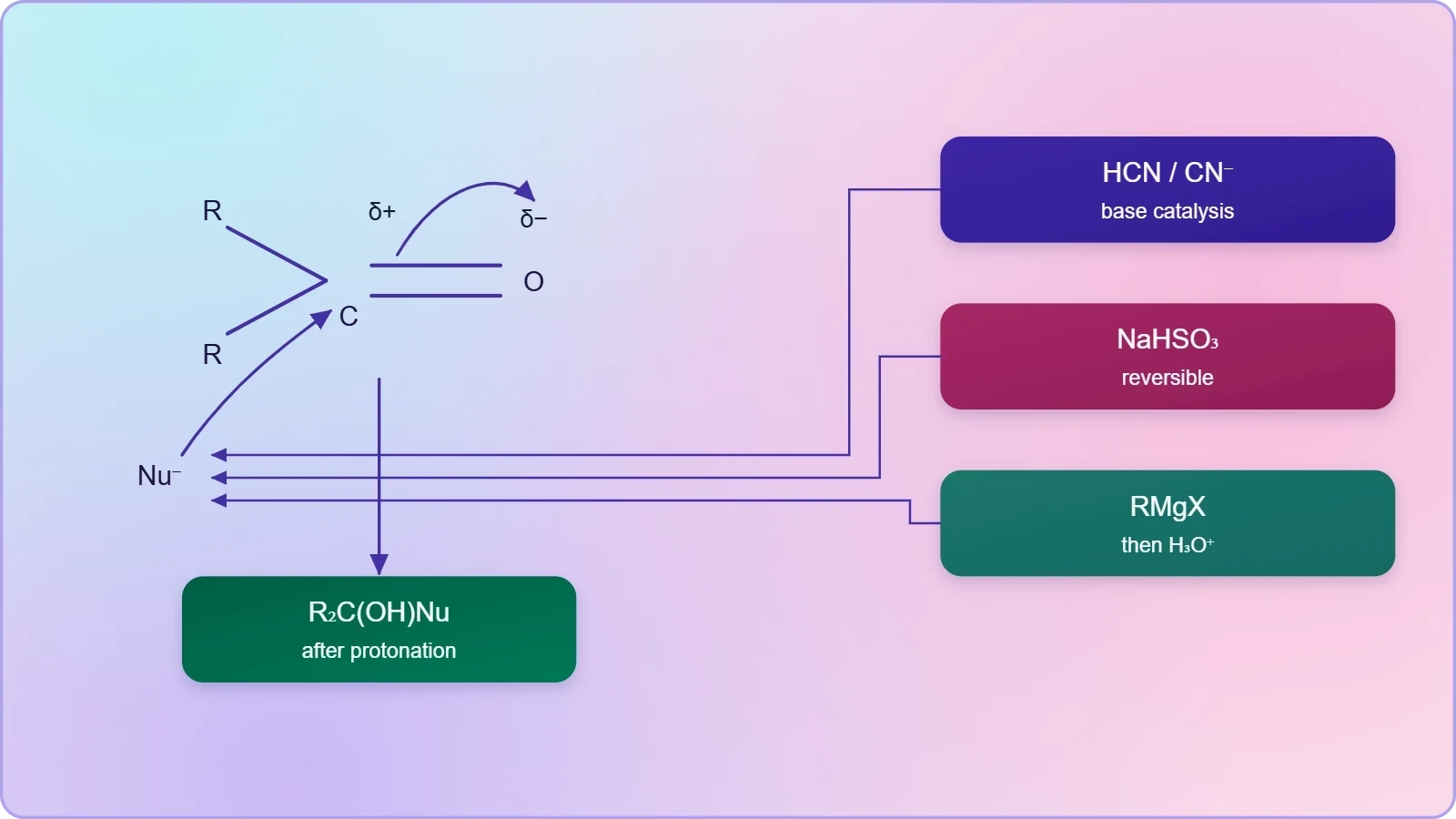
What makes these three additions worth studying together is the contrast they offer. Cyanide addition is base-catalysed, essentially irreversible under mild conditions, and produces a cyanohydrin that opens a doorway to alpha-hydroxy acids and amino acids. Bisulfite addition is a reversible equilibrium whose position depends on steric crowding, which is precisely why it becomes a purification tool rather than a synthesis endpoint. Grignard addition is the most powerful of the three, forging carbon–carbon bonds with remarkable generality, yet it collapses in the presence of acidic protons. Understanding why each behaves as it does is the real objective of this lesson, not memorising three equations.
We will move from mechanism to application, from the laboratory bench to industrial scale, and from textbook problems to pharmaceutical synthesis. Along the way we will examine worked examples, flag the mistakes that cost students marks in CBSE examinations, and extend the discussion to safety, since hydrogen cyanide is one of the most dangerous reagents a chemistry student will ever encounter on paper. By the end, you should be able to predict which carbonyl compounds form stable bisulfite adducts, explain why Grignard reagents fail on certain substrates, and trace a cyanohydrin through to a carboxylic acid derivative.
On This Page
Hydrogen Cyanide Addition and Cyanohydrin Formation
Hydrogen cyanide adds across the carbonyl double bond to give a cyanohydrin, a molecule carrying both a hydroxyl group and a nitrile on the same carbon. The reaction is deceptively simple on paper, yet it proceeds only very slowly when pure ##\ce{HCN}## is used, because molecular hydrogen cyanide is a weak nucleophile. The practical solution is base catalysis: a trace of base removes a proton from ##\ce{HCN}## to generate the cyanide ion ##\ce{CN^-}##, which is a far stronger nucleophile and attacks the carbonyl carbon readily. This is a recurring theme in carbonyl chemistry — the reactive species is almost never the neutral reagent but its conjugate base.
The mechanism follows the standard nucleophilic addition pathway established earlier. Cyanide attacks the electrophilic carbon, the ##\pi## bond breaks, and the oxygen acquires a negative charge as an alkoxide intermediate. Protonation of that alkoxide, either by the solvent or by a fresh molecule of ##\ce{HCN}##, delivers the cyanohydrin and regenerates cyanide, which is why the base is needed only in catalytic quantity. The overall transformation is shown below, and note that the product retains every carbon atom of the starting material plus one new carbon from cyanide.

For formaldehyde the product is the simplest cyanohydrin, ##\ce{HOCH2CN}##; for acetaldehyde it is ##\ce{CH3CH(OH)CN}##; for acetone it is ##\ce{(CH3)2C(OH)CN}##. Aromatic aldehydes such as benzaldehyde also react, giving mandelonitrile, ##\ce{C6H5CH(OH)CN}##, a compound of genuine industrial importance. The reaction is reversible in principle, and cyanohydrins can be decomposed back to the carbonyl compound and cyanide by treatment with base, which is why they are often protected or immediately derivatised in multi-step syntheses.
Mechanistic Detail and the Role of Base Catalysis
The rate law for cyanohydrin formation reflects the dual role of cyanide. At low pH the concentration of ##\ce{CN^-}## is negligible and the reaction crawls; at very high pH the cyanohydrin itself is deprotonated and the equilibrium shifts back toward starting materials. There is therefore an optimum pH window, typically mildly basic, where the nucleophile is plentiful but the product remains intact. This pH dependence is a favourite examination question because it tests whether a student understands that catalysis and equilibrium are separate concepts operating simultaneously.

Steric effects also matter. Ketones react more slowly than aldehydes because two alkyl groups shield the carbonyl carbon, and highly hindered ketones such as di-tert-butyl ketone react sluggishly or not at all. Electron-withdrawing substituents accelerate the addition by increasing the electrophilicity of the carbonyl carbon, while electron-donating groups retard it. These trends mirror the reactivity order established in the previous lesson and reinforce the principle that nucleophilic addition is governed by the balance of electrophilicity and steric accessibility.
Industrial Synthesis and Downstream Transformations
On an industrial scale, cyanohydrins are produced continuously rather than in batch. Acetone cyanohydrin, ##\ce{(CH3)2C(OH)CN}##, is manufactured in enormous quantities as the precursor to methyl methacrylate, the monomer for poly(methyl methacrylate) acrylic glass. The process passes acetone and hydrogen cyanide through a packed bed with a basic catalyst, and the product is stabilised with a trace of acid to prevent decomposition. Mandelonitrile, derived from benzaldehyde, is a key intermediate in the synthesis of synthetic pyrethroid insecticides and certain pharmaceuticals.
The synthetic value of cyanohydrins lies in the nitrile group, which is a versatile functional handle. Hydrolysis of the nitrile under acidic conditions converts ##\ce{-CN}## first to an amide and then to a carboxylic acid, giving an alpha-hydroxy acid. Lactic acid, ##\ce{CH3CH(OH)COOH}##, can be reached from acetaldehyde cyanohydrin by this route, and mandelic acid, ##\ce{C6H5CH(OH)COOH}##, from mandelonitrile. Reduction of the nitrile with lithium aluminium hydride instead yields an amino alcohol, and this is the classical entry into beta-amino alcohols used as chiral ligands and pharmaceutical building blocks.
Safety deserves explicit attention here. Hydrogen cyanide is a volatile liquid boiling at 26.7 °C and is lethal at concentrations of a few hundred parts per million in air; it blocks cytochrome c oxidase and halts cellular respiration. Cyanide salts are equally dangerous when acidified, since they liberate ##\ce{HCN}## gas. All work must be conducted in a fume hood with appropriate personal protective equipment, and waste streams containing cyanide are treated with alkaline hypochlorite before disposal. Students should treat every cyanohydrin problem as a reminder that the reagent behind the arrow is a regulated poison.
Sodium Bisulphite Addition and Purification Strategy
Sodium hydrogensulphite, ##\ce{NaHSO3}##, adds across the carbonyl group to give a crystalline bisulphite adduct in which the sulphur atom bonds to the carbonyl carbon and the oxygen becomes a hydroxyl. The reaction is an equilibrium, and its position is governed almost entirely by steric bulk. For most aldehydes the equilibrium lies far to the right, so the adduct forms cleanly and precipitates. For most ketones, particularly those with two alkyl substituents, the equilibrium lies to the left and little or no adduct is obtained. Methyl ketones occupy an intermediate position and often react, while higher ketones generally do not.
This steric discrimination is the basis of a classical separation technique. Because the bisulphite adduct is water-soluble and the unreacted ketone is not, a mixture of an aldehyde and a ketone can be shaken with saturated sodium bisulphite solution. The aldehyde is captured as the adduct and passes into the aqueous layer, while the ketone remains in the organic phase. The two layers are separated, and the aldehyde is recovered by treating the aqueous layer with dilute mineral acid or alkali, which reverses the addition and regenerates the free carbonyl compound. The ketone is recovered unchanged from the organic layer.
Reversibility as a Design Feature
The reversibility that makes bisulphite addition useless as a synthesis endpoint is exactly what makes it valuable as a purification step. Dilute mineral acid protonates the sulphonate oxygen and promotes elimination of sulphur dioxide and water, returning the aldehyde. Dilute alkali works by a different route, generating sulphite and the free aldehyde through hydrolysis of the adduct. Either way, the carbonyl compound is recovered without contamination, and the method is gentle enough to preserve sensitive functional groups elsewhere in the molecule.
Bisulphite adducts are also useful for characterisation. They are crystalline solids with sharp melting points, so an unknown aldehyde can be converted to its adduct and identified by melting point comparison with literature values. This application has largely been superseded by spectroscopic methods, but it remains a classic illustration of how a reversible reaction can be exploited analytically. The adduct of benzaldehyde with sodium bisulphite, for instance, is a well-defined solid that decomposes on acidification to return the aldehyde.
Practical Limitations and Common Errors
Students frequently write the bisulphite adduct with the sulphur bonded to oxygen rather than carbon, which is incorrect. The nucleophilic atom is sulphur, and the new ##\ce{C-S}## bond is the defining feature of the product. Another common error is to claim that all ketones fail to react; methyl ketones such as acetone do form adducts, albeit less readily, and the distinction is one of degree rather than absolutes. Examiners reward the nuance, not the blanket statement.
There are also practical constraints. The reaction requires saturated bisulphite solution and often cooling, and the adducts can be unstable if warmed. Aromatic aldehydes react well, but sterically hindered aldehydes may resist. The method is unsuitable for acid-sensitive substrates because the recovery step uses acid or alkali. These limitations do not diminish the technique's historical importance; they simply define the conditions under which it works best, and a well-prepared answer acknowledges both the power and the boundaries of the method.
We Also Published
Grignard Reagents and Carbon–Carbon Bond Formation
Grignard reagents, of general formula ##\ce{RMgX}##, are the most versatile nucleophiles available to the synthetic chemist. The carbon–magnesium bond is strongly polarised, with partial negative charge on carbon, so the organic group behaves as a carbanion equivalent. When a Grignard reagent meets an aldehyde or ketone, the carbanion attacks the carbonyl carbon and, after aqueous workup, delivers an alcohol with a new carbon–carbon bond. Formaldehyde gives a primary alcohol, other aldehydes give secondary alcohols, and ketones give tertiary alcohols. This is the single most important carbon–carbon bond-forming reaction in the undergraduate curriculum.
The mechanism is a two-stage sequence. In the first stage, the nucleophilic carbon of ##\ce{RMgX}## attacks the electrophilic carbonyl carbon, pushing the ##\pi## electrons onto oxygen and generating a magnesium alkoxide. In the second stage, dilute aqueous acid is added to protonate the alkoxide, liberating the alcohol and converting the magnesium to a water-soluble salt. The acid workup is not optional decoration; without it the alkoxide persists and the alcohol is never released. Students who omit the workup step lose marks, because the reaction as written is incomplete.

The reaction is carried out in dry ether or tetrahydrofuran because Grignard reagents are destroyed by water and by any proton source. The solvent stabilises the reagent by coordinating to magnesium, and its dryness is critical. Even trace moisture from poorly dried glassware will consume part of the reagent, reducing yield and confusing stoichiometry. This sensitivity is the price paid for the extraordinary reactivity of the carbon–magnesium bond, and it explains why Grignard chemistry is performed with rigorous exclusion of water and air.
Applications in Pharmaceutical Synthesis
Grignard additions are woven through the manufacture of many drugs. The synthesis of the antihistamine diphenhydramine, for example, uses a Grignard reagent derived from bromobenzene to build the benzhydryl framework. The antimalarial and antiarrhythmic compound quinine and its analogues rely on Grignard steps to install complex side chains. In the synthesis of the analgesic tramadol, Grignard chemistry constructs the cyclohexanol core. These are not textbook curiosities; they are production routes run at tonne scale, and they demonstrate that the reaction's sensitivity to moisture is manageable with proper engineering.
Chiral Grignard additions are particularly valuable. When a chiral aldehyde or a chiral auxiliary is used, the addition can proceed with high diastereoselectivity, giving access to enantiomerically enriched alcohols. This is central to the synthesis of many modern pharmaceuticals, where a single enantiomer is required for biological activity. The Grignard reagent itself is achiral, but the stereochemical information in the substrate or auxiliary directs the attack, and this principle underpins a large fraction of asymmetric synthesis in the pharmaceutical industry.
Limitations: Acidic Protons and Incompatible Groups
The chief limitation of Grignard reagents is their intolerance of acidic protons. Any functional group containing an ##\ce{O-H}##, ##\ce{N-H}##, ##\ce{S-H}##, or terminal alkyne ##\ce{C-H}## will protonate the reagent and destroy it, regenerating the hydrocarbon and leaving the carbonyl untouched. Carboxylic acids, alcohols, phenols, amines, amides, and water itself are all incompatible. This is why a Grignard synthesis must be planned with protecting groups: a hydroxyl group elsewhere in the molecule is masked as an ether or a silyl ether before the Grignard step and unmasked afterward.
Other limitations include incompatibility with strongly electrophilic groups such as nitro or nitrile, which may react with the reagent, and with acidic workup conditions that could destroy sensitive products. Grignard reagents also fail with very hindered ketones, where steric approach is blocked. These constraints mean that the Grignard reaction, despite its power, requires careful retrosynthetic planning. The skilled chemist chooses the order of operations so that incompatible groups are introduced after the Grignard step or protected before it.
Comparing the Three Additions: Reactivity and Selectivity
Placing the three reactions side by side reveals a coherent logic. Cyanide addition is base-catalysed and essentially irreversible under mild conditions, so it drives to completion and is limited mainly by steric hindrance at the carbonyl. Bisulphite addition is a genuine equilibrium, so its outcome depends on the balance of steric and electronic factors and can be reversed at will. Grignard addition is effectively irreversible and extraordinarily powerful, but it demands a substrate free of acidic protons. The three reagents thus occupy different niches, and choosing between them is a matter of matching reagent properties to synthetic goals.
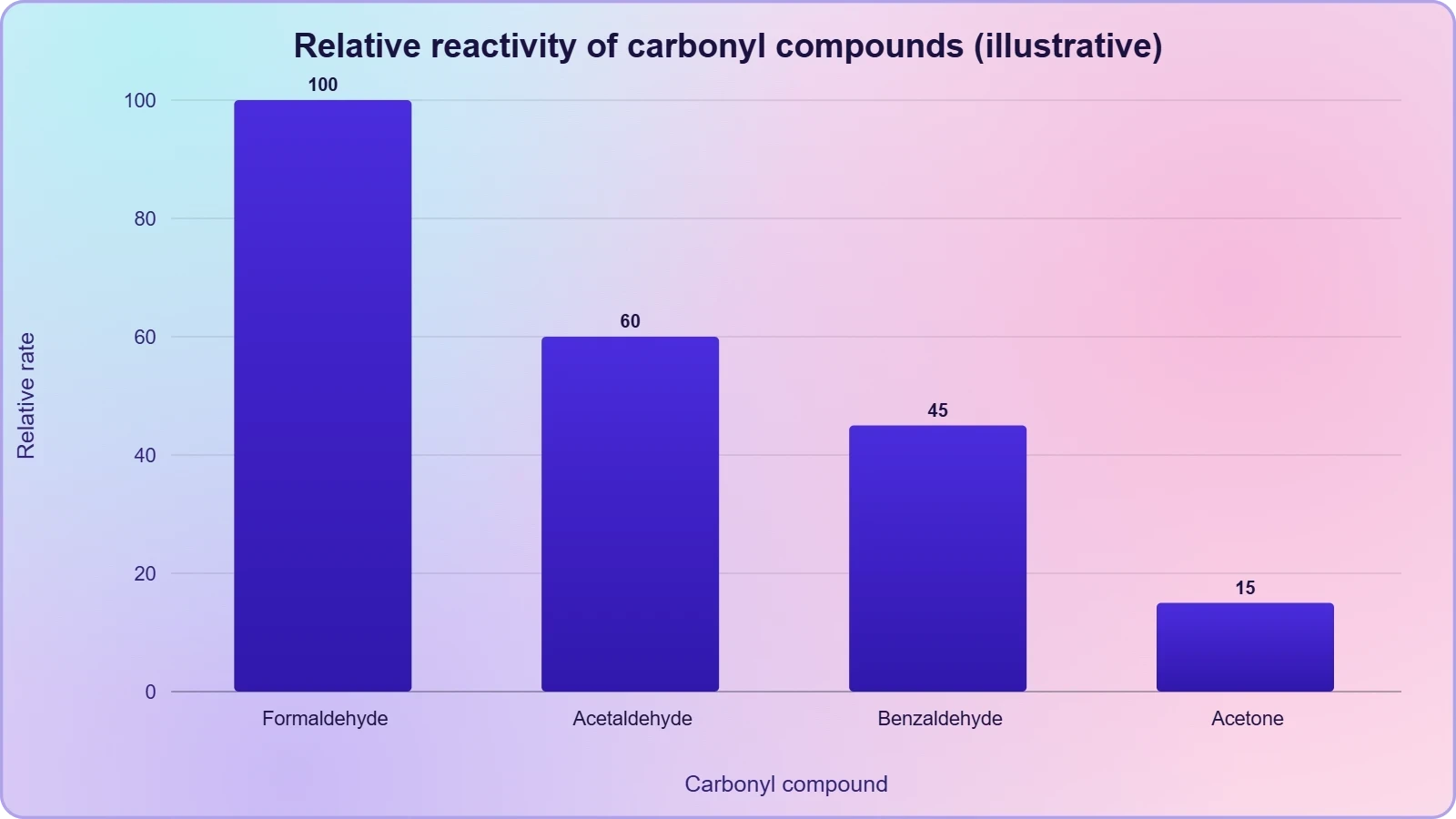
Reactivity toward all three nucleophiles follows the same order: formaldehyde is most reactive, other aldehydes next, ketones least reactive. This is the familiar consequence of steric shielding and of the electron-donating effect of alkyl groups, which stabilise the partial positive charge on the carbonyl carbon. A student who internalises this single trend can predict the outcome of a wide range of reactions without memorising each one individually. The trend is the principle; the individual reactions are its expressions.
Worked Example: Predicting the Product
Consider the reaction of propanal, ##\ce{CH3CH2CHO}##, with each of the three reagents. With ##\ce{HCN}## and a trace of base, the product is the cyanohydrin ##\ce{CH3CH2CH(OH)CN}##. With ##\ce{NaHSO3}##, the bisulphite adduct forms readily because propanal is an aldehyde with modest steric demand. With methylmagnesium bromide, ##\ce{CH3MgBr}##, followed by acid workup, the product is butan-2-ol, ##\ce{CH3CH2CH(OH)CH3}##, a secondary alcohol. Each product is distinct, and each follows directly from the mechanism rather than from memorisation.
Now consider acetone, ##\ce{(CH3)2CO}##. With ##\ce{HCN}## it gives acetone cyanohydrin, ##\ce{(CH3)2C(OH)CN}##, the industrial precursor to methyl methacrylate. With ##\ce{NaHSO3}## it gives only a partial conversion because it is a ketone, though as a methyl ketone it does react to some extent. With ##\ce{CH3MgBr}## it gives tert-butanol, ##\ce{(CH3)3COH}##, a tertiary alcohol. The contrast between the aldehyde and the ketone across all three reactions is the single most examinable pattern in this lesson, and it repays careful practice.
Common Mistakes and Examination Traps
The most frequent error is forgetting the acid workup in a Grignard reaction, which leaves the answer as a magnesium alkoxide rather than an alcohol. The second is writing the bisulphite adduct with sulphur bonded to oxygen instead of carbon. The third is claiming that Grignard reagents react with carboxylic acids to give ketones; in fact the acidic proton destroys the reagent, and the acid is recovered as its magnesium salt. Each of these errors stems from a shallow grasp of mechanism, and each is corrected by returning to first principles rather than memorising exceptions.
A subtler trap concerns stereochemistry. Addition of ##\ce{HCN}## to a chiral aldehyde creates a new stereocentre, and the product is a mixture of diastereomers unless the substrate is achiral or the reaction is stereoselective. Students often overlook this and write a single product where two are formed. Similarly, Grignard addition to a carbonyl adjacent to an existing stereocentre can give mixtures whose ratio depends on the conformation of the intermediate. Recognising when stereochemistry matters is a mark of genuine understanding rather than surface familiarity.
Safety, Scale, and Laboratory Practice
Hydrogen cyanide demands the most serious safety consideration of any reagent in this lesson. It is a volatile liquid with a boiling point near room temperature, and inhalation of its vapour causes rapid collapse because it binds to the iron centre of cytochrome c oxidase and blocks electron transport. Cyanide salts are less volatile but liberate ##\ce{HCN}## on contact with acid, so they must never be acidified outside a fume hood. Antidote kits containing hydroxocobalamin or sodium thiosulphate are standard in laboratories where cyanide chemistry is performed, and their presence is not a formality.
Grignard reagents present a different hazard profile. They are pyrophoric in concentrated form, react violently with water, and generate flammable hydrogen when quenched. Ether solvents are highly flammable and form explosive peroxides on storage, so Grignard work requires inert atmosphere techniques, proper grounding, and careful quenching. Bisulphite solutions are comparatively benign but release sulphur dioxide on acidification, which is an irritant. Each reagent carries its own risk signature, and a competent chemist matches the safety protocol to the specific hazard rather than applying a generic precaution.
Industrial Context and Green Chemistry
At industrial scale, cyanohydrin chemistry is conducted in continuous flow reactors that minimise the inventory of hydrogen cyanide at any moment. This is a direct application of green chemistry principles: reducing the hazard of a process by reducing the amount of dangerous material present at a given time. The acetone cyanohydrin route to methyl methacrylate has been refined over decades to recover and recycle hydrogen cyanide, and modern plants operate with sophisticated containment and monitoring systems that would have been unimaginable to the chemists who first studied these reactions.
Grignard chemistry at scale faces the challenge of solvent recovery and the cost of maintaining anhydrous conditions. Flow chemistry has again provided solutions, allowing Grignard reagents to be generated and consumed in a single continuous stream without the need for long-term storage. These engineering developments do not change the underlying chemistry taught in this lesson, but they show that the reactions on the page are living industrial processes, continually refined by the same mechanistic understanding that students are expected to master.
Connecting Forward to Alcohols and Ammonia Derivatives
The next lesson extends nucleophilic addition to alcohols and ammonia derivatives, where the mechanism shifts from simple addition to addition-elimination. The hemiacetal and acetal chemistry of alcohols, and the imine and hydrazone chemistry of ammonia derivatives, build directly on the mechanistic framework established here. The same carbonyl electrophile is attacked, but the nucleophile now carries a leaving group or a proton that allows a second step, and the products are stable only under specific conditions. Recognising that continuity is the key to retaining the material.
Before moving on, consolidate the three reactions of this lesson by writing each mechanism from memory, including every curved arrow and every proton transfer. Then predict the products of each reagent with formaldehyde, acetaldehyde, benzaldehyde, acetone, and acetophenone. If you can do this without hesitation, you have internalised the logic of nucleophilic addition, and the next lesson will feel like a natural extension rather than a new topic. The carbonyl group is the same; only the nucleophile changes.
Worked Problems and Consolidation
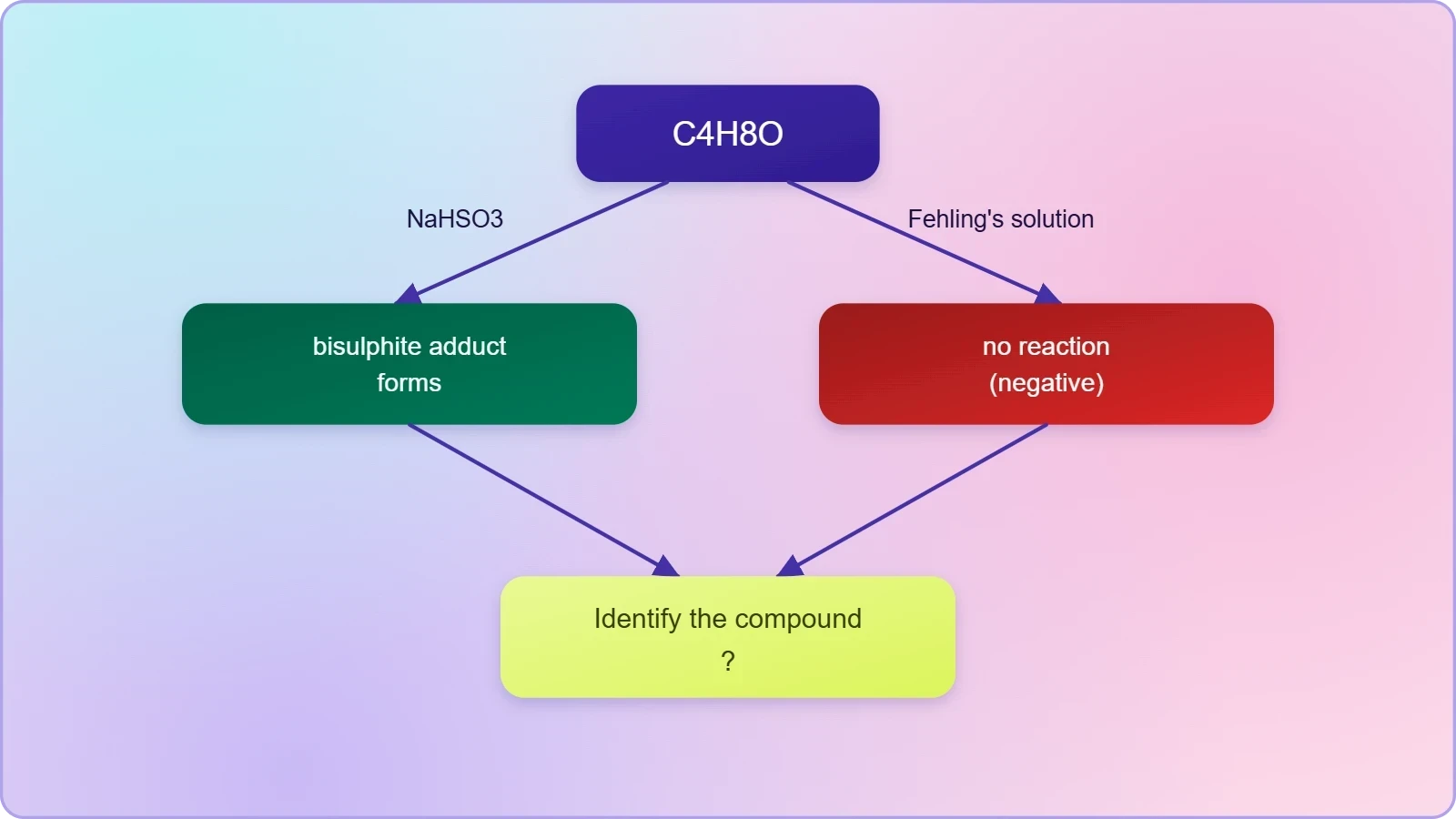
Problem one: an unknown compound of formula ##\ce{C4H8O}## forms a bisulphite adduct but does not react with Fehling's solution. Identify it. The bisulphite adduct indicates an aldehyde or a methyl ketone, and the negative Fehling's test rules out an aliphatic aldehyde, so the compound is a methyl ketone. Of the possible structures, butan-2-one, ##\ce{CH3COCH2CH3}##, fits the formula and the tests. This kind of reasoning, combining a positive test with a negative one, is exactly what examination questions reward, and it requires that you know not only what each reagent does but also what it does not do.
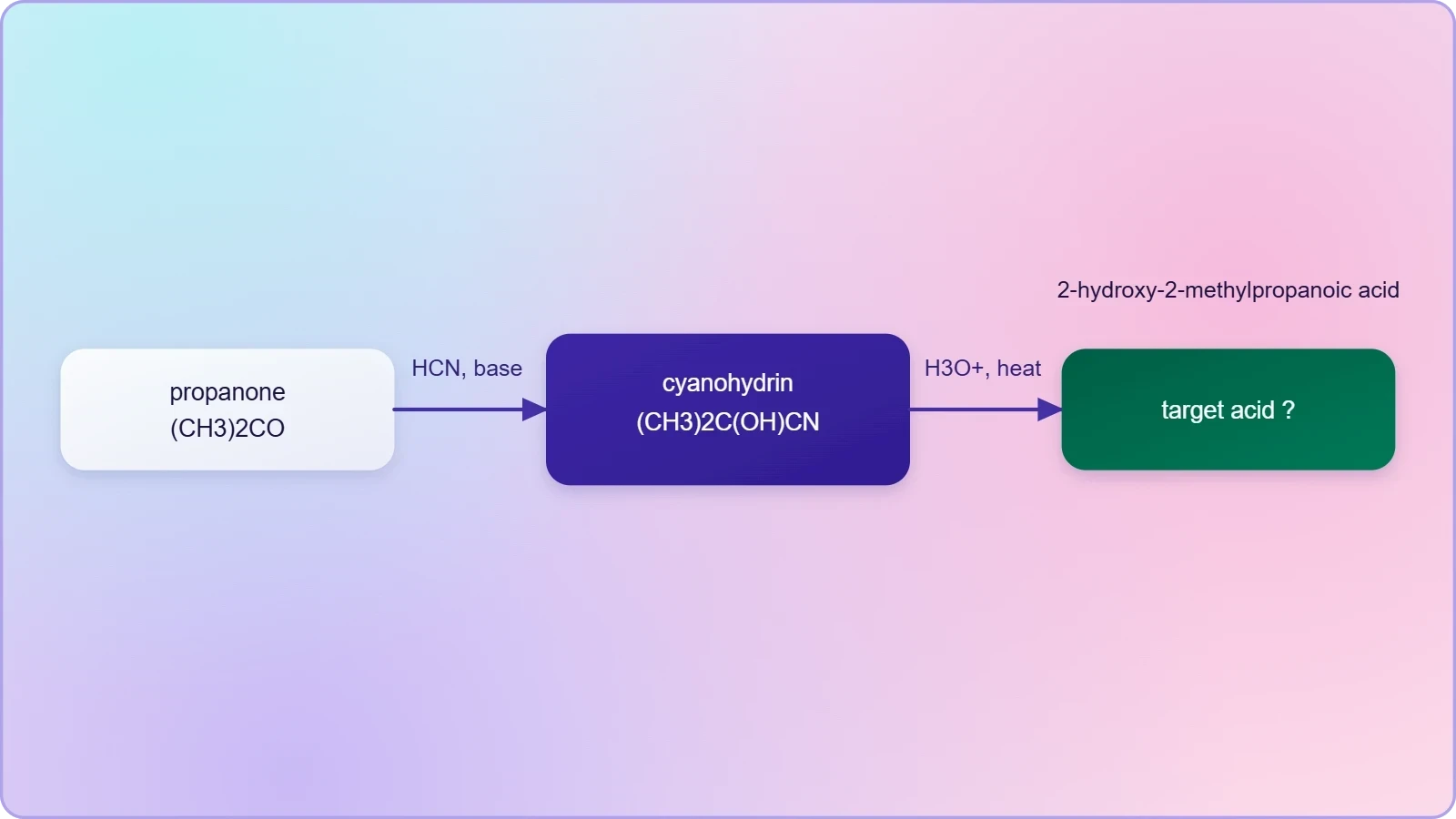
Problem two: outline a synthesis of 2-hydroxy-2-methylpropanoic acid from propanone. The first step is cyanohydrin formation with ##\ce{HCN}## and base, giving acetone cyanohydrin, ##\ce{(CH3)2C(OH)CN}##. The second step is hydrolysis of the nitrile with aqueous acid and heat, converting ##\ce{-CN}## to ##\ce{-COOH}## and yielding the target alpha-hydroxy acid. The sequence is short but it demonstrates the synthetic logic of the lesson: a nucleophilic addition installs a carbon, and a functional group transformation converts that carbon into the desired oxidation state.
Problem Three: Grignard Retrosynthesis
Problem three: propose a Grignard synthesis of 1-phenylethanol, ##\ce{C6H5CH(OH)CH3}##. Working backward, the alcohol is secondary, so it arises from addition of a Grignard reagent to an aldehyde. Disconnection of the ##\ce{C-C}## bond adjacent to the hydroxyl gives either benzaldehyde plus methylmagnesium bromide, or acetaldehyde plus phenylmagnesium bromide. Both disconnections are valid, and the choice in practice depends on the availability and cost of the reagents. This is the essence of retrosynthetic thinking, and it is the skill that separates a student who can recall reactions from one who can design syntheses.
Problem four: explain why a Grignard reagent cannot be used to convert a carboxylic acid into a ketone. The carboxylic acid contains an acidic proton on the hydroxyl group, and the Grignard reagent is a strong base. Proton transfer is far faster than nucleophilic addition, so the reagent is destroyed and the acid is converted to its magnesium salt. The reaction does not fail because the carbonyl is unreactive; it fails because a competing acid–base reaction consumes the reagent first. Understanding this distinction is essential for planning any Grignard synthesis in the presence of acidic functional groups.
Summary of Key Principles
The three additions in this lesson share a single mechanism but differ in catalysis, reversibility, and synthetic role. Cyanide addition is base-catalysed and opens the door to alpha-hydroxy acids and amino alcohols. Bisulphite addition is a sterically controlled equilibrium that serves as a purification tool. Grignard addition is the premier carbon–carbon bond-forming reaction, powerful but intolerant of acidic protons. Mastery of these distinctions, together with a clear grasp of the underlying mechanism, prepares you for the addition-elimination chemistry of alcohols and ammonia derivatives that follows.
As you revise, keep the reactivity order in mind: formaldehyde, then aldehydes, then ketones. Keep the mechanistic sequence in mind: nucleophilic attack, then protonation. Keep the practical constraints in mind: dry conditions for Grignard, acid or alkali for reversing bisulphite adducts, and rigorous safety for cyanide. These three threads — reactivity, mechanism, and practice — run through every problem in this lesson, and they will run through the examination as well. A student who holds all three together is prepared not just for the next lesson but for the whole of carbonyl chemistry.
From our network :
- Analyzing Trump Deportation Numbers Insights Into The 2026 Immigration Crackdown
- 10 Physics Numerical Problems with Solutions for IIT JEEPrepare for IIT JEE with 10 physics numerical problems, complete with detailed solutions and conceptual explanations. Ideal for mastering kinematics, thermodynamics, electromagnetism, and optics.
- Trump Political Strategy How Geopolitical Stunts Serve As Media Diversions
- How to Print Cheaply: Cutting the Cost per PageA practical, measured guide to lowering what each printed page costs — duplex and draft modes, third-party ink, yield mathematics, and knowing when a new printer beats refills.
- AI-Powered 'Precision Diagnostic' Replaces Standard GRE Score ReportsDiscover the new GRE Precision Diagnostic. Learn how AI-powered behavioral analytics and time-to-solve tracking are replacing standard GRE score reports to empower students.
- Do You Need a New Router or Is Your Internet Plan the Problem?A practical comparison of the signs that point to router limits versus signs your broadband speed or provider is the bottleneck, so you can decide what to replace before spending money.
- 98% of Global MBA Programs Now Prefer GRE Over GMAT Focus EditionExplore why 98% of global MBA programs now prefer the GRE over GMAT Focus. Learn about the shorter GRE format, verbal logic importance, and strategic versatility for students.
- EV 2.0: The Solid-State Battery Breakthrough and Global Factory ExpansionDiscover the impact of the Solid-State Battery Breakthrough on the EV market. Learn about CATL and BYD stock growth, global factory expansion in Europe, and the future of EV 2.0 technology.
- Where to Put Your Wireless Router for Better CoverageA practical, physics-grounded guide to router placement: why the centre of the home beats the corner, how walls and metal sap signal, and how to run a simple survey that proves the improvement.