The Cannizzaro reaction occupies a singular place in carbonyl chemistry because it is the reaction that happens precisely when the familiar aldol pathway is unavailable. Aldehydes that carry no α-hydrogen cannot be deprotonated at the carbon adjacent to the carbonyl, so the entire enolate machinery of aldol and haloform chemistry is closed to them. Instead, when such an aldehyde is heated with concentrated alkali, two molecules of the same substrate conspire: one is oxidised to a carboxylate salt while the other is reduced to a primary alcohol. This self-oxidation–reduction, or disproportionation, is the defining signature of the Cannizzaro reaction, and it transforms an apparent chemical dead end into a productive synthetic route.
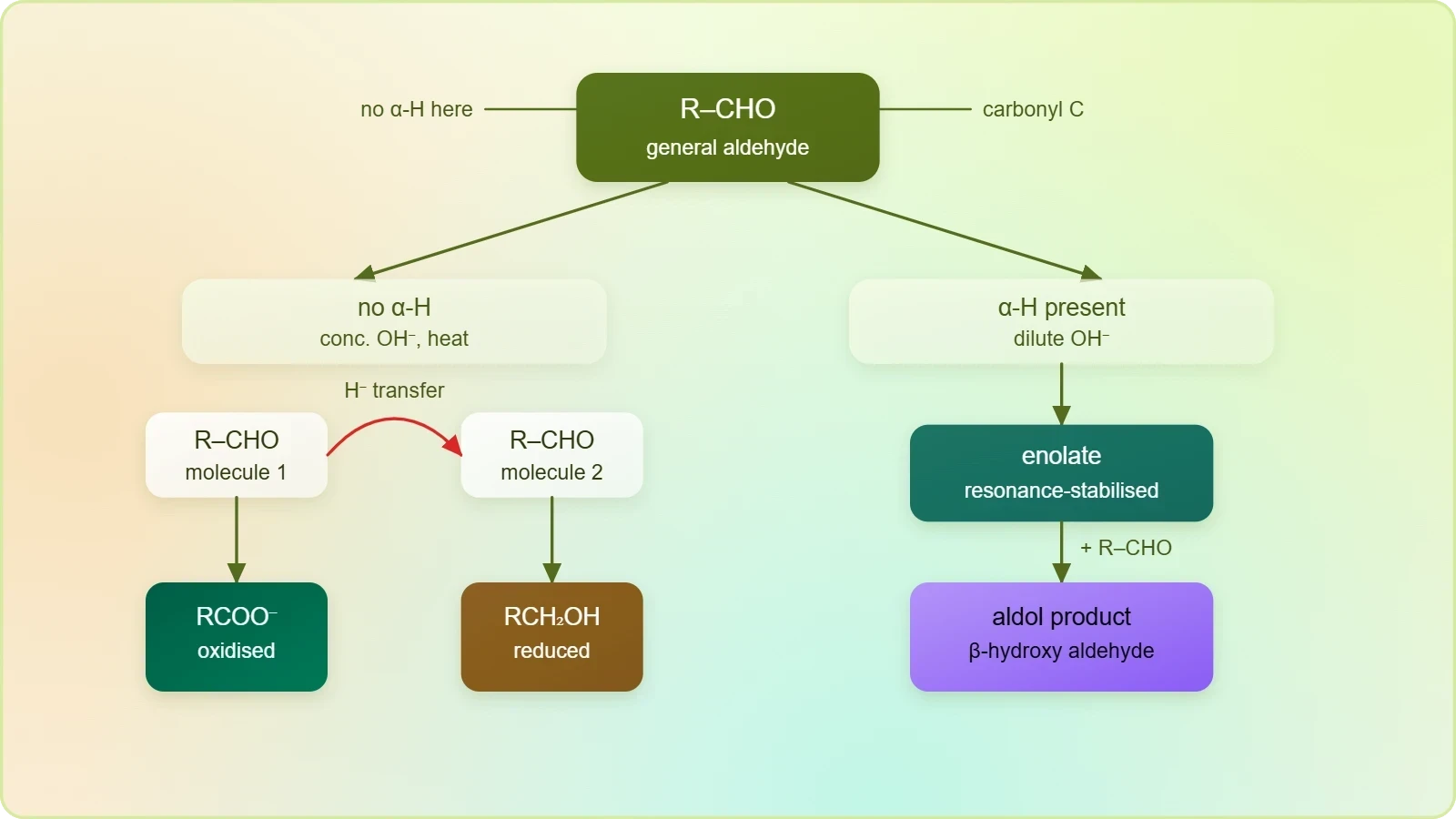
Understanding this lesson requires more than memorising a balanced equation. The mechanism unfolds through a nucleophilic addition of hydroxide to the carbonyl carbon, generating a tetrahedral alkoxide intermediate that then expels a hydride ion onto a second aldehyde molecule. That hydride transfer is the conceptual heart of the process, and it explains why the reaction demands strong base, elevated temperature and substrates free of acidic α-hydrogens. Crossed Cannizzaro variants, the special behaviour of formaldehyde, and the regiochemistry of electrophilic substitution in aromatic aldehydes and ketones all follow logically once this hydride-shift logic is secure.
This lesson builds directly on the preceding study of α-hydrogen acidity, aldol and cross aldol condensation, and it prepares the ground for the industrial and everyday uses of aldehydes and ketones that follow. Aromatic aldehydes and ketones add a second dimension, because their rings undergo electrophilic substitution while the carbonyl group acts as a deactivating, meta-directing substituent. By the end, you should be able to predict products, justify reactivity trends with electronic and steric arguments, and recognise the Cannizzaro reaction at work in real manufacturing processes.
On This Page
The Cannizzaro Reaction: Definition and Scope
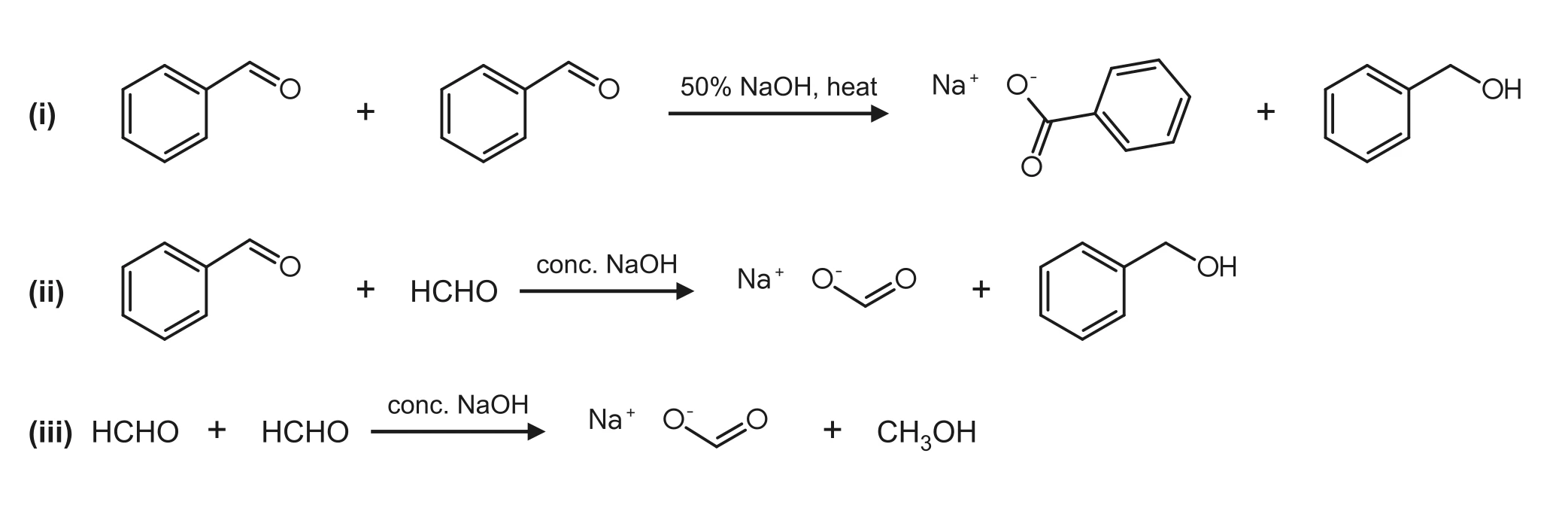
The Cannizzaro reaction is the base-promoted disproportionation of aldehydes that possess no α-hydrogen atom. On heating with concentrated aqueous or alcoholic alkali, typically ##\ce{NaOH}## or ##\ce{KOH}## at around 50% concentration, one molecule of the aldehyde is oxidised to the sodium salt of the corresponding carboxylic acid while a second molecule is reduced to the corresponding primary alcohol. The overall transformation consumes two equivalents of aldehyde and one equivalent of hydroxide, and it produces no carbon–carbon bond, which distinguishes it sharply from the aldol family of reactions studied earlier.
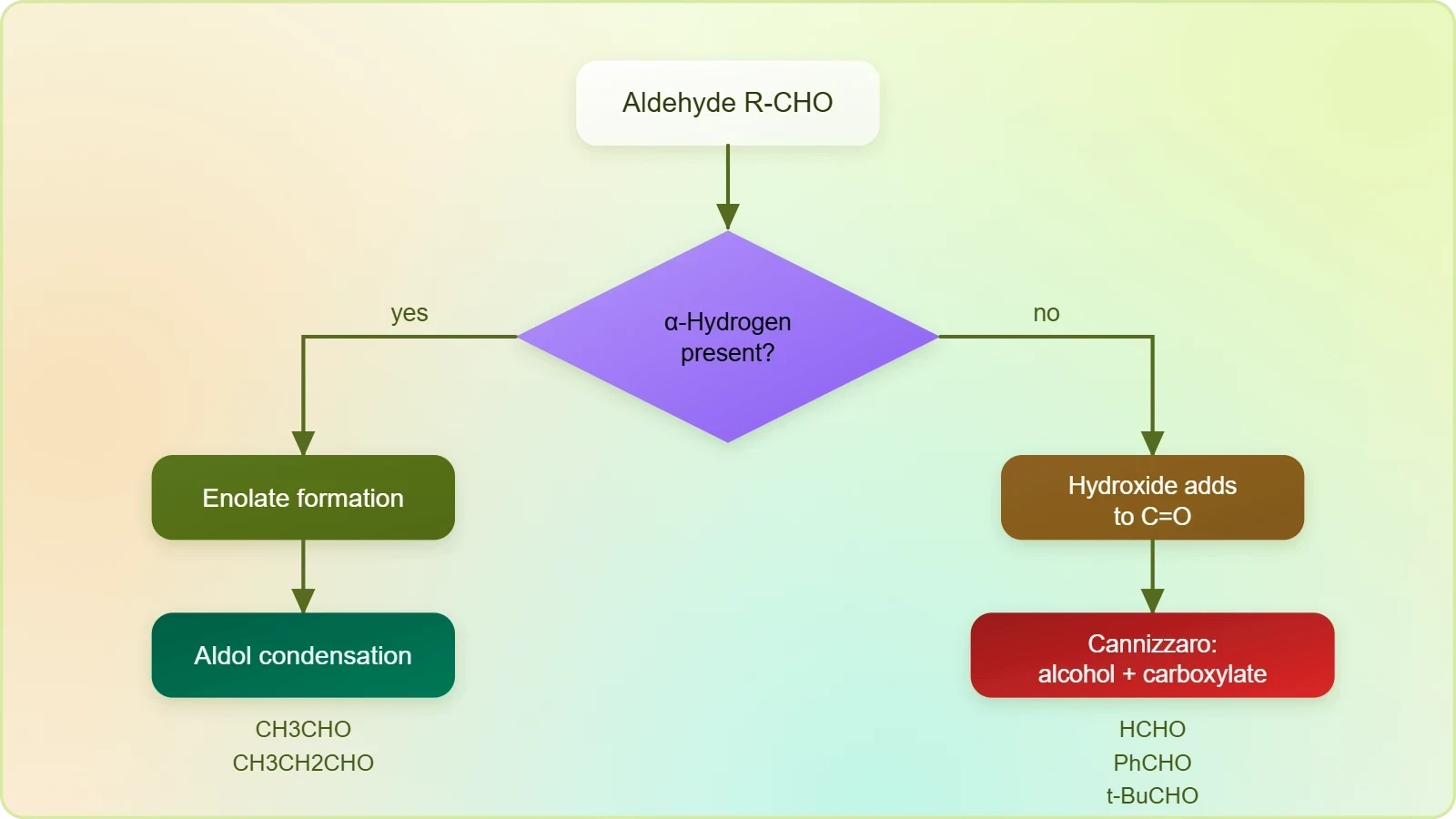
The scope of the reaction is defined negatively: it applies to aldehydes lacking α-hydrogens. Formaldehyde, benzaldehyde, and aldehydes such as 2,2-dimethylpropanal (pivalaldehyde) all qualify, because the carbon next to their carbonyl carries no hydrogen that could be removed by base. By contrast, acetaldehyde, propanal and other aldehydes with at least one α-hydrogen prefer aldol condensation under the same basic conditions, and the Cannizzaro pathway becomes a minor or negligible competitor. This selectivity is one of the most instructive examples of how a single structural feature governs an entire reaction manifold.
Why the Absence of α-Hydrogen Matters
Under basic conditions, an aldehyde with an α-hydrogen is rapidly deprotonated to form a resonance-stabilised enolate. That enolate is a competent nucleophile and attacks a second carbonyl molecule, initiating the aldol sequence. The equilibrium lies far toward enolate formation because the conjugate base is stabilised by delocalisation onto the carbonyl oxygen. Once enolate chemistry is available, it outcompetes the slower hydride-transfer pathway of the Cannizzaro reaction, so the aldol product dominates and disproportionation is effectively suppressed.
When no α-hydrogen exists, deprotonation at carbon is impossible, and hydroxide has only one productive role: it adds to the carbonyl carbon as a nucleophile. The resulting tetrahedral intermediate is the gateway to hydride transfer. This is why the Cannizzaro reaction is often described as the reaction of last resort for aldehydes, and why examiners use it as a diagnostic test for the presence or absence of α-hydrogens. Recognising the structural prerequisite instantly tells you which reaction family to expect.
Formaldehyde Versus Acetaldehyde
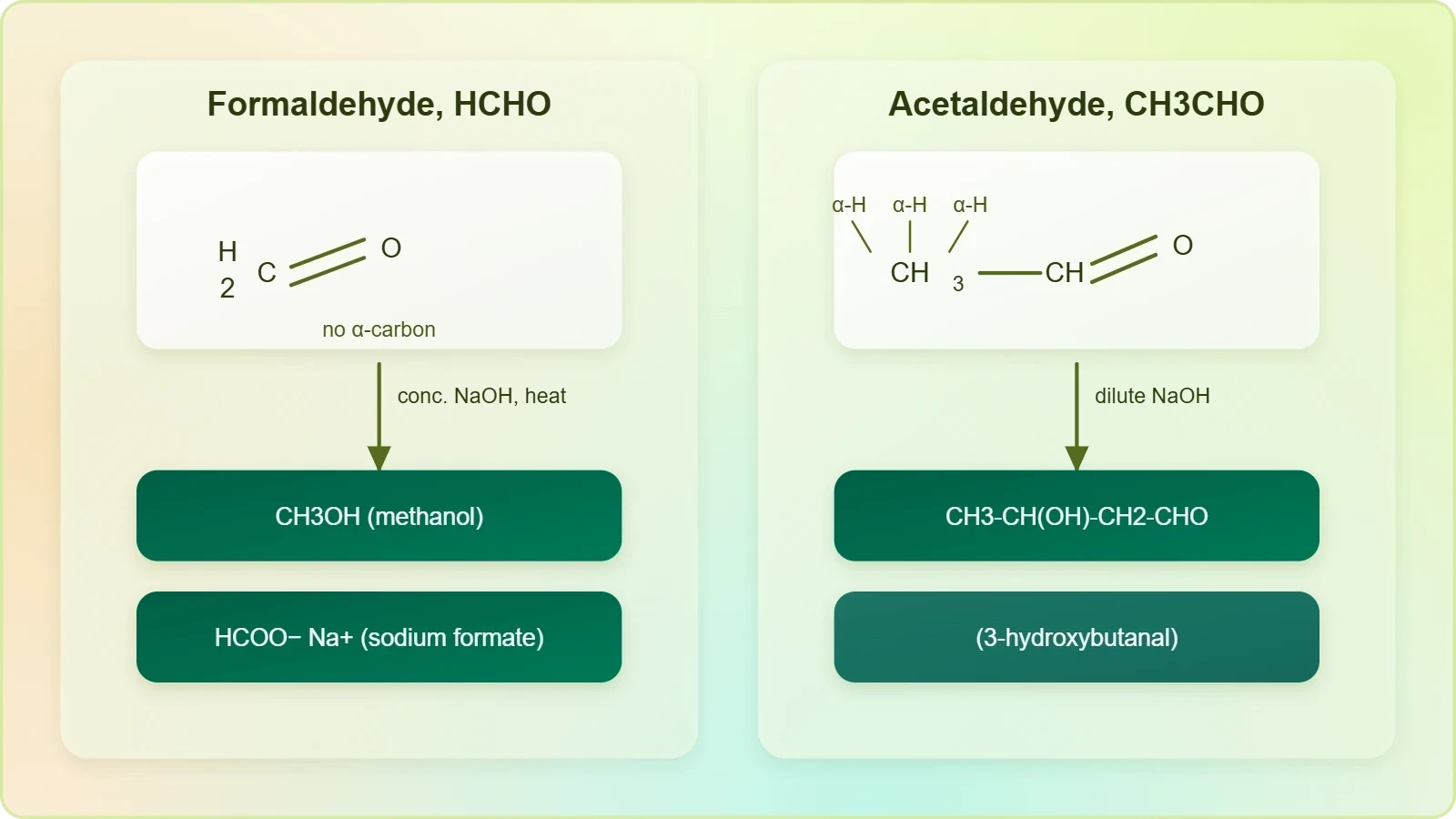
Formaldehyde, ##\ce{HCHO}##, has no α-carbon at all, so it undergoes Cannizzaro reaction cleanly, giving methanol and sodium formate. Acetaldehyde, ##\ce{CH3CHO}##, possesses three α-hydrogens and therefore undergoes aldol condensation instead, forming 3-hydroxybutanal and its dehydration product. This contrast is the single most frequently examined comparison in this topic, and it captures the essential logic of the lesson in one pair of molecules.
The distinction has practical consequences. Because formaldehyde is so reactive and so readily disproportionated, it is often used as a hydride donor in crossed Cannizzaro reactions with other aldehydes. In those cases formaldehyde is preferentially oxidised to formate, while the second aldehyde is reduced to its alcohol. This selectivity arises because the hydride transfer from the formaldehyde-derived intermediate is especially favourable, a point developed further in the crossed Cannizzaro discussion below.
Mechanistic Detail of the Hydride Transfer
The accepted mechanism proceeds in three discrete stages. First, hydroxide ion attacks the electrophilic carbonyl carbon of one aldehyde molecule, producing a tetrahedral monoanion. Second, this alkoxide collapses, expelling a hydride ion that is delivered to the carbonyl carbon of a second aldehyde molecule; the first molecule is thereby oxidised to a carboxylic acid, which is immediately deprotonated to the carboxylate. Third, the second molecule, now an alkoxide, is protonated by water during work-up to yield the primary alcohol. The net result is one oxidation and one reduction, coupled within a single concerted hydride transfer.

The hydride transfer step is rate-determining and is strongly favoured by the electron-withdrawing character of the carbonyl group receiving the hydride. This is why aldehydes with electron-poor carbonyls disproportionate more readily, and why formaldehyde, whose carbonyl is unusually electrophilic, is such an effective hydride donor. The mechanism also explains the requirement for concentrated base: a high hydroxide concentration ensures a substantial population of the tetrahedral intermediate, and the elevated temperature supplies the activation energy for the hydride shift.
Writing the Mechanism with Curly Arrows
In examinations, the mechanism is best presented as a sequence of arrow-pushing steps. Hydroxide attacks the carbonyl carbon, and the π-electrons move onto oxygen to form the alkoxide. The alkoxide then forms a six-membered cyclic transition state with the second aldehyde, through which the hydride migrates while the second carbonyl oxygen accepts the hydride. The resulting carboxylate departs, and the second alkoxide is protonated. Drawing the cyclic transition state correctly is often the difference between full and partial marks.
A common error is to show the hydride as a free ion, ##\ce{H-}##, floating in solution. In reality the transfer is concerted and occurs through the cyclic assembly, so the hydride never exists as a discrete species. Another frequent mistake is to forget the final protonation step, leaving the alcohol as an alkoxide. Both errors are penalised because they misrepresent the electron flow and the charge balance of the overall transformation.
Crossed Cannizzaro Reactions
When two different aldehydes lacking α-hydrogens are treated together with concentrated alkali, a crossed Cannizzaro reaction occurs. The mixture can in principle give four products, but in practice one pair often dominates because of differing carbonyl electrophilicities. The classic example is the reaction of formaldehyde with benzaldehyde, which yields sodium formate and benzyl alcohol almost exclusively. Formaldehyde is preferentially oxidised because its hydride transfer is especially favourable, while benzaldehyde is reduced to the alcohol.
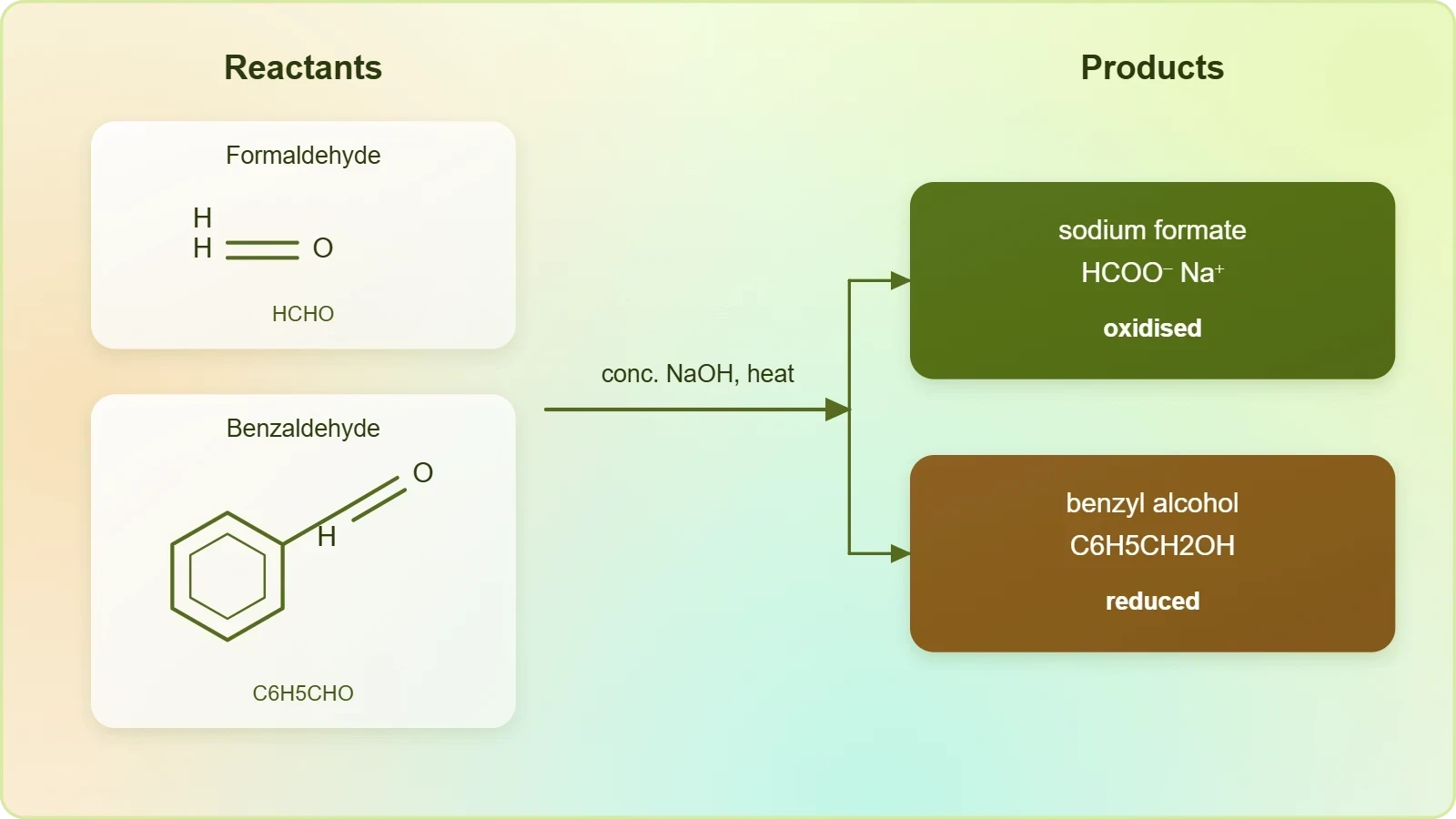
This selectivity makes the crossed Cannizzaro reaction a valuable synthetic tool. Benzyl alcohol, an important solvent and intermediate, is manufactured industrially by exactly this route. The reaction also appears in the preparation of various substituted benzyl alcohols from aromatic aldehydes. Understanding which partner is oxidised and which is reduced is the key skill, and it follows directly from the relative stability of the carboxylate products and the electrophilicity of the carbonyl carbons involved.
We Also Published
Electrophilic Substitution in Aromatic Aldehydes and Ketones
Aromatic aldehydes and ketones, such as benzaldehyde and acetophenone, retain the reactivity of the benzene ring toward electrophiles. The carbonyl group, however, is electron-withdrawing by both inductive and resonance effects, so it deactivates the ring toward electrophilic substitution and directs incoming electrophiles predominantly to the meta position. This behaviour parallels that of other meta-directing groups such as the nitro group, and it provides a reliable predictive framework for ring functionalisation.
The deactivation is strongest at the ortho and para positions, where resonance structures place positive charge on the ring carbon bearing the substituent. Because the meta positions avoid this destabilisation, substitution there is comparatively favoured. The result is that nitration, halogenation, sulphonation and Friedel–Crafts acylation of benzaldehyde or acetophenone all give predominantly meta-substituted products, a pattern that students should be able to justify from resonance structures rather than memorise.

Representative Reactions of Acetophenone
Nitration of acetophenone with a mixture of concentrated nitric and sulphuric acids gives m-nitroacetophenone as the major product. Sulphonation with fuming sulphuric acid gives the meta-sulphonic acid. Halogenation in the presence of a Lewis acid catalyst, such as ##\ce{FeBr3}##, gives m-bromoacetophenone. Each of these transformations confirms the meta-directing influence of the acetyl group and illustrates how a carbonyl substituent can be used deliberately to control ring substitution patterns in synthesis.

Benzaldehyde behaves analogously. Nitration gives m-nitrobenzaldehyde, and halogenation gives the corresponding meta-halo derivatives. These products are valuable intermediates in pharmaceutical and agrochemical synthesis, where the meta relationship between the carbonyl and the incoming group is often essential to biological activity. Recognising the directing effect therefore has direct practical value beyond the examination hall.
Substituent Effects on Directing Ability
When additional substituents are already present on the ring, the directing influence of the carbonyl group must be weighed against theirs. Strongly activating groups such as ##\ce{-OH}## or ##\ce{-NH2}## generally dominate and direct ortho and para, even when a meta-directing carbonyl is present. Weakly activating alkyl groups compete more evenly, and the outcome depends on steric factors and the precise reaction conditions. This hierarchy of directing power is a recurring theme in aromatic chemistry.

Electron-withdrawing substituents reinforce the meta direction of the carbonyl group, while electron-donating substituents can override it. Students should practise ranking substituents by their activating or deactivating strength and then predicting the major product. A useful rule of thumb is that the most strongly activating group present controls the regiochemistry, with the carbonyl group acting as a secondary influence unless no stronger director is available.
Worked Examples and Diagnostic Reasoning
Applying these ideas to unfamiliar molecules is the real test of understanding. Consider an organic compound with molecular formula ##\ce{C8H8O}## that forms an orange-red precipitate with 2,4-DNP reagent and a yellow precipitate on heating with iodine in sodium hydroxide, yet does not reduce Tollens' or Fehling's reagent and does not decolourise bromine water or Baeyer's reagent. The 2,4-DNP test confirms a carbonyl compound, and the failure to reduce Tollens' reagent identifies it as a ketone rather than an aldehyde.
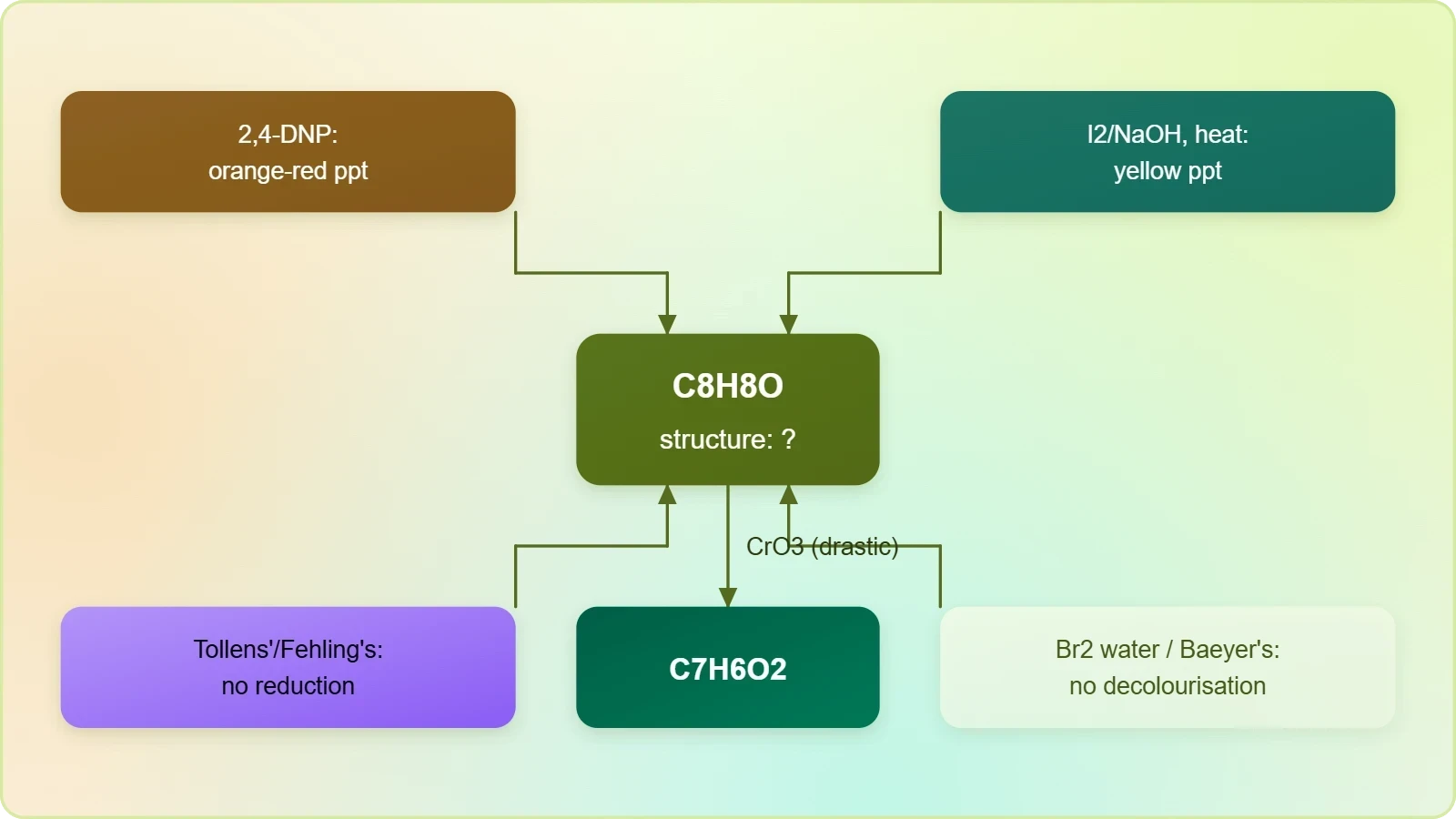
The iodoform test indicates a methyl ketone, and the high degree of unsaturation without alkene behaviour points to an aromatic ring. Drastic oxidation with chromic acid gives a carboxylic acid of formula ##\ce{C7H6O2}##, which is benzoic acid. Working backwards, the original compound must be phenyl methyl ketone, that is, acetophenone. This chain of deductions, moving from functional group tests to structural fragments, is exactly the reasoning examiners reward.
Haloform Oxidation as a Complementary Tool
Aldehydes and ketones having at least one methyl group attached to the carbonyl carbon are oxidised by sodium hypohalite to the sodium salt of the corresponding carboxylic acid, with one carbon fewer than the original carbonyl compound. The methyl group is converted to haloform, ##\ce{CHX3}##. This oxidation does not affect a carbon–carbon double bond elsewhere in the molecule, which makes it a chemoselective transformation of considerable synthetic value.
The iodoform reaction with sodium hypoiodite is also used to detect the ##\ce{CH3CO}## group, or a ##\ce{CH3CH(OH)}## group that is oxidised to a ##\ce{CH3CO}## group under the reaction conditions. This diagnostic value explains why the iodoform test appears so frequently alongside the Cannizzaro reaction in examination questions: together they allow a student to distinguish methyl ketones, secondary alcohols and α-hydrogen-free aldehydes with confidence.
Common Mistakes to Avoid
Students frequently confuse the conditions for aldol and Cannizzaro reactions, applying concentrated alkali to an aldehyde that has α-hydrogens and predicting disproportionation. The correct rule is that dilute alkali favours aldol condensation, while concentrated alkali with heat is required for Cannizzaro. Another common error is to assume that all aromatic aldehydes undergo Cannizzaro; this is true for benzaldehyde, but an aromatic aldehyde with an α-hydrogen on the side chain would behave differently.
A third pitfall is misassigning the oxidation and reduction halves of the crossed Cannizzaro reaction. Remember that formaldehyde is almost always the partner that is oxidised to formate, while the more substituted aldehyde is reduced to the alcohol. Finally, when drawing electrophilic substitution products, ensure the incoming group is placed meta to the carbonyl, not ortho or para, unless a stronger activating substituent is present to override the carbonyl's directing influence.
Industrial Importance and Synthetic Applications
The Cannizzaro reaction is not merely an examination curiosity; it underpins several large-scale industrial processes. The crossed Cannizzaro reaction between benzaldehyde and formaldehyde is the classical route to benzyl alcohol, a widely used solvent and a precursor to esters, ethers and pharmaceuticals. Formaldehyde itself is produced industrially by the catalytic oxidation of methanol, and its ready disproportionation is exploited in the manufacture of formate salts and in various polymer formulations.
In the broader chemical industry, aldehydes and ketones serve as solvents, starting materials and reagents for the synthesis of other products. Formaldehyde is well known as formalin, a 40% aqueous solution used to preserve biological specimens and to prepare bakelite, a phenol–formaldehyde resin, along with urea–formaldehyde glues and other polymeric materials. Acetaldehyde is used primarily as a starting material in the manufacture of acetic acid, ethyl acetate, vinyl acetate, polymers and drugs.
From Laboratory to Plant
Benzaldehyde finds use in perfumery and in the dye industries, while acetone and ethyl methyl ketone are common industrial solvents. Many aldehydes and ketones, including butyraldehyde, vanillin, acetophenone and camphor, are valued for their characteristic odours and flavours. The Cannizzaro reaction contributes to this landscape by providing a base-mediated route to alcohols and carboxylate salts without the need for expensive oxidising or reducing agents, which is attractive from both an economic and an environmental standpoint.
Process chemists appreciate the reaction because it is atom-economical in the sense that both halves of the aldehyde are converted into useful products. The absence of heavy-metal catalysts and the use of inexpensive hydroxide make it a green-friendly transformation when the substrate permits. These practical advantages explain why the reaction remains in active industrial use more than a century after its discovery.
Connecting Forward to Uses of Aldehydes and Ketones
The products of the Cannizzaro reaction, namely primary alcohols and carboxylate salts, are themselves versatile building blocks. Alcohols can be oxidised back to aldehydes or converted to esters, while carboxylate salts can be acidified to carboxylic acids and then transformed into acid chlorides, anhydrides, esters and amides. This connectivity means that a single disproportionation step can open access to a wide family of derivatives, a theme that the next lesson on the uses of aldehydes and ketones develops in detail.
Carboxylic acids, the oxidation products of the Cannizzaro reaction, deserve particular attention because they are among the earliest organic compounds isolated from nature. Formic acid was first obtained from red ants, acetic acid from vinegar, and butyric acid from rancid butter, which is why their common names persist. In the IUPAC system, aliphatic carboxylic acids are named by replacing the terminal –e of the parent alkane with –oic acid, with the carboxyl carbon always numbered one.
Consolidation: Practice, Pitfalls and Exam Strategy
Consolidating this lesson means being able to move fluently between structure, mechanism and product. A reliable strategy is to first inspect the substrate for α-hydrogens, since that single check decides whether aldol or Cannizzaro chemistry applies. Next, identify whether the carbonyl is aliphatic or aromatic, because aromatic systems introduce the possibility of ring substitution alongside carbonyl reactivity. Finally, consider the reaction conditions, since dilute versus concentrated alkali and the presence of heat can redirect the outcome entirely.
Practice questions should include predicting the products of crossed Cannizzaro reactions, drawing the cyclic transition state for hydride transfer, and predicting the major product of nitration or halogenation of substituted acetophenones. Each of these exercises reinforces a distinct concept while building the exam stamina needed for multi-step problems. Working through the reasoning aloud, as if explaining to a classmate, is one of the most effective ways to expose gaps in understanding.
Quick Reference for Reaction Conditions
The Cannizzaro reaction requires concentrated alkali, typically around 50% ##\ce{NaOH}## or ##\ce{KOH}##, and heating. Aldol condensation, by contrast, uses dilute alkali at room temperature or with mild warming. Electrophilic substitution of aromatic aldehydes and ketones requires strong electrophiles generated by acid mixtures or Lewis acid catalysts, and it proceeds with meta selectivity. Keeping these condition sets distinct prevents the most common errors in examination answers.
It is also worth remembering that the Cannizzaro reaction is a disproportionation, so the oxidation state of carbon changes in opposite directions in the two reacting molecules. One carbonyl carbon rises from +1 to +3 in the carboxylate, while the other falls from +1 to −1 in the alcohol. Tracking these oxidation-state changes is an elegant way to verify that the equation is balanced and that no redox partner has been overlooked.
Looking Ahead to the Next Lesson
The alcohols and carboxylate salts generated here are the gateway to the final lesson on the uses of aldehydes and ketones. That lesson will survey formalin, bakelite, solvents, perfumes and pharmaceutical intermediates, tying together the reactivity patterns developed across the entire course. Students who have internalised the logic of α-hydrogen acidity, aldol condensation and Cannizzaro disproportionation will find that the applications lesson reads as a natural consequence rather than a list to be memorised.
Before moving on, revisit the worked example involving ##\ce{C8H8O}## and confirm that every deduction follows from a specific test result. Then attempt a parallel problem with a different molecular formula and a different set of tests. The transferable skill is not the answer to any single question but the disciplined reasoning that converts observations into structures, and that skill will serve you well beyond the chemistry classroom.
From our network :
- Analyzing Trump Deportation Numbers Insights Into The 2026 Immigration Crackdown
- EV 2.0: The Solid-State Battery Breakthrough and Global Factory ExpansionDiscover the impact of the Solid-State Battery Breakthrough on the EV market. Learn about CATL and BYD stock growth, global factory expansion in Europe, and the future of EV 2.0 technology.
- Trump Political Strategy How Geopolitical Stunts Serve As Media Diversions
- Where to Put Your Wireless Router for Better CoverageA practical, physics-grounded guide to router placement: why the centre of the home beats the corner, how walls and metal sap signal, and how to run a simple survey that proves the improvement.
- 10 Physics Numerical Problems with Solutions for IIT JEEPrepare for IIT JEE with 10 physics numerical problems, complete with detailed solutions and conceptual explanations. Ideal for mastering kinematics, thermodynamics, electromagnetism, and optics.
- AI-Powered 'Precision Diagnostic' Replaces Standard GRE Score ReportsDiscover the new GRE Precision Diagnostic. Learn how AI-powered behavioral analytics and time-to-solve tracking are replacing standard GRE score reports to empower students.
- Do You Need a New Router or Is Your Internet Plan the Problem?A practical comparison of the signs that point to router limits versus signs your broadband speed or provider is the bottleneck, so you can decide what to replace before spending money.
- 98% of Global MBA Programs Now Prefer GRE Over GMAT Focus EditionExplore why 98% of global MBA programs now prefer the GRE over GMAT Focus. Learn about the shorter GRE format, verbal logic importance, and strategic versatility for students.
- How to Print Cheaply: Cutting the Cost per PageA practical, measured guide to lowering what each printed page costs — duplex and draft modes, third-party ink, yield mathematics, and knowing when a new printer beats refills.