Carboxylic acids occupy a privileged position in organic synthesis because the carboxyl group can be reached from an extraordinary variety of starting materials. A primary alcohol, an aldehyde, an alkylbenzene side chain, a nitrile, a Grignard reagent, an acyl halide, an anhydride or an ester can all be funnelled toward the same ##\ce{-COOH}## terminus, and the choice among these routes is rarely arbitrary. Each pathway carries its own selectivity profile, its own functional-group tolerance, and its own practical cost in reagents, temperature and waste. Understanding that map of routes is what separates a student who can write one oxidation from a chemist who can plan a synthesis.
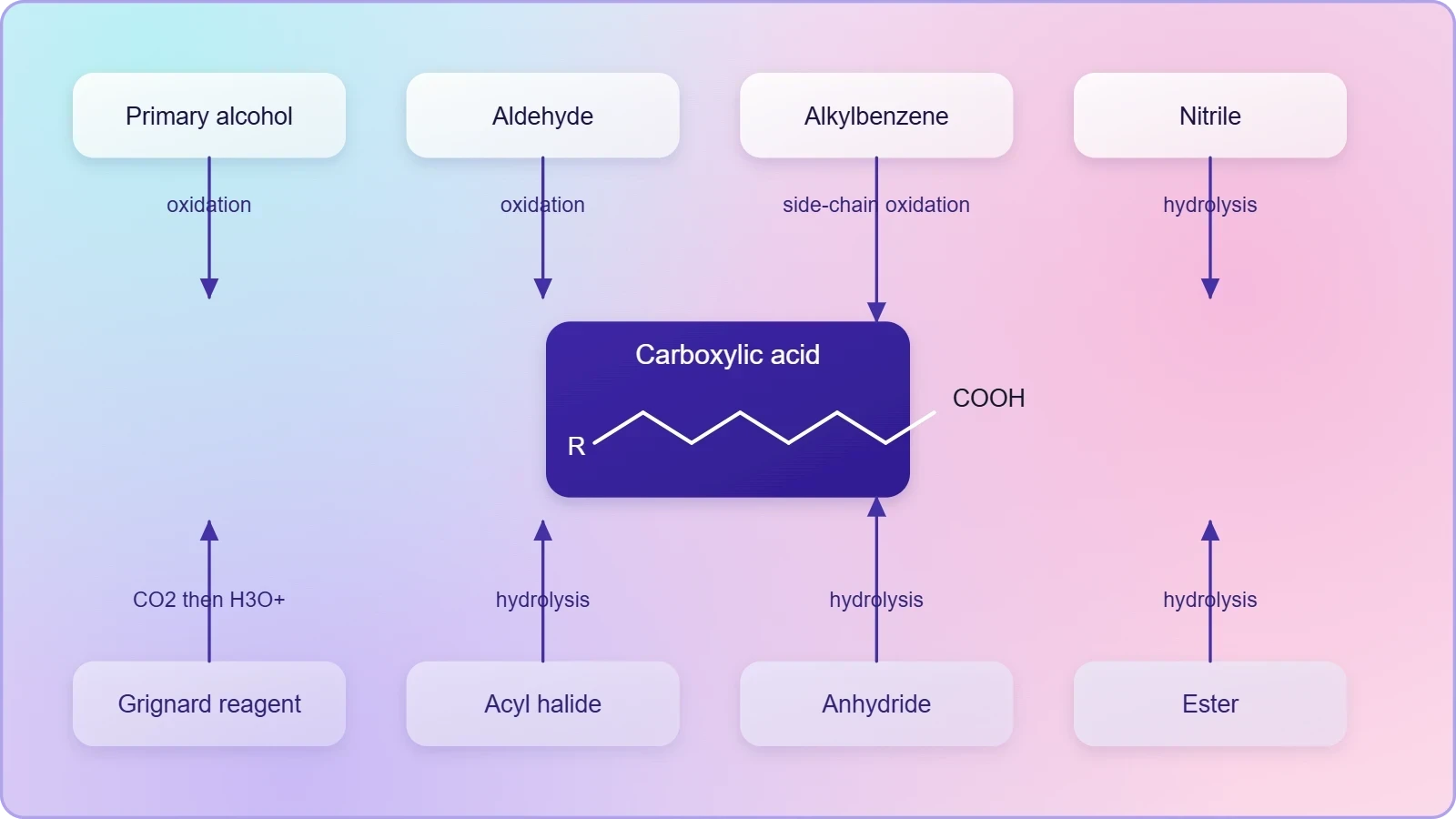
This lesson builds directly on the nomenclature and structure work of the previous session, where the planar carboxyl carbon and its 120° bond angles were established, together with the resonance that makes that carbon less electrophilic than a ketone carbonyl. Here the focus shifts from what the group is to how the group is made. The survey moves from the simplest oxidations of primary alcohols and aldehydes, through the vigorous side-chain oxidation of alkylbenzenes, into the carbon–carbon bond-forming logic of nitrile hydrolysis and Grignard carboxylation, and finally to the hydrolysis of acyl halides, anhydrides and esters. Each method is examined mechanistically rather than memorised as a bare equation.
Because the next lesson turns to the physical properties of carboxylic acids, particularly their dimerisation through hydrogen bonding and their solubility behaviour, the preparation methods covered here are deliberately chosen to foreshadow those themes. Several routes deliver the acid as a carboxylate salt that must be protonated before the free acid appears, and that acidification step is precisely where the low volatility and ready crystallisation of higher acids become practically useful. Worked transformations, selective oxidation examples, and the environmental liabilities of chromic acid oxidations are woven throughout so that the chemistry stays connected to laboratory reality.
On This Page
- Oxidation of Primary Alcohols and Aldehydes
- Side-Chain Oxidation of Alkylbenzenes and Alkenes
- Nitriles, Amides and Grignard Carboxylation
- Hydrolysis of Acyl Halides, Anhydrides and Esters
- Planning a Synthesis and Avoiding Common Errors
- Advanced Insights and Links to Later Chemistry
- Consolidation: From Structure to Synthesis
Oxidation of Primary Alcohols and Aldehydes
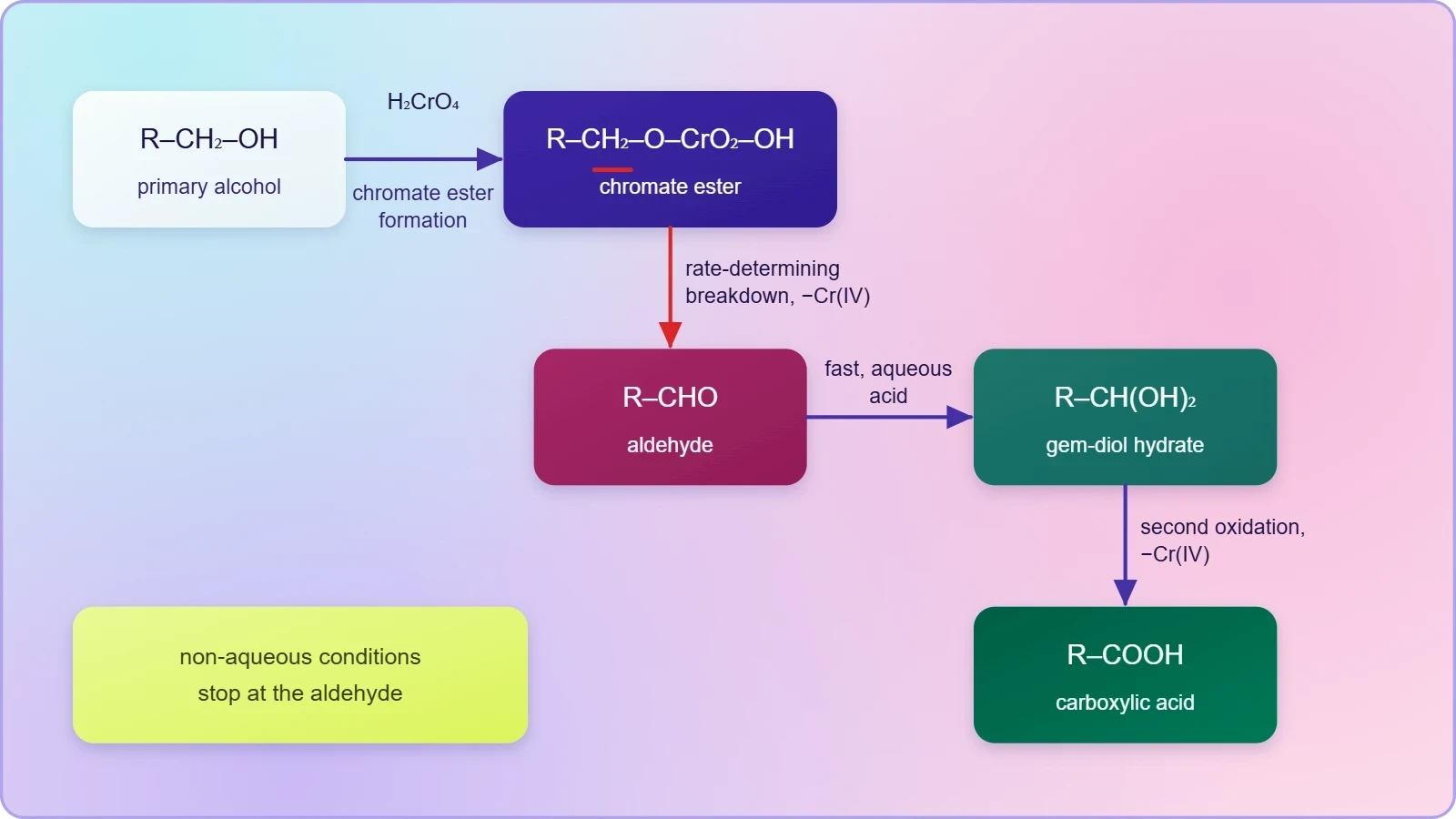
Primary alcohols are readily oxidised to carboxylic acids by potassium permanganate in neutral, acidic or alkaline media, or by potassium dichromate and chromium trioxide in acidic media. The classical Jones reagent, a solution of ##\ce{CrO3}## in aqueous sulfuric acid with acetone as co-solvent, is the standard laboratory embodiment of the dichromate route. The oxidation proceeds through the aldehyde, which is hydrated to a gem-diol and then oxidised again, so the aldehyde is an intermediate rather than a resting point unless the oxidant is deliberately mild or the aldehyde is removed as it forms.
Mechanistic sequence and the role of the hydrate
The chromic acid oxidation of a primary alcohol begins with chromate ester formation at the hydroxyl oxygen, followed by rate-determining breakdown that transfers hydride-like character to chromium and releases the aldehyde. In aqueous acid the aldehyde is largely present as its hydrate, ##\ce{RCH(OH)2}##, and this gem-diol is oxidised by a second chromate ester cycle far faster than the free aldehyde itself. That is why aqueous Jones conditions drive the reaction cleanly to the acid, whereas anhydrous or non-aqueous oxidants such as pyridinium chlorochromate stop at the aldehyde because the hydrate concentration is negligible.
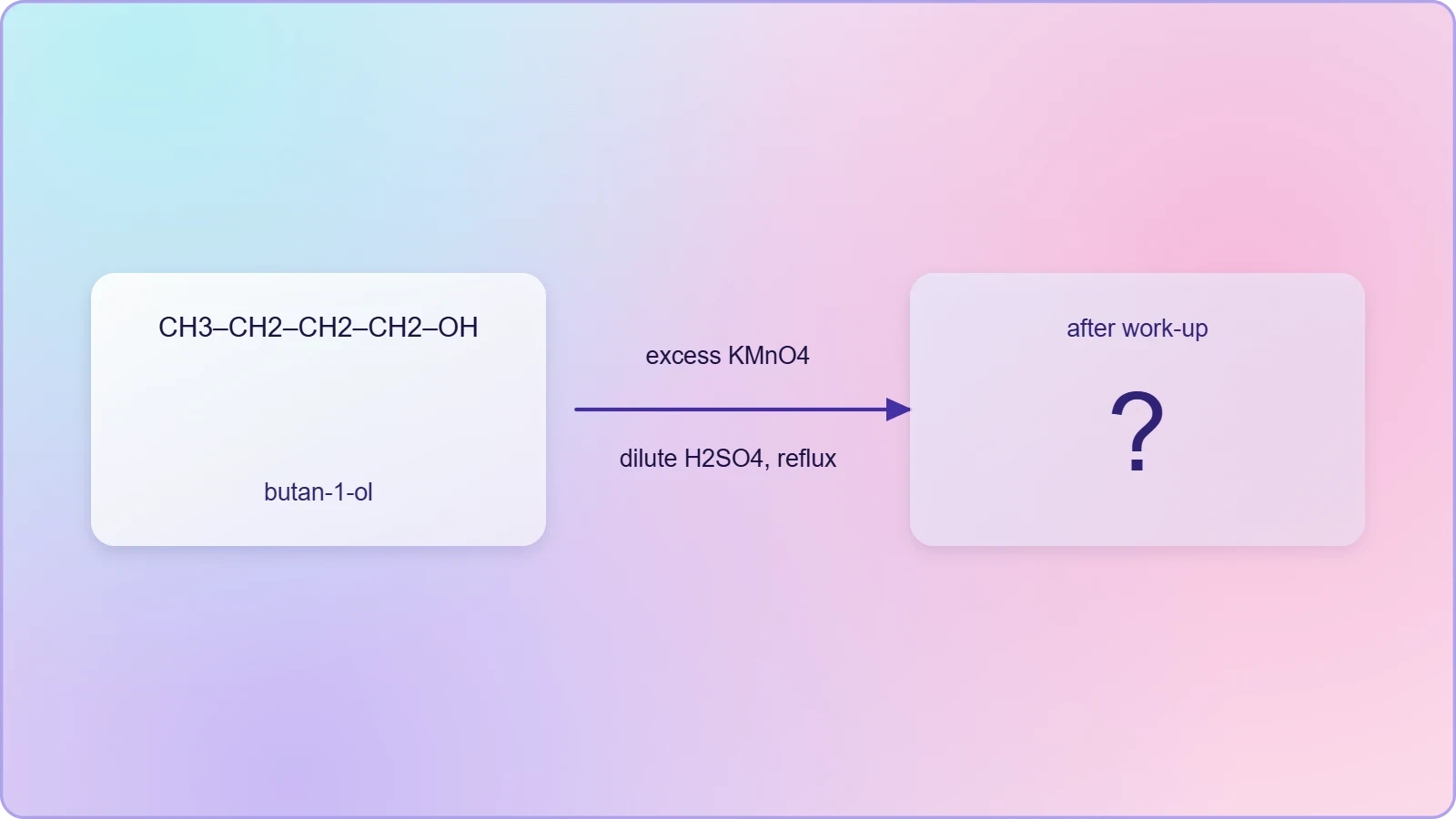
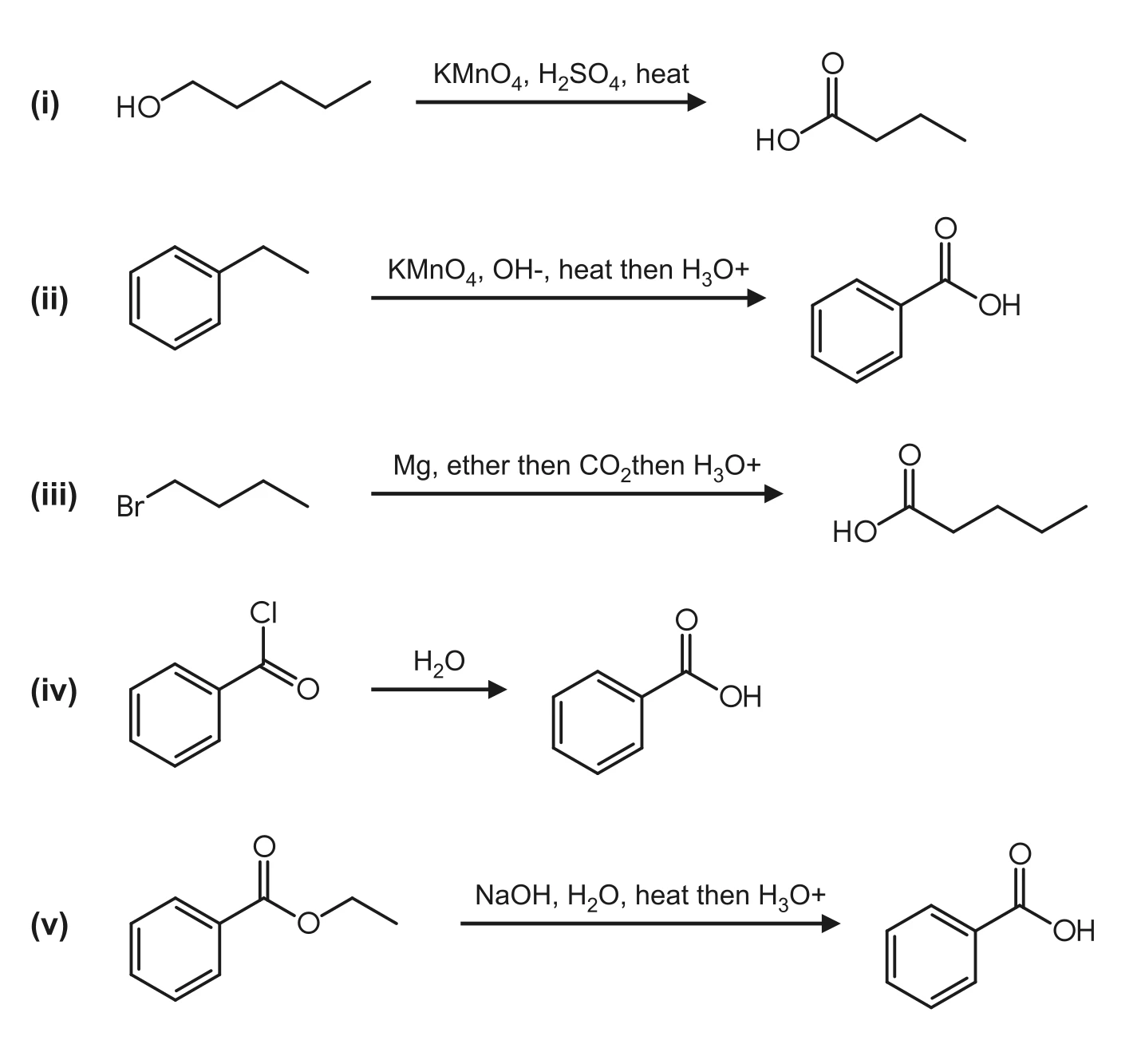
Permanganate follows a comparable logic. In alkaline medium the aldehyde hydrate is rapidly oxidised, and the product is isolated as the carboxylate salt, which is then acidified. In acidic medium the free acid is obtained directly. A useful worked example is the conversion of butan-1-ol to butanoic acid: treatment with excess ##\ce{KMnO4}## in dilute ##\ce{H2SO4}## under reflux gives ##\ce{CH3CH2CH2COOH}## after work-up. The same transformation with ##\ce{K2Cr2O7/H2SO4}## is equally valid, and the choice between them is usually a matter of cost and waste handling rather than chemistry.
Selective oxidation and the aldehyde problem
Selectivity becomes critical when a molecule contains more than one oxidisable site. Mild oxidants such as the Tollens reagent, ammoniacal silver nitrate, oxidise aldehydes to carboxylates without touching alcohols, alkenes or most other functionality, and they are the classical test for an aldehyde. The silver mirror is a visible confirmation that oxidation has occurred. Similarly, alkaline hydrogen peroxide or sodium chlorite under buffered conditions can convert an aldehyde to an acid while leaving a ketone untouched, which is invaluable when a molecule carries both carbonyl types.
When the target is the aldehyde rather than the acid, the strategy inverts: the oxidation must be stopped before the hydrate can form. Pyridinium chlorochromate, the Dess–Martin periodinane and manganese dioxide all achieve this in non-aqueous media. A common examination error is to write a Jones oxidation of a primary alcohol and expect the aldehyde as the product; the correct answer under aqueous acidic conditions is the carboxylic acid. Recognising the medium, not just the reagent name, is what determines the product.
Side-Chain Oxidation of Alkylbenzenes and Alkenes
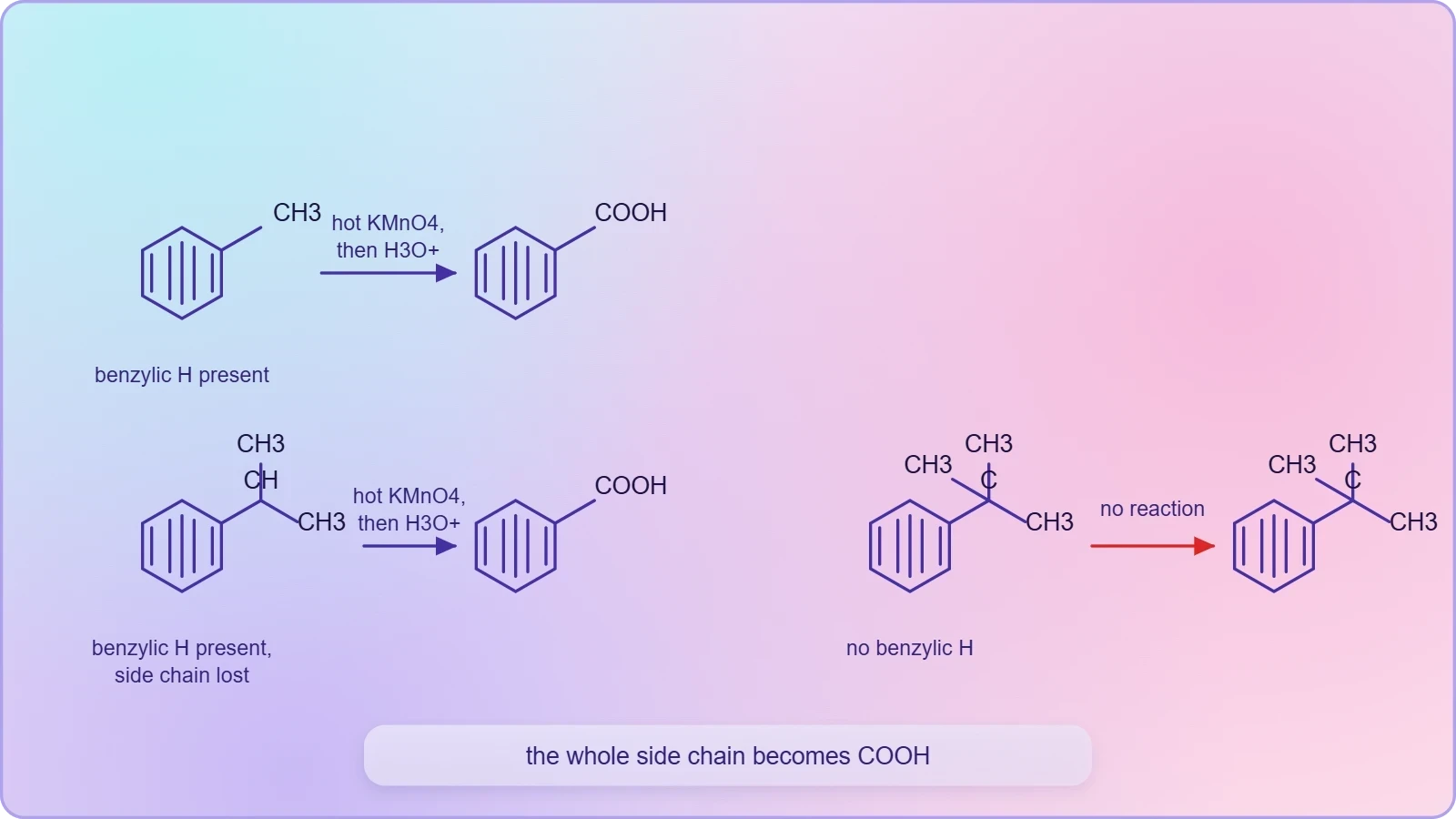
Aromatic carboxylic acids are prepared by vigorous oxidation of alkylbenzenes with chromic acid or with acidic or alkaline potassium permanganate. The defining feature of this reaction is that the entire side chain is oxidised to the carboxyl group irrespective of its length, so toluene, ethylbenzene and propylbenzene all deliver benzoic acid. The mechanism proceeds through benzylic hydrogen abstraction, giving a benzylic radical or cation that is trapped by the oxidant, and the chain is then degraded carbon by carbon until only the carboxyl carbon attached to the ring remains.
Which side chains survive and which are destroyed
Primary and secondary alkyl groups are oxidised in this manner, while a tertiary alkyl group is not affected because it lacks a benzylic hydrogen. This distinction is a favourite examination point: tert-butylbenzene resists permanganate, whereas isopropylbenzene is converted to benzoic acid. The benzylic position must bear at least one hydrogen for the oxidation to initiate. A second practical consequence is that substituents on the ring must be stable to the oxidant; strongly electron-rich rings can be degraded, and phenolic or amino groups are usually protected or introduced later in a synthesis.
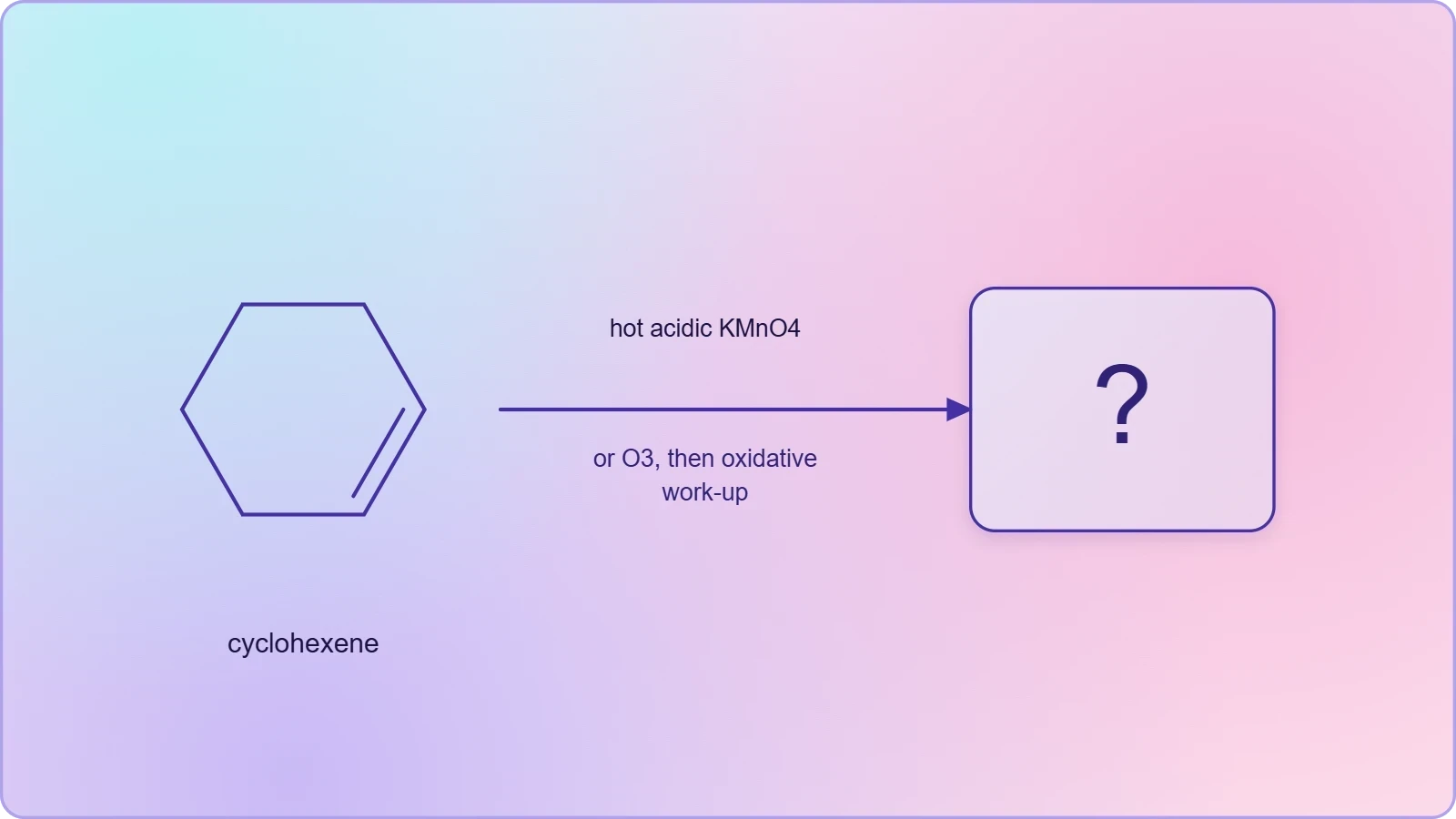
Suitably substituted alkenes are also oxidised to carboxylic acids with these reagents. Oxidative cleavage of a carbon–carbon double bond by hot acidic permanganate or by ozone followed by oxidative work-up converts each alkene carbon bearing a hydrogen into a carboxyl group. Cyclohexene, for example, is cleaved to hexane-1,6-dioic acid, ##\ce{HOOC(CH2)4COOH}##, a transformation that appears in the standard exercise set. This makes alkene cleavage a reliable route to dicarboxylic acids that would be awkward to reach by simple oxidation of a diol.
Environmental and practical liabilities of chromium(VI)
Chromic acid and dichromate oxidations are effective but carry serious environmental costs. Chromium(VI) is a recognised carcinogen and a persistent groundwater contaminant, and the spent chromium must be reduced to chromium(III) and precipitated as hydroxide before disposal. Modern practice increasingly favours catalytic oxidation with air or hydrogen peroxide over a cobalt or manganese catalyst, or the use of sodium hypochlorite under phase-transfer conditions, precisely to avoid stoichiometric chromium. For a student, the lesson is that a reaction written on paper as a clean arrow may hide a substantial waste stream in the laboratory.
Potassium permanganate is not innocent either; it generates large masses of manganese dioxide sludge, and its over-oxidation can cleave rings and destroy sensitive substituents. The choice of oxidant therefore balances selectivity, cost and environmental burden. In examination answers, mentioning the chromium waste issue alongside the correct product demonstrates a fuller understanding than a bare equation, and it is the kind of contextual remark that distinguishes a top-band response from a merely correct one.
Nitriles, Amides and Grignard Carboxylation
Nitriles are hydrolysed to amides and then to carboxylic acids in the presence of acid or base as catalyst, and mild conditions are used to stop the reaction at the amide stage when that is the desired product. The mechanism under acidic conditions begins with protonation of the nitrile nitrogen, which makes the nitrile carbon electrophilic and allows water to attack, giving an imidic acid that tautomerises to the amide. A second, slower hydrolysis converts the amide to the acid through a tetrahedral intermediate, and this second step is why the reaction can be halted at the amide by using limited water, short times or cold dilute acid.
Mechanism of nitrile hydrolysis in acid and base
Under basic conditions the hydroxide ion attacks the nitrile carbon directly, generating an imidate anion that is protonated to the imidic acid and then tautomerises to the amide; further hydroxide attack on the amide gives the carboxylate and ammonia. The base-catalysed route is often faster for the first stage but can be harder to stop cleanly at the amide. In both cases the overall stoichiometry is the addition of two molecules of water, and the nitrogen leaves as ammonium or as ammonia depending on the medium. The carboxylate salt formed in base is acidified to liberate the free acid.
The synthetic value of the nitrile route lies in the fact that nitriles are easily made from alkyl halides by ##\ce{S_N2}## displacement with cyanide, so the sequence alkyl halide to nitrile to acid adds exactly one carbon to the chain. This is the same one-carbon ascent that the Grignard route provides, and the two are complementary: nitrile hydrolysis is convenient for primary halides, while Grignard carboxylation tolerates a wider range of substrates and avoids the toxicity of cyanide. A worked example is the conversion of 3-nitrobromobenzene to 3-nitrobenzoic acid, where the aryl bromide is converted to the nitrile and then hydrolysed, the nitro group surviving both steps.
Grignard reagents and carbon dioxide
Grignard reagents react with dry carbon dioxide, conveniently supplied as solid dry ice, to form the magnesium salt of a carboxylic acid, which on acidification with a mineral acid gives the corresponding carboxylic acid. The reaction is a nucleophilic addition of the carbanion-like Grignard carbon to the electrophilic carbon of ##\ce{CO2}##, followed by collapse of the carboxylate–magnesium complex. Because the Grignard reagent is prepared from an alkyl or aryl halide, the overall sequence converts a halide into an acid containing one carbon more than the halide, which is the classic method for ascending a homologous series.
Carboxylation is prized in synthesis because it is one of the few direct ways to install a carboxyl group on an ##\ce{sp^3}## carbon without an oxidation step, and it works for aryl, vinyl and primary, secondary and even tertiary Grignard reagents. The limitations are equally important: the reaction demands strictly anhydrous conditions, fails with substrates bearing acidic protons such as alcohols, amines or terminal alkynes, and is incompatible with many electrophilic functional groups. Protecting groups or a change of strategy are often required, and this is a recurring theme in multi-step synthesis planning.
Hydrolysis of Acyl Halides, Anhydrides and Esters
Acid chlorides hydrolyse with water to give carboxylic acids, and they hydrolyse more readily with aqueous base to give carboxylate ions, which on acidification provide the corresponding acids. The reaction is a nucleophilic acyl substitution: water or hydroxide attacks the carbonyl carbon, a tetrahedral intermediate forms, and chloride departs as the carbonyl reforms. Because chloride is an excellent leaving group and the carbonyl is strongly electrophilic, acid chlorides are the most reactive of the carboxylic acid derivatives and react vigorously, often fuming in moist air.
Anhydrides and the role of phosphorus pentoxide
Anhydrides are hydrolysed to the corresponding acids with water, and the reaction is slower than for acid chlorides because the carboxylate leaving group is a weaker one. The reverse reaction, dehydration of two carboxylic acid molecules to form an anhydride, is thermodynamically unfavourable and requires a dehydrating agent. Phosphorus pentoxide, ##\ce{P2O5}##, is the classical choice: it strips water from the acid, driving the equilibrium toward the anhydride. For acetic acid, heating with ##\ce{P2O5}## gives acetic anhydride, and the same reagent converts dicarboxylic acids such as succinic acid into cyclic anhydrides on gentle heating.
The mechanism of ##\ce{P2O5}## dehydration is best viewed as activation of the carboxyl group followed by attack of a second acid molecule, with phosphorus oxychloride or polyphosphoric acid species as intermediates. In practice, the reagent is used in excess and the anhydride is distilled from the mixture. A common mistake is to write ##\ce{P2O5}## as a simple drying agent in this context; it is a stoichiometric dehydrating reagent that chemically activates the acid, and the balanced equation must account for the phosphorus-containing by-product.
Ester hydrolysis: acidic versus basic
Acidic hydrolysis of esters gives carboxylic acids directly, while basic hydrolysis gives carboxylates, which on acidification give the corresponding acids. Acidic hydrolysis is reversible and is driven to completion by using a large excess of water, whereas basic hydrolysis, commonly called saponification, is irreversible because the carboxylate is unreactive toward nucleophilic attack. The basic route is therefore preferred when complete conversion is required, and it is the basis of soap manufacture from triglycerides. The acidic route is preferred when the acid is sensitive to base or when the alcohol is to be recovered.
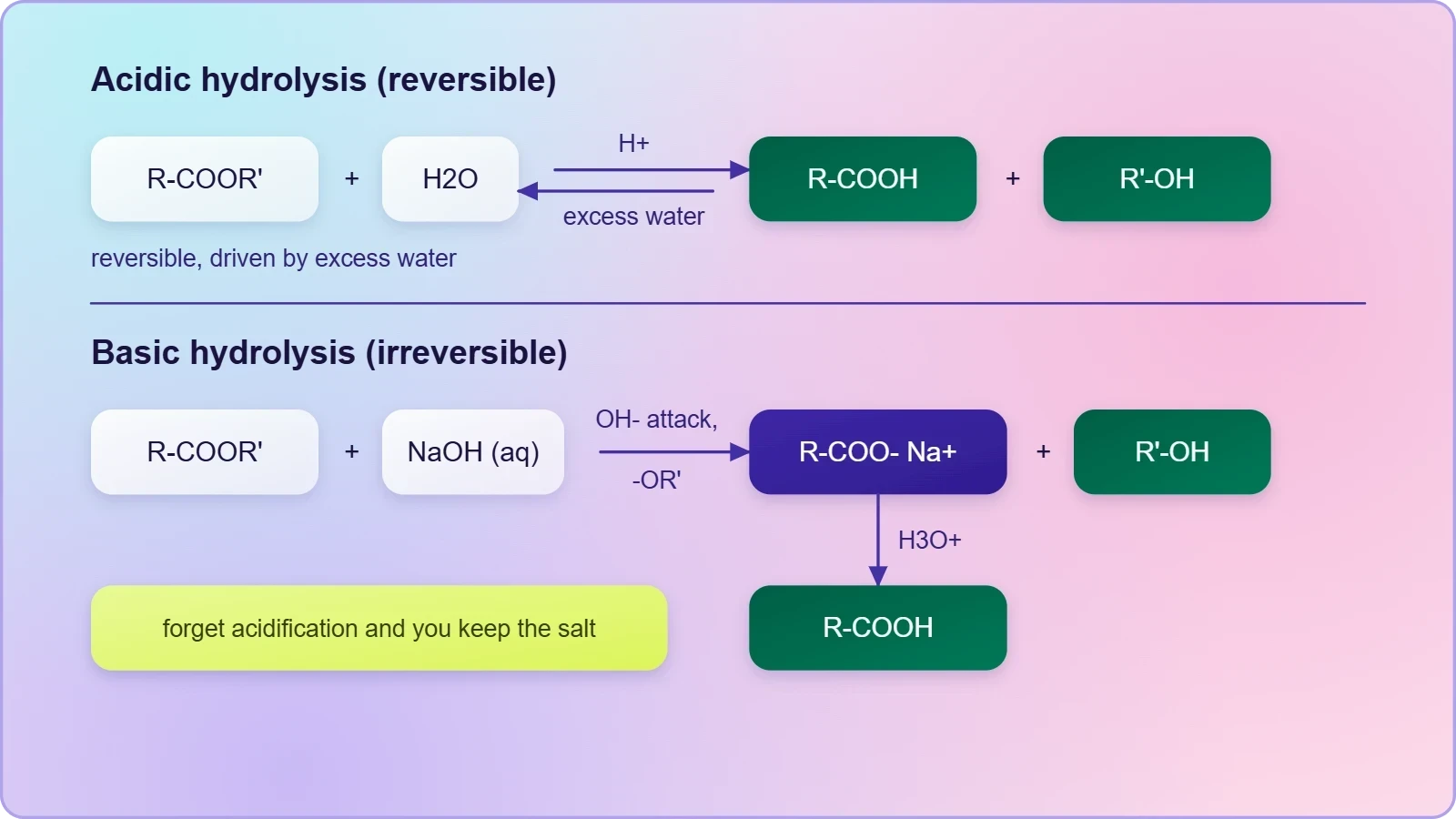
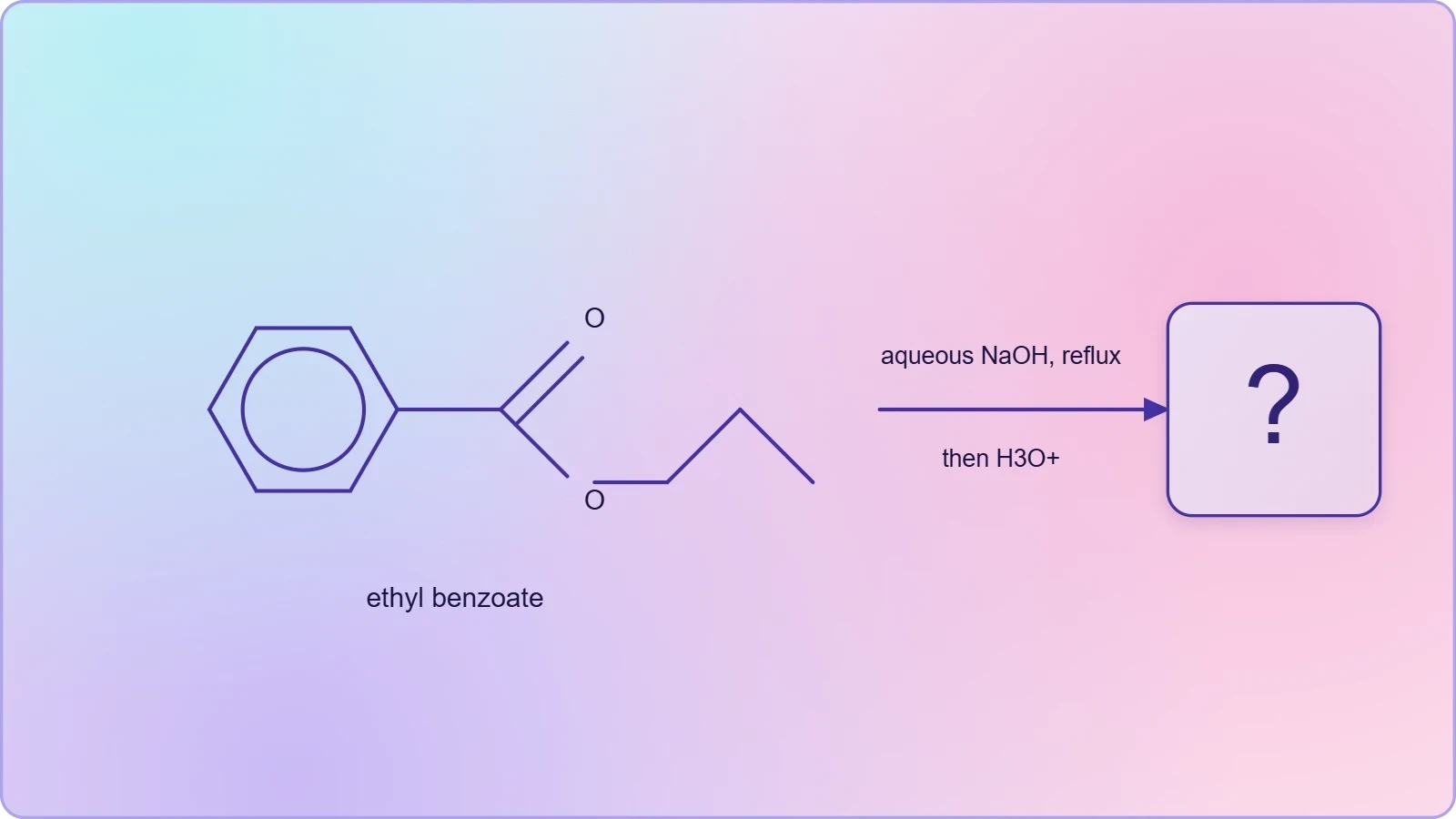
Mechanistically, acidic hydrolysis proceeds by protonation of the ester carbonyl, attack of water, and breakdown of the tetrahedral intermediate with loss of alcohol, while basic hydrolysis involves direct hydroxide attack and expulsion of alkoxide. Both are acyl substitution reactions, and both are accelerated by electron-withdrawing groups on the acyl side. A worked example is the conversion of ethyl benzoate to benzoic acid: reflux with aqueous sodium hydroxide gives sodium benzoate, and acidification with dilute hydrochloric acid precipitates benzoic acid, which is nearly insoluble in cold water and can be collected by filtration.
Planning a Synthesis and Avoiding Common Errors
Choosing among the six families of methods is a matter of matching the starting material to the target and then checking compatibility. If the carbon skeleton is already correct and a primary alcohol or aldehyde sits at the intended carboxyl position, oxidation is the shortest route. If the skeleton needs one more carbon, nitrile hydrolysis or Grignard carboxylation is indicated. If the target is aromatic, side-chain oxidation of an alkylbenzene is usually the most direct approach, provided the ring substituents survive the oxidant. If a reactive acyl derivative is already in hand, simple hydrolysis completes the job.
Worked transformations and their logic
Consider the conversion of benzyl alcohol to phenylethanoic acid, ##\ce{PhCH2COOH}##. Oxidation of the alcohol would give benzoic acid, losing the benzylic carbon, so the correct route converts the alcohol to the bromide, then to the nitrile, and then hydrolyses it, preserving the extra carbon. Conversely, converting acetophenone to benzoic acid requires oxidative cleavage of the methyl ketone, which proceeds through the enol and is achieved with hypohalite or permanganate. Recognising whether a carbon must be retained or removed is the first decision in every such problem.
Another instructive case is the conversion of 4-methylacetophenone to benzene-1,4-dicarboxylic acid. Both the methyl group and the acetyl group are oxidised to carboxyl groups by hot alkaline permanganate, giving terephthalic acid after acidification. The same logic converts phenylethene, styrene, to benzoic acid by oxidative cleavage of the vinyl group. In each case the student should write the intermediate and the final acidification explicitly, because marks are commonly lost for omitting the protonation step that liberates the free acid from its salt.
Frequent mistakes and how to pre-empt them
The most common error is forgetting acidification after a base-catalysed hydrolysis or oxidation, leaving the answer as a carboxylate salt when the free acid is required. A second is assuming that tertiary alkyl groups on a benzene ring are oxidised; they are not, because no benzylic hydrogen is available. A third is using aqueous Jones reagent and expecting an aldehyde, when the hydrate pathway inevitably carries the oxidation through to the acid. A fourth is ignoring functional-group incompatibility, such as attempting a Grignard reaction on a substrate that bears an acidic proton.
Students also frequently mis-order the nitrile hydrolysis, writing the acid directly without the amide intermediate, or they forget that the reaction can be stopped at the amide under mild conditions. In aromatic side-chain oxidation, they may oxidise only part of the chain rather than the entire chain to the carboxyl carbon. Finally, they often omit the environmental note about chromium waste, which is increasingly expected in higher-level answers. Checking each of these points before finalising an answer converts a partially correct response into a complete one.
We Also Published
Advanced Insights and Links to Later Chemistry
Beyond the six standard routes, several modern methods deserve attention because they reveal the underlying logic of carboxyl installation. The palladium-catalysed carbonylation of aryl and vinyl halides with carbon monoxide and water, often called hydroxycarbonylation, converts an aryl bromide directly to a benzoic acid derivative under mild pressure. This is the industrial answer to the stoichiometric Grignard carboxylation, and it avoids both the moisture sensitivity and the large salt waste of the classical route. Recognising the parallel between the Grignard and the catalytic carbonylation helps students see synthesis as a continuum rather than a list.
Protecting groups and chemoselectivity
When a molecule contains several oxidisable or acidic sites, protecting groups become essential. Silyl ethers shield alcohols from oxidation, acetals shield aldehydes and ketones from nucleophiles, and benzyl or tert-butyl esters shield the carboxyl group itself during later transformations. The choice of protecting group is governed by the conditions it must survive, and the deprotection step must not damage the newly formed acid. This is where the preparation methods of this lesson meet the broader strategy of multi-step synthesis, and it is a theme that recurs throughout advanced organic chemistry.
Chemoselectivity also matters in the oxidation step itself. A molecule bearing both a primary alcohol and an alkene cannot be oxidised with hot permanganate without cleaving the double bond, so a milder oxidant or a protection–deprotection sequence is required. Similarly, a substrate with a benzylic alcohol and an aliphatic alcohol will oxidise preferentially at the benzylic position under mild conditions. These distinctions are not memorised rules but consequences of the mechanisms already discussed, and deriving them from first principles is the mark of genuine understanding.
Industrial context and green chemistry
On an industrial scale, the preparation of carboxylic acids is dominated by catalytic processes: the oxidation of acetaldehyde to acetic acid, the carbonylation of methanol to acetic acid, and the oxidation of cyclohexane to adipic acid, a precursor to nylon. These processes are engineered to minimise waste and to recover catalysts, and they illustrate why the laboratory methods in this lesson are chosen for selectivity rather than for economy. The environmental concerns around chromium(VI) and permanganate sludge are precisely what drove the shift toward air and hydrogen peroxide oxidations in industry.
Green chemistry principles also favour routes that avoid stoichiometric metal oxidants, that use water as solvent where possible, and that maximise atom economy. The Grignard carboxylation has excellent atom economy because all of the carbon dioxide ends up in the product, but it generates magnesium salts on work-up. Nitrile hydrolysis is atom-economical in the same sense but carries cyanide hazards. Weighing these factors is part of what it means to think like a chemist rather than a reaction-recall machine, and it prepares students for the applied questions that increasingly appear in examinations.
Consolidation: From Structure to Synthesis
The carboxyl group's planarity and its resonance stabilisation, established in the previous lesson, explain why the carbon is only moderately electrophilic and why the acid is strongly acidic once formed. Those same electronic features govern the preparation methods: the carbonyl must be made electrophilic enough for nucleophilic attack in the nitrile and Grignard routes, and the resulting carboxylate must be stabilised enough to drive hydrolysis and oxidation to completion. Structure and synthesis are two views of the same electronic reality, and holding both in mind makes the six routes feel like variations on a single theme rather than isolated facts.
Self-check exercises
Attempt the following before moving on. Convert propan-1-ol to propanoic acid by two different routes and compare their atom economy. Show how bromobenzene can be converted to benzoic acid without using a chromium reagent. Explain why tert-butylbenzene fails to react with alkaline permanganate while ethylbenzene reacts readily. Write the complete mechanism for the acid-catalysed hydrolysis of ethanenitrile, showing the imidic acid intermediate. Finally, explain why ##\ce{P2O5}## is required to form acetic anhydride from acetic acid, and what would happen if the reaction were attempted without it.
These exercises deliberately mix recall with reasoning, because the examination questions that carry the most marks ask students to justify a choice rather than to reproduce an equation. A student who can explain why the aldehyde hydrate matters, why the benzylic hydrogen is essential, and why the carboxylate must be protonated will handle unfamiliar transformations with confidence. The next lesson turns to the physical properties of carboxylic acids, where the dimeric hydrogen-bonded structure and the solubility trends will build directly on the acids prepared here.
From our network :
- AI-Powered 'Precision Diagnostic' Replaces Standard GRE Score ReportsDiscover the new GRE Precision Diagnostic. Learn how AI-powered behavioral analytics and time-to-solve tracking are replacing standard GRE score reports to empower students.
- How to Print Cheaply: Cutting the Cost per PageA practical, measured guide to lowering what each printed page costs — duplex and draft modes, third-party ink, yield mathematics, and knowing when a new printer beats refills.
- Analyzing Trump Deportation Numbers Insights Into The 2026 Immigration Crackdown
- Trump Political Strategy How Geopolitical Stunts Serve As Media Diversions
- EV 2.0: The Solid-State Battery Breakthrough and Global Factory ExpansionDiscover the impact of the Solid-State Battery Breakthrough on the EV market. Learn about CATL and BYD stock growth, global factory expansion in Europe, and the future of EV 2.0 technology.
- 10 Physics Numerical Problems with Solutions for IIT JEEPrepare for IIT JEE with 10 physics numerical problems, complete with detailed solutions and conceptual explanations. Ideal for mastering kinematics, thermodynamics, electromagnetism, and optics.
- Do You Need a New Router or Is Your Internet Plan the Problem?A practical comparison of the signs that point to router limits versus signs your broadband speed or provider is the bottleneck, so you can decide what to replace before spending money.
- 98% of Global MBA Programs Now Prefer GRE Over GMAT Focus EditionExplore why 98% of global MBA programs now prefer the GRE over GMAT Focus. Learn about the shorter GRE format, verbal logic importance, and strategic versatility for students.
- Where to Put Your Wireless Router for Better CoverageA practical, physics-grounded guide to router placement: why the centre of the home beats the corner, how walls and metal sap signal, and how to run a simple survey that proves the improvement.