Physics: Build the Picture First, Then Do the Maths
Physics rewards students who can see what is happening before they write an equation. This guide organises Jupiter Science’s Physics material by topic, so you can build intuition, work through solved problems, and revise without hunting through old notes.
Useful whether you are preparing for JEE, NEET, or your Class 11–12 board exams — the concepts are the same; only the depth of the problems changes.
Explore Physics by exam
The syllabus is shared. What differs is how deep you go and how a question is asked.
IIT-JEE
Numerical-value and multi-concept problems across the full Class 11–12 syllabus. Speed and accuracy matter as much as understanding.
Open the IIT-JEE hub →NEET
45 Physics questions out of 180, drawn from NCERT concepts. Formula recall and careful reading matter more than speed alone.
Open the NEET hub →Board exams
Derivations, definitions, diagrams and numericals, marked step by step. NCERT is the primary source.
Open board exam prep →Physics by topic
Five branches cover the Class 11–12 syllabus. Mechanics and electromagnetism carry the most weight in most exams.
Mechanics
Units & measurement, kinematics, laws of motion, work-energy-power, rotational motion, gravitation, and properties of matter.
Electricity & magnetism
Electrostatics, current electricity, magnetic effects of current, electromagnetic induction and alternating current.
Optics & waves
Ray and wave optics, oscillations, mechanical waves and electromagnetic waves.
Thermal physics
Thermal properties of matter, thermodynamics, and the kinetic theory of gases.
Modern physics
Dual nature of radiation and matter, atoms, nuclei, and semiconductor electronics.
Practical skills
Units, dimensional analysis, error estimation and graph reading — small marks in exams, but the skills every other chapter depends on.
Lessons to read first
Concept explanations paired with worked examples, ordered the way most students meet them.
- MechanicsDynamics: laws, examples and 10 solved problemsNewton’s laws applied step by step.
- MechanicsElastic and inelastic collisionsMomentum, restitution and how to plan an impact problem.
- Numericals10 physics numerical problems with solutionsTen worked numericals across mechanics and beyond.
- ReferencePhysics formula sheetsCompact reference for quick revision before a test.
Latest Physics lessons and problems
Updated automatically as new Physics content is published.
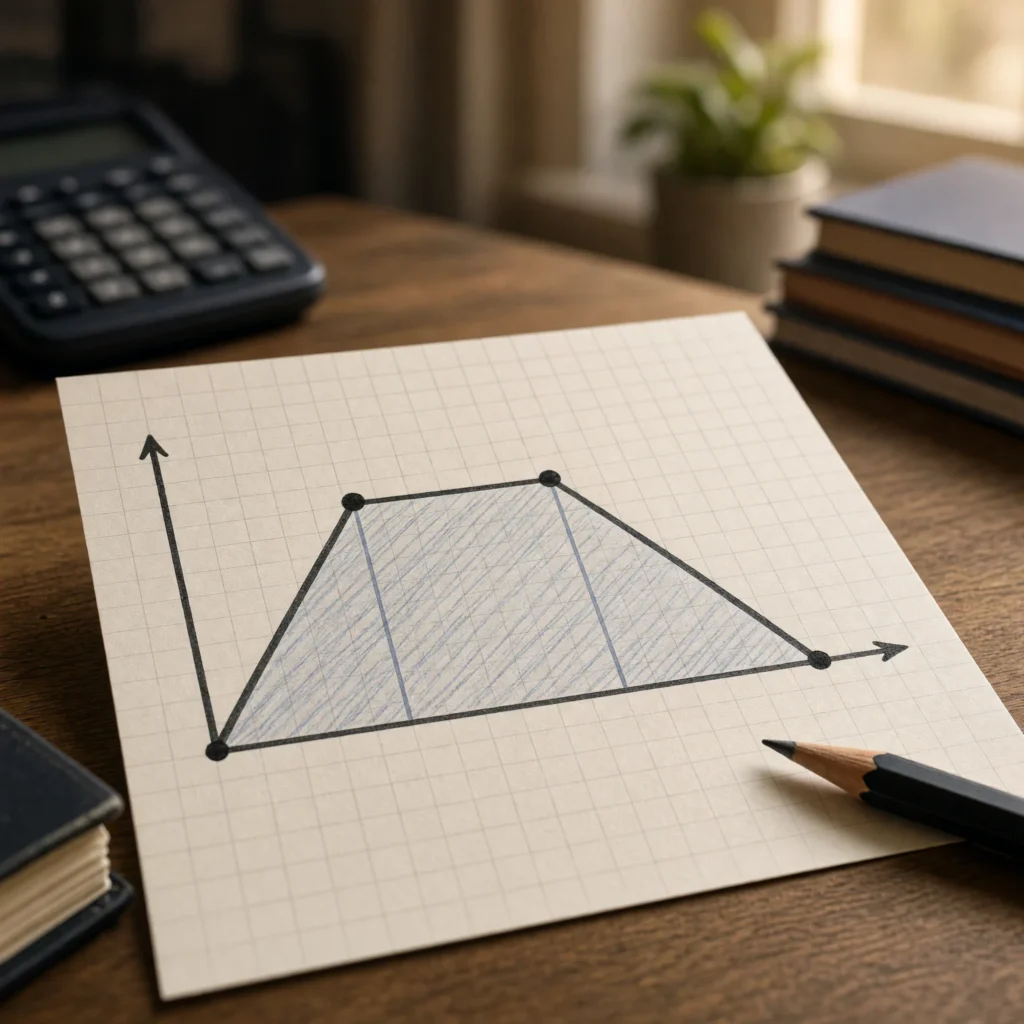
Mastering Velocity-Time Graph Problems for JEE: Slope, Area, and Multi-Stage Motion
Master advanced velocity-time graph problems for JEE physics with rigorous mathematical derivations, slope-acceleration analysis, and multi-stage motion strategies.

Calculus Foundations of Exponential and Logarithmic Physics: Transients, Circuits, and Decay
Explore the mathematical foundations of exponential and logarithmic physics, covering first-order differential equations, characteristic time constants, RC and...

Revolutionary Breakthrough Turns Seawater Into Fresh Water Without Harmful Brine
Discover how scientists have successfully converted seawater into potable fresh water without generating hazardous brine, revolutionizing global water...

Caltech Breakthrough: Tiny Silicon Chip Steers Light in 74 Femtoseconds
Discover how a revolutionary tiny chip developed at Caltech can steer light in just 74 quadrillionths of a...

Global Fusion Energy News Aggregation: Department of Energy Insights
Examine the structural dynamics of global fusion energy news aggregation through the Department of Energy portal, covering plasma...

Why 'Perfect' Systems Harbor Hidden Fragility and Catastrophic Risk
Explore the complex mathematical and thermodynamic reasons why hyper-optimized, perfect systems exhibit extreme fragility and unexpected catastrophic failure.
Turn understanding into marks
Practice questions
Problems with solutions, so you can check your method as well as your answer.
Practise →Sample questions
Short original questions with reasoning revealed once you have tried.
Try them →Formula sheets
Compact reference sheets for quick revision before a test.
Revise →Revision notes
Short, exam-focused notes for the days before you sit a paper.
Open notes →Physics preparation FAQ
Short answers for students starting out.
Which chapters should I start with?
Units and measurement, kinematics and Newton’s laws. Almost every later chapter — work-energy, rotation, even electricity — leans on vectors and the way forces are analysed in these early chapters.
Is Physics harder for JEE or NEET?
Not harder, but different. JEE numericals often combine two or three concepts and expect a computed answer. NEET Physics is multiple-choice and leans more on correctly recalling and applying a formula under time pressure. Both need the same conceptual base.
Do I need calculus for Physics?
Basic differentiation and integration make kinematics, rotational motion and electromagnetic induction much easier to understand, and JEE expects it. NEET Physics can mostly be handled without calculus, though it still helps.
How do I stop making silly numerical mistakes?
Write down units at every step, not just the final answer, and keep a short error log labelling each mistake as a concept gap, a calculation slip, or a misread question. Most “silly mistakes” turn out to be one of these repeating.
Related subjects
Pick one branch and finish one chapter this week.
Physics rewards steady practice more than the number of resources you collect.
Maintained by Rahul Anand. Also see: Mathematics · Chemistry · Biology · Academy