The carbon atom immediately adjacent to a carbonyl group carries hydrogen atoms whose behaviour is anything but ordinary. These α-hydrogens are weakly acidic, and that single property opens an entire chemical landscape: enolate formation, aldol addition, dehydration to conjugated enones, and the elegant cross-coupling of two different carbonyl partners. For students preparing for CBSE Class 11 and 12 examinations, this lesson sits at the hinge of carbonyl chemistry, connecting the reduction and oxidation reactions studied earlier to the Cannizzaro chemistry that follows. Understanding why α-hydrogens are acidic, and how that acidity is exploited, transforms a list of reactions into a coherent mechanistic story.
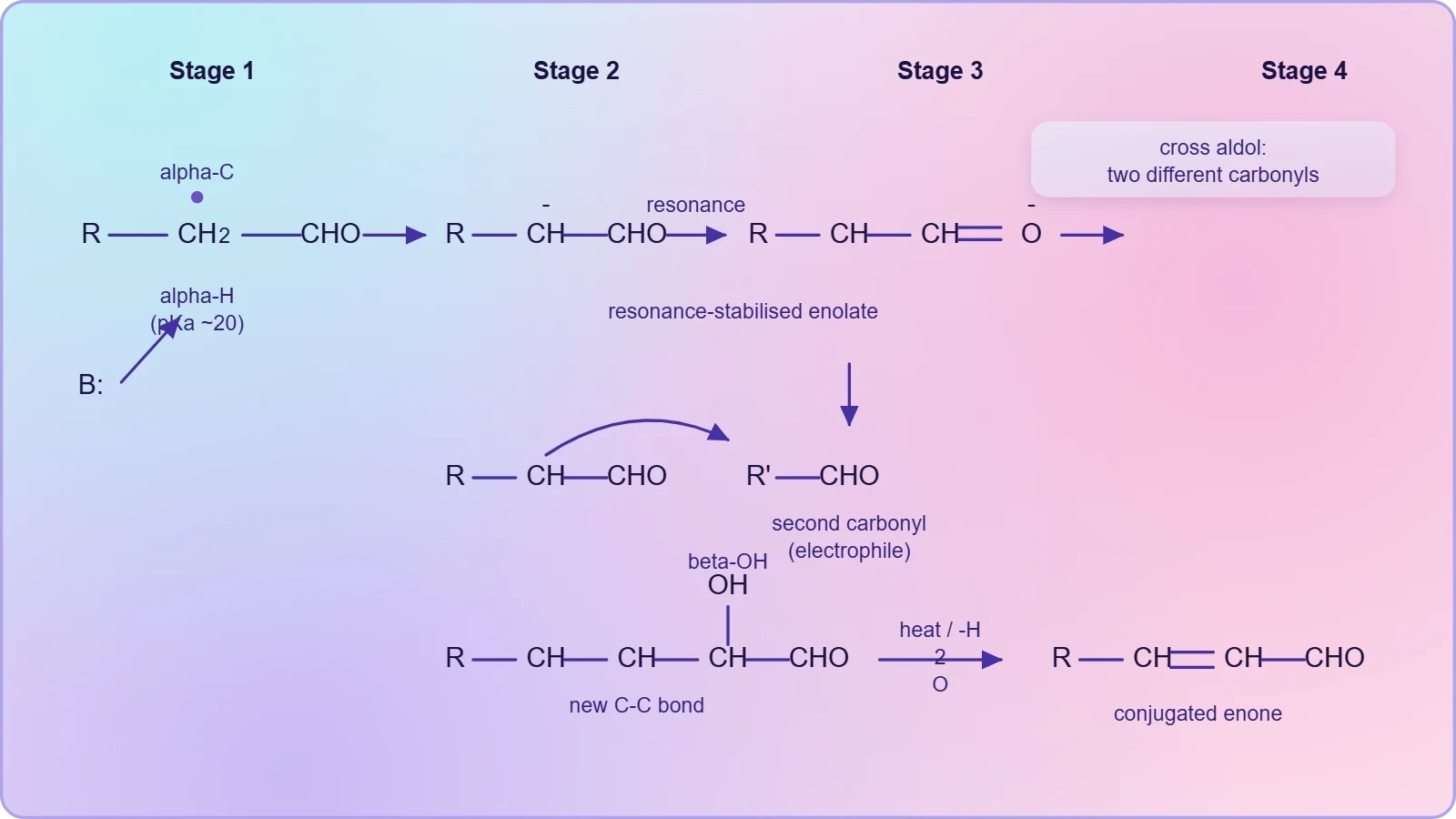
The aldol reaction itself is deceptively simple in its written form yet rich in nuance. A dilute alkali abstracts an α-proton, generating a resonance-stabilised enolate that attacks a second carbonyl molecule, producing a β-hydroxy aldehyde or β-hydroxy ketone. Heating or stronger base then drives dehydration, yielding an α,β-unsaturated carbonyl compound. Beyond this core sequence lie stereochemical subtleties, directed aldol strategies, reversibility considerations, and the industrial-scale use of aldol logic in pharmaceutical synthesis. Each of these deserves careful attention because examiners increasingly test mechanistic reasoning rather than memorised equations.
This lesson builds deliberately on the oxidation and reduction chemistry already covered, using the haloform oxidation of methyl ketones as a bridge into α-carbon reactivity. It then prepares the ground for the Cannizzaro reaction, which applies precisely to those aldehydes lacking α-hydrogens and therefore unable to undergo aldol chemistry. By the end, you should be able to draw complete enolate mechanisms, predict the products of mixed aldol reactions, explain syn and anti selectivity, and recognise where aldol condensation appears in real synthetic routes.
On This Page
- Acidity of α-Hydrogens and the Enolate Intermediate
- The Aldol Addition and Condensation Sequence
- Cross Aldol Condensation and Its Product Distribution
- Stereochemistry of the Aldol Addition
- Controlling Conditions and Avoiding Side Reactions
- Synthetic Utility and Pharmaceutical Applications
- Advanced Insights and Examination Strategy
- Summary and Transition to Cannizzaro Chemistry
Acidity of α-Hydrogens and the Enolate Intermediate
The acidity of α-hydrogens arises from two reinforcing effects that operate simultaneously. First, the carbonyl carbon bears a partial positive charge because oxygen is more electronegative, and this electron-withdrawing influence propagates to the adjacent carbon, polarising the ##\ce{C-H}## bond. Second, once a proton is removed, the resulting carbanion is stabilised by resonance delocalisation of the negative charge onto the carbonyl oxygen. The conjugate base, called an enolate, is therefore a hybrid of a carbanion and an alkoxide-like structure, and this delocalisation lowers the energy of deprotonation considerably.
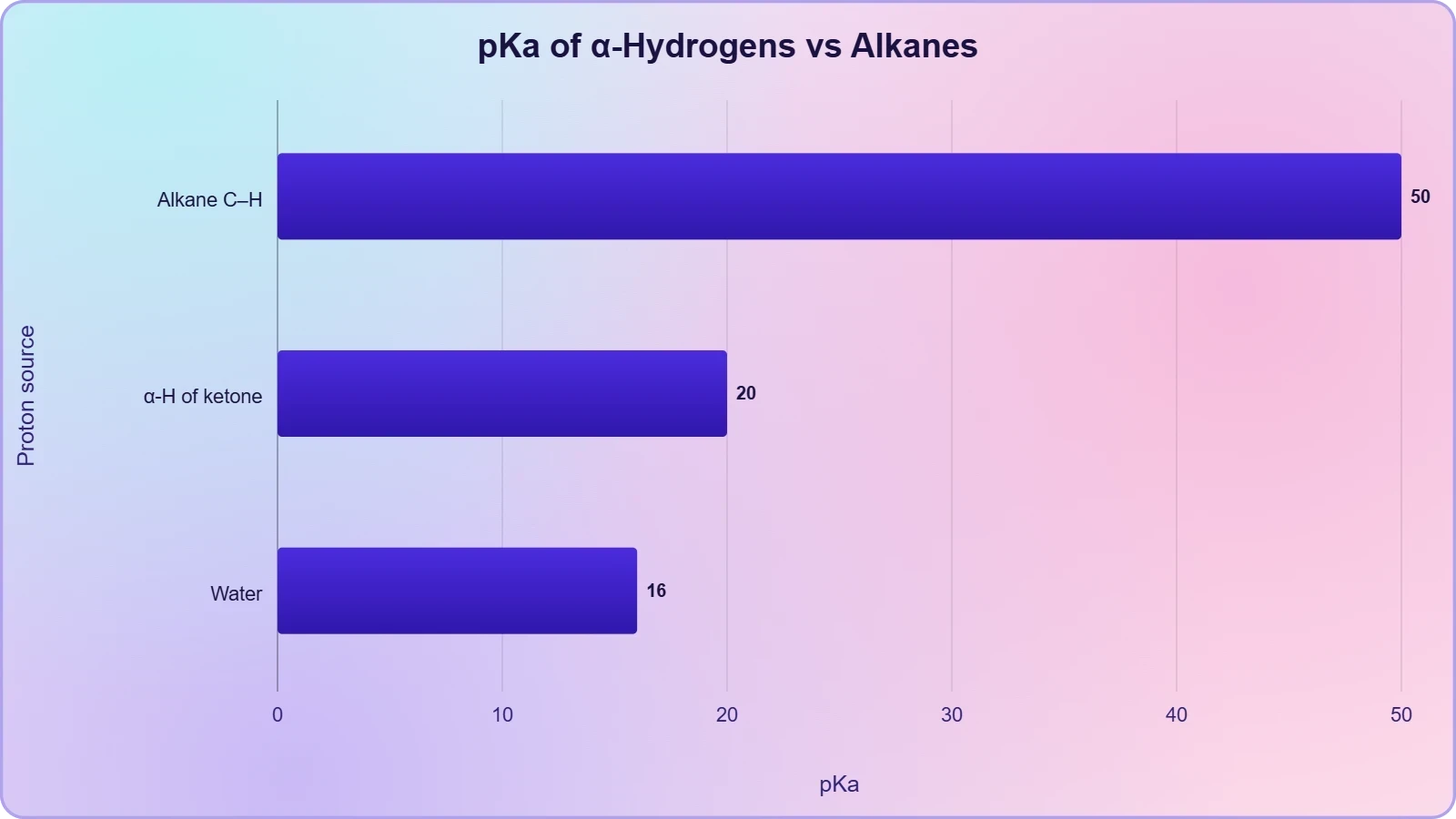
Quantitatively, the ##\mathrm{p}K_a## of an α-hydrogen in a simple aldehyde or ketone lies near 20, compared with roughly 50 for an ordinary alkane ##\ce{C-H}##. That enormous difference explains why dilute aqueous hydroxide, with a ##\mathrm{p}K_a## near 15.7 for its conjugate acid water, can generate a small equilibrium concentration of enolate. The equilibrium lies far to the left, but the enolate is reactive enough that even trace amounts drive the reaction forward. This is a recurring theme in carbonyl chemistry: thermodynamic scarcity of an intermediate does not prevent it from being kinetically decisive.
Mechanism of Enolate Formation
Enolate formation proceeds through a straightforward acid-base sequence. The base donates a lone pair to the α-proton, the ##\ce{C-H}## bond breaks heterolytically, and the electron pair forms the new carbon-base bond while the carbonyl π-electrons shift onto oxygen. The result is a resonance-stabilised enolate with negative charge shared between carbon and oxygen. In protic solvents such as water or ethanol, proton exchange is fast and the enolate is rapidly reprotonated, so only a tiny steady-state concentration exists. In aprotic solvents or with strong bases such as lithium diisopropylamide, enolates can be generated quantitatively and trapped.
The choice of base matters enormously. Sodium hydroxide or potassium hydroxide in aqueous ethanol generates enolate slowly and reversibly, which is ideal for aldol reactions that require equilibration. Lithium diisopropylamide, by contrast, is a strong, sterically hindered, kinetically fast base that deprotonates essentially irreversibly at low temperature. This distinction underpins the difference between classical aldol condensation and modern directed aldol methodology, and it explains why the same carbonyl compound can give entirely different product distributions depending on conditions.
Kinetic versus Thermodynamic Enolates
When a carbonyl compound possesses α-hydrogens on both sides, two distinct enolates can form. Removal of the less hindered proton is faster, giving the kinetic enolate, while removal of the more substituted proton gives the more stable thermodynamic enolate. Low temperature and a bulky base favour the kinetic product; higher temperature and equilibrating conditions favour the thermodynamic one. This control is central to synthetic planning because the two enolates lead to regioisomeric aldol products, and choosing the wrong conditions can silently deliver the undesired isomer.
For unsymmetrical ketones such as 2-methylcyclohexanone, the distinction is especially consequential. Deprotonation at the less substituted α-carbon gives an enolate that reacts at that position, while deprotonation at the more substituted carbon gives the alternative. Examiners frequently test this by asking students to predict the major product under specified conditions, and the correct answer depends entirely on recognising which enolate dominates. Mastering this logic is more valuable than memorising individual reactions.
The Aldol Addition and Condensation Sequence
Aldehydes and ketones possessing at least one α-hydrogen undergo reaction in the presence of dilute alkali to form β-hydroxy aldehydes, known as aldols, or β-hydroxy ketones, known as ketols. The name aldol itself is a contraction of aldehyde and alcohol, reflecting the two functional groups present in the product. This first stage is the aldol addition. When the β-hydroxy carbonyl is subsequently heated or treated with stronger base, it loses water to give an α,β-unsaturated carbonyl compound, and this second stage is the aldol condensation proper.
The distinction between addition and condensation is frequently blurred in casual usage, but it matters for mechanistic accuracy. The addition is reversible and often equilibrium-controlled, whereas the dehydration step is driven forward by the formation of a conjugated system. Conjugation between the carbon-carbon double bond and the carbonyl group lowers the energy of the product substantially, providing the thermodynamic driving force. In examination answers, stating both stages explicitly demonstrates a level of understanding that simple product-drawing does not.
Mechanistic Pathway of Aldol Addition
The mechanism unfolds in three principal steps. First, hydroxide abstracts an α-proton to generate the enolate. Second, the enolate carbon attacks the electrophilic carbonyl carbon of a second molecule, and the resulting alkoxide is protonated by water to give the β-hydroxy carbonyl. Third, if dehydration is required, a second deprotonation at the α-carbon generates another enolate, which expels hydroxide to form the conjugated enone. Each step is an equilibrium, and the overall direction is governed by the stability of the final product.
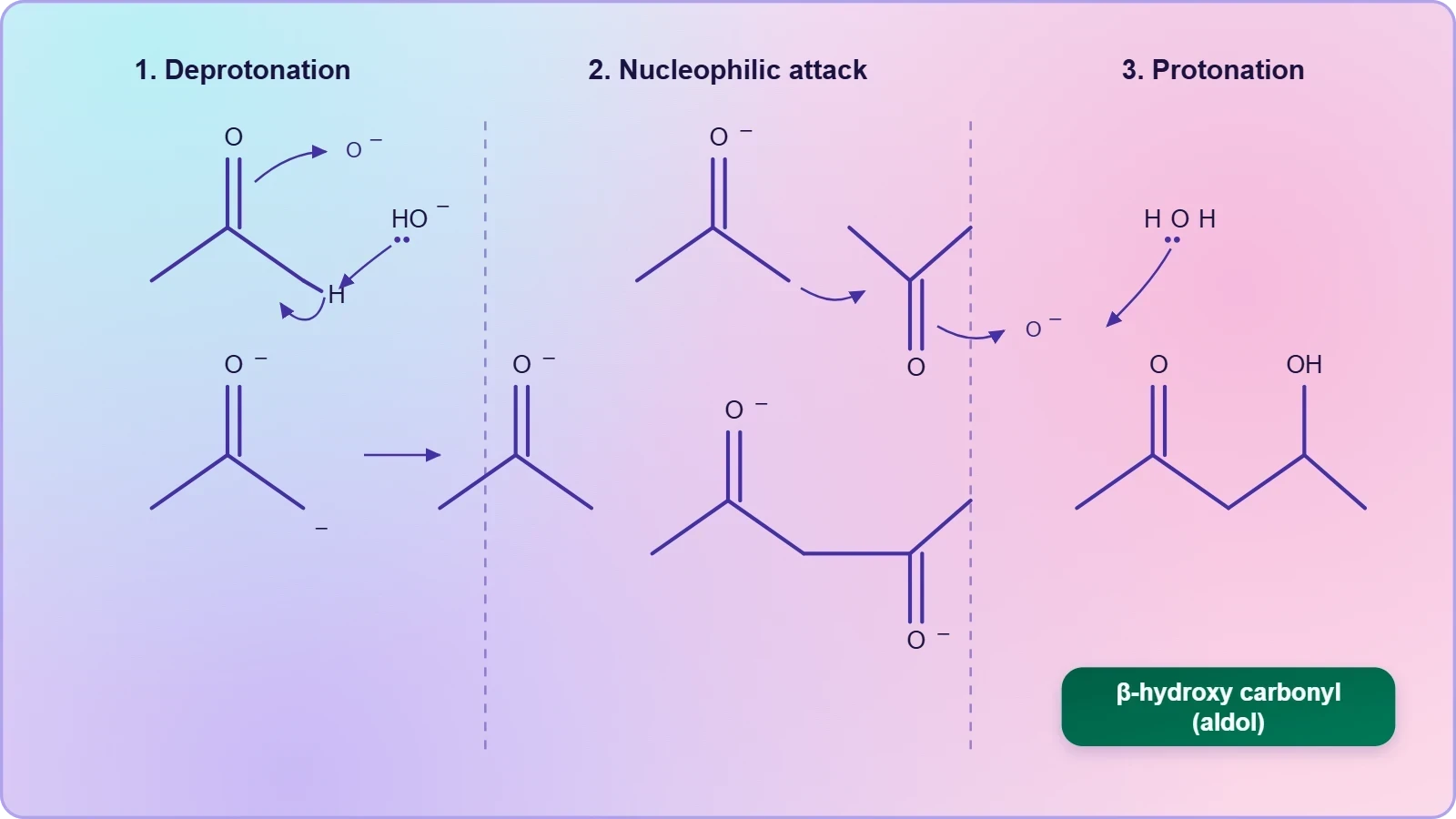
A common error is to draw the enolate attacking its own molecule, which would produce a cyclic product not observed under these conditions. The enolate must attack a separate carbonyl molecule, and the attacking nucleophilic site is the α-carbon, not the oxygen. Students should also remember that the electrophilic partner is the carbonyl carbon of the second molecule, which remains unreacted until collision occurs. Clear arrow-pushing from the enolate carbon to the electrophilic carbon, followed by collapse of the alkoxide, prevents most mechanistic mistakes.
Dehydration to α,β-Unsaturated Carbonyls
Dehydration of the aldol is an elimination reaction facilitated by the acidity of the remaining α-hydrogen. The β-hydroxy carbonyl still possesses an α-hydrogen, which is removed by base to form an enolate; the resulting anion then expels the β-hydroxide ion, generating the carbon-carbon double bond. The product is an α,β-unsaturated aldehyde or ketone, a motif of enormous synthetic value because the conjugated double bond can be elaborated in many ways. Heating alone often suffices for aldehydes, while ketones may require stronger conditions.
The conjugated enone products are themselves excellent electrophiles, which introduces a practical hazard: under forcing conditions, the enone can react further with additional enolate, leading to polymeric material. This is why aldol condensations are typically conducted with controlled stoichiometry and moderate temperatures. Recognising this tendency toward polymerisation is essential for anyone attempting the reaction in a laboratory, and it explains why industrial processes often use continuous flow or carefully regulated addition rates.
Cross Aldol Condensation and Its Product Distribution
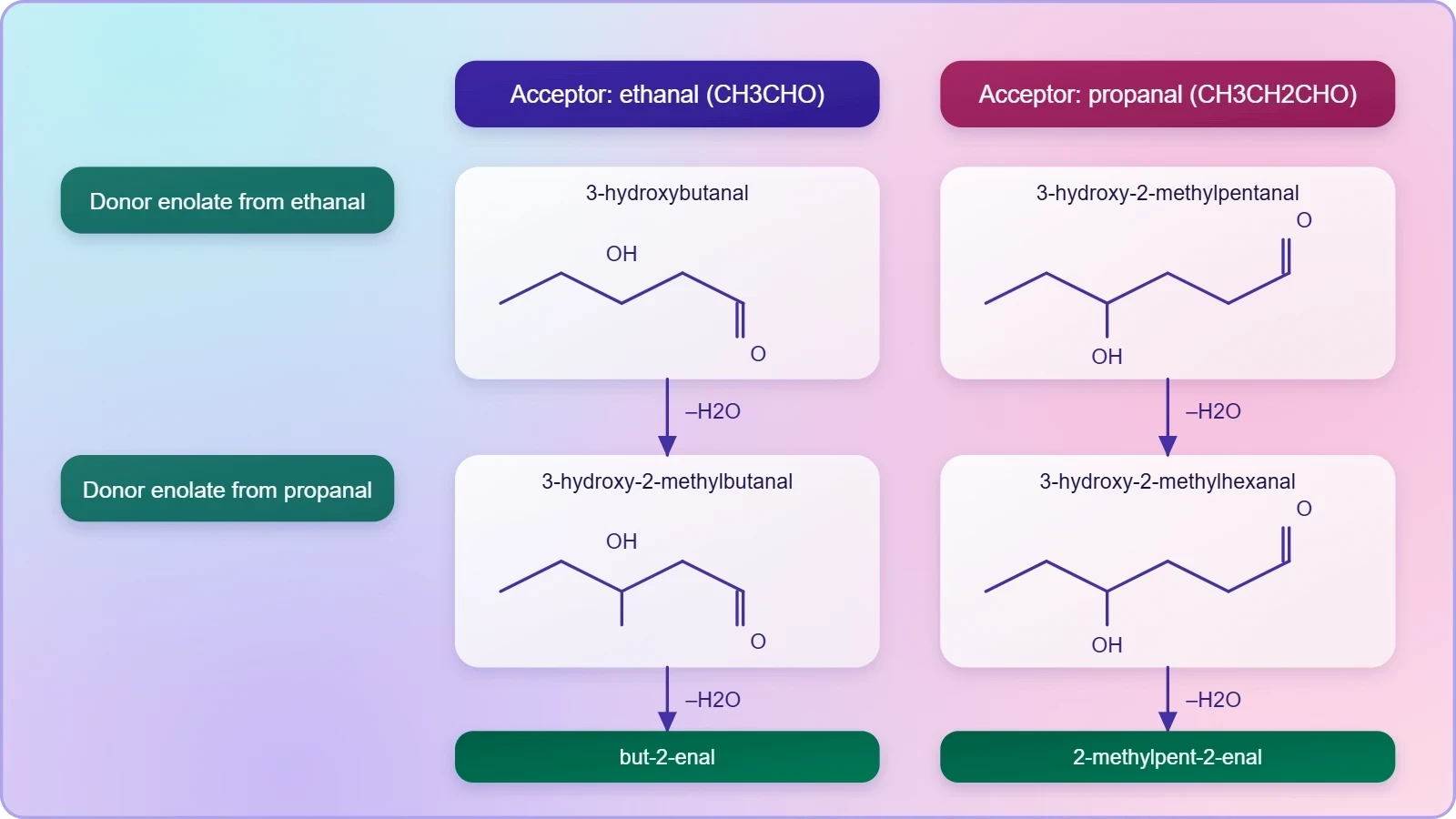
When aldol condensation is carried out between two different aldehydes, two different ketones, or an aldehyde and a ketone, the process is termed cross aldol condensation. If both partners possess α-hydrogens, the reaction generates a mixture of four products, because either molecule can serve as the enolate donor and either can serve as the electrophilic acceptor. This statistical complexity is both a challenge and an opportunity: careful choice of partners and conditions allows chemists to bias the outcome toward a single desired product.
The classic illustration uses a mixture of ethanal and propanal. Four distinct β-hydroxy carbonyls can form, and upon dehydration four α,β-unsaturated products result. In practice, one partner is often chosen to lack α-hydrogens, such as benzaldehyde or formaldehyde, which eliminates its ability to act as a donor and reduces the mixture to two products. This strategy of using a non-enolisable aldehyde is one of the most reliable ways to control cross aldol reactions in both teaching laboratories and industrial synthesis.
Predicting Products with Unsymmetrical Partners
Consider the reaction between benzaldehyde and propanal in dilute alkali. Benzaldehyde has no α-hydrogen and cannot form an enolate, so it can only act as the electrophile. Propanal, possessing two α-hydrogens, forms an enolate that attacks benzaldehyde, giving 2-hydroxy-2-phenylpropanal, which dehydrates to 2-phenylprop-2-enal, also known as α-methylcinnamaldehyde. The regiochemistry is unambiguous because only one donor is possible, and the product is a single major compound rather than a mixture.
When both partners are enolisable, the situation becomes genuinely complex. Ethanal and propanal, for example, can each donate or accept, producing four aldols. In such cases, one reactant is often added slowly to a large excess of the other, or a preformed enolate is used, to suppress unwanted combinations. Examiners sometimes ask students to identify all four products, and the disciplined approach is to enumerate donor-acceptor pairs systematically rather than guessing.
Directed Aldol Reactions
Directed aldol reactions solve the selectivity problem by converting one partner cleanly into its enolate before the second carbonyl is introduced. Lithium diisopropylamide in tetrahydrofuran at low temperature is the reagent of choice, generating the enolate quantitatively and irreversibly. The second carbonyl is then added, and because no free base remains to equilibrate the mixture, only the intended crossed product forms. This approach is standard in modern synthetic laboratories and underpins the preparation of countless complex molecules.
An additional layer of control comes from using enol ethers or silyl enol ethers, which are stable, isolable enolate equivalents. These react with aldehydes under Lewis acid catalysis in what are known as Mukaiyama aldol reactions, giving precise control over which partner donates and which accepts. The broader lesson is that classical aldol condensation is equilibrium-driven and statistically messy, whereas directed methods impose kinetic control and deliver single products with high fidelity.
Stereochemistry of the Aldol Addition
The aldol addition creates a new stereocentre at the β-carbon and, when the α-carbon of the donor is substituted, a second stereocentre at the α-carbon. The relative configuration of these two centres is described as syn or anti, and the outcome depends on the geometry of the enolate and the reaction conditions. This stereochemical dimension is often omitted from introductory treatments, yet it is precisely what makes the aldol reaction so powerful in the synthesis of complex natural products.
Under conditions that allow equilibration, such as aqueous hydroxide, the thermodynamically more stable anti diastereomer usually predominates. Under kinetic control, with preformed enolates at low temperature, the syn diastereomer can be favoured instead. The underlying model invokes a six-membered cyclic transition state in which the enolate oxygen coordinates the aldehyde, and the substituent geometry determines whether the two new groups end up on the same or opposite faces.
Syn and Anti Selectivity Explained
For a ##\ce{Z}##-enolate, the substituent on the α-carbon and the enolate oxygen lie on the same side, and reaction through a chair-like transition state typically delivers the syn aldol. For an ##\ce{E}##-enolate, the anti product is favoured. Because enolate geometry can be controlled by the choice of base and counterion, chemists can often dictate the stereochemical outcome. Lithium enolates tend to give ##\ce{Z}## geometry for many ketones, while boron enolates frequently give the ##\ce{E}## form, providing a practical stereochemical switch.
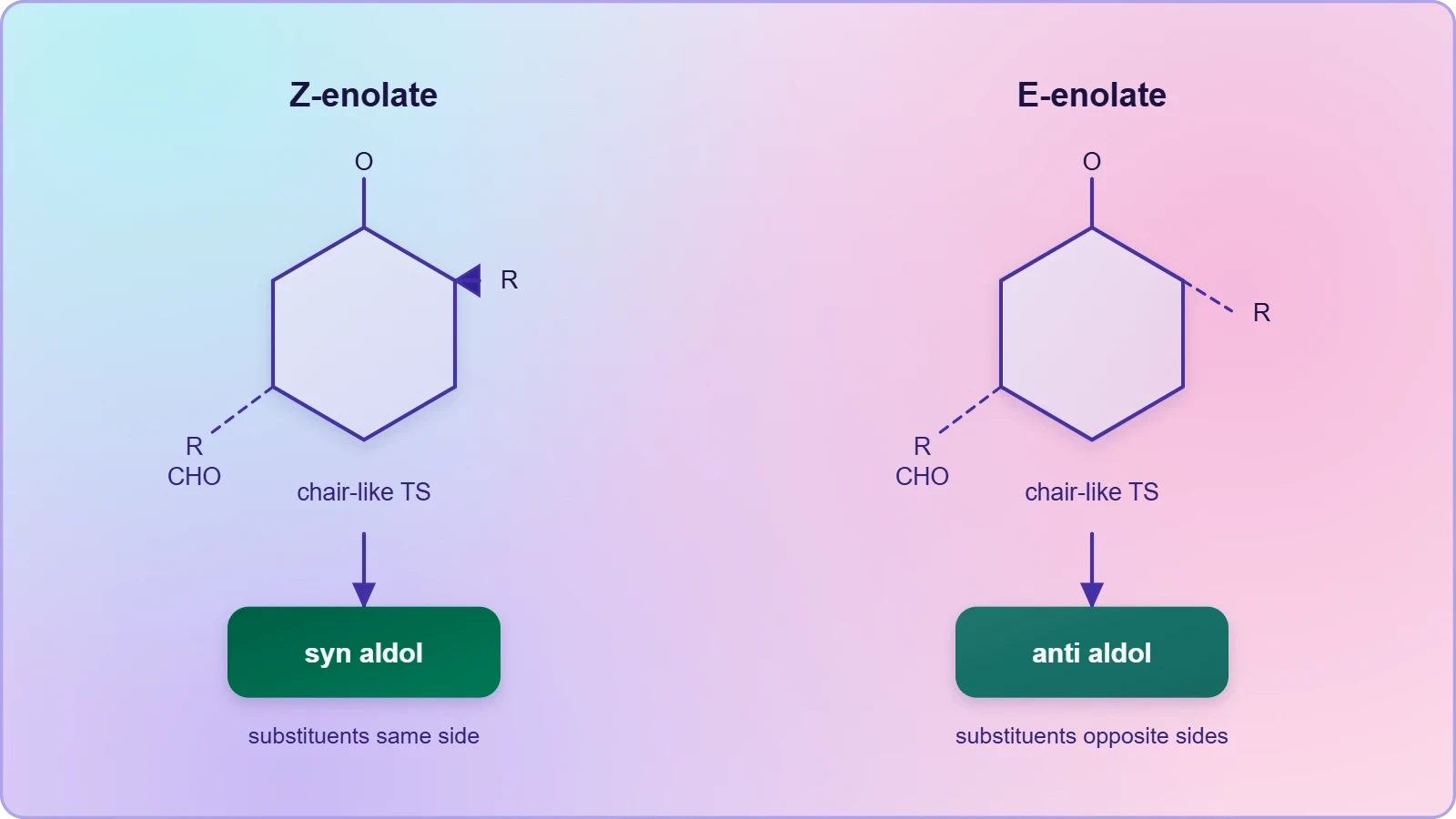
Students should appreciate that this level of control is not required for CBSE examinations but is essential for understanding why the aldol reaction appears so often in research literature. The key takeaway is that the aldol addition is stereoselective rather than stereorandom, and the selectivity is rationalisable through transition-state models. Recognising this transforms the reaction from a memorised transformation into a design tool.
Reversibility and Retro-Aldol Cleavage
The aldol addition is reversible, and the reverse process, retro-aldol cleavage, is catalysed by the same base that promotes the forward reaction. This reversibility has profound consequences. It means that aldol products can equilibrate, that mixtures can interconvert, and that the final product distribution reflects thermodynamic stability rather than kinetic accessibility. It also explains why dehydration is often necessary to drive the reaction to completion: removing water or forming the conjugated enone shifts the equilibrium irreversibly forward.
Retro-aldol cleavage is not merely a nuisance; it is exploited in biosynthesis and in synthetic degradation studies. Enzymes such as aldolases catalyse both directions with exquisite selectivity, and chemists have borrowed this logic to design dynamic combinatorial libraries. In examination contexts, recognising reversibility helps explain why aldol reactions sometimes give lower yields than expected and why conditions must be tuned to favour the desired direction.
We Also Published
Controlling Conditions and Avoiding Side Reactions
Aldol reactions are sensitive to base concentration, temperature, solvent, and stoichiometry. Too much base or too high a temperature can promote dehydration followed by conjugate addition of enolate to the enone, producing oligomeric or polymeric material. This polymerisation is a well-known practical problem, particularly with formaldehyde and acetaldehyde, and it is the reason industrial aldol processes are carefully engineered with controlled addition rates and continuous removal of products.
Solvent choice also matters. Protic solvents such as water and ethanol accelerate proton exchange and favour equilibrating conditions, which is appropriate for classical aldol condensation. Aprotic solvents such as tetrahydrofuran, combined with strong bases, favour kinetic enolate formation and suppress equilibration. Matching solvent to purpose is therefore a deliberate design decision rather than an afterthought, and students who appreciate this point write far more convincing mechanistic explanations.
Common Mistakes and How to Avoid Them
One frequent error is forgetting that the enolate attacks a second molecule, not itself, leading to incorrectly drawn cyclic products. Another is neglecting to protonate the alkoxide intermediate, which leaves a charged species in the final answer. A third is misidentifying which partner can form an enolate when one lacks α-hydrogens. Each of these mistakes stems from incomplete mechanistic reasoning rather than carelessness, and each is corrected by tracing every proton and electron through the sequence.
Students also commonly overlook the dehydration step, reporting the β-hydroxy carbonyl when the question specifies condensation. Reading the question carefully for words such as heat, condense, or dehydrate prevents this. Finally, drawing the enolate with the negative charge only on carbon, rather than showing resonance with oxygen, loses marks in mechanistic questions. A complete answer shows both resonance contributors and explains why the carbon is the nucleophilic site.
Worked Example: Identifying an Aromatic Ketone
An organic compound (A) with molecular formula ##\ce{C8H8O}## forms an orange-red precipitate with 2,4-DNP reagent and gives a yellow precipitate on heating with iodine in sodium hydroxide. It neither reduces Tollens' or Fehling's reagent nor decolourises bromine water or Baeyer's reagent. On drastic oxidation with chromic acid, it gives a carboxylic acid (B) with molecular formula ##\ce{C7H6O2}##. Identify (A) and (B) and explain the reactions involved.
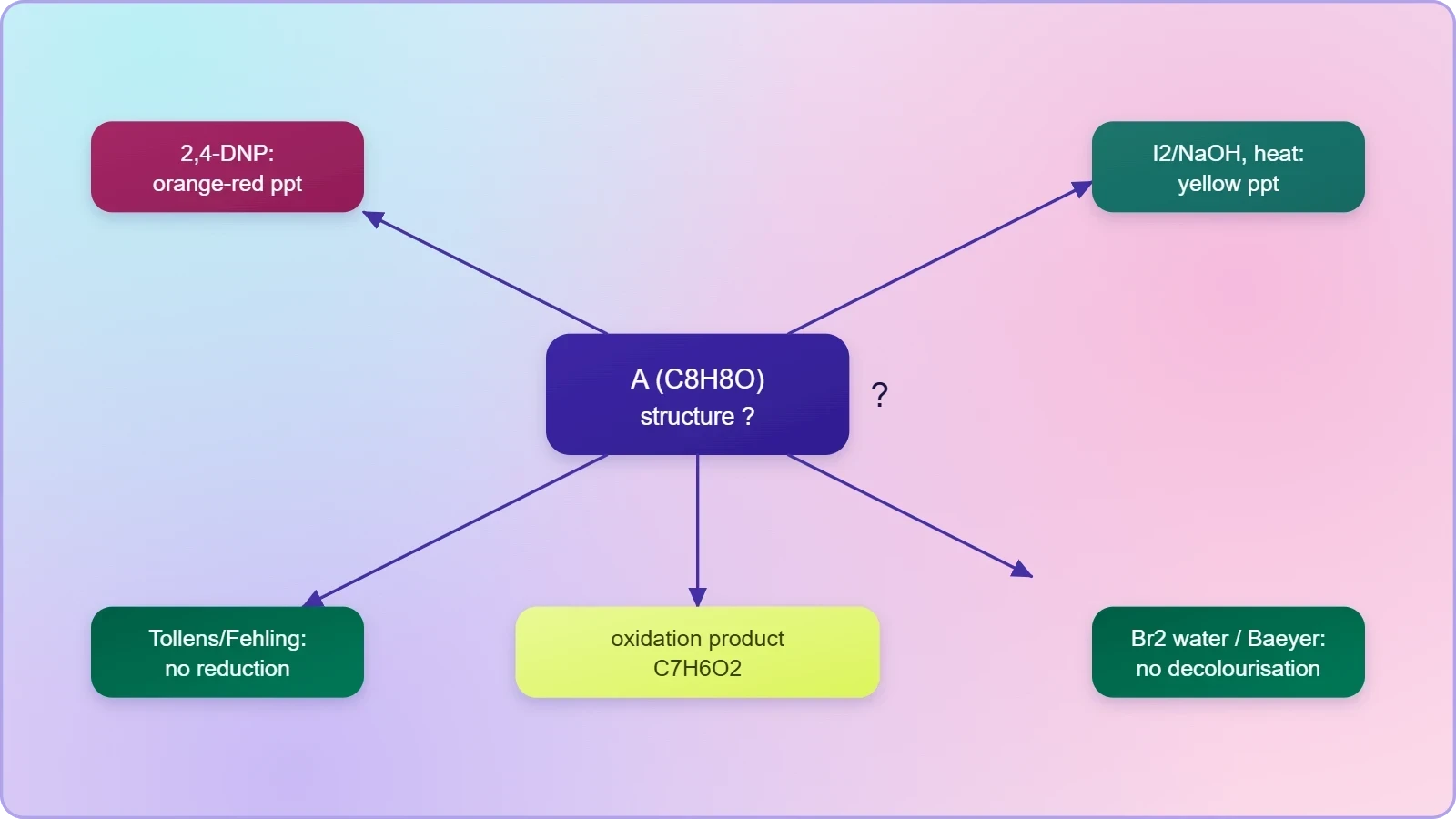
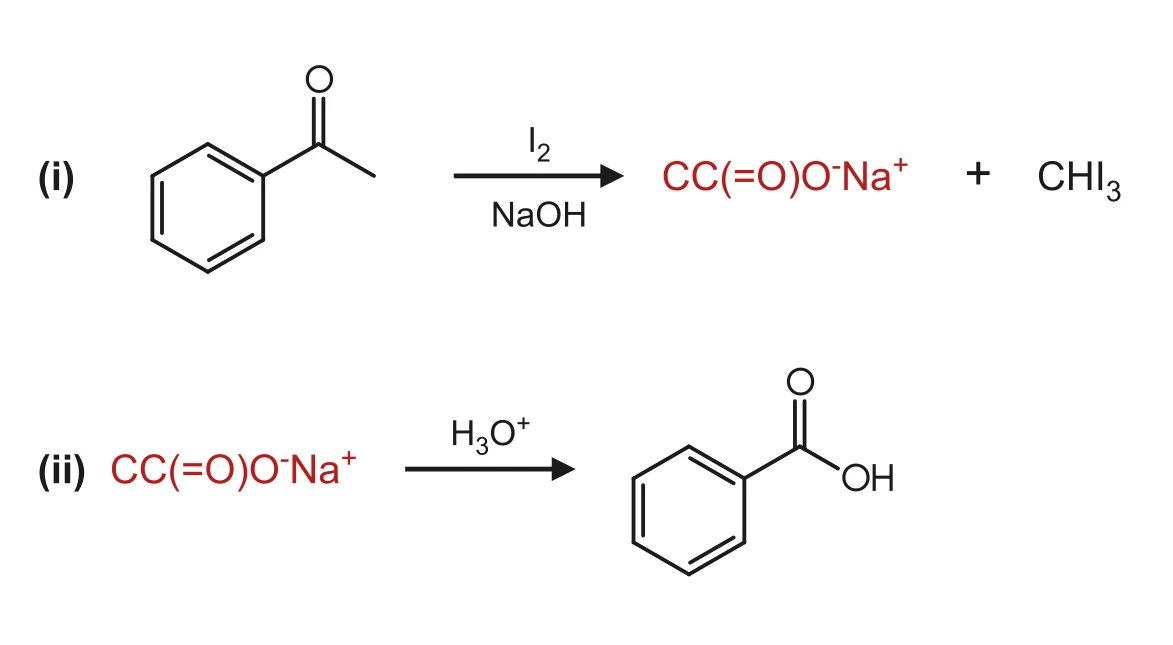
The 2,4-DNP test confirms a carbonyl compound, and failure to reduce Tollens' or Fehling's identifies it as a ketone. The iodoform test indicates a methyl ketone. The high degree of unsaturation without bromine or Baeyer decolourisation points to an aromatic ring. Oxidation to ##\ce{C7H6O2}## identifies (B) as benzoic acid, so (A) is acetophenone, ##\ce{C6H5COCH3}##. The haloform oxidation converts the methyl group to a carboxylate, giving benzoate after acidification.
Synthetic Utility and Pharmaceutical Applications
The aldol condensation is one of the most widely used carbon-carbon bond-forming reactions in organic synthesis, and its influence extends far beyond the classroom. It appears in the industrial preparation of bulk chemicals, in the construction of fragrances and flavour compounds, and in the multi-step synthesis of complex pharmaceuticals. The ability to join two carbonyl fragments while simultaneously creating a new stereocentre makes it indispensable for building molecular complexity efficiently.
In pharmaceutical chemistry, aldol logic underpins the synthesis of statins, certain antibiotics, and a range of anticancer agents. The β-hydroxy carbonyl motif generated by aldol addition is found in many bioactive natural products, and directed aldol methods allow chemists to install it with precise stereochemical control. Recognising this connection between a textbook reaction and real medicines helps students appreciate why mechanistic understanding matters beyond examinations.
Industrial and Laboratory Examples
The industrial synthesis of 2-ethylhexanol, a major plasticiser alcohol, begins with an aldol condensation of butanal followed by hydrogenation. Similarly, the preparation of methyl methacrylate and various α,β-unsaturated esters relies on aldol-type chemistry. In the laboratory, the synthesis of dibenzalacetone from acetone and benzaldehyde is a standard undergraduate experiment that demonstrates cross aldol condensation with a non-enolisable partner, producing a brightly coloured conjugated product.
Pharmaceutical applications include the preparation of intermediates for antihypertensive and anti-inflammatory drugs, where aldol reactions assemble key carbon skeletons. The antibiotic tetracycline family and several antifungal agents contain structural features traceable to aldol disconnections. In each case, the reaction is chosen because it delivers both the carbon framework and the functional group handle needed for subsequent elaboration, illustrating the economy that makes aldol chemistry so attractive.
Advanced Insights and Examination Strategy
Beyond the standard syllabus, several advanced points enrich understanding. The acidity of α-hydrogens increases when additional electron-withdrawing groups are present, so β-dicarbonyl compounds have ##\mathrm{p}K_a## values near 9 and form enolates almost completely with weak bases. This principle explains why acetoacetic ester and malonic ester chemistry is so versatile. It also explains why the α-hydrogens of a simple ketone are acidic enough for aldol chemistry but not acidic enough for complete deprotonation by hydroxide.
Another advanced consideration is the role of the counterion in determining enolate geometry and reactivity. Lithium enolates are often aggregated in solution, and the degree of aggregation affects both reactivity and stereoselectivity. Adding a chelating agent such as hexamethylphosphoramide can break up aggregates and alter the outcome. These subtleties are rarely examined directly but explain many apparent anomalies in the literature and reward students who read beyond the textbook.
Connecting to Neighbouring Lessons
The haloform oxidation studied earlier is itself an α-carbon reaction, and recognising that connection reinforces the unity of carbonyl chemistry. The Cannizzaro reaction, covered next, applies specifically to aldehydes lacking α-hydrogens, which is precisely why such aldehydes cannot undergo aldol condensation. Understanding this complementarity prevents confusion: benzaldehyde undergoes Cannizzaro but not aldol, while acetaldehyde undergoes aldol but not Cannizzaro under the same conditions.
Reduction and oxidation reactions, the subject of the previous lesson, also intersect with aldol chemistry. The α,β-unsaturated carbonyls produced by aldol condensation can be selectively reduced at the carbon-carbon double bond, and this combination of aldol condensation followed by hydrogenation is a powerful way to build saturated carbonyl frameworks. Recognising these cross-connections turns isolated reactions into a coherent synthetic toolkit.
Practice Problems and Self-Assessment
Attempt to predict the product of propanal with dilute sodium hydroxide, then with benzaldehyde under the same conditions. Draw the complete mechanism for each, showing enolate formation, nucleophilic attack, protonation, and dehydration. Then consider acetone with benzaldehyde and explain why dibenzalacetone forms with two equivalents of aldehyde. Finally, explain why 2,2-dimethylpropanal cannot undergo aldol condensation but does undergo Cannizzaro reaction.
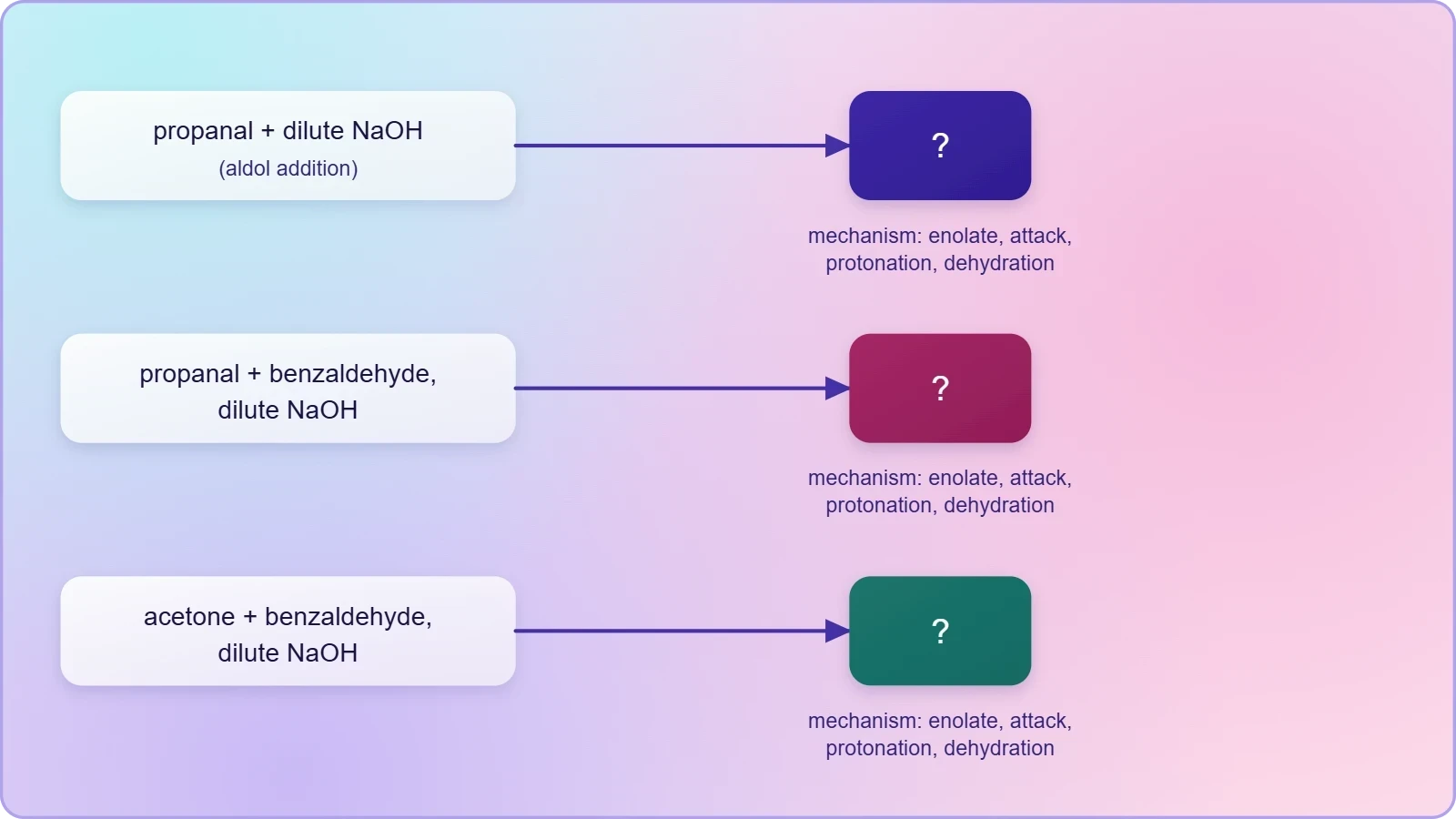
For each problem, check that you have identified the enolisable partner, drawn the enolate with resonance, shown the correct electrophilic carbon, and included dehydration where appropriate. Compare your answers with the mechanisms presented in this lesson and note any steps you omitted. Repeated practice with these patterns builds the fluency that examination questions reward, and it prepares you for the Cannizzaro reaction, where the absence of α-hydrogens becomes the central theme.
Summary and Transition to Cannizzaro Chemistry
The aldol condensation stands as a cornerstone of carbonyl chemistry because it converts the modest acidity of α-hydrogens into a powerful carbon-carbon bond-forming tool. From enolate formation through nucleophilic addition, protonation, and dehydration, each step is governed by clear thermodynamic and kinetic principles. Cross aldol reactions extend the logic to two different partners, while directed methods impose selectivity that classical conditions cannot achieve. Stereochemical control and reversibility add further layers that reward careful study.
As you move to the next lesson on the Cannizzaro reaction, keep in mind the central dividing line: aldehydes with α-hydrogens undergo aldol chemistry, while those without them undergo disproportionation. This simple rule organises a great deal of carbonyl reactivity and will serve you well in both examinations and further study. The mechanistic habits developed here, particularly resonance drawing and electron tracing, transfer directly to the Cannizzaro mechanism and beyond.
From our network :
- Do You Need a New Router or Is Your Internet Plan the Problem?A practical comparison of the signs that point to router limits versus signs your broadband speed or provider is the bottleneck, so you can decide what to replace before spending money.
- 10 Physics Numerical Problems with Solutions for IIT JEEPrepare for IIT JEE with 10 physics numerical problems, complete with detailed solutions and conceptual explanations. Ideal for mastering kinematics, thermodynamics, electromagnetism, and optics.
- Trump Political Strategy How Geopolitical Stunts Serve As Media Diversions
- EV 2.0: The Solid-State Battery Breakthrough and Global Factory ExpansionDiscover the impact of the Solid-State Battery Breakthrough on the EV market. Learn about CATL and BYD stock growth, global factory expansion in Europe, and the future of EV 2.0 technology.
- 98% of Global MBA Programs Now Prefer GRE Over GMAT Focus EditionExplore why 98% of global MBA programs now prefer the GRE over GMAT Focus. Learn about the shorter GRE format, verbal logic importance, and strategic versatility for students.
- How to Print Cheaply: Cutting the Cost per PageA practical, measured guide to lowering what each printed page costs — duplex and draft modes, third-party ink, yield mathematics, and knowing when a new printer beats refills.
- Analyzing Trump Deportation Numbers Insights Into The 2026 Immigration Crackdown
- Where to Put Your Wireless Router for Better CoverageA practical, physics-grounded guide to router placement: why the centre of the home beats the corner, how walls and metal sap signal, and how to run a simple survey that proves the improvement.
- AI-Powered 'Precision Diagnostic' Replaces Standard GRE Score ReportsDiscover the new GRE Precision Diagnostic. Learn how AI-powered behavioral analytics and time-to-solve tracking are replacing standard GRE score reports to empower students.