Carbonyl chemistry begins with a single, deceptively simple arrangement of atoms: a carbon doubly bonded to an oxygen, written ##\ce{C=O}##. This functional group sits at the heart of organic chemistry because it governs the behaviour of aldehydes, ketones, carboxylic acids and their many derivatives, compounds that appear in fabrics, flavourings, plastics, solvents and drugs. Understanding the carbonyl group is therefore not an isolated exercise but a gateway into how a vast family of molecules is built, transformed and put to work in laboratories and industries alike.
This opening lesson of the course establishes the conceptual foundation on which every later topic rests. It introduces the carbonyl group, surveys where aldehydes, ketones and carboxylic acids occur in nature and commerce, and explains why the polarity of the ##\ce{C=O}## bond makes these molecules simultaneously electrophilic at carbon and basic at oxygen. From there, the lesson distinguishes aldehydes from ketones, sketches the wider family of acid derivatives, and connects structure to the reactivity patterns that later lessons will examine in mechanistic detail.
Because this is the first lesson, the emphasis falls on orientation rather than exhaustive procedure. Nomenclature, preparation routes and named reactions belong to the lessons that follow, so here the aim is to build a clear mental map: what the carbonyl group is, how it is classified, where it appears, and why chemists care so deeply about it. Students who internalise this map will find the mechanistic chapters ahead far easier to navigate, because every reaction they meet will trace back to the polarised ##\ce{C=O}## bond introduced here.
On This Page
- The Carbonyl Group as the Defining Structural Unit
- Occurrence and Significance in Nature and Industry
- Electrophilic and Nucleophilic Centres in Carbonyl Chemistry
- Historical Development and the Growth of Carbonyl Chemistry
- Physical Properties Linked to Molecular Structure
- Preparing for Nomenclature and the Lessons Ahead
- Worked Examples and Advanced Insights
The Carbonyl Group as the Defining Structural Unit
Organic chemistry in the preceding unit dealt with compounds built around the carbon–oxygen single bond, the ##\ce{C-O}## linkage found in alcohols and ethers. The present unit shifts attention to the carbon–oxygen double bond, ##\ce{C=O}##, universally called the carbonyl group. This is one of the most consequential functional groups in the discipline, because its electronic structure creates a built-in polarity that dictates how the surrounding molecule will behave under almost every reaction condition. Recognising a carbonyl group in a structure is the first step toward predicting its chemistry.
The group is planar at the carbonyl carbon, which is ##sp^2## hybridised and bonded to three atoms through three ##\sigma## bonds, with the remaining ##p## orbital forming a ##\pi## bond to oxygen. Oxygen is markedly more electronegative than carbon, so the ##\pi## electron cloud is drawn toward oxygen, leaving carbon electron-poor and oxygen electron-rich. This permanent dipole, often quoted near 2.3–2.8 D for simple aldehydes and ketones, is the physical origin of nearly all carbonyl reactivity and explains why these compounds have higher boiling points than comparable alkanes.
Classification of Carbonyl-Containing Compounds
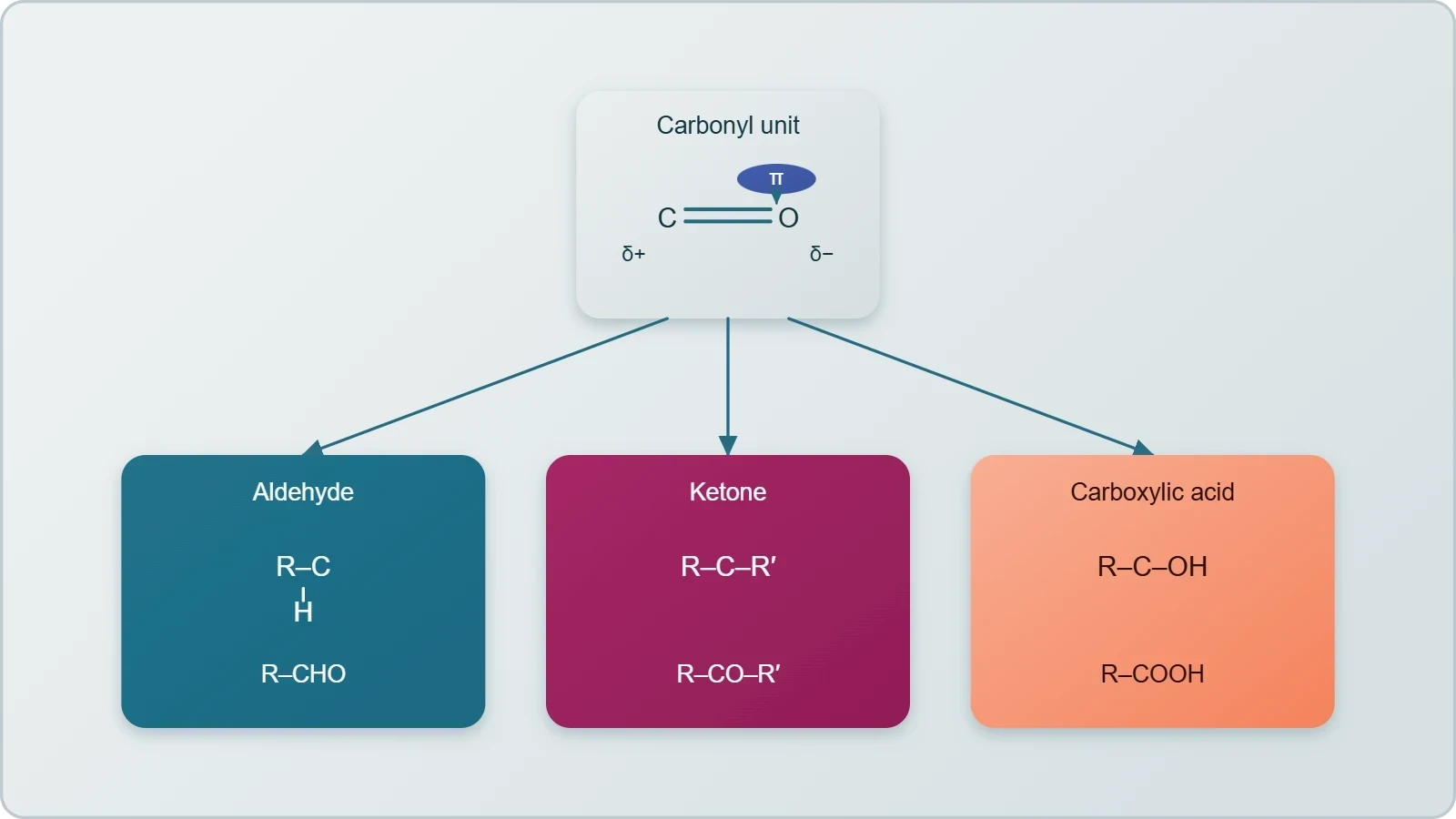
The identity of the atoms flanking the carbonyl carbon determines the class of compound. In an aldehyde, the carbonyl carbon is bonded to at least one hydrogen and to a carbon or hydrogen; in a ketone, it is bonded to two carbon atoms. When the carbonyl carbon is attached to a hydroxyl moiety, the compound is a carboxylic acid, and when it is attached to nitrogen or a halogen, the products are amides and acyl halides respectively. Esters and anhydrides complete the family as carboxylic acid derivatives.
These relationships are best visualised as a family tree rooted at the carbonyl group. Every member shares the ##\ce{C=O}## unit but differs in the substituent attached to the carbonyl carbon, and that single difference reshapes both physical properties and reactivity. A carboxylic acid, for instance, is far more acidic than an alcohol because its conjugate base is stabilised by resonance across two oxygen atoms. The table below summarises the principal classes and their general formulas.
Electronic Structure and the Origin of Polarity
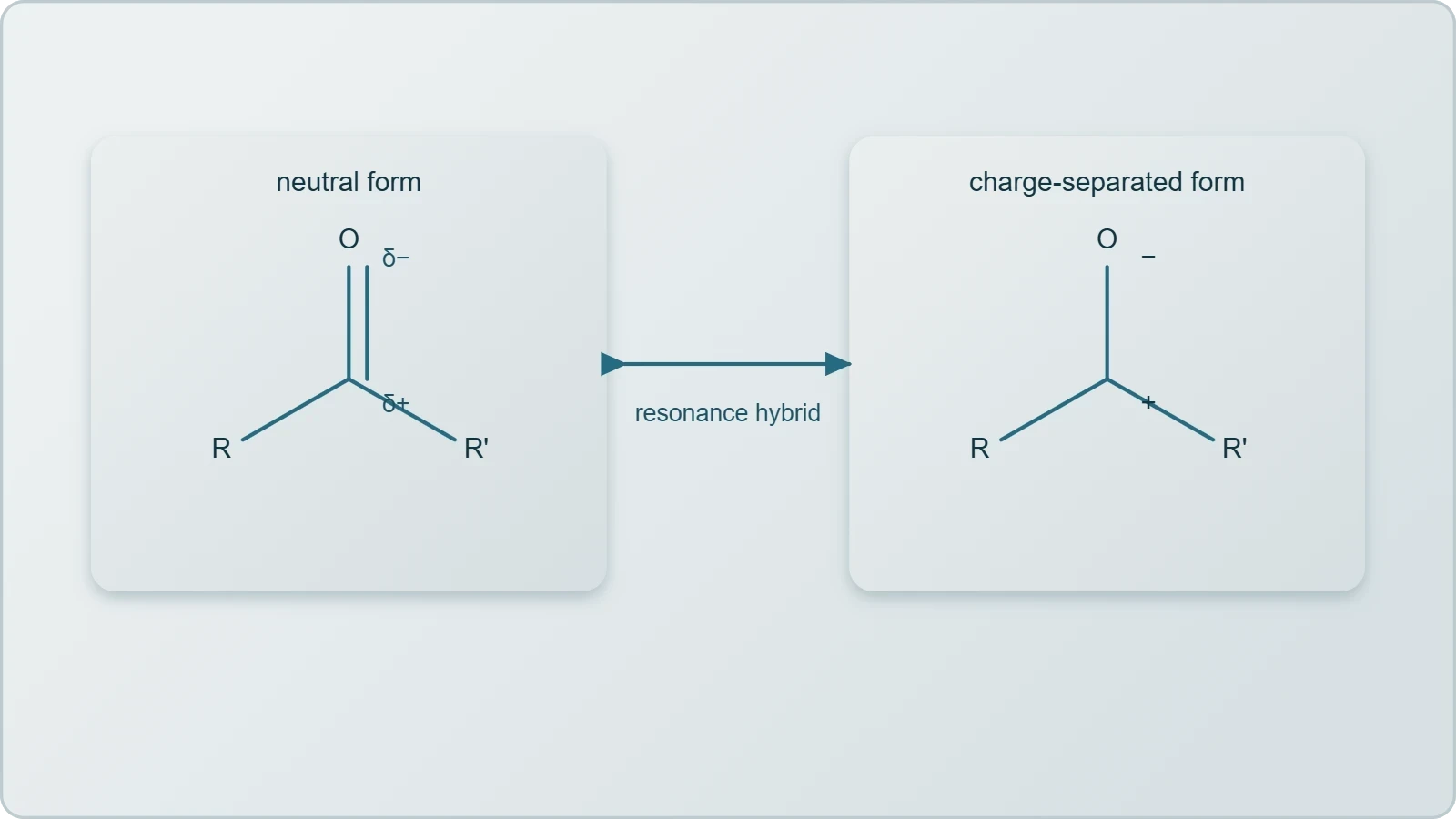
The polarity of the carbonyl group deserves close attention because it explains almost everything that follows. Because oxygen holds the ##\pi## electrons more tightly, the carbon atom carries a partial positive charge, ##\delta^+##, and oxygen a partial negative charge, ##\delta^-##. This creates two distinct reactive sites within one functional group: an electrophilic carbon that attracts nucleophiles and a basic oxygen that attracts electrophiles and protons. Students who remember this single idea can predict the direction of most carbonyl reactions before learning any mechanism.
The resonance description reinforces the same picture. The ##\ce{C=O}## bond can be drawn as a resonance hybrid of a neutral double-bonded form and a charge-separated single-bonded form, ##\ce{C+-O-}##. The greater the contribution of the polar form, the more electrophilic the carbon becomes. This is why substituents that donate electron density through resonance, such as the oxygen of an ester or the nitrogen of an amide, soften the electrophilicity of the carbonyl carbon and make such derivatives less reactive than aldehydes and ketones.
We Also Published
Occurrence and Significance in Nature and Industry
Aldehydes, ketones and carboxylic acids are widespread across the plant and animal kingdoms, and they participate in some of the most important biochemical processes of life. Their presence is not incidental: the carbonyl group is chemically versatile enough to serve as a building block, an energy carrier and a signalling molecule. From the sugars that fuel cellular respiration to the metabolic intermediates of the citric acid cycle, carbonyl chemistry underpins the molecular logic of living systems, which is why a student who understands these compounds gains insight into biology as well as synthesis.
In the laboratory and the factory, the same functional group drives an enormous range of products. Carbonyl compounds are constituents of fabrics, flavourings, plastics and drugs, and several families are manufactured on a large scale for use as solvents such as acetone, and for preparing adhesives, paints, resins, perfumes and synthetic fibres. The commercial reach of carbonyl chemistry is therefore vast, spanning pharmaceuticals, materials science, food technology and cosmetics, and it explains why this unit occupies such a central place in the organic chemistry syllabus.
Carbonyl Compounds in Living Systems
Glucose, the body's principal fuel, is a polyhydroxy aldehyde in its open-chain form, while fructose is a polyhydroxy ketone; both are carbonyl compounds at heart. The universal energy currency ATP carries its phosphate groups on a ribose sugar whose chemistry is intimately tied to carbonyl reactivity, and many metabolic intermediates, including those of glycolysis and the citric acid cycle, are aldehydes, ketones or carboxylic acids. Even the chemistry of vision depends on retinal, an aldehyde that changes shape when it absorbs light, triggering the nerve signal that allows us to see.
Carboxylic acids appear throughout biochemistry as well. Amino acids, the monomers of proteins, contain a carboxyl group together with an amino group, and fatty acids are long-chain carboxylic acids that store energy and build cell membranes. Lactic acid accumulates in muscles during vigorous exercise, and acetic acid is the active component of vinegar. The ubiquity of these functional groups in living matter is a powerful argument for studying them carefully, since biology repeatedly exploits the same reactivity that organic chemists use in the laboratory.
Everyday Products and Commercial Importance
Many familiar smells and tastes trace directly to carbonyl compounds. Vanillin, obtained from vanilla beans, gives vanilla its characteristic aroma; salicylaldehyde from meadow sweet and cinnamaldehyde from cinnamon contribute their pleasant fragrances. Camphor, a cyclic ketone, has long been used as a fragrant insect repellent and in traditional medicine, while benzaldehyde provides the almond-like scent of marzipan. Formaldehyde serves as a preservative and a precursor to resins, and acetone is a familiar solvent in nail polish remover and industrial cleaning.
On an industrial scale, carbonyl chemistry supports the manufacture of pharmaceuticals, agrochemicals, polymers and dyes. The table below gathers several well-known compounds alongside their class and typical use, illustrating how a single functional group connects a perfumery ingredient to a life-saving drug. Recognising these connections helps students see that the reactions studied in later lessons are not abstract exercises but the working methods behind products they encounter daily.
Electrophilic and Nucleophilic Centres in Carbonyl Chemistry
Every reaction of a carbonyl compound can be read as an encounter between two complementary sites. The electron-poor carbonyl carbon is electrophilic and welcomes attack by nucleophiles, species rich in electrons such as hydride ions, carbanions, amines and alcohols. The electron-rich carbonyl oxygen is basic and can accept a proton or interact with an electrophile. This dual character makes the carbonyl group unusually versatile, allowing the same molecule to react with both electron-rich and electron-poor partners depending on the conditions chosen.
Nucleophilic addition is the signature reaction of aldehydes and ketones, and it follows a consistent pattern. A nucleophile attacks the electrophilic carbon, the ##\pi## bond breaks, and the electrons move onto oxygen, generating an alkoxide intermediate that is subsequently protonated to give an alcohol derivative. The mechanism is shown schematically below, with the curved arrows indicating electron flow from the nucleophile to carbon and from the ##\pi## bond to oxygen. Mastering this single template prepares students for the many named reactions that follow.
Why Aldehydes Are More Reactive Than Ketones
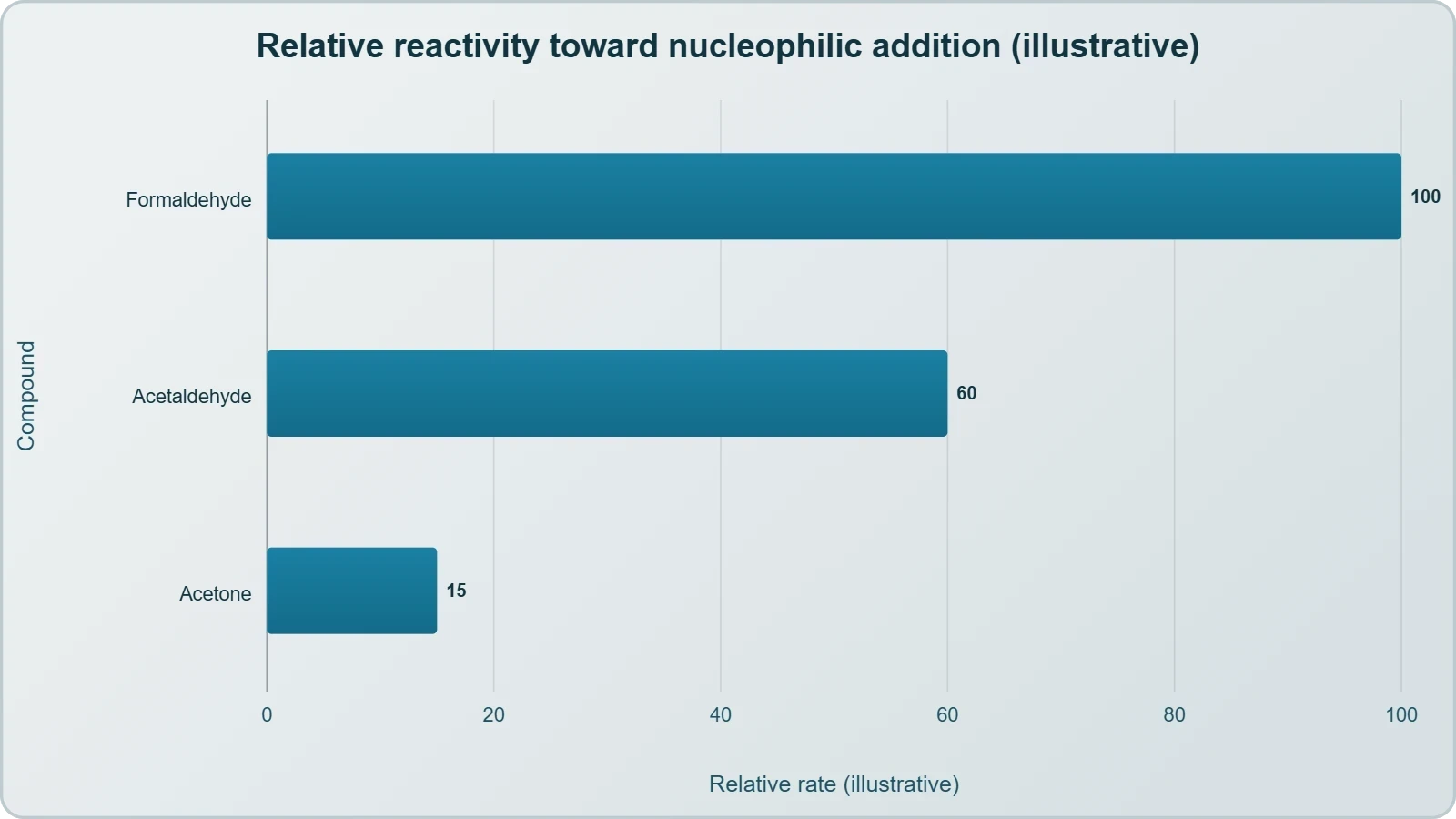
Although aldehydes and ketones share the same functional group, they differ measurably in reactivity, and aldehydes are generally the more reactive of the two toward nucleophilic addition. Two factors account for this. First, the two alkyl groups of a ketone donate electron density inductively toward the carbonyl carbon, partially neutralising its positive charge and reducing its attraction for nucleophiles. Second, those same alkyl groups create steric crowding around the carbonyl carbon, making it harder for an incoming nucleophile to approach and bond.
Formaldehyde, with two hydrogen atoms and no alkyl groups, is the most reactive carbonyl compound of all, while a ketone such as acetone reacts far more slowly. This ordering matters practically, because it allows chemists to choose reagents that discriminate between the two classes. Tests such as Tollens' and Fehling's reagents exploit the ease with which aldehydes are oxidised, a topic developed in later lessons, and the difference in reactivity also guides the design of selective syntheses in which one carbonyl group must be transformed while another is preserved.
Acidity and the Carboxyl Group
Carboxylic acids extend the carbonyl story in a distinctive direction. The carbonyl carbon is bonded to a hydroxyl group, and the resulting ##\ce{-COOH}## unit is acidic because the conjugate base, a carboxylate ion, is stabilised by resonance that spreads the negative charge equally over two oxygen atoms. This delocalisation makes carboxylic acids far more acidic than alcohols, with typical ##\ce{p}K_a## values around 4–5 compared with roughly 16 for ethanol. The contrast illustrates how the carbonyl group can amplify the properties of a neighbouring functional group.
Substituents attached to the carbon chain further tune this acidity. Electron-withdrawing groups, such as halogens, stabilise the carboxylate anion and increase acidity, while electron-donating groups have the opposite effect. The effect weakens as the substituent moves further from the carboxyl group, so a chlorine atom on the ##\alpha##-carbon exerts a stronger influence than one several bonds away. These substituent effects, examined in detail later in the course, are a recurring theme in organic chemistry and reward careful attention to structure.
Historical Development and the Growth of Carbonyl Chemistry
The systematic study of carbonyl compounds emerged during the nineteenth century as chemists began to isolate and characterise the substances responsible for familiar tastes and smells. Investigators recognised that many fragrant plant extracts shared a common reactive unit, and the gradual identification of this unit as the carbon–oxygen double bond helped establish the idea of functional groups as the organising principle of organic chemistry. Early work on aldehydes and ketones thus contributed directly to the conceptual framework that modern chemists take for granted.
As analytical methods improved, chemists learned to distinguish aldehydes from ketones through simple colour tests and to convert one class into another by controlled oxidation or reduction. These practical discoveries accumulated into a coherent body of knowledge about preparation and reaction, much of which forms the backbone of the present syllabus. The historical arc from plant extracts to laboratory synthesis illustrates how observation, classification and mechanistic reasoning build on one another, a lesson as valuable to students as any specific reaction.
From Natural Products to Synthetic Chemistry
Many of the earliest carbonyl compounds studied were natural products valued for their aroma or medicinal properties. The isolation of camphor, the characterisation of vanillin and the identification of cinnamaldehyde in cinnamon all contributed to a growing catalogue of known structures. Chemists then asked whether these substances could be made in the laboratory, and the successful syntheses that followed demonstrated that natural products were not fundamentally different from other organic molecules, a realisation that transformed the ambitions of the discipline.
This shift from isolation to synthesis laid the groundwork for the pharmaceutical and materials industries of the twentieth century. Once chemists could build carbonyl compounds deliberately, they could design molecules with specific properties, from dyes and fragrances to drugs and polymers. The methods developed along the way, including condensation reactions and selective reductions, remain in active use today, and the historical perspective helps students appreciate that the reactions they study are the accumulated tools of generations of chemists.
Common Misconceptions to Avoid
Several misunderstandings recur among students meeting carbonyl chemistry for the first time. One is the belief that the ##\ce{C=O}## bond is nonpolar because carbon and oxygen are both nonmetals; in fact the electronegativity difference makes it strongly polar. Another is the assumption that aldehydes and ketones behave identically because they share a functional group; their reactivity differs because of steric and electronic effects. A third is the confusion of the carbonyl group with the carboxyl group, which contains an additional hydroxyl unit and behaves quite differently.
Students also sometimes overlook the role of the oxygen lone pairs, treating the carbonyl oxygen as a passive spectator. In reality, protonation of oxygen is often the first step in acid-catalysed reactions, and hydrogen bonding through oxygen explains the relatively high boiling points of these compounds. Keeping these points in mind prevents errors that can persist into later lessons, where a shaky grasp of the basics can make mechanisms seem arbitrary rather than logical.
Physical Properties Linked to Molecular Structure
The physical behaviour of carbonyl compounds follows directly from their structure. Because the ##\ce{C=O}## bond is polar, molecules attract one another through dipole–dipole interactions, and the resulting boiling points are higher than those of alkanes of comparable mass. Aldehydes and ketones cannot hydrogen bond with one another, since they lack an ##\ce{O-H}## bond, but they can accept hydrogen bonds from water and alcohols through their oxygen lone pairs. This explains why the smaller members, such as formaldehyde, acetaldehyde and acetone, are freely soluble in water.
Solubility falls as the hydrocarbon portion grows, because the nonpolar alkyl chain increasingly disrupts the hydrogen-bonded network of water. Formaldehyde is a gas at room temperature, acetaldehyde is a volatile liquid, and the higher aldehydes and ketones are liquids or solids with limited water solubility. Carboxylic acids behave differently again: they form strong hydrogen-bonded dimers through their ##\ce{-COOH}## units, giving them unusually high boiling points, and the lower members are miscible with water because of additional hydrogen bonding.
Boiling Points and Intermolecular Forces
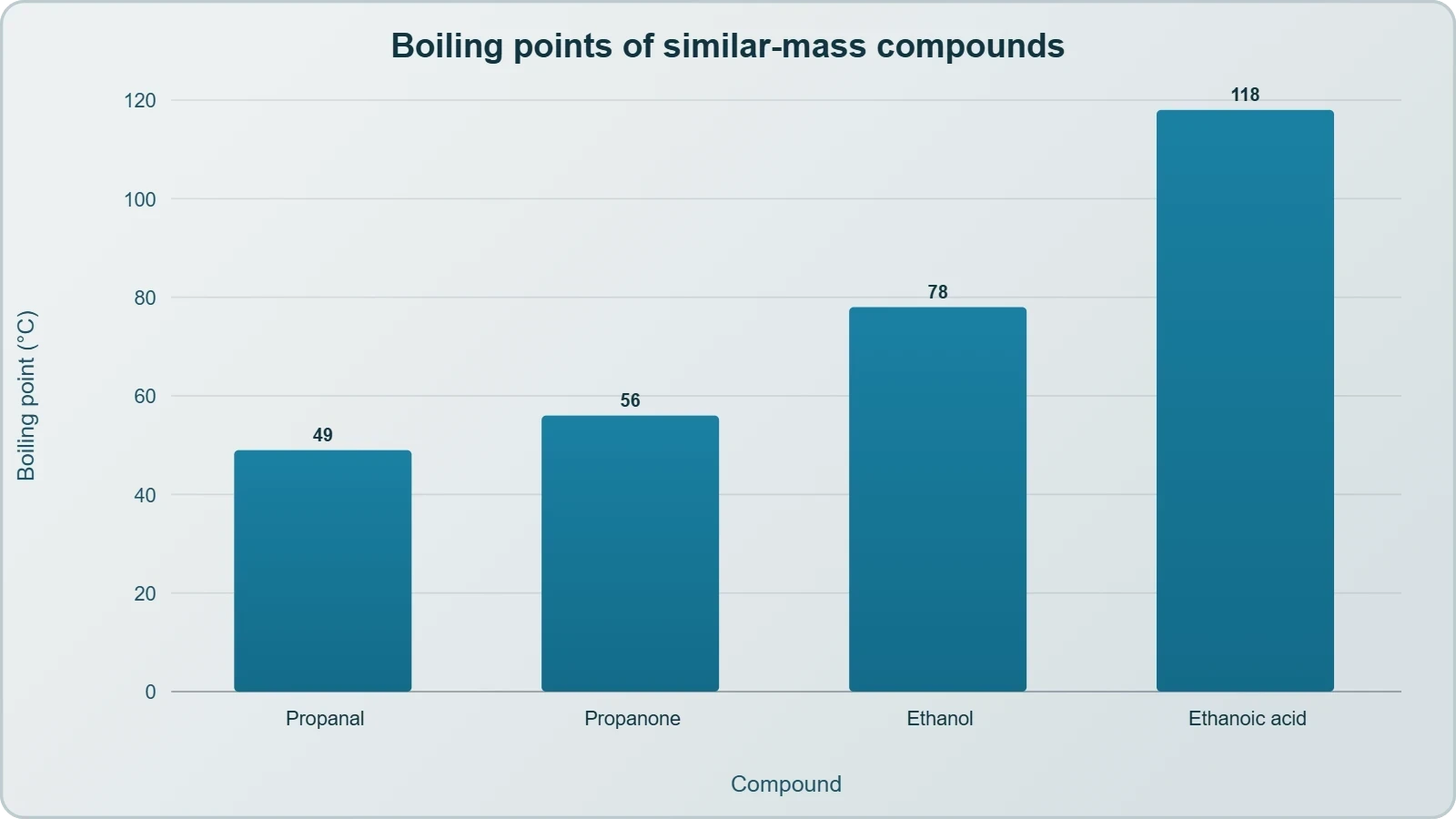
A useful comparison places an aldehyde, a ketone, an alcohol and a carboxylic acid of similar molecular mass side by side. The alcohol and the carboxylic acid boil much higher than the aldehyde and ketone because they can donate hydrogen bonds, while the carboxylic acid exceeds even the alcohol because each molecule can engage in two hydrogen bonds within a dimer. The aldehyde and ketone, limited to dipole–dipole attraction, boil at lower temperatures. The table below presents representative values to make the pattern concrete.
Solubility and Spectroscopic Signatures
Solubility follows the same logic in reverse. Small carbonyl compounds dissolve readily in water because their polar ##\ce{C=O}## group can accept hydrogen bonds from solvent molecules, but as the hydrocarbon chain lengthens the molecule becomes increasingly alkane-like and water-insoluble. This pattern is familiar from alcohols and explains why acetone mixes freely with water while higher ketones do not. In the laboratory, this solubility difference is sometimes used to separate or purify carbonyl compounds from nonpolar impurities.
Spectroscopy offers a powerful way to identify the carbonyl group. In infrared spectra, the ##\ce{C=O}## stretching vibration produces a strong, sharp absorption typically between ##\approx 1700## and ##1750\,\text{cm}^{-1}##, and its exact position shifts with the surrounding structure, so aldehydes, ketones, esters and acids can often be distinguished. In proton nuclear magnetic resonance, the aldehydic hydrogen appears far downfield, near 9–10 ppm, providing another reliable diagnostic signal that students will meet in practical work.
Preparing for Nomenclature and the Lessons Ahead
With the structural and conceptual groundwork in place, the next stage of the course turns to naming these compounds. Aldehydes and ketones are known by both common names, often derived from the corresponding carboxylic acids by replacing the ending –ic with aldehyde, and by systematic IUPAC names. The common names frequently reflect the Latin or Greek term for the original natural source, and substituent positions are indicated by Greek letters such as ##\alpha##, ##\beta##, ##\gamma## and ##\delta##, with the ##\alpha##-carbon being the one directly attached to the aldehyde group.
This lesson has deliberately stopped short of detailed naming rules, preparation methods and named reactions, because those belong to the lessons that follow. What matters now is that students can recognise the carbonyl group in any structure, classify the compound as an aldehyde, ketone, carboxylic acid or derivative, and anticipate the polarity-driven reactivity that will recur throughout. The table below offers a quick self-check of the core ideas before moving on to nomenclature.
Worked Examples and Advanced Insights
Applying the ideas from this lesson to concrete problems consolidates understanding. Consider the task of classifying a set of structures by functional group, or of predicting which of two compounds will react faster with a nucleophile. Such exercises force students to move beyond memorisation and reason from structure to behaviour. The examples below illustrate the kind of reasoning expected, and they preview the problem-solving style that later lessons will develop in greater depth.
Advanced students should also appreciate that carbonyl chemistry extends well beyond the syllabus into modern synthesis and biochemistry. The same polarised bond that allows a simple aldehyde to be reduced to an alcohol also enables the construction of complex drug molecules through sequences of condensation and addition. Recognising this continuity between classroom reactions and real-world chemistry is one of the rewards of studying the carbonyl group carefully, and it prepares students for more specialised work in later courses.
Worked Example: Classifying and Ranking Carbonyl Compounds
Suppose a student is asked to classify propanal, propanone, propanoic acid and propanoyl chloride, and to rank the first two by reactivity toward nucleophilic addition. Propanal is an aldehyde, propanone a ketone, propanoic acid a carboxylic acid and propanoyl chloride an acyl halide. For reactivity, propanal exceeds propanone because the ketone's two methyl groups donate electron density and crowd the carbonyl carbon, reducing both its electrophilicity and its accessibility to an incoming nucleophile.
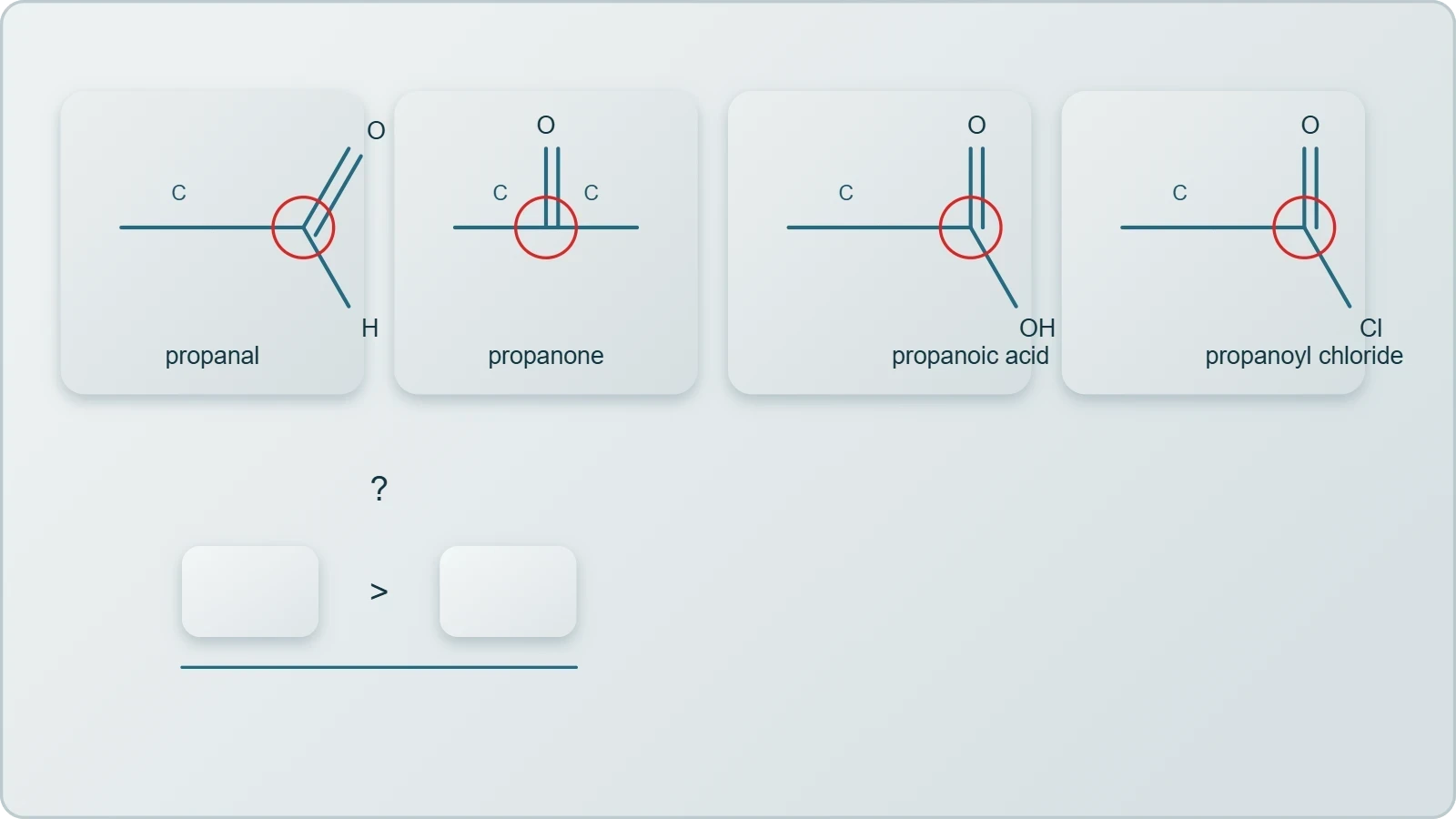
The reasoning can be summarised in a short calculation of the kind used to compare electrophilicity. The partial positive charge on the carbonyl carbon, ##\delta_C##, is reduced by electron-donating alkyl groups, so a ketone's carbon is less positive than an aldehyde's. Combined with the steric factor, this produces the observed ordering. Students should be able to state both reasons clearly, since examiners frequently award marks for identifying electronic and steric effects separately rather than treating reactivity as a single unexplained fact.
Worked Example: Reading a Structure for Functional Groups
A second exercise asks students to inspect a molecule containing several functional groups and identify each one. Consider a compound that contains both an aldehyde and a carboxylic acid unit; the aldehyde carbon is bonded to hydrogen and carbon, while the acid carbon is bonded to a hydroxyl group. Distinguishing them requires attention to the atoms attached to the carbonyl carbon, not merely to the presence of the ##\ce{C=O}## unit, and this habit of careful inspection prevents many errors in later nomenclature and reaction problems.
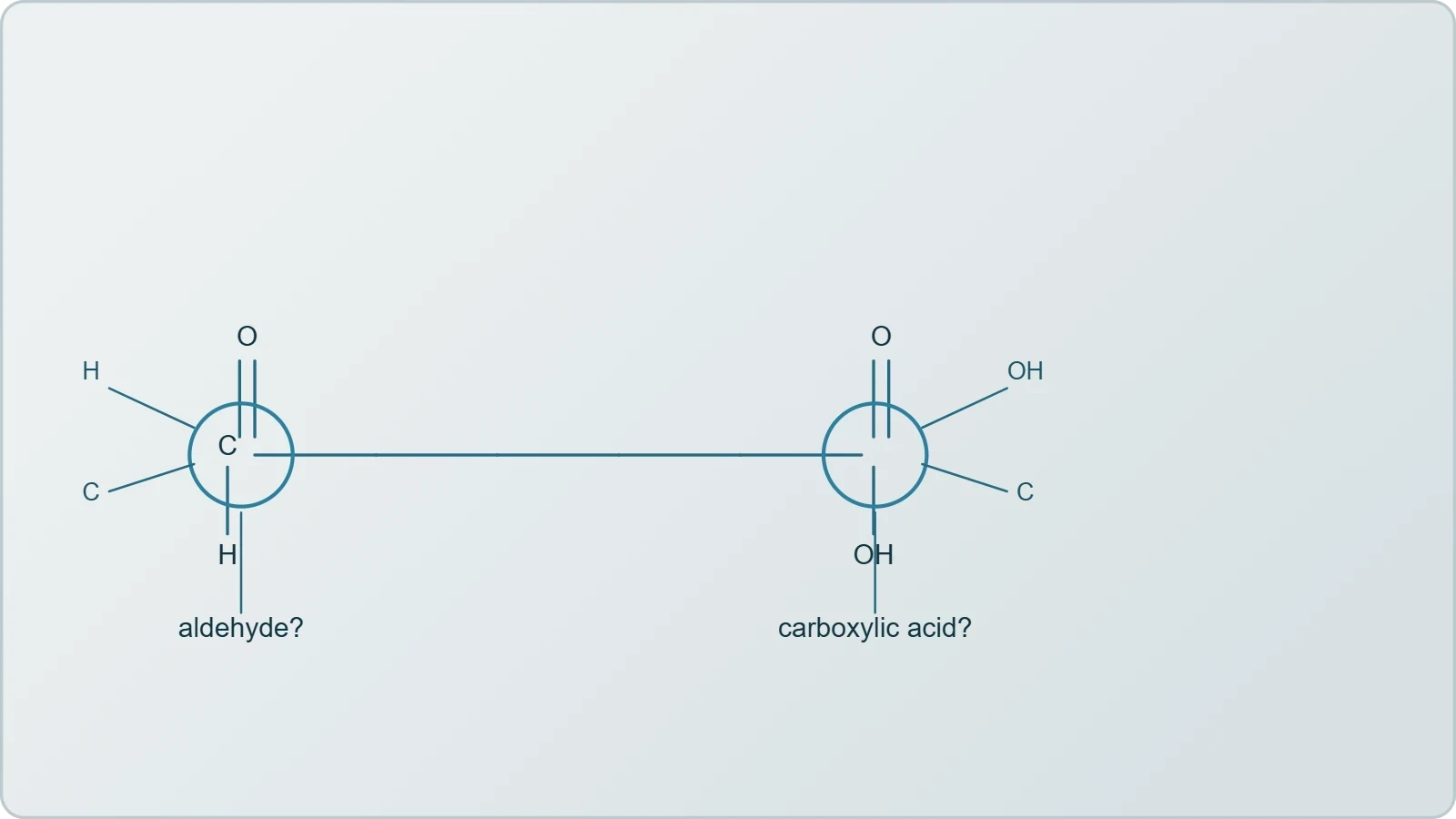
Once the groups are identified, their relative reactivity can be predicted. The aldehyde is more electrophilic and more easily oxidised, while the carboxylic acid is acidic and resistant to nucleophilic addition because its carbonyl carbon is stabilised by resonance from the adjacent oxygen. This contrast illustrates a broader principle: within one molecule, different functional groups retain their characteristic behaviour, and selective reactions can target one while leaving another untouched, a cornerstone of modern synthetic planning.
From our network :
- Analyzing Trump Deportation Numbers Insights Into The 2026 Immigration Crackdown
- Do You Need a New Router or Is Your Internet Plan the Problem?A practical comparison of the signs that point to router limits versus signs your broadband speed or provider is the bottleneck, so you can decide what to replace before spending money.
- 98% of Global MBA Programs Now Prefer GRE Over GMAT Focus EditionExplore why 98% of global MBA programs now prefer the GRE over GMAT Focus. Learn about the shorter GRE format, verbal logic importance, and strategic versatility for students.
- How to Print Cheaply: Cutting the Cost per PageA practical, measured guide to lowering what each printed page costs — duplex and draft modes, third-party ink, yield mathematics, and knowing when a new printer beats refills.
- Where to Put Your Wireless Router for Better CoverageA practical, physics-grounded guide to router placement: why the centre of the home beats the corner, how walls and metal sap signal, and how to run a simple survey that proves the improvement.
- Trump Political Strategy How Geopolitical Stunts Serve As Media Diversions
- AI-Powered 'Precision Diagnostic' Replaces Standard GRE Score ReportsDiscover the new GRE Precision Diagnostic. Learn how AI-powered behavioral analytics and time-to-solve tracking are replacing standard GRE score reports to empower students.
- 10 Physics Numerical Problems with Solutions for IIT JEEPrepare for IIT JEE with 10 physics numerical problems, complete with detailed solutions and conceptual explanations. Ideal for mastering kinematics, thermodynamics, electromagnetism, and optics.
- EV 2.0: The Solid-State Battery Breakthrough and Global Factory ExpansionDiscover the impact of the Solid-State Battery Breakthrough on the EV market. Learn about CATL and BYD stock growth, global factory expansion in Europe, and the future of EV 2.0 technology.