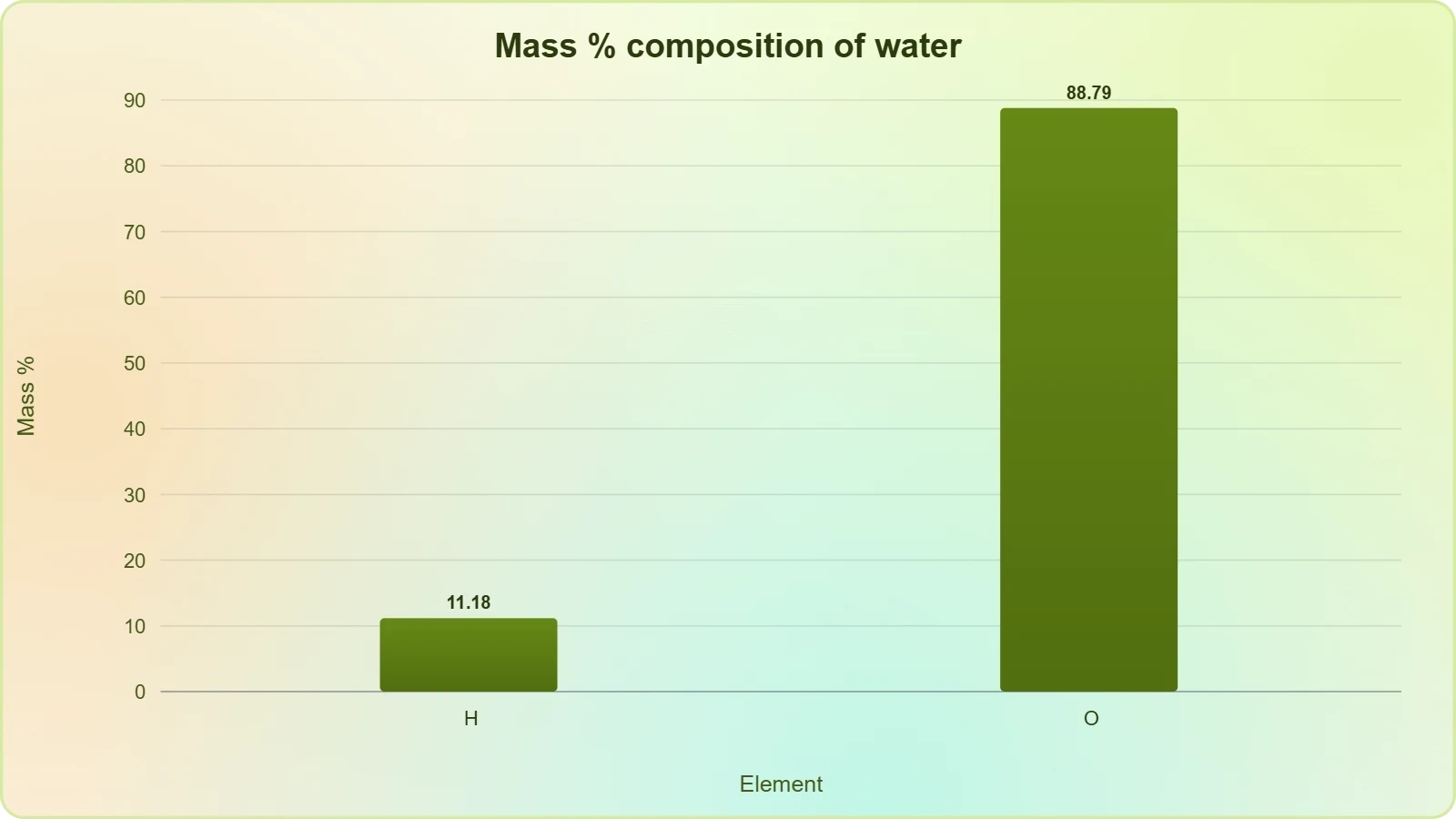
Percentage composition is the quantitative fingerprint of a chemical compound. Every pure substance carries a fixed, reproducible proportion of each element by mass, and that proportion is dictated entirely by the formula and the atomic masses of the constituent atoms. When a chemist determines that water is 11.18% hydrogen and 88.79% oxygen, the result is not an arbitrary measurement but a direct consequence of the ratio of atomic masses within the molecule. This lesson builds on the molar mass calculations you have already practised and shows how to convert a chemical formula into a precise statement of elemental composition, then how to use that statement as an analytical tool.
The practical value of this concept extends far beyond textbook exercises. Percentage composition allows a laboratory analyst to verify whether a purchased reagent is genuinely pure, to characterise an unknown mineral, to assess the quality of an alloy, or to quantify a pollutant in an air sample. Because the theoretical composition of any pure compound is fixed, any deviation from the expected value signals the presence of impurities, moisture, or a different substance altogether. Mastering this calculation therefore equips you with one of the most versatile diagnostic tools in the chemist's repertoire, one that connects the abstract world of formulas to the tangible world of samples and measurements.
In this lesson you will calculate mass percentages from molecular formulas, examine worked examples for water and ethanol, explore how composition data feeds into empirical formula determination, and investigate applications in metallurgy, mineralogy, environmental monitoring, and quality control. You will also confront the distinction between mass percent and volume percent, a distinction that matters greatly in industrial and environmental contexts. By the end, you should be able to move confidently between a formula and its composition, and to interpret composition data critically when it is presented to you.
On This Page
The Fundamental Definition of Mass Percentage
Mass percentage expresses the fraction of a compound's total mass contributed by a particular element, scaled to one hundred. The governing relationship is elegantly simple: the mass of the element present in one mole of the compound is divided by the molar mass of the compound, and the quotient is multiplied by one hundred. Because the formula tells us exactly how many atoms of each element appear in one molecule, the mass of each element in one mole is simply the number of atoms multiplied by the atomic mass of that element. The sum of all elemental masses must equal the molar mass, which provides a built-in arithmetic check on every calculation you perform.
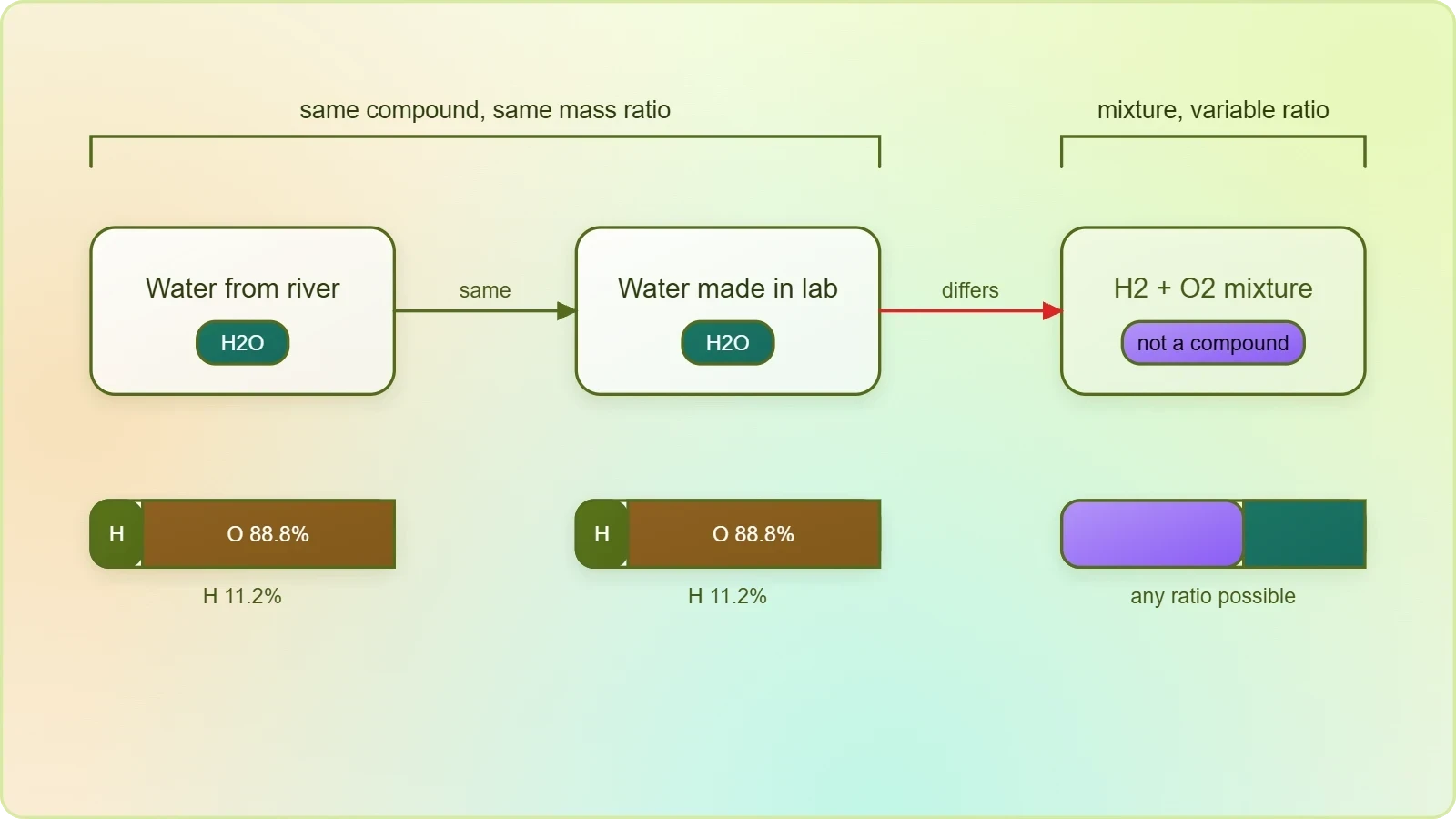
This definition rests on the law of definite proportions, one of the foundational laws of chemical combination. It states that a given compound always contains the same elements in the same proportion by mass, regardless of its source or method of preparation. Pure water from a laboratory still and pure water from a glacier both contain 11.18% hydrogen and 88.79% oxygen. This constancy is what makes percentage composition analytically meaningful: any measured deviation from the theoretical value is evidence of contamination or of a different chemical identity, never a violation of the law itself.
Deriving the Working Formula
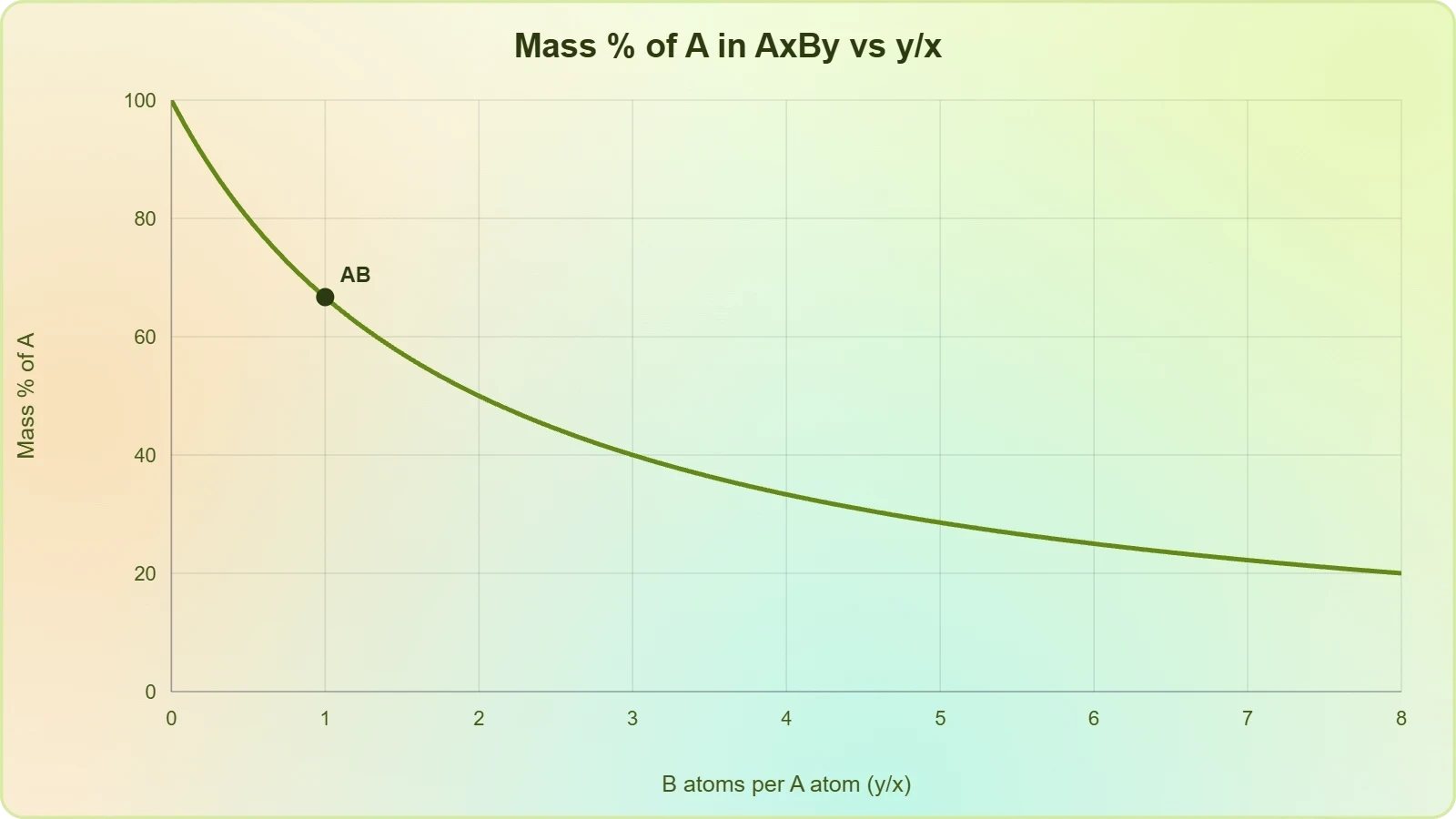
For a compound with molecular formula ##A_xB_y##, the mass percentage of element A is given by the expression below, where ##M_A## and ##M_B## are the atomic masses and ##M## is the molar mass of the compound. The numerator represents the total mass contributed by A in one mole, and the denominator is the total mass of that mole. Because the formula is general, it applies equally to binary compounds, to polyatomic molecules, and to ionic formula units such as sodium chloride or calcium carbonate, where the "molecular formula" is really an empirical formula representing the repeating unit.
A useful consistency condition follows immediately: the sum of the mass percentages of all elements in a compound must equal 100%, within rounding error. If your calculated percentages sum to 99.4% or 100.6%, the discrepancy is almost always due to rounding of atomic masses rather than a conceptual error. Using atomic masses to four significant figures, as in the standard values 1.008 for hydrogen, 12.01 for carbon, 16.00 for oxygen, and 35.45 for chlorine, keeps the accumulated rounding error small. Always verify the sum before reporting a final answer.
Worked Example: Water and Ethanol
Water, ##H_2O##, has a molar mass of 18.02 g/mol. The mass of hydrogen in one mole is ##2 \times 1.008 = 2.016## g, and the mass of oxygen is 16.00 g. Dividing each by 18.02 and multiplying by 100 gives 11.18% hydrogen and 88.79% oxygen, which sum to 99.97%, the small shortfall being pure rounding. Ethanol, ##C_2H_5OH##, contains two carbon, six hydrogen, and one oxygen atom, giving a molar mass of ##(2 \times 12.01) + (6 \times 1.008) + 16.00 = 46.068## g/mol. The corresponding percentages are 52.14% carbon, 13.13% hydrogen, and 34.73% oxygen, which again sum to essentially 100%.
Notice how the ethanol calculation rewards careful bookkeeping. The formula ##C_2H_5OH## is equivalent to ##C_2H_6O##, and the hydrogen count of six is easy to miscount if you treat the hydroxyl group carelessly. Writing the molecular formula in condensed form and then explicitly listing the atom count for each element prevents this error. The same discipline applies to more complex molecules such as glucose, ##C_6H_{12}O_6##, or sulfuric acid, ##H_2SO_4##, where the atom counts are larger and the arithmetic more demanding. A systematic table of element, atom count, atomic mass, and elemental mass is the most reliable way to avoid mistakes.
We Also Published
From Composition Data to Empirical Formula
Percentage composition is not merely a descriptive output; it is also an analytical input. When an unknown compound is subjected to elemental analysis, the instrument reports the mass percentage of each element, and the chemist must reverse the calculation to recover the formula. The procedure, illustrated in the reference problem involving a compound of hydrogen, carbon, and chlorine, proceeds in five disciplined steps. First, assume a 100 g sample so that mass percentages convert directly into grams. Second, divide each mass by the corresponding atomic mass to obtain moles. Third, divide every mole value by the smallest one to obtain a simple ratio. Fourth, if the ratio contains fractions, multiply through by a small integer to reach whole numbers. Fifth, write the empirical formula and, if the molar mass is known, scale it to the molecular formula.
The worked example is instructive. A compound containing 4.07% hydrogen, 24.27% carbon, and 71.65% chlorine yields, in a 100 g sample, 4.07 g H, 24.27 g C, and 71.65 g Cl. Dividing by atomic masses gives approximately 4.04 mol H, 2.02 mol C, and 2.02 mol Cl. Dividing by the smallest value, 2.02, produces a ratio of 2:1:1 for H:C:Cl, so the empirical formula is ##CH_2Cl##. The empirical formula mass is 49.48 g, and dividing the given molar mass of 98.96 g by this value gives n = 2, so the molecular formula is ##C_2H_4Cl_2##, which is 1,2-dichloroethane, a compound historically used as an industrial solvent and once as a lead-scavenging additive in petrol.
Handling Fractional Ratios and Rounding
Real analyses rarely produce perfectly whole-number ratios, and the chemist must exercise judgement. A ratio such as 1:1.33 should be recognised as 3:4 after multiplying by three, while a ratio of 1:1.5 becomes 2:3 after multiplying by two. Ratios close to whole numbers, such as 1:1.98, should be rounded to 1:2, because the deviation reflects experimental uncertainty in the elemental analysis rather than a genuine fractional atom count. The skill lies in distinguishing rounding noise from a true fractional ratio, and this judgement improves with practice and with attention to the precision of the analytical data.
A common mistake is to divide by the smallest mole value before checking whether the resulting ratios are close to integers. Another is to forget that the empirical formula represents the simplest ratio, not necessarily the actual molecule. Acetic acid and glucose share the empirical formula ##CH_2O## but have molecular formulas ##C_2H_4O_2## and ##C_6H_{12}O_6## respectively, with molar masses of 60.05 g/mol and 180.16 g/mol. Only the molar mass, determined independently by methods such as mass spectrometry or freezing-point depression, distinguishes them. The next lesson develops this relationship between empirical and molecular formulas in full detail.
Verifying Purity Through Composition
Because the theoretical composition of a pure compound is fixed, a measured composition that deviates from it is a direct indicator of impurity. A sample of calcium carbonate labelled as pure should contain 40.04% calcium, 12.00% carbon, and 47.96% oxygen. If analysis returns only 38.5% calcium, the shortfall suggests contamination by a calcium-poor material such as silica or clay, or the presence of moisture. Industrial quality control laboratories routinely perform this check on incoming raw materials, and pharmaceutical monographs specify acceptable composition ranges for active ingredients. The logic is straightforward: purity is defined by conformity to a known compositional signature.
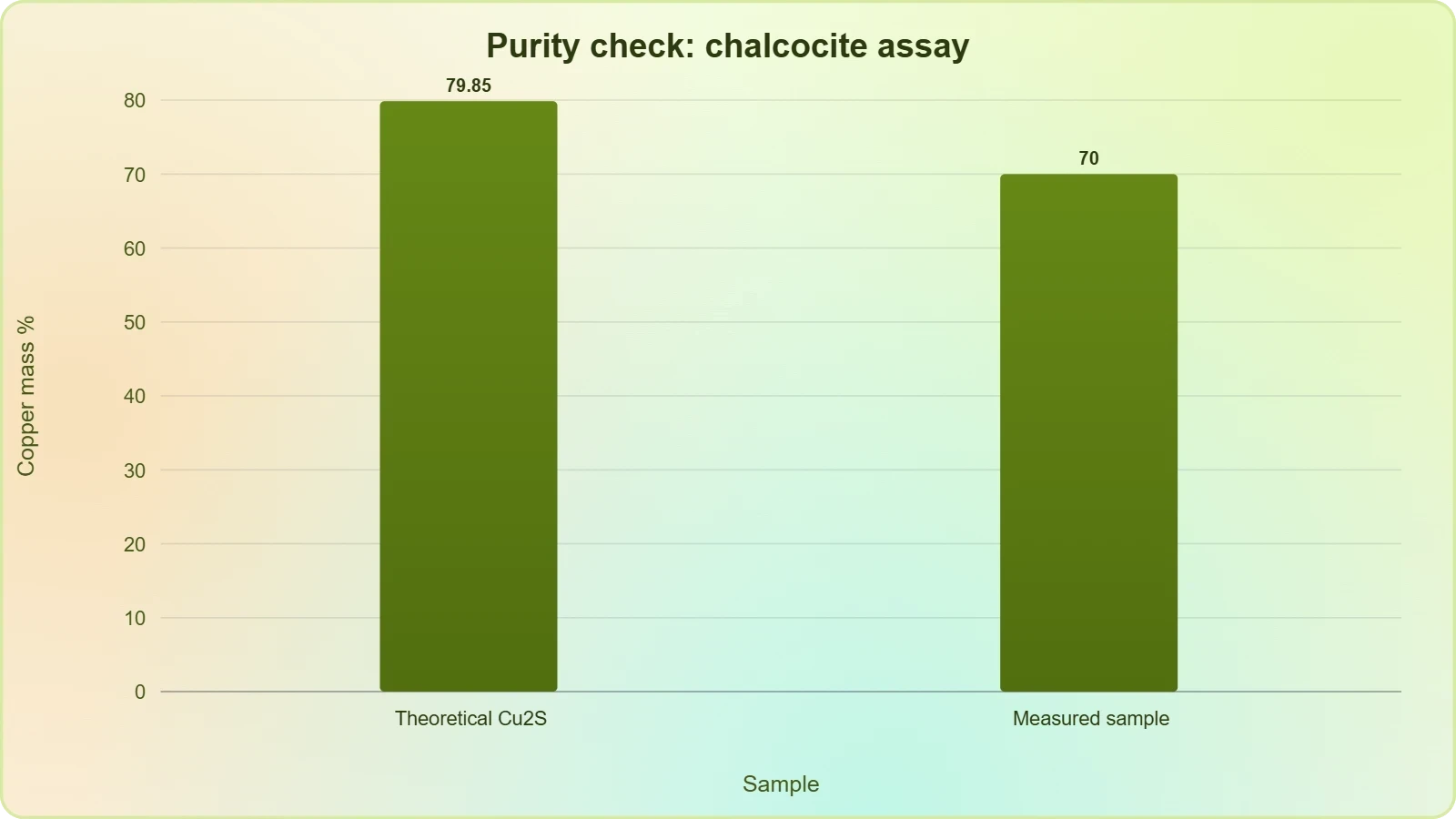
This principle also underpins the assay of ores and minerals. A copper ore described as chalcocite, ##Cu_2S##, should contain 79.85% copper and 20.15% sulfur by mass. If a sample assays at 70% copper, the discrepancy indicates that the ore is mixed with gangue minerals or that the mineral is not pure chalcocite. Mining companies use such assays to grade ore bodies and to decide whether extraction is economically viable. The same reasoning applies to the analysis of fertilisers, where the percentage of nitrogen, phosphorus, or potassium determines the product grade and its market price.
Mass Percent in Alloys and Industrial Mixtures
Alloys are homogeneous mixtures of metals, and their properties depend critically on composition. Brass, for example, is an alloy of copper and zinc, and its mass percentage of zinc determines whether it behaves as a soft, ductile metal suitable for decorative work or a harder alloy used in bearings and fittings. Stainless steel contains chromium at concentrations typically between 10.5% and 18% by mass, and it is this chromium content that forms the protective oxide layer responsible for corrosion resistance. In each case, the mass percentage is the specification: a purchaser orders an alloy by composition, and the supplier certifies it by analysis.
The calculation for a mixture differs subtly from that for a pure compound. In a compound, the mass percentage of an element is fixed by the formula and is a theoretical quantity. In an alloy or mixture, the mass percentage is an empirical measurement that can vary continuously across a range. A brass sample containing 30% zinc by mass means that 30 g of every 100 g of alloy is zinc, with the remainder almost entirely copper. This is a statement about the mixture's bulk composition, not about a molecular formula, because alloys generally do not have a fixed stoichiometric formula. The distinction matters when interpreting analytical certificates.
Carat, Fineness, and Compositional Standards
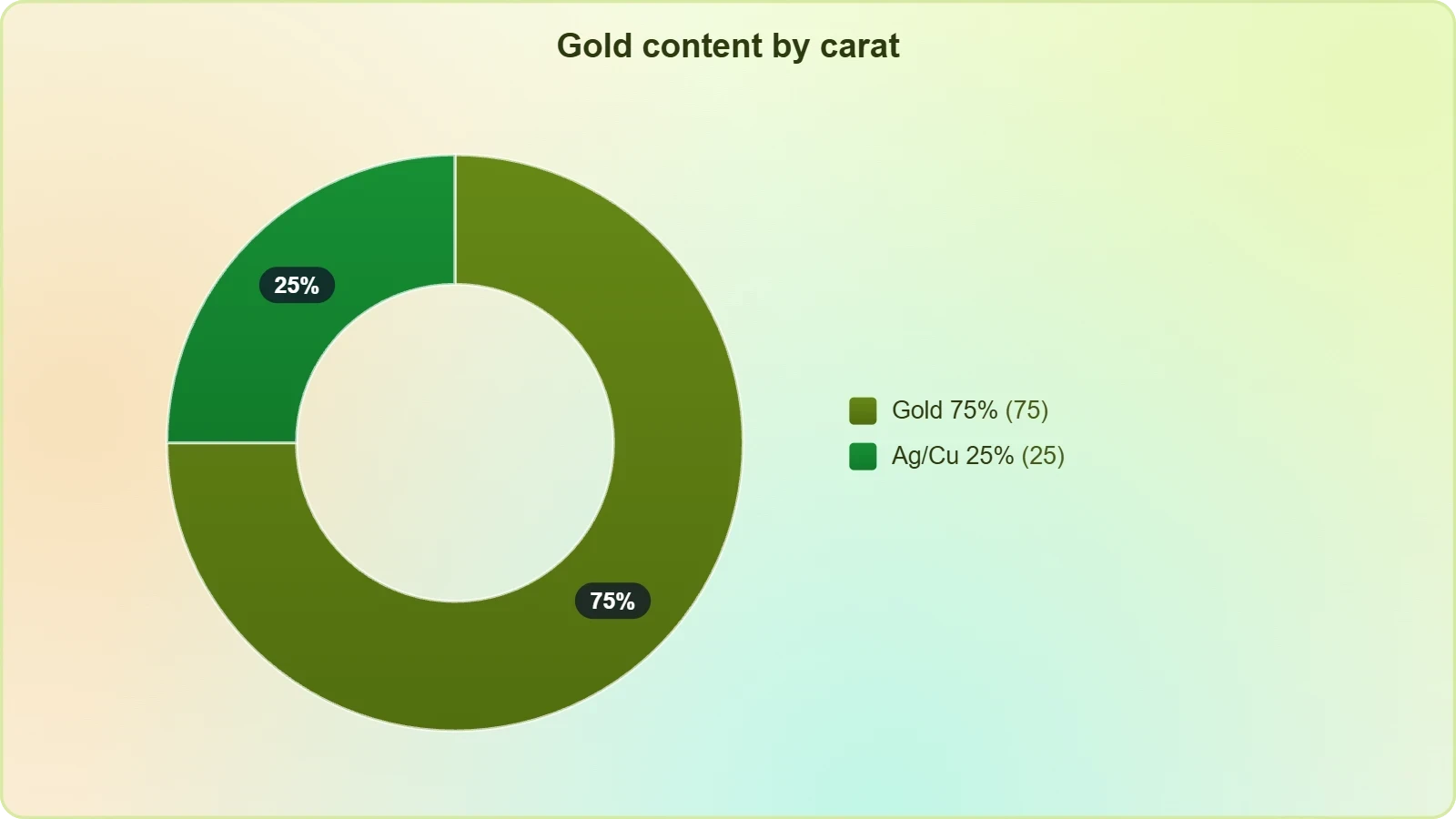
Precious metals are graded by composition standards that are themselves mass-percentage conventions. Pure gold is defined as 24 carat, so 18-carat gold contains ##18/24 = 75\%## gold by mass, with the balance made up of silver, copper, or other metals added to control hardness and colour. The term "fineness" expresses the same idea in parts per thousand: sterling silver is 925 fineness, meaning 92.5% silver by mass. These conventions illustrate how deeply mass percentage is embedded in commerce and craftsmanship, and how a single number can encode both quality and value.
Pharmaceutical and food labelling follows similar logic. A tablet declared to contain 500 mg of paracetamol is specified by mass, and the percentage of the active ingredient relative to total tablet mass determines the formulation's efficiency. Food labels report the percentage by mass of fat, protein, and carbohydrate, allowing consumers and regulators to assess nutritional content. In every case, the underlying calculation is the same: the mass of the component of interest divided by the total mass of the sample, multiplied by one hundred. The contexts differ, but the arithmetic is universal.
Mass Balance in Reactions and Processes
Percentage composition connects naturally to the principle of mass balance, which states that the total mass of reactants consumed in a chemical reaction equals the total mass of products formed. In the combustion of methane, ##CH_4 + 2O_2 \rightarrow CO_2 + 2H_2O##, 16 g of methane reacts with 64 g of oxygen to produce 44 g of carbon dioxide and 36 g of water, and the totals on each side, 80 g, agree exactly. This conservation is the foundation of stoichiometric calculation and of industrial material accounting, where every input and output stream is weighed and reconciled.
Mass balance also allows the composition of a product to be predicted from the composition of the feed. If a fertiliser manufacturer knows the mass percentage of nitrogen in the ammonia feedstock, the mass balance of the conversion to urea determines the nitrogen content of the final product. Any shortfall in the measured nitrogen percentage of the product signals losses in the process, perhaps through incomplete conversion or through volatilisation. Industrial chemists use this reasoning to calculate yields and to identify inefficiencies, making percentage composition a tool not only of analysis but of process engineering.
Environmental Analysis and Pollutant Quantification
Percentage composition plays a central role in environmental monitoring, where the concentration of a pollutant is often expressed as a mass percentage or a closely related mass-based ratio. Carbon dioxide in the atmosphere, for instance, is currently present at roughly 420 parts per million by volume, which corresponds to about 0.064% by mass given the molar masses of carbon dioxide and air. Sulfur dioxide emitted from coal combustion is monitored in the same way, and the sulfur content of the coal itself is specified as a mass percentage because it determines how much sulfur dioxide will be released per tonne burned. Regulations therefore translate directly into compositional limits on fuels.
Particulate matter analysis provides another example. A filter sample collected from an air-quality monitoring station is weighed before and after exposure, and the mass of collected particulate is expressed as a concentration in micrograms per cubic metre of air. When the composition of the particulate is analysed, the mass percentages of sulfate, nitrate, and carbonaceous material reveal the sources of pollution, whether industrial, vehicular, or natural. This compositional fingerprinting guides public health policy and helps regulators target the most significant contributors to poor air quality.
Mass Percent Versus Volume Percent
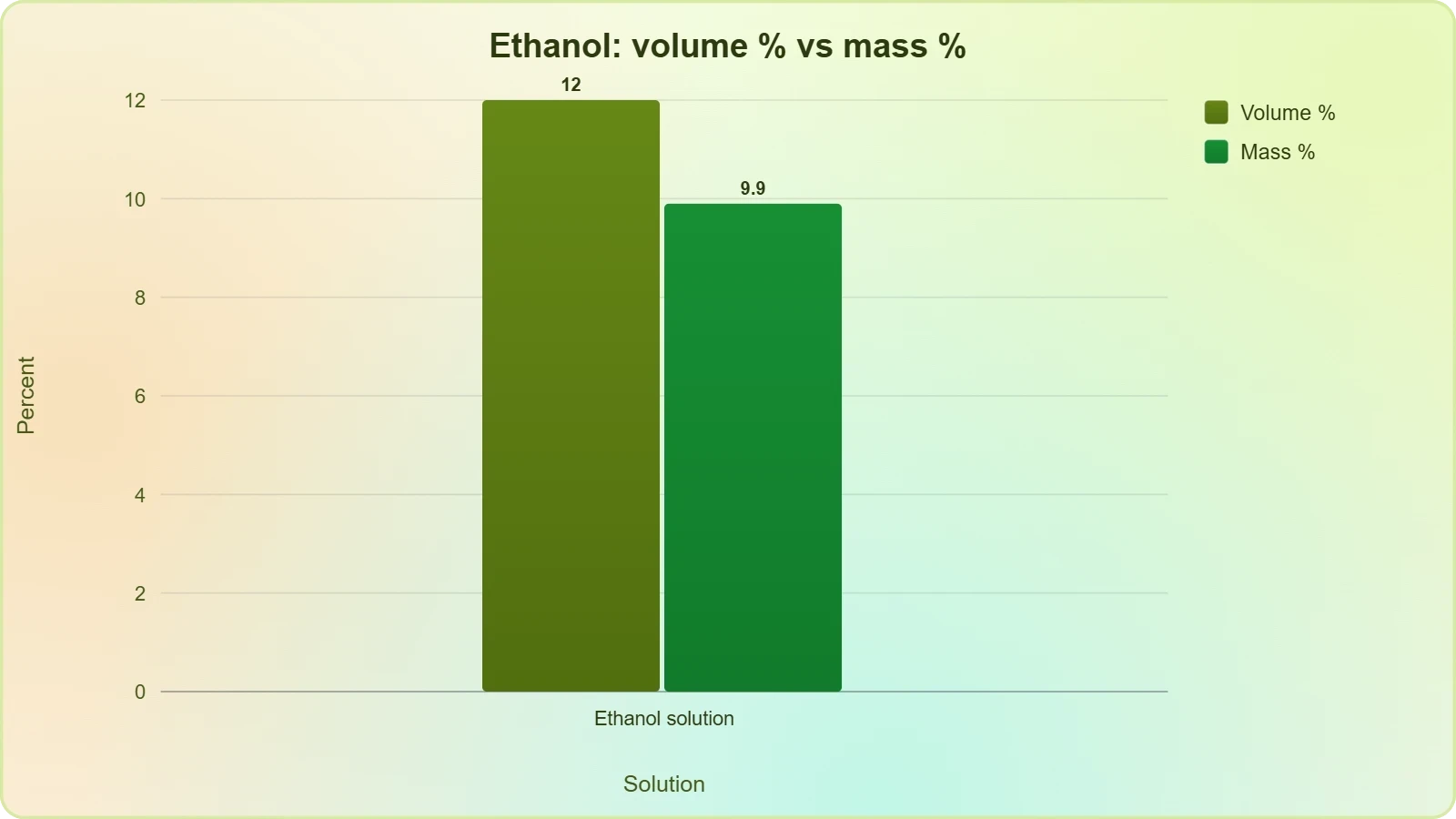
A critical distinction arises when the composition of a gas mixture or a liquid solution is reported. Mass percent expresses the mass of a component divided by the total mass, while volume percent expresses the volume of a component divided by the total volume. For gases, volume percent is often used because volumes are easier to measure and, under the ideal gas approximation, volume is proportional to mole fraction. For liquids, volume percent is common in commercial contexts, as in the alcohol content of beverages, where a "12% ABV" wine contains 12 mL of ethanol per 100 mL of solution. The two measures are not interchangeable.
The difference becomes significant when the densities of the components differ substantially. Ethanol has a density of about 0.789 g/mL, while water has a density of 1.00 g/mL, so a solution that is 12% ethanol by volume is only about 9.9% ethanol by mass. Confusing the two can lead to serious errors in formulation, dosing, or regulatory compliance. In atmospheric chemistry, the distinction between parts per million by volume and by mass likewise affects the interpretation of emissions data. Always check which basis is being used before comparing or converting composition figures.
Common Errors and Advanced Considerations
Several recurring errors undermine otherwise sound calculations. The most frequent is miscounting atoms in a condensed formula, particularly when a hydroxyl or carboxyl group is written separately, as in ##C_2H_5OH##. Another is using the atomic mass of an element when the formula contains a polyatomic ion, such as forgetting that the sulfate group ##SO_4## contributes four oxygen atoms. A third is rounding intermediate values too aggressively, which can shift the final percentage by several tenths. The remedy is a disciplined tabular approach: list each element, its atom count, its atomic mass, and its elemental mass, then sum and divide.
A subtler issue concerns significant figures. The atomic masses used in a calculation carry a certain precision, and the final percentage should not be reported with more significant figures than the least precise input justifies. Reporting water as 11.1847% hydrogen implies a precision that the underlying atomic masses do not support. Two decimal places are conventional for percentage composition, and this convention should be followed unless the analytical context demands otherwise. Consistency in rounding also ensures that the elemental percentages sum to 100% within the expected tolerance.
Hydrates, Solvates, and Non-Stoichiometric Compounds
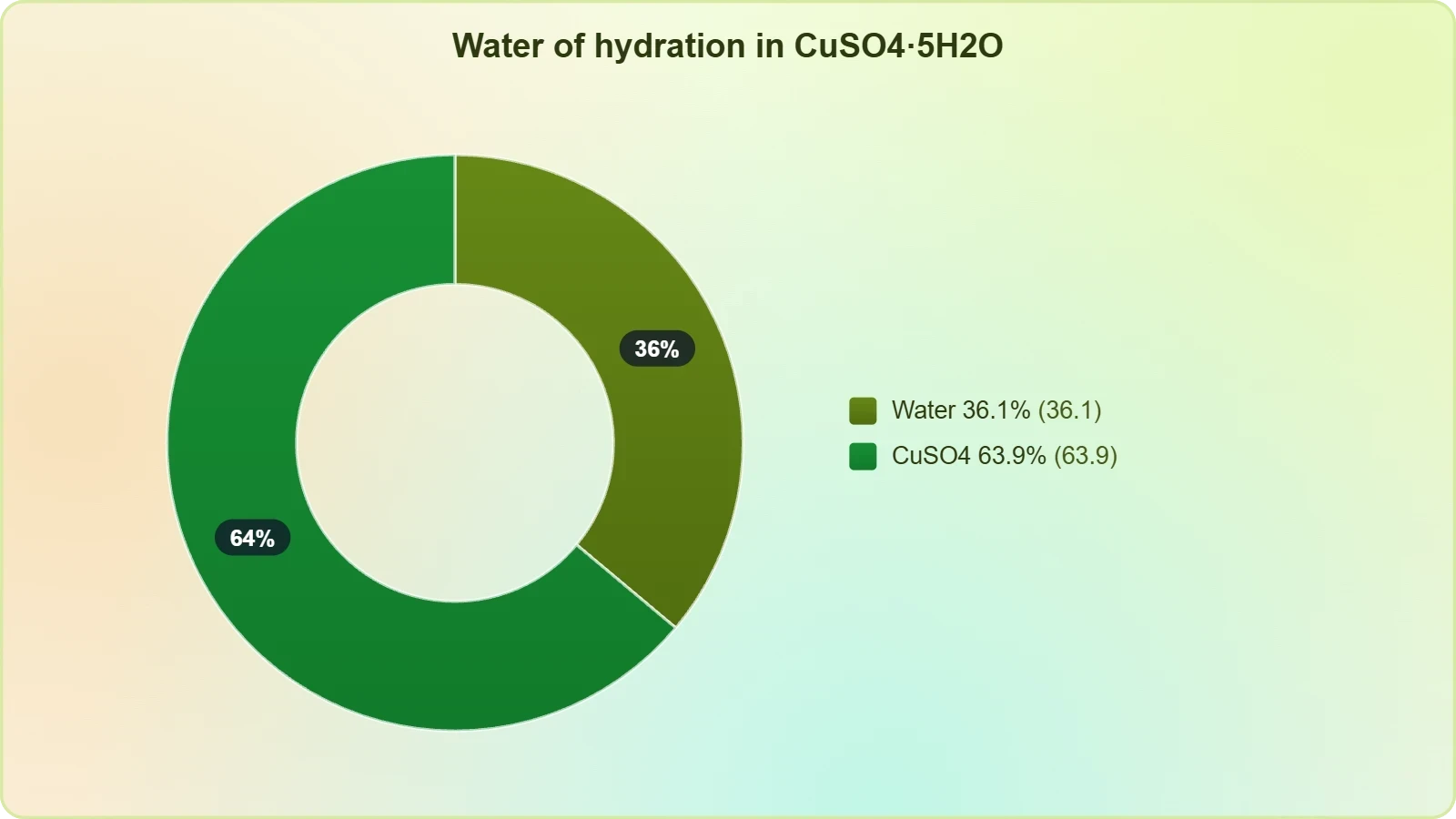
Many ionic compounds crystallise with water of hydration, and the percentage composition must account for the water molecules. Copper sulfate pentahydrate, ##CuSO_4 \cdot 5H_2O##, has a molar mass of 249.68 g/mol, of which 90.08 g is water, so the compound is 36.08% water by mass. Heating drives off this water to leave the anhydrous salt, and the mass loss observed on heating provides a direct experimental measure of the water content. This is the basis of the classical gravimetric determination of hydration number, and it illustrates how percentage composition can be measured rather than merely calculated.
Some solid compounds are non-stoichiometric, meaning their composition deviates slightly from simple whole-number ratios. Iron(II) oxide, for example, is typically deficient in iron, with a composition ranging from about ##Fe_{0.84}O## to ##Fe_{0.95}O## depending on preparation. In such cases, the mass percentage of iron is not a single fixed value but a range, and the concept of a definite composition must be applied with care. These materials are important in catalysis and in semiconductor physics, where small compositional variations produce significant changes in electronic and chemical behaviour.
Composition and the Road to Molecular Formula
The determination of percentage composition is the first stage of a longer analytical sequence. Once the mass percentages are known, the empirical formula follows, and once the molar mass is known, the molecular formula follows in turn. This chain, from composition to empirical formula to molecular formula, is one of the central logical structures of chemistry, and it recurs throughout organic and inorganic analysis. The next lesson develops the empirical and molecular formula relationship in detail, building directly on the compositional calculations practised here.
It is worth appreciating how much information a single percentage figure can carry. A reported sulfur content of 2.5% in a coal sample tells an environmental chemist how much sulfur dioxide will be released per tonne of fuel, informs a power station operator about the need for flue-gas desulfurisation, and guides a regulator in setting emission limits. The same number, interpreted through the lens of stoichiometry and mass balance, connects the molecular scale to the industrial and environmental scales. Percentage composition is thus a bridge concept, linking the formula on the page to the consequences in the world.
Practical Determination and Laboratory Technique
Although percentage composition is usually calculated from a formula, it can also be measured experimentally, and the two approaches should agree. The classical method is gravimetric analysis: the element of interest is converted into a pure, weighable compound, and the mass of that compound is used to back-calculate the mass of the element in the original sample. For example, chloride in a sample can be precipitated as silver chloride, ##AgCl##, whose mass, combined with the known composition of silver chloride, reveals the chloride content of the original material. The technique is slow but highly accurate and remains a benchmark against which instrumental methods are validated.
Modern laboratories rely more heavily on instrumental techniques such as combustion analysis, atomic absorption spectroscopy, and inductively coupled plasma mass spectrometry. In combustion analysis, a sample is burned in oxygen, and the carbon dioxide and water produced are captured and weighed, allowing the carbon and hydrogen content to be calculated. These methods are fast and require small samples, but they still depend on the same stoichiometric relationships. The percentage composition reported by an instrument is only as reliable as the calibration and the sample preparation, and the chemist must always interpret the output critically.
Worked Laboratory Calculation
Suppose a 2.500 g sample of an impure carbonate is treated with acid, and the carbon dioxide evolved is absorbed in a weighed tube. If the tube gains 0.880 g of carbon dioxide, the moles of carbon dioxide are ##0.880 / 44.01 = 0.0200## mol, and since each mole of carbonate releases one mole of carbon dioxide, the sample contains 0.0200 mol of carbonate. If the carbonate is calcium carbonate, the mass of pure calcium carbonate is ##0.0200 \times 100.09 = 2.002## g, so the sample is 80.1% calcium carbonate by mass. The remaining 19.9% is impurity, and this figure would be reported on the certificate of analysis.
This calculation demonstrates the integration of several concepts: the mole, molar mass, stoichiometry, and percentage composition. It also shows how a measured mass of a product can be converted into a statement about the composition of a reactant. The same logic underlies the determination of purity in pharmaceutical, metallurgical, and environmental laboratories, and it is the practical counterpart to the formula-based calculations practised earlier in this lesson. Mastery of both approaches, theoretical and experimental, is what distinguishes a competent analytical chemist.
Consolidating the Concept
Percentage composition is the quantitative expression of the law of definite proportions, and it serves as a bridge between the molecular formula and the analytical laboratory. From a formula and a table of atomic masses, you can calculate the mass percentage of every element in a compound, verify that the percentages sum to 100%, and use the result to check the purity of a sample or to grade an ore. From measured percentages, you can reverse the calculation to recover the empirical formula and, with the molar mass, the molecular formula. The same arithmetic underpins alloy specification, environmental monitoring, pharmaceutical quality control, and industrial mass balance.
The lesson has also drawn attention to the distinctions that matter in practice: mass percent versus volume percent, theoretical composition versus measured composition, stoichiometric compounds versus non-stoichiometric ones, and the treatment of hydrates. Each distinction carries consequences for how a composition figure should be interpreted and reported. A chemist who understands these nuances can move confidently between the formula on the page and the sample on the bench, and can judge when a deviation from the expected composition is significant and when it is merely rounding noise.
As you proceed to the next lesson on empirical and molecular formulas, carry forward the discipline of the tabular calculation and the habit of checking that percentages sum to 100%. The empirical formula is the natural next step from composition data, and the molecular formula follows once the molar mass is known. Together, these concepts form the analytical backbone of quantitative chemistry, and they will recur in every subsequent topic, from reaction stoichiometry to the characterisation of new materials. The ability to calculate and interpret percentage composition is therefore not an isolated skill but a foundation for everything that follows.
From our network :
- Trump Political Strategy How Geopolitical Stunts Serve As Media Diversions
- Analyzing Trump Deportation Numbers Insights Into The 2026 Immigration Crackdown
- EV 2.0: The Solid-State Battery Breakthrough and Global Factory ExpansionDiscover the impact of the Solid-State Battery Breakthrough on the EV market. Learn about CATL and BYD stock growth, global factory expansion in Europe, and the future of EV 2.0 technology.
- Do You Need a New Router or Is Your Internet Plan the Problem?A practical comparison of the signs that point to router limits versus signs your broadband speed or provider is the bottleneck, so you can decide what to replace before spending money.
- 98% of Global MBA Programs Now Prefer GRE Over GMAT Focus EditionExplore why 98% of global MBA programs now prefer the GRE over GMAT Focus. Learn about the shorter GRE format, verbal logic importance, and strategic versatility for students.
- AI-Powered 'Precision Diagnostic' Replaces Standard GRE Score ReportsDiscover the new GRE Precision Diagnostic. Learn how AI-powered behavioral analytics and time-to-solve tracking are replacing standard GRE score reports to empower students.
- Where to Put Your Wireless Router for Better CoverageA practical, physics-grounded guide to router placement: why the centre of the home beats the corner, how walls and metal sap signal, and how to run a simple survey that proves the improvement.
- How to Print Cheaply: Cutting the Cost per PageA practical, measured guide to lowering what each printed page costs — duplex and draft modes, third-party ink, yield mathematics, and knowing when a new printer beats refills.
- 10 Physics Numerical Problems with Solutions for IIT JEEPrepare for IIT JEE with 10 physics numerical problems, complete with detailed solutions and conceptual explanations. Ideal for mastering kinematics, thermodynamics, electromagnetism, and optics.
RESOURCES
- 2.10: Percent Composition - Chemistry LibreTextschem.libretexts.orgJul 6, 2019 ... Mass Percent Composition · Find the molar mass of all the elements in the compound in grams per mole. ·…
- 5.3 Percent Composition – CHEM 1114 – Introduction to Chemistrypressbooks.bccampus.caGiven the chemical formula of the substance, we were able to determine the amount of the substance (moles) from its mass, and vice versa.…
- Percent Composition - Calculations, Methods, Examples and ...flexbooks.ck12.orgThe percent composition is the percent by mass of each element in a compound. It is calculated in a similar way that we just…
- Determination of percent composition of a mixture analyzed by gas ...pubmed.ncbi.nlm.nih.govWe present the results of a study of percent composition for a mixture which has been separated by gas chromatography and analyzed using helium ...
- 3.2 Determining Empirical and Molecular Formulas - Chemistry 2eopenstax.orgFeb 14, 2019 ... By the end of this section, you will be able to: Compute the percent composition of a compound; Determine the…
- Determine the molecular formula of the compound using percentage ...chemistry.stackexchange.comDec 16, 2014 ... You're actually on the right track. Looking at the percent composition, you've correctly identified that the ratio of C to…
- Calculate empirical formula when given percent composition datachemteam.info6) Divide the molecule weight by the "EFW:". 64.07 / 64 = 1. 7) Use the scaling factor computed just above to determine the…
- Determination of Rose Alcohol Composition in Extracts and Flowers ...pmc.ncbi.nlm.nih.govNov 4, 2025 ... The percent composition of each rose alcohol in the headspace, as determined via the SPME method, was utilized to construct…
- California Code of Regulations, Title 8, Section 5194. Hazard ...dir.ca.gov... the stability of the substance or changing its composition. ... (10) If the Director determines that the specific chemical identity or percentage composition ...
- gas chromatography - Purdue Universitychem.purdue.eduDETERMINING THE PERCENT COMPOSITION OF A MIXTURE OF. VOLATILE LIQUIDS USING A GAS CHROMATOGRAPH. (Revised: 1-12-93). INTRODUCTION. Gas chromatography is a ...
- Percent Composition and Empirical Formula - A New Viewpubs.acs.orgJul 1, 1998 ... The method involves the determination of a minimum molar mass for the compound based on the percentage of each element,…
- Chemistry 702: Percentage Composition and Empirical Formulasgpb.orgStudents learn how to determine the limiting reactant in a chemical equation. Chemistry 803: Limiting Reactants · Describe the kinetic ...
- Fluorimetric determination of sphingosine and its application to ...jlr.orgThe percentage composition of a glycosphingolipid mixture from the kidneys of adult C57/BL male mice is given. SUPPLEMENTARY KEY WORDS glycosyl cerainides.
- Empirical & Molecular Formulas | Notes - Pearsonpearson.com... percent composition, mass-to-mole conversions, and formula determination ... To determine the empirical formula from percentage composition, follow these steps:.
- Mass Percent Composition | Definition, Related Videos & FAQs - JoVEjove.comIn chemistry, it is determined by dividing an element's mass in one mole of the compound, calculated from its atomic mass and subscript in…