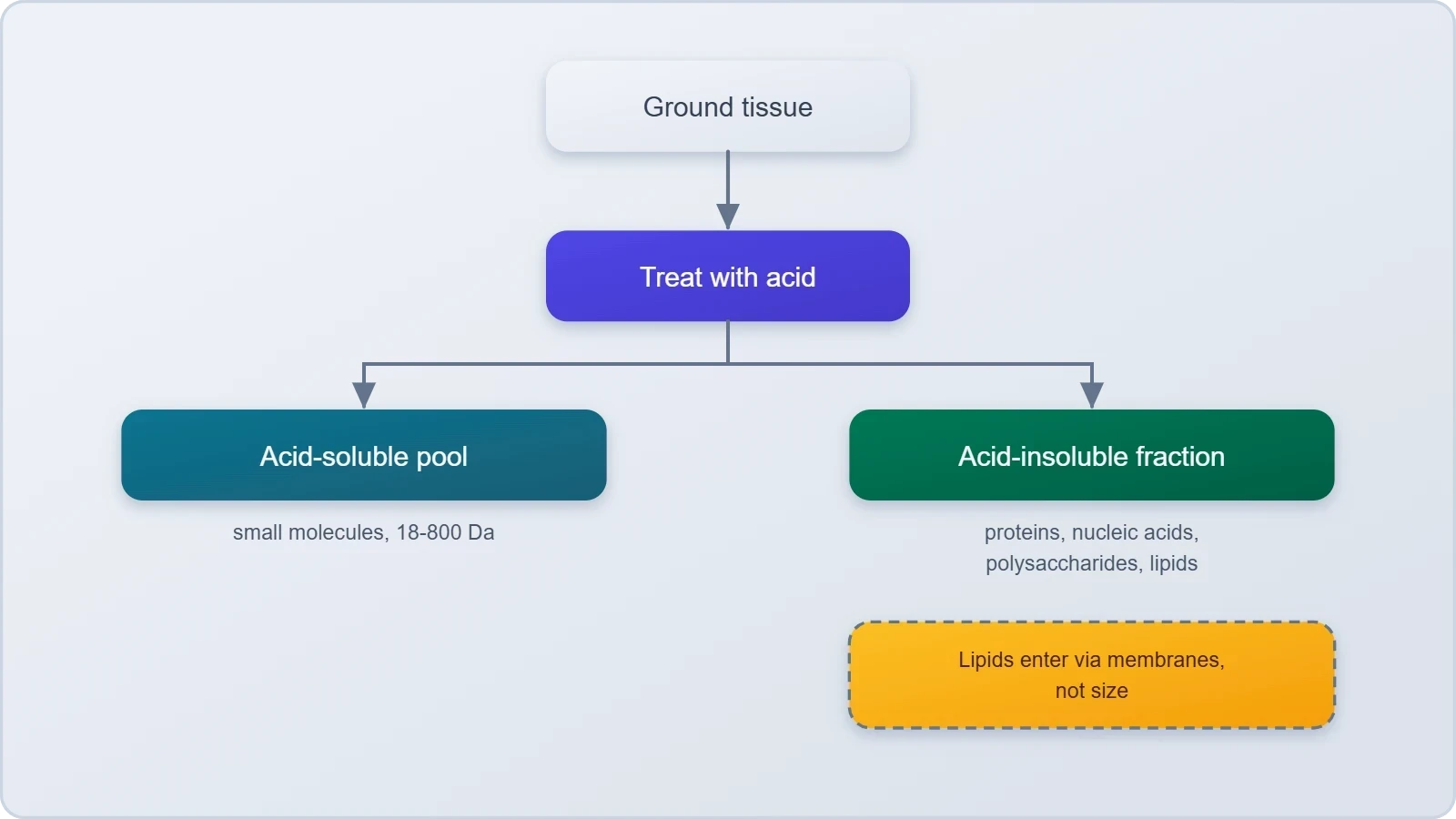
Every living tissue, when ground and treated with acid, separates into two fractions that reveal something fundamental about the architecture of life. One fraction dissolves readily and contains small molecules; the other resists dissolution and holds the large polymeric structures that give cells their form and function. This division is not arbitrary. It reflects a genuine chemical boundary between the lightweight currency of metabolism and the heavy machinery of biological structure. Understanding this boundary is essential for anyone studying biomolecules, because it explains why certain compounds behave the way they do during extraction and analysis.
The acid-insoluble fraction is deceptively simple in composition: it contains only four classes of organic compounds—proteins, nucleic acids, polysaccharides, and lipids. Yet these four classes account for the structural and functional backbone of every organism. What makes this fraction particularly instructive is the apparent anomaly of lipids. These molecules are small by molecular weight standards, rarely exceeding 800 daltons, yet they consistently appear in the macromolecular fraction. Resolving this apparent contradiction requires understanding how cellular membranes behave when tissues are disrupted, and why physical behaviour during extraction matters as much as molecular size.
This lesson builds directly on the distinction between primary and secondary metabolites established earlier, and it prepares the ground for a detailed examination of proteins in the lessons that follow. By the end, you will understand the molecular weight ranges that define each fraction, the four organic compound types in the acid-insoluble pool, the reason lipids separate with macromolecules despite their small size, and the overall abundance of chemicals in living organisms. Each concept connects to the next, forming a coherent picture of how life organises its chemistry.
On This Page
The Acid-Soluble Pool and Its Molecular Weight Range
The acid-soluble pool represents roughly the cytoplasmic composition of a cell. When tissue is ground and treated with acid, the small molecules dissolve into the solution while the larger structures remain suspended as insoluble material. This soluble fraction contains an extraordinary diversity of compounds—amino acids, sugars, nucleotides, and countless other small organic molecules—all sharing one defining characteristic: their molecular weights fall within a relatively narrow and modest range. This range, from approximately 18 to around 800 daltons, defines what biochemists call micromolecules or simply biomolecules.
Defining Micromolecules by Size
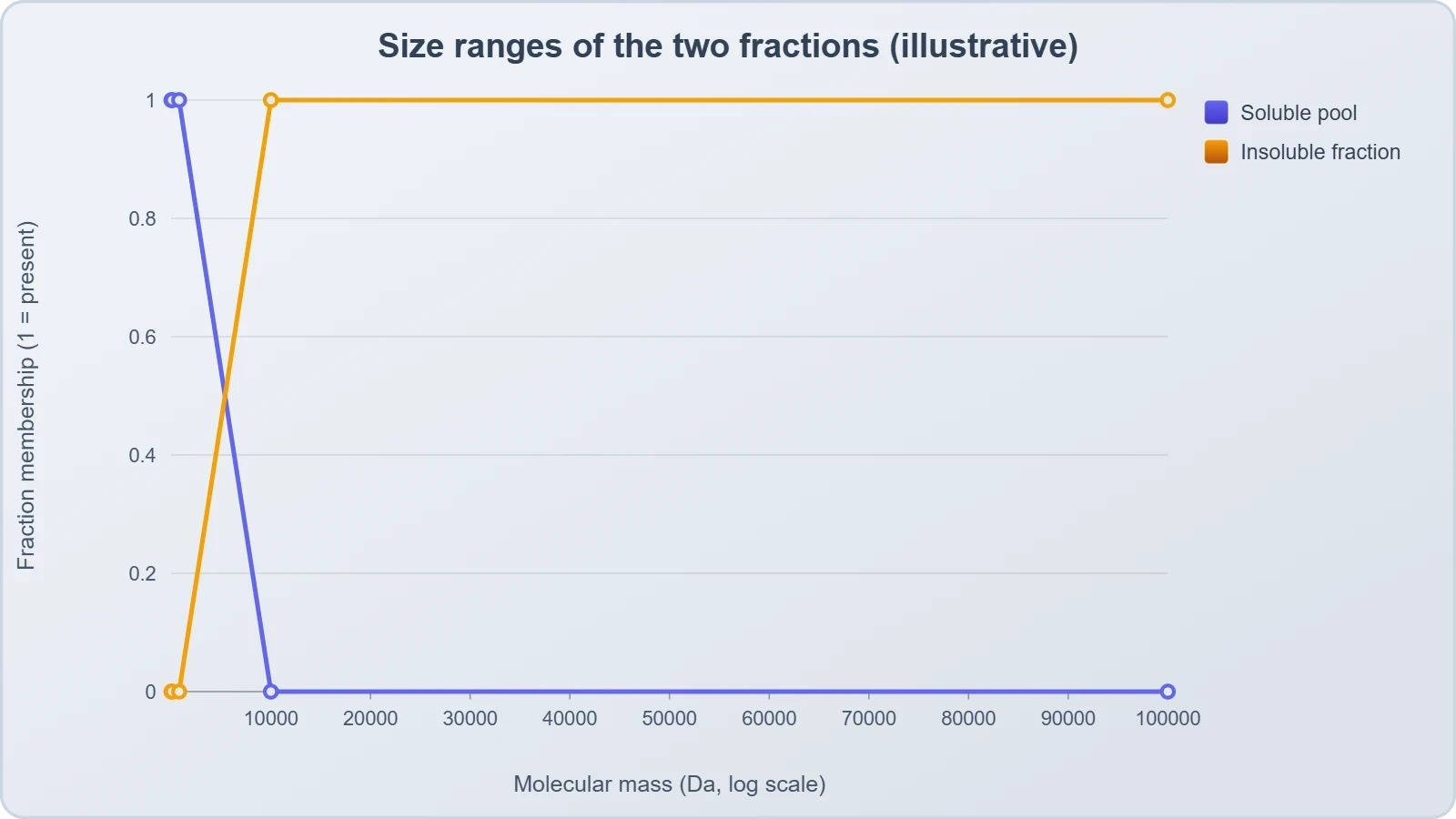
The lower boundary of 18 daltons corresponds to water, the smallest and most abundant molecule in living systems. The upper boundary of approximately 800 daltons captures the largest of the small organic compounds, including certain nucleotides and small peptides. Any compound falling within this window is classified as a micromolecule. These molecules are the working currency of metabolism—they participate directly in reactions, serve as building blocks for larger structures, and regulate physiological processes. Their small size allows them to move freely through cellular compartments and to dissolve readily in the aqueous environment of the cytoplasm.
The term "biomolecule" in this context carries a specific meaning that differs from its broader usage. While all compounds found in living organisms are technically biomolecules, the classification system used here reserves the term for those small, acid-soluble compounds with molecular weights below one thousand daltons. This distinction matters because it separates the dynamic, reactive small molecules from the stable, structural macromolecules. The acid-soluble pool thus represents the metabolically active fraction of the cell—the compounds that are constantly being synthesised, broken down, and transformed.
The Four Types of Organic Compounds in the Insoluble Fraction
The acid-insoluble fraction presents a striking contrast in complexity. Where the soluble pool contains thousands of diverse small compounds, the insoluble fraction contains only four types of organic compounds: proteins, nucleic acids, polysaccharides, and lipids. This remarkable simplicity at the class level belies enormous complexity within each category. Proteins alone can contain thousands of distinct molecular species, each with a unique sequence of amino acids. Yet all of them belong to a single chemical class defined by their polymeric nature and their behaviour during acid extraction.
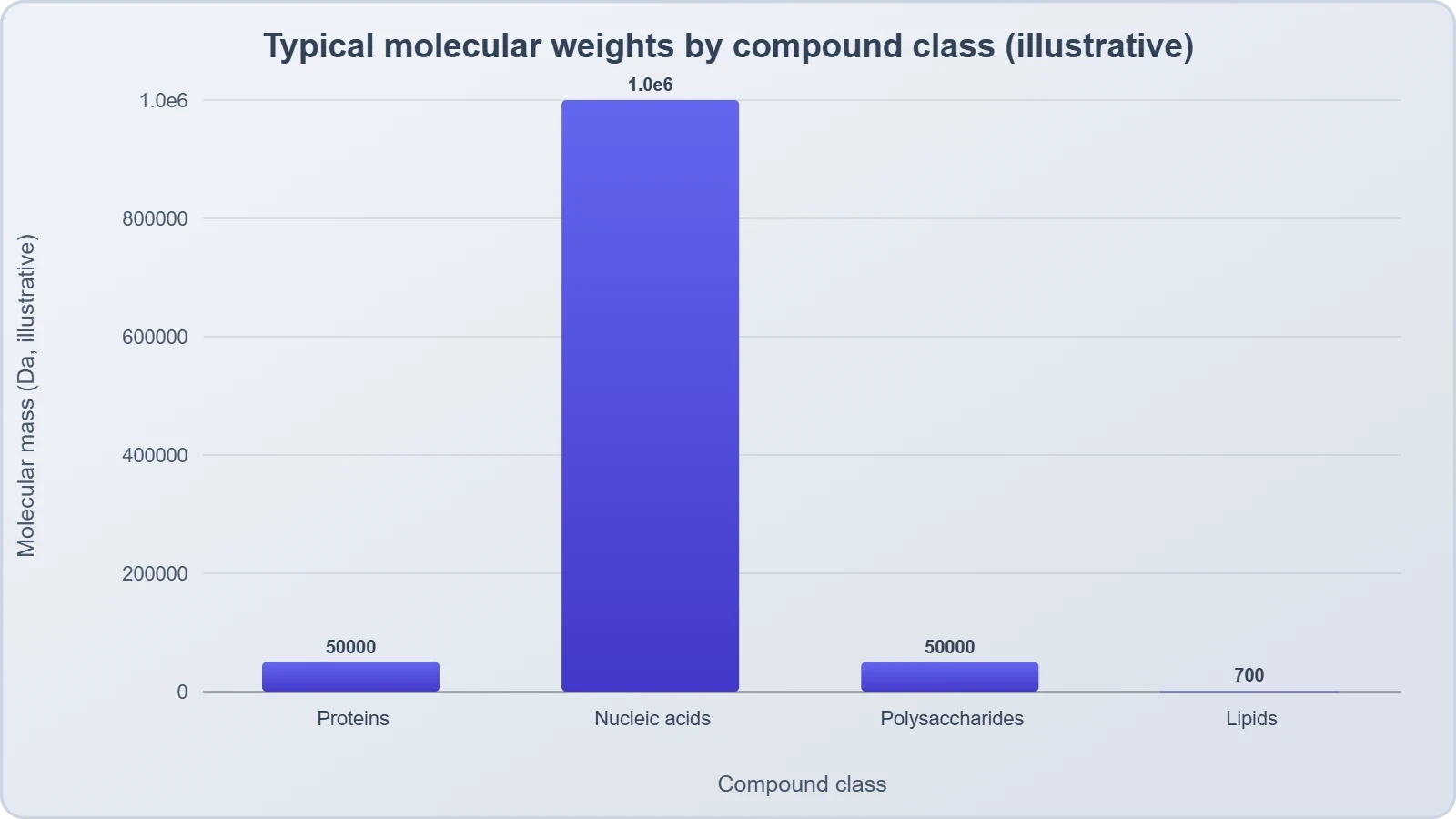
With the exception of lipids, these compounds share a defining characteristic: their molecular weights reach ten thousand daltons and above. This size threshold separates them decisively from the micromolecules of the soluble pool. Proteins, nucleic acids, and polysaccharides are all polymeric substances—they consist of repeating monomer units linked together in long chains. This polymeric structure accounts for their large size and their insolubility in acid. When we speak of macromolecules or biomacromolecules, we refer specifically to these large polymeric compounds that form the structural and functional infrastructure of cells.
Why Lipids Separate with the Macromolecular Fraction
The presence of lipids in the acid-insoluble fraction presents one of the most instructive anomalies in the study of biomolecules. By molecular weight alone, lipids belong firmly in the micromolecule category. Their masses rarely exceed 800 daltons, placing them squarely within the range of the acid-soluble pool. Yet when tissue is ground and treated with acid, lipids consistently appear in the insoluble fraction alongside proteins, nucleic acids, and polysaccharides. This apparent contradiction is not a flaw in the classification system but rather a window into how cellular organisation influences chemical behaviour.
The Role of Membrane Structure
Lipids in living tissues do not exist merely as isolated molecules floating in solution. They are arranged into highly organised structures, most notably the cell membrane and the membranes of various organelles. These membranes consist of lipid bilayers studded with proteins, forming a continuous barrier that separates the cell's interior from its environment and compartmentalises its internal functions. When a tissue is ground during extraction, the mechanical force disrupts these membrane structures, breaking them into fragments. These fragments do not dissolve in water; instead, they form vesicles—small, sealed sacs of membrane material that remain suspended in the aqueous medium.
These vesicles behave physically like large particles rather than dissolved molecules. They cannot pass through the filters or centrifugation steps that separate soluble from insoluble material. Consequently, the lipids trapped within these membrane fragments are carried into the acid-insoluble fraction along with the proteins and other macromolecules. The lipids themselves remain small molecules, but their supramolecular organisation—their arrangement into membranes—confers upon them the physical properties of macromolecular structures. This distinction between molecular size and supramolecular behaviour is a recurring theme in biochemistry.
Lipids as Non-Polymeric Macromolecular Components
It is worth emphasising that lipids are not strictly macromolecules. Unlike proteins, nucleic acids, and polysaccharides, they are not polymeric substances built from repeating monomer units. A triglyceride, for example, consists of a glycerol backbone esterified to three fatty acid chains—a discrete, finite structure rather than an extended chain. Cholesterol and phospholipids similarly possess defined molecular architectures with no repeating backbone. Their classification as macromolecular components is therefore a matter of operational convenience rather than chemical definition. They appear in the macromolecular fraction because of where they reside in the cell, not because of what they are made of.
This operational classification has practical consequences for how biochemists study cellular composition. When analysing the macromolecular fraction, one must remember that it contains both true polymers and membrane-associated small molecules. The presence of lipids in this fraction also explains why membrane proteins are so difficult to study in isolation—they are intimately associated with lipids that travel with them through extraction procedures. Understanding this association is essential for anyone working with membrane biochemistry or designing protocols for protein purification.
The Two Fractions Together Represent the Entire Chemical Composition
The acid-soluble and acid-insoluble fractions are complementary, not competing, descriptions of cellular chemistry. The soluble pool represents roughly the cytoplasmic composition—the small molecules dissolved in the aqueous interior of the cell. The insoluble fraction contains the macromolecules from both the cytoplasm and the organelles, including the membrane structures that compartmentalise the cell. Together, these two fractions account for the entire chemical composition of living tissues. No compound is lost between them; every molecule in the cell belongs to one fraction or the other, and the boundary between them is defined by behaviour during acid extraction.
Cytoplasmic and Organellar Contributions
The cytoplasm contributes to both fractions. Small metabolites dissolve into the acid-soluble pool, while cytoplasmic proteins and ribosomes—themselves complex assemblies of RNA and protein—remain in the insoluble fraction. Organelles contribute primarily to the insoluble fraction, as their membranes and internal structures fragment during grinding and join the macromolecular pool. This distribution explains why the insoluble fraction is so rich in membrane-associated components and why its analysis requires disruption of cellular architecture. The soluble pool, by contrast, can be analysed with relatively gentle methods that preserve the native state of small molecules.
Understanding this division helps explain why different analytical techniques are required for different classes of biomolecules. Small metabolites can be studied using techniques such as chromatography and mass spectrometry that work well with dissolved compounds. Macromolecules require techniques that can handle large, often insoluble structures—electrophoresis for proteins, ultracentrifugation for nucleic acids, and specialized methods for membrane proteins that must be extracted from lipid environments. The fractionation scheme thus serves as a practical guide for experimental design as well as a conceptual framework for understanding cellular composition.
Abundance of Chemicals in Living Organisms
When the chemical composition of living tissue is arranged by abundance, a clear hierarchy emerges. Water is by far the most abundant chemical, constituting 70 to 90 percent of total cellular mass. This dominance of water reflects its role as the solvent in which all cellular chemistry occurs. Among organic compounds, proteins are the most abundant, accounting for 10 to 15 percent of cellular mass. Nucleic acids follow at 5 to 7 percent, carbohydrates at approximately 3 percent, and lipids at about 2 percent. Ions contribute roughly 1 percent. This distribution reveals the priorities of cellular organisation: water provides the medium, proteins perform most of the work, and the other classes play supporting roles.
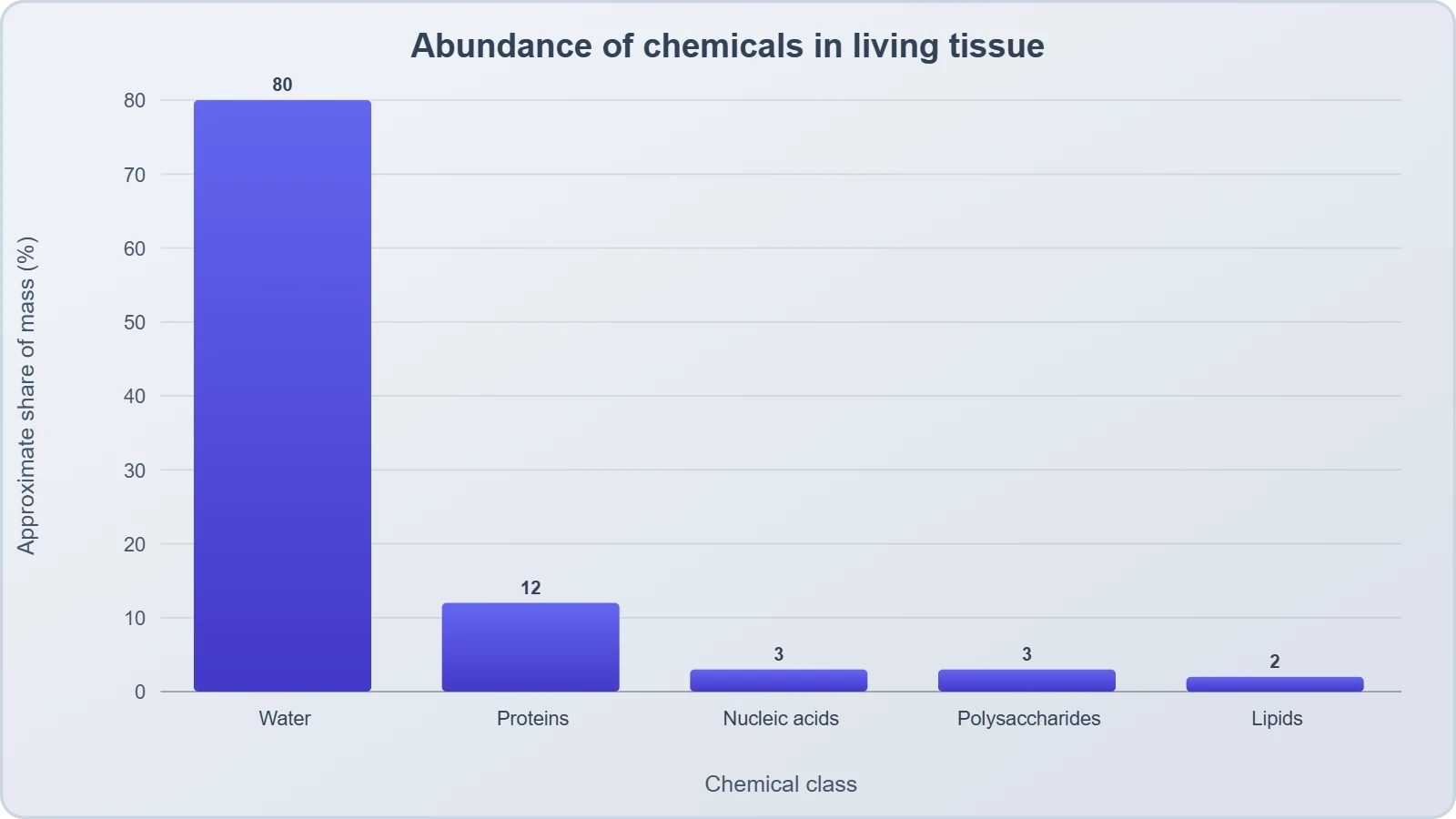
The abundance of proteins is particularly striking when compared to their structural complexity. As heteropolymers built from twenty different amino acids, proteins can adopt an enormous variety of forms and functions. This versatility explains why they dominate the cellular workforce. Nucleic acids, though less abundant by mass, carry the information required to build and maintain the entire system. Carbohydrates serve both structural and energy-storage roles, while lipids, despite their modest abundance, form the membranes that define cellular boundaries. Each class contributes uniquely to the living system, and their relative abundances reflect the balance of structural, functional, and informational demands.
Proteins as Heteropolymers of Amino Acids
Proteins occupy a special place among the macromolecules of the acid-insoluble fraction. They are polypeptides—linear chains of amino acids linked by peptide bonds—and they perform an extraordinary range of functions in living organisms. Some transport nutrients across cell membranes, some fight infectious organisms, some serve as hormones, and some function as enzymes that catalyse the chemical reactions of life. The diversity of protein function arises from the diversity of protein structure, which in turn arises from the sequence of amino acids in each polypeptide chain. Understanding proteins begins with understanding their building blocks and the bonds that connect them.
The Peptide Bond and Polymer Structure
Amino acids are joined together by peptide bonds, which form between the carboxyl group of one amino acid and the amino group of the next. This linkage creates a linear chain with a repeating backbone and variable side chains extending from each residue. The sequence of amino acids in a protein is determined by the genetic information encoded in DNA, and this sequence ultimately determines the protein's three-dimensional structure and function. The peptide bond itself is a covalent linkage that is stable under physiological conditions, allowing proteins to maintain their structure over time and to perform their functions reliably within the cellular environment.
The polymeric nature of proteins distinguishes them from the small molecules of the acid-soluble pool. A protein may contain hundreds or even thousands of amino acid residues, giving it a molecular weight far above the 10,000-dalton threshold that defines the macromolecular fraction. This large size is essential to protein function: it allows proteins to fold into complex three-dimensional shapes with specific binding sites, catalytic centres, and interaction surfaces. The size and complexity of proteins also explain why they are so abundant in cells—they are the molecular machines that carry out the work of life.
Heteropolymers Versus Homopolymers
Proteins are heteropolymers, meaning they are built from more than one type of monomer. There are twenty types of amino acids that commonly occur in proteins, including alanine, cysteine, proline, tryptophan, and lysine. A homopolymer, by contrast, has only one type of monomer repeating n number of times. The heteropolymeric nature of proteins is fundamental to their functional diversity. If proteins were homopolymers, they could not achieve the structural complexity required for catalysis, recognition, and regulation. The sequence of different amino acids along the chain creates the information that directs protein folding and function.
This information about amino acid content has practical importance for nutrition. Certain amino acids are essential for human health and must be supplied through the diet, while others can be synthesised by the body. Dietary proteins are therefore the source of essential amino acids. The distinction between essential and non-essential amino acids reflects the metabolic capabilities of the organism: non-essential amino acids can be made from other compounds, while essential amino acids cannot. This nutritional dimension of protein chemistry connects the molecular structure of proteins to the physiological needs of the organism, illustrating how biochemistry informs our understanding of health and disease.
Going Further: Context and Connections
The dalton, the unit of mass used throughout this lesson, is named after John Dalton, the English chemist and physicist who pioneered atomic theory in the early nineteenth century. One dalton is approximately equal to the mass of a single hydrogen atom, making it a convenient unit for expressing the masses of molecules. When we say that a protein has a molecular weight of 50,000 daltons, we mean that its mass is roughly fifty thousand times that of a hydrogen atom. This scale helps us appreciate the enormous size difference between the small metabolites of the acid-soluble pool and the macromolecules of the insoluble fraction.
The behaviour of lipids during tissue extraction also connects to a broader principle in cell biology: the importance of membranes. Cell membranes are made largely of lipids and proteins, arranged in a bilayer that separates the interior of the cell from its surroundings. This organisation explains why membrane fragments appear in the insoluble fraction—the lipids are not free molecules but structural components of a larger assembly. Understanding this principle helps explain not only the fractionation behaviour of lipids but also the broader role of membranes in cellular organisation, signalling, and transport. The acid-insoluble fraction thus provides a window into the structural logic of the cell.
Also Read
- No links available.
From our network :
- Mastering DB2 LUW v12 Tables: A Comprehensive Technical GuideComprehensive guide on DB2 LUW v12 tables. Explore CREATE TABLE syntax, BLU Acceleration, range partitioning, data types, and security features for IBM DB2 LUW v12.
- Mastering DB2 12.1 Instance Design: A Technical Deep Dive into Modern Database ArchitectureComprehensive guide to DB2 12.1 Instance Design. Explore architectural components, HADR setup, buffer pool tuning, and security policies for IBM DB2 12.1. Includes 10 functional SQL and Shell samples.
- 10 Physics Numerical Problems with Solutions for IIT JEEPrepare for IIT JEE with 10 physics numerical problems, complete with detailed solutions and conceptual explanations. Ideal for mastering kinematics, thermodynamics, electromagnetism, and optics.
- Vite 6/7 'Cold Start' Regression in Massive Module GraphsIn-depth analysis of Vite 6/7 cold start regressions in massive module graphs. Learn about barrel file issues, pre-bundling optimizations, and how to improve Vite dev server performance.
- EV 2.0: The Solid-State Battery Breakthrough and Global Factory ExpansionDiscover the impact of the Solid-State Battery Breakthrough on the EV market. Learn about CATL and BYD stock growth, global factory expansion in Europe, and the future of EV 2.0 technology.
- Analyzing Trump Deportation Numbers Insights Into The 2026 Immigration Crackdown
- 98% of Global MBA Programs Now Prefer GRE Over GMAT Focus EditionExplore why 98% of global MBA programs now prefer the GRE over GMAT Focus. Learn about the shorter GRE format, verbal logic importance, and strategic versatility for students.
- AI-Powered 'Precision Diagnostic' Replaces Standard GRE Score ReportsDiscover the new GRE Precision Diagnostic. Learn how AI-powered behavioral analytics and time-to-solve tracking are replacing standard GRE score reports to empower students.
- Trump Political Strategy How Geopolitical Stunts Serve As Media Diversions
RESOURCES
- Molecular signatures of biomacromolecules at micron and ...sciencedirect.com... acid-etched shells or acid-insoluble organic matrix (OM), i.e. shell biopolymers. For fossil acid-insoluble fraction, organic extract was bleached in a 1:2 ...
- Biomacromolecules | CK-12 Foundationflexbooks.ck12.orgThe acid-insoluble fraction contained proteins, polysaccharides such as starch, and nucleic acids, all polymeric macromolecules >10,000 Da contributing to ...
- A Strategy for the Sequential Recovery of Biomacromolecules from ...pubs.acs.orgNov 28, 2017 ... Water-soluble polysaccharides were then extracted from the insoluble residual fraction using sequential alkaline and acidic treatments at 90 °C ...
- What are the biomacromolecules found in the acid-insoluble fraction ...biology.lifeeasy.orgThe biomacromolecules found in the acid-insoluble fraction of the cell are polysaccharides, proteins, lipids and nucleic acids.
- How many of the following statements are incorrect:-i) Acid insoluble ...askfilo.comDec 5, 2024 ... Text solution. Concepts: Acid insoluble fraction, Molecular weight, Micromolecules, Biomacromolecules, Biomolecules. Explanation: To determine ...
- Which of the following organic compounds are present in acid ...allen.inTo solve the question of which organic compounds are present in the acid insoluble fraction but are not strictly biomacromolecules, we can follow these ...
- Degradation of Biomacromolecules during High‐Rate Composting ...acsess.onlinelibrary.wiley.comSep 1, 2001 ... ... insoluble in 13.5 mol L−1 sulfuric acid. Lipids were solubilized by ... Whole soil and humic acid fraction. Geoderma…
- Biomacromolecules and nucleic acids | PPTX - Slideshareslideshare.netThese biomacromolecules carry out essential functions in living organisms and are found in the acid insoluble fraction after cell disruption and lysis.
- Biomacromolecules and nucleic acids | PPTXpt.slideshare.netBiomolecules while those which are found in the acid insoluble fraction are called macromolecules or. There is one feature ...
- Find the correct statement: - Allenallen.inBiomacromolecules are found in the acid soluble fraction. B. The compounds ... fractions: the Acid Soluble Fraction and the Acid Insoluble Fraction. The ...
- biomolecules chapter 9 - NCERTncert.nic.inare called macromolecules or biomacromolecules. ... The other type of macromolecule that one would find in the acid insoluble fraction of any living tissue…
- co-peptide hydrogels formed by Michael-type addition - PubMedpubmed.ncbi.nlm.nih.govCross-linking kinetics, studied by in situ rheometry, can be controlled by pH and the presence of charged amino acid ... soluble fraction. It was…
- Functional Material Features of Bombyx mori Silk Light vs. Heavy ...pmc.ncbi.nlm.nih.govMass balance analysis of the formic acid insoluble fraction showed 70 ... Biomacromolecules. 2005;6(5):2563–9. doi: 10.1021/bm050294m. [DOI] [PubMed] ...
- Which is/are true about the macromolecules or biomacromolecules?tardigrade.inNov 10, 2020 ... These are found in acid insoluble fraction or retentate. · With the exception of lipids these are polymeric substances.
- The molecular weight of fats rea less than 8,000 daltons but are still ...quora.comNov 1, 2017 ... The acid insoluble fraction has only 4 types of organic compounds ... biomacromolecules because lipids are insoluble with acid. And…