Algae occupy a foundational place in the plant kingdom, and their classification into three great classes—Chlorophyceae, Phaeophyceae and Rhodophyceae—rests on a remarkably small set of decisive traits. Pigment composition, the chemistry of the stored food, the architecture of the cell wall and the number and placement of flagella together separate green, brown and red algae into coherent groups. This lesson examines each class in turn, preserving the terminology, examples and order of ideas that define the standard treatment of the subject.
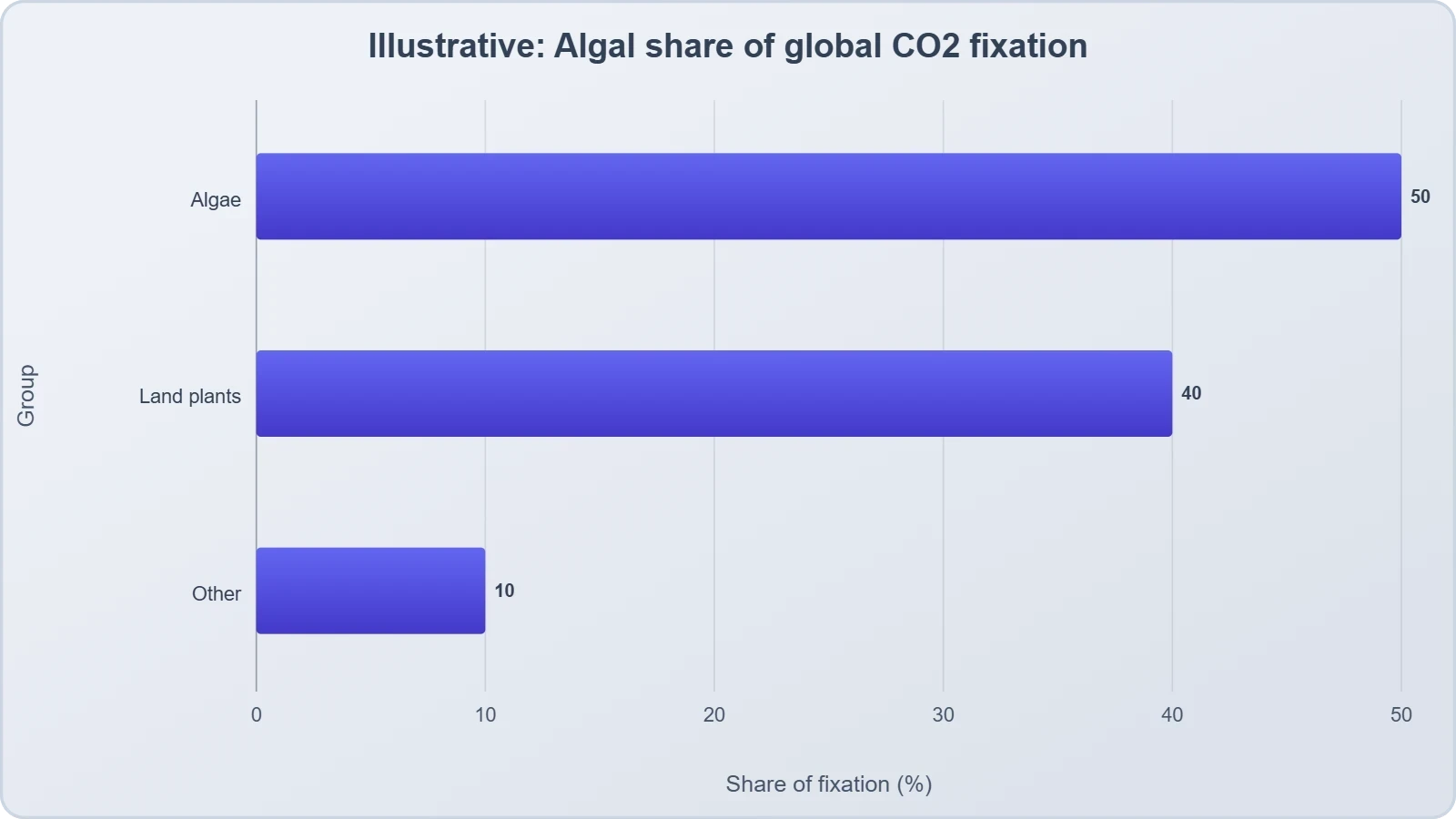
Before the classes are taken individually, the ecological and economic weight of algae deserves emphasis. At least half of the total carbon dioxide fixation on earth is carried out by algae through photosynthesis, and they raise the level of dissolved oxygen in their immediate surroundings. As primary producers of energy-rich compounds, they form the basis of food cycles for all aquatic animals, while species of Porphyra, Laminaria and Sargassum number among the seventy marine algae used as food.
The commercial dimension is equally instructive. Certain marine brown and red algae produce large amounts of hydrocolloids, water-holding substances such as algin from brown algae and carrageen from red algae. Agar, obtained from Gelidium and Gracilaria, is used to grow microbes and in preparations of ice-creams and jellies, while Chlorella, a unicellular alga rich in proteins, serves as a food supplement even for space travellers.
On This Page
- Chlorophyceae: The Green Algae and Their Chloroplast Diversity
- Phaeophyceae: Brown Algae of Marine Habitats
- Rhodophyceae: Red Algae and Their Deep-Water Range
- The Consolidated Table of Divisions and Their Characteristics
- Economic Importance and the Hydrocolloid Economy
- Going Further: Pigment Chemistry and Water-Holding Substances
Chlorophyceae: The Green Algae and Their Chloroplast Diversity
The members of Chlorophyceae are commonly called green algae, and their plant body may be unicellular, colonial or filamentous. They are usually grass green because chlorophyll a and chlorophyll b dominate their pigment complement, and these pigments are localised in definite chloroplasts whose shapes vary widely between species.
Form, Pigments and Storage Bodies
Chloroplasts may be discoid, plate-like, reticulate, cup-shaped, spiral or ribbon-shaped in different species, a morphological range that gives the class much of its taxonomic interest. Most members possess one or more storage bodies called pyrenoids located within the chloroplasts, and pyrenoids contain protein besides starch. Some algae may instead store food in the form of oil droplets.
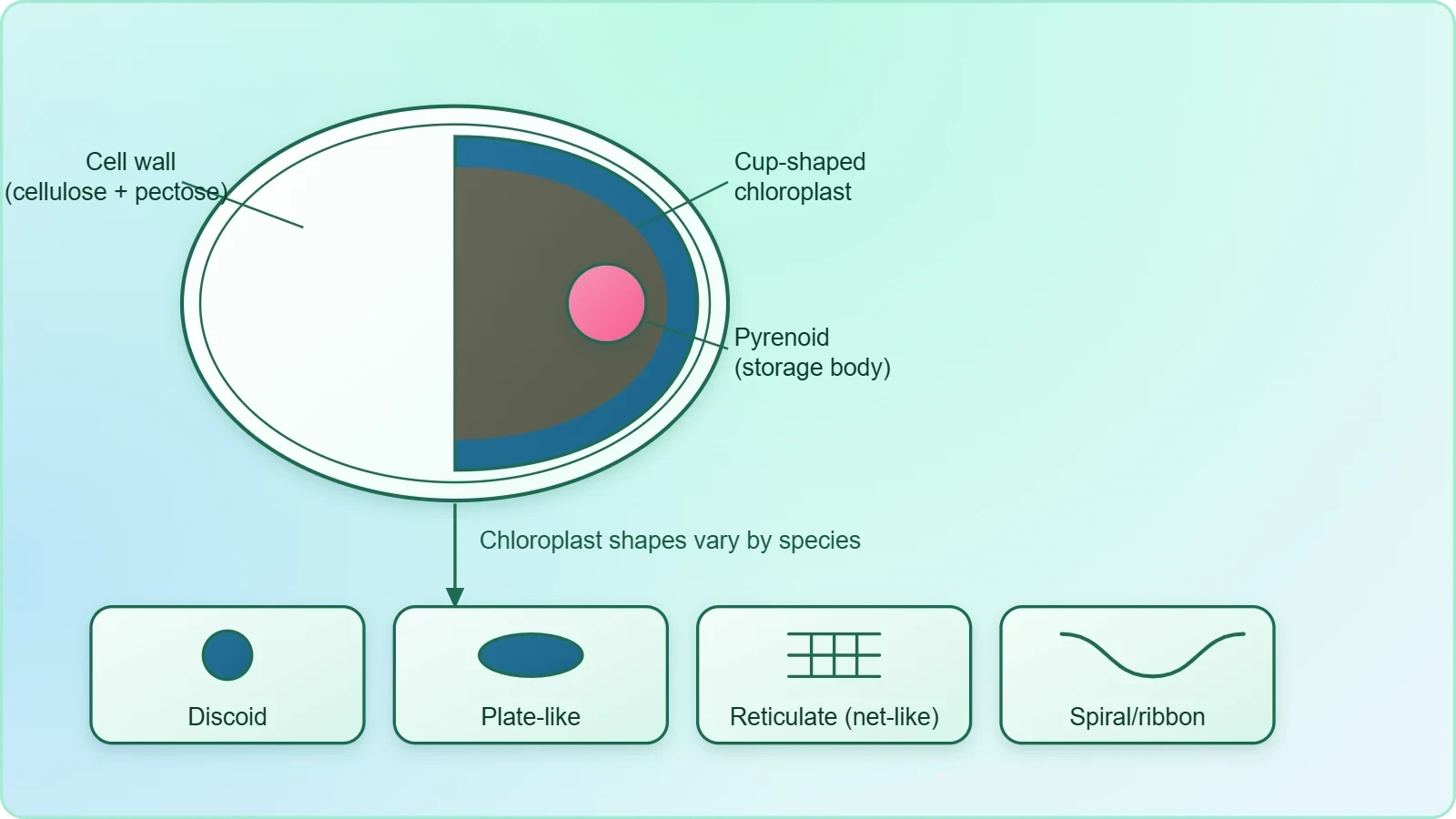
The green algal cell wall is characteristically rigid, built of an inner layer of cellulose and an outer layer of pectose. This wall chemistry, together with the pigment profile, distinguishes green algae from the brown and red classes that follow, and it prepares the ground for the reproductive variation described next.
Reproduction and Representative Genera
Vegetative reproduction usually takes place by fragmentation. Asexual reproduction is by flagellated zoospores produced in zoosporangia, while sexual reproduction shows considerable variation in the type and formation of sex cells and may be isogamous, anisogamous or oogamous. Commonly found green algae include Chlamydomonas, Volvox, Ulothrix, Spirogyra and Chara.
These genera illustrate the class's structural range, from the motile colonial Volvox to the filamentous Ulothrix and Spirogyra. The three modes of sexual reproduction encountered here recur in modified form in the brown algae, which makes the comparison between classes especially instructive for the learner.
Phaeophyceae: Brown Algae of Marine Habitats
The members of Phaeophyceae, or brown algae, are found primarily in marine habitats and show great variation in size and form. They range from simple branched, filamentous forms such as Ectocarpus to profusely branched forms represented by kelps, which may reach a height of 100 metres.
Pigments, Colour and Stored Food
Brown algae possess chlorophyll a, chlorophyll c, carotenoids and xanthophylls. They vary in colour from olive green to various shades of brown depending upon the amount of the xanthophyll pigment fucoxanthin present in them, and food is stored as complex carbohydrates, which may be in the form of laminarin or mannitol.
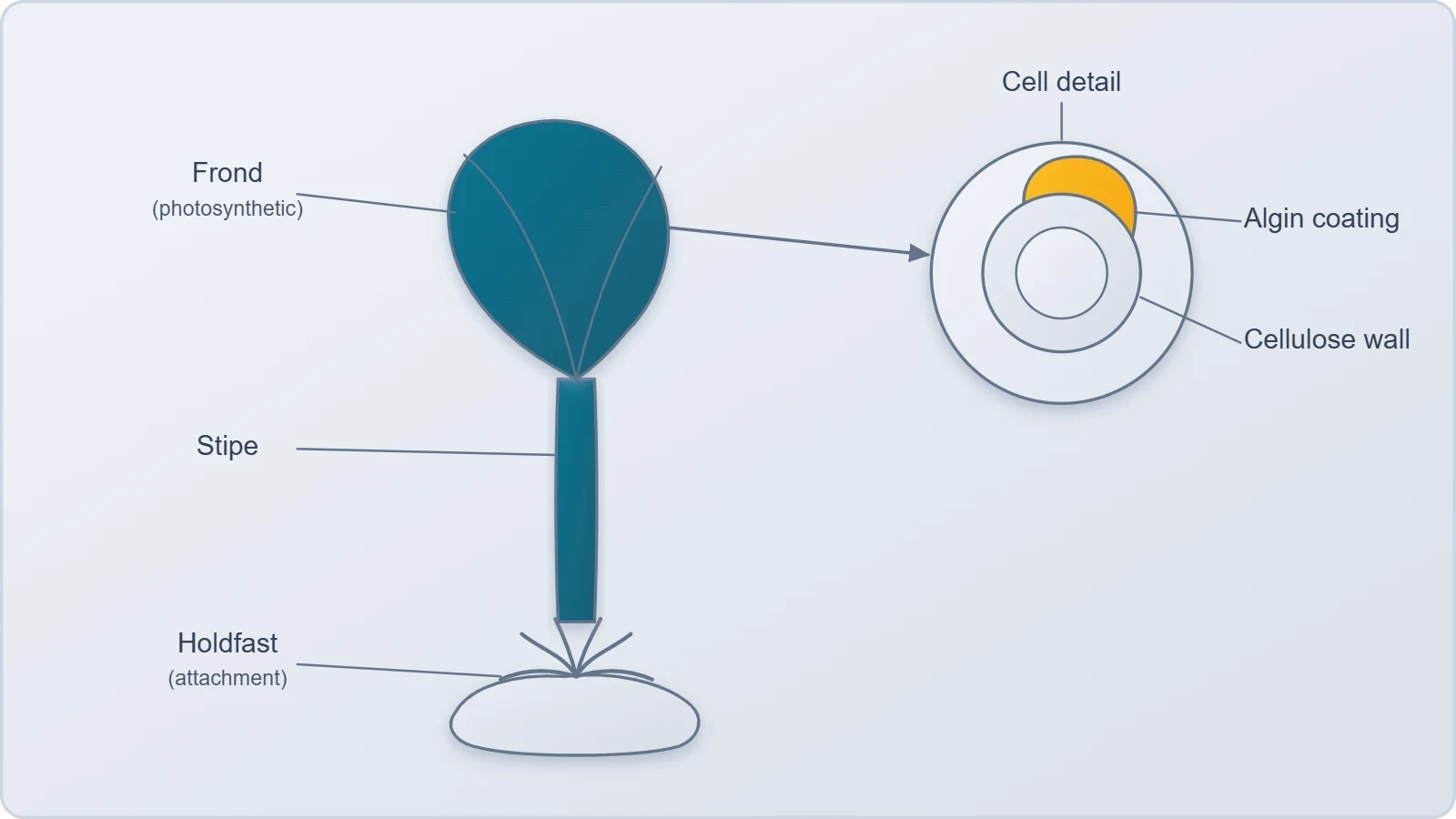
The vegetative cells have a cellulosic wall usually covered on the outside by a gelatinous coating of algin. The protoplast contains, in addition to plastids, a centrally located vacuole and nucleus, an arrangement that supports the large, differentiated bodies seen in the kelps.
Body Plan, Reproduction and Common Forms
The plant body is usually attached to the substratum by a holdfast, and has a stalk called the stipe and a leaf-like photosynthetic organ called the frond. Vegetative reproduction takes place by fragmentation, while asexual reproduction in most brown algae is by biflagellate zoospores that are pear-shaped and bear two unequal laterally attached flagella.
Sexual reproduction may be isogamous, anisogamous or oogamous. Union of gametes may take place in water or within the oogonium in oogamous species, and the gametes are pyriform, that is pear-shaped, bearing two laterally attached flagella. Common forms are Ectocarpus, Dictyota, Laminaria, Sargassum and Fucus.
Rhodophyceae: Red Algae and Their Deep-Water Range
The members of Rhodophyceae are commonly called red algae because of the predominance of the red pigment r-phycoerythrin in their body. The majority of red algae are marine, with greater concentrations found in the warmer areas, and they occur both in well-lighted regions close to the water surface and at great depths where relatively little light penetrates.
Thallus Structure and Stored Food
The red thalli of most red algae are multicellular, and some of them have complex body organisation. Food is stored as floridean starch, which is very similar to amylopectin and glycogen in structure, a storage chemistry that sets the class apart from the starch of green algae and the laminarin or mannitol of brown algae.
Their cell walls contain cellulose together with pectin and poly sulphate esters, a composition reflected in the commercial hydrocolloids the class yields. The combination of accessory pigment and wall chemistry allows red algae to thrive across a remarkable depth range in marine environments.
Reproduction and Representative Genera
Red algae usually reproduce vegetatively by fragmentation. They reproduce asexually by non-motile spores and sexually by non-motile gametes, a contrast with the flagellated zoospores and gametes of the green and brown classes. This absence of motile stages is reflected in the complete absence of flagella in the class.
Commonly encountered forms include Porphyra and Polysiphonia. Porphyra is among the marine algae used as food, while Gelidium and Gracilaria are the sources of agar, one of the most valuable commercial products obtained from this class.
The Consolidated Table of Divisions and Their Characteristics
The three classes are best held together in a single comparative frame, because the decisive differences lie in a handful of columns: major pigments, stored food, cell wall composition, flagellar number and position of insertion, and habitat. Reading the classes side by side makes the logic of the division visible at a glance.
Pigments, Storage and Wall Chemistry Compared
Chlorophyceae carry chlorophyll a and b and store starch, with a wall of cellulose and pectose. Phaeophyceae carry chlorophyll a, c and fucoxanthin, store mannitol and laminarin, and have a wall of cellulose and algin. Rhodophyceae carry chlorophyll a, d and phycoerythrin, store floridean starch, and have a wall of cellulose, pectin and poly sulphate esters.
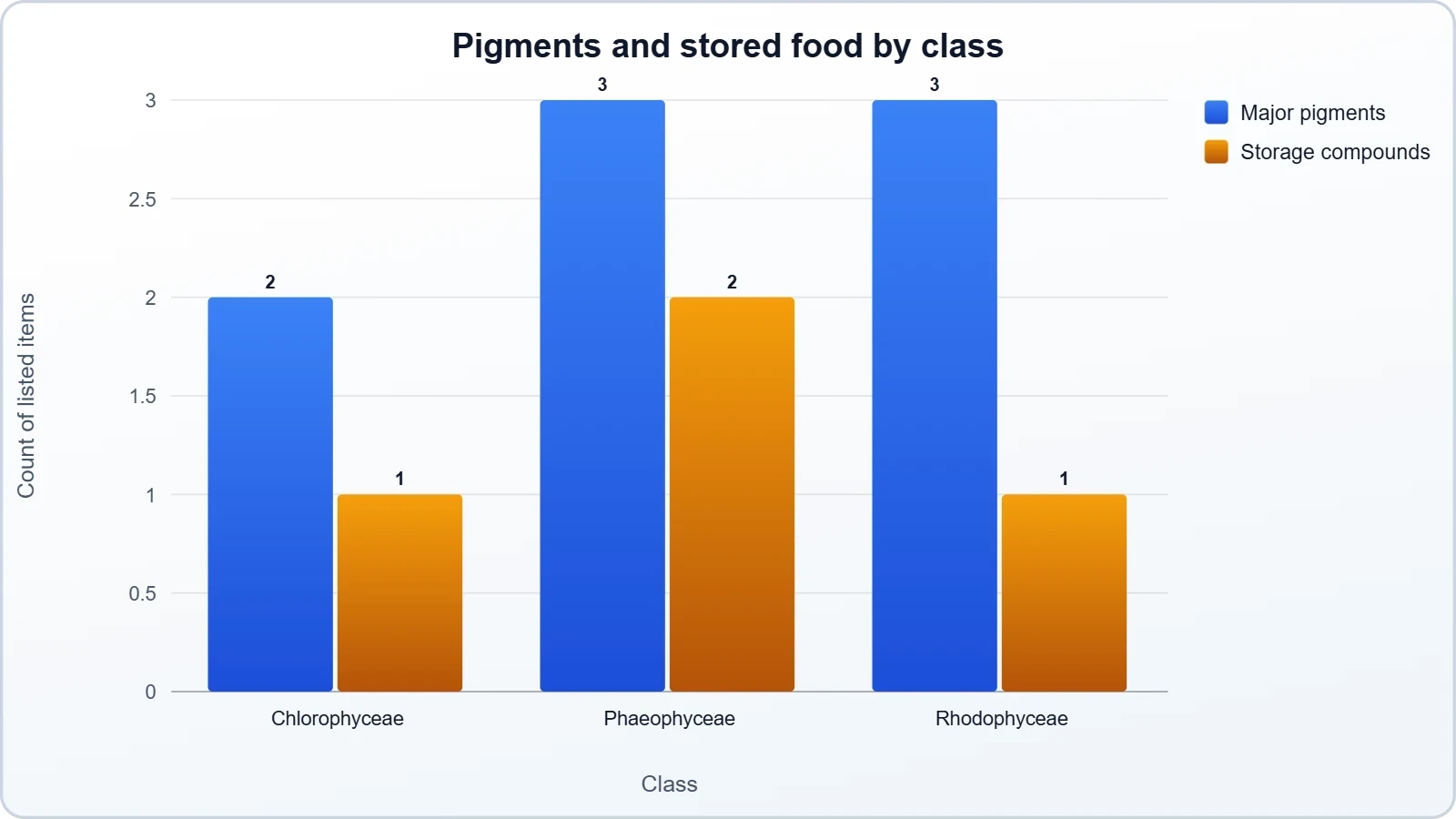
These three columns alone account for most of the observable differences between the classes. The pigment set governs colour, the storage compound reflects metabolic strategy, and the wall chemistry determines both texture and commercial value, from the algin of brown algae to the agar-yielding walls of red algae.
Flagella and Habitat Compared
Flagellar arrangement offers a further clean separation. Chlorophyceae have two to eight equal flagella inserted apically, Phaeophyceae have two unequal flagella inserted laterally, and Rhodophyceae have none at all. Habitat overlaps considerably, yet the brown algae are essentially marine, while green and red algae appear across fresh, brackish and salt water.
Reading the table row by row, the learner can reconstruct each class from its entries alone. This is precisely the value of the consolidated table: it compresses the descriptive material of the three preceding sections into a form that supports recall, comparison and examination-style answers.
Economic Importance and the Hydrocolloid Economy
Algae are useful to man in a variety of ways, and the three classes contribute differently to that usefulness. At least half of the total carbon dioxide fixation on earth is carried out by algae through photosynthesis, and being photosynthetic they increase the level of dissolved oxygen in their immediate environment.
Food, Feed and Primary Production
Algae are of paramount importance as primary producers of energy-rich compounds which form the basis of the food cycles of all aquatic animals. Many species of Porphyra, Laminaria and Sargassum are among the seventy species of marine algae used as food, and Chlorella, a unicellular alga rich in proteins, is used as a food supplement even by space travellers.
This protein-rich unicellular form illustrates how a single genus can serve a nutritional purpose quite distinct from the bulk biomass of the kelps. The food value of algae therefore spans the microscopic and the macroscopic, from Chlorella cultures to harvested Laminaria fronds.
Hydrocolloids, Agar and Industrial Uses
Certain marine brown and red algae produce large amounts of hydrocolloids, water-holding substances such as algin from brown algae and carrageen from red algae, which are used commercially. Agar, one of the commercial products obtained from Gelidium and Gracilaria, is used to grow microbes and in preparations of ice-creams and jellies.
The commercial logic is straightforward: a substance that holds water stabilises texture, which is why these extracts appear in foods, microbiological media and countless industrial formulations. The economic weight of the three classes thus extends well beyond their ecological role as primary producers.
Going Further: Pigment Chemistry and Water-Holding Substances
Two observations from the wider literature deepen the material without altering it. The first concerns fucoxanthin, the xanthophyll pigment whose amount in brown algae explains the colour range from olive green to various shades of brown. The second concerns the hydrocolloids, algin from brown algae and carrageen from red algae, which hold water and are used commercially for precisely that property.
Why Fucoxanthin Governs Brown Algal Colour
Fucoxanthin is a xanthophyll, one of the oxygenated carotenoids, and it absorbs light in regions of the spectrum where chlorophyll absorbs less effectively. Because its concentration varies between species and between parts of the same thallus, the visible colour of brown algae shifts along a continuum rather than sitting at a single fixed hue.
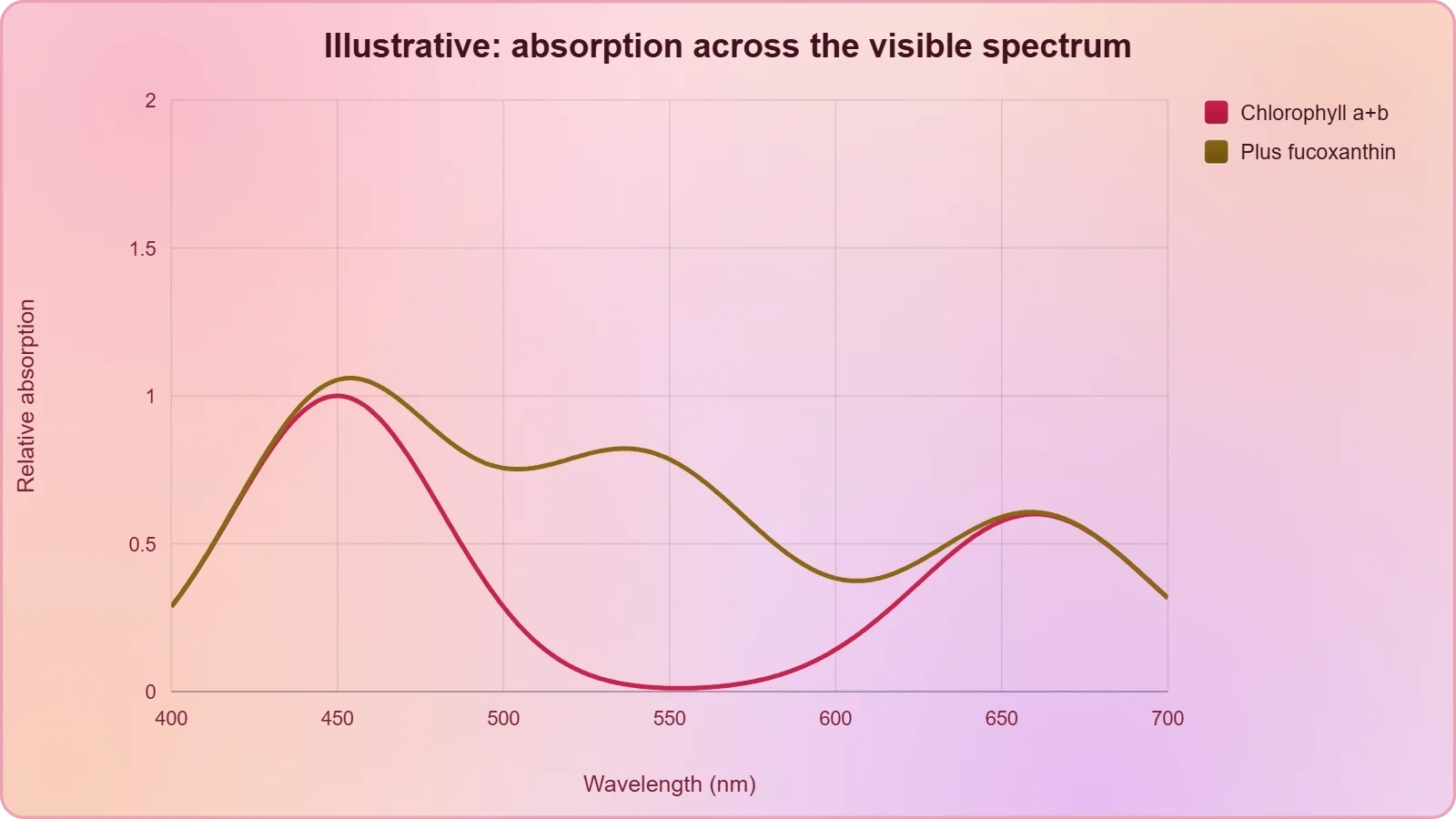
This is why the class description speaks of olive green through to various shades of brown rather than one colour. The pigment also contributes to light harvesting, so its abundance is not merely decorative but tied to the photosynthetic performance of the alga in its marine habitat.
Why Hydrocolloids Hold Water
Hydrocolloids are water-holding substances, and the term itself explains the commercial demand. Algin from brown algae and carrageen from red algae both bind water, thickening and stabilising the materials into which they are introduced, which is why they appear in foods and industrial preparations.
Agar, obtained from Gelidium and Gracilaria, behaves in the same family of ways and is used to grow microbes and in preparations of ice-creams and jellies. The water-holding property, rather than any nutritional value, accounts for most of the industrial interest in these three classes.
Also Read
- No links available.
From our network :
- Analyzing Trump Deportation Numbers Insights Into The 2026 Immigration Crackdown
- Trump Political Strategy How Geopolitical Stunts Serve As Media Diversions
- 98% of Global MBA Programs Now Prefer GRE Over GMAT Focus EditionExplore why 98% of global MBA programs now prefer the GRE over GMAT Focus. Learn about the shorter GRE format, verbal logic importance, and strategic versatility for students.
- EV 2.0: The Solid-State Battery Breakthrough and Global Factory ExpansionDiscover the impact of the Solid-State Battery Breakthrough on the EV market. Learn about CATL and BYD stock growth, global factory expansion in Europe, and the future of EV 2.0 technology.
- Vite 6/7 'Cold Start' Regression in Massive Module GraphsIn-depth analysis of Vite 6/7 cold start regressions in massive module graphs. Learn about barrel file issues, pre-bundling optimizations, and how to improve Vite dev server performance.
- 10 Physics Numerical Problems with Solutions for IIT JEEPrepare for IIT JEE with 10 physics numerical problems, complete with detailed solutions and conceptual explanations. Ideal for mastering kinematics, thermodynamics, electromagnetism, and optics.
- Mastering DB2 LUW v12 Tables: A Comprehensive Technical GuideComprehensive guide on DB2 LUW v12 tables. Explore CREATE TABLE syntax, BLU Acceleration, range partitioning, data types, and security features for IBM DB2 LUW v12.
- AI-Powered 'Precision Diagnostic' Replaces Standard GRE Score ReportsDiscover the new GRE Precision Diagnostic. Learn how AI-powered behavioral analytics and time-to-solve tracking are replacing standard GRE score reports to empower students.
- Mastering DB2 12.1 Instance Design: A Technical Deep Dive into Modern Database ArchitectureComprehensive guide to DB2 12.1 Instance Design. Explore architectural components, HADR setup, buffer pool tuning, and security policies for IBM DB2 12.1. Includes 10 functional SQL and Shell samples.
RESOURCES
- 25. Distinguish among Chlorophyceae(Green Algae), Pheophyceae ...brainly.inOct 8, 2020 ... The three classes of algae are Chlorophyceae (green algae), Phaeophyceae (brown algae) and Rhodophyceae (red algae).Chlorophyceae: The members ...
- [The occurence and distribution of volatile amines in marine algae]pubmed.ncbi.nlm.nih.gov... Phaeophyceae (11), and Rhodophyceae (12) were examined for ... three classes of algae, but an especially widespread occurrence was found in Rhodophyceae.
- complete the following table groups of algae, chlorophyceae ...brainly.inSep 1, 2019 ... Complete the following table groups of algae, chlorophyceae ,phaeophyceae,rhodophyceae ... 3. The cell wall of these algae is composed of ...
- Optimization of Seaweed Harvesting for Maximum Antimicrobial ...jeeng.netJan 1, 2024 ... monitored in 14 species belonging to the three classes of algae: Chlorophyceae, Phaeophyceae, and Rhodophyceae. MATERIALS AND METHODS.
- Algae Algae are simple, autotrophic, plant-like organisms found ...instagram.comDec 9, 2025 ... Keywords: algae, types of algae, chlorophyceae, phaeophyceae, rhodophyceae, plant kingdom, Vijna Academy ... Three Major Classes of Algae:
- Photoinhibition of photosynthesis in Macrocystis pyrifera ...sciencedirect.com... (Rhodophyceae) and Ulva lactuca (Chlorophyceae) in outdoor culture systems ... algae exposed to natural levels and cycles of solar radiation. A clear daily ...
- Algae Classification NEET: Chlorophyceae, Phaeophyceae ...gyaanbeeforneet.comOct 21, 2026 ... The three main classes are Chlorophyceae (green algae), Phaeophyceae (brown algae), and Rhodophyceae (red algae). Each class has unique ...
- Concentrations of phytochelatins and glutathione found in natural ...sciencedirect.com), Rhodophyceae (Solieria chordalis) and Chlorophyceae ... (Chlorophyceae), representing the three phylogenetic groups of marine macroalgae, were ...
- Introduction to algae classification and life cycles - Facebookfacebook.comJul 17, 2026 ... CLASS 3 — RHODOPHYCEAE (Red Algae): General ... Chlorophyceae, Phaeophyceae, and Rhodophyceae?" → → Chlorophyceae ...
- Classification of Algae - Chlorophyceae, Phaeophyceae ... - Pinterestpinterest.comMar 5, 2025 ... Learn about the salient features of different types of algae including Chlorophyceae, Phaeophyceae, and Rhodophyceae. Explore the roots of ...
- Seaweed diversity within intertidal zone of Olaikuda and Vadakkadu ...pmc.ncbi.nlm.nih.govThe two study stations were well diversified with three groups of seaweeds such as Chlorophyceae, Phaeophyceae and Rhodophyceae. ... Algae from pondicherry coast.
- plant kingdom chapter 3 - NCERTncert.nic.inThe algae are divided into three main classes: Chlorophyceae, Phaeophyceae and Rhodophyceae. 3.1.1 Chlorophyceae. The members of chlorophyceae are commonly ...
- Characteristics of Chlorophyceae, Phaeophyceae, and ... - Facebookfacebook.comSep 1, 2026 ... THREE MAJOR ALGAL CLASSES — Chlorophyceae, Phaeophyceae & Rhodophyceae Algae show remarkable diversity in their pigments, habitats and ...
- Algal Classes: Chlorophyceae, Phaeophyceae, Rhodophyceae | PDFscribd.comSCAN_20251014_104430117 - Free download as PDF File (.pdf), Text File (.txt) or read online for free. The document outlines three classes of algae: ...
- Algae general characters and classification | PPTX - Slideshareslideshare.net2. CHARACTERISTICS OF ALGAE CLASSIFICATIONBASED ON PIGMENTS CHLOROPHYCEAE PHAEOPHYCEAE RHODOPHYCEAE. 3. CHARACTERISTICS OF ALGAE AQUATIC AUTROPHIC MODE ...