Decomposition is the quiet engine that keeps every ecosystem solvent. Where the previous lesson traced how plants and consumers manufacture organic matter, this lesson follows that matter back to its inorganic origins. Dead leaves, bark, flowers, animal remains and fecal matter together form detritus, the raw material that decomposers dismantle into carbon dioxide, water and mineral nutrients. Without this reverse flow, carbon and nitrogen would remain locked in dead tissue, soils would starve, and the nutrient pool available to producers would shrink year after year.
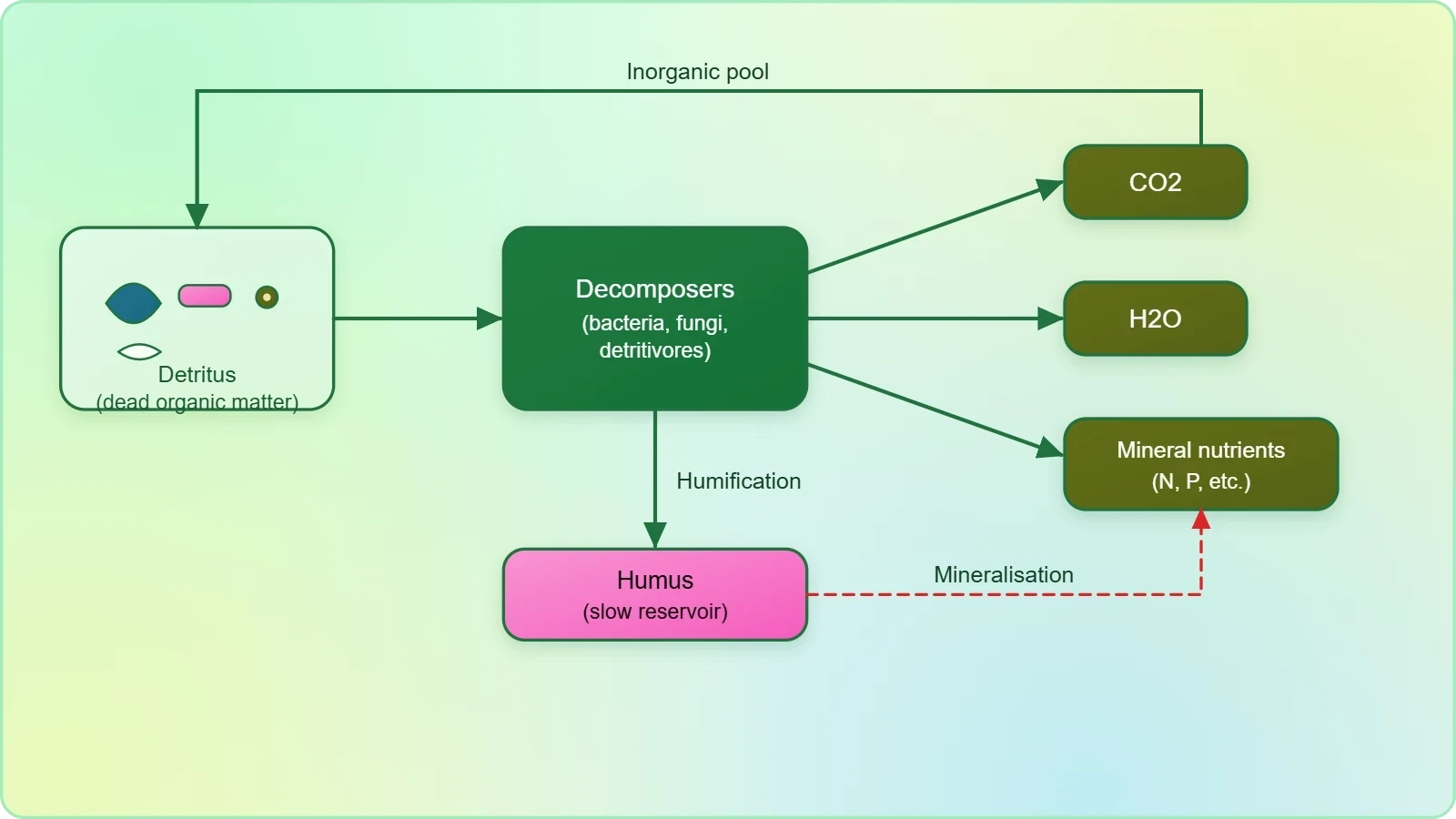
The process is best understood as a coordinated sequence of five steps: fragmentation, leaching, catabolism, humification and mineralisation. These steps do not queue politely one after another; they operate simultaneously on the same detrital mass, each one preparing material for the others. Detritivores such as earthworms shatter litter into finer particles, water carries soluble nutrients downward, microbial enzymes cleave complex polymers into simpler compounds, humus accumulates as a resistant colloidal residue, and finally mineralisation releases inorganic ions back into the soil solution where roots can reclaim them.
Because decomposition governs nutrient availability, soil fertility and the residence time of carbon in terrestrial systems, its controls matter far beyond the biology classroom. Litter chemistry, temperature, moisture and oxygen supply together determine whether organic matter disappears within months or persists for centuries. This lesson examines each control, quantifies the differences between biomes, and connects decomposition to the detritus food chain that dominates energy flow in most terrestrial ecosystems.
On This Page
- The Five Interlocking Steps of Decomposition
- Extracellular Enzymes and the Diversity of Decomposers
- Litter Quality: The Chemical Control on Decomposition
- Climatic Controls: Temperature, Moisture and Oxygen
- The Detritus Food Chain and Its Dominance on Land
- Worked Example: Tropical versus Temperate Decomposition
- Humus, Soil Fertility and Carbon Sequestration
- Modelling Decomposition: A Computational View
The Five Interlocking Steps of Decomposition
Decomposition is not a single reaction but a cascade in which physical, chemical and biological agents cooperate. The reference framework identifies five steps, and each deserves careful attention because each is rate-limiting under different circumstances. Fragmentation and leaching are largely physical, catabolism is enzymatic, and humification and mineralisation represent the twin fates of degraded organic matter: temporary storage in humus or immediate return to the inorganic pool. Understanding how these steps interlock explains why a handful of soil contains more metabolic activity than a hectare of forest canopy.
Fragmentation and Leaching: The Physical Prelude
Detritivores initiate breakdown by reducing the particle size of litter. Earthworms, millipedes, termites, woodlice and nematodes consume detritus and excrete finer fragments, a process called fragmentation. Smaller particles expose vastly greater surface area to microbial colonisation, and surface area is the currency of enzymatic attack. A single leaf fragmented into a thousand pieces offers microbial enzymes a thousand times more contact area than the intact lamina, so fragmentation accelerates every subsequent chemical step. Detritivores also mix organic fragments with mineral soil, creating the intimate organo-mineral associations that stabilise carbon for decades.
Leaching follows as water percolates through the litter layer. Water-soluble inorganic nutrients, along with soluble organic compounds such as sugars and amino acids, move downward into the soil horizon and may precipitate as unavailable salts. Leaching is a genuine loss term for the litter layer but not necessarily for the ecosystem, since deeper horizons and groundwater may retain the mobile nutrients. In humid tropical forests, intense leaching can strip soluble nutrients from surface litter within weeks, which is one reason tropical soils depend so heavily on rapid biological recycling rather than on stored mineral reserves.
Catabolism, Humification and Mineralisation
Catabolism is the enzymatic heart of decomposition. Bacteria and fungi secrete extracellular enzymes, including cellulases, hemicellulases, lignin peroxidases and chitinases, that cleave insoluble polymers outside the cell into smaller molecules that can be absorbed. This extracellular strategy is what allows microbes to attack substrates far larger than themselves. The diversity of decomposer microbes is staggering: actinomycetes specialise in recalcitrant compounds, white-rot fungi uniquely degrade lignin, and bacterial communities shift composition as substrate chemistry changes through the decay sequence.
Humification converts part of the degraded material into humus, a dark, amorphous, colloidal substance highly resistant to microbial attack. Humus decomposes at an extremely slow rate and, being colloidal, holds water and nutrients on its charged surfaces, functioning as a reservoir that plants and microbes draw upon during scarcity. Mineralisation is the final release: further microbial degradation of humus liberates inorganic nutrients such as ammonium, nitrate, phosphate and sulphate. The balance between humification and mineralisation determines whether an ecosystem accumulates soil carbon or runs a nutrient deficit.
Extracellular Enzymes and the Diversity of Decomposers
The decomposer community is functionally defined by its ability to digest outside the cell. Fungi and bacteria secrete hydrolytic and oxidative enzymes into the surrounding litter, converting insoluble polymers into soluble monomers that are then absorbed. This extracellular digestion explains why decomposition proceeds even when microbes are not physically inside the substrate. It also explains why enzyme production is energetically expensive and tightly regulated: microbes invest in enzymes only when the return in absorbable carbon justifies the cost, a calculus that shapes community composition as litter chemistry changes.
Who Does the Work: Bacteria, Fungi and Actinomycetes
Bacteria dominate the early, soluble-rich phase of decay, rapidly consuming sugars, amino acids and simple carbohydrates. As the easily metabolised fraction is exhausted, fungi take over because their hyphal networks can traverse particulate litter and their enzymatic repertoire includes lignin-modifying peroxidases that bacteria largely lack. White-rot fungi mineralise lignin completely, while brown-rot fungi modify lignin and leave a brown residue. Actinomycetes, filamentous bacteria, specialise in recalcitrant compounds such as chitin and contribute the earthy smell of freshly turned soil through geosmin production.
The functional redundancy within this community is remarkable. Thousands of microbial taxa can perform similar transformations, which stabilises decomposition rates against species loss. Yet the community is not interchangeable: the presence or absence of specific lignin-degrading fungi can shift the fate of a forest floor from rapid turnover to long-term carbon storage. This is why decomposition research increasingly focuses on functional genes and enzyme activities rather than on taxonomic lists alone, since function predicts process rates more reliably than identity does.
Enzyme Kinetics and the Temperature Response
Extracellular enzyme activity follows Michaelis–Menten kinetics, so the rate of substrate cleavage depends on enzyme concentration, substrate availability and the affinity constant of the enzyme for its substrate. Temperature modifies these rates through the Arrhenius relationship, and a useful approximation is that reaction rates roughly double for every 10 °C rise within the biologically relevant range. This temperature sensitivity, captured by the ##Q_{10}## coefficient, is central to predicting how warming will alter soil carbon losses.
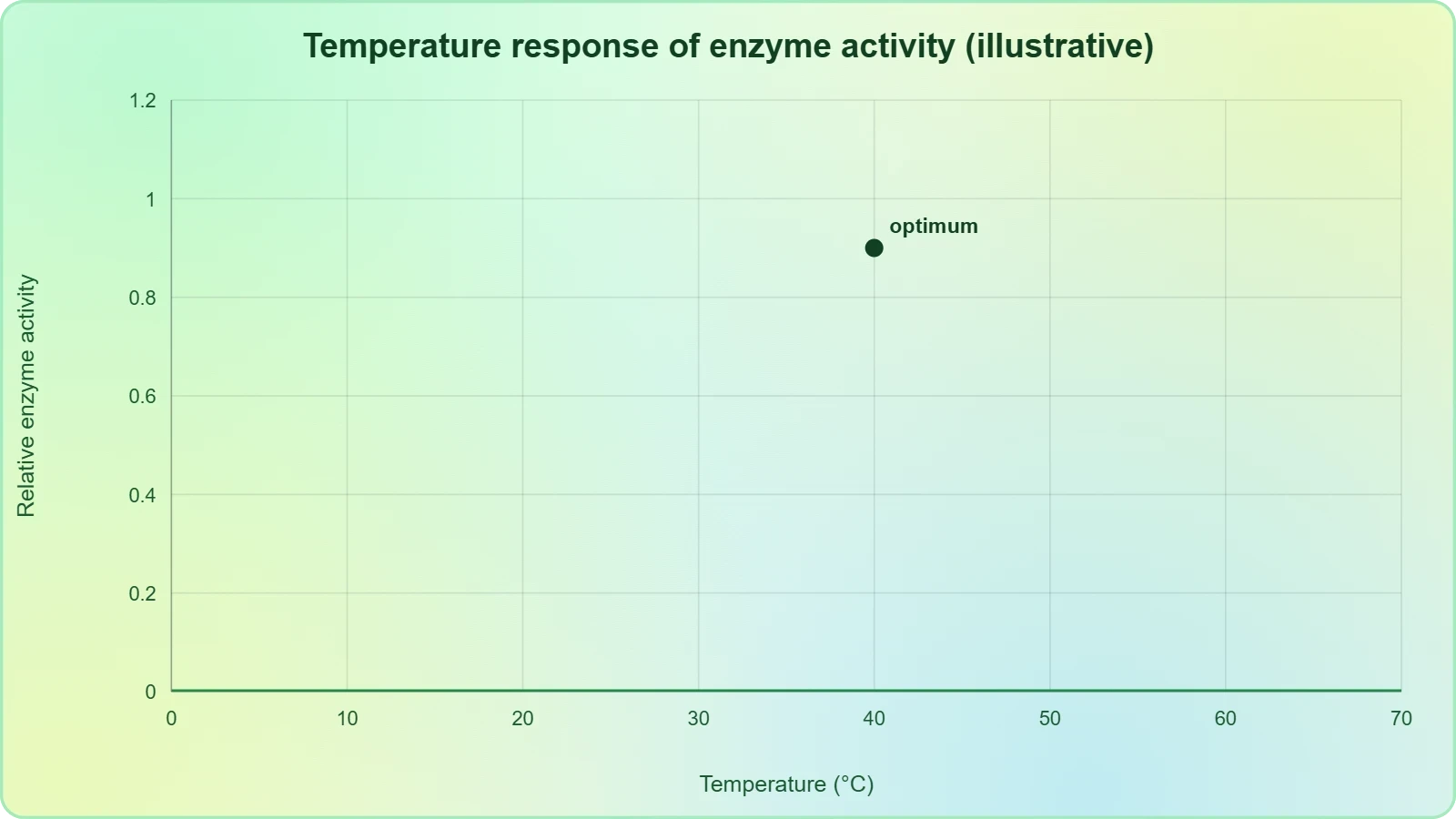
Here ##R_1## and ##R_2## are decomposition rates at temperatures ##T_1## and ##T_2##. A ##Q_{10}## of about 2 is typical for litter decomposition, meaning a 10 °C warming roughly doubles the rate, provided moisture and oxygen remain adequate. However, the temperature sensitivity itself declines as substrate quality declines, so recalcitrant humus responds less strongly to warming than fresh litter does. This nuance matters enormously for climate projections, because it determines whether old soil carbon will be released as rapidly as fresh plant material.
Litter Quality: The Chemical Control on Decomposition
Under any given climate, the chemical composition of detritus is the strongest predictor of decomposition rate. The reference framework states the principle clearly: decomposition is slower when detritus is rich in lignin and chitin, and quicker when it is rich in nitrogen and water-soluble substances such as sugars. This is because lignin and chitin are structurally complex polymers that few enzymes can cleave, whereas sugars and amino acids are immediately assimilable. Litter quality therefore acts as a chemical gatekeeper that can override climatic advantages or disadvantages.
The Carbon-to-Nitrogen Ratio and Lignin Content
The carbon-to-nitrogen (C:N) ratio is the most widely used index of litter quality. Microbial decomposers require roughly 24–30 units of carbon per unit of nitrogen for their own biomass, so litter with a C:N ratio near this threshold decomposes efficiently. Fresh grass litter with a C:N ratio around 15–25 decomposes rapidly, while oak or pine litter with ratios of 50–80 decomposes slowly because microbes must scavenge scarce nitrogen, often importing it from soil solution and temporarily immobilising it. This immobilisation can starve plants of nitrogen during the decay of carbon-rich litter.
Lignin content compounds the effect. Lignin is a cross-linked aromatic polymer that physically shields cellulose and hemicellulose from enzymatic attack, and its own degradation requires oxidative enzymes and molecular oxygen. Litter with lignin exceeding roughly 20–30 percent of dry mass decomposes slowly regardless of its nitrogen content, because the physical barrier limits access to the more labile fractions. The lignin-to-nitrogen ratio integrates both factors and often predicts decay constants better than either variable alone, which is why it features prominently in decomposition models.
Climatic Controls: Temperature, Moisture and Oxygen
Temperature and soil moisture are the most important climatic regulators of decomposition, acting through their effects on soil microbial activity. Warm and moist environments favour decomposition, whereas low temperature and anaerobiosis inhibit it, leading to the build-up of organic materials. This single principle explains the distribution of organic soils across the planet, from the thin, rapidly cycling litter of tropical forests to the deep peat deposits of cold, waterlogged northern latitudes. Climate and litter quality interact, so neither can be interpreted in isolation.
Temperature and Moisture Interactions
Within the range where microbes remain active, decomposition increases with temperature, roughly doubling per 10 °C as described by the ##Q_{10}## relationship. Moisture acts through a hump-shaped response: too little water limits enzyme diffusion and microbial motility, while too much water fills soil pores and excludes oxygen. Maximum decomposition typically occurs at intermediate moisture, often around 60 percent of water-holding capacity. Because warming also increases evaporation, the net effect of climate change on decomposition depends on whether moisture or temperature becomes limiting, a balance that varies by region and season.
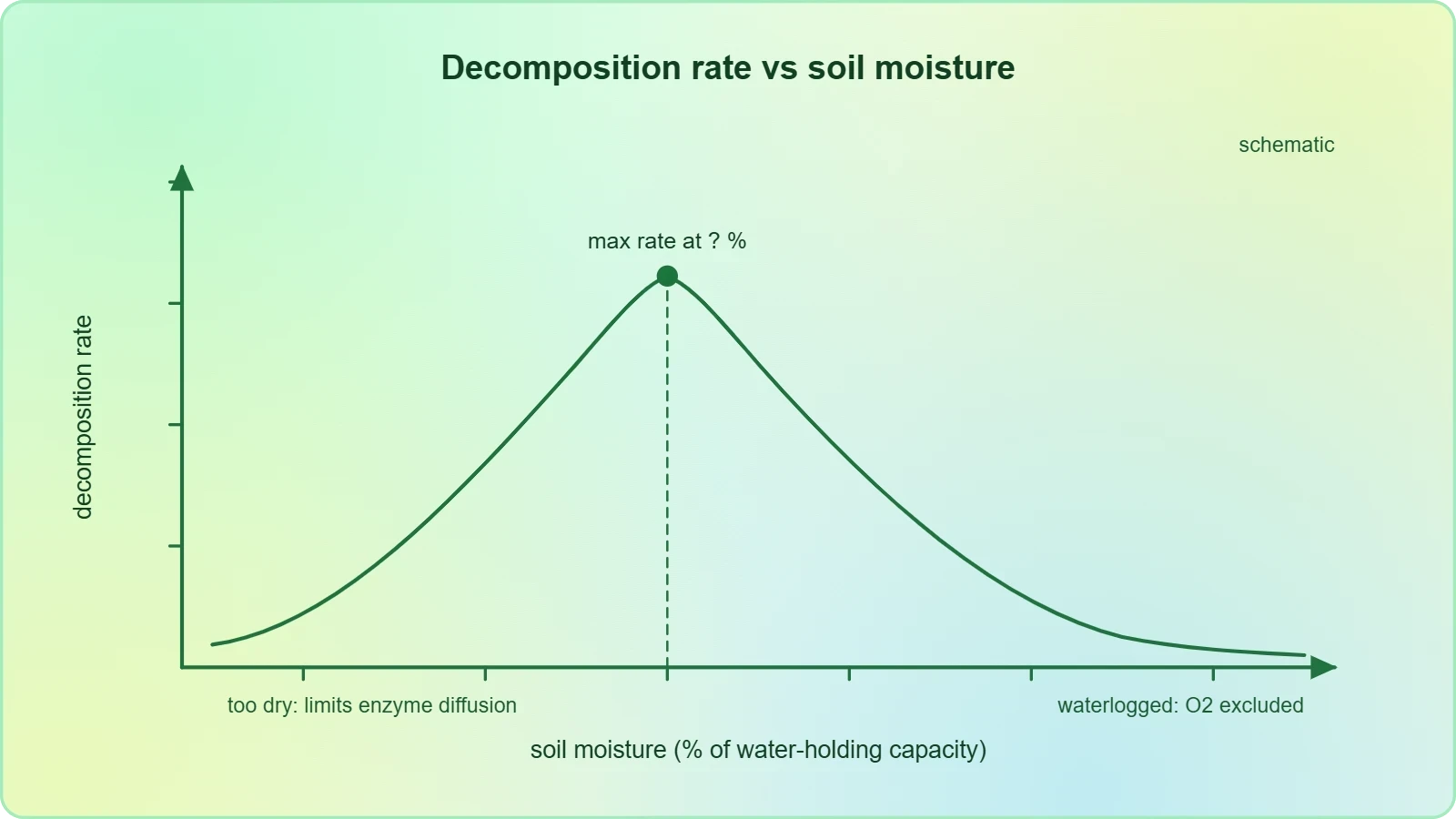
These interactions produce the classic global pattern in which tropical forests decompose litter within months while boreal forests may take years to process the same mass. The difference is not simply that tropical temperatures are higher; it is that warm, moist conditions keep microbial communities continuously active, whereas cold or dry periods impose dormancy. Seasonal snow cover, for instance, can suppress decomposition for half the year even in temperate forests, effectively halving the annual rate compared with a tropical site of similar litter quality.
Oxygen, Anaerobiosis and Peat Formation
Decomposition is largely an oxygen-requiring process. Aerobic respiration by decomposers yields far more energy per unit substrate than anaerobic metabolism, so oxygen availability directly limits decay rates. When soils become waterlogged, oxygen diffuses slowly through water and microbial communities shift toward anaerobic pathways that are slower and often incomplete. Organic matter accumulates because production outpaces decomposition, and over centuries this imbalance produces peat, a waterlogged deposit of partially decomposed plant material that stores enormous quantities of carbon.
Peatlands cover only about three percent of the land surface yet store roughly twice the carbon contained in all forests, precisely because anaerobic conditions throttle decomposition. Draining peatlands for agriculture reverses this protection by admitting oxygen, triggering rapid oxidation of stored carbon and turning these ecosystems from carbon sinks into sources. This example illustrates why the oxygen control is not a minor detail but a first-order determinant of global carbon balance, and why wetland conservation is a climate strategy in its own right.
The Detritus Food Chain and Its Dominance on Land
The detritus food chain begins with dead organic matter and is composed of decomposers, heterotrophic organisms mainly fungi and bacteria that meet their energy and nutrient requirements by degrading detritus. These organisms are also called saprotrophs, from the Greek for "to decompose." They secrete digestive enzymes that break down dead and waste materials into simple inorganic substances, which are subsequently absorbed. The detritus food chain is the route by which the energy and matter captured by producers but not consumed by herbivores re-enter the living system.
Grazing versus Detritus Pathways
In an aquatic ecosystem, the grazing food chain is the major conduit for energy flow. In a terrestrial ecosystem, by contrast, a much larger fraction of energy flows through the detritus food chain than through the grazing food chain. This asymmetry arises because most plant biomass on land is not eaten alive; it senesces and falls as litter. Forests, grasslands and croplands therefore route the majority of their primary production through decomposers rather than through herbivores, making the detritus pathway the dominant energy channel in terrestrial biomes.
The two pathways are not isolated. Detritus food chain organisms are prey to grazing food chain animals, and omnivores such as cockroaches and crows feed across both. These interconnections form a food web, and the detritus food chain may connect with the grazing food chain at several levels. This linkage means that disturbances to decomposer communities can propagate upward into vertebrate populations, a point often overlooked when decomposition is treated as a mere cleanup service rather than a central trophic pathway.
Worked Example: Tropical versus Temperate Decomposition
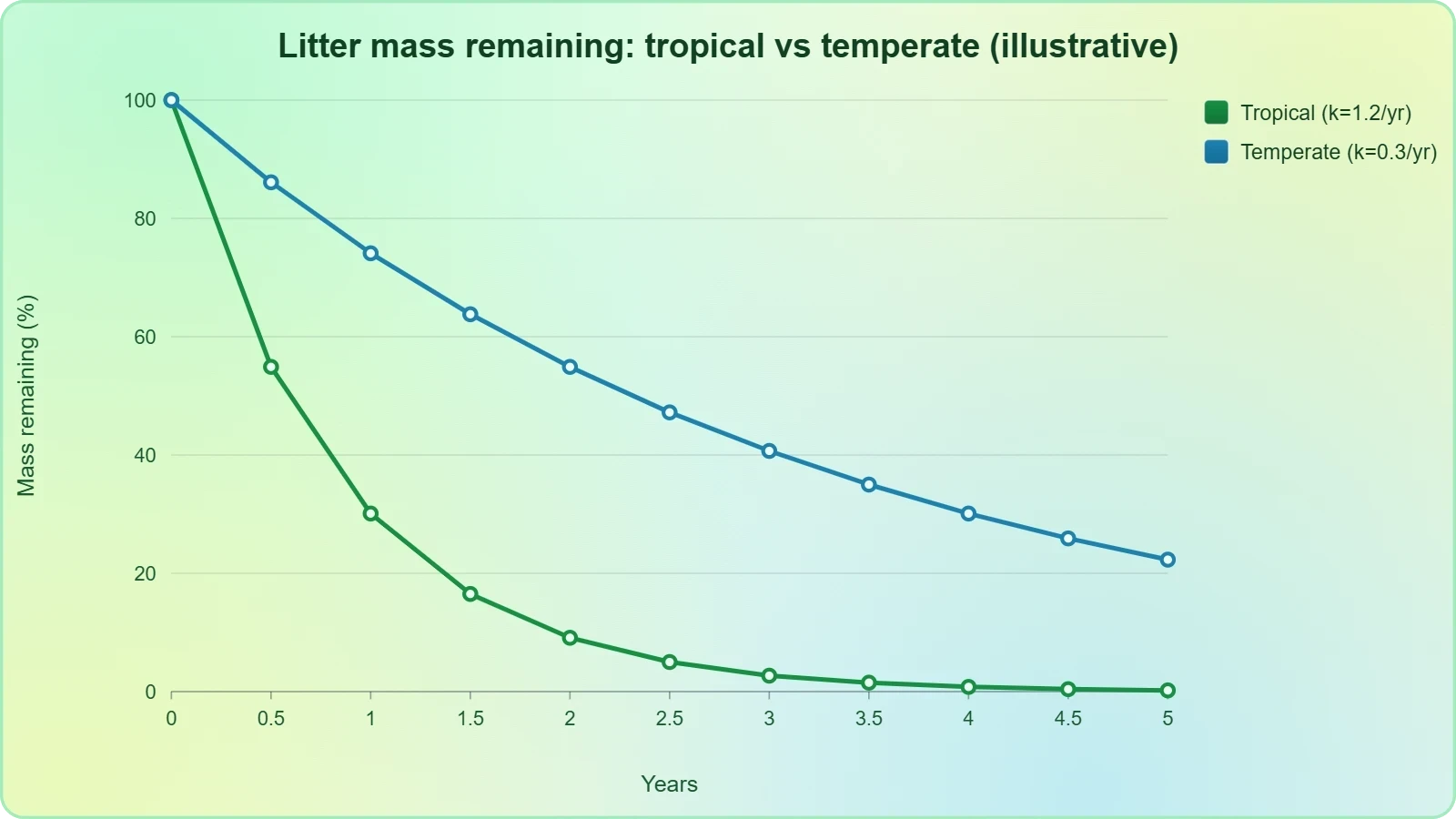
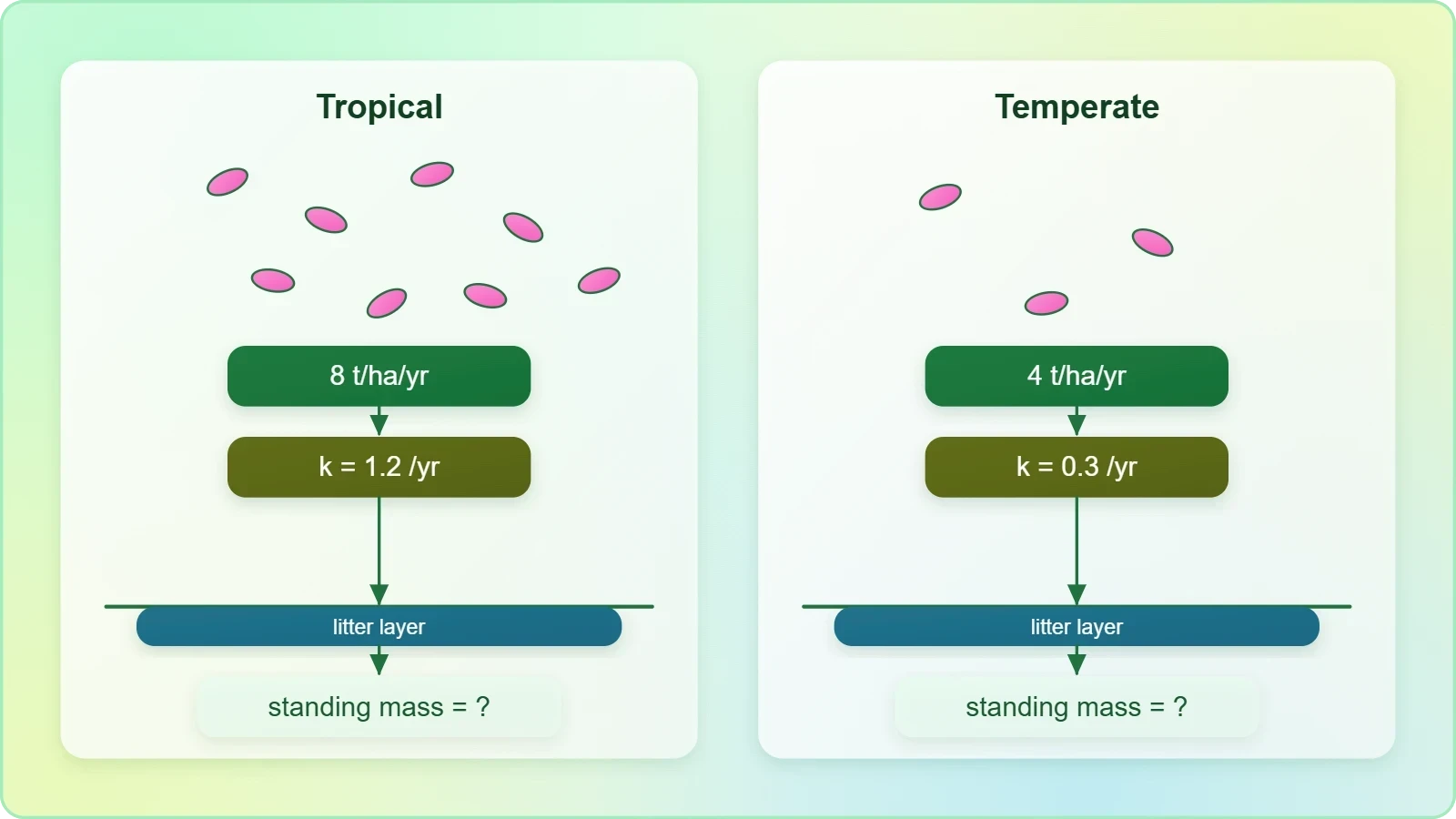
Quantitative comparison makes the controls concrete. Suppose a tropical forest floor receives 8 tonnes of leaf litter per hectare per year and decomposes it with a decay constant of about 1.2 per year, while a temperate forest receives 4 tonnes per hectare per year with a decay constant of about 0.3 per year. The standing litter mass at steady state equals annual input divided by the decay constant, so the tropical site holds roughly 6.7 tonnes of litter while the temperate site holds about 13.3 tonnes despite receiving half the input. The temperate forest accumulates more litter because its slower decay outweighs its lower production.
Applying the Decay Model
The exponential decay model describes litter disappearance as ##L_t = L_0 e^{-kt}##, where ##L_t## is the mass remaining at time ##t##, ##L_0## is the initial mass, and ##k## is the decay constant. For the tropical site with ##k = 1.2\ \text{yr}^{-1}##, half of the initial litter mass remains after ##t_{1/2} = \ln(2)/k \approx 0.58## years, or about seven months. For the temperate site with ##k = 0.3\ \text{yr}^{-1}##, the half-life is ##\ln(2)/0.3 \approx 2.3## years. The same leaf material persists roughly four times longer in the cooler climate.
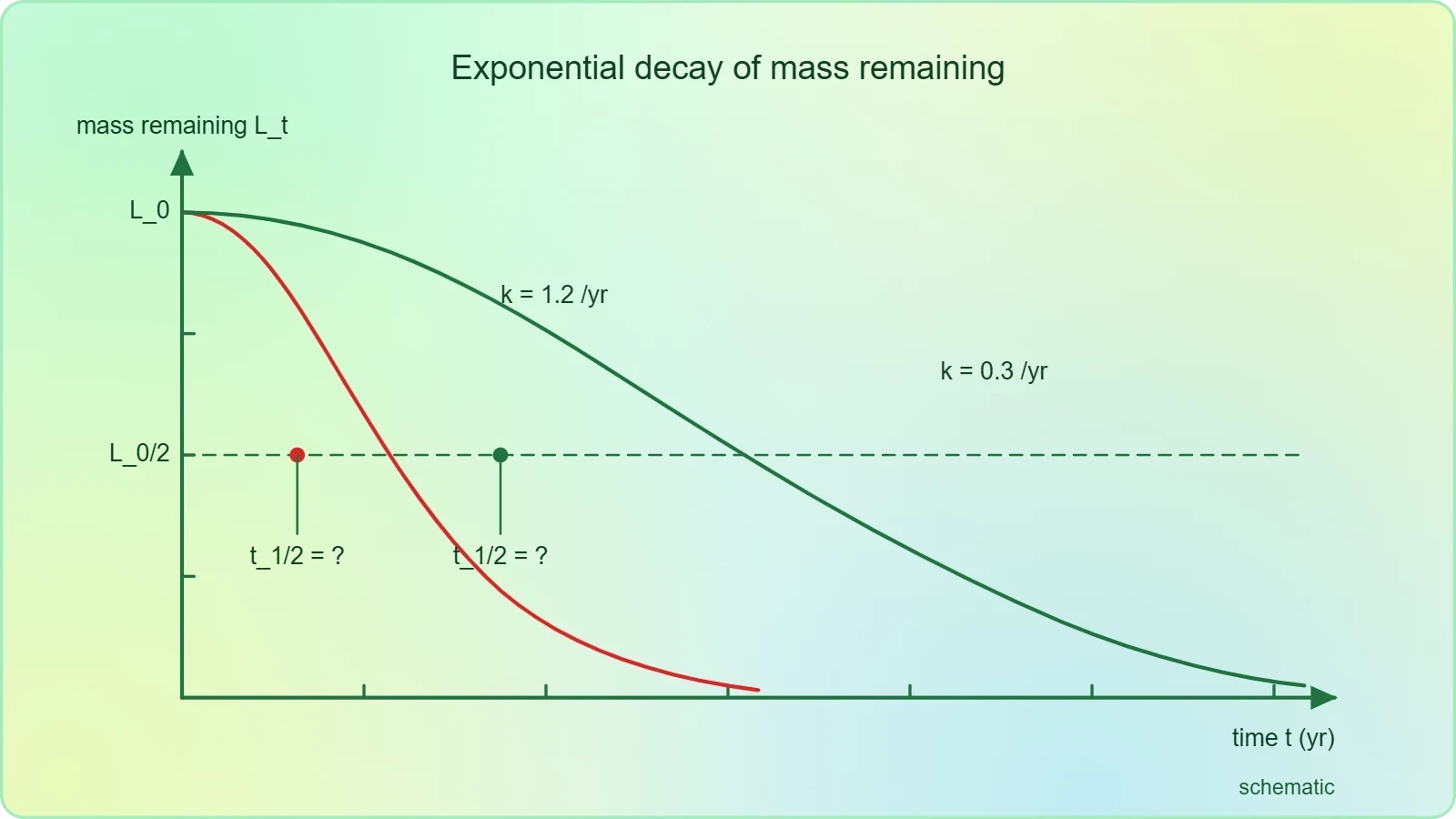
These calculations assume constant ##k##, which is a simplification: in reality ##k## declines as the labile fraction is exhausted and the remaining material becomes enriched in lignin. A two-compartment model, with a fast pool and a slow pool, captures this behaviour better and is standard in soil carbon models. Nevertheless, the single-exponential comparison illustrates the central lesson: climate and litter quality jointly set decay constants, and small differences in ##k## compound into large differences in standing litter and soil carbon over years.
Common Mistakes and Exam Pointers
Students frequently assume decomposition steps occur strictly in sequence, but the reference material is explicit that all steps operate simultaneously on the detritus. Another common error is to treat humus as inert; it is highly resistant but still decomposes slowly and serves as a nutrient reservoir. A third mistake is to confuse mineralisation with catabolism: catabolism degrades detritus into simpler substances, while mineralisation specifically releases inorganic nutrients from humus. Finally, remember that decomposition is largely aerobic, so waterlogged conditions slow it and promote organic matter accumulation rather than rapid nutrient release.
Humus, Soil Fertility and Carbon Sequestration
Humus is the long-lived residue of decomposition and one of the most consequential substances in the biosphere. Being colloidal, it carries charged surfaces that bind water and nutrient ions, functioning as a reservoir that releases nutrients gradually as mineralisation proceeds. This is why soils rich in humus remain fertile even when fertiliser inputs are modest, and why the loss of humus through erosion or excessive tillage degrades productivity for decades. Humus also improves soil structure, promoting aggregation and water infiltration that support root growth and reduce runoff.
From Fertility to Carbon Storage
Beyond fertility, humus represents sequestered carbon. Because it resists microbial attack and decomposes at an extremely slow rate, organic matter that enters the humus pool can remain in soil for centuries. Globally, soils hold more carbon than the atmosphere and vegetation combined, so the balance between humification and mineralisation has direct climate implications. Practices that build humus, such as reduced tillage, organic amendments and perennial cropping, therefore serve dual purposes: they sustain agricultural productivity and remove carbon dioxide from the atmosphere.
The sequestration benefit is not unlimited. Humus formation depends on the supply of organic inputs and on conditions that slow mineralisation, and the pool eventually saturates. Moreover, warming accelerates mineralisation, so carbon stored under cool conditions may be released as temperatures rise. This tension between building soil carbon and protecting existing stocks defines much of contemporary soil science, and it reinforces the lesson that decomposition is not merely a nutrient recycling process but a regulator of the planet's carbon budget.
Modelling Decomposition: A Computational View
Because decomposition integrates many interacting controls, ecologists increasingly express it as explicit models that can be tested against field data. The simplest is the single-exponential decay already introduced, but real litter behaves as a mixture of pools with different turnover times. A two-pool model separates a fast, labile fraction from a slow, recalcitrant fraction, each with its own decay constant. Such models underpin the soil carbon modules of global climate models, and writing them as code makes the assumptions transparent and the sensitivity to parameters easy to explore.
Implementing a Two-Pool Decay Model
The following Python snippet simulates litter mass remaining over time for a fast and a slow pool, using the exponential decay equation for each. Adjusting the rate constants and the initial pool fractions reproduces the contrast between tropical and temperate decomposition discussed earlier. Running the model with different parameters demonstrates how sensitive standing litter mass is to small changes in decay constants, a sensitivity that explains why seemingly modest warming can produce large shifts in soil carbon storage.
import math

def two_pool_decay(litter_mass, fast_fraction, k_fast, k_slow, years):
    fast = litter_mass * fast_fraction
    slow = litter_mass * (1 - fast_fraction)
    results = []
    for t in range(years + 1):
        remaining = fast * math.exp(-k_fast * t) + slow * math.exp(-k_slow * t)
        results.append((t, round(remaining, 3)))
    return results

# Tropical site: rapid turnover of the labile fraction
tropical = two_pool_decay(100, 0.4, 1.8, 0.25, 5)
# Temperate site: slower rates across both pools
temperate = two_pool_decay(100, 0.4, 0.6, 0.08, 5)

for (t1, m1), (t2, m2) in zip(tropical, temperate):
    print(f"Year {t1}: tropical {m1}% | temperate {m2}%")
Running this model reveals that after five years the tropical litter retains only a small fraction of its initial mass, while the temperate litter retains substantially more. The divergence is driven mainly by the slow pool, whose decay constant differs by a factor of about three between the two climates. This is precisely the behaviour observed in litterbag experiments, where the same litter type decomposes far faster when transplanted to a warmer, moister site. The model thus connects theory to measurable field data.
Interpreting Model Output and Its Limits
Models are only as good as their assumptions. The two-pool approach assumes constant decay constants, but microbial communities acclimate to temperature and substrate chemistry changes as decay proceeds. It also ignores priming effects, whereby fresh labile inputs accelerate the decomposition of older organic matter. These complications mean that model predictions carry uncertainty, especially over long time horizons. Nevertheless, even simple models clarify which controls dominate and guide the design of experiments that can discriminate between competing hypotheses.
Decomposition closes the loop that productivity opens. The organic matter manufactured by producers and passed to consumers eventually returns to the inorganic pool through the coordinated action of detritivores and microbes, and the rate of that return is governed by litter chemistry, climate and oxygen supply. Humus forms a slow-moving reservoir within this cycle, storing nutrients and carbon while mineralisation releases them for reuse. The next lesson follows the energy that flows through these trophic levels, examining how much of the energy fixed by producers actually reaches consumers and why ecological pyramids take the shapes they do.
Also Read
- No links available.
From our network :
- Analyzing Trump Deportation Numbers Insights Into The 2026 Immigration Crackdown
- 10 Physics Numerical Problems with Solutions for IIT JEEPrepare for IIT JEE with 10 physics numerical problems, complete with detailed solutions and conceptual explanations. Ideal for mastering kinematics, thermodynamics, electromagnetism, and optics.
- Trump Political Strategy How Geopolitical Stunts Serve As Media Diversions
- How to Print Cheaply: Cutting the Cost per PageA practical, measured guide to lowering what each printed page costs — duplex and draft modes, third-party ink, yield mathematics, and knowing when a new printer beats refills.
- Where to Put Your Wireless Router for Better CoverageA practical, physics-grounded guide to router placement: why the centre of the home beats the corner, how walls and metal sap signal, and how to run a simple survey that proves the improvement.
- 98% of Global MBA Programs Now Prefer GRE Over GMAT Focus EditionExplore why 98% of global MBA programs now prefer the GRE over GMAT Focus. Learn about the shorter GRE format, verbal logic importance, and strategic versatility for students.
- Do You Need a New Router or Is Your Internet Plan the Problem?A practical comparison of the signs that point to router limits versus signs your broadband speed or provider is the bottleneck, so you can decide what to replace before spending money.
- AI-Powered 'Precision Diagnostic' Replaces Standard GRE Score ReportsDiscover the new GRE Precision Diagnostic. Learn how AI-powered behavioral analytics and time-to-solve tracking are replacing standard GRE score reports to empower students.
- EV 2.0: The Solid-State Battery Breakthrough and Global Factory ExpansionDiscover the impact of the Solid-State Battery Breakthrough on the EV market. Learn about CATL and BYD stock growth, global factory expansion in Europe, and the future of EV 2.0 technology.
RESOURCES
- Resources will be updated soon.