The question of which molecule first carried hereditary information is one of the most consequential in all of biology, and the answer that has emerged over the past half-century is both surprising and elegant: RNA, the seemingly humbler cousin of DNA, almost certainly came first. This lesson examines the RNA world hypothesis — the proposition that early life depended on RNA for both information storage and catalysis — and traces the chemical logic that eventually allowed DNA to supplant RNA as the primary archival molecule. Building directly on the previous lesson, in which DNA was established as the genetic material of the overwhelming majority of organisms, we now confront the exceptions and the deep evolutionary history that explain why those exceptions exist at all.
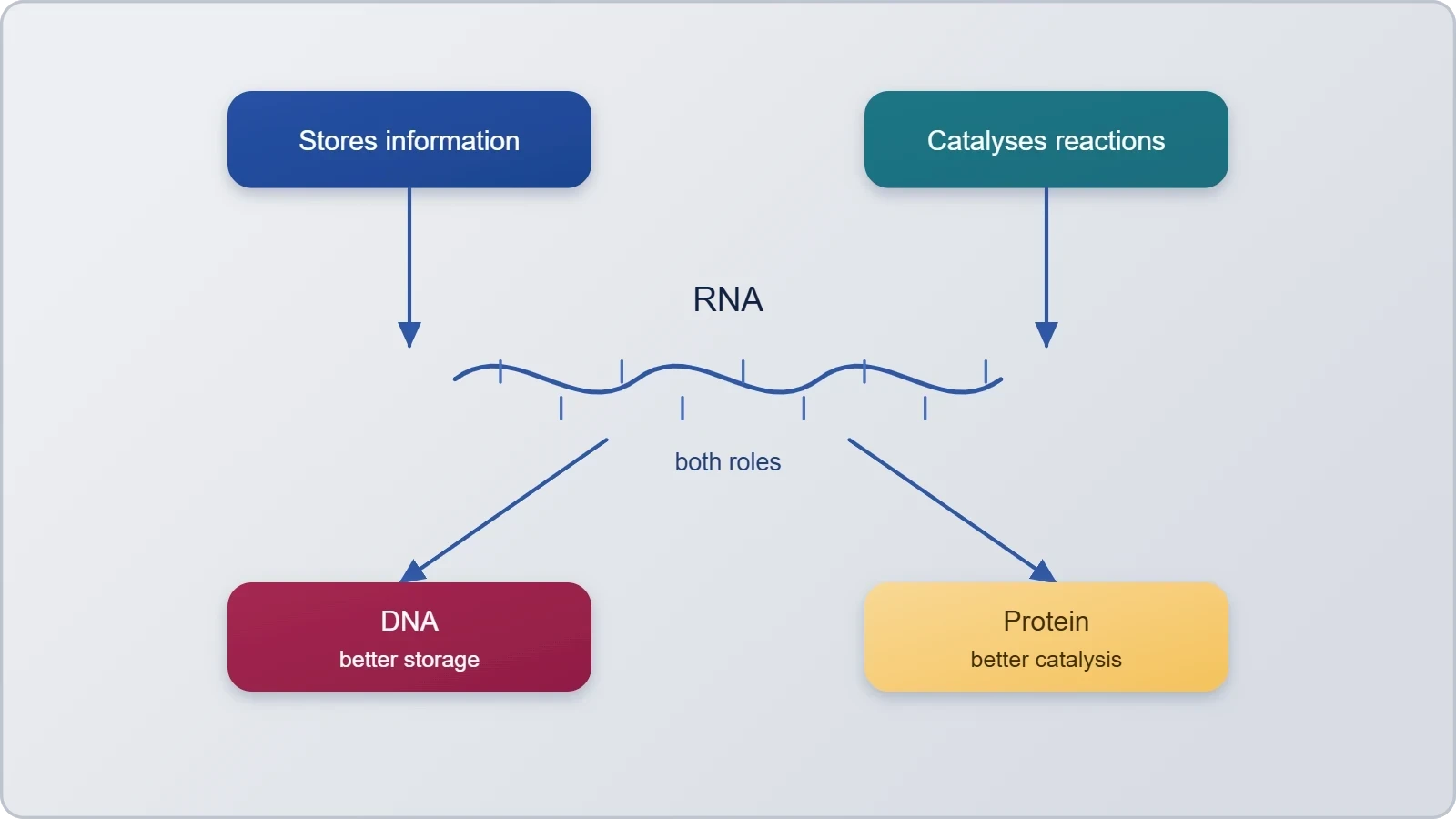
The reasoning is grounded in a set of criteria that any candidate genetic material must satisfy: it must be capable of replication, chemically and structurally stable, able to mutate slowly enough to permit evolution without collapsing into error, and capable of expressing itself as observable traits. Both DNA and RNA satisfy the first criterion through complementary base pairing, but they diverge sharply on the others. RNA's 2'-hydroxyl group renders it reactive, labile, and prone to degradation, while DNA's deoxyribose backbone and its use of thymine in place of uracil confer a stability that makes it far better suited to long-term storage. Yet that same reactivity is precisely what makes RNA catalytic — and catalysis, as we shall see, is the property that places RNA at the origin of life itself.
What follows is a rigorous treatment of the evidence: the catalytic RNAs known as ribozymes, the structural fossil embedded in the ribosome, the coenzymes that betray their RNA ancestry, and the modern organisms that still use RNA as their genetic material. We will also examine the prebiotic chemistry that may have generated the first nucleotides, the transition from an RNA world to a DNA-and-protein world, and the common misconceptions that trip up students encountering this material for the first time. By the end, the apparent paradox — why life chose the less stable molecule for catalysis and the more stable one for storage — should resolve into a coherent evolutionary narrative.
On This Page
- The Criteria for a Genetic Material and the Chemical Logic of Stability
- The RNA World Hypothesis: Evidence and Mechanism
- Coenzymes, Prebiotic Chemistry, and the Miller–Urey Experiment
- The Transition from RNA to DNA: A Chemical and Evolutionary Analysis
- Experimental Foundations and Modern Applications
- Synthesis: Why RNA Came First and Why DNA Took Over
The Criteria for a Genetic Material and the Chemical Logic of Stability
Before evaluating RNA as a candidate for the first genetic material, it is worth restating the four criteria with precision, because each one carries chemical consequences that shape the entire argument. A genetic material must be able to generate its own replica through base pairing and complementarity; it must be chemically and structurally stable enough to resist change across the life cycle, age, and physiological fluctuation; it must provide scope for slow mutation, the raw material of evolution; and it must be able to express itself in the form of Mendelian characters. Proteins, notably, fail the very first criterion, since they possess no mechanism for templated self-duplication. This immediately narrows the field to the nucleic acids.
The stability criterion deserves particular attention because it was visible in the classical experiments long before its molecular basis was understood. Griffith's transforming principle survived heat that killed the bacteria, demonstrating that some property of the genetic material resisted denaturation. We can now explain this in structural terms: the two complementary strands of DNA, when separated by heating, reassociate spontaneously once appropriate conditions are restored. This capacity for renaturation is a direct consequence of the double-stranded architecture and the fidelity of Watson–Crick pairing, and it provides a built-in mechanism for repairing damage that would be catastrophic for a single-stranded molecule.
The Reactive 2'-Hydroxyl Group and the Instability of RNA
Every nucleotide in RNA carries a 2'-OH group on its ribose sugar, and this seemingly minor chemical detail has profound consequences. The hydroxyl group is nucleophilic and can attack the adjacent phosphodiester bond, a reaction that is accelerated under alkaline conditions and that leads to spontaneous strand cleavage. This is why RNA is described as labile and easily degradable, and why laboratory protocols for handling RNA demand RNase-free conditions and constant vigilance against contamination. The same reactivity that destabilizes RNA, however, is the foundation of its catalytic capacity, since the 2'-OH can participate directly in the general acid–base chemistry of phosphoryl transfer reactions.
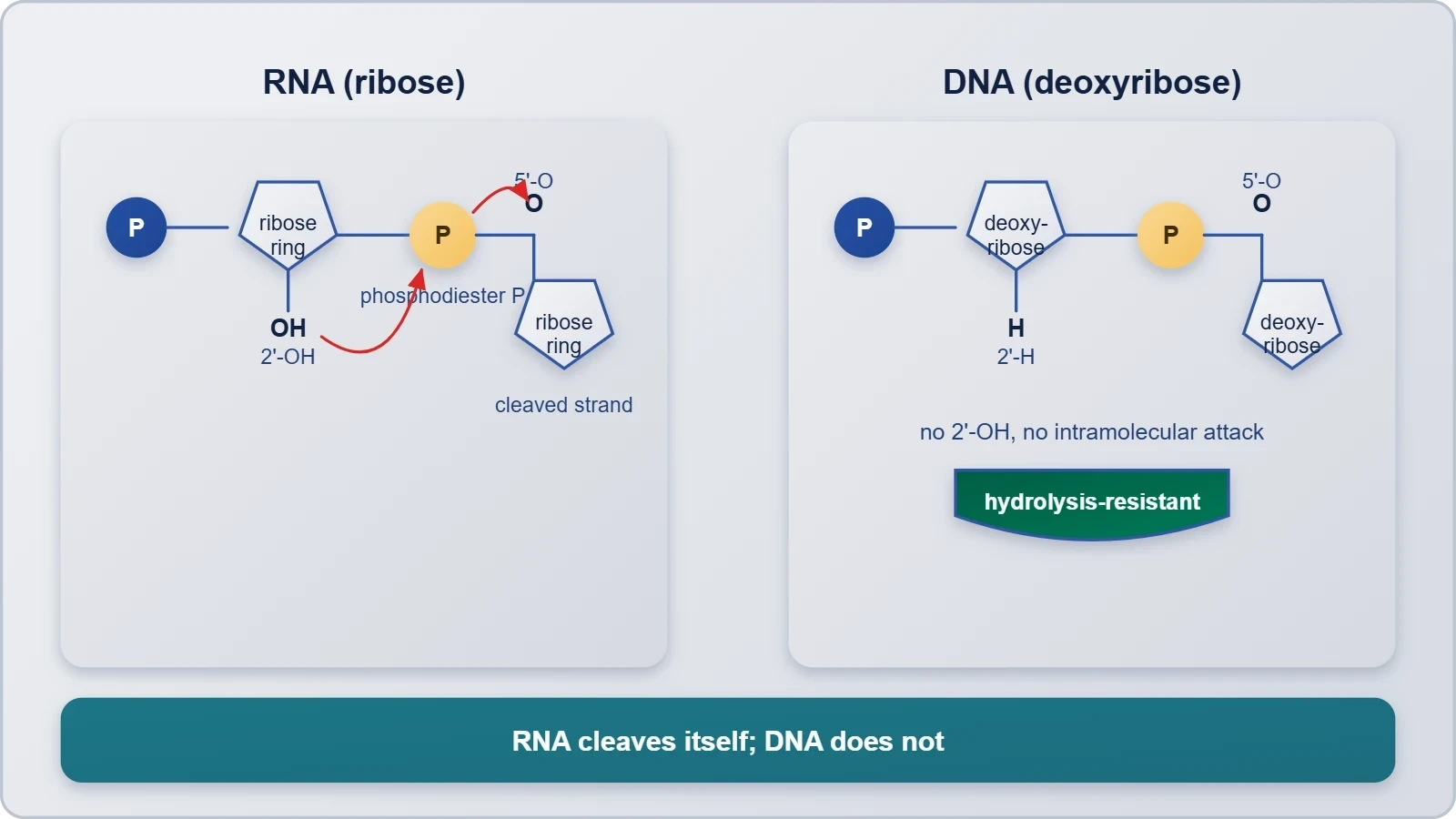
DNA solves the stability problem through two coordinated modifications. First, the absence of the 2'-OH group removes the intramolecular nucleophile responsible for strand cleavage, making the deoxyribose backbone far more resistant to hydrolysis. Second, the substitution of thymine for uracil confers additional stability, a point the reference material flags as requiring a deeper treatment of DNA repair processes. The evolutionary logic is unmistakable: DNA is chemically less reactive and structurally more stable than RNA, and therefore a superior archival molecule for storing genetic information across the lifespan of an organism and across generations.
Mutation Rates, Expression, and the Division of Labour
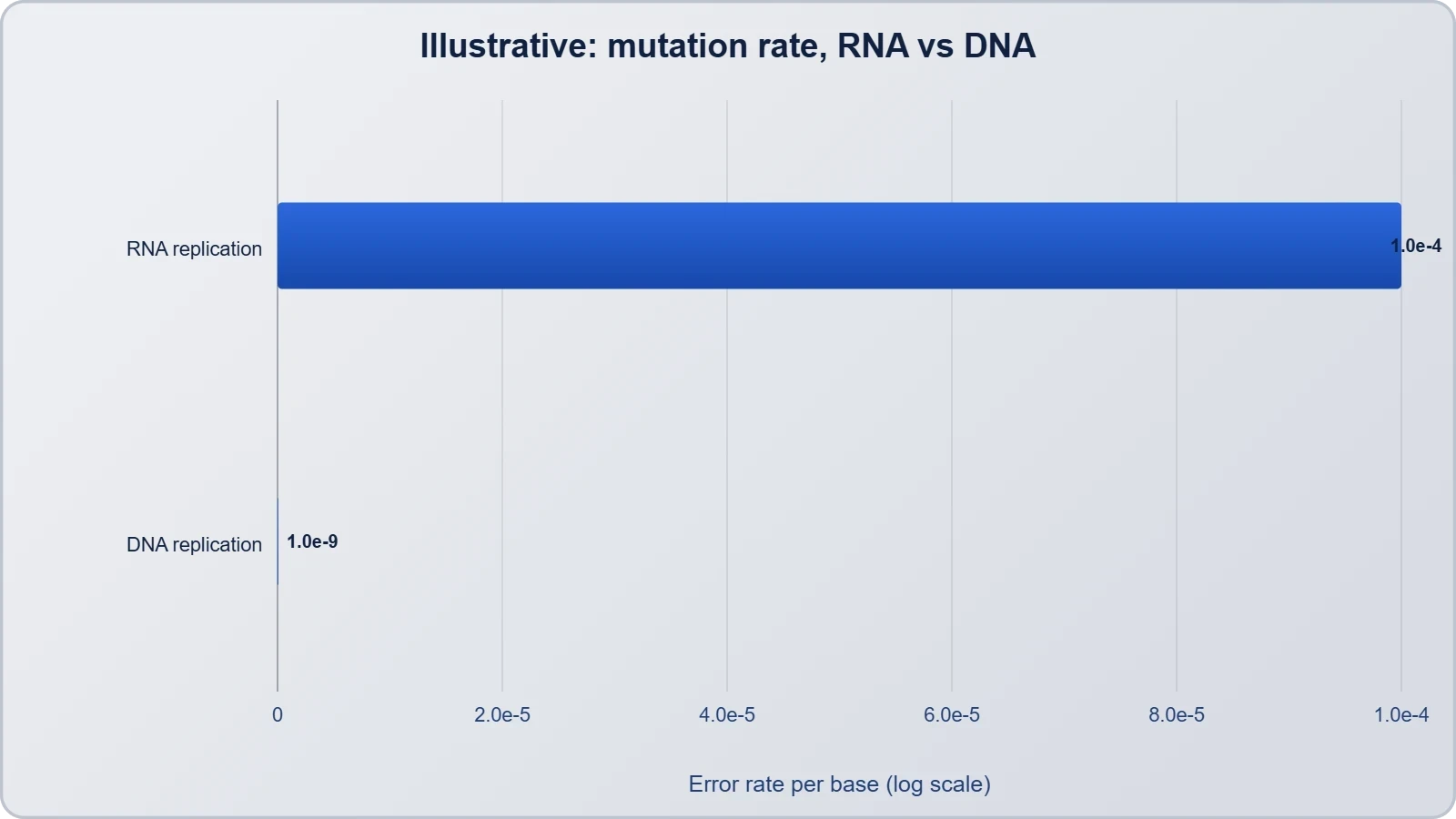
Both nucleic acids are capable of mutation, but they do so at markedly different rates. Because RNA is unstable, it mutates faster, and this has a direct evolutionary consequence: viruses with RNA genomes and short lifespans mutate and evolve rapidly, which is why RNA viruses such as influenza and SARS-CoV-2 present such persistent challenges to vaccine design and antiviral therapy. The high mutation rate is a double-edged sword — it accelerates adaptation but also imposes an error threshold beyond which genomes cannot maintain their integrity.
On the question of expression, RNA holds a clear advantage: it can directly code for protein synthesis, whereas DNA depends on RNA as an intermediary. The protein-synthesizing machinery of the cell evolved around RNA, not the reverse. Taken together, these considerations lead to a nuanced conclusion that the reference material states explicitly: both RNA and DNA can function as genetic material, but DNA, being more stable, is preferred for the storage of genetic information, while RNA is better suited to the transmission and expression of that information. This division of labour is the central theme of the RNA world narrative.
The RNA World Hypothesis: Evidence and Mechanism
The RNA world hypothesis proposes that RNA was the first genetic material, serving simultaneously as the carrier of hereditary information and as the catalyst for the biochemical reactions of early life. The evidence is now substantial: essential life processes such as metabolism, translation, and splicing appear to have evolved around RNA rather than around protein. Certain critical biochemical reactions in living systems are catalysed by RNA catalysts and not by protein enzymes, a fact that is difficult to reconcile with any model in which proteins came first. The hypothesis thus offers a chemically plausible route out of the chicken-and-egg problem that has long troubled origin-of-life research.
The core difficulty is straightforward to state. Modern cells use DNA to store information and proteins to catalyse reactions, but DNA cannot catalyse and proteins cannot replicate themselves. How could either have arisen without the other? RNA resolves the paradox because it can do both. It can store information in its sequence and, through its 2'-OH group and complex tertiary folding, catalyse chemical transformations. The RNA world is therefore not merely a hypothesis about antiquity but a solution to a logical impasse, and the subsequent evolution of DNA from RNA, with chemical modifications that make it more stable, represents the resolution of that impasse into the modern division of labour.
Ribozymes: Catalytic RNA in the Modern World
The discovery of ribozymes in the 1980s overturned the long-held assumption that all biological catalysts are proteins. The hammerhead ribozyme, found in certain plant viroids and viroid-like satellite RNAs, is a small self-cleaving RNA motif that catalyses site-specific phosphodiester cleavage using a conserved catalytic core. Its compact structure and well-characterized mechanism make it a favourite model system for understanding RNA catalysis. RNase P, by contrast, is a much larger ribonucleoprotein complex responsible for processing the 5' ends of precursor tRNAs, and its catalytic activity resides in the RNA subunit rather than the protein component — a striking demonstration that RNA can perform essential cellular chemistry.
These examples matter because they establish that RNA catalysis is not a laboratory curiosity but a living reality. The hammerhead ribozyme shows that small RNAs can achieve precise catalytic function through folding alone, while RNase P shows that even in modern cells, where protein enzymes dominate, RNA retains indispensable catalytic roles. The peptidyl transferase centre of the ribosome, discussed below, extends this argument to the very heart of protein synthesis. Together, these ribozymes constitute a molecular fossil record, preserving evidence of a time when RNA shouldered the catalytic burden that proteins now carry.
The Ribosome as a Structural Fossil
The strongest structural evidence for the RNA world comes from the ribosome itself. High-resolution crystal structures reveal that the peptidyl transferase centre — the site where amino acids are joined into polypeptide chains — is composed entirely of RNA, with no protein side chains within catalytic distance of the reaction. The proteins of the ribosome are positioned peripherally, where they appear to stabilize the RNA scaffold rather than participate in catalysis. In other words, the machine that synthesizes all proteins in every living cell is, at its catalytic core, a ribozyme.
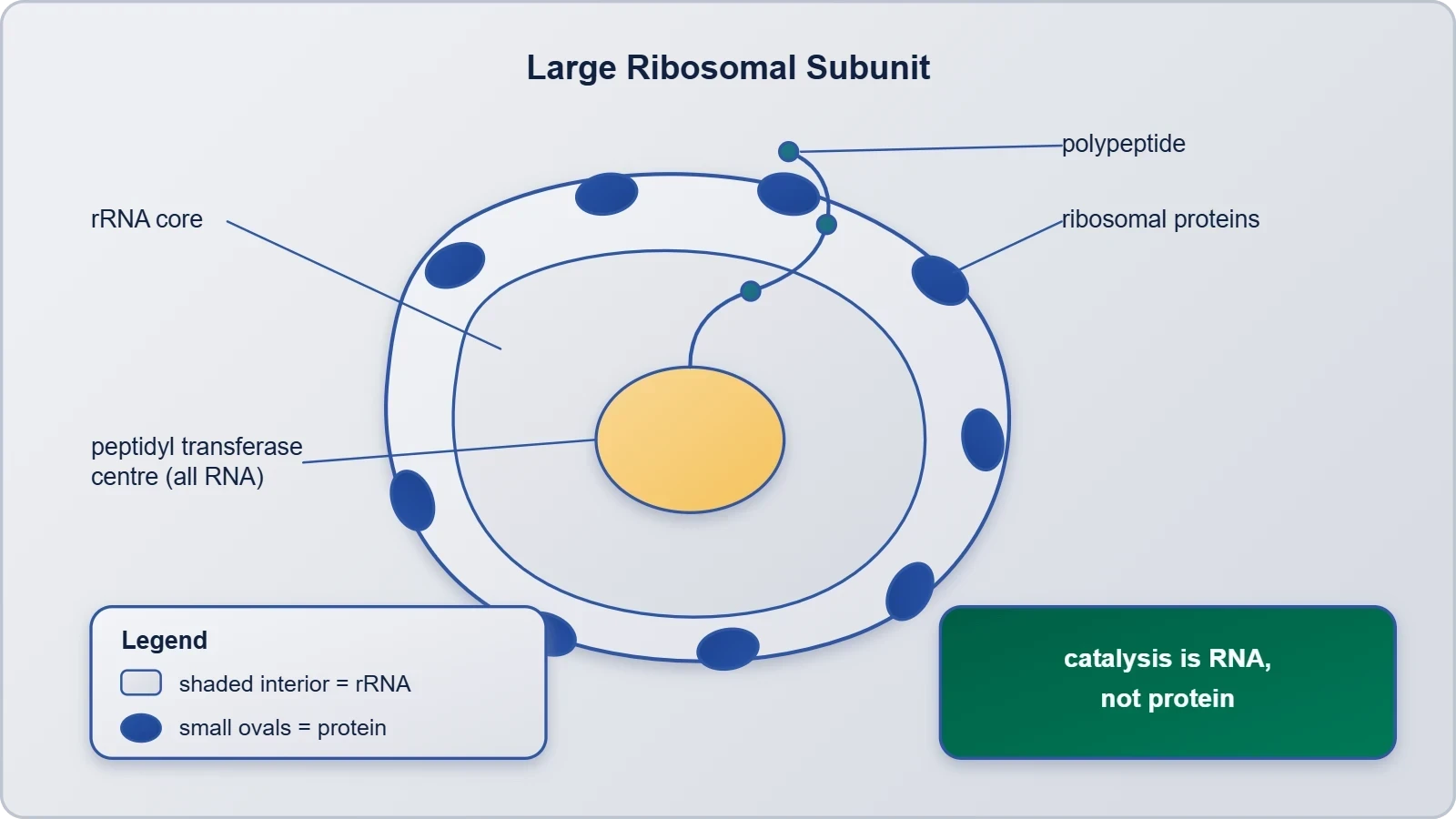
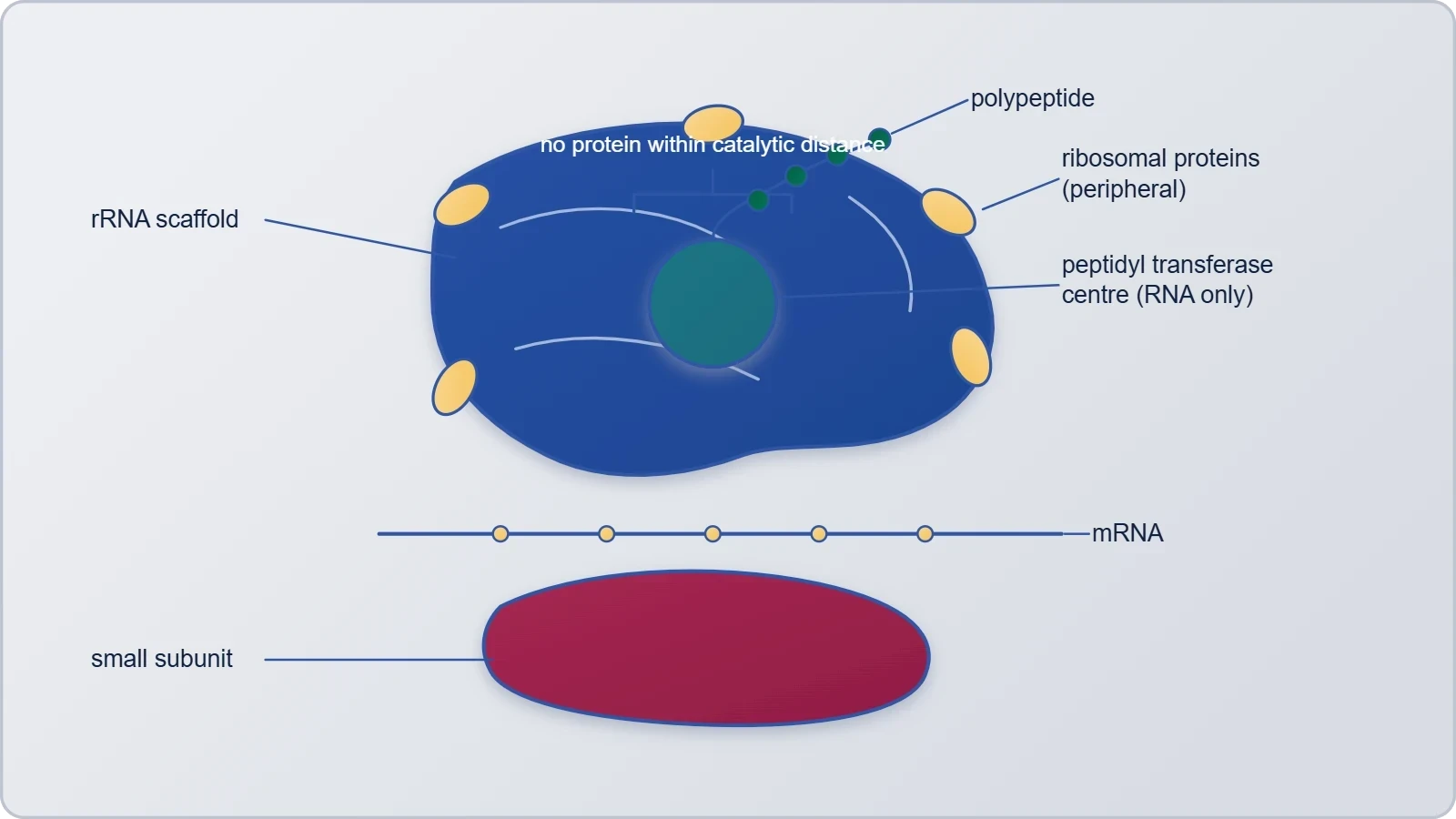
This observation carries enormous evolutionary weight. If protein synthesis is catalysed by RNA, then the protein-synthesizing machinery must have existed before the proteins it produces — and that machinery is built of RNA. The ribosome thus preserves, in its architecture, a record of the transition from an RNA-dominated world to a protein-dominated one. The proteins were added later, as structural reinforcement and regulatory accessories, while the ancient catalytic RNA core was retained because it could not be replaced without destroying the function it had evolved to perform.
Coenzymes, Prebiotic Chemistry, and the Miller–Urey Experiment
The evolutionary link between RNA and modern metabolism is preserved in the structure of coenzymes. Many of the most ancient and universal coenzymes — including ATP, NAD⁺, FAD, coenzyme A, and S-adenosylmethionine — contain nucleotide moieties, often adenine ribonucleotides, as essential structural components. This is not a coincidence. The most economical explanation is that these coenzymes originated as RNA molecules or RNA-bound cofactors in the RNA world and retained their nucleotide handles even after proteins took over catalysis. The nucleotide portion functions as a molecular fossil, a recognizable remnant of the era when RNA was the central molecule of metabolism.
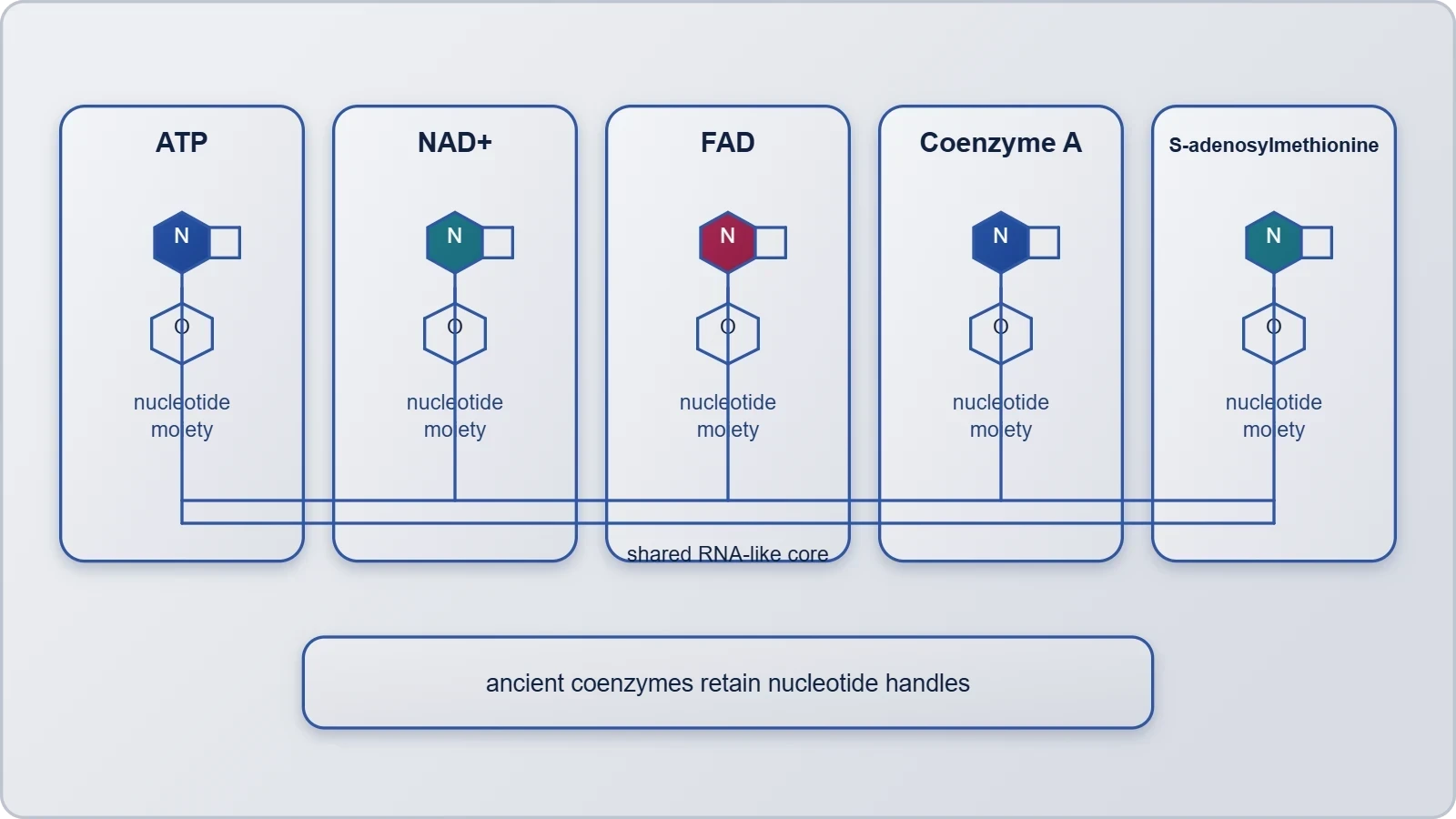
This observation connects the RNA world to the broader question of how the first nucleotides arose. The Miller–Urey experiment of 1953 demonstrated that amino acids could be generated from simple gases under simulated early-Earth conditions, and subsequent work extended these findings to nucleobases and sugars. While the prebiotic synthesis of RNA remains an active research frontier, the demonstration that the building blocks of nucleic acids can form under plausible prebiotic conditions lends credibility to the hypothesis that RNA emerged from the chemistry of the early Earth rather than requiring biological machinery that did not yet exist.
From Nucleotides to the First Replicators
The transition from free nucleotides to self-replicating RNA is the most demanding step in the RNA world narrative. Laboratory experiments have shown that certain RNA sequences can catalyse their own ligation and, in some cases, their own replication, albeit inefficiently. The concept of the RNA replicase — an RNA enzyme capable of copying RNA templates — has been approached through directed evolution, producing ribozymes with modest but genuine polymerase activity. These experiments do not prove that the RNA world existed, but they demonstrate that the required chemistry is achievable, which is precisely what a viable hypothesis demands.
Compartmentalization is the second requirement. A replicating molecule in a dilute ocean would benefit only itself, not its descendants, unless it were confined within a membrane or a mineral surface that kept its products nearby. Fatty acid vesicles and clay minerals have both been proposed as plausible compartments, and experiments show that RNA can be encapsulated and can replicate within such vesicles. The combination of replication, catalysis, and compartmentalization provides a minimal set of conditions under which Darwinian evolution could begin, and each of these conditions has been demonstrated in the laboratory.
Viroids and the Persistence of RNA Genomes
Some modern organisms still use RNA as their genetic material, and the viroids are the most striking example. Viroids are small, circular, single-stranded RNA molecules, typically a few hundred nucleotides in length, that infect plants and cause diseases such as potato spindle tuber viroid. They encode no proteins whatsoever, relying entirely on host machinery for replication and on their own catalytic RNA structure for processing. The hepatitis delta virus, similarly, possesses a ribozyme in its genome. These entities are living reminders that RNA-based heredity is not merely a historical conjecture but a present-day reality.
The RNA viruses — including tobacco mosaic virus and the QB bacteriophage cited in the reference material — represent a broader class of organisms that retain RNA as their genetic material. Their existence demonstrates that RNA genomes are viable, provided the organism's lifestyle accommodates the higher mutation rate. Short generation times and large population sizes allow RNA viruses to tolerate error rates that would be lethal for a complex organism with a large genome. The persistence of these RNA-based systems alongside DNA-based life is a living demonstration of the trade-offs that shaped the evolution of genetic material.
The Transition from RNA to DNA: A Chemical and Evolutionary Analysis
The evolution of DNA from RNA is best understood as a series of chemical modifications that traded catalytic versatility for archival stability. The first modification was the removal of the 2'-hydroxyl group, converting ribose to deoxyribose. This single change eliminated the intramolecular nucleophile responsible for RNA's lability, making the backbone resistant to spontaneous hydrolysis. The second modification was the substitution of thymine for uracil, which confers additional stability and provides a mechanism for the cell to distinguish genuine DNA from uracil-containing damage that must be repaired. Together, these changes transformed a reactive, catalytic molecule into a stable, inert one.
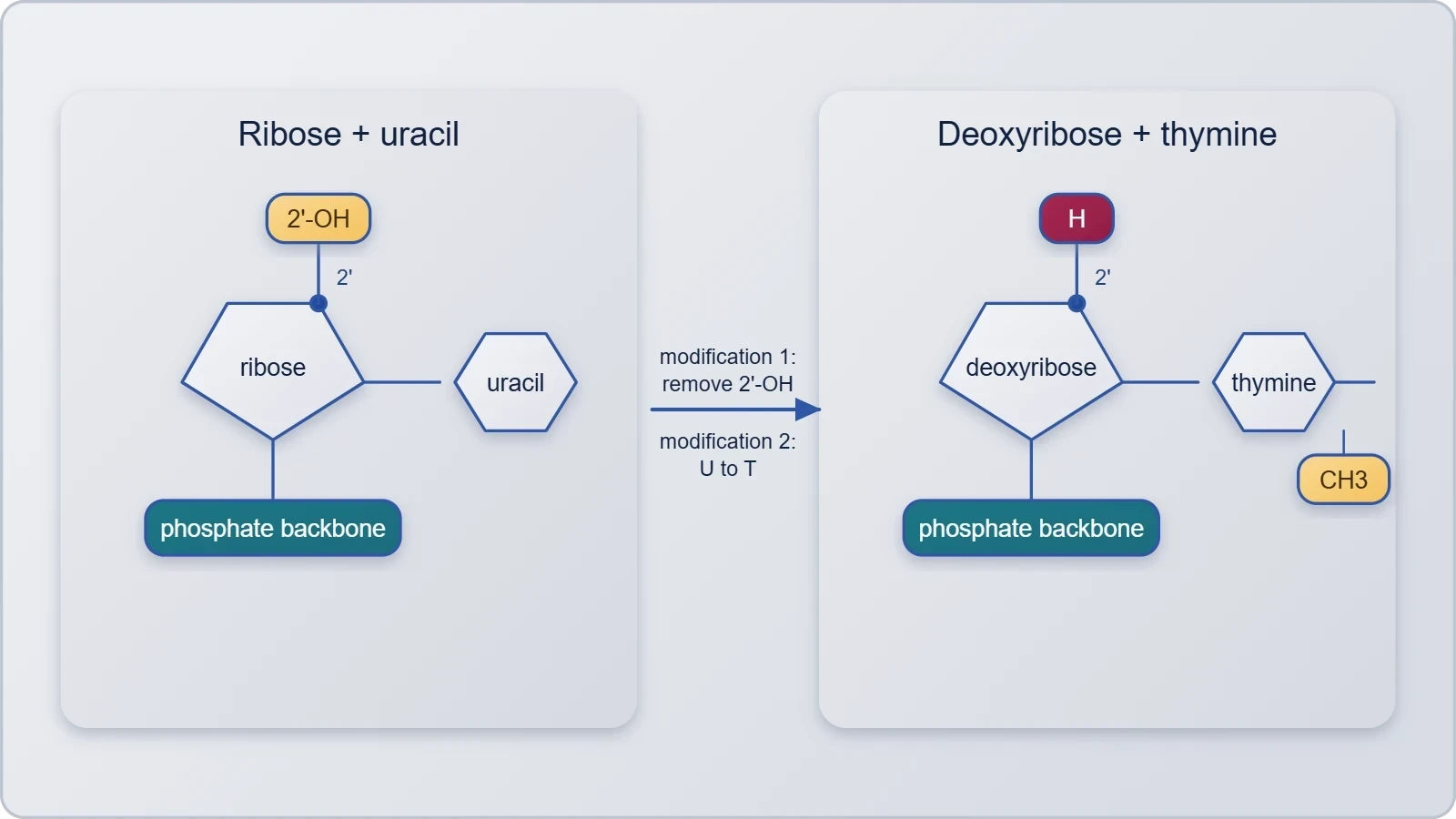
The third modification was the adoption of a double-stranded architecture. A single-stranded RNA genome is vulnerable to chemical damage because there is no second copy to serve as a template for repair. A double-stranded DNA molecule, by contrast, carries two complementary copies of the information, so that damage to one strand can be corrected by reference to the other. This is the molecular basis of the repair processes that the reference material flags for later study, and it explains why DNA can maintain the low mutation rate required for the stable inheritance of complex genomes.
Why DNA Did Not Replace RNA Entirely
A natural question arises: if DNA is superior for storage, why did RNA survive at all? The answer lies in the division of labour. DNA is chemically inert, which makes it an excellent archive but a poor catalyst and a poor signalling molecule. RNA retains the reactivity that DNA lost, and that reactivity is essential for catalysis, regulation, and the dynamic processes of gene expression. The cell therefore uses DNA for long-term storage and RNA for the transient, reactive tasks that require chemical flexibility. This division is not a compromise but an optimization: each molecule is deployed where its properties are most advantageous.
The persistence of RNA in modern cells is thus a direct consequence of its evolutionary history. The ribosome, the spliceosome, and the tRNA and rRNA machinery all retain RNA at their catalytic or structural cores because these functions evolved in an RNA world and could not be fully replaced without disrupting the architecture that had already been optimized. The transition to DNA was not a wholesale replacement but a specialization, in which DNA took over the archival role while RNA retained the catalytic and regulatory roles it had always performed.
Common Misconceptions and Worked Reasoning
Students frequently assume that the RNA world hypothesis claims RNA was the only molecule present in early life. This is a misreading. The hypothesis claims that RNA was the first molecule to combine information storage with catalysis, not that proteins and lipids were absent. Indeed, the transition to the modern world required the emergence of proteins and membranes, and the RNA world is best understood as a stage in a longer trajectory rather than a complete description of early life. A second common error is to assume that RNA is simply "less evolved" than DNA; in fact, RNA's reactivity is a functional adaptation, not a deficiency.
A useful worked example illustrates the mutation-rate argument quantitatively. Suppose an RNA genome of 10,000 nucleotides replicates with an error rate of ##10^{-4}## per base. The expected number of mutations per replication is ##10^4 \times 10^{-4} = 1##, meaning that, on average, every offspring carries one mutation. For a DNA genome of the same size with an error rate of ##10^{-9}## per base, the expected number is ##10^4 \times 10^{-9} = 10^{-5}##, so only one in a hundred thousand offspring carries a mutation. This difference explains why RNA viruses evolve so rapidly and why large, complex genomes require the stability that DNA provides.
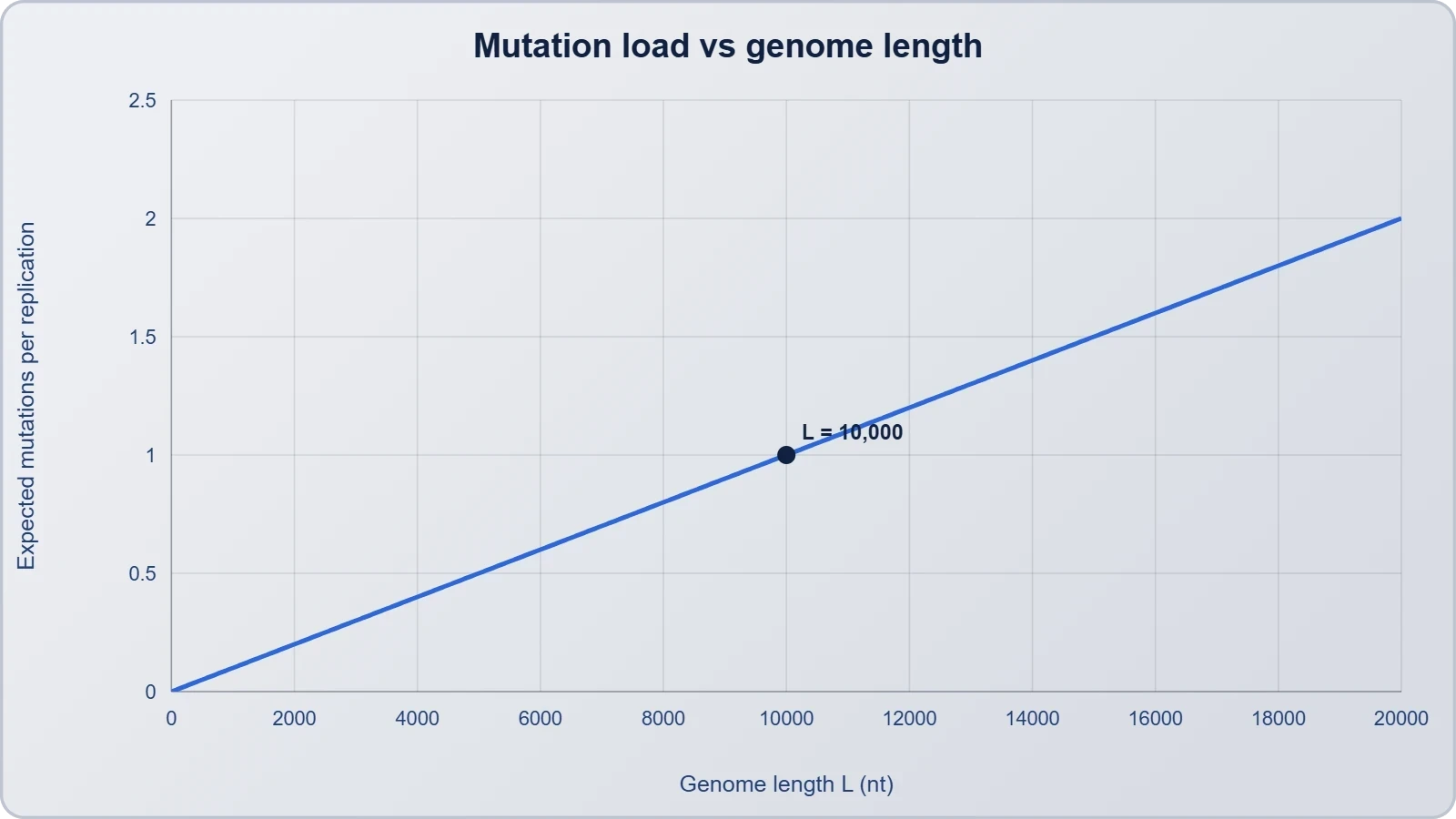
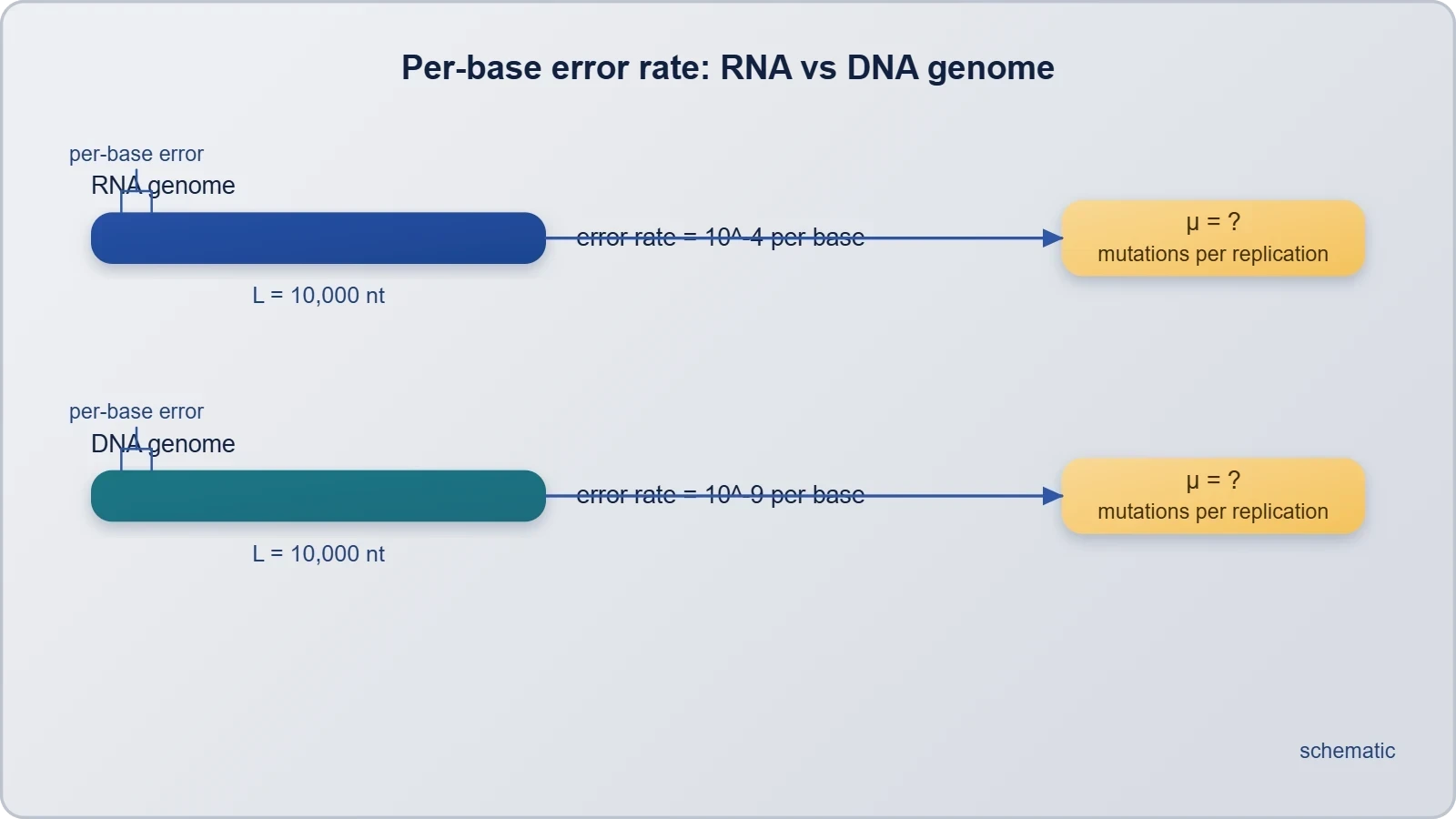
Here ##\mu## is the expected number of mutations per replication, ##L## is the genome length in nucleotides, and ##\epsilon## is the per-base error rate. The relationship makes the evolutionary trade-off explicit: for a given error rate, there is a maximum genome length beyond which the mutation load becomes intolerable. This is the error threshold, and it explains why RNA viruses have small genomes while DNA-based organisms can maintain genomes orders of magnitude larger.
Experimental Foundations and Modern Applications
The RNA world hypothesis is supported not only by comparative biology but by direct experimentation. The discovery of catalytic RNA by Cech and Altman in the 1980s earned the Nobel Prize in Chemistry in 1989 and fundamentally changed the way biologists think about the relationship between information and catalysis. Subsequent work has produced ribozymes with polymerase activity, demonstrated RNA replication within vesicles, and revealed the structural details of the ribosome's catalytic core. Each of these findings has strengthened the case that RNA can perform the functions required of a primordial genetic material.
Modern biotechnology has also harnessed RNA's versatility in ways that echo its ancient roles. RNA interference, CRISPR-based RNA targeting, mRNA vaccines, and aptamer-based sensors all exploit the same properties — base pairing, folding, and catalytic potential — that made RNA the original molecule of life. The mRNA vaccine platforms deployed during the COVID-19 pandemic are a particularly vivid example: they use RNA to deliver genetic information directly to the cell's translation machinery, bypassing DNA entirely. In a sense, these technologies recapitulate the RNA world's logic in a modern therapeutic context.
Reading the Evidence: A Practical Framework
When evaluating claims about the RNA world, it helps to apply a consistent framework. First, ask whether the proposed RNA function has been demonstrated in a modern organism or in a laboratory experiment. Second, ask whether the function is plausibly ancient, as indicated by its presence across all domains of life. Third, ask whether the function could have been performed by a simpler molecule. The ribosome's RNA core passes all three tests: it is demonstrably catalytic, universally conserved, and not replaceable by protein. The coenzymes pass the first two tests and provide strong circumstantial evidence for the third.
This framework also helps distinguish between established fact and active hypothesis. That RNA can catalyse reactions is established fact. That RNA was the first genetic material is a well-supported hypothesis, not a proven historical event, because the relevant transitional organisms are extinct and unlikely to be recovered. The scientific value of the hypothesis lies in its explanatory power and its testability, not in the possibility of direct observation. Students should be comfortable with this distinction, which is characteristic of historical sciences generally.
Looking Ahead to Replication
The next lesson turns to DNA replication, the mechanism by which the stable archival molecule is faithfully copied. The contrast with RNA is instructive: DNA replication achieves error rates orders of magnitude lower than RNA replication, and it does so through proofreading and repair mechanisms that are only possible because of the double-stranded architecture. The transition from RNA to DNA was therefore not merely a change of molecule but the acquisition of an entirely new capacity for fidelity, one that made complex genomes possible.
The semiconservative model proposed by Watson and Crick in 1953 — with its famous understatement that the specific pairing "immediately suggests a possible copying mechanism for the genetic material" — will be examined in detail, along with the Meselson–Stahl experiment that confirmed it. For now, it is enough to recognize that the RNA world set the stage for this transition by demonstrating that nucleic acids could both store and act upon information. The evolution of DNA was the refinement of that dual capacity into a specialized division of labour.
Synthesis: Why RNA Came First and Why DNA Took Over
The RNA world hypothesis resolves a genuine paradox in the logic of early life. Information storage without catalysis is inert, and catalysis without information storage is transient. RNA alone among known molecules can do both, and the evidence that it once did so is embedded in the structure of the ribosome, the chemistry of coenzymes, and the persistence of ribozymes across all domains of life. The hypothesis is not a speculation about a single molecule but a coherent account of how the dual requirements of heredity and metabolism could have been met by a single chemical system.
The subsequent evolution of DNA was a specialization, not a replacement. By removing the 2'-hydroxyl group and substituting thymine for uracil, early life created a molecule that could store information with far greater fidelity than RNA. By adopting a double-stranded architecture, it created a molecule that could be repaired by reference to a complementary copy. These changes made possible the large, complex genomes that characterize modern organisms, while RNA retained the catalytic and regulatory roles for which its reactivity is essential. The division of labour between DNA and RNA is thus the enduring legacy of the RNA world.
For students preparing for advanced study, the lesson carries a broader methodological point. The RNA world hypothesis is a historical claim supported by comparative, structural, and experimental evidence rather than by direct observation. Learning to weigh such evidence — to distinguish between what is demonstrated, what is inferred, and what remains conjectural — is as important as memorizing the facts themselves. The next lesson on DNA replication will show how the stable archival molecule is copied with extraordinary fidelity, completing the picture of how genetic information is stored, expressed, and transmitted.
Also Read
- No links available.
From our network :
- 10 Physics Numerical Problems with Solutions for IIT JEEPrepare for IIT JEE with 10 physics numerical problems, complete with detailed solutions and conceptual explanations. Ideal for mastering kinematics, thermodynamics, electromagnetism, and optics.
- Where to Put Your Wireless Router for Better CoverageA practical, physics-grounded guide to router placement: why the centre of the home beats the corner, how walls and metal sap signal, and how to run a simple survey that proves the improvement.
- EV 2.0: The Solid-State Battery Breakthrough and Global Factory ExpansionDiscover the impact of the Solid-State Battery Breakthrough on the EV market. Learn about CATL and BYD stock growth, global factory expansion in Europe, and the future of EV 2.0 technology.
- 98% of Global MBA Programs Now Prefer GRE Over GMAT Focus EditionExplore why 98% of global MBA programs now prefer the GRE over GMAT Focus. Learn about the shorter GRE format, verbal logic importance, and strategic versatility for students.
- Trump Political Strategy How Geopolitical Stunts Serve As Media Diversions
- Do You Need a New Router or Is Your Internet Plan the Problem?A practical comparison of the signs that point to router limits versus signs your broadband speed or provider is the bottleneck, so you can decide what to replace before spending money.
- AI-Powered 'Precision Diagnostic' Replaces Standard GRE Score ReportsDiscover the new GRE Precision Diagnostic. Learn how AI-powered behavioral analytics and time-to-solve tracking are replacing standard GRE score reports to empower students.
- Analyzing Trump Deportation Numbers Insights Into The 2026 Immigration Crackdown
- How to Print Cheaply: Cutting the Cost per PageA practical, measured guide to lowering what each printed page costs — duplex and draft modes, third-party ink, yield mathematics, and knowing when a new printer beats refills.
RESOURCES
- Resources will be updated soon.