Glycolysis is the oldest and most universal energy-releasing pathway in the living world, and it is the point at which the study of respiration becomes genuinely biochemical. Every organism alive today, from a bacterium in a thermal vent to the cells inside a woody stem, retains the enzymatic machinery to break glucose down to pyruvic acid without the help of oxygen. That single fact tells us something profound about the history of life: the pathway predates the oxygen-rich atmosphere in which most familiar organisms now live, and it has been conserved so faithfully that its logic survives unchanged across billions of years of evolution.
This lesson examines the pathway at its foundations rather than at its individual steps. It explains where the name glycolysis comes from, who assembled the scheme that we still draw today, and why that scheme carries the initials of three scientists. It then locates the pathway inside the cell, traces how a plant converts the sucrose manufactured by photosynthesis into the two monosaccharides that actually enter glycolysis, and follows the first phosphorylations that commit a sugar to breakdown. The ten reactions themselves, and the fate of the pyruvate they produce, belong to the lesson that follows.
For learners preparing for intermediate-level examinations, the value of this material lies in its precision. The terminology is exact, the enzyme names are fixed, and the order of ideas mirrors the way the pathway is conventionally taught. Read carefully, the lesson also answers a question that students often carry silently: if plants make glucose, why do they begin with sucrose? The answer connects photosynthesis, storage, and respiration into a single continuous economy of carbon inside the plant body.
On This Page
The Meaning and Origin of the Term Glycolysis
The word glycolysis is built from two Greek roots, and both of them describe exactly what the pathway does. Glycos means sugar, and lysis means splitting. Taken together, the term announces a process in which a sugar molecule is broken apart. This is not a loose metaphor but a literal description of the central event: a six-carbon sugar is cleaved into two three-carbon fragments, and those fragments are then rearranged and oxidised to yield pyruvic acid. The name has survived because it captures the chemistry so economically that no better label has ever been needed.
It is worth pausing on how much information a well-chosen scientific name can carry. Students who understand the etymology of glycolysis immediately grasp that the pathway is a splitting reaction rather than a combustion, and that its substrate is a sugar rather than a lipid or a protein. The same habit of reading names carefully pays dividends throughout respiration, where terms such as oxidative phosphorylation and decarboxylation describe their own chemistry. Vocabulary, in this subject, is not decoration; it is compressed explanation.
The Scientists Behind the EMP Pathway
The scheme of glycolysis was given by Gustav Embden, Otto Meyerhof, and J. Parnas, and for that reason the pathway is often referred to as the EMP pathway, taking the initial letters of their surnames. These three investigators worked during the early decades of the twentieth century, when the intermediate compounds of fermentation and muscle metabolism were being identified one by one. Their achievement was to assemble scattered observations into a coherent sequence, so that each reaction could be understood as a link in a chain rather than an isolated curiosity.
The name EMP pathway is therefore a historical tribute as much as a technical label. When a textbook writes EMP, it is acknowledging that the sequence we now take for granted was pieced together by patient laboratory work rather than revealed in a single moment. Learners should treat the two names, glycolysis and the EMP pathway, as interchangeable, since examination questions may use either. Recognising the equivalence prevents the confusion that arises when a familiar process appears under an unfamiliar title.
Why the Pathway Is Universal
In anaerobic organisms, glycolysis is the only process in respiration. This statement from the material deserves emphasis, because it explains why the pathway is present in all living organisms without exception. An organism that lives entirely without oxygen has no electron transport chain to fall back on, no oxidative phosphorylation to generate the bulk of its ATP. For such an organism, the partial oxidation of glucose to pyruvic acid is the whole of its energy economy, and the pathway must therefore be efficient enough to sustain life on its own.
Among present-day organisms, some are facultative anaerobes, able to switch between oxygen-dependent and oxygen-independent metabolism, while in others the requirement for anaerobic conditions is obligate. The material also notes that there are sufficient reasons to believe the first cells on this planet lived in an atmosphere that lacked oxygen. Glycolysis, in other words, is a living fossil, a biochemical pathway that has outlasted the world that produced it and now serves as a shared foundation beneath every more elaborate respiratory strategy.
Location of Glycolysis Within the Cell
Glycolysis occurs in the cytoplasm of the cell. This single sentence carries more significance than its brevity suggests. The cytoplasm is the fluid interior of the cell, outside the membrane-bound organelles, and it is available to every cell regardless of whether that cell possesses mitochondria. Because the pathway is housed there, it can operate in prokaryotes that have no organelles at all, and it can operate in eukaryotic cells even when oxygen is scarce and the mitochondria are effectively idle. Location and universality are therefore two sides of the same fact.
Contrast this with the later stages of aerobic respiration, which are associated with the mitochondria. A student who remembers only one thing about glycolysis should remember that it is cytoplasmic. Examination questions frequently test this point by asking where a particular intermediate is formed, and the answer for every step of glycolysis is the same. The pathway is also present in all living organisms, so the cytoplasm is not merely a convenient site but the evolutionary original home of respiratory chemistry.
Why the Cytoplasm Matters for Anaerobes
For an obligate anaerobe, the cytoplasm is the entire respiratory apparatus. There is no organelle to which the products of glycolysis might be delivered, and no oxygen to accept electrons at the end of a chain. The pyruvic acid formed must therefore be dealt with by fermentation, a topic treated elsewhere in this course. The point to grasp here is structural: the cytoplasmic location of glycolysis is precisely what makes the pathway viable as a standalone process, complete in itself for organisms that never encounter oxygen.
Even in plants, where oxygen is normally abundant, the cytoplasmic location allows respiration to continue during temporary shortages. A waterlogged root, a germinating seed beneath a compacted soil surface, or a bulky storage organ with limited internal air spaces may experience conditions in which oxygen diffusion is restricted. In such circumstances the glycolytic machinery, sitting in the cytoplasm and requiring no oxygen, keeps the cell supplied with a modest but essential trickle of ATP until conditions improve.
Glycolysis and the Plant's Air Spaces
The material observes that the distance gases must diffuse even in large, bulky plants is not great, because each living cell in a plant is located quite close to the surface. In stems, the living cells are organised in thin layers inside and beneath the bark, and they have openings called lenticels. The cells in the interior are dead and provide only mechanical support. Most cells of a plant therefore have at least a part of their surface in contact with air, a condition facilitated by the loose packing of parenchyma cells in leaves, stems and roots.
This anatomy explains why aerobic respiration can proceed in most plant tissues and why glycolysis usually feeds into the full oxidative machinery rather than standing alone. The interconnected network of air spaces created by loosely packed parenchyma delivers oxygen efficiently to living cells, so the cytoplasmic pathway hands its pyruvate onward to the mitochondria. Only where that delivery fails, through flooding or compaction, does the anaerobic route become the plant's working option.
From Sucrose to Glucose and Fructose
In plants, the glucose that enters glycolysis is derived from sucrose, which is the end product of photosynthesis, or from storage carbohydrates. This is a distinctly botanical opening to the pathway, and it deserves attention. An animal physiologist might begin with blood glucose, but a plant physiologist must begin with sucrose, because sucrose is the form in which the plant moves sugar from the leaf to every other tissue. The starting point of glycolysis in a plant is therefore a disaccharide delivered by the transport system of the plant body.
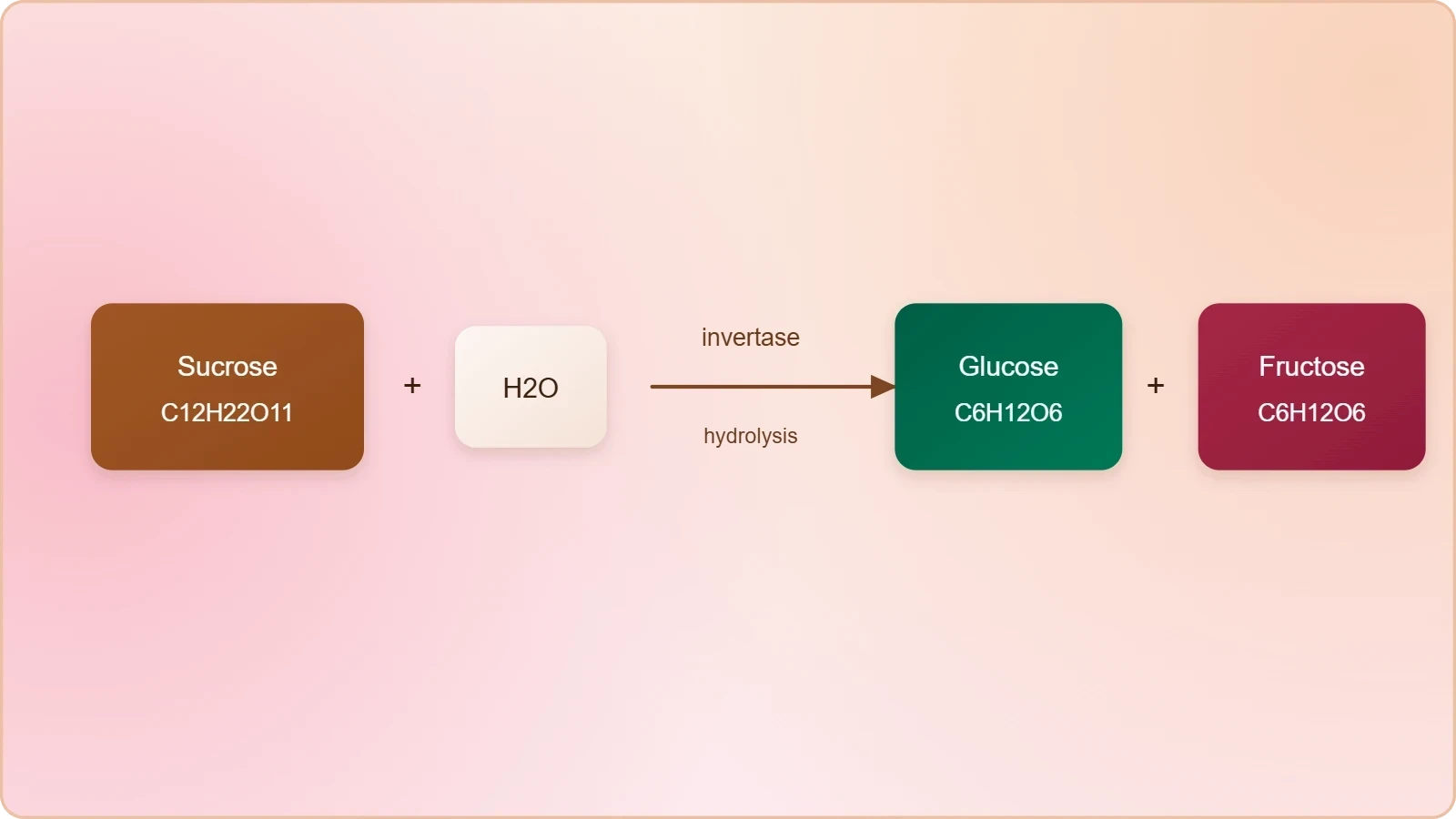
Sucrose is converted into glucose and fructose by the enzyme invertase, and these two monosaccharides readily enter the glycolytic pathway. The word readily is well chosen. Once the disaccharide has been split, no further preparation is needed before the sugars can be phosphorylated and committed to breakdown. The plant has, in effect, arranged its sugar transport so that the final delivery step produces exactly the substrates that glycolysis requires, with no wasted intermediate stage between arrival and entry.
The Role of Invertase
Invertase is the enzyme that performs this cleavage, splitting one molecule of sucrose into one molecule of glucose and one molecule of fructose. The reaction can be written compactly as a hydrolysis:
The equation balances because sucrose, a twelve-carbon disaccharide, is divided into two six-carbon monosaccharides. Both products are hexoses, and both are capable of entering the pathway. The enzyme's name reflects the optical change that accompanies the reaction, a detail that historically helped investigators follow the process in the laboratory. For the purposes of this lesson, the essential point is simply that invertase stands at the doorway of glycolysis in plants, converting the transported sugar into the two forms that the pathway can accept.
Why Two Different Monosaccharides Enter
The material states that glucose and fructose readily enter the glycolytic pathway, and this raises an obvious question: how can two different sugars follow the same route? The answer lies in the early phosphorylations. Glucose and fructose are phosphorylated to give rise to glucose-6-phosphate by the activity of the enzyme hexokinase. This phosphorylated form of glucose then isomerises to produce fructose-6-phosphate. From that point onward, the subsequent steps of metabolism of glucose and fructose are the same, and the two streams merge into a single sequence.
The convergence is elegant. Fructose, arriving from sucrose, is phosphorylated to fructose-6-phosphate, which is precisely the compound that glucose reaches after its own phosphorylation and isomerisation. The pathway therefore does not need two separate machineries; it needs one, fed by two entrances that meet at a common intermediate. This is one of the clearest examples in metabolism of economy through convergence, and it explains why the chapter can describe the metabolism of both sugars in a single paragraph without any loss of accuracy.
The First Phosphorylations and the Commitment of the Sugar
Glucose and fructose are phosphorylated to give rise to glucose-6-phosphate by the activity of the enzyme hexokinase. This is the first chemical modification that the sugar undergoes on entering the pathway, and it is a decisive one. Phosphorylation is the addition of a phosphate group to a molecule, and in this case the phosphate is donated by ATP. The sugar is thus activated, and the cell has spent energy to secure it. From this moment the molecule is trapped inside the metabolic system, committed to the glycolytic sequence rather than free to diffuse away.
The material is careful to note where ATP is utilised, and this is one of the points that students are expected to track. ATP is utilised at two steps: first in the conversion of glucose into glucose-6-phosphate, and second in the conversion of fructose-6-phosphate to fructose 1,6-bisphosphate. Both expenditures occur early in the pathway, before any energy has been recovered. The cell is therefore investing before it earns, and the logic of that investment is central to understanding why glycolysis is described as a pathway with an energy-requiring phase followed by an energy-yielding phase.
Hexokinase and the Isomerisation Step
Hexokinase is the enzyme responsible for the first phosphorylation, and its name identifies both its substrate and its action: a hexose sugar and the addition of a phosphate. The product, glucose-6-phosphate, then isomerises to produce fructose-6-phosphate. Isomerisation rearranges the molecule without changing its atomic composition, converting an aldose into a ketose so that the subsequent chemistry can proceed. The material states plainly that this phosphorylated form of glucose then isomerises to produce fructose-6-phosphate, and that the subsequent steps of metabolism of glucose and fructose are the same.
The second ATP expenditure follows, converting fructose-6-phosphate to fructose 1,6-bisphosphate. The prefix bis indicates that two phosphate groups are now present, one at each end of the six-carbon chain. This symmetrical arrangement prepares the molecule for the cleavage that gives the pathway its name, since a sugar phosphorylated at both ends can be split cleanly into two three-carbon fragments. The investment of a second ATP is thus not waste but preparation, setting up the splitting reaction that defines glycolysis.
Counting the Energy Invested
Two molecules of ATP are consumed for each molecule of glucose that enters the pathway, one at the hexokinase step and one at the phosphofructokinase step. The material poses the question directly: can you calculate how many ATP molecules are directly synthesised in this pathway from one glucose molecule? The answer requires balancing the two ATP spent against the ATP produced later, when BPGA is converted to 3-phosphoglyceric acid and when PEP is converted to pyruvic acid. That arithmetic belongs to the next lesson, but the investment side of the ledger is established here.
Keeping a running account of ATP and NADH is one of the most useful habits a student of respiration can develop. The material explicitly advises noting the steps at which utilisation or synthesis of ATP, or in this case NADH + H+, takes place. A simple ledger, with expenditures on one side and returns on the other, turns a list of ten reactions into a comprehensible financial statement of cellular energy. The first two entries on the expenditure side are the phosphorylations described above.
The Ten Reactions and the Products of the Pathway
In glycolysis, a chain of ten reactions, under the control of different enzymes, takes place to produce pyruvate from glucose. The number ten is worth fixing in memory, because it frames the pathway as a defined sequence rather than an open-ended process. Each reaction is catalysed by its own enzyme, and each converts one identifiable intermediate into the next. The material presents these steps in a figure, and the accompanying list of intermediates, from glucose through the phosphorylated hexoses to the triose phosphates and onward to pyruvic acid, forms the skeleton of the pathway.
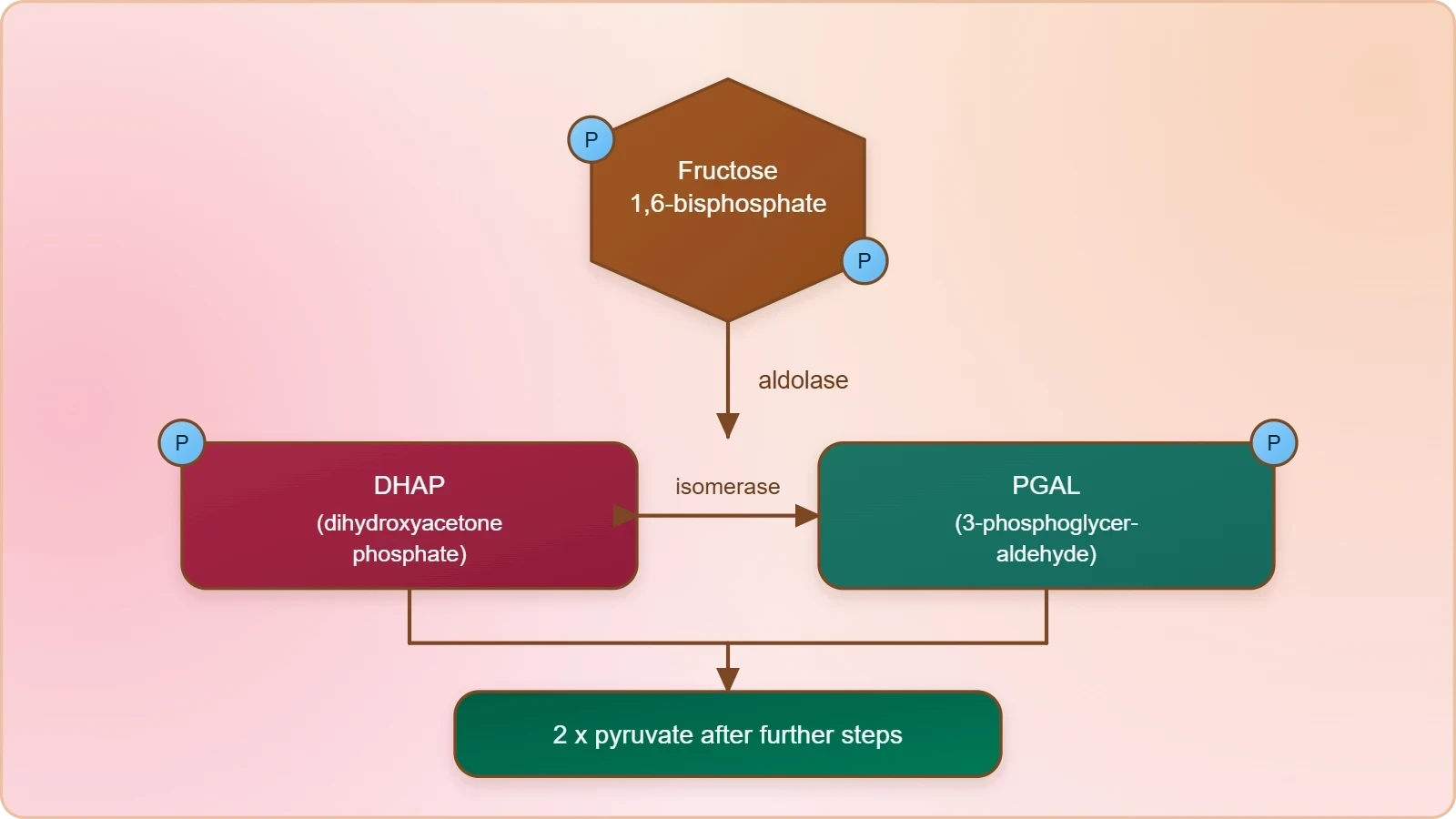
The middle of the sequence contains the cleavage that gives glycolysis its name. Fructose 1,6-bisphosphate is split into dihydroxyacetone phosphate and 3-phosphoglyceraldehyde, also called PGAL. The two triose phosphates are interconvertible, so both eventually proceed through the same remaining reactions, and the pathway from this point operates in duplicate. This is why the products of the later steps are conventionally written with a factor of two, and why one molecule of glucose yields two molecules of pyruvic acid rather than one.
Oxidation, Phosphorylation and the Formation of NADH
There is one step in glycolysis where NADH + H+ is formed from NAD+, and the material identifies it precisely: the conversion of 3-phosphoglyceraldehyde (PGAL) to 1,3-bisphosphoglycerate (BPGA). Two redox-equivalents are removed, in the form of two hydrogen atoms, from PGAL and transferred to a molecule of NAD+. PGAL is oxidised and combines with inorganic phosphate to become BPGA. This is the only oxidation-reduction reaction in the pathway, and it is the point at which the energy later harvested by the electron transport system is first captured.
The conversion of BPGA to 3-phosphoglyceric acid (PGA) is also an energy-yielding process, and this energy is trapped by the formation of ATP. Another ATP is synthesised during the conversion of PEP to pyruvic acid. These two substrate-level phosphorylations are the returns on the investment made earlier. Because the pathway runs in duplicate after the cleavage, each of these ATP-forming steps occurs twice per glucose molecule, a point that the arithmetic of the next lesson will make explicit.
Pyruvic Acid as the Key Product
Pyruvic acid is the key product of glycolysis, and the material immediately asks what its metabolic fate might be. The answer depends on the cellular need. Where oxygen is available, pyruvate passes into the mitochondria and is oxidised completely through the aerobic pathway. Where oxygen is absent, it is dealt with by fermentation. The three-carbon acid is therefore a junction rather than a terminus, and the direction taken at that junction determines the entire character of the organism's respiration.
This branching point is what makes glycolysis so widely useful. The pathway itself is identical in an anaerobic bacterium, a flooded root, and a vigorously respiring leaf; only the fate of the pyruvate differs. By ending at a stable three-carbon compound rather than attempting complete oxidation, glycolysis provides a universal and oxygen-independent supply of ATP, together with a supply of carbon skeletons that the cell can direct wherever its circumstances require.
Going Further
Two pieces of background help to place this lesson in a wider biochemical context, and both are well established outside the material itself. The first concerns invertase, the enzyme that splits sucrose into glucose and fructose. In plants, invertases are found in the cell wall, the vacuole, and the cytoplasm, and they influence how sugar is partitioned between storage and metabolism. The second concerns phosphorylation, the addition of a phosphate group to a molecule. Phosphorylation generally makes a sugar more reactive and less able to leave the cell, which is precisely why it serves as the committing step of glycolysis.
These additions do not alter anything stated in the material; they simply explain why the steps described are chemically sensible. A phosphorylated sugar carries a charged group that hinders its passage across membranes, so the cell retains the molecule it has invested in. And an invertase positioned at the point where sucrose arrives can release glucose and fructose exactly where the glycolytic enzymes are waiting. The pathway, seen this way, is not only a sequence of reactions but a piece of cellular architecture, arranged so that each step occurs in the right place at the right time.
Also Read
- No links available.
From our network :
- Mastering DB2 LUW v12 Tables: A Comprehensive Technical GuideComprehensive guide on DB2 LUW v12 tables. Explore CREATE TABLE syntax, BLU Acceleration, range partitioning, data types, and security features for IBM DB2 LUW v12.
- 98% of Global MBA Programs Now Prefer GRE Over GMAT Focus EditionExplore why 98% of global MBA programs now prefer the GRE over GMAT Focus. Learn about the shorter GRE format, verbal logic importance, and strategic versatility for students.
- Vite 6/7 'Cold Start' Regression in Massive Module GraphsIn-depth analysis of Vite 6/7 cold start regressions in massive module graphs. Learn about barrel file issues, pre-bundling optimizations, and how to improve Vite dev server performance.
- EV 2.0: The Solid-State Battery Breakthrough and Global Factory ExpansionDiscover the impact of the Solid-State Battery Breakthrough on the EV market. Learn about CATL and BYD stock growth, global factory expansion in Europe, and the future of EV 2.0 technology.
- AI-Powered 'Precision Diagnostic' Replaces Standard GRE Score ReportsDiscover the new GRE Precision Diagnostic. Learn how AI-powered behavioral analytics and time-to-solve tracking are replacing standard GRE score reports to empower students.
- Analyzing Trump Deportation Numbers Insights Into The 2026 Immigration Crackdown
- Trump Political Strategy How Geopolitical Stunts Serve As Media Diversions
- Mastering DB2 12.1 Instance Design: A Technical Deep Dive into Modern Database ArchitectureComprehensive guide to DB2 12.1 Instance Design. Explore architectural components, HADR setup, buffer pool tuning, and security policies for IBM DB2 12.1. Includes 10 functional SQL and Shell samples.
- 10 Physics Numerical Problems with Solutions for IIT JEEPrepare for IIT JEE with 10 physics numerical problems, complete with detailed solutions and conceptual explanations. Ideal for mastering kinematics, thermodynamics, electromagnetism, and optics.
RESOURCES
- The Entner-Doudoroff pathway is an overlooked glycolytic route in ...pubmed.ncbi.nlm.nih.govMay 10, 2016 ... ... plants oxidize carbohydrates via glycolysis [ … ... (EMP) pathway] and the oxidative pentose phosphate (OPP) pathway.
- The Entner–Doudoroff pathway is an overlooked glycolytic route in ...pmc.ncbi.nlm.nih.govApr 25, 2016 ... It is general knowledge that cyanobacteria and plants oxidize carbohydrates via glycolysis [the Embden–Meyerhof–Parnas (EMP) pathway] and the ...
- The return of metabolism: biochemistry and physiology of glycolysisonlinelibrary.wiley.comNov 30, 2025 ... A further variant of the EMP pathway found in some plants employs a non-phosphorylating version of GAPDH (GAPN, in purple)…
- Glycolysis - Wikipediaen.wikipedia.orgGlycolysis is the metabolic pathway that converts glucose into pyruvate and, in most organisms, occurs in the liquid part of cells (the cytosol).
- The Entner-Doudoroff Pathway Contributes to Glycogen Breakdown ...frontiersin.orgDec 8, 2021 ... ... glycolytic EMP or ED pathways (Figure 1). ... ). The Entner-Doudoroff pathway is an overlooked glycolytic route in cyanobacteria…
- Mixotrophy: An updated view of glucose pathways in cyanobacteriaelifesciences.orgAug 5, 2026 ... ... EMP pathway, including phosphofructokinase (Rocap et al., 2003). ... pathway, limiting plants to glycolysis and the pentose phosphate pathway.
- Flux Connections Between Gluconate Pathway, Glycolysis, and ...frontiersin.orgNov 20, 2018 ... Bacillus megaterium is a bacterium of great importance as a plant-beneficial bacterium in agricultural applications and in industrial ...
- Four glycolytic pathways present in E. coli. EMP, Embden-Meyerhof...researchgate.netMediterranean plants are challenged against extreme, often unpredictable stress events which may pose severe constrains for the plant survival, as uncontrolled ...
- Silicon improves the growth of Glycyrrhiza uralensis Fisch. under ...link.springer.comSep 7, 2023 ... Here, we analyzed the changes in parameters related to growth and respiration, including glycolysis pathway (EMP), tricarboxylic acid (TCA) ...
- Respiration in Plants – NEET Short Notes From Glycolysis (EMP ...instagram.comDec 22, 2025 ... From Glycolysis (EMP pathway) to the Krebs / TCA cycle, these handwritten notes cover the complete cellular respiration process in…
- Steps of EMP Pathway - BYJU'Sbyjus.comIt occurs in the cytoplasm of all living cells, aerobic as well as anaerobic. EMP pathway or glycolysis is the primary step of cellular…
- Central Carbon Metabolism - FB10 - Uni Kasseluni-kassel.deThe Entner-Doudoroff pathway: an overlooked glycolytic route in cyanobacteria and plants ... EMP and OPP pathway share many enzymes with the CBB cycle ...
- Plastid ancestors lacked a complete Entner-Doudoroff pathway ...nature.comFeb 6, 2024 ... Although most organisms rely principally on the Embden–Meyerhof–Parnas (EMP) pathway (i.e., glycolysis) and the pentose phosphate pathway (PPP) ...
- Glycolytic Shunts Replenish the Calvin–Benson–Bassham Cycle as ...sciencedirect.comThe name EMP shunt was omitted, as Pfk, which is the key enzyme of the EMP pathway, should not be part of the shunt…
- respiration in plants chapter 12 - NCERTncert.nic.inParnas, and is often referred to as the. EMP pathway. In anaerobic organisms, it is the only process in respiration. Glycolysis occurs in the…