
Chemistry has always been a science of inference, where the deepest truths hide inside the space between what we can measure and what we can imagine. For most of its history, the discipline relied on snapshots: a crystal structure frozen at ninety kelvin, a spectrum averaged over billions of molecules, a reaction flask observed only at its beginning and its end. Those static portraits are powerful, yet they conceal the essential drama of a reaction, the fleeting choreography of atoms breaking and forming bonds on timescales of femtoseconds to picoseconds. Time-resolved X-ray liquidography shatters that limitation by turning chemistry into cinema, capturing molecular motion frame by frame in the very solvent where life and synthesis actually happen.
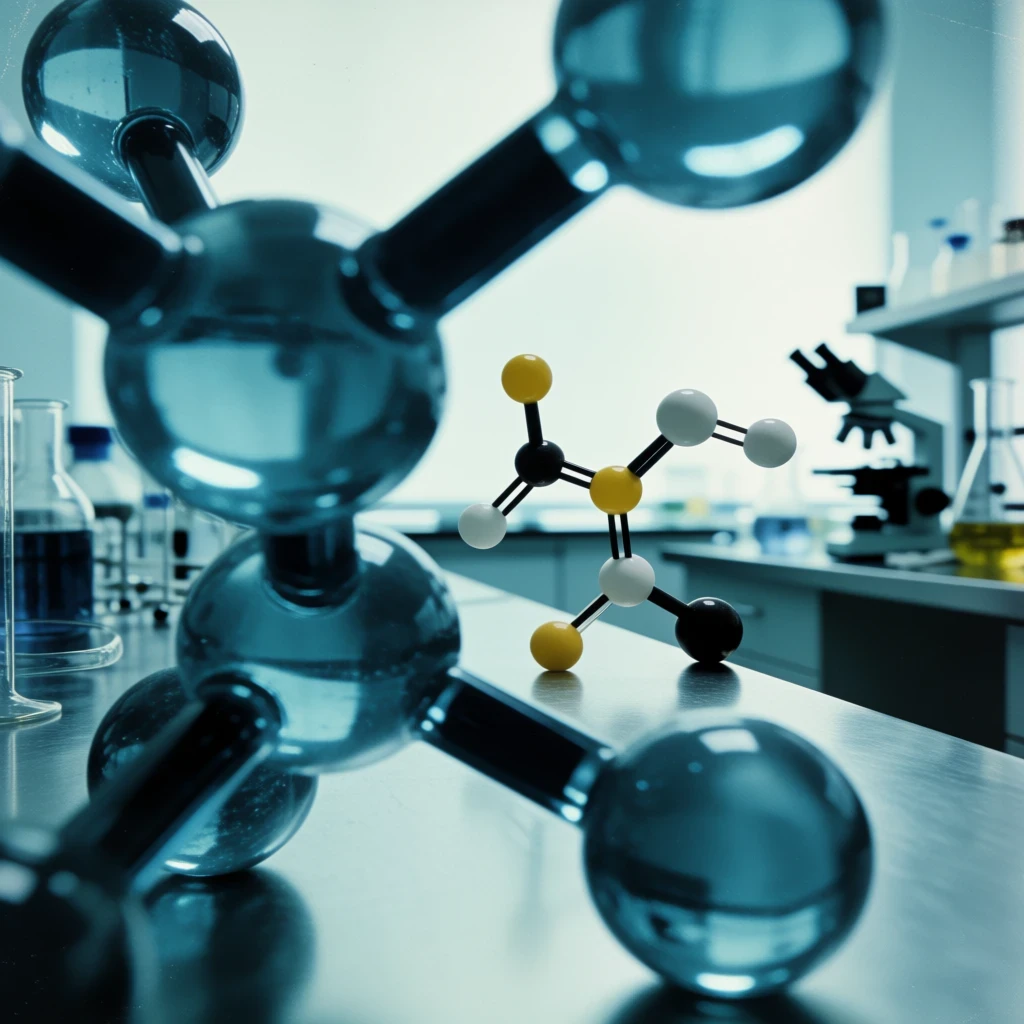
The technique's most celebrated subject is azobenzene, a deceptively simple molecule that flips between trans and cis configurations when struck by light. This photoisomerization drives molecular switches, light-responsive polymers, and photopharmacology, yet the precise atomic pathway remained contested for decades. By firing ultrashort X-ray pulses at a solution of azobenzene moments after an optical laser triggers the switch, researchers record scattering patterns that encode the full three-dimensional structure of every intermediate. The result is a molecular movie of remarkable fidelity, revealing not a single clean rotation but a complex, solvent-coupled dance through multiple transient geometries.
What follows is a rigorous examination of how this technique works, what the azobenzene film actually shows, and why time-resolved structural data fundamentally rewrites our understanding of reaction dynamics. We will unpack the physics of X-ray scattering from liquids, derive the mathematical relationships that convert diffuse rings into atomic coordinates, and confront the statistical realities of extracting signal from noise. Along the way, we will see why the difference between a snapshot and a movie is not merely aesthetic but epistemologically decisive for chemistry.
On This Page
- The Physics and Promise of Time-Resolved X-ray Liquidography
- Azobenzene: The Molecular Switch Under the X-ray Spotlight
- From Scattering Rings to Atomic Coordinates: The Mathematical Engine
- Statistics, Uncertainty, and the Discipline of Structural Inference
- What the Movie Reveals That Snapshots Cannot
- Computational Tools and the Future of Molecular Filmmaking
- Why the Molecular Movie Matters Beyond the Laboratory
The Physics and Promise of Time-Resolved X-ray Liquidography
Time-resolved X-ray liquidography, often abbreviated TRXL, belongs to a family of pump-probe techniques that use light to initiate a reaction and X-rays to interrogate it. A femtosecond optical laser pulse excites the sample, and a delayed X-ray pulse, typically generated at a synchrotron or X-ray free-electron laser, scatters from the perturbed solution. By systematically varying the delay between pump and probe, researchers assemble a sequence of structural snapshots that together constitute a movie of the reaction.
Why Liquids Demand a Different Scattering Theory
In crystallography, the periodic lattice concentrates scattered intensity into sharp Bragg peaks whose positions and amplitudes directly yield atomic positions. A liquid has no such long-range order, so its scattering pattern consists of broad, diffuse rings that encode pairwise distance distributions rather than a single unit cell. Extracting structure from these rings requires a fundamentally different mathematical framework, one built on the Debye scattering equation and the pair distribution function.
The scattered intensity from a collection of ##[N]## atoms in solution is governed by the Debye equation, which sums contributions over every pair of atoms weighted by their separation. For a molecule with atomic form factors ##[f_i]## and interatomic distances ##[r_{ij}]##, the coherent scattering intensity takes the form shown below, where the sinc function arises from orientational averaging in the isotropic liquid.
The exponential term accounts for the Debye-Waller damping caused by thermal motion, with ##[\sigma_{ij}]## representing the mean-square displacement along each atom pair. Because the solvent contributes an enormous, largely static background, the experimental signal of interest is the difference between the laser-excited and unexcited scattering patterns, a quantity known as the difference scattering signal ##[\Delta S(q)]##.
This difference signal is exquisitely sensitive to small structural changes but also vulnerable to artifacts from solvent heating, which produces its own characteristic scattering signature. Separating the solute's structural response from thermal solvent effects demands careful global analysis, often decomposing ##[\Delta S(q)]## into basis components corresponding to distinct structural species and solvent temperature jumps.
The Pump-Probe Timing Architecture
The temporal resolution of the experiment is set by the cross-correlation of the optical pump and X-ray probe pulses, not by detector speed or data acquisition rate. Modern X-ray free-electron lasers deliver pulses of a few tens of femtoseconds, enabling observation of vibrational motions and bond-breaking events that occur faster than a single molecular vibration. Synchrotron sources, by contrast, typically provide picosecond resolution, sufficient for tracking conformational changes but too slow for the earliest photochemical events.
Each delay point requires a fresh sample volume because the laser irreversibly alters the molecules it excites. Liquid jet nozzles flowing at meters per second ensure that every X-ray pulse interrogates pristine solution, a practical requirement that shapes the entire experimental design. The resulting dataset is a three-dimensional array of scattering intensity as a function of momentum transfer ##[q]##, delay time ##[t]##, and sometimes polarization or concentration.
Azobenzene: The Molecular Switch Under the X-ray Spotlight
Azobenzene consists of two phenyl rings joined by an azo bridge, and its trans isomer is planar and thermodynamically favored by roughly fifty kilojoules per mole. Absorption of ultraviolet light near 365 nanometers promotes the molecule to an excited state from which it can isomerize to the bent cis form within picoseconds. The reverse reaction can be driven photochemically with visible light or thermally over hours, making azobenzene a reversible, fatigue-resistant switch.
The Contested Mechanism of Photoisomerization
Two competing mechanisms have dominated discussion for decades: rotation about the central nitrogen-nitrogen bond, and inversion at a single nitrogen atom. In the rotational pathway, the phenyl rings twist out of plane as the bond order of the azo linkage drops, passing through a perpendicular transition state. In the inversion pathway, one ring flips through a linear nitrogen geometry while the other remains largely stationary.
Static crystallography could never settle the question because the intermediate structures exist only for picoseconds and only in solution. Time-resolved liquidography resolves the ambiguity by measuring the actual atomic displacements as they unfold, revealing that azobenzene does not choose one pathway cleanly. Instead, the molecule follows a hybrid trajectory in which rotation dominates but is modulated by substantial in-plane bending and by the surrounding solvent cage.
Reading the Movie Frame by Frame
The earliest frames, captured within a few hundred femtoseconds, show the molecule still near its Franck-Condon geometry with the azo bond beginning to lengthen. By roughly one picosecond, the central bond has extended substantially and the phenyl rings have begun to twist, marking passage through the transition region. Within several picoseconds, the cis product geometry emerges, with a characteristic carbon-nitrogen-nitrogen-carbon dihedral angle far from planarity.
Critically, the movie also captures the solvent's response. Surrounding molecules reorganize on a slightly slower timescale, and this solvent rearrangement feeds back on the solute, stabilizing the cis form and shaping the effective reaction coordinate. The reaction is therefore not a property of the isolated molecule alone but of the molecule-solvent system acting as a single dynamical entity.
Quantitatively, the structural change can be tracked through the carbon-nitrogen-nitrogen-carbon dihedral angle ##[\phi]##, which evolves from approximately ##[180^\circ]## in the trans isomer toward values near ##[60^\circ]## in the cis form. The rate of this evolution, extracted from the time-dependent population of each structural species, follows first-order kinetics with a time constant ##[\tau]## that can be fitted directly to the data.
Fitting this expression to the extracted populations yields time constants of a few picoseconds in common solvents, with the exact value depending on viscosity and on the excitation wavelength used. The ability to measure ##[\tau]## structurally, rather than merely spectroscopically, is what distinguishes liquidography from ultrafast infrared or Raman methods.
We Also Published
From Scattering Rings to Atomic Coordinates: The Mathematical Engine
Converting raw difference scattering into a molecular structure is an inverse problem of considerable subtlety. The measured signal is a one-dimensional function of momentum transfer, yet the target is a set of three-dimensional atomic coordinates for multiple transient species. Solving this requires combining the scattering data with prior chemical knowledge, spectroscopic constraints, and rigorous statistical inference.
The Pair Distribution Function and Its Inversion
The sine Fourier transform of the scattering intensity yields the pair distribution function, which expresses the probability of finding two atoms at a given separation. For a solute in solution, the relevant quantity is the solute-only pair distribution, obtained after subtracting solvent and cell contributions. The transform relationship is given below, where ##[\rho_0]## is the average atomic number density.
The upper limit ##[q_{\max}]## determines the spatial resolution of the resulting structure, with the effective resolution approximately equal to ##[\pi/q_{\max}]##. Higher momentum transfer therefore yields sharper structural detail, which is precisely why X-ray free-electron lasers with access to large ##[q]## are so valuable for this work.
In practice, the inversion is ill-posed because the transform truncates at finite ##[q_{\max}]## and because experimental noise amplifies at high ##[q]##. Regularization techniques, including Tikhonov methods and maximum entropy approaches, stabilize the inversion by penalizing unphysical oscillations in the recovered distribution.
Global Fitting and Species Decomposition
Rather than inverting the transform directly, most modern analyses fit a parametric model in which each transient species has an assumed geometry whose Debye scattering is computed and compared to the data. The total signal is modeled as a linear combination of species contributions weighted by their time-dependent populations, plus solvent heating terms.
The fitting procedure minimizes a weighted residual between model and data across all ##[q]## and ##[t]## points simultaneously, a global optimization that couples structural parameters to kinetic parameters. This coupling is both a strength and a hazard: it allows kinetic and structural information to reinforce each other, but it can also allow systematic errors to propagate between the two domains.
Statistics, Uncertainty, and the Discipline of Structural Inference
Every structural claim from liquidography rests on a statistical foundation, and the credibility of the molecular movie depends on how honestly that foundation is reported. The difference signal is small, often less than one percent of the total scattering, and it must be extracted from data containing Poisson counting noise, detector artifacts, and systematic drifts. Rigorous uncertainty quantification is therefore not a formality but the core of scientific validity.
Error Propagation from Photons to Coordinates
The fundamental noise floor is set by photon counting statistics, where the variance of a measured intensity equals its mean. When the difference signal is formed by subtracting two large numbers, the relative uncertainty grows dramatically, a classic manifestation of catastrophic cancellation. The relative error in the difference signal scales inversely with the fractional change being measured.
Here ##[\epsilon]## represents the fractional change in scattering intensity caused by the structural transformation, and ##[N_{\text{ref}}]## is the photon count in the reference measurement. This relationship explains why liquidography demands enormous photon fluxes and why free-electron lasers transformed the field's capabilities.
Propagating these intensity uncertainties into structural parameters requires the Jacobian of the model with respect to each parameter, followed by standard linear error propagation or, more robustly, Markov chain Monte Carlo sampling of the posterior distribution. The latter approach naturally handles parameter correlations that linear propagation obscures.
Model Selection and the Risk of Overfitting
Because multiple kinetic models can often fit the same data within experimental uncertainty, model selection must be conducted with explicit criteria such as the Akaike or Bayesian information criteria. These metrics penalize model complexity, discouraging the addition of transient species that improve fit only by absorbing noise. Reporting several plausible models, rather than a single favored one, is the hallmark of methodological integrity.
Cross-validation provides a complementary safeguard, fitting the model to a subset of delay times and testing its predictive power on held-out data. A model that predicts unseen frames of the molecular movie is far more credible than one merely interpolating the frames it was trained on. This practice, borrowed from machine learning, is increasingly standard in time-resolved structural science.
What the Movie Reveals That Snapshots Cannot
The deepest lesson of time-resolved liquidography is epistemological: a structure is not a mechanism. A static crystal structure tells us where atoms sit at equilibrium, but it cannot tell us the order in which bonds break, which motions are correlated, or how the environment steers the reaction. The molecular movie supplies precisely this missing information, converting a list of endpoints into a narrative of transformation.
Reaction Coordinates and Energy Landscapes
By tracking atomic positions across thousands of frames, researchers reconstruct the effective reaction coordinate and, with the aid of computational chemistry, the underlying potential energy surface. The azobenzene movie reveals that the barrier region is broad and flat, allowing the molecule to sample multiple pathways rather than following a single steep descent. This flatness explains the low quantum yield of isomerization, since many trajectories return to the starting isomer.
The measured structural evolution can be compared directly with molecular dynamics simulations, providing a stringent test that static structures cannot offer. When simulation and experiment agree on the time-dependent geometry, confidence in both grows; when they disagree, the discrepancy points to missing physics, such as neglected solvent friction or inaccurate excited-state surfaces.
Solvent Coupling and the Collective Nature of Chemistry
The movie also shows that the solvent is not a passive spectator but an active participant, reorganizing on timescales comparable to the reaction itself. This coupling means that reaction rates and pathways depend on viscosity, polarity, and local structure, a dependence that static gas-phase calculations systematically miss. Chemistry in solution is inherently a collective phenomenon.
These insights carry practical consequences for designing molecular machines and photoresponsive materials. A switch that must operate inside a crowded cellular environment will behave differently from one studied in dilute solution, and liquidography provides the data needed to anticipate that difference. The technique thus bridges fundamental physical chemistry and applied materials design.
Computational Tools and the Future of Molecular Filmmaking
Extracting a movie from scattering data is as much a computational challenge as an experimental one, and the field increasingly relies on sophisticated software pipelines and machine learning. Modern analyses combine quantum chemical calculations of excited states, molecular dynamics simulations of solvent, and Bayesian inference to produce structural ensembles rather than single static models. This ensemble view acknowledges that molecules in solution are never perfectly ordered.
Simulation-Assisted Structural Refinement
Quantum mechanical calculations provide the potential energy surfaces and transition dipole moments needed to interpret the optical excitation, while classical or hybrid simulations supply the solvent configurations. Together they generate candidate structures whose predicted scattering can be compared to experiment. The following Python snippet illustrates a simplified workflow for computing a Debye scattering curve from atomic coordinates.
import numpy as np

def debye_scattering(coords, form_factors, q_values, sigma=0.05):
    """Compute isotropic Debye scattering intensity for a set of atoms."""
    n = len(coords)
    intensity = np.zeros_like(q_values)
    for i in range(n):
        for j in range(n):
            r_ij = np.linalg.norm(coords[i] - coords[j])
            if r_ij < 1e-6:
                intensity += form_factors[i] * form_factors[j]
            else:
                damping = np.exp(-0.5 * sigma**2 * q_values**2)
                intensity += (form_factors[i] * form_factors[j]
                              * np.sin(q_values * r_ij)
                              / (q_values * r_ij) * damping)
    return intensity

q = np.linspace(0.1, 8.0, 400)
coords = np.array([[0.0, 0.0, 0.0], [1.25, 0.0, 0.0], [2.68, 0.0, 0.0]])
ff = np.array([7.0, 7.0, 6.0])
signal = debye_scattering(coords, ff, q)
print(signal[:5])
Such calculations are computationally expensive for large solvated systems, which is why approximate methods and machine-learned surrogates are increasingly employed. Neural networks trained on quantum chemistry data can predict scattering patterns orders of magnitude faster than direct simulation, enabling the thousands of model evaluations required for Bayesian inference.
Emerging Directions and Open Questions
The next frontier involves extending liquidography to larger biomolecules and to reactions in complex environments such as membranes and interfaces. Serial femtosecond crystallography and time-resolved small-angle scattering are converging with liquidography to provide multiscale views of dynamics. Meanwhile, the push toward attosecond resolution promises to capture electronic motion itself, the ultimate limit of chemical cinematography.
Open questions remain about how to rigorously validate structural ensembles, how to account for sample heterogeneity, and how to make the enormous datasets generated by these experiments openly accessible. The field's future depends as much on data standards and reproducibility as on brighter X-ray sources. Chemistry as cinema demands not only better cameras but better editing rooms.
Why the Molecular Movie Matters Beyond the Laboratory
The azobenzene movie is more than a technical triumph; it exemplifies a broader shift in how science understands matter. Chemistry has traditionally been taught as a sequence of stable structures connected by arrows, but the arrows themselves are where the action lives. Time-resolved liquidography makes those arrows visible, transforming abstract reaction schemes into observable physical events with measurable durations and geometries.
Implications for Molecular Design
Designers of molecular switches, photochromic materials, and light-activated drugs depend on knowing not just the endpoints but the pathway and its timescale. A drug that must isomerize within a biological window requires kinetics matched to that window, and liquidography supplies the structural kinetics directly. This knowledge shortens design cycles and reduces reliance on trial-and-error synthesis.
Similarly, the solvent sensitivity revealed by these experiments informs formulation science, where the choice of medium can make or break a photoresponsive device. Understanding that the reaction coordinate is coupled to solvent reorganization allows chemists to tune the environment deliberately rather than accidentally.
A Cultural Shift in Chemical Reasoning
Perhaps the most enduring contribution is cultural: the acceptance that dynamics, not just structure, is the proper object of chemical explanation. Textbooks will increasingly present reactions as trajectories through time, and students will learn to think in terms of evolving ensembles rather than rigid models. The molecular movie is becoming the native language of chemistry.
This shift also strengthens public appreciation of chemistry as a dynamic, visual science rather than a static catalog of compounds. When people can watch a molecule switch, the discipline becomes tangible, and the gap between expert and lay understanding narrows. The camera, in this sense, is as powerful an educational instrument as the flask.
The molecular movie of azobenzene is thus a compact emblem of modern chemistry's ambitions. It demonstrates that with sufficiently bright light and sufficiently clever mathematics, the invisible can be rendered visible, and the fleeting can be made permanent enough to study. Chemistry, at atomic resolution, is finally being filmed rather than merely photographed.
From our network :
- AI-Powered 'Precision Diagnostic' Replaces Standard GRE Score ReportsDiscover the new GRE Precision Diagnostic. Learn how AI-powered behavioral analytics and time-to-solve tracking are replacing standard GRE score reports to empower students.
- Analyzing Trump Deportation Numbers Insights Into The 2026 Immigration Crackdown
- Vite 6/7 'Cold Start' Regression in Massive Module GraphsIn-depth analysis of Vite 6/7 cold start regressions in massive module graphs. Learn about barrel file issues, pre-bundling optimizations, and how to improve Vite dev server performance.
- Trump Political Strategy How Geopolitical Stunts Serve As Media Diversions
- 98% of Global MBA Programs Now Prefer GRE Over GMAT Focus EditionExplore why 98% of global MBA programs now prefer the GRE over GMAT Focus. Learn about the shorter GRE format, verbal logic importance, and strategic versatility for students.
- EV 2.0: The Solid-State Battery Breakthrough and Global Factory ExpansionDiscover the impact of the Solid-State Battery Breakthrough on the EV market. Learn about CATL and BYD stock growth, global factory expansion in Europe, and the future of EV 2.0 technology.
- 10 Physics Numerical Problems with Solutions for IIT JEEPrepare for IIT JEE with 10 physics numerical problems, complete with detailed solutions and conceptual explanations. Ideal for mastering kinematics, thermodynamics, electromagnetism, and optics.
- Mastering DB2 12.1 Instance Design: A Technical Deep Dive into Modern Database ArchitectureComprehensive guide to DB2 12.1 Instance Design. Explore architectural components, HADR setup, buffer pool tuning, and security policies for IBM DB2 12.1. Includes 10 functional SQL and Shell samples.
- Mastering DB2 LUW v12 Tables: A Comprehensive Technical GuideComprehensive guide on DB2 LUW v12 tables. Explore CREATE TABLE syntax, BLU Acceleration, range partitioning, data types, and security features for IBM DB2 LUW v12.
RESOURCES
- Resources will be updated soon.
0 Comments