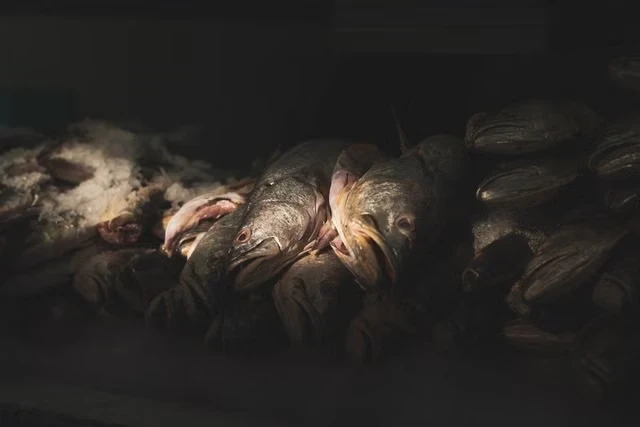
The ocean has never respected the lines humans draw upon it, yet for centuries, fisheries management has operated on the quiet assumption that fish populations remain roughly where they have always been. That assumption is now dissolving in warming waters, as NOAA reported on September 3, 2026, that multiple U.S. East Coast fish populations are shifting northward at an accelerating pace. This is not a subtle ecological footnote; it is a fundamental reorganization of marine life that is colliding with rigid legal frameworks, catch limits, and international agreements designed for a world of static ranges.
When a fish crosses a management boundary, it does not simply swim into new water; it swims into a jurisdictional vacuum where quotas, permits, and fishing rights suddenly become ambiguous. The species that once sustained one community now appears in another's nets, triggering disputes over who holds the legal right to harvest it. These conflicts are not hypothetical scenarios for future decades; they are unfolding now along the Eastern Seaboard, forcing regulators, scientists, and fishing communities to confront a question that has no precedent in modern fisheries law: when the fish move, who gets the right to fish?
This analysis examines the scientific drivers behind these migrations, the institutional failures they expose, and the emerging governance models attempting to reconcile ecological reality with economic necessity. By exploring the data, the legal mechanisms, and the human stakes involved, we can understand why climate-driven fish movement represents one of the most consequential challenges to ocean governance in the twenty-first century.
On This Page
- The Oceanographic Forces Reshaping Fish Distribution
- The Legal Architecture of a Static Ocean
- Economic Consequences for Fishing Communities
- Scientific Uncertainty and Adaptive Management
- Governance Innovations for a Mobile Resource
- The Path Forward for Climate-Resilient Fisheries
- Conclusion: Redrawing the Map of Ocean Commerce
The Oceanographic Forces Reshaping Fish Distribution
The Northwest Atlantic is warming faster than most of the global ocean, creating a thermal conveyor that pulls warm-water species northward while compressing the habitat of cold-adapted stocks. Sea surface temperatures along the Northeast Shelf have risen by roughly 1.8 degrees Fahrenheit since the early 1980s, a shift that has already redrawn the boundaries of commercially vital species.
This warming is not uniform; it interacts with currents, salinity gradients, and seasonal cycles to produce complex, sometimes counterintuitive, movement patterns. Understanding these physical drivers is essential because they determine not only where fish go, but how quickly management systems must adapt to follow them.
Thermal Habitat Shifts and Species Range Dynamics
Fish are ectothermic creatures whose metabolic rates, reproductive cycles, and prey availability are tightly coupled to water temperature. When thermal thresholds shift, species track their preferred temperature envelope, often moving poleward at rates exceeding 40 miles per decade.
NOAA surveys indicate that species such as black sea bass, summer flounder, and butterfish have shifted their centers of biomass northward by significant margins since the 1990s. These movements are not uniform across life stages, with juveniles often remaining in nursery habitats while adults push into newly suitable waters.
The result is a decoupling between where fish spawn, where they grow, and where they are harvested, creating mismatches that undermine traditional stock assessment models. Fishery scientists must now incorporate dynamic habitat models that project future distributions rather than assuming historical patterns will persist.
Range shifts also alter predator-prey relationships, as warm-water species invade ecosystems previously dominated by cold-water communities. This ecological reshuffling can trigger cascading effects that change the entire productivity of a fishing ground, not merely the location of a single stock.
For regulators, the scientific challenge is compounded by uncertainty; climate models project a range of possible futures, and management decisions must remain robust across multiple plausible scenarios. Adaptive harvest strategies that can respond to real-time data are becoming essential tools in this new environment.
Currents, Oxygen, and the Hidden Drivers of Migration
Temperature alone does not dictate fish movement; ocean currents transport larvae, oxygen minimum zones create barriers, and prey distributions shift in response to changing plankton communities. The Gulf Stream's position and strength directly influence the shelf waters where many commercial species reside.
Recent research has documented that the Gulf Stream is shifting poleward, altering the thermal structure of the continental shelf and affecting the delivery of nutrients to coastal ecosystems. These physical changes propagate through the food web, ultimately determining where forage fish aggregate and where larger predators follow.
Dissolved oxygen levels are also declining in some coastal regions, creating hypoxic zones that exclude oxygen-sensitive species and compress their available habitat. This compression can concentrate fish into smaller areas, increasing catch rates temporarily while masking underlying population declines.
Ocean acidification adds another layer of stress, affecting the calcification rates of shell-forming organisms that serve as prey for many commercial fish species. The combined effects of warming, acidification, and deoxygenation create a multidimensional stressor environment that complicates single-factor management approaches.
Scientists increasingly rely on ecosystem-based fisheries management that accounts for these interacting drivers rather than managing species in isolation. This holistic perspective is scientifically sound but institutionally demanding, requiring coordination across agencies and jurisdictions that historically operated independently.
The Legal Architecture of a Static Ocean
Fisheries management in the United States rests on the Magnuson-Stevens Act, which establishes regional fishery management councils and requires annual catch limits based on scientific assessments. These assessments assume that stock boundaries remain relatively stable, allowing quotas to be allocated among states and fishing communities with reasonable confidence.
When stocks move, this architecture begins to fail because the allocation formulas, permit systems, and international agreements were negotiated under the assumption of geographic permanence. The legal framework is not designed to handle rapid, climate-driven redistribution of the resource itself.
Quota Allocation and the State-Federal Divide
State waters extend three nautical miles offshore, while federal jurisdiction covers from three to two hundred nautical miles, creating a patchwork of regulatory authority. Each state manages its own inshore fisheries, often with different rules, seasons, and quota systems than those applied in federal waters.
When fish shift northward, they may leave one state's waters and enter another's, triggering disputes over who has the right to harvest the migrating stock. A species that historically supported North Carolina fishermen may now be predominantly caught off Massachusetts, yet the quota allocation still reflects historical catch patterns.
The Atlantic States Marine Fisheries Commission coordinates interstate management, but its authority is limited and its decisions require consensus among member states. This consensus-based approach becomes nearly impossible when the resource itself is moving from one state's jurisdiction to another.
Federal permit holders face similar challenges, as their permits may specify geographic areas that no longer correspond to where the fish actually are. Fishermen who invested in permits for southern waters find themselves unable to follow the fish north without acquiring new, often expensive, permits.
These allocation conflicts are not merely administrative inconveniences; they have real economic consequences for fishing communities whose livelihoods depend on predictable access to harvestable stocks. The social fabric of coastal towns is woven around these historical patterns of access and ownership.
International Boundaries and the Law of the Sea
Beyond the Exclusive Economic Zone, international waters are governed by regional fisheries management organizations that allocate quotas among member nations. These organizations operate on consensus and are notoriously slow to adjust allocations in response to changing stock distributions.
When fish migrate across international boundaries, they may move from waters managed by one nation to those managed by another, or into high seas areas governed by multilateral agreements. Each transition creates a potential governance gap where no single authority has clear jurisdiction.
The United Nations Convention on the Law of the Sea provides the overarching legal framework, but it was negotiated before climate-driven migration was understood as a major phenomenon. Its provisions for straddling stocks and highly migratory species are general and do not anticipate the scale of redistribution now observed.
Disputes over shared stocks have already emerged in other regions, such as the mackerel wars in the Northeast Atlantic, where Iceland, the Faroe Islands, and the European Union clashed over quota shares as mackerel shifted northward. These conflicts offer cautionary lessons for the Northwest Atlantic.
International fisheries law lacks effective mechanisms for rapid reallocation, and the principle of zonal attachment, which ties quota shares to where fish are found, is difficult to apply when distributions change annually. The legal system is simply too slow to keep pace with ecological change.
Economic Consequences for Fishing Communities
The communities that depend on commercial fishing are among the most vulnerable to climate-driven stock shifts, yet they have the least capacity to adapt. Fishing vessels are capital-intensive assets, and permits are often tied to specific fisheries and geographic regions, limiting operational flexibility.
When fish move, fishermen face a cruel choice: follow the fish and incur higher fuel costs and regulatory complexity, or stay and watch their catches decline. Neither option is attractive, and both carry significant economic risk for small-boat operators who dominate the East Coast fleet.
The Cost of Following the Fish
Vessels that choose to follow migrating stocks must travel longer distances, increasing fuel consumption, crew costs, and time away from port. These additional expenses can erase the profit margin on catches, particularly for lower-value species that are sensitive to transportation costs.
Port infrastructure is also geographically fixed; processing plants, ice houses, and repair facilities are located where fish historically landed, not where they are now found. Fishermen who land their catch in new ports may find inadequate infrastructure or face higher processing fees.
The economic ripple effects extend beyond the fishing vessels themselves to the entire supply chain, including bait suppliers, equipment dealers, and local restaurants that depend on fresh seafood. When landings shift, these businesses suffer even if total catches remain stable.
Communities that lose access to their traditional fisheries face the prospect of economic decline, with few alternative employment opportunities available in rural coastal areas. The social fabric of these towns, built over generations around fishing, cannot be easily reconstituted elsewhere.
Insurance, financing, and permit values are all affected by the uncertainty surrounding future fish distributions, making it harder for fishermen to secure loans or plan long-term investments. The financial system is not designed to accommodate this level of resource mobility.
Distributional Justice and Historical Access
Quota allocation systems are built on historical catch records, which reflect past fishing patterns rather than current or future fish distributions. This creates a fundamental tension between the principle of historical access and the reality of ecological change.
Southern fishing communities argue that they invested in permits, vessels, and infrastructure based on historical access, and that shifting allocations northward would constitute an unfair taking of their economic rights. Northern communities counter that they should not be denied access to fish that now reside in their waters.
These distributional conflicts are not merely economic; they raise questions of environmental justice, as marginalized communities often have fewer resources to adapt to changing conditions. Low-income fishermen and minority-owned vessels may be disproportionately affected by allocation shifts.
Some proposals suggest compensating fishermen who lose access through transition programs or buyouts, but such mechanisms are politically contentious and administratively complex. The question of who bears the cost of climate adaptation in fisheries remains unresolved.
Ultimately, the allocation problem is a zero-sum game in the short term, as total allowable catches are constrained by conservation requirements. The challenge is to develop allocation mechanisms that are both fair and flexible enough to respond to ecological reality.
We Also Published
Scientific Uncertainty and Adaptive Management
Fisheries science has traditionally relied on stock assessments that estimate population size and productivity from survey data, catch records, and biological models. These assessments are inherently uncertain, but climate-driven migration adds a new dimension of unpredictability that challenges conventional approaches.
Survey vessels that sample fixed transects may miss fish that have moved beyond the survey area, leading to underestimates of population size and overly conservative catch limits. Conversely, fish aggregating in newly suitable habitat may be overestimated if surveys do not account for changing distributions.
Dynamic Stock Assessment Models
Scientists are developing dynamic stock assessment models that incorporate environmental covariates such as temperature, ocean currents, and habitat suitability to project future distributions. These models can improve the accuracy of catch limit recommendations by accounting for movement.
However, dynamic models require extensive data on environmental conditions and fish-habitat relationships, which are not available for all species. The data requirements are substantial, and the models are computationally intensive, limiting their application to well-studied stocks.
Management strategy evaluation, a simulation approach that tests alternative harvest rules against a range of plausible future scenarios, is gaining traction as a tool for climate-resilient management. This approach identifies harvest policies that perform well across multiple possible futures rather than optimizing for a single projection.
Real-time monitoring and adaptive triggers allow managers to adjust catch limits as new data become available, rather than waiting for the next scheduled assessment cycle. This flexibility is essential when stocks are moving rapidly and conditions are changing quickly.
The scientific community is also exploring the use of environmental DNA, acoustic surveys, and satellite remote sensing to complement traditional trawl surveys and provide more timely information on fish distributions. These emerging technologies offer the potential for more responsive management.
Quantifying Uncertainty in a Moving Ocean
Uncertainty in stock assessments is typically expressed as a probability distribution around the estimated biomass, with catch limits set to achieve a target probability of not overfishing. Climate-driven movement increases this uncertainty, requiring more precautionary catch limits that may impose economic costs.
Consider a simplified model where the true biomass ##B_t## at time ##t## follows a random walk with climate-driven drift ##\mu## and process error ##\sigma##:
where ##\varepsilon_t## is a standard normal random variable. If the drift ##\mu## is unknown and must be estimated from data, the uncertainty in the biomass projection grows with the time horizon, requiring increasingly precautionary catch limits.
The probability of overfishing, given a catch limit ##C##, can be expressed as:
where ##\Phi## is the standard normal cumulative distribution function and ##B_{MSY}## is the biomass that supports maximum sustainable yield. As ##\sigma## increases due to climate-driven movement, the probability of overfishing rises for any given catch limit.
To maintain a target probability of ##\alpha## that overfishing does not occur, the catch limit must satisfy:
where ##z_{\alpha}## is the critical value from the standard normal distribution. This equation demonstrates that increased uncertainty ##\sigma## directly reduces the allowable catch, imposing economic costs on fishermen.
For example, if ##B_t = 100##, ##\mu = 5##, ##B_{MSY} = 80##, ##\sigma = 10##, and ##\alpha = 0.05## (so ##z_{\alpha} = 1.645##), the catch limit is:
If climate-driven movement increases the uncertainty to ##\sigma = 20##, the catch limit falls to:
This negative catch limit indicates that no fishing should occur under the higher uncertainty scenario, illustrating how climate-driven movement can force dramatic reductions in harvest. The economic consequences of such precautionary adjustments are substantial, yet they may be necessary to prevent long-term stock depletion.
Adaptive management approaches that reduce uncertainty through enhanced monitoring can partially offset these costs, but they require sustained investment in data collection and analysis. The trade-off between precautionary conservation and economic access is a central challenge of climate-resilient fisheries governance.
Governance Innovations for a Mobile Resource
Traditional fisheries governance assumes that the resource stays put, but climate change has fundamentally broken that assumption. Innovative governance models are emerging that treat fish distributions as dynamic and build flexibility into management systems from the outset.
These innovations range from inter-jurisdictional compacts that allow quota to move with the fish, to rights-based systems that separate harvesting privileges from geographic location. Each approach has trade-offs, but all recognize that static management is no longer viable.
Interstate Compacts and Flexible Quota Systems
One promising approach is the creation of interstate compacts that allow quota shares to be transferred across state lines as fish distributions shift. Such compacts would require states to cede some autonomy in exchange for a more rational, ecosystem-scale management framework.
The Atlantic States Marine Fisheries Commission has begun exploring mechanisms for quota flexibility, including provisions that allow states to trade quota allocations when surveys indicate significant stock movement. These mechanisms remain limited but represent a step toward adaptive governance.
Rights-based management systems, such as catch shares, can also be designed to be location-flexible, allowing permit holders to harvest their share wherever the fish are found. This approach decouples the right to fish from a specific geographic area, reducing the incentive to fish in areas where stocks have declined.
However, flexible quota systems raise concerns about concentration of fishing rights in the hands of large corporate entities that can afford to follow fish across jurisdictions. Small-scale fishermen may be disadvantaged in such systems, requiring safeguards to protect community-based fishing.
Any governance innovation must also address the conservation imperative, ensuring that flexible access does not lead to overfishing as stocks move through different jurisdictions. Catch limits must remain science-based and enforceable across the entire range of the stock.
International Cooperation and Precedent
International fisheries management offers both cautionary tales and potential models for adaptive governance. The Northeast Atlantic mackerel dispute demonstrates the costs of failing to adapt, while other agreements show that cooperative reallocation is possible under the right conditions.
The United States and Canada share several transboundary stocks, including cod, haddock, and yellowtail flounder, managed through bilateral agreements that allocate quotas between the two nations. These agreements have mechanisms for periodic review, but they are not designed for rapid reallocation in response to climate-driven shifts.
Some regional fisheries management organizations have begun incorporating climate considerations into their decision-making, including provisions for precautionary buffers and ecosystem-based approaches. These efforts remain nascent, but they establish important precedents for climate-adaptive governance.
The United Nations Fish Stocks Agreement encourages cooperation among states fishing for shared stocks and provides a framework for dispute resolution, but it lacks enforcement mechanisms. Strengthening these international institutions is essential for managing stocks that cross multiple jurisdictional boundaries.
Ultimately, the governance challenge is not merely technical but political, requiring nations and communities to accept short-term losses for long-term sustainability. Building the political will for such cooperation is perhaps the greatest obstacle to climate-resilient fisheries management.
The Path Forward for Climate-Resilient Fisheries
The challenge of climate-driven fish migration is not a problem to be solved once but a condition to be managed continuously. Fisheries governance must evolve from a system designed for stability to one that embraces dynamism as a fundamental feature of marine ecosystems.
This evolution requires changes across multiple dimensions: scientific assessment, legal frameworks, economic incentives, and international cooperation. No single reform will suffice; the response must be comprehensive and coordinated across scales.
Integrating Climate Science into Management
Fisheries management must move beyond single-species assessments to embrace ecosystem-based approaches that account for climate-driven changes in productivity, distribution, and species interactions. This requires substantial investment in ocean observation systems and modeling capacity.
Management bodies should adopt precautionary buffers that explicitly account for climate uncertainty, reducing catch limits when projections are highly uncertain. These buffers impose short-term costs but protect against the risk of irreversible stock depletion.
Regular reassessment cycles should be shortened to allow more frequent adjustments as new data become available, and trigger mechanisms should be established to initiate management responses when stocks cross predefined thresholds. This adaptive approach keeps management aligned with ecological reality.
Stakeholder engagement is essential, as fishermen possess valuable local knowledge about changing conditions that can complement scientific monitoring. Collaborative research programs that involve fishermen in data collection can improve both the accuracy and the legitimacy of management decisions.
Ultimately, the integration of climate science into fisheries management is not a technical exercise but a cultural shift that requires managers, scientists, and stakeholders to embrace uncertainty and continuous learning.
Building Political Will for Collective Action
The governance reforms needed to address climate-driven fish migration require political will that is often lacking in the face of short-term economic pressures. Building this will requires effective communication about the costs of inaction and the benefits of adaptive management.
Fishermen who are directly affected by stock shifts can be powerful advocates for reform if they perceive that new governance arrangements will protect their long-term interests. Engaging fishing communities as partners rather than obstacles is essential for building durable political coalitions.
Legal frameworks must be updated to authorize adaptive management approaches, including provisions for emergency adjustments and inter-jurisdictional cooperation. These legal changes require legislative action, which depends on political leadership and public support.
International cooperation is similarly dependent on diplomatic engagement and the willingness of nations to subordinate short-term national interests to long-term collective benefits. Climate change is a global problem that demands global solutions, and fisheries governance is no exception.
The question of who gets the right to fish when fish move across borders has no easy answer, but the cost of failing to answer it is mounting. Every year of delay makes the eventual adjustment more painful and the risk of stock collapse more acute.
Conclusion: Redrawing the Map of Ocean Commerce
The migration of fish across borders is not an anomaly to be corrected but a permanent feature of a changing climate. The question of who gets the right to fish is therefore not a one-time dispute but an ongoing negotiation that will require new institutions, new legal frameworks, and new forms of cooperation.
The scientific evidence is clear, the economic stakes are high, and the governance gaps are widening. The choice facing policymakers is not whether to adapt but how quickly and how fairly the adaptation will occur.
Those who fish, those who manage fisheries, and those who consume seafood all have a stake in building a governance system that can keep pace with a moving ocean. The alternative is a future of conflict, depleted stocks, and diminished coastal communities.
Climate change has already redrawn the physical map of the ocean; it is now demanding that we redraw the human map of rights, responsibilities, and relationships that govern its use. The fish are moving, and the law must move with them.
The path forward is neither simple nor certain, but it is unavoidable. Every stakeholder must engage in the difficult work of building climate-resilient fisheries governance, or accept the consequences of inaction.
From our network :
- 10 Physics Numerical Problems with Solutions for IIT JEEPrepare for IIT JEE with 10 physics numerical problems, complete with detailed solutions and conceptual explanations. Ideal for mastering kinematics, thermodynamics, electromagnetism, and optics.
- Mastering DB2 LUW v12 Tables: A Comprehensive Technical GuideComprehensive guide on DB2 LUW v12 tables. Explore CREATE TABLE syntax, BLU Acceleration, range partitioning, data types, and security features for IBM DB2 LUW v12.
- AI-Powered 'Precision Diagnostic' Replaces Standard GRE Score ReportsDiscover the new GRE Precision Diagnostic. Learn how AI-powered behavioral analytics and time-to-solve tracking are replacing standard GRE score reports to empower students.
- Mastering DB2 12.1 Instance Design: A Technical Deep Dive into Modern Database ArchitectureComprehensive guide to DB2 12.1 Instance Design. Explore architectural components, HADR setup, buffer pool tuning, and security policies for IBM DB2 12.1. Includes 10 functional SQL and Shell samples.
- 98% of Global MBA Programs Now Prefer GRE Over GMAT Focus EditionExplore why 98% of global MBA programs now prefer the GRE over GMAT Focus. Learn about the shorter GRE format, verbal logic importance, and strategic versatility for students.
- Analyzing Trump Deportation Numbers Insights Into The 2026 Immigration Crackdown
- Vite 6/7 'Cold Start' Regression in Massive Module GraphsIn-depth analysis of Vite 6/7 cold start regressions in massive module graphs. Learn about barrel file issues, pre-bundling optimizations, and how to improve Vite dev server performance.
- Trump Political Strategy How Geopolitical Stunts Serve As Media Diversions
- EV 2.0: The Solid-State Battery Breakthrough and Global Factory ExpansionDiscover the impact of the Solid-State Battery Breakthrough on the EV market. Learn about CATL and BYD stock growth, global factory expansion in Europe, and the future of EV 2.0 technology.
RESOURCES
- New Study: Climate Change to Shift Many Fish Species Northfisheries.noaa.govMay 17, 2018 ... A new NOAA Fisheries-funded study presents the first major projections of where U.S. fish species populations may shift under future…
- Climate change drives shifts in straddling fish stocks in the world's ...pubmed.ncbi.nlm.nih.govJul 30, 2025 ... ... migratory stocks are projected to shift across Regional Fisheries Management Organizations (RFMOs). Coastal states and RFMOs require to ...
- North Atlantic Right Whale | NOAA Fisheriesfisheries.noaa.gov... fishing activity along the east coast of North America. This leads to ... changing environmental conditions, new and expanded ocean uses, and ocean…
- Fish Species Forecast to Migrate Hundreds of Miles Northward as ...insideclimatenews.orgMay 16, 2018 ... ... change target species, to change gear and fishing ... climate change impacts will ripple through coastal communities and seafood…
- Climate change drives shifts in straddling fish stocks in the world's ...science.orgJul 30, 2025 ... More stocks are expected to shift toward the high seas, and highly migratory stocks are projected to shift across Regional…
- Global climate, El Niño, and militarized fisheries disputes in the East ...sciencedirect.comPlausible mechanisms include migrating fish populations in response to ocean warming, leading to scarcity in some regions and abundance in others (Pinsky et al.
- Climate change strengthens the case for a high seas fishing banbiogeography.pensoft.netJun 19, 2026 ... ... migrating species to unsustainable fishing pressure. A ban ... Climate change drives shifts in straddling fish stocks in the…
- Climate Impacts on African Fisheries: The Imperative to Understand ...blogs.worldbank.orgNov 11, 2017 ... Climate change leads to rising sea temperatures, making fish stocks migrate ... In East Africa, ocean warming has already destroyed…
- Climate change is driving fish stocks from countries' waters to the ...news.mongabay.comAug 29, 2025 ... This arrangement, which makes fisheries management difficult, is set to get even more complicated as climate change continues to heat…
- Climate change increases the risk of fisheries conflictdigitalcommons.uri.eduImpact of Climate Change on Fisheries. The effects of climate change on the ocean environment impact fish populations, fisheries, and fisheries management ...
- BRIEFER - The Center for Climate & Securityclimateandsecurity.orgJun 29, 2015 ... Warming ocean temperatures associated with climate change will also change migratory patterns of fish in the open sea.xii Fish stock…
- The Fish That Ate an Agreement: How Migrating Mackerel ...carnegieendowment.orgJul 18, 2023 ... ... fisheries and resources that are likely to become more widespread under a changing climate. ... climate change on the…
- Building Climate-Ready Fisheries and Fishing Communities - NRDCnrdc.orgNov 8, 2022 ... Faced with these changing environments, fish populations are struggling to adapt. While some are successfully migrating to colder waters, others ...
- Climate Change as a Factor Impacting Current and Future ...thearcticinstitute.orgOct 24, 2023 ... ... fisheries, demand in development of new ways of management of migratory fish stocks, and possible conflicts for marine living…
- Public Law 110–243 110th Congress Joint Resolutioncongress.govWhereas habitat expansion and migration of fish stocks into the. Arctic Ocean ... by climate change, and emerging fisheries in the Arctic should take ...




0 Comments