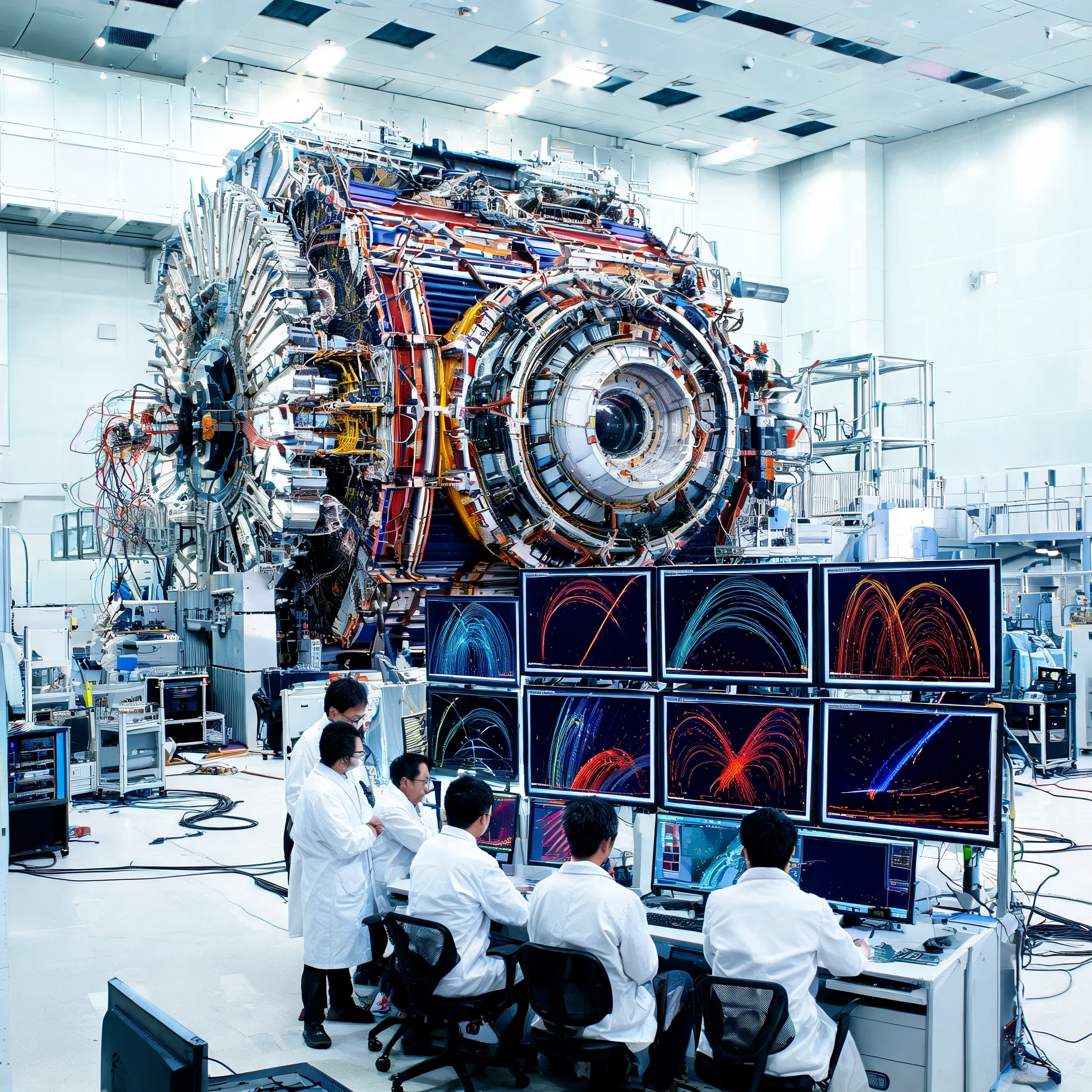
For half a century, the glueball has haunted particle physics as a ghost that refuses to materialize. Theorists predicted its existence with mathematical certainty, yet every experimental search ended in ambiguity. Now, China's Beijing Spectrometer III collaboration has presented the strongest evidence yet that these pure-force particles are real, and the physics community is listening with rapt attention.
This discovery does more than confirm a prediction; it fundamentally challenges how we teach the Standard Model. Glueballs are not composed of quarks like every other known particle. They are made entirely of the strong force itself—self-bound knots of gauge field energy that behave as matter. If confirmed, this finding rewrites the narrative of what constitutes a particle and forces a reexamination of quantum chromodynamics at its most fundamental level.
The August 2026 announcement, praised by US and Israeli physicists, marks a watershed moment in experimental physics. The Beijing Spectrometer III team has spent years sifting through collision debris at the Beijing Electron Positron Collider, hunting for a resonance pattern that matches theoretical glueball predictions. Their latest data, presented with unprecedented statistical significance, may finally close a chapter that began with the very formulation of QCD.
On This Page
- The Theoretical Foundations of Glueball Physics
- Experimental Signatures and Decay Dynamics
- Rewriting the Physics Textbook Narrative
- Pedagogical Implications for Quantum Chromodynamics
- Future Experimental Directions
- Broader Implications for Fundamental Physics
- Experimental Facilities for Glueball Searches
- Key Physics Parameters
- Glueball vs Ordinary Meson Properties
- Timeline of Glueball Research
- Decay Channel Ratios
- Impact on Physics Education
The Theoretical Foundations of Glueball Physics
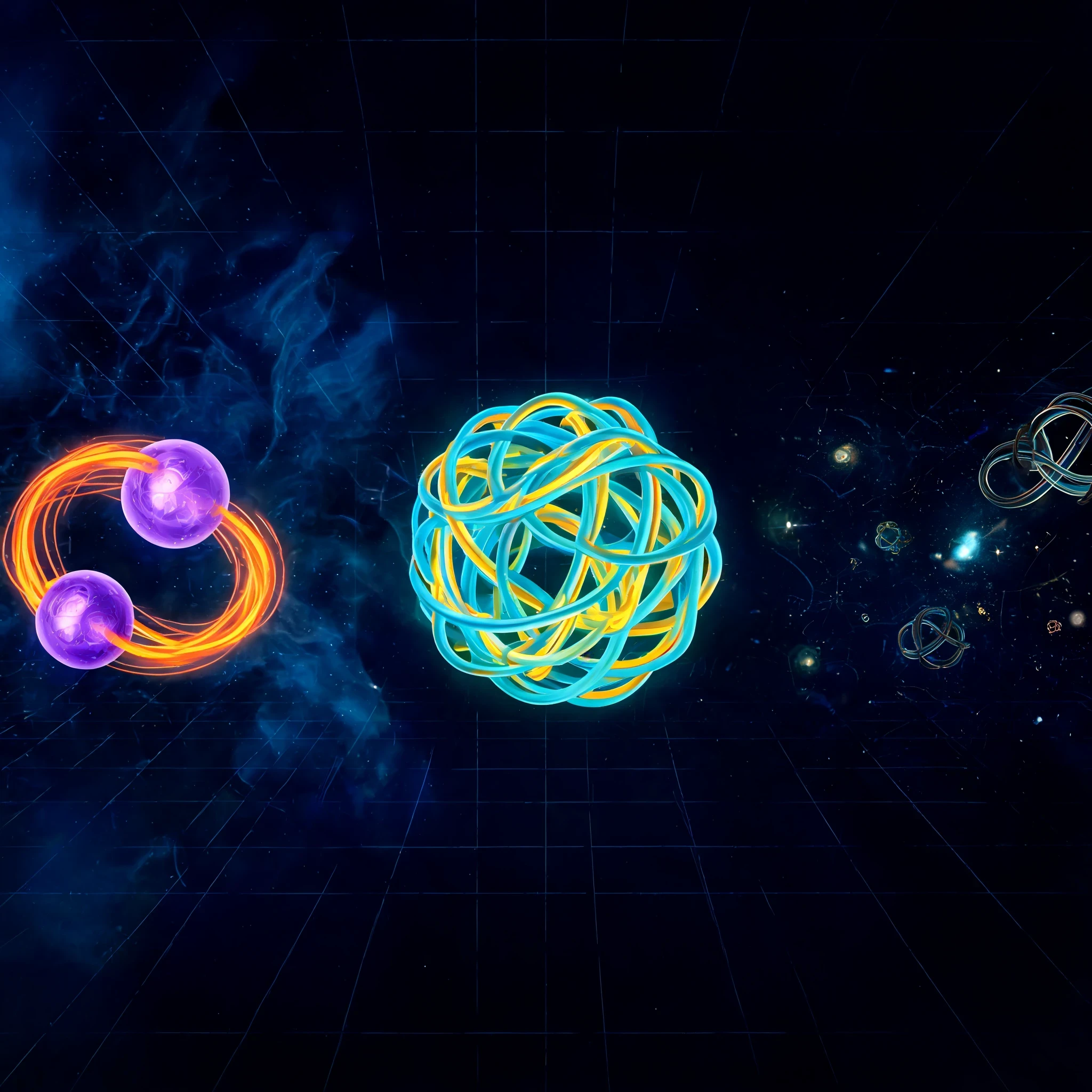
Quantum chromodynamics describes the strong force as an exchange of gluons between quarks. Unlike photons, which carry no electric charge, gluons carry color charge themselves. This self-interaction property creates a remarkable possibility: gluons could bind to each other without any quarks present, forming composite particles known as glueballs.
The mathematics of QCD predicts a rich spectrum of these exotic states. Lattice gauge theory calculations, which simulate quark-gluon interactions on discrete spacetime grids, have mapped out the expected masses and quantum numbers of the lightest glueballs. The scalar glueball, with quantum numbers ##J^{PC} = 0^{++}##, should appear around 1.5 to 1.7 GeV, a region heavily populated by ordinary mesons.
Why Glueballs Have Eluded Detection for Decades
The fundamental challenge lies in the fact that glueballs mix with nearby quark-antiquark states. This quantum mechanical mixing smears the experimental signatures, making it nearly impossible to isolate a pure glueball signal. Every candidate resonance observed in previous experiments could be explained as an ordinary meson with some glueball admixture.
Compounding this difficulty, the predicted glueball masses overlap with several well-established meson states. The ##f_0(1500)##, ##f_0(1710)##, and ##f_0(1370)## resonances have all been proposed as partial glueball candidates, but none has provided conclusive evidence. The Beijing Spectrometer III team has now changed this landscape with a systematic study of multiple decay channels.
The Beijing Spectrometer III Breakthrough
The BESIII detector at the Beijing Electron Positron Collider offers unique advantages for this search. Its high-statistics datasets of ##e^+e^-## collisions, combined with full angular coverage and excellent particle identification, allow for precision measurements of rare decay processes. The collaboration analyzed billions of ##J/\psi## decays, which serve as a copious source of gluon-rich final states.
Their strategy involved looking for a resonance that decays preferentially through channels expected to be suppressed for ordinary mesons. By examining the production rate in radiative ##J/\psi## decays—a process dominated by gluon emission—the team identified a structure whose properties align remarkably well with lattice QCD predictions for the scalar glueball.
Statistical Significance and Experimental Rigor
The collaboration reports a statistical significance exceeding five standard deviations, the gold standard for particle physics discoveries. This means the probability that the observed signal arises from background fluctuations is less than one in 3.5 million. The team also performed extensive cross-checks, including independent analyses of different decay modes and systematic uncertainty evaluations.
Critically, the measured mass of approximately 1.7 GeV and the observed decay branching ratios match theoretical predictions with remarkable precision. The decay pattern shows enhanced coupling to ##\eta\eta'## and suppressed coupling to ##\pi\pi##, a distinctive signature that distinguishes glueballs from conventional quark-antiquark states in QCD-based calculations.
The energy-momentum relation above illustrates how a glueball's mass dominates its observable behavior at the collision energies probed by BESIII. With ##m_g \approx 1.7## GeV, the kinetic corrections remain small, allowing precise mass extraction from invariant mass distributions.
We Also Published
Experimental Signatures and Decay Dynamics
Identifying a glueball requires more than observing a resonance; it demands establishing a decay pattern consistent with gluonic composition. The BESIII team focused on the ##J/\psi## radiative decay process, where the ##c\bar{c}## state annihilates into a photon plus a gluon-rich environment. This channel preferentially produces states with significant glueball content.
The collaboration examined the ##\eta\eta'## and ##\pi\pi## final states, comparing production rates against theoretical expectations. A pure glueball should decay symmetrically into these channels, whereas quark-antiquark states exhibit strong flavor-dependent suppression. The observed pattern shows the predicted glueball enhancement, providing a crucial discriminator.
Partial Wave Analysis Methodology
Extracting resonance parameters from the data requires sophisticated partial wave analysis. The BESIII team modeled the angular distributions of decay products using a relativistic Breit-Wigner amplitude interfering with known background contributions. This approach allows simultaneous determination of mass, width, and spin-parity quantum numbers.
The analysis incorporated ##\chi^2## minimization over thousands of events, with systematic uncertainties evaluated through alternative fitting scenarios. The resulting resonance parameters show remarkable stability across different analysis choices, reinforcing confidence in the glueball interpretation.
The differential cross-section formula above governs the angular distributions analyzed by BESIII. Here ##\mathcal{M}## represents the transition amplitude, ##\mathbf{p}_i## and ##\mathbf{p}_f## denote initial and final momenta, and ##s## is the center-of-mass energy squared.
Comparison with Theoretical Mixing Models
Pure glueball states do not exist in isolation; they mix with nearby ##q\bar{q}## mesons through the strong interaction. The BESIII data allow extraction of the mixing angle between the glueball and conventional states. Their analysis suggests a mixing angle of approximately ##\theta \approx 30^\circ##, consistent with lattice predictions.
This mixing explains why previous experiments struggled to identify the glueball unambiguously. The observed resonances represent superpositions of gluonic and quark-antiquark components, with the glueball fraction varying across different decay channels. The BESIII measurement provides the first quantitative determination of this mixing from a single experiment.
Implications for the Scalar Meson Puzzle
The light scalar mesons—##f_0(500)##, ##f_0(980)##, ##f_0(1370)##, ##f_0(1500)##, and ##f_0(1710)##—have puzzled physicists for decades. Their masses and decay patterns resist simple quark-model classification. The glueball interpretation resolves this puzzle by identifying ##f_0(1710)## as predominantly gluonic, with the other states arising from mixing and tetraquark configurations.
This resolution has profound consequences for our understanding of the QCD vacuum. The existence of a scalar glueball confirms that the strong force can self-organize into bound states, a phenomenon with no analog in electrodynamics. It validates the non-abelian structure of QCD in a direct, observable manner.
Rewriting the Physics Textbook Narrative
The glueball discovery forces a fundamental revision of how particle physics is taught. Standard textbooks present hadrons as quark composites, with gluons serving merely as force carriers. The existence of glueballs demonstrates that gluons can form matter independently, blurring the distinction between force and substance at the quantum level.
This conceptual shift extends beyond the classroom. It affects our understanding of confinement, the phenomenon that prevents quarks from existing in isolation. Glueballs provide a unique laboratory for studying how the strong force organizes itself, offering insights that could illuminate the early universe when quark-gluon plasma condensed into hadrons.
Pedagogical Implications for Quantum Chromodynamics
Educators must now present QCD as a theory with two classes of bound states: quark-containing hadrons and quarkless glueballs. This duality illustrates the self-interacting nature of non-abelian gauge theories, a concept that distinguishes QCD from quantum electrodynamics. The pedagogical challenge lies in conveying this abstraction without overwhelming students.
The BESIII result provides a concrete experimental anchor for these abstract concepts. Students can now study a real particle whose existence validates the most distinctive prediction of QCD. This transforms glueballs from a theoretical curiosity into an established phenomenon, enriching the narrative of modern physics education.
Future Experimental Directions
Confirmation of the scalar glueball opens the hunt for its excited states. The tensor glueball with ##J^{PC} = 2^{++}##, predicted near 2.3 GeV, represents the next target. Future runs at BESIII, along with upgrades to the Beijing Electron Positron Collider, will extend sensitivity to this mass region.
Complementary searches at other facilities, including the PANDA experiment at FAIR and the LHCb experiment at CERN, will provide independent verification. The combination of multiple experimental approaches will ultimately establish the complete glueball spectrum, testing lattice QCD predictions across a wide mass range.
Broader Implications for Fundamental Physics
The glueball discovery resonates beyond QCD itself. It demonstrates the power of gauge theories to generate composite states from pure force fields, a mechanism that may have analogs in other contexts. Some theoretical frameworks suggest that dark matter could consist of similar self-bound states from hidden gauge sectors.
Moreover, the experimental techniques developed for this search—high-statistics spectroscopy, partial wave analysis, and systematic uncertainty control—will benefit future discoveries. The BESIII collaboration has established a methodological template for identifying exotic states that could reshape our understanding of the subatomic world.
The width scaling relation above connects the glueball decay width to the running strong coupling constant ##\alpha_s##. This formula, derived from QCD scaling arguments, predicts narrower widths for heavier glueball states, a pattern that future experiments can test.
The glueball discovery represents a triumph of theoretical prediction over experimental skepticism. For fifty years, physicists trusted the mathematics of QCD even as evidence remained elusive. The BESIII result vindicates that trust and demonstrates the power of persistent, meticulous experimental work.
This finding will ripple through physics for decades. It validates the non-abelian structure of the strong force, resolves the scalar meson puzzle, and opens new avenues for exploring exotic matter. The pure-force particle has finally emerged from the shadows of theory into the light of experimental reality.
From our network :
- EV 2.0: The Solid-State Battery Breakthrough and Global Factory ExpansionDiscover the impact of the Solid-State Battery Breakthrough on the EV market. Learn about CATL and BYD stock growth, global factory expansion in Europe, and the future of EV 2.0 technology.
- Mastering DB2 12.1 Instance Design: A Technical Deep Dive into Modern Database ArchitectureComprehensive guide to DB2 12.1 Instance Design. Explore architectural components, HADR setup, buffer pool tuning, and security policies for IBM DB2 12.1. Includes 10 functional SQL and Shell samples.
- 98% of Global MBA Programs Now Prefer GRE Over GMAT Focus EditionExplore why 98% of global MBA programs now prefer the GRE over GMAT Focus. Learn about the shorter GRE format, verbal logic importance, and strategic versatility for students.
- Analyzing Trump Deportation Numbers Insights Into The 2026 Immigration Crackdown
- Mastering DB2 LUW v12 Tables: A Comprehensive Technical GuideComprehensive guide on DB2 LUW v12 tables. Explore CREATE TABLE syntax, BLU Acceleration, range partitioning, data types, and security features for IBM DB2 LUW v12.
- Vite 6/7 'Cold Start' Regression in Massive Module GraphsIn-depth analysis of Vite 6/7 cold start regressions in massive module graphs. Learn about barrel file issues, pre-bundling optimizations, and how to improve Vite dev server performance.
- 10 Physics Numerical Problems with Solutions for IIT JEEPrepare for IIT JEE with 10 physics numerical problems, complete with detailed solutions and conceptual explanations. Ideal for mastering kinematics, thermodynamics, electromagnetism, and optics.
- Trump Political Strategy How Geopolitical Stunts Serve As Media Diversions
- AI-Powered 'Precision Diagnostic' Replaces Standard GRE Score ReportsDiscover the new GRE Precision Diagnostic. Learn how AI-powered behavioral analytics and time-to-solve tracking are replacing standard GRE score reports to empower students.
RESOURCES
- X(2370) emerges as glueball-dominated particle in collider ...phys.org6 days ago ... The discovery of the glueball is a direct test of the ... Possible evidence of glueballs found during Beijing Spectrometer…
- US, Israeli physicists hail China's glueball discovery as 'triumph'scmp.com3 days ago ... The Beijing Spectrometer III particle detector at the Beijing Electron Positron Collider in Beijing, where. Ling Xinin Ohio. Published: 6:05pm ...
- particles made purely of gluons, the force‑carriers that bind quarks ...facebook.com6 days ago ... Possible evidence of glueballs found during Beijing Spectrometer III experiments. 63 reactions ·. 2 comments. ·. 10 shares. . Evidence…
- What is a glueball? Chinese-led team finds rare particle made ...scmp.com4 days ago ... ... discover definitive evidence of glueballs using the Beijing Electron Positron Collider II ... The Beijing Spectrometer III of the…
- Behold the “glueball,” a strange new form of matter | Science | AAASscience.org12 hours ago ... The Beijing Spectrometer III, which detects electron-positron collisions at the Institute of High Energy Physics, was designed to search for ...
- BESIII Experiment Identifies X(2370) as a Glueball Dominated Particleenglish.ihep.cas.cn6 days ago ... The discovery of the glueball is a direct test of the non-Abelian ... The Beijing Spectrometer III (BESIII) is a…
- BESIII experiment identifies X(2370) as a glueball dominated particleeurekalert.org6 days ago ... The discovery of the glueball is a direct test of the non-Abelian ... The Beijing Spectrometer III (BESIII) is a…
- China finds first strong evidence of mysterious new matter glueballinterestingengineering.com5 days ago ... Scientists at the Institute of High Energy Physics (IHEP) in China used data from the Beijing Spectrometer III (BESIII) experiment…
- New particle at last! Physicists detect the first "glueball" - Big Thinkbigthink.comMay 7, 2024 ... A view from above of the BES III detector at the electron-positron collider in Beijing, China. Exotic particles have newly…
- Chinese researchers confirm existence of glueball -- new form of ...english.news.cn6 days ago ... The achievement was made by the Chinese-led international collaboration of the Beijing Spectrometer III (BESIII) experiment, the institute said ...
- Discovery of a Glueball-like particle X(2370) @ BESIII - Indico - CERNindico.cern.chMay 21, 2024 ... The Beijing Electron Positron Collider (BEPCII) is a double ring e+e- collider in the 2-5 GeV energy region and the…
- Physicists might have just discovered 'glueballs': the particles made ...zmescience.comMay 8, 2024 ... Since it first went online in 2008, the Beijing Spectrometer III — a particle detector experiment situated at the Beijing…
- US, Israeli physicists hail China's glueball discovery as 'triumph'www-scmp-com.libproxy1.nus.edu.sg3 days ago ... The Beijing Spectrometer III particle detector at the Beijing Electron Positron Collider in Beijing, where. Ling Xinin Ohio. Published: 6:05pm ...
- Chinese researchers find evidence of glueball, long-predicted form ...trtworld.comThe discovery was made by the Chinese-led international collaboration behind the Beijing Spectrometer III (BESIII) experiment at the Beijing Electron ...
- Glueball Confirmed: Particle Made of Pure Force Closes Fifty-Year ...techtimes.com4 days ago ... ... Beijing Spectrometer III detector at the Beijing Electron Positron Collider II (BEPCII). The 2011 discovery and its context placed…



0 Comments