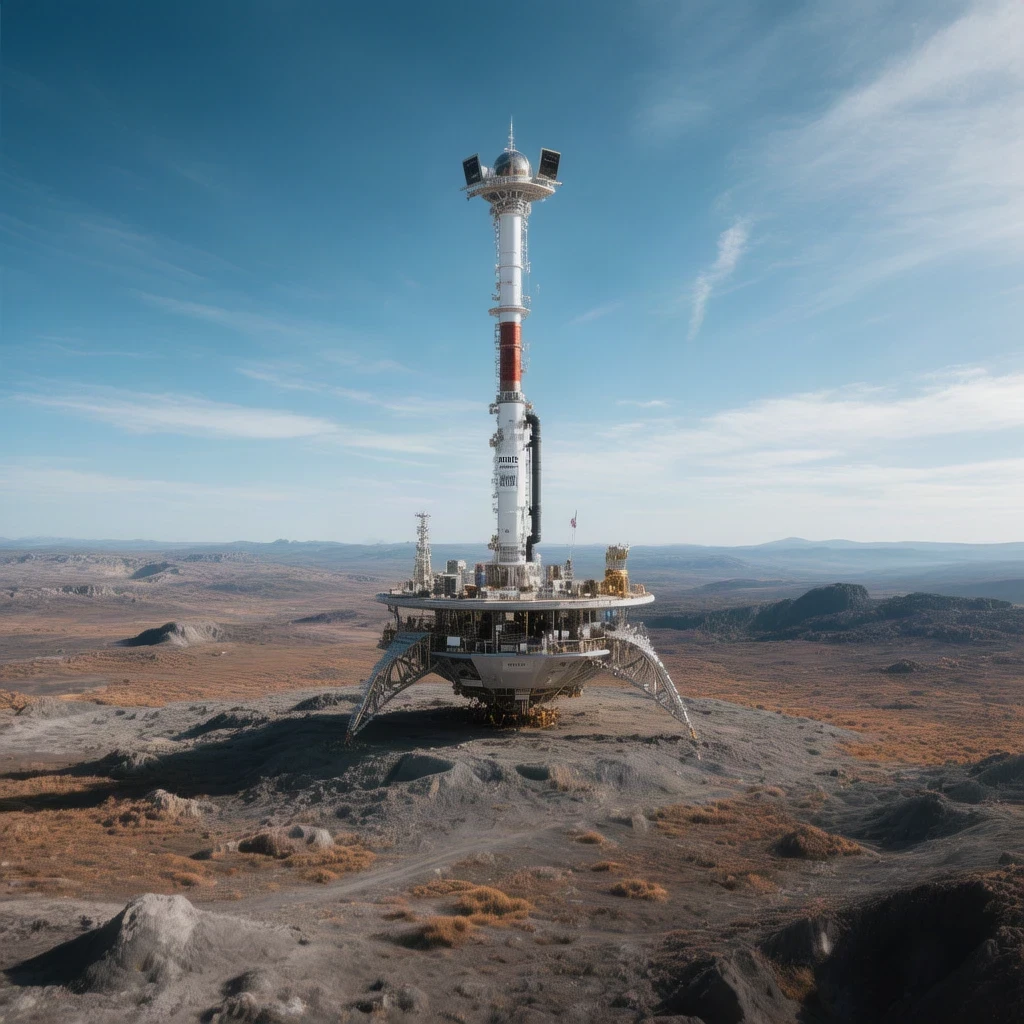
The celestial environment surrounding our nearest cosmic neighbor has entered a precarious epoch defined by anthropogenic accumulation and untracked orbital debris. When the upper stage of a Falcon 9 launch vehicle collided with the lunar surface on August 5, 2026, it marked yet another milestone in the industrialization of cislunar space. However, this particular impact gained unprecedented scientific significance due to the vigilant perspective of South Korea's pioneering Danuri lunar orbiter. By capturing high-resolution visual documentation of the resulting crater and impact zone, Danuri transformed an incidental collision into a critical case study for planetary protection.
Analyzing the physical remnants of terrestrial hardware on extraterrestrial bodies requires rigorous mathematical modeling of hypervelocity impacts, kinetic energy dissipation, and ejecta blanket formation. As commercial space flight accelerates alongside national lunar exploration initiatives, the necessity for robust environmental monitoring frameworks becomes paramount. The international scientific community can no longer afford to treat the lunar surface as an infinite, unblemished dumping ground for spent rocket stages. Danuri's empirical observations provide the essential baseline data required to quantify the physical alterations inflicted upon the regolith by foreign kinetic payloads.
On This Page
Kinetic Impact Dynamics and Regolith Mechanics

The physics governing hypervelocity impacts on celestial bodies devoid of significant atmospheres involve complex transformations of kinetic energy into thermal energy, seismic waves, and material deformation. When a massive cylindrical structure such as a Falcon 9 upper stage impacts the lunar regolith at velocities exceeding ##v \approx 2.5 \text{ km/s}##, the resulting explosion-like excavation shatters local rock formations. Understanding the cratering efficiency requires a deep dive into the momentum transfer equations and the mechanical properties of basaltic lunar soil. Researchers utilize empirical scaling laws to relate the projectile's mass and impact velocity to the final crater diameter and depth observed by orbiters like Danuri.
The kinetic energy ##E_k## delivered to the lunar surface is expressed through classical mechanics, factoring in the mass ##m## and impact velocity ##v## of the spent booster stage. To quantify this destructive energy transfer, we apply the standard kinetic energy formulation tailored for hypervelocity impact scenarios:
In the context of the Falcon 9 upper stage, with an estimated dry mass of approximately ##4,000 \text{ kg}## and a terminal impact velocity approaching ##2.5 \text{ km/s}##, the calculated kinetic energy yields a catastrophic release of mechanical force. Substituting these values into our derivation demonstrates the immense magnitude of the event:
This colossal energy output generates intense shockwaves that propagate radially through the lunar crust, pulverizing target materials and expelling high-velocity ejecta across considerable distances. The resulting crater morphology captured by South Korea's Danuri spacecraft serves as a physical laboratory for validating theoretical cratering models under low-gravity conditions.
Crater Formation and Ejecta Distribution Analysis
The structural geometry of the impact site observed from orbit reveals critical insights regarding the impact angle, projectile integrity, and subsurface layering. Ejecta blankets surrounding the crater provide a asymmetric distribution pattern that correlates directly with the oblique trajectory of the incoming rocket body. Through stereoscopic imaging and altimetry data gathered by Danuri's onboard instruments, scientists can reconstruct the transient cavity collapse phase.
Mathematical modeling of the transient cavity radius ##R_t## relies on scaling relationships derived from explosive cratering experiments. The scaling parameter accounts for gravitational acceleration ##g## and target density ##\rho_t##:
Here, ##C_1## represents a dimensionless coupling constant, ##r_p## is the effective projectile radius, and ##\mu## is an empirical scaling exponent typically valued around ##0.16## for cohesionless rock soils. Evaluating this equation provides researchers with precise dimensions for anticipated impact scars before optical confirmation is even established.
Subsurface Disruption and Seismic Propagation
Beyond the immediate visual scarring, high-energy impacts transmit significant seismic energy into the lunar interior, exciting moonquakes that are detectable by legacy and modern seismometers. The partitioning of impact energy between excavation work and seismic wave generation is a vital area of planetary geophysics. By analyzing the seismic coupling efficiency ##\eta_s##, scientists estimate the proportion of kinetic energy converted into elastic waves:
For impacts occurring within porous regolith layers, seismic efficiency typically remains low due to the high attenuation properties of fragmental surface materials. Nevertheless, controlled hardware impacts offer invaluable calibration sources for mapping the internal stratification of the lunar crust and upper mantle.
---
Orbital Surveillance and Environmental Monitoring

The successful imaging of the Falcon 9 crash site by South Korea's Danuri orbiter highlights the crucial evolution of lunar orbital surveillance capabilities. As cislunar traffic intensifies with crewed Artemis missions, robotic rovers, and commercial cargo deliveries, cataloging artificial debris becomes an operational imperative. Danuri's high-resolution ShadowCam and optical payload suite demonstrate that remote sensing instruments must now actively monitor anthropogenic contamination alongside traditional geological targets.
To evaluate the optical detectability of disturbed regolith, analysts calculate the contrast ratio ##C_r## between the newly exposed sub-surface material and the weathered background regolith. The optical contrast is determined by surface reflectance values ##R_{\text{target}}## and ##R_{\text{background}}##:
Fresh impact craters typically exhibit higher albedo values because unweathered silicate grains have not yet experienced prolonged solar wind darkening and space weathering. Danuri's optical sensors leverage this precise spectral differential to pinpoint small debris impact scars across vast lunar expanses.
Policy Frameworks and Planetary Protection
The proliferation of lunar debris necessitates the establishment of international treaties and rigorous policy guidelines governing disposal and orbital decay management. Unlike Earth orbit, where atmospheric drag eventually removes defunct satellites, lunar orbit and surface debris remain indefinitely unless actively mitigated or targeted for clean-up operations. The probability of accidental collisions between operational spacecraft and uncontrolled spent rocket stages increases non-linearly with traffic density.
---
We Also Published
Long-Term Implications for Cislunar Sustainability
The intersection of commercial space expansion and scientific preservation demands a proactive approach to lunar environmental management. As documented by Danuri, high-speed impacts leave permanent physical signatures on the Moon's pristine surface. Ensuring the long-term sustainability of cislunar architecture requires aerospace manufacturers to design upper stages with controlled deorbit capabilities, thereby preventing uncontrolled trajectories toward the lunar far side or high-value scientific regions.




0 Comments