Biotechnology is best understood not as a single laboratory technique but as an intellectual settlement between two very different worlds: the molecular biologist's obsession with the precise chemistry of DNA, and the chemical engineer's discipline of sterile, scalable, reproducible production. When students first meet the term, they often imagine only gene editing or recombinant insulin, yet the field's true identity is broader and older. For centuries, human communities harnessed living cells to make curd, bread, wine and vinegar without any knowledge of genes at all. What changed in the twentieth century was not the ambition to use life for human benefit, but the arrival of tools that made that use deliberate, predictable and quantitative rather than empirical and accidental.
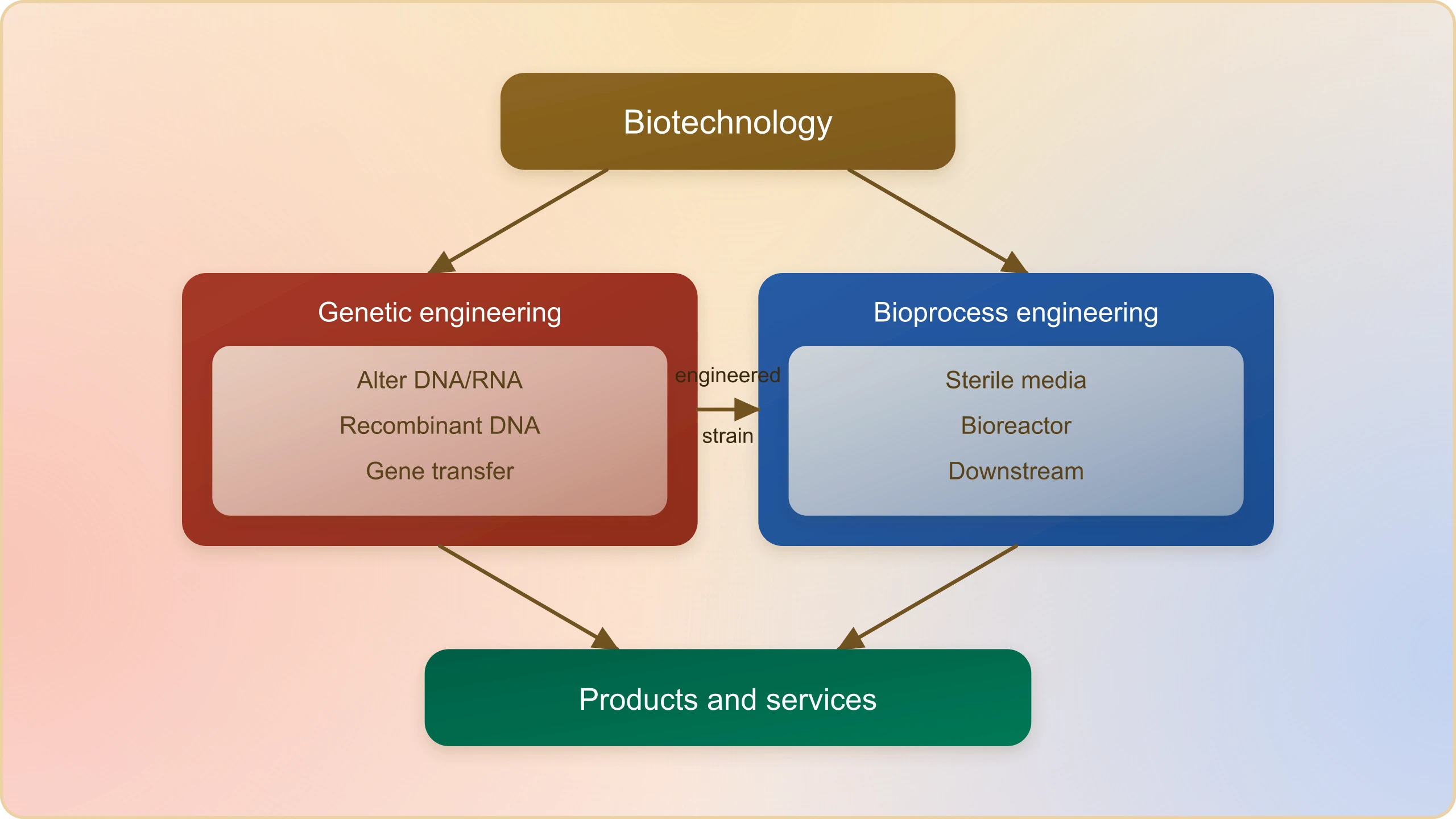
This opening lesson of the course establishes the conceptual map on which every later lesson depends. It defines biotechnology in both its traditional and modern senses, presents the widely cited European Federation of Biotechnology definition, and then isolates the two core techniques that made modern biotechnology possible: genetic engineering and bioprocess engineering. Around these two pillars we will build a historical timeline, a worked comparison between traditional breeding and recombinant gene transfer, and a product pipeline that traces a strain from a frozen vial all the way to a regulated, formulated product. The aim is to give you a vocabulary and a mental architecture, so that restriction enzymes, vectors, transformation and downstream purification later feel like rooms in a house you already know.
Because this is the first lesson of ten, it deliberately stays at the level of scope and definition rather than experimental detail. The next lesson will examine replication, cloning and the first recombinant DNA molecule in depth; here we only need to see why those ideas mattered. Throughout, keep one question in mind: what distinguishes a process that merely uses microbes from one that is genuinely biotechnological in the modern sense? The answer involves precision, scale, sterility and regulation, and each of those four words will recur repeatedly as the course unfolds.
On This Page
- Defining Biotechnology: From Ancient Fermentation to Molecular Precision
- The Two Core Techniques That Built Modern Biotechnology
- A Short History of Biotechnology: From Fermentation to Recombinant DNA
- Traditional Breeding Versus Recombinant Transfer: Why Precision Matters
- The Product Pipeline: A Map for the Rest of the Course
- Genetically Modified Organisms: Science, Law and Public Trust
- Common Misconceptions and Preparing for the Next Lesson
Defining Biotechnology: From Ancient Fermentation to Molecular Precision
Biotechnology deals with techniques of using live organisms, or enzymes derived from organisms, to produce products and processes useful to humans. In this broad sense, making curd, bread or wine, all of which are microbe-mediated processes, counts as biotechnology. The word itself joins the Greek bios, meaning life, to technologia, meaning systematic craft, and the compound captures exactly the tension the field lives with: life is the raw material, but craft implies control. That control is what separates a village bakery from an industrial fermentation plant, and it is the thread we will follow through every definition in this lesson.
In contemporary usage, however, the term is applied in a restricted sense, referring to processes that use genetically modified organisms to achieve results on a larger scale. Alongside this, many other techniques are also included under the biotechnology umbrella: in vitro fertilisation leading to a so-called test-tube baby, synthesising a gene and using it, developing a DNA vaccine, or correcting a defective gene. The scope is therefore genuinely wide, spanning medicine, agriculture, industry and environmental management, and any definition that captures only recombinant DNA will be too narrow to survive contact with real practice.
The European Federation of Biotechnology Definition and Its Logic
The European Federation of Biotechnology, commonly abbreviated EFB, offers a definition that deliberately spans both the traditional and the modern molecular view: "The integration of natural science and organisms, cells, parts thereof, and molecular analogues for products and services." Read carefully, this sentence contains four distinct ingredients. Natural science supplies the disciplinary base of biochemistry, genetics, microbiology and chemical engineering; organisms, cells and parts thereof name the biological units that may be whole living things, cultured cells, or subcellular components such as enzymes and organelles; molecular analogues extend the reach to synthetic molecules that mimic biological function; and products and services remind us that biotechnology is an applied, economically embedded activity rather than pure curiosity-driven research.
The elegance of the EFB formulation is that it does not privilege genetic modification. A traditional fermentation using an unmodified yeast satisfies every clause, and so does a modern therapeutic antibody produced in a genetically engineered Chinese hamster ovary cell line. This inclusivity matters pedagogically because it prevents students from equating biotechnology with recombinant DNA alone. It also matters commercially, since many established industries, from brewing to cheese-making, are legitimately biotechnological while using organisms that regulators would never classify as genetically modified.

Why the Definition Matters in Practice
Definitions are not idle academic furniture; they determine funding, regulation and public trust. A product classified as biotechnological may attract specific patent provisions, biosafety review, labelling requirements and import controls that a conventional chemical product avoids. In the European Union, for instance, the deliberate release of genetically modified organisms is governed by a dedicated directive, while in other jurisdictions the trigger for regulation may be the process used rather than the product's final composition. Students who intend to work in industry must therefore learn to read definitions as legal instruments, not merely as dictionary entries.
There is also a scientific reason to be precise. When a process is described as biotechnological, we implicitly claim that the biological component is essential and controlled, not incidental. A wastewater treatment pond that happens to contain microbes is not biotechnology in the strict sense unless the microbial community is managed for a defined outcome. This distinction between using biology and engineering biology is the conceptual hinge on which the entire course turns, and it prepares the ground for the two core techniques introduced shortly.
The Two Core Techniques That Built Modern Biotechnology
Among the many techniques that contribute to biotechnology, two stand out as the foundational pillars that enabled the birth of the modern field. The first is genetic engineering: the techniques used to alter the chemistry of genetic material, namely DNA and RNA, to introduce these into host organisms and thereby change the phenotype of the host organism. The second is bioprocess engineering: the maintenance of a sterile, microbial-contamination-free ambience in chemical engineering processes, so that only the desired microbe or eukaryotic cell grows in large quantities for the manufacture of products such as antibiotics, vaccines and enzymes. One pillar changes what the cell is; the other changes how much of it we can grow and how reliably.
It is worth pausing on why both were necessary. Genetic engineering without bioprocess engineering yields a laboratory curiosity: a few micrograms of a precious protein in a shake flask, unrepeatable and unaffordable. Bioprocess engineering without genetic engineering yields efficient fermentation of whatever the organism naturally makes, which is useful but limited to nature's existing repertoire. The modern industry exists precisely at their intersection, and almost every commercial biotechnology product can be traced back to a decision made in one domain that only became valuable because of a capability in the other.
Genetic Engineering: Altering the Chemistry of Heredity
Genetic engineering encompasses the creation of recombinant DNA, the use of gene cloning and gene transfer, and the deliberate modification of an organism's hereditary material. Its conceptual advantage over traditional breeding is precision. Traditional hybridisation procedures used in plant and animal breeding very often lead to the inclusion and multiplication of undesirable genes along with the desired ones, because whole genomes are shuffled rather than individual traits selected. Genetic engineering overcomes this limitation by allowing us to isolate and introduce only one or a set of desirable genes, without dragging undesirable genes into the target organism.
The mechanism depends on a simple but profound fact about DNA replication. If a piece of DNA is somehow transferred into an alien organism, it most likely will not multiply in the progeny cells, because it lacks the machinery to initiate its own replication. But when it becomes integrated into the genome of the recipient, it may multiply and be inherited along with the host DNA, because it has become part of a chromosome, and a chromosome contains a specific sequence called the origin of replication that initiates replication. Linking an alien DNA fragment to an origin of replication is therefore what allows it to replicate and multiply in the host, a process we call cloning, or making multiple identical copies of a template DNA.
Bioprocess Engineering: Sterility, Scale and the Upstream–Downstream Split
Bioprocess engineering is often imagined as the bioreactor alone, but the discipline is considerably larger. It begins upstream, with the selection and preparation of culture media, the design of sterilisation protocols for media, vessels and air, the preparation of inoculum through graded seed stages, and the control of temperature, pH, dissolved oxygen and foaming. Only then does the fermentation or cell culture itself proceed in the bioreactor. After that, downstream processing takes over: cell harvesting, disruption where necessary, clarification, chromatography, concentration, formulation and quality control. The upstream–downstream vocabulary is standard in the industry and will recur throughout this course.
The defining constraint of the whole enterprise is sterility. A bioreactor running for two weeks at thirty-seven degrees Celsius in a nutrient-rich medium is an ideal incubator for contaminants, and a single stray bacterium can outgrow a slower-growing production strain and ruin an entire batch worth millions. Bioprocess engineering therefore borrows heavily from chemical engineering: mass and energy balances, heat transfer, mixing and aeration, scale-up correlations and process analytical technology. The quantitative reasoning you will meet later, from growth kinetics to yield coefficients, belongs to this pillar rather than to the molecular biology pillar.
A Short History of Biotechnology: From Fermentation to Recombinant DNA
Placing biotechnology in historical sequence clarifies why the two core techniques emerged when they did. For millennia, fermentation was empirical: communities discovered that certain conditions produced leavened bread, soured milk or alcoholic beverages, and they reproduced those conditions without any theory of microbiology. The scientific understanding arrived much later, and the industrial exploitation of microbes followed the growth of chemistry and chemical engineering in the nineteenth and twentieth centuries. Each stage added a layer of control, and each layer of control made the next stage conceivable.
The decisive modern chapter begins with the recognition that DNA carries hereditary information and that its structure permits copying and recombination. Once the double helix was described in 1953, the question of how to manipulate it became a practical engineering problem rather than a philosophical one. The answer arrived through the convergence of two research programmes, one studying how bacteria defend themselves against viruses, the other studying small circular DNA molecules that replicate independently inside bacterial cells. Their meeting produced the first recombinant DNA molecule and, with it, the discipline we now call modern biotechnology.
From Ancient Fermentation to Antibiotics
Traditional microbe-mediated processes, including curd, bread and wine, represent the oldest biotechnology and remain economically significant today. The nineteenth century brought Pasteur's demonstrations that fermentation is caused by living organisms, which transformed brewing and food preservation into sciences. The twentieth century then delivered the antibiotic era: Alexander Fleming's observation of penicillin in 1928, followed by the large-scale production achieved during the 1940s, demonstrated that a microbial product could be manufactured in enormous quantities and could change the course of medicine. Deep-tank fermentation, developed for penicillin, established many of the sterility and aeration principles that bioprocess engineering still uses.
These developments established an important precedent. Before recombinant DNA, industry could already grow microbes at scale and harvest their natural products. What it could not do was instruct a microbe to make a human protein, or to overproduce a specific enzyme on demand. The limitation was biological rather than engineering-based, and it is precisely the limitation that genetic engineering was designed to remove. Understanding this sequence prevents the common misconception that biotechnology sprang fully formed from molecular biology; it grew from an industrial fermentation tradition that was already mature.
The Cohen–Boyer Breakthrough and the Birth of Recombinant DNA
Herbert Boyer was born in 1936 and raised in a corner of western Pennsylvania where railroads and mines were the destiny of most young men. He completed graduate work at the University of Pittsburgh in 1963, followed by three years of postgraduate study at Yale, and in 1966 took up an assistant professorship at the University of California at San Francisco. By 1969 he had performed studies on a couple of restriction enzymes of the E. coli bacterium with especially useful properties. Boyer observed that these enzymes cut DNA strands in a particular fashion, leaving what became known as sticky ends, and these clipped ends made pasting together pieces of DNA a precise exercise.
This discovery led to a rich and rewarding conversation in Hawaii with a Stanford scientist named Stanley Cohen, who had been studying small ringlets of DNA called plasmids that float freely in the cytoplasm of certain bacterial cells and replicate independently of the coding strand. Cohen had developed a method of removing these plasmids from the cell and reinserting them into other cells. Combining plasmid reinsertion with DNA splicing enabled Boyer and Cohen to recombine segments of DNA in desired configurations and insert them into bacterial cells, which could then act as manufacturing plants for specific proteins. In 1972 they constructed the first artificial recombinant DNA by linking a gene encoding antibiotic resistance with a native plasmid of Salmonella typhimurium, and this breakthrough became the basis on which the discipline of biotechnology was founded.
Traditional Breeding Versus Recombinant Transfer: Why Precision Matters
The clearest way to appreciate genetic engineering is to compare it with the breeding methods it supplements. Traditional hybridisation, whether in crops or livestock, works by crossing whole organisms and then selecting among the progeny. Because each parent contributes an entire genome, the offspring inherit thousands of genes, and the breeder can only choose among combinations that already exist. Desirable traits frequently travel with undesirable ones, so the breeder must perform repeated backcrosses over many generations to dilute the unwanted genetic material. This process is powerful and has produced most of the world's food crops, but it is slow, probabilistic and genetically imprecise.
Recombinant transfer changes the unit of manipulation from the whole genome to a defined DNA sequence. Instead of hoping that a favourable combination appears, the engineer identifies a specific gene, isolates it, and introduces it into a recipient organism. The result is that only the intended gene, together with the small amount of accompanying vector sequence, is added. This does not make the outcome automatically safe or predictable, because the gene's position and expression level still matter, but it does make the genetic change describable, testable and traceable in a way that a wide cross is not.

A Worked Example: Introducing Insect Resistance
Consider a crop damaged by a stem-boring insect. A conventional breeder might screen thousands of accessions for natural resistance, cross a resistant wild relative with an elite variety, and then backcross for six to eight generations to recover yield and quality while retaining resistance. Even then, the resistance may be polygenic and partially effective, and linkage drag may depress yield. A recombinant approach instead identifies a single well-characterised gene, for example one encoding an insecticidal protein from Bacillus thuringiensis, and introduces it into the elite variety directly. The elite background is preserved, and the new trait is inherited as a defined genetic element that can be tracked by molecular assays.
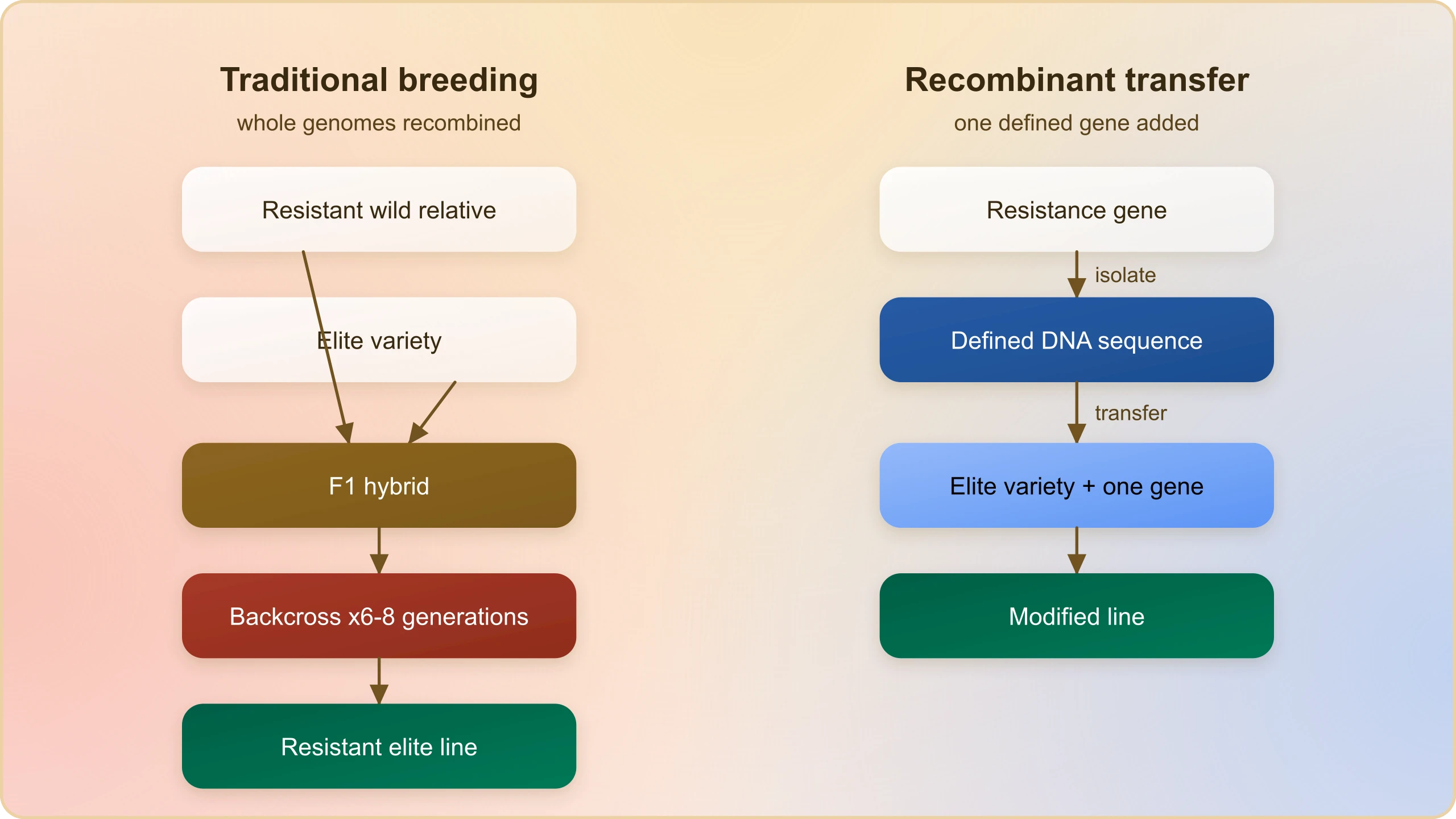
The comparison also exposes the trade-offs. The recombinant route requires a reliable transformation system, a suitable promoter, regulatory approval and extensive biosafety assessment, and it may face public acceptance challenges that conventional breeding never encounters. The conventional route requires no regulatory approval in most jurisdictions but consumes a decade or more and may fail entirely if no resistance source exists. Neither approach is universally superior; the choice depends on the trait, the species, the market and the regulatory environment. What matters for this lesson is that the recombinant route converts a breeding problem into an engineering problem with defined inputs and measurable outputs.
The Product Pipeline: A Map for the Rest of the Course
Every commercial biotechnology product travels along a recognisable route, and learning that route early gives the remaining lessons a destination. The pipeline begins with strain construction, where genetic engineering defines what the organism will make. It proceeds through process development, where bioprocess engineering determines how the organism will be grown and how the product will be recovered. It continues through purification and formulation, where the product is rendered stable, safe and administrable, and it concludes with regulatory approval and post-market surveillance. Each stage has its own vocabulary, its own failure modes and its own quantitative criteria for success.
Treating the pipeline as a map has a practical benefit: it tells you which questions belong to which lesson. When we later discuss restriction enzymes and ligases, we are at the strain-construction stage. When we discuss bioreactor operation and growth kinetics, we are at the process-development stage. When we discuss chromatography and quality control, we are at purification. And when we discuss biosafety committees and regulatory frameworks, we are at the approval stage. Students who keep this map in mind find that the course stops feeling like a list of techniques and starts feeling like a sequence of engineering decisions.
Stage-by-Stage View of a Biotechnological Product
The first stage, strain construction, produces a candidate organism that carries the desired genetic information. The second, process development, establishes a reproducible cultivation protocol, including media composition, inoculum strategy, aeration and temperature control. The third, downstream processing, recovers the product from a complex mixture of cells, metabolites and medium components, typically using a sequence of clarification, concentration and high-resolution chromatography steps. The fourth, formulation, converts a purified bulk substance into a stable dosage form. The fifth, regulatory approval, requires evidence of safety, efficacy and manufacturing consistency, often through clinical trials and inspections of the production facility.
Each stage imposes constraints on the others, and this coupling is a recurring theme in industrial practice. A strain that produces an enormous titre of an insoluble protein may be a purification nightmare, while a strain that secretes a modest amount of a correctly folded protein may be far more economical overall. Similarly, a purification step that requires a solvent incompatible with the final formulation forces redesign upstream. The pipeline is therefore not a linear sequence but a feedback loop, and experienced process scientists spend much of their time negotiating trade-offs between adjacent stages rather than optimising any single one in isolation.
Where the Two Core Techniques Meet in the Pipeline
Genetic engineering dominates the first stage and influences the third, because the choice of host and signal sequence determines whether the product is secreted or retained intracellularly. Bioprocess engineering dominates the second and third stages, where sterility, mixing, oxygen transfer and chromatographic resolution determine yield and purity. Regulatory science then overlays both, requiring documented control at every step. The two core techniques are therefore not sequential phases but interlocking disciplines that must be co-designed, and the most successful products are those in which the molecular biologist and the process engineer communicated early and often.
A useful quantitative habit is to track yield across the pipeline as a cumulative product. If strain construction yields a titre of ##T_0## grams per litre, and each subsequent stage recovers a fraction ##r_i## of the material, the final recovered mass per litre is given by the product of the individual recovery factors. This simple relationship explains why a purification step with ninety percent recovery is considered excellent and why three such steps together retain only about seventy-three percent of the starting material. It also explains why process engineers obsess over small percentage improvements: they compound.

We Also Published
Genetically Modified Organisms: Science, Law and Public Trust
The phrase genetically modified organism, usually shortened to GMO, is both a scientific description and a legal category, and the two do not always coincide. Scientifically, a GMO is an organism whose genetic material has been altered using techniques that do not occur naturally, typically recombinant DNA methods. Legally, however, the definition varies between jurisdictions. The European Union regulates the deliberate release of GMOs under a dedicated framework that treats recombinant DNA techniques as the trigger, while the United States has historically regulated products according to their characteristics and intended use rather than the process that produced them. A crop approved in one jurisdiction may therefore be unapproved in another, even when the genetic change is identical.
This divergence has practical consequences for trade, research and public communication. A scientist publishing a result may find that the same organism is classified differently depending on where the experiment is performed, and a company planning a market launch must navigate a patchwork of approvals. Students should therefore learn to ask two separate questions whenever the term GMO appears: what is the biological nature of the modification, and what is the regulatory status of the organism in the relevant jurisdiction? Conflating the two leads to confusion in both laboratory and policy discussions.
Why Definitions Differ Between Jurisdictions
Jurisdictions differ because they balance different concerns. Some emphasise process-based oversight, reasoning that the technique itself carries novel risks that warrant scrutiny regardless of the product. Others emphasise product-based oversight, reasoning that the characteristics of the final organism determine risk and that identical products should be treated identically. A third group uses a hybrid approach, listing specific techniques that trigger review while exempting others, such as certain forms of targeted mutagenesis. These choices reflect legal traditions, public attitudes and the influence of stakeholder groups as much as they reflect scientific evidence, and understanding that context is part of professional competence.
The practical lesson is that regulatory categories are not natural kinds. They are human constructions designed to manage uncertainty, and they evolve as techniques change. Newer methods such as precise genome editing have strained older definitions, prompting reviews and revisions in several countries. A biotechnology professional should therefore maintain current knowledge of the regulatory landscape in the regions where they work, and should be cautious about assuming that a term used in one country carries the same meaning in another.
Communicating Biotechnology Responsibly
Public trust is a genuine technical variable, not a soft add-on. A product that is scientifically sound but poorly communicated may fail commercially, while a well-explained product with transparent evidence can earn acceptance even in cautious markets. Responsible communication begins with precise language: distinguishing between a gene, a protein and a product; acknowledging uncertainty where it exists; and avoiding both alarmist and triumphalist framing. It also requires listening, because concerns about GMOs often reflect legitimate questions about corporate concentration, labelling and environmental effects rather than simple misunderstanding of molecular biology.
For students entering the field, this means developing a dual literacy. You need the technical vocabulary to describe what a modification actually is, and the communicative skill to explain it to non-specialists without condescension. The two core techniques of this lesson provide a useful starting point, because they allow you to separate what was changed in the organism from how the organism is grown and managed. That separation often defuses confusion, since many public concerns are really about industrial agriculture or pharmaceutical pricing rather than about recombinant DNA itself.
Common Misconceptions and Preparing for the Next Lesson
Several misconceptions recur whenever biotechnology is introduced, and correcting them early saves considerable confusion later. The first is that biotechnology equals genetic engineering. As the EFB definition makes clear, the field includes traditional fermentation, enzyme technology and cell culture, and genetic engineering is one powerful subset. The second is that a genetically modified organism is inherently more dangerous than an unmodified one. Risk depends on the specific modification, the organism and the environment, not on the label alone, which is why case-by-case assessment is the standard approach in every serious regulatory system.
A third misconception is that bioprocess engineering is simply scaling up a laboratory flask. In reality, scale changes the physics: oxygen transfer becomes limiting, heat removal becomes difficult, mixing times lengthen and gradients form. A process that works in a two-litre vessel may fail completely in a two-thousand-litre tank unless the engineering parameters are re-examined. A fourth misconception is that a high titre guarantees a successful product, when in fact purification and formulation often determine commercial viability. Each of these errors stems from treating one pillar of biotechnology in isolation from the other.
Diagnostic Questions to Test Your Understanding
Before moving on, test your grasp with a few diagnostic questions. Can you state the EFB definition from memory and explain each of its four components? Can you distinguish genetic engineering from bioprocess engineering using a concrete product example, such as recombinant insulin? Can you explain why an alien DNA fragment needs an origin of replication to persist in a host? Can you describe the difference between upstream and downstream processing, and place three unit operations in each category? If you can answer these without notes, you have the conceptual foundation the next lesson requires.
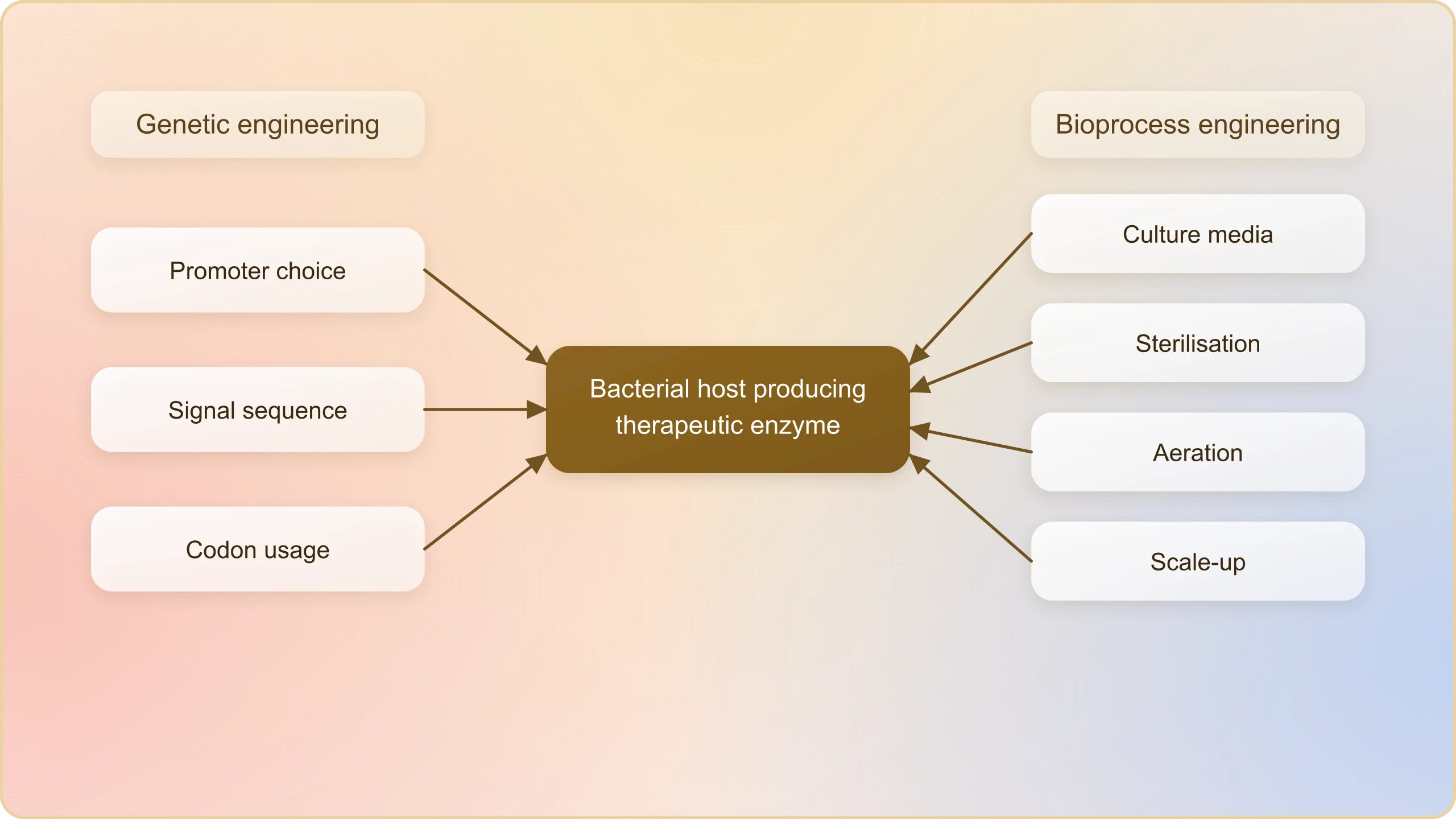
You should also be able to reason about a simple scenario. Suppose a company wants to produce a therapeutic enzyme in a bacterial host. Which decisions belong to genetic engineering, and which to bioprocess engineering? The choice of promoter, signal sequence and codon usage belongs to the former; the choice of medium, induction strategy, aeration rate and purification train belongs to the latter. Recognising this division is the practical skill this lesson aims to build, and it will be assumed rather than re-taught in the lessons that follow.
Bridge to Lesson Two: Replication, Cloning and the First Recombinant DNA
The next lesson examines the conceptual basis of genetic engineering in detail, beginning with replication and the origin of replication, then moving to the meaning of cloning and the construction of the first recombinant DNA molecule. It will revisit the Cohen–Boyer experiment with greater molecular precision, explaining how restriction enzymes generate sticky ends, how ligases seal nicks, and why the choice of plasmid vector matters. The historical narrative introduced here will become a mechanistic one, and the vocabulary of vectors, inserts and transformants will be established properly.
To prepare, review the distinction between a chromosome and a plasmid, and remind yourself why replication is the central problem in cloning. Consider also the difference between cloning a gene and expressing it: the first produces many copies of DNA, the second produces a functional protein, and the two require different elements. This distinction will structure much of the next lesson and will recur when we discuss expression vectors and host systems. Bring the two-pillar framework with you, and the molecular details will attach themselves to a structure you already understand.
From our network :
- Analyzing Trump Deportation Numbers Insights Into The 2026 Immigration Crackdown
- 98% of Global MBA Programs Now Prefer GRE Over GMAT Focus EditionExplore why 98% of global MBA programs now prefer the GRE over GMAT Focus. Learn about the shorter GRE format, verbal logic importance, and strategic versatility for students.
- AI-Powered 'Precision Diagnostic' Replaces Standard GRE Score ReportsDiscover the new GRE Precision Diagnostic. Learn how AI-powered behavioral analytics and time-to-solve tracking are replacing standard GRE score reports to empower students.
- Where to Put Your Wireless Router for Better CoverageA practical, physics-grounded guide to router placement: why the centre of the home beats the corner, how walls and metal sap signal, and how to run a simple survey that proves the improvement.
- EV 2.0: The Solid-State Battery Breakthrough and Global Factory ExpansionDiscover the impact of the Solid-State Battery Breakthrough on the EV market. Learn about CATL and BYD stock growth, global factory expansion in Europe, and the future of EV 2.0 technology.
- 10 Physics Numerical Problems with Solutions for IIT JEEPrepare for IIT JEE with 10 physics numerical problems, complete with detailed solutions and conceptual explanations. Ideal for mastering kinematics, thermodynamics, electromagnetism, and optics.
- Trump Political Strategy How Geopolitical Stunts Serve As Media Diversions
- How to Print Cheaply: Cutting the Cost per PageA practical, measured guide to lowering what each printed page costs — duplex and draft modes, third-party ink, yield mathematics, and knowing when a new printer beats refills.
- Do You Need a New Router or Is Your Internet Plan the Problem?A practical comparison of the signs that point to router limits versus signs your broadband speed or provider is the bottleneck, so you can decide what to replace before spending money.