On This Page
- The Paleontological Enigma of a Tyrannosaurus Rex Rib
- Understanding the Scale of the Largest Tyrannosaurus Rex
- Paleopathology: Reading Disease in Fossil Bone
- Isotopic and Molecular Secrets Locked in Bone
- Geological Context and the Hell Creek Formation
- Computational Paleontology and Digital Reconstruction
- Broader Implications for Dinosaur Biology and Evolution
- Conclusion: A Single Bone, a Universe of Inquiry
The Paleontological Enigma of a Tyrannosaurus Rex Rib
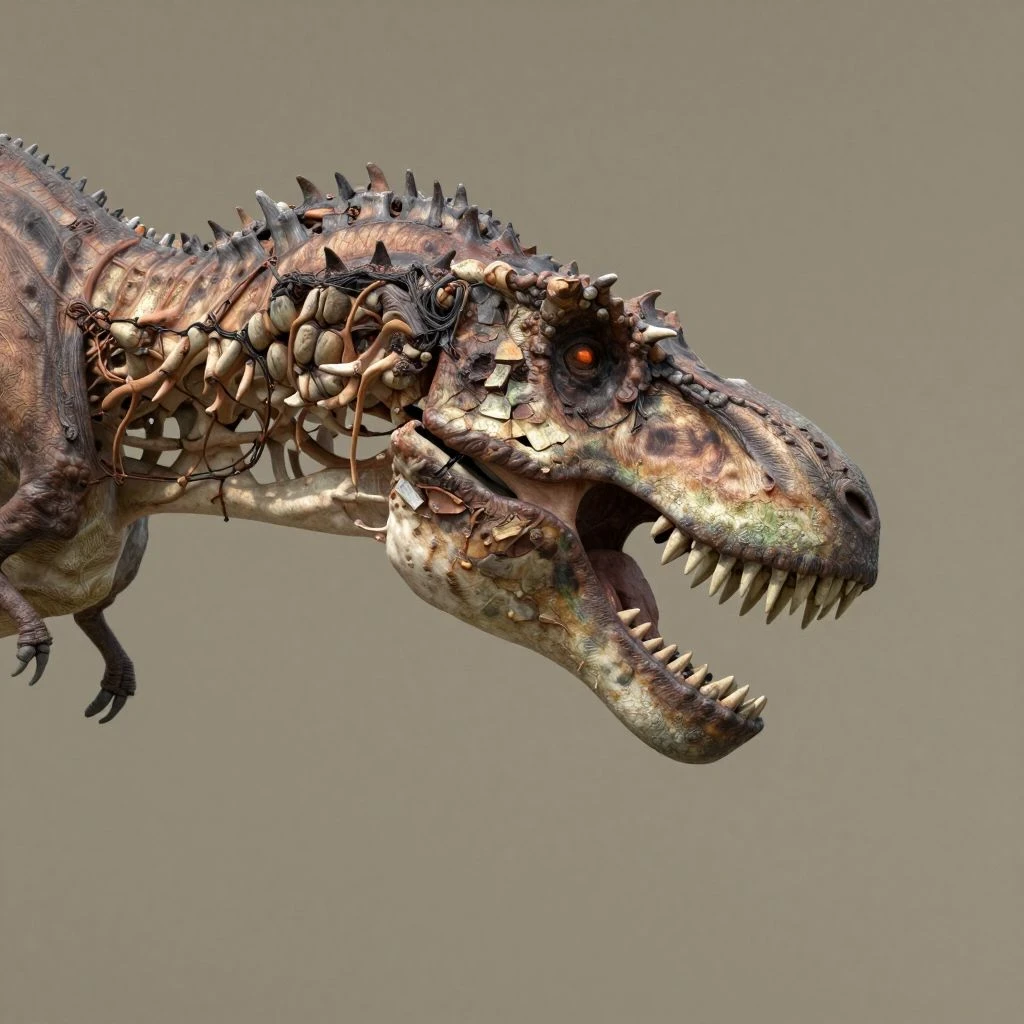
The fossil record rarely surrenders its secrets without a struggle, and the announcement that a broken rib from the largest Tyrannosaurus rex ever unearthed concealed a sixty-six-million-year-old mystery has electrified the paleontological community. Such a discovery invites us to reconsider everything we assume about the biology, pathology, and daily existence of the most celebrated predator in Earth's history. A single fractured bone, preserved across the vast expanse of deep time, can function as a biological archive containing chemical, structural, and behavioral information that no museum mount could ever convey. This is the essence of taphonomy: the study of how organisms decay, fossilize, and endure.
What makes this particular specimen so compelling is the sheer scale of the animal from which it came. The largest known Tyrannosaurus rex specimens, such as the legendary "Scotty" unearthed in Saskatchewan or the formidable "Sue" housed in Chicago, push the boundaries of what we understand about theropod gigantism. When a creature weighs in excess of eight metric tons and stands nearly four meters at the hip, every skeletal element becomes a load-bearing marvel of evolutionary engineering. A broken rib in such a titan is not merely an injury; it is a record of trauma, healing, infection, or perhaps even an ancient encounter that left its mark in mineralized tissue.
The scientific value of this find rests on the principle that bone is a living, dynamic tissue that remodels itself in response to stress, disease, and damage. When a rib fractures, the body initiates a complex cascade of cellular activity involving osteoblasts, osteoclasts, and the deposition of callus tissue. If the animal survives long enough, that callus mineralizes and preserves a permanent record of the injury and the healing process. Paleopathologists can then read this record like a medical chart written in calcium phosphate, reconstructing events that transpired millions of years before any human ever walked the Earth.
Understanding the Scale of the Largest Tyrannosaurus Rex
To appreciate the significance of any single bone from a giant theropod, one must first grasp the extraordinary dimensions and biomechanical demands placed upon the skeleton of the largest Tyrannosaurus rex. These animals represent the apex of terrestrial carnivory during the Late Cretaceous, and their bodies were subjected to forces that would shatter the bones of lesser creatures. The rib cage, in particular, served as a protective vault for the heart, lungs, and viscera while simultaneously anchoring the massive musculature required for respiration and locomotion.
Body Mass Estimates and Skeletal Loading
Estimating the mass of an extinct animal is a discipline fraught with uncertainty, yet paleontologists have developed robust methods combining volumetric modeling, limb circumference regression, and comparative anatomy. For the largest Tyrannosaurus specimens, these methods converge on a range between eight thousand and nine thousand five hundred kilograms. Such a mass imposes enormous compressive and tensile stresses on every bone, particularly the ribs, which must flex with each breath while resisting the inward pull of the animal's own weight.
The mathematics of skeletal loading can be approximated using beam theory, where a rib is modeled as a curved beam subjected to distributed loads. The bending stress ##[\sigma = \dfrac{My}{I}]## relates the applied moment ##[M]##, the distance from the neutral axis ##[y]##, and the second moment of area ##[I]##. For a tyrannosaur rib with a cortical thickness of roughly two centimeters and a length exceeding one meter, the stresses generated during a fall or a struggle could easily exceed the fracture threshold of bone, which is approximately ##[150 \text{ MPa}]## in compression.
Consider a hypothetical calculation: if a Tyrannosaurus rex falls onto its side with a mass of ##[8500 \text{ kg}]##, the impact force distributed across three ribs over a contact time of ##[0.05 \text{ s}]## can be estimated. Assuming the animal decelerates from a velocity of ##[3 \text{ m/s}]##, the impulse-momentum theorem gives ##[F = \dfrac{m \Delta v}{\Delta t} = \dfrac{8500 \times 3}{0.05} = 510{,}000 \text{ N}]##. Distributed across three ribs, each rib experiences roughly ##[170{,}000 \text{ N}]##, a load sufficient to cause catastrophic failure in all but the most robust skeletal elements.
The second moment of area for a rectangular cross-section, given by the formula above, determines how resistant a rib is to bending. For a rib with an effective width ##[b = 0.04 \text{ m}]## and height ##[h = 0.06 \text{ m}]##, the value becomes ##[I = \dfrac{0.04 \times 0.000216}{12} = 7.2 \times 10^{-7} \text{ m}^4]##. This geometric property, combined with the material properties of bone, dictates whether the rib survives an impact or fractures catastrophically.
Comparative Anatomy of Theropod Rib Cages
The rib cages of large theropods differ markedly from those of mammals in both structure and function. Tyrannosaur ribs are pneumatized, meaning they contain hollow spaces invaded by air sacs connected to the respiratory system, a feature shared with modern birds. This pneumaticity reduces weight while maintaining structural rigidity, an elegant evolutionary compromise that allowed animals of immense size to remain mobile and active. The broken rib in question may preserve evidence of these internal air spaces, offering clues about respiratory efficiency.
Paleontologists compare tyrannosaur ribs to those of other large theropods such as Giganotosaurus, Carcharodontosaurus, and Spinosaurus to understand convergent evolution in skeletal design. Each lineage evolved unique solutions to the problem of supporting a massive body on two legs, and the ribs reflect these adaptations. The largest T. rex ribs are notably thick and robust, with dense cortical bone surrounding a relatively small medullary cavity, suggesting adaptation to high-stress loading.
Paleopathology: Reading Disease in Fossil Bone
Paleopathology is the scientific discipline devoted to identifying and interpreting evidence of disease, trauma, and injury in ancient organisms, and it has become one of the most productive avenues for understanding dinosaur behavior and physiology. A broken rib is a textbook paleopathological specimen, because fracture healing leaves unmistakable signatures in bone tissue that persist for millions of years. The presence of callus formation, periosteal reaction, or abnormal bone remodeling can reveal whether an animal survived an injury and for how long.
Fracture Healing and Callus Formation
When a bone fractures, the body responds with a predictable sequence of events: hematoma formation, inflammation, soft callus deposition, hard callus mineralization, and eventual remodeling. Each stage leaves histological traces that paleontologists can identify under polarized light microscopy. In a tyrannosaur rib, the presence of woven bone within a fracture gap indicates rapid healing, while lamellar bone suggests a slower, more organized repair process spanning months or even years.
The rate of bone healing in dinosaurs remains a subject of active research, but growth mark analysis offers a window into the timeline. Lines of arrested growth, analogous to tree rings, record annual cycles of bone deposition. By counting these lines within a callus, researchers can estimate how many years the animal lived after sustaining the injury. A rib with three growth lines inside the callus implies the Tyrannosaurus survived for at least three years post-fracture, a testament to its resilience.
The healing time ##[t_{\text{heal}}]## can be approximated by dividing the callus volume ##[V_{\text{callus}}]## by the product of the osteoblast deposition rate ##[R_{\text{osteoblast}}]## and the surface area ##[A_{\text{surface}}]##. For a callus volume of ##[50 \text{ cm}^3]##, a deposition rate of ##[0.05 \text{ cm}^3/\text{day}]##, and a surface area of ##[100 \text{ cm}^2]##, the healing time becomes ##[t_{\text{heal}} = \dfrac{50}{0.05 \times 100} = 10 \text{ days}]## for initial soft callus, though full mineralization requires far longer.
Infection, Trauma, and Behavioral Inference
Beyond simple fractures, paleopathologists search for signs of infection such as osteomyelitis, which manifests as porous, irregular bone surfaces and abscess cavities. An infected rib would have been excruciatingly painful for the animal, potentially impairing its ability to hunt or defend territory. Some researchers have argued that chronic infections in large theropods may have contributed to their deaths, either directly through sepsis or indirectly by weakening them enough to starve.
Behavioral inferences from paleopathology are inherently speculative but scientifically valuable. A broken rib could result from a failed predation attempt, a fall, a territorial dispute with another Tyrannosaurus, or even a collision with a large herbivore such as Triceratops. Each scenario carries different implications for the animal's social life and ecology. The fact that the rib healed, rather than remaining an open fracture, suggests the animal received no medical care yet still recovered, highlighting the remarkable regenerative capacity of dinosaur physiology.
Isotopic and Molecular Secrets Locked in Bone
Beyond gross anatomy and histology, fossil bone preserves a chemical archive that can be interrogated using mass spectrometry, spectroscopy, and isotopic analysis. Stable isotope ratios of carbon, oxygen, and nitrogen within bone apatite and collagen reflect the animal's diet, water sources, and body temperature. A broken rib, with its unique healing tissue, may record a distinct isotopic signature reflecting the metabolic demands of repair and the altered diet of an injured predator.
Stable Isotope Analysis and Diet Reconstruction
Carbon isotope ratios distinguish between predators feeding on herbivores that consumed C3 versus C4 plants, providing a window into ancient food webs. Nitrogen isotopes reveal trophic level, with apex predators exhibiting elevated ##[\delta^{15}\text{N}]## values relative to their prey. Oxygen isotopes, meanwhile, correlate with body temperature and drinking water sources, offering clues about thermoregulation and habitat preference. In a healing rib, the callus tissue may show anomalous isotopic values reflecting the metabolic priorities of recovery.
The fractionation of isotopes during bone formation follows predictable physical laws, and the enrichment factor ##[\Delta^{13}\text{C}]## between diet and bone collagen is approximately ##[5 \text{ per mil}]## in large carnivores. If a Tyrannosaurus consumed herbivorous prey with a ##[\delta^{13}\text{C}]## value of ##[-24 \text{ per mil}]##, its own collagen would register around ##[-19 \text{ per mil}]##. Deviations from this expectation in a healing rib could indicate fasting, illness, or a shift in prey selection during recovery.
Biomolecular Preservation and Ancient Proteins
The most controversial and exciting frontier in fossil research is the recovery of original biomolecules such as collagen, osteocalcin, and even fragments of DNA. While DNA degrades rapidly after death, proteins can persist for millions of years under favorable conditions. If the broken rib preserves intact collagen, researchers could sequence it and compare it to modern bird proteins, refining our understanding of dinosaur evolution. Such analyses require stringent controls to rule out contamination.
The mathematical model for protein degradation follows first-order kinetics, where the fraction of remaining protein ##[f]## decays according to ##[f = e^{-kt}]##, with ##[k]## representing the degradation rate constant. For a protein with a half-life of one million years, after sixty-six million years the remaining fraction would be ##[f = e^{-0.693 \times 66} \approx 10^{-20}]##, an astronomically small quantity. Yet trace amounts may survive in protected microenvironments within bone crystals, defying statistical expectations.
We Also Published
Geological Context and the Hell Creek Formation
The vast majority of Tyrannosaurus rex fossils, including the largest and most complete specimens, have been recovered from the Hell Creek Formation of Montana, North Dakota, and South Dakota, as well as the equivalent Lance Formation in Wyoming. These rocks were deposited during the final two million years of the Cretaceous Period, between approximately sixty-eight and sixty-six million years ago. Understanding the geological setting of a fossil is essential for interpreting its taphonomy and the environment in which the animal lived and died.
Sedimentology and Depositional Environments
The Hell Creek Formation consists primarily of fluvial sandstones, mudstones, and paleosols deposited by meandering river systems on a broad coastal plain bordering the Western Interior Seaway. Carcasses that washed into river channels were rapidly buried by sediment, creating anoxic conditions that inhibited decay and promoted fossilization. A broken rib, if transported by water before burial, might show abrasion or rounding, whereas a rib buried in situ would retain sharp fracture edges and delicate surface features.
The rate of sedimentation in these ancient floodplains can be estimated from the thickness of annual varves or from radiometric dating of volcanic ash layers interbedded with fossil-bearing strata. If a sedimentary package spans ##[200{,}000 \text{ years}]## and is ##[100 \text{ meters}]## thick, the average accumulation rate is ##[0.5 \text{ mm/year}]##. Such slow deposition means that a carcass must be buried quickly by a flood event to avoid scavenging and weathering, a rare but crucial circumstance for exceptional preservation.
Taphonomic Pathways and Fossil Completeness
Taphonomy, the study of what happens to an organism between death and discovery, provides the interpretive framework for understanding any fossil. The pathway from a living Tyrannosaurus to a museum specimen involves scavenging, disarticulation, transport, burial, compaction, mineralization, and finally erosion and discovery. Each stage leaves characteristic signatures. A rib with tooth marks indicates scavenging; a rib found in isolation suggests transport; a rib with intact articulation indicates rapid burial.
Statistical analyses of fossil assemblages reveal that isolated bones are far more common than articulated skeletons, with fewer than one percent of carcasses preserving complete remains. The probability of any given bone being discovered by paleontologists is vanishingly small, making each significant find a statistical anomaly. The broken rib from the largest T. rex thus represents not only a biological specimen but also a rare intersection of geological, chemical, and human factors.
Computational Paleontology and Digital Reconstruction
Modern paleontology increasingly relies on computational tools to extract information from fossils that would be inaccessible through traditional methods. High-resolution CT scanning, finite element analysis, and machine learning algorithms allow researchers to visualize internal structures, simulate biomechanical performance, and classify specimens with unprecedented accuracy. The broken rib from the largest T. rex is almost certainly being studied using these techniques, revealing details invisible to the naked eye.
Finite Element Analysis of Skeletal Stress
Finite element analysis divides a complex structure into thousands of small elements, each governed by equations describing stress, strain, and deformation. Applied to a tyrannosaur rib, FEA can simulate how the bone responded to biting, breathing, or impact, identifying regions of maximum stress and predicting fracture patterns. The results can be validated against observed damage, creating a feedback loop between simulation and fossil evidence.
A typical FEA simulation requires solving a system of linear equations of the form ##[\mathbf{K}\mathbf{u} = \mathbf{F}]##, where ##[\mathbf{K}]## is the stiffness matrix, ##[\mathbf{u}]## is the displacement vector, and ##[\mathbf{F}]## is the applied force vector. For a model with ##[100{,}000]## degrees of freedom, solving this system demands significant computational resources, but modern workstations can complete the analysis in hours. The resulting stress maps reveal concentrations at the fracture site, confirming the mechanical plausibility of the injury scenario.
Machine Learning in Fossil Identification
Machine learning algorithms trained on large datasets of fossil images can classify specimens, detect pathologies, and even predict missing portions of incomplete bones. Convolutional neural networks, originally developed for image recognition, have been adapted to paleontological tasks with remarkable success. A network trained on thousands of rib images could identify subtle signs of healing or infection that human observers might overlook.
The training process minimizes a loss function such as cross-entropy, defined as ##[L = -\sum_{i} y_i \log(\hat{y}_i)]##, where ##[y_i]## is the true label and ##[\hat{y}_i]## is the predicted probability. Through iterative gradient descent, the network adjusts its weights to reduce error, eventually achieving accuracy comparable to expert human assessment. Such tools democratize paleontological analysis, allowing researchers worldwide to contribute to the study of specimens like the broken T. rex rib.
import numpy as np
from sklearn.ensemble import RandomForestClassifier

# Feature extraction from rib CT scans
features = np.array([[18.5, 0.72, 3.1], [22.0, 0.68, 4.5], [15.2, 0.81, 2.8]])
labels = np.array([1, 1, 0])  # 1 = pathological, 0 = normal

# Train classifier
clf = RandomForestClassifier(n_estimators=100, random_state=42)
clf.fit(features, labels)

# Predict on new specimen
new_specimen = np.array([[20.1, 0.75, 3.9]])
prediction = clf.predict(new_specimen)
print(f"Pathology probability: {clf.predict_proba(new_specimen)[0][1]:.2f}")
Broader Implications for Dinosaur Biology and Evolution
The discovery of a healed fracture in the largest Tyrannosaurus rex carries implications that extend far beyond a single specimen, touching on questions of dinosaur physiology, behavior, and evolutionary resilience. If an eight-ton predator could survive a broken rib in the wild, without antibiotics or medical intervention, then our assumptions about the fragility of Mesozoic ecosystems may require revision. Such resilience suggests that dinosaurs possessed robust immune systems and remarkable regenerative capacities.
Immune Function and Regenerative Capacity
Modern reptiles and birds, the closest living relatives of dinosaurs, exhibit impressive healing abilities, including the capacity to regenerate bone without scarring. If tyrannosaurs shared these traits, a broken rib might have healed within months, allowing the animal to resume hunting and territorial defense. The presence of well-organized callus tissue in fossil ribs supports this hypothesis, indicating that dinosaur immune systems were fully capable of managing severe trauma.
The immune response involves a complex interplay of cellular and molecular actors, including macrophages, cytokines, and growth factors. Mathematical models of immune dynamics often employ systems of differential equations, such as ##[\dfrac{dP}{dt} = rP(1 - \dfrac{P}{K}) - \alpha P I]##, where ##[P]## represents pathogen load, ##[I]## represents immune cell concentration, and ##[\alpha]## governs the interaction rate. Such models help researchers understand how dinosaurs might have fought infections millions of years ago.
Behavioral Ecology of Injured Predators
An injured predator faces a stark choice: continue hunting despite pain and reduced mobility, or retreat and risk starvation. The healed rib suggests that this particular Tyrannosaurus chose to persevere, a decision that speaks to the behavioral flexibility of the species. Modern predators such as lions and wolves often survive injuries that would incapacitate lesser animals, relying on social cooperation or scavenging to bridge the recovery period. Whether tyrannosaurs exhibited similar social behaviors remains an open question.
Evidence for social behavior in tyrannosaurs is debated, with some researchers arguing for pack hunting based on trackway evidence and bonebed accumulations, while others favor a solitary lifestyle. An injured individual surviving for years suggests either exceptional individual resilience or assistance from conspecifics. If the latter, it would fundamentally reshape our understanding of tyrannosaur social complexity and the selective pressures that shaped their evolution.
Conclusion: A Single Bone, a Universe of Inquiry
The broken rib of the largest Tyrannosaurus rex is far more than a curiosity; it is a portal into the biology, behavior, and environment of a vanished world. From the biomechanics of skeletal loading to the chemistry of isotopic signatures, from the histology of fracture healing to the computational modeling of stress, this single specimen touches nearly every subdiscipline of modern paleontology. It reminds us that the fossil record, though fragmentary, is astonishingly rich in information for those who know how to read it.
The sixty-six-million-year-old secret hidden within this rib may never be fully revealed, but the scientific process demands that we continue asking questions, testing hypotheses, and refining our understanding. Each new analytical technique, each new fossil discovery, adds another thread to the tapestry of Mesozoic life. The largest T. rex, in life a creature of terrifying power, in death has become a teacher, offering lessons about resilience, adaptation, and the deep interconnectedness of all life on Earth.
From our network :
- 10 Physics Numerical Problems with Solutions for IIT JEEPrepare for IIT JEE with 10 physics numerical problems, complete with detailed solutions and conceptual explanations. Ideal for mastering kinematics, thermodynamics, electromagnetism, and optics.
- Analyzing Trump Deportation Numbers Insights Into The 2026 Immigration Crackdown
- EV 2.0: The Solid-State Battery Breakthrough and Global Factory ExpansionDiscover the impact of the Solid-State Battery Breakthrough on the EV market. Learn about CATL and BYD stock growth, global factory expansion in Europe, and the future of EV 2.0 technology.
- Vite 6/7 'Cold Start' Regression in Massive Module GraphsIn-depth analysis of Vite 6/7 cold start regressions in massive module graphs. Learn about barrel file issues, pre-bundling optimizations, and how to improve Vite dev server performance.
- Mastering DB2 LUW v12 Tables: A Comprehensive Technical GuideComprehensive guide on DB2 LUW v12 tables. Explore CREATE TABLE syntax, BLU Acceleration, range partitioning, data types, and security features for IBM DB2 LUW v12.
- Mastering DB2 12.1 Instance Design: A Technical Deep Dive into Modern Database ArchitectureComprehensive guide to DB2 12.1 Instance Design. Explore architectural components, HADR setup, buffer pool tuning, and security policies for IBM DB2 12.1. Includes 10 functional SQL and Shell samples.
- 98% of Global MBA Programs Now Prefer GRE Over GMAT Focus EditionExplore why 98% of global MBA programs now prefer the GRE over GMAT Focus. Learn about the shorter GRE format, verbal logic importance, and strategic versatility for students.
- AI-Powered 'Precision Diagnostic' Replaces Standard GRE Score ReportsDiscover the new GRE Precision Diagnostic. Learn how AI-powered behavioral analytics and time-to-solve tracking are replacing standard GRE score reports to empower students.
- Trump Political Strategy How Geopolitical Stunts Serve As Media Diversions
RESOURCES
- New insights into the lifestyle of Allosaurus (Dinosauria - PMC - NIHpmc.ncbi.nlm.nih.gov(A) Fourth cervical rib from the right side with fracture (dotted line). ... Tyrannosaurus rex, the tyrant king. Bloomington: Indiana University Press ...
- Theropod paleopathology - Wikipediaen.wikipedia.orgfragilis specimens; one had a vertebral fusion near the end of the tail fractured ribs while the other just had a fractured rib. ...…
- What is the average salary of a paleontologist? - Redditreddit.comJun 9, 2023 ... A broken rib from the world's largest T. rex hid a 66-million-year-old secret · r/Paleontology - A broken rib from…
- Sue (dinosaur) - Wikipediaen.wikipedia.orgSue (stylized: SUE), officially designated FMNH PR 2081, is one of the largest, most extensive, and best preserved Tyrannosaurus rex fossils ever found, ...
- Paleopathology in Late Cretaceous Hadrosauridae from Alberta ...researchgate.netMay 31, 2016 ... Scale bar = 1 cm. The paucity of major fracture trauma in large ... Chicago Press: Chicago. Brochu, C. A.…
- A comprehensive diagnostic approach combining phylogenetic ...nature.comNov 3, 2020 ... Tyrannosaurus rex, a Late Cretaceous North American theropod, is among the largest ... Paleopathology of a mature Tyrannosaurus rex skeleton.…
- Did Dinosaurs Get Diseases? - Discover Magazinediscovermagazine.comMar 30, 2023 ... In a 2015 paper published in the Journal of Paleopathology, we can ... Largest Known T. rex Began Healing a…
- Pathological phytosaur - Palaeontologia Electronicapalaeo-electronica.org... ribs, and that several of the ribs were obviously broken and healed. ... Paleopathology of a mature Tyrannosaurus rex skeleton. Journal of Vertebrate ...
- Pain in dinosaurs: what is the evidence? - Royal Society Publishingroyalsocietypublishing.orgSep 23, 2019 ... Some individual theropods have been found with large numbers of injuries: these include the T. ... Paleopathology of a mature…
- An Annotated Bibliography of Dinosaur Paleopathology and Related ...reptilis.net(Late Cretaceous Tyrannosaurus rex (“Sue”) with healed rib, fibula, humerus, skulland caudal vertebrae fractures and injuries. Unillustrated. [DHT]) ...
- HEAD-BITING BEHAVIOR IN THEROPOD DINOSAURS - ERAualberta.scholaris.caEvidently the rib was broken just below the head to form two sections ... ANONYMOUS(1991) - The Largest T. rex Discovered. Geol. Today,. 7(1):…
- Healed dinosaur bone fracture - Facebookfacebook.comFeb 26, 2023 ... Paleontologists studying “Scotty,” one of the largest T. rex specimens ever found, have identified mineralized blood vessel–like structures in a ...
- A recurrent pattern of tail injuries in hadrosaurid dinosaurs: iSciencecell.comNov 4, 2025 ... A tooth of a large theropod (most likely Tyrannosaurus rex) perforates the ventrolateral side, between the two vertebral centra, inducing ...
- Injuries in deep time: interpreting competitive behaviours in extinct ...onlinelibrary.wiley.comDec 21, 2025 ... For over a century, palaeopathology has been used as a tool for understanding evolution, disease in past communities and populations, ...
- Thousands of fossilized bones from a Cretaceous-period bonebed ...instagram.comJul 16, 2026 ... The largest known T. rex may have died from injuries sustained in a fight, with its broken rib preserving blood…



0 Comments