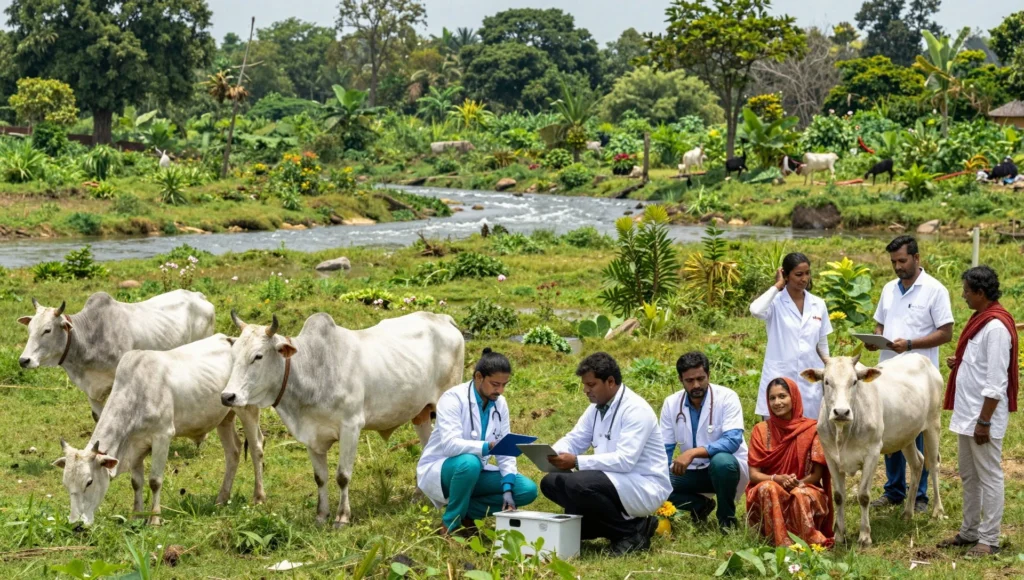
World One Health Day, observed each November, has become far more than a ceremonial fixture on the global health calendar. It marks a deliberate intellectual shift: the recognition that human medicine, veterinary science, and environmental stewardship can no longer operate as separate disciplines with separate budgets and separate chains of command. The COVID-19 pandemic made this abstraction painfully concrete, demonstrating how a pathogen emerging at the interface of wildlife, livestock, and people can destabilise economies and health systems within weeks. What the observance now demands is not another round of declarations but a serious examination of how institutions, funding streams, and scientific training must be reorganised around a single, indivisible picture of health.
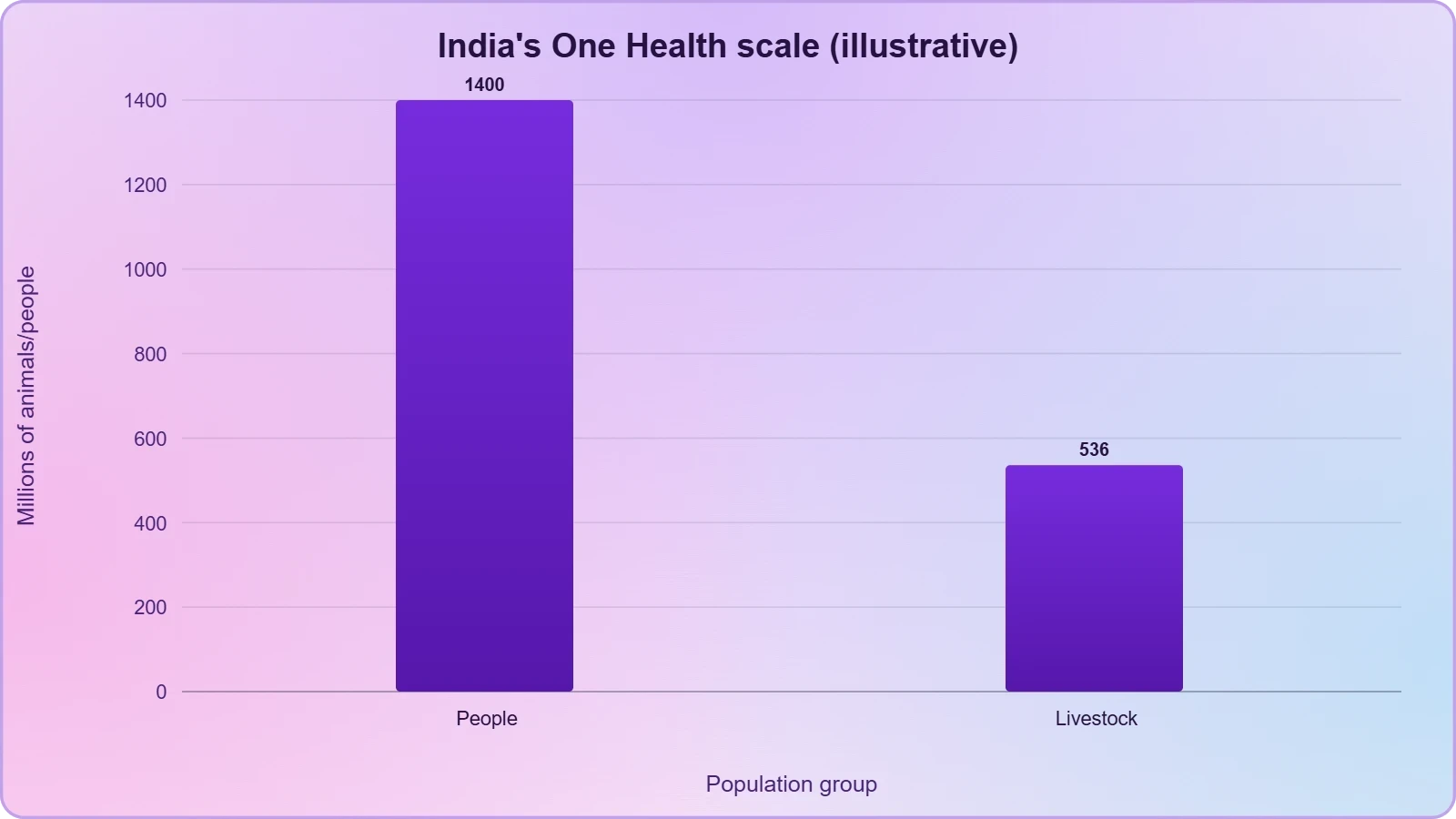
India sits at the centre of this conversation for reasons that are demographic, agricultural, and ecological all at once. With roughly 1.4 billion people, an estimated 536 million livestock animals, and the world's largest milk output, the country hosts one of the densest and most consequential human–animal interfaces on Earth. That density is not merely a statistic; it is a daily operational reality for millions of smallholder farmers, veterinarians, and public health workers. When a cattle virus circulates in one district and a plague scare surfaces in another, the two events belong to the same epidemiological story, even if they are handled by different ministries, reported through different channels, and funded from different budgets.
The intellectual lineage of One Health is older and more distinguished than most contemporary policy documents acknowledge. Emperor Ashoka's second Major Rock Edict, carved in the third century BCE, records the provision of medical care for both people and animals and the planting of healing herbs wherever they were lacking — an early statement of shared therapeutic obligation. Nearly two millennia later, Rudolf Virchow, who coined the term zoonosis, insisted that no dividing line should exist between animal and human medicine. These historical anchors matter because they reframe One Health as a return to an older synthesis rather than a novel bureaucratic invention.
On This Page
The Epidemiological Case for Indivisible Health
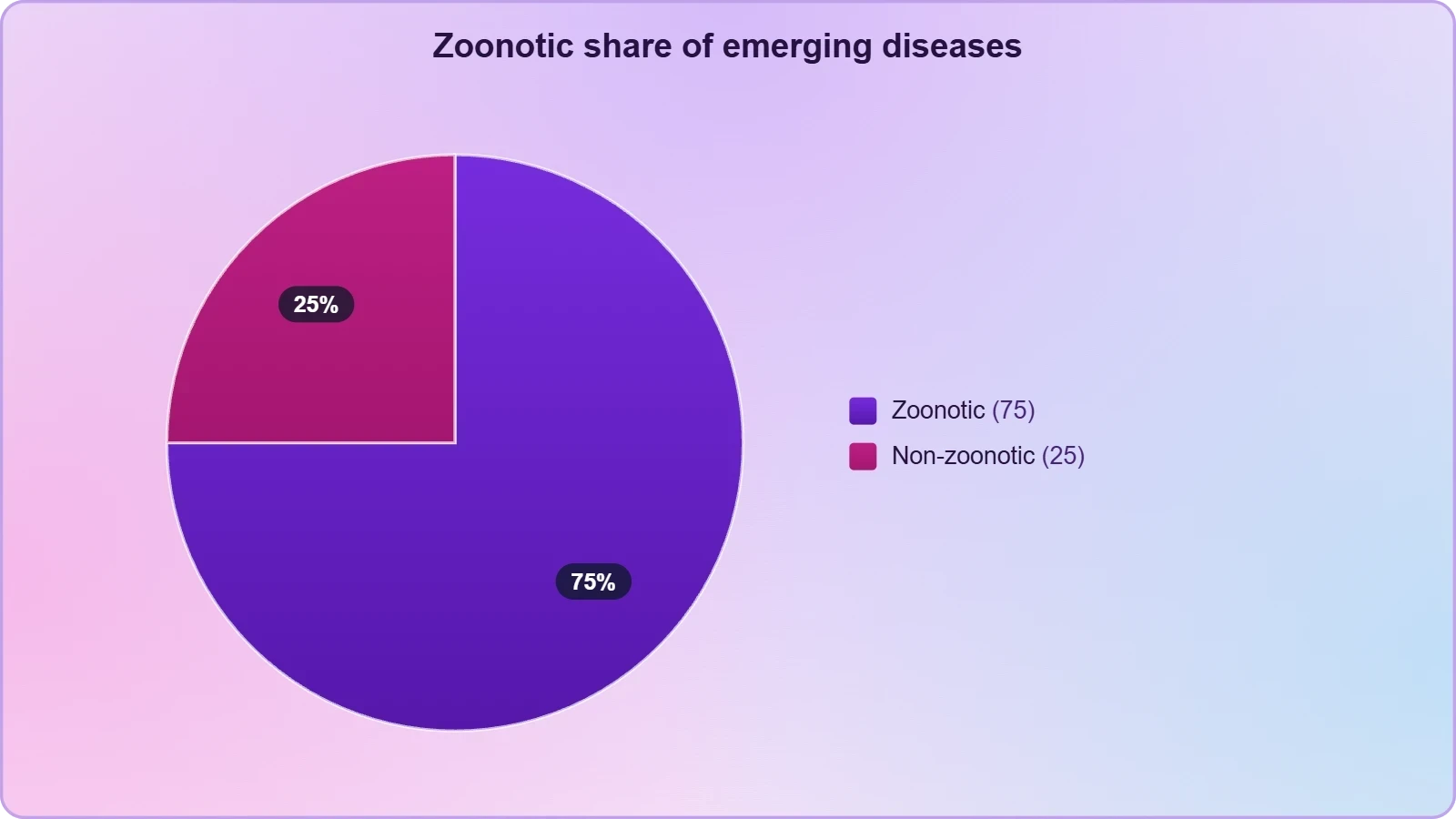
Roughly three-quarters of emerging human infectious diseases are zoonotic in origin, meaning they pass from animal reservoirs into human populations. This figure, drawn from decades of outbreak surveillance, is the empirical backbone of the One Health argument. It explains why influenza strains circulating in poultry farms, coronaviruses harboured in bats, and antimicrobial resistance genes moving through livestock all carry direct consequences for human hospitals. The implication is structural rather than rhetorical: surveillance systems that monitor only human cases will always detect threats after they have already crossed the species barrier, which is precisely the moment when containment becomes most expensive and least reliable.
Zoonotic Spillover and the Cost of Late Detection
Spillover events are governed by contact rates, viral shedding, and receptor compatibility, and each of these factors can be modelled and monitored. When wildlife habitats shrink and livestock production intensifies near human settlements, the probability of cross-species transmission rises in ways that are statistically predictable. Investing in veterinary and wildlife surveillance therefore functions as an early-warning system for human epidemics, not as a separate animal welfare expense. Countries that integrated animal and human disease reporting during recent avian influenza outbreaks detected clusters days earlier than those relying on clinical human diagnoses alone, and those days translate directly into reduced transmission chains and lower hospitalisation burdens.
The economics reinforce the biology. A pathogen contained at the farm gate costs a fraction of one contained in an intensive care unit, and the ratio is not marginal. Estimates from global health economists consistently place prevention spending far below the cost of reactive outbreak response, yet budgetary silos continue to reward emergency expenditure over quiet, unglamorous surveillance. One Health governance is fundamentally an argument about where money should sit in the fiscal cycle, and the answer it proposes is upstream, in the shared interface where animals, environments, and people actually meet.
Antimicrobial Resistance as a Shared Failure
Antimicrobial resistance illustrates the indivisibility principle with unusual clarity. Every antibiotic administered to livestock and every prescription written in a clinic contributes to the same selective pressure on the same microbial populations. Resistance genes do not respect the boundary between agricultural and clinical settings; they travel through water, soil, food chains, and hospital plumbing. A country that regulates human antibiotic use while leaving veterinary use unmonitored has effectively regulated half of a single problem, and the unregulated half will eventually undermine the regulated one.
India's livestock sector makes this particularly consequential. With hundreds of millions of animals and a large smallholder base, veterinary antibiotic stewardship requires extension services, farmer training, and affordable diagnostic alternatives rather than simple prohibition. The One Health framing helps here because it positions the farmer, the veterinarian, and the physician as participants in one stewardship programme rather than as separate constituencies with competing interests. That reframing is administrative as much as scientific, and it is where most implementation failures occur.
India's Scale as a One Health Laboratory
No country illustrates the One Health challenge at greater scale than India. The coexistence of 1.4 billion people with roughly 536 million livestock animals, dense poultry production, expanding peri-urban settlements, and extraordinary biodiversity creates an interface of unmatched complexity. Add the world's largest milk output and a dairy sector dominated by smallholders, and the result is a system where animal health decisions are made daily by millions of individuals rather than by a handful of regulators. Any effective One Health strategy must therefore be designed for decentralised implementation, not merely for national policy documents.
The Dairy Economy and Disease Interdependence
Milk production depends on animal health in the most literal sense, and animal health depends on human behaviour, veterinary access, and environmental conditions. A cattle virus that reduces yields in one belt ripples into household incomes, nutrition, and rural credit. Because the dairy economy is so deeply embedded in rural livelihoods, veterinary surveillance in India is simultaneously an economic policy instrument. Framing animal disease control as agricultural productivity policy rather than as a narrow veterinary concern has proven effective in securing political attention and budget allocation, which is precisely the kind of cross-sector argument One Health requires.
The plague scare referenced in contemporary commentary serves as a useful counterpoint. Plague is a classic zoonosis with a flea vector and rodent reservoir, and its reappearance in any region triggers immediate human public health mobilisation. Yet the underlying drivers — rodent ecology, urban sanitation, and wildlife contact — sit outside the traditional remit of human health agencies. Responding to the human cases without addressing the reservoir ecology guarantees recurrence, which is why integrated vector and reservoir management belongs in the same operational plan as clinical case management.
Institutional Coordination and the Mission Framework
India's One Health Mission represents an attempt to formalise coordination across ministries that have historically operated in parallel. The practical difficulty is not conceptual agreement but operational integration: shared data standards, joint outbreak investigation teams, and unified laboratory networks. Without interoperable reporting systems, a veterinary laboratory and a district hospital can each hold half of the same outbreak picture and neither can see the whole. Building that interoperability is unglamorous infrastructure work, but it is the difference between a mission on paper and a functioning surveillance architecture on the ground.
Workforce training follows the same logic. Veterinarians, physicians, ecologists, and laboratory scientists are trained in separate institutions with separate curricula and separate professional cultures. One Health practice requires at least a shared vocabulary and a shared understanding of case definitions across these groups. Field epidemiology training programmes that mix disciplines have demonstrated measurable improvements in outbreak detection speed, suggesting that the human capital dimension of integration deserves as much investment as the technological one.
Historical Foundations: From Ashoka to Virchow
The One Health concept is frequently presented as a modern corrective to twentieth-century specialisation, but its intellectual roots run considerably deeper. Ashoka's second Major Rock Edict, inscribed in the third century BCE, documents the provision of medical treatment for both human beings and animals and the deliberate planting of medicinal herbs in places where they were absent. This is not incidental philanthropy; it is a governing philosophy in which the welfare of people and animals is treated as a single administrative responsibility, articulated by a state that understood public health as part of statecraft.
The Edict as Early Health Policy
What makes the edict remarkable is its operational character. It does not merely express compassion; it records the establishment of facilities, the distribution of remedies, and the identification of gaps in provision. In contemporary language, this is a needs assessment followed by infrastructure investment, applied simultaneously to human and veterinary medicine. Reading the edict as an early health policy document rather than as a purely moral inscription reveals a governing logic that modern ministries are only now rediscovering under the label of cross-sectoral integration.
The edict also implies a geography of provision, since planting herbs "where they were lacking" requires knowledge of which regions lacked them. That is a surveillance function, however rudimentary, and it suggests that the administrative apparatus of the Mauryan state already understood the difference between uniform policy and targeted intervention. The parallel with modern One Health surveillance, which must identify high-risk interfaces rather than apply identical monitoring everywhere, is striking and not merely coincidental.
Virchow and the Unity of Medicine
Rudolf Virchow, writing in the nineteenth century, coined the term zoonosis and argued forcefully that no dividing line should separate animal and human medicine. His position emerged from both scientific observation and political conviction: Virchow understood disease as a social phenomenon shaped by living conditions, and he saw the separation of veterinary and human practice as an artefact of professional organisation rather than a reflection of biological reality. That insight anticipated by more than a century the institutional fragmentation that One Health now seeks to repair.
Virchow's cellular pathology established that disease processes operate at a level of biological organisation that is indifferent to professional boundaries. A pathogen does not consult a licensing register before infecting a host. The intellectual honesty of his position lies in its refusal to treat administrative convenience as a scientific principle, and that refusal remains the sharpest argument available against siloed health governance today.
Modelling Spillover Risk Quantitatively
One Health arguments gain persuasive force when they move from principle to quantification. Spillover risk can be expressed as a function of contact intensity, pathogen prevalence in the reservoir, and the probability of successful cross-species infection per contact event. Formalising this relationship allows public health planners to compare interventions on a common scale and to identify which lever produces the largest reduction in expected human cases. The mathematics is deliberately simple, but its policy implications are not, because it forces explicit assumptions about where transmission actually occurs.
A Basic Spillover Probability Model
Consider a simplified formulation in which the expected number of human infections per unit time depends on the rate of human–animal contact and the probability that any single contact transmits infection. Writing the contact rate as ##[c]## and the per-contact transmission probability as ##[p]##, the expected number of spillover events is their product. This structure makes clear that interventions reducing contact frequency and interventions reducing per-contact infectivity are mathematically interchangeable in their effect on expected cases, even though they may differ enormously in cost and feasibility.
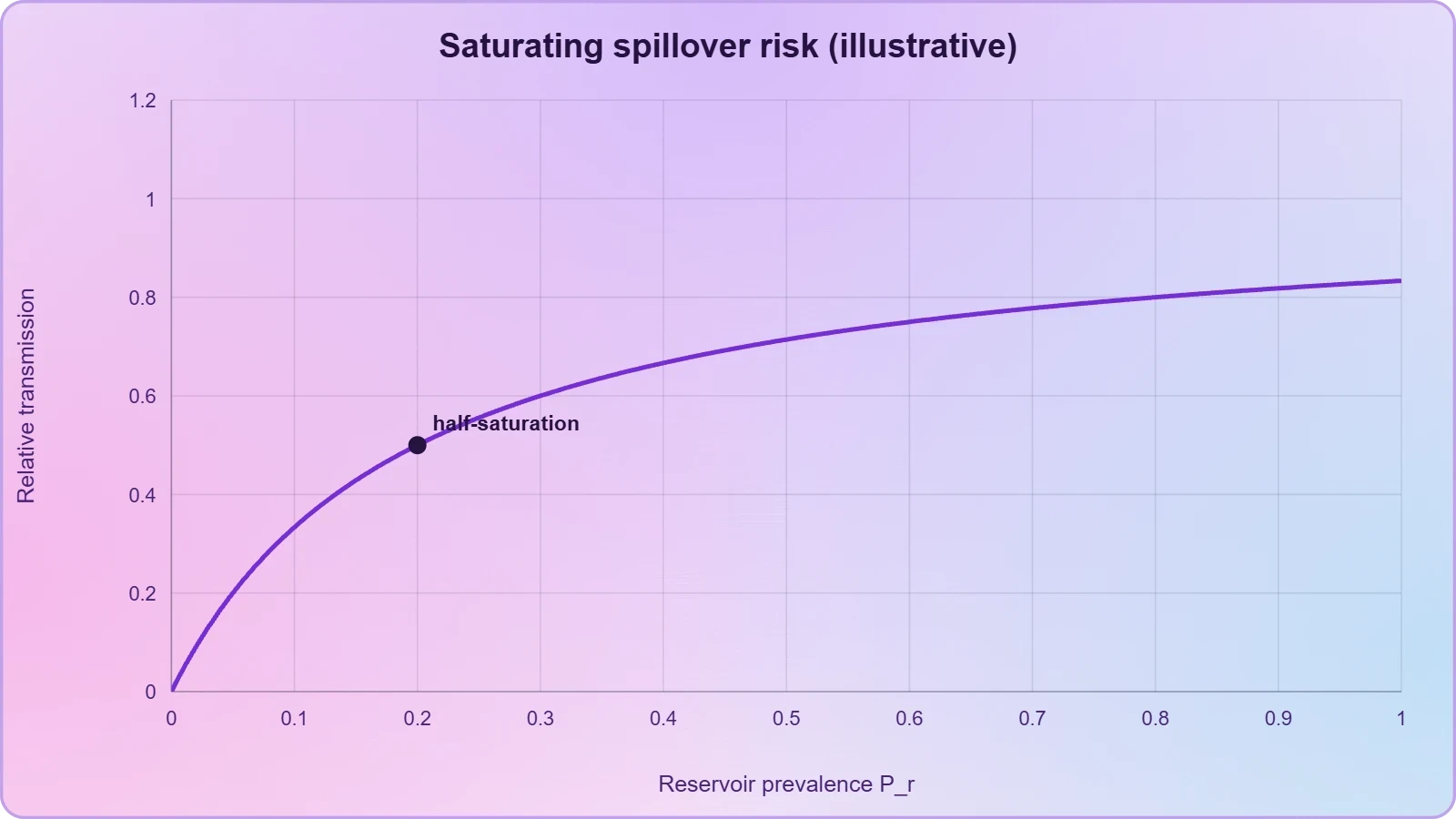
Here ##[P_r]## represents pathogen prevalence in the reservoir population and ##[K]## a half-saturation constant reflecting the nonlinear relationship between prevalence and transmission. The saturating term matters because transmission does not scale indefinitely with prevalence; at high prevalence, behavioural and immunological factors dampen the marginal effect. Ignoring this saturation leads to overestimates of risk in high-prevalence settings and underestimates in low-prevalence ones, which is precisely where early warning systems operate.
Reproduction Numbers Across Species Boundaries
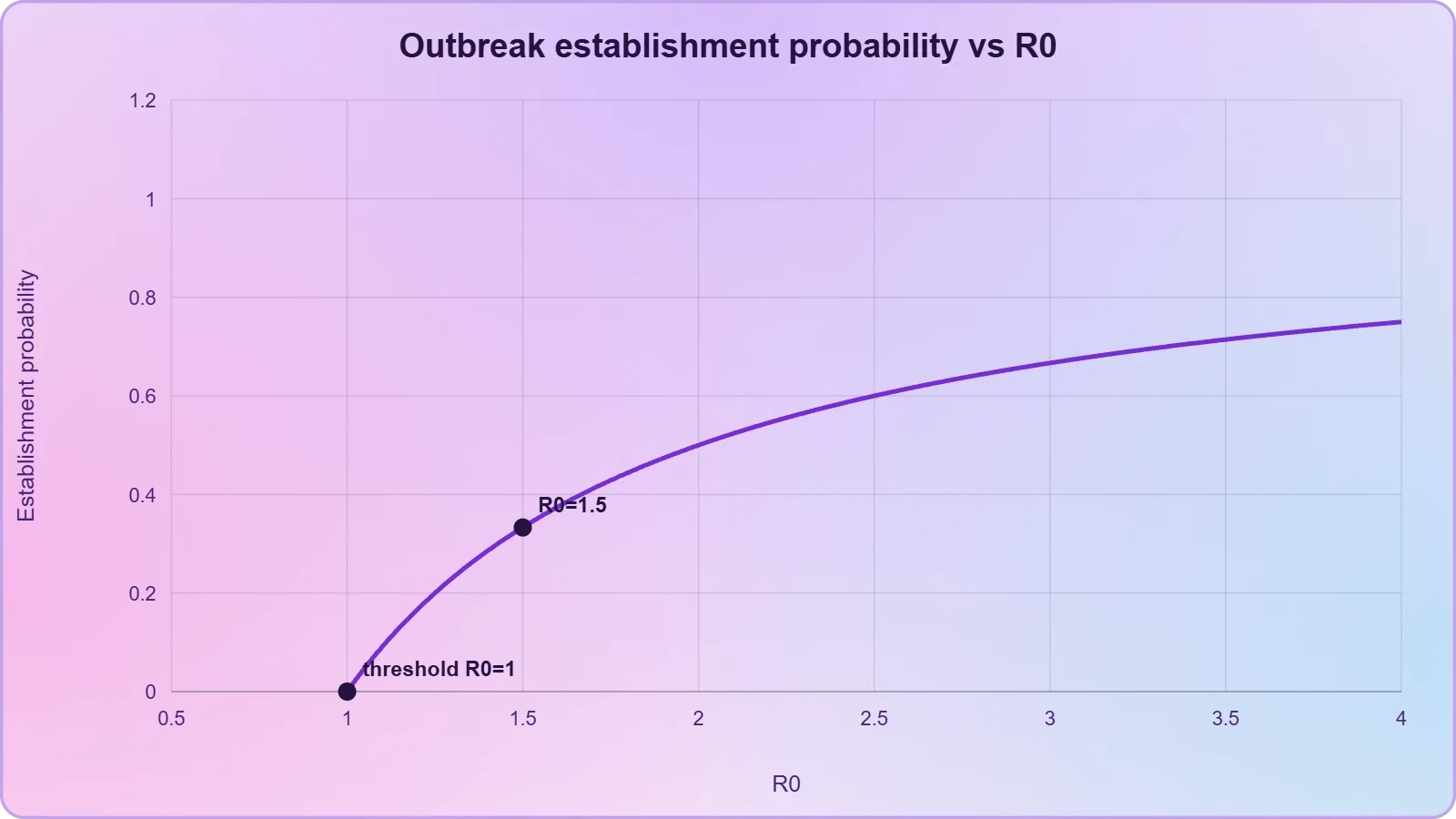
The basic reproduction number provides a second quantitative lens. For a zoonotic pathogen, the human reproduction number ##[R_0]## determines whether sustained human-to-human transmission is possible after an initial spillover. When ##[R_0 < 1]##, chains of transmission die out stochastically, and the probability that a single introduction establishes an outbreak declines rapidly with each subsequent case. This is why early detection at the animal interface is so valuable: it intercepts introductions while the extinction probability remains high, rather than after the pathogen has adapted to efficient human transmission.
The expression above gives the probability that an introduction establishes a sustained outbreak when ##[R_0]## exceeds unity. Its practical reading is stark: a pathogen with ##[R_0 = 1.5]## establishes an outbreak from roughly one in three introductions, whereas one with ##[R_0 = 3]## establishes from about two in three. Reducing ##[R_0]## through early isolation, contact tracing, and animal-side interventions therefore produces disproportionate reductions in establishment probability, which is the quantitative justification for integrated surveillance rather than reactive response.
We Also Published
Governance, Data, and Institutional Integration
The hardest One Health problems are administrative rather than biological. Ministries of health, agriculture, environment, and animal husbandry each hold partial authority over the same epidemiological system, and each has its own reporting cadence, data standards, and accountability structures. Integration therefore requires deliberate institutional design: joint planning bodies with real budgetary authority, shared data platforms with common ontologies, and outbreak protocols that assign clear responsibility at the interface. Without these, coordination remains a matter of goodwill between individuals rather than a property of the system itself.
Interoperable Surveillance Architecture
Data interoperability is the technical expression of the One Health principle. A veterinary laboratory reporting an unusual mortality event in livestock and a hospital reporting a cluster of febrile illness should be able to see each other's signals within hours, not weeks. Achieving this requires standardised case definitions, shared identifiers, and privacy frameworks that permit appropriate data exchange without compromising individual confidentiality. The engineering is tractable; the political economy of data sharing across ministries is considerably harder, because information asymmetry is a source of institutional power.
Practical implementations typically begin with sentinel sites rather than national systems, concentrating resources where the human–animal interface is densest. This staged approach allows protocols to be tested and refined before scaling, and it produces early evidence of value that sustains political commitment. The lesson from successful integration efforts elsewhere is consistent: start with a concrete operational problem, demonstrate measurable improvement, and let the institutional architecture grow around demonstrated success rather than around a comprehensive blueprint.
Workforce and Community Engagement
Frontline implementation ultimately depends on people: veterinary field staff, community health workers, farmers, and local officials who make daily decisions about reporting and response. Their incentives matter enormously. A farmer who fears culling or loss of income has little reason to report disease early, which is why compensation schemes and confidential reporting channels are epidemiological instruments rather than welfare gestures. Designing these incentives correctly is a governance task informed by behavioural science, and it is frequently neglected in favour of laboratory and technological investment.
Community engagement also determines whether surveillance data reflect reality. Passive reporting systems capture only what reaches formal facilities, systematically missing events in remote or underserved areas. Community-based surveillance, in which trained local observers report unusual patterns in animals or people, has repeatedly detected outbreaks earlier than formal systems in resource-constrained settings. Building this capacity requires sustained investment in training and trust, but the returns in detection speed are substantial and well documented.
Prevention as Statecraft: The Strategic Conclusion
The deepest claim in the One Health argument is that life is epidemiologically indivisible. Pathogens move through reservoirs, vectors, livestock, and human populations without regard to the administrative boundaries that separate the agencies responsible for each. If the biology is unified, then the institutions that study and govern health must be unified in their operation, or at minimum sufficiently coordinated that no part of the system is blind to signals arising in another. This is a claim about statecraft as much as about medicine, because it concerns how governments allocate authority, information, and money.
From Reactive Response to Structural Prevention
Prevention is politically difficult because its successes are invisible. An outbreak that never happens generates no headlines, no emergency appropriations, and no ministerial credit. Reactive response, by contrast, is highly visible and richly rewarded. Correcting this asymmetry requires deliberate institutional design: ring-fenced prevention budgets, performance metrics that reward early detection, and public reporting that makes surveillance capacity legible to citizens. Without such mechanisms, the structural bias toward reaction will persist regardless of how compelling the epidemiological evidence becomes.
The historical record supports a measured optimism. Ashoka's edict and Virchow's insistence on unified medicine were both minority positions in their own eras, yet both have proven durable. The contemporary One Health movement inherits their logic and now possesses the surveillance technology, genomic tools, and analytical methods to act on it at scale. What remains is the political and administrative work of aligning institutions with biology, which is slower and less celebrated than scientific discovery but ultimately more consequential for population health.
Implications for India and the Global System
For India, the strategic case is unusually strong. The country's scale means that successful integration would deliver benefits that extend well beyond its borders, and its dairy and livestock economy means that animal health investment is simultaneously rural development policy. Conversely, failure to integrate carries costs that are borne disproportionately by smallholders and by the health systems that absorb zoonotic outbreaks. The One Health Mission therefore deserves evaluation not by the elegance of its framing but by the operational integration it achieves in laboratories, district offices, and farms.
Globally, the lesson is that health security is a shared infrastructure rather than a national possession. Pathogens do not require visas, and surveillance capacity in one region protects populations in every other. Financing integrated surveillance as a global public good, rather than as a series of bilateral favours, is the logical extension of the indivisibility principle. The institutions that govern and study health must learn to work in the same integrated way that the biology they study already does, and the cost of delay is measured in outbreaks.
From our network :
- 98% of Global MBA Programs Now Prefer GRE Over GMAT Focus EditionExplore why 98% of global MBA programs now prefer the GRE over GMAT Focus. Learn about the shorter GRE format, verbal logic importance, and strategic versatility for students.
- AI-Powered 'Precision Diagnostic' Replaces Standard GRE Score ReportsDiscover the new GRE Precision Diagnostic. Learn how AI-powered behavioral analytics and time-to-solve tracking are replacing standard GRE score reports to empower students.
- Mastering DB2 LUW v12 Tables: A Comprehensive Technical GuideComprehensive guide on DB2 LUW v12 tables. Explore CREATE TABLE syntax, BLU Acceleration, range partitioning, data types, and security features for IBM DB2 LUW v12.
- Analyzing Trump Deportation Numbers Insights Into The 2026 Immigration Crackdown
- Trump Political Strategy How Geopolitical Stunts Serve As Media Diversions
- 10 Physics Numerical Problems with Solutions for IIT JEEPrepare for IIT JEE with 10 physics numerical problems, complete with detailed solutions and conceptual explanations. Ideal for mastering kinematics, thermodynamics, electromagnetism, and optics.
- EV 2.0: The Solid-State Battery Breakthrough and Global Factory ExpansionDiscover the impact of the Solid-State Battery Breakthrough on the EV market. Learn about CATL and BYD stock growth, global factory expansion in Europe, and the future of EV 2.0 technology.
- Vite 6/7 'Cold Start' Regression in Massive Module GraphsIn-depth analysis of Vite 6/7 cold start regressions in massive module graphs. Learn about barrel file issues, pre-bundling optimizations, and how to improve Vite dev server performance.
- Mastering DB2 12.1 Instance Design: A Technical Deep Dive into Modern Database ArchitectureComprehensive guide to DB2 12.1 Instance Design. Explore architectural components, HADR setup, buffer pool tuning, and security policies for IBM DB2 12.1. Includes 10 functional SQL and Shell samples.
RESOURCES
- One health - World Health Organization (WHO)who.intOne Health is an integrated, unifying approach that aims to sustainably balance and optimize the health of people, animals and ecosystems.
- About One Health - CDCcdc.govCDC uses the One Health approach by involving experts in human, animal, environmental health, and other relevant disciplines and sectors in monitoring and ...
- One Health: A Holistic Approach to Tackling Global Health Issuespmc.ncbi.nlm.nih.govMar 7, 2024 ... One Health approach is a concept which provides a comprehensive framework to address the interconnectedness of human, animal, and environmental ...
- One Health - World Health Organization (WHO)who.intSep 21, 2017 ... How is WHO advancing One Health approaches? WHO formed a One Health Initiative to integrate work on human, animal and…
- A One-Health Perspective of Antimicrobial Resistance (AMR) - PMCpmc.ncbi.nlm.nih.govOct 13, 2025 ... The One Health approach integrating human, animal, and environmental health ... India implemented the Environment (Protection) Amendment ...
- A one health approach addressing poultry-associated antimicrobial ...sciencedirect.com... human, animal and environmental health by a one-health approach. 2. Antimicrobial use in poultry. The poultry sector employs a variety of antimicrobials to ...
- facilitators of and barriers to effective cross-sector convergence for ...pubmed.ncbi.nlm.nih.govAug 6, 2021 ... Operationalising the "One Health" approach in India ... human, animal and environmental health sectors in India. Methods: A ...
- A One Health approach to polybrominated diphenyl ethers (PBDEs)sciencedirect.com∗One Health approach to PBDEs integrates human, animal, and environmental health. •. ∗Microplastics interactions enhance PBDE bioavailability and toxicity ...
- Surveillance of zoonotic respiratory viral infections in animal farmspubmed.ncbi.nlm.nih.govSep 10, 2026 ... The One Health approach recognizes the interconnectedness of human, animal, and environmental health in addressing the growing threat of ...
- One health approach to chagas disease: a systematic review on the ...frontiersin.orgOnly 11.8% of the studies integrated the three core components of One Health (human, animal, and environmental). Although topics such as surveillance ...
- India accelerates progress on One Health: A critical step in ...blogs.worldbank.orgJul 16, 2025 ... India is advancing pandemic preparedness through the One Health approach, integrating human, animal, and environmental health to tackle ...
- Advances in the One Health Approach: Integrating Human, Animal ...novapublishers.comMay 4, 2026 ... This book is a must-have resource for public health professionals, veterinarians, environmental scientists, healthcare practitioners, ...
- One health: integrating human, animal and environmental healthembl.orgEvents · All EMBL sites. 22nd EMBL Science and Society Conference. One health: integrating human, animal and environmental health. Overview; Speakers; Programme ...
- Safeguarding Animal, Human and Ecosystem Health - World Bankworldbank.orgJun 3, 2021 ... The “One Health” approach proactively engages different disciplines, such as human medicine, veterinary medicine, and environmental health ...