Biological control represents one of the most intellectually satisfying applications of ecological reasoning to practical agriculture. Rather than treating pests as enemies to be chemically annihilated, biocontrol asks a more sophisticated question: which organisms already regulate this pest in nature, and how can we amplify that regulation? The answer draws on predators, parasitoids, and microbial pathogens that have co-evolved with their targets over millions of years. For learners who have followed this course from curd and bread through antibiotics, sewage treatment, and biogas, this lesson marks a shift in emphasis — from harnessing microbes as chemical factories to deploying them as ecological agents.
The stakes are considerable. Chemical pesticides have delivered remarkable yield gains, yet their costs include groundwater contamination, destruction of beneficial insects, pest resistance, and residues in food. Biocontrol offers a targeted alternative, and microbial agents such as Bacillus thuringiensis, Trichoderma species, and baculoviruses sit at the heart of commercial practice. This lesson examines how these agents actually work at the molecular level, surveys the wider cast of predators and parasitoids, weighs genuine advantages against real limitations, and corrects the widespread misconception that "natural" automatically means harmless. It also examines the regulatory frameworks governing genetically modified crops and closes with one of the most celebrated success stories in the field.
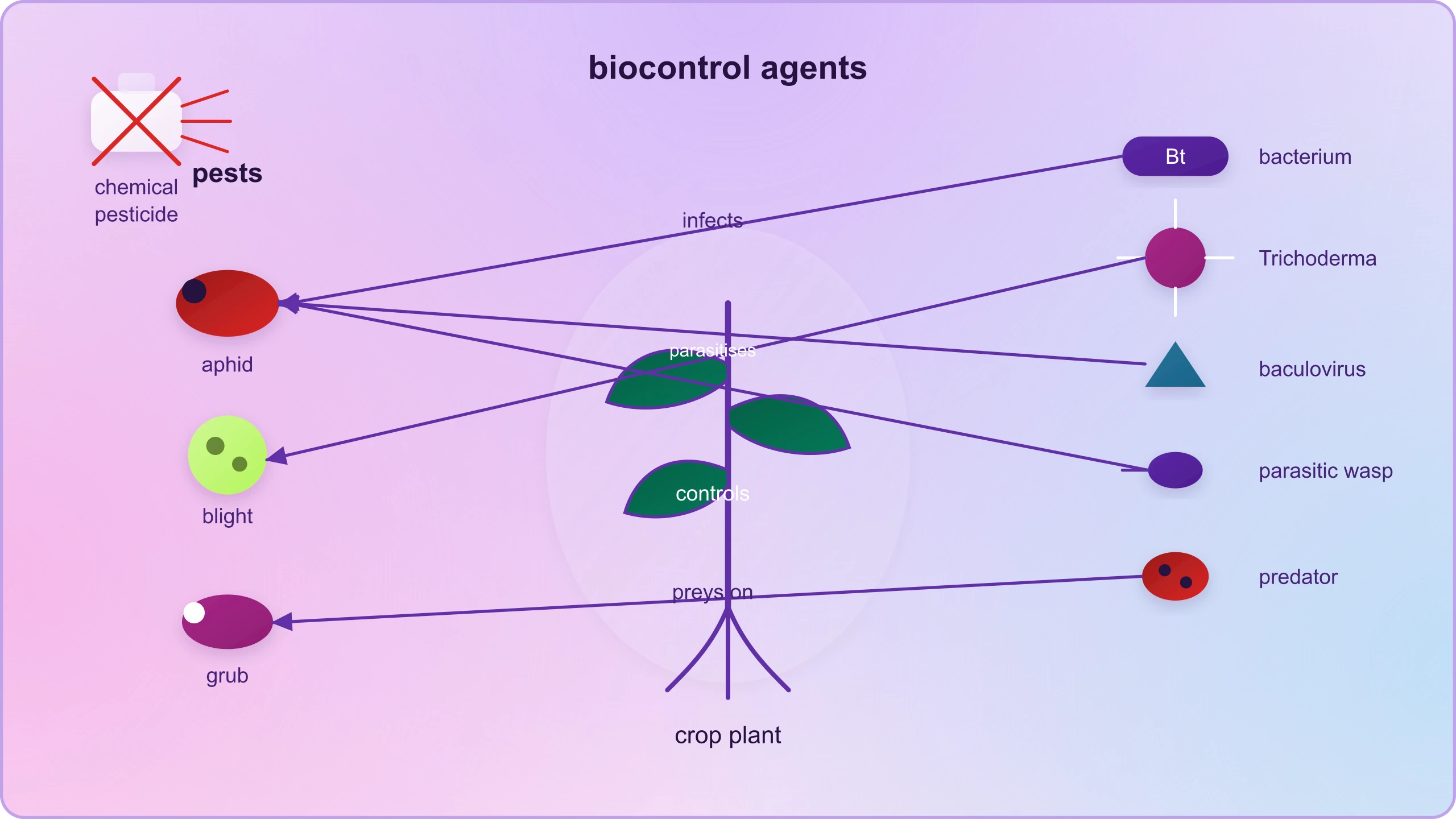
Because the previous lesson explored how methanogens convert plant waste into biogas, the underlying theme of microbial intervention in agriculture is already established. Here the focus narrows to pest and disease suppression, and the material deliberately prepares the ground for the next lesson on biofertilisers. Together, biocontrol and biofertilisation form the twin pillars of the organic farming movement that the reference material describes as a response to the recognised problems of chemical overuse. The lesson is written for senior secondary biology learners and curious adults alike, with worked examples, common mistakes, and advanced points woven throughout.
On This Page
- The Ecological Logic of Biological Control
- Bacillus thuringiensis: The Molecular Machinery of Bt
- Fungal Antagonists and Viral Insecticides
- Weighing Advantages Against Limitations
- Correcting the Safety Assumption and Regulating GM Crops
- Case Study: The Cassava Mealybug Campaign in Africa
- Integrating Biocontrol into Agricultural Practice
- Advanced Perspectives and Examination Preparation
The Ecological Logic of Biological Control
Every agricultural field is an ecosystem, whether or not we choose to see it that way. Aphids, caterpillars, and fungal blights are not invaders from outside nature; they are organisms exploiting a resource that humans have concentrated for them. In undisturbed ecosystems, no species achieves outbreak densities for long, because predators, parasites, and pathogens respond to abundance with numerical and functional responses. Biocontrol is the deliberate engineering of those regulatory relationships into cropland, substituting ecological pressure for chemical pressure. The reference material captures the essence succinctly: microbes can be used to kill harmful pests, a process called biocontrol, and these measures help avoid heavy use of toxic pesticides.
The distinction between chemical and biological control is not merely one of origin but of dynamics. A pesticide acts immediately and uniformly, then dissipates. A biocontrol agent must establish, reproduce, and persist, which means its effectiveness depends on environmental conditions, timing, and the availability of its host. This makes biocontrol slower to act but often self-sustaining. Understanding this difference is essential for anyone evaluating claims about efficacy, because a biocontrol programme judged by the standards of a chemical spray will almost always appear to underperform, even when it delivers superior long-term regulation.
Three Strategies: Classical, Augmentative, and Conservation
Practitioners recognise three broad approaches. Classical biocontrol introduces an exotic natural enemy, usually from the pest's native range, in a one-off release intended to establish permanently. Augmentative biocontrol releases large numbers of an agent repeatedly, treating it almost like a biological pesticide. Conservation biocontrol modifies the environment — planting hedgerows, reducing broad-spectrum sprays, providing overwintering sites — so that naturally occurring enemies thrive. Each strategy demands different expertise and carries different risk profiles, and the choice depends on whether the pest is native or invasive and whether the cropping system can tolerate some pest presence.
The reference material's framing of biocontrol as a way to reduce pesticide dependence aligns most closely with conservation and augmentative approaches in practice. A farmer who sprays Trichoderma formulations onto soil or releases parasitic wasps into a greenhouse is augmenting; a farmer who plants flowering strips to sustain hoverflies is conserving. Classical programmes are typically government-led because they require quarantine facilities, host-range testing, and long-term monitoring. Recognising which strategy is in play helps learners interpret news reports about "wasps released to fight pests" with appropriate context.
Natural Enemies Beyond Microbes
Although this lesson centres on microbial agents, the broader guild of biocontrol organisms deserves attention. Parasitic wasps, often tiny and exquisitely host-specific, lay eggs inside or on pest insects; the developing larvae consume the host from within, a lifestyle called parasitoidism. Predatory mites feed on spider mites and thrips, and are staples of greenhouse integrated pest management. Ladybird beetles and lacewing larvae consume aphids voraciously. These macro-organisms complement microbial agents, and integrated programmes frequently combine both, since a fungal pathogen and a predatory insect attack different life stages and do not compete directly.
The specificity of these relationships is remarkable and commercially valuable. Trichogramma wasps, for instance, parasitise the eggs of lepidopteran pests, killing the pest before it can feed. Because the wasp seeks out eggs of a particular size and chemistry, non-target effects are limited. This specificity is the central argument for biocontrol over broad-spectrum chemicals, which kill pest and beneficial alike. It also explains why biocontrol requires more knowledge: the farmer must identify the pest accurately and understand its life cycle to deploy the right agent at the right moment.
Bacillus thuringiensis: The Molecular Machinery of Bt
Bacillus thuringiensis, universally abbreviated Bt, is a soil bacterium that forms crystalline protein inclusions during sporulation. These crystals, called delta-endotoxins or Cry proteins, are the basis of the world's most widely used microbial insecticide and, in transgenic form, of the most widely planted genetically modified crops. The reference material lists Bt among the principal microbial biocontrol agents alongside Trichoderma and baculoviruses. What makes Bt so instructive is that its mechanism illustrates, with unusual clarity, how a pathogen can be lethal to one group of organisms while remaining innocuous to humans, animals, and most beneficial insects.
The bacterium itself is harmless when ingested by a mammal. The crystal is a protoxin, an inactive precursor, and this is the key to its selectivity. Activation requires specific chemical conditions found in the guts of target insects but absent elsewhere. Understanding this two-step mechanism — ingestion followed by condition-dependent activation — explains both the safety profile and the narrow spectrum of Bt products, and it is a favourite examination topic because it tests whether students understand that toxicity is contextual rather than intrinsic.
From Protoxin to Pore: The Activation Cascade
When a susceptible caterpillar ingests Bt crystals, the alkaline environment of its midgut, typically around pH 9.5 to 10.5, dissolves the crystal. Gut proteases then cleave the protoxin, removing a portion of the molecule to yield an active toxin fragment of roughly 60 kilodaltons. This activated toxin binds to specific receptors on the midgut epithelial cells, inserts into the membrane, and forms pores. Ions leak, the cells swell and lyse, and the gut lining disintegrates. The insect stops feeding within hours and dies within days, often as gut bacteria invade the damaged tissue.
The dependence on alkaline conditions and specific receptors is what protects non-target organisms. Mammalian stomachs are strongly acidic, so crystals dissolve poorly and any surviving protoxin is digested as ordinary protein. Insects lacking the correct midgut receptors are unaffected even if they ingest the crystal. This receptor specificity also explains the evolution of resistance: field populations of some pests have developed mutations in receptor genes that prevent toxin binding, a textbook example of selection acting on a single molecular interaction.
Different Cry proteins target different insect orders. Cry1 proteins act mainly against lepidopterans (caterpillars), Cry3 against coleopterans (beetles), and Cry4 against dipterans (flies and mosquitoes). This diversity allows formulation of products tailored to specific pests, and it underpins the development of transgenic crops expressing particular Cry genes. The specificity is not absolute — some non-target Lepidoptera can be affected by Bt pollen dust — which is why the "always safe" assumption discussed later in this lesson requires qualification.
Bt Crops and the Refugia Strategy
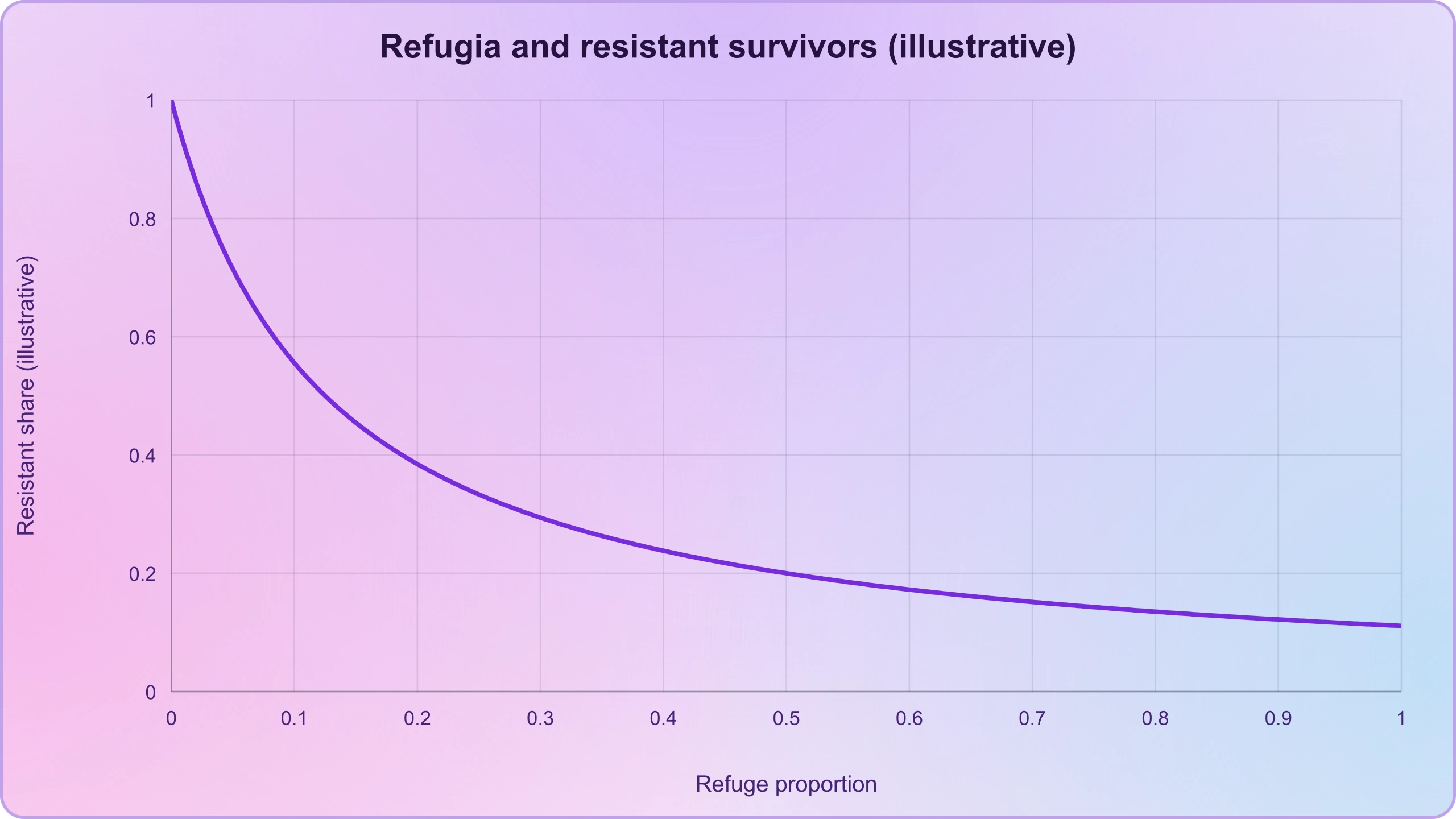
Genetic engineering has moved Bt toxin from a sprayable formulation into the plant itself. Cotton and maize engineered to express Cry proteins kill bollworms and stem borers that feed on them, reducing insecticide applications substantially. The reference material's discussion of biocontrol as a means to avoid heavy pesticide use extends naturally to this technology. However, continuous expression of a single toxin imposes intense selection pressure, and resistance management is mandatory in most jurisdictions. The standard approach is the refuge strategy: farmers plant a proportion of non-Bt crop nearby so that susceptible insects survive and mate with any resistant survivors, diluting resistance alleles.
The mathematics of refugia is instructive. If resistant homozygotes are rare and mating is random, the proportion of resistant offspring among survivors depends on the ratio of refuge to Bt plants. High-dose/refuge strategies aim to make resistance functionally recessive, so that heterozygous offspring of resistant and susceptible parents still die on Bt plants. This is a rare instance where population genetics is written directly into agricultural regulation, and it demonstrates that the durability of a biocontrol technology depends as much on deployment strategy as on the molecule itself.
Fungal Antagonists and Viral Insecticides
Beyond Bt, two further groups of microbial agents complete the core toolkit described in the reference material. Trichoderma species are soil-dwelling fungi that suppress plant pathogens through a combination of parasitism, competition, and induced resistance. Baculoviruses are DNA viruses that infect insects with high specificity, particularly Lepidoptera. Both illustrate different ecological strategies: Trichoderma works largely through soil ecology and plant signalling, while baculoviruses are obligate pathogens that must be ingested by a host to replicate. Together they show that microbial biocontrol is not a single technique but a family of approaches united by the use of living organisms to suppress pests.
These agents also demonstrate the practical trade-offs of biocontrol. Trichoderma formulations are relatively robust and can be applied as soil amendments, whereas baculoviruses are fragile, degraded by ultraviolet light, and slow to kill. Neither matches the convenience of a chemical spray, yet both offer persistence and specificity that chemicals cannot. For learners preparing for the next lesson on biofertilisers, the parallel is worth noting: Trichoderma and mycorrhizal fungi both operate through soil biology, and some organisms serve both pest suppression and nutrient provision.
Trichoderma: Parasitism, Competition, and Induced Resistance
Trichoderma hyphae grow toward the hyphae of pathogenic fungi such as Rhizoctonia and Pythium, coil around them, and secrete cell-wall-degrading enzymes including chitinases and glucanases. This mycoparasitism physically dismantles the pathogen. Simultaneously, Trichoderma competes aggressively for space and nutrients in the root zone, denying pathogens a foothold. Perhaps most interestingly, it triggers induced systemic resistance in the plant, priming defence genes so that the plant responds more vigorously to subsequent attack. This triple mechanism makes Trichoderma a cornerstone of integrated disease management in horticulture.
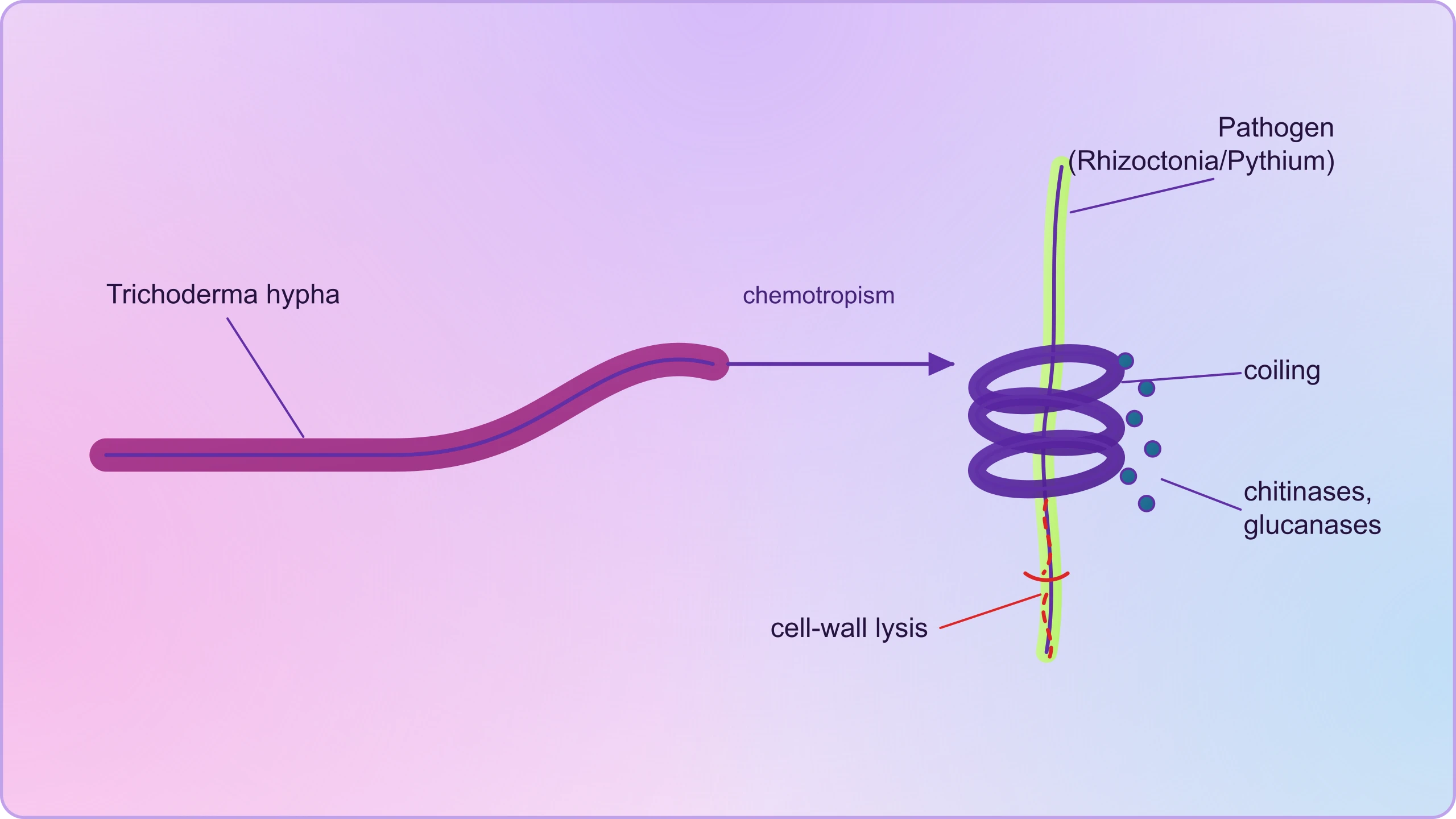
Commercial formulations are applied as seed treatments, soil drenches, or compost inoculants. Because Trichoderma establishes in the rhizosphere, it offers lasting protection rather than a single hit. Farmers report improved root vigour alongside disease suppression, an effect partly attributable to the fungus's ability to solubilise nutrients and stimulate root growth. The reference material notes that mycorrhizal fungi confer resistance to root-borne pathogens; Trichoderma operates in a comparable ecological niche, and the two are sometimes combined, though compatibility must be tested because fungi can antagonise one another.
Baculoviruses: Specificity Through Co-evolution
Baculoviruses, particularly nucleopolyhedroviruses and granuloviruses, infect the larvae of Lepidoptera, Hymenoptera, and Diptera. Their occlusion bodies — protein matrices containing virions — protect the virus outside the host and are ingested when larvae feed on contaminated foliage. In the alkaline midgut, the matrix dissolves, virions are released, and infection spreads through the insect's tissues. Infected larvae climb to elevated positions and hang before dying, a behaviour that aids dispersal of occlusion bodies onto lower foliage. This manipulation of host behaviour is a striking example of parasite adaptation.
The specificity of baculoviruses is their great strength and their commercial limitation. Each virus typically infects a narrow range of species, so a product targeting one pest will not harm pollinators or predators. But this same narrowness means farmers must diagnose the pest precisely, and the slow speed of kill — often several days — makes baculoviruses unsuitable for acute outbreaks. They are best used preventively or within integrated programmes. Their safety record has made them attractive for organic certification, and they are among the few viral pesticides registered for agricultural use.
Weighing Advantages Against Limitations
Biocontrol is often presented in textbooks as an unalloyed good, and the reference material's emphasis on avoiding toxic pesticides is well placed. Yet a professional understanding requires honest accounting of both sides. The advantages are genuine: specificity that protects non-target organisms, reduced environmental contamination, lower risk of acute human toxicity, compatibility with organic certification, and the possibility of self-sustaining control. The limitations are equally real: slower action, sensitivity to environmental conditions, higher cost per unit area in many cases, short shelf life of living formulations, and the demanding knowledge requirements for correct deployment. Neither list should be suppressed in the interest of advocacy.
The economic dimension deserves particular attention. Chemical pesticides benefit from decades of manufacturing scale, stable formulations, and straightforward application. Biocontrol agents are living products with expiry dates, cold-chain requirements, and variable field performance. A farmer weighing the two must consider not only purchase price but labour, timing, and risk of crop loss. Policy instruments — subsidies, extension services, certification premiums — can shift the calculus, which is why biocontrol adoption correlates strongly with regulatory environments that internalise the environmental costs of chemicals.
Where Biocontrol Excels
Biocontrol performs best in protected environments such as greenhouses, where climate can be controlled and beneficial insects cannot disperse. It excels against pests that have developed resistance to multiple chemical classes, since a novel mode of action restores control. It is well suited to perennial systems — orchards, plantations, forests — where established agent populations can persist across seasons. And it is indispensable in organic production, where synthetic pesticides are prohibited. In these contexts, the slower action of biocontrol is offset by durability and the avoidance of resistance, making it the economically rational choice rather than merely an ethical one.
Classical biocontrol against invasive pests is another area of clear success, because an introduced pest often arrives without its co-evolved enemies and therefore reaches outbreak densities. Reuniting it with a specialist natural enemy can produce dramatic and permanent suppression. The cassava mealybug case study later in this lesson is the canonical example. These programmes require rigorous host-range testing before release, but when properly conducted they deliver benefits that persist indefinitely at negligible ongoing cost, a rare instance of public investment yielding permanent returns.
Where Biocontrol Struggles
Open-field annual crops present the hardest case. Agents applied at sowing may not survive until the pest arrives, and repeated applications erode the economic advantage. Environmental conditions — ultraviolet radiation, temperature extremes, low humidity — can inactivate microbial formulations within hours. Baculoviruses are especially vulnerable to sunlight. Storage and transport of living products demand infrastructure that many smallholders lack. And because biocontrol rarely eliminates a pest entirely, farmers accustomed to zero-tolerance thresholds may perceive it as ineffective even when it keeps damage below economic injury levels.
Regulatory and commercial hurdles compound these biological constraints. Registering a living organism requires extensive toxicology and environmental fate data, and the market for a narrow-spectrum product is small, discouraging investment. The result is that many effective agents remain niche products while broad-spectrum chemicals dominate. Understanding these structural factors helps learners appreciate why the shift toward biocontrol described in the reference material is a gradual policy process rather than a simple technological substitution.
Correcting the Safety Assumption and Regulating GM Crops
The most persistent misconception in this field is that biocontrol agents are inherently safe because they are natural. Nature is full of highly effective killers, and introducing an organism to a new environment is an ecological intervention with consequences that must be assessed. The reference material's caution about heavy pesticide use should not be read as a guarantee that biological alternatives are risk-free. Some generalist predators consume beneficial insects as well as pests; some parasitoids attack non-target species; and microbial agents can affect organisms sharing the same receptors or habitats. Rigorous host-range testing exists precisely because these risks are real.
Documented cases illustrate the point. The introduction of the cane toad to Australia, though not a biocontrol agent in the modern sense, remains the classic cautionary tale of biological introduction gone wrong. More relevantly, some predatory snails introduced for weed or pest control have impacted native molluscs, and certain generalist parasitoids have reduced populations of non-target butterflies. The lesson is not that biocontrol is dangerous but that it requires the same evidence-based scrutiny as any other intervention. "Natural" describes origin, not safety, and conflating the two is a category error that has real ecological consequences.
Non-Target Effects and Host-Range Testing
Modern regulation requires that any candidate biocontrol agent undergo host-range testing before release. Researchers expose the agent to a panel of non-target species chosen on phylogenetic and ecological grounds, and observe whether it attacks them. For microbial agents, testing includes beneficial insects, pollinators, and vertebrates. The Bt case shows how this works in practice: Cry proteins are screened against non-target Lepidoptera, and concerns about pollen from Bt maize affecting monarch butterflies prompted extensive research and, in some cases, restrictions on planting near protected habitats.
Post-release monitoring is equally important, because laboratory host-range tests cannot capture every field interaction. Classical programmes typically include long-term surveillance to detect unexpected effects and to verify that the agent is controlling the target without spreading beyond intended areas. This adaptive approach — release, monitor, respond — is a mature model of environmental governance. Learners should recognise that the strength of a biocontrol programme lies not in the absence of risk but in the rigour with which risk is characterised and managed.
Regulating Genetically Modified Crops
Bt crops sit at the intersection of biocontrol and genetic engineering, and their regulation reflects both. In India, the Genetic Engineering Appraisal Committee evaluates GM crops for environmental safety, while the Food Safety and Standards Authority assesses food safety. Approval requires data on gene expression, toxicity, allergenicity, and effects on non-target organisms, along with a resistance management plan. The process is layered because the technology crosses institutional boundaries: it is simultaneously an agricultural input, an environmental intervention, and a food product.
Regulatory frameworks vary internationally, and the variation itself is instructive. The European Union applies a precautionary approach with mandatory labelling, while the United States regulates products by their characteristics rather than their method of production. India permits Bt cotton for commercial cultivation but has not approved Bt brinjal, reflecting both scientific assessment and public consultation. These differences are not merely bureaucratic; they shape which technologies reach farmers and at what cost. For students, the key insight is that regulation is a social process informed by science, not a purely technical calculation.
Case Study: The Cassava Mealybug Campaign in Africa
Few biocontrol programmes illustrate the potential of the approach as vividly as the campaign against the cassava mealybug in sub-Saharan Africa. Cassava is a staple for hundreds of millions of people, valued for its tolerance of poor soils and drought. In the early 1970s, the mealybug Phenacoccus manihoti, accidentally introduced from South America, spread across the continent, causing yield losses of up to eighty per cent in some regions. Chemical control was impractical for resource-poor farmers, and the pest's waxy coating protected it from many contact insecticides. The situation demanded an ecological solution.
Researchers traced the pest to its native range and searched for co-evolved natural enemies. They identified a parasitic wasp, Anagyrus lopezi, which lays its eggs inside the mealybug and whose larvae consume the host from within. After rigorous host-range testing, the wasp was released in Nigeria in 1981 and subsequently across more than twenty countries. It established, spread, and suppressed mealybug populations dramatically. The programme is estimated to have saved cassava harvests worth billions of dollars, with benefit-cost ratios reported in the hundreds, and it remains a benchmark for classical biocontrol.
Why the Campaign Succeeded
Several factors converged. The pest was invasive and had left its specialist enemies behind, so a single well-chosen agent could fill an empty ecological niche. The wasp was highly specific, limiting non-target risk. Cassava is a perennial crop, providing continuous habitat that allowed the agent to persist. And the programme was coordinated internationally, with sustained funding for exploration, testing, mass rearing, and release. The wasp's ability to disperse and establish without repeated releases made the intervention self-sustaining, a defining advantage of classical biocontrol over augmentative approaches.
The campaign also demonstrated the value of long-term monitoring. Researchers tracked mealybug and wasp populations for years after release, documenting both suppression and the wasp's spread. This evidence was essential for securing continued support and for answering sceptics who doubted that a tiny insect could control a devastating pest. The lesson for learners is that successful biocontrol is a scientific programme, not a single act of release, and that its credibility rests on data collected over time.
Lessons for Modern Practice
The cassava story is often cited as proof that biocontrol works, but its lessons are more nuanced. It succeeded because the pest was exotic, the crop was perennial, and the agent was specific and self-dispersing. Transferring the model to a native pest in an annual crop would be inappropriate. The case therefore teaches discrimination: biocontrol is not a universal solution but a set of tools whose suitability depends on the ecological and economic context. Recognising this prevents both over-enthusiasm and undue scepticism.
The programme also highlights the importance of institutional commitment. Exploration in South America, quarantine, host-range testing, and continental release required decades of coordinated effort across countries and institutions. No individual farmer could have achieved this. Classical biocontrol is therefore a public good, typically funded by governments or international agencies, and its success depends on sustained investment rather than market incentives alone. This is a crucial point for policy discussion, and it connects back to the reference material's call for a shift toward biological approaches in agriculture.
Integrating Biocontrol into Agricultural Practice
In practice, biocontrol is rarely used alone. Integrated pest management combines biological, cultural, physical, and — where necessary — chemical tools, deploying each at the stage where it is most effective. A greenhouse might use predatory mites against spider mites, Trichoderma against root pathogens, and targeted chemicals only as a last resort. This layered approach reflects ecological reality: pests are controlled by multiple pressures, and relying on a single agent invites resistance and failure. The reference material's emphasis on reducing pesticide use is best understood within this integrated framework rather than as a call for total replacement.
For learners, the practical takeaway is that successful biocontrol depends on knowledge. Identifying the pest, understanding its life cycle, selecting the right agent, timing the application, and monitoring outcomes are all skills. This is why extension services and farmer training matter as much as the products themselves. A farmer who understands that a parasitoid wasp needs nectar sources, or that a baculovirus degrades in sunlight, will use these tools far more effectively than one who simply substitutes a biological product for a chemical one.
Connecting to Biofertilisers and the Next Lesson
The reference material pairs biocontrol with biofertilisers as twin responses to the problems of chemical agriculture. The connection is more than thematic. Organisms such as Trichoderma suppress disease and improve nutrient availability simultaneously, and mycorrhizal fungi that enhance phosphorus uptake also confer resistance to root pathogens. The next lesson examines biofertilisers in detail — Rhizobium, Azospirillum, Azotobacter, Glomus, and cyanobacteria such as Anabaena and Nostoc — and the ecological principles established here will recur there. Soil biology, in both cases, is the unifying theme.
This continuity matters for examination preparation. Questions often ask students to explain how microbes can decrease the use of chemical fertilisers and pesticides, and a complete answer draws on both lessons: biofertilisers enrich nutrients, biocontrol agents suppress pests, and together they reduce chemical dependence. The reference material's summary makes exactly this point, noting that biocontrol measures help avoid heavy use of toxic pesticides and that there is a need to push for biofertilisers in place of chemical fertilisers. Learners should be able to articulate both halves of this argument with specific examples.
Common Mistakes to Avoid
Several errors recur in student answers. The first is assuming biocontrol is always completely safe; as discussed, non-target effects are possible and regulation exists for good reason. The second is confusing Bt toxin with the bacterium itself — the toxin is a crystal protein, and its activation depends on alkaline gut conditions. The third is treating biocontrol and biofertilisers as interchangeable; they address different problems, pests versus nutrients. The fourth is claiming biocontrol is always cheaper; in many annual cropping systems it is not, and honest comparison is required.
A fifth mistake concerns mechanism. Students sometimes state that Bt toxin kills insects by poisoning them directly, missing the receptor-binding and pore-formation steps that explain specificity. Others describe Trichoderma only as a competitor, neglecting mycoparasitism and induced resistance. Precision in mechanism is what distinguishes a strong answer from a vague one, and it is also what makes the science genuinely interesting. The molecular details are not decoration; they are the reason these agents work and the reason they are safe for the organisms they spare.
Quick Reference: Core Biocontrol Agents
Advanced Perspectives and Examination Preparation
Beyond the syllabus, several advanced themes enrich understanding. RNA interference offers a new frontier: crops engineered to produce double-stranded RNA targeting pest genes can silence essential functions in the insect that ingests them, with exquisite specificity. Phage therapy, though aimed at bacterial pathogens of humans and plants rather than insects, applies the same logic of using biological agents to suppress harmful organisms. And the microbiome of the plant itself — the community of microbes on leaves and roots — is increasingly recognised as a determinant of disease resistance, opening possibilities for engineering protective communities rather than deploying single agents.
These developments share a common principle with classical biocontrol: exploit biological specificity rather than broad toxicity. They also share its challenges: regulation, public acceptance, and the difficulty of maintaining efficacy in variable field conditions. For students, the value of studying biocontrol is not merely to memorise examples but to grasp this principle and its trade-offs. The reference material's summary captures the broader point that microbes play an important role in the welfare of human society, and biocontrol is one of the clearest demonstrations of that role in agriculture.
Worked Example: Calculating Refugia Requirements
Consider a simplified resistance management calculation. Suppose a Bt crop kills all susceptible homozygotes and ninety-nine per cent of heterozygotes, and initial resistance allele frequency is 0.001. With random mating, the frequency of resistant homozygotes among survivors depends on the refuge proportion. If twenty per cent of the field is non-Bt refuge, a large pool of susceptible insects survives to mate with any resistant individuals, keeping the frequency of resistant homozygotes extremely low. Reducing the refuge to five per cent shrinks that pool and accelerates resistance evolution. This is why regulators mandate minimum refuge sizes.
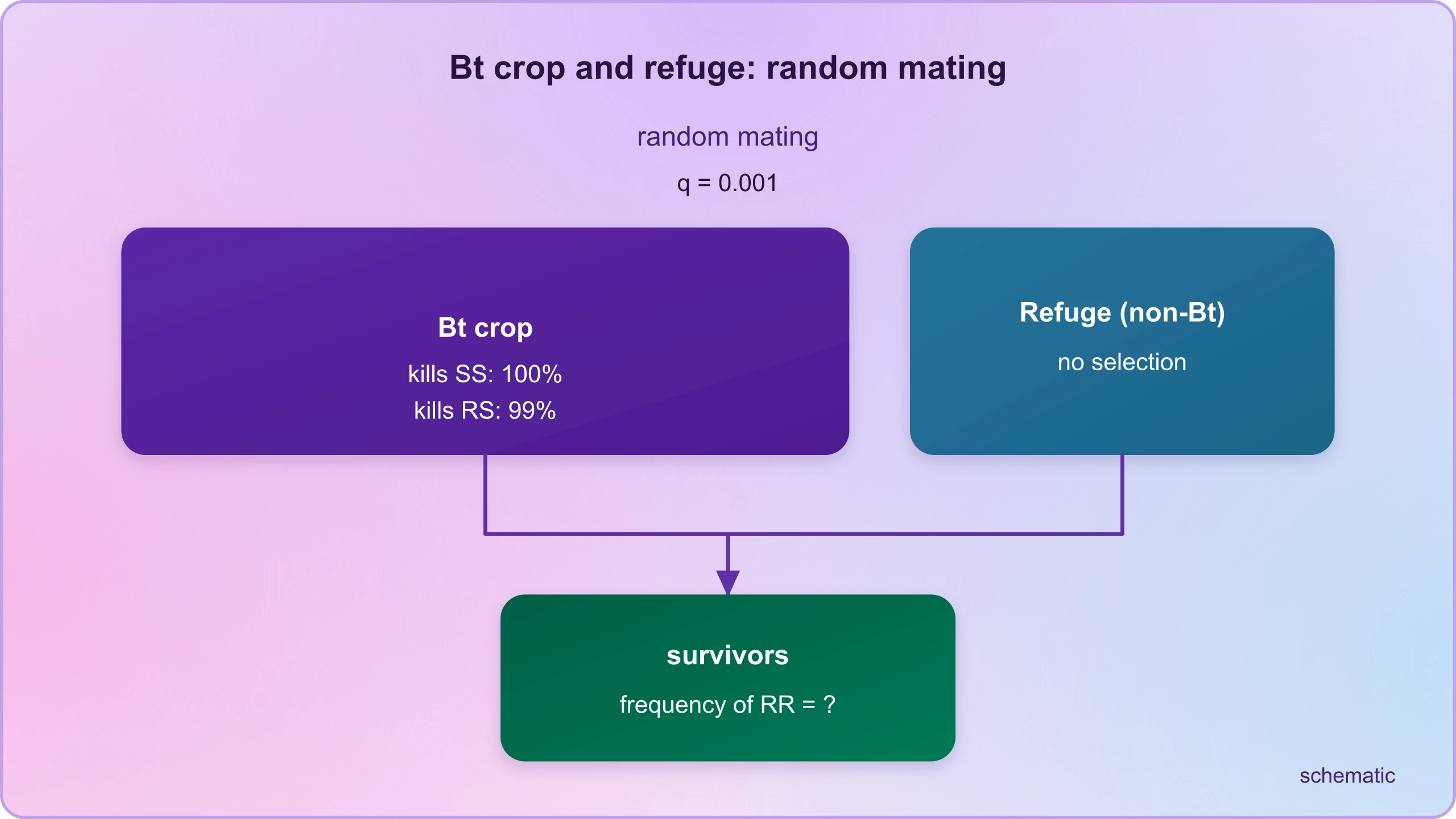
The calculation illustrates a general principle: the durability of a biocontrol technology is a function of deployment, not just of the agent. The same logic applies to repeated applications of a single microbial agent, which can select for resistance just as chemicals do. Rotating agents with different modes of action, maintaining refuges, and integrating cultural controls all slow the evolution of resistance. Students who understand this principle can evaluate agricultural recommendations critically, recognising that a product's label is only part of the story.
Summary and Transition
This lesson has examined biocontrol as the deliberate use of living organisms to suppress pests, tracing its ecological logic, its principal agents, and its practical trade-offs. Bacillus thuringiensis demonstrated how a protoxin activated by alkaline gut conditions achieves specificity through molecular mechanism. Trichoderma showed how a fungus can combine parasitism, competition, and induced resistance. Baculoviruses illustrated the strengths and limits of narrow host range. The cassava mealybug campaign provided a benchmark of classical success, while the discussion of non-target effects and GM regulation corrected the assumption that natural means safe.
The next lesson turns to biofertilisers, examining how bacteria, fungi, and cyanobacteria enrich soil nutrients. The reference material identifies Rhizobium, Azospirillum, Azotobacter, Glomus, Anabaena, and Nostoc as key organisms, and the ecological principles established here — specificity, establishment, environmental dependence — will apply directly. Together, biocontrol and biofertilisation represent the microbial foundation of sustainable agriculture, and understanding both is essential for anyone engaging seriously with the future of food production.
Also Read
- No links available.
From our network :
- Where to Put Your Wireless Router for Better CoverageA practical, physics-grounded guide to router placement: why the centre of the home beats the corner, how walls and metal sap signal, and how to run a simple survey that proves the improvement.
- EV 2.0: The Solid-State Battery Breakthrough and Global Factory ExpansionDiscover the impact of the Solid-State Battery Breakthrough on the EV market. Learn about CATL and BYD stock growth, global factory expansion in Europe, and the future of EV 2.0 technology.
- Trump Political Strategy How Geopolitical Stunts Serve As Media Diversions
- AI-Powered 'Precision Diagnostic' Replaces Standard GRE Score ReportsDiscover the new GRE Precision Diagnostic. Learn how AI-powered behavioral analytics and time-to-solve tracking are replacing standard GRE score reports to empower students.
- Analyzing Trump Deportation Numbers Insights Into The 2026 Immigration Crackdown
- How to Print Cheaply: Cutting the Cost per PageA practical, measured guide to lowering what each printed page costs — duplex and draft modes, third-party ink, yield mathematics, and knowing when a new printer beats refills.
- Do You Need a New Router or Is Your Internet Plan the Problem?A practical comparison of the signs that point to router limits versus signs your broadband speed or provider is the bottleneck, so you can decide what to replace before spending money.
- 10 Physics Numerical Problems with Solutions for IIT JEEPrepare for IIT JEE with 10 physics numerical problems, complete with detailed solutions and conceptual explanations. Ideal for mastering kinematics, thermodynamics, electromagnetism, and optics.
- 98% of Global MBA Programs Now Prefer GRE Over GMAT Focus EditionExplore why 98% of global MBA programs now prefer the GRE over GMAT Focus. Learn about the shorter GRE format, verbal logic importance, and strategic versatility for students.
RESOURCES
- Resources will be updated soon.