Waste is not a destination; it is a chemical state awaiting a microbial decision. Every kilogram of discarded organic matter, every litre of municipal sewage, and every hectare of hydrocarbon-contaminated soil represents stored energy and stored elements that bacteria, archaea, and fungi are uniquely equipped to redistribute. Lesson 11 of this course follows the thread from biofertilisers into the engineered ecosystems where microbes perform their most economically consequential work: converting refuse into compost, pollutants into harmless compounds, and effluent into electricity and fuel. The lesson sits deliberately between soil enrichment and the closing synthesis, because waste management is where the microbial skills already studied — nitrogen fixation, decomposition, antagonism — are redeployed at industrial scale.
The material ahead treats four connected domains. Composting and sewage treatment show microbes operating in managed solid and liquid waste streams; bioremediation and phytoremediation show them repairing contaminated land and water; anaerobic digestion and microbial fuel cells show them generating energy from what society throws away; and the sustainability frameworks and emerging engineered strains show how these processes align with global development targets. Each domain rests on the same thermodynamic logic: microorganisms extract electrons from reduced compounds and deposit them somewhere useful, whether that destination is oxygen, nitrate, an electrode, or a methane molecule. Understanding that shared logic turns a list of applications into a coherent system.
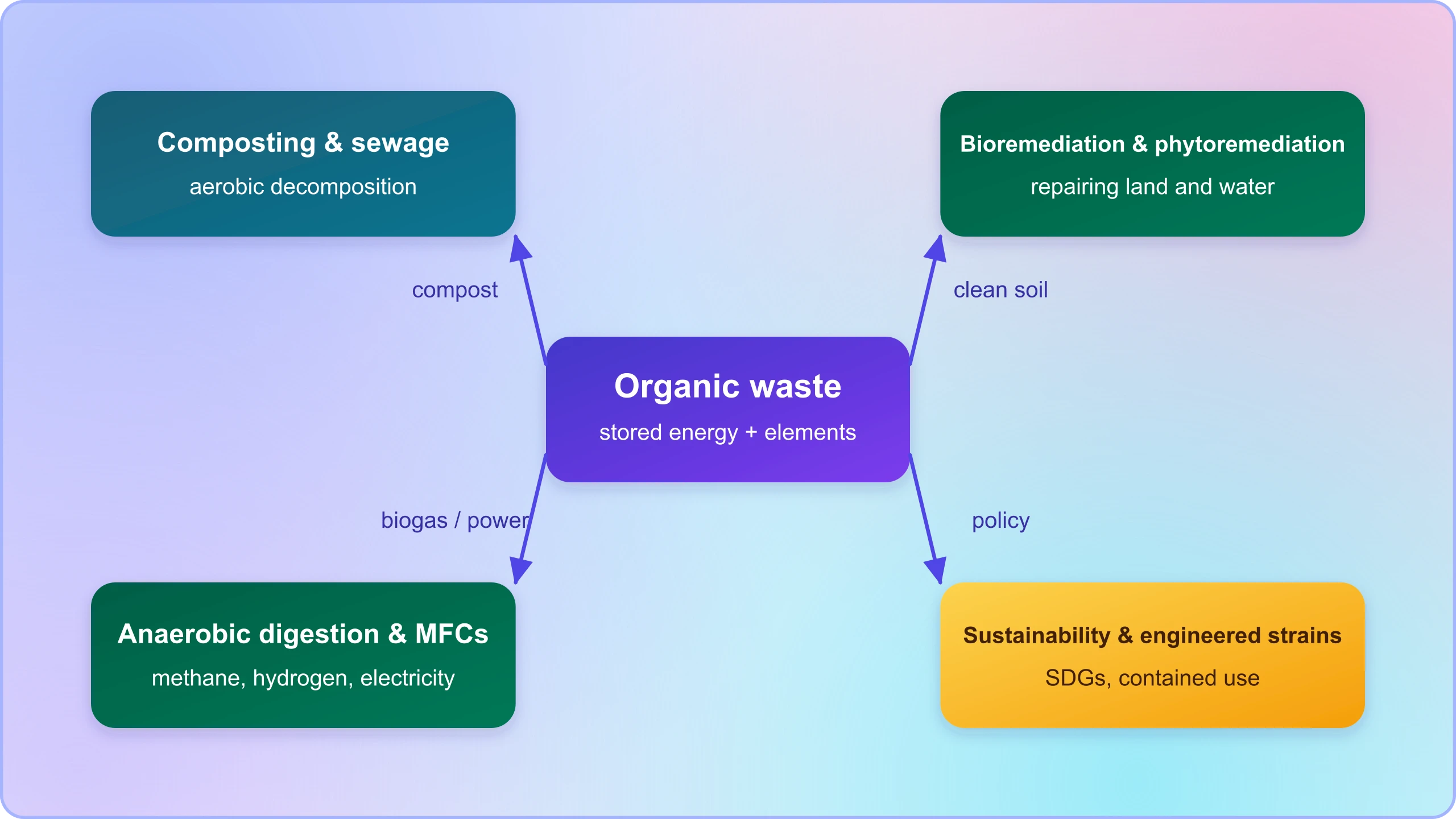
Learners should arrive with the vocabulary of the preceding lesson intact — biofertilisers, mycorrhizae, and the distinction between free-living and symbiotic nitrogen fixers — and should leave able to explain why a compost heap is not simply a rotting pile, why the Exxon Valdez cleanup depended on indigenous bacteria rather than imported ones, and why a microbial fuel cell is a genuine energy technology rather than a laboratory curiosity. The lesson also corrects a persistent misconception about composting and introduces the regulatory and ethical questions raised by releasing engineered organisms into open environments.
On This Page
Composting: Managed Aerobic Decomposition
Composting is the controlled, thermophilic oxidation of organic waste by a succession of microbial communities, and its success depends on maintaining conditions that favour aerobic decomposers over anaerobic ones. The process unfolds in distinct phases: a mesophilic phase where bacteria and fungi begin breaking down soluble sugars and starches, a thermophilic phase where temperatures climb to between 55 °C and 65 °C and thermophilic actinomycetes and Bacillus species dominate, a cooling phase as readily degradable material is exhausted, and a maturation phase where slower-growing fungi and actinobacteria convert remaining lignin and cellulose into stable humus. Each phase selects a different community, and the pile's temperature curve is effectively a readout of microbial succession.
The single most common error in this subject is the assumption that composting is always an anaerobic process. In fact, well-managed composting is deliberately aerobic, and the turning of a heap exists precisely to restore oxygen to the interior. Anaerobic decomposition produces methane, hydrogen sulphide, and organic acids that lower pH and stall the process, which is why a sealed, waterlogged pile smells foul and decomposes slowly. Anaerobic digestion is a separate, engineered process treated later in this lesson; conflating the two obscures the different microbial pathways and the different products each yields.
The Carbon-to-Nitrogen Ratio and Aeration
Microbial growth in a compost heap is governed by the availability of carbon as an energy source and nitrogen as a building block for protein. The optimal initial carbon-to-nitrogen mass ratio lies near 30:1, a figure derived from the roughly 30:1 ratio found in microbial biomass itself. A heap dominated by dry leaves or straw (high carbon) decomposes slowly because nitrogen limits protein synthesis, while a heap dominated by grass clippings or food waste (low carbon) releases ammonia and loses nitrogen to the atmosphere. Blending "browns" and "greens" is therefore a stoichiometric exercise, not a matter of taste.
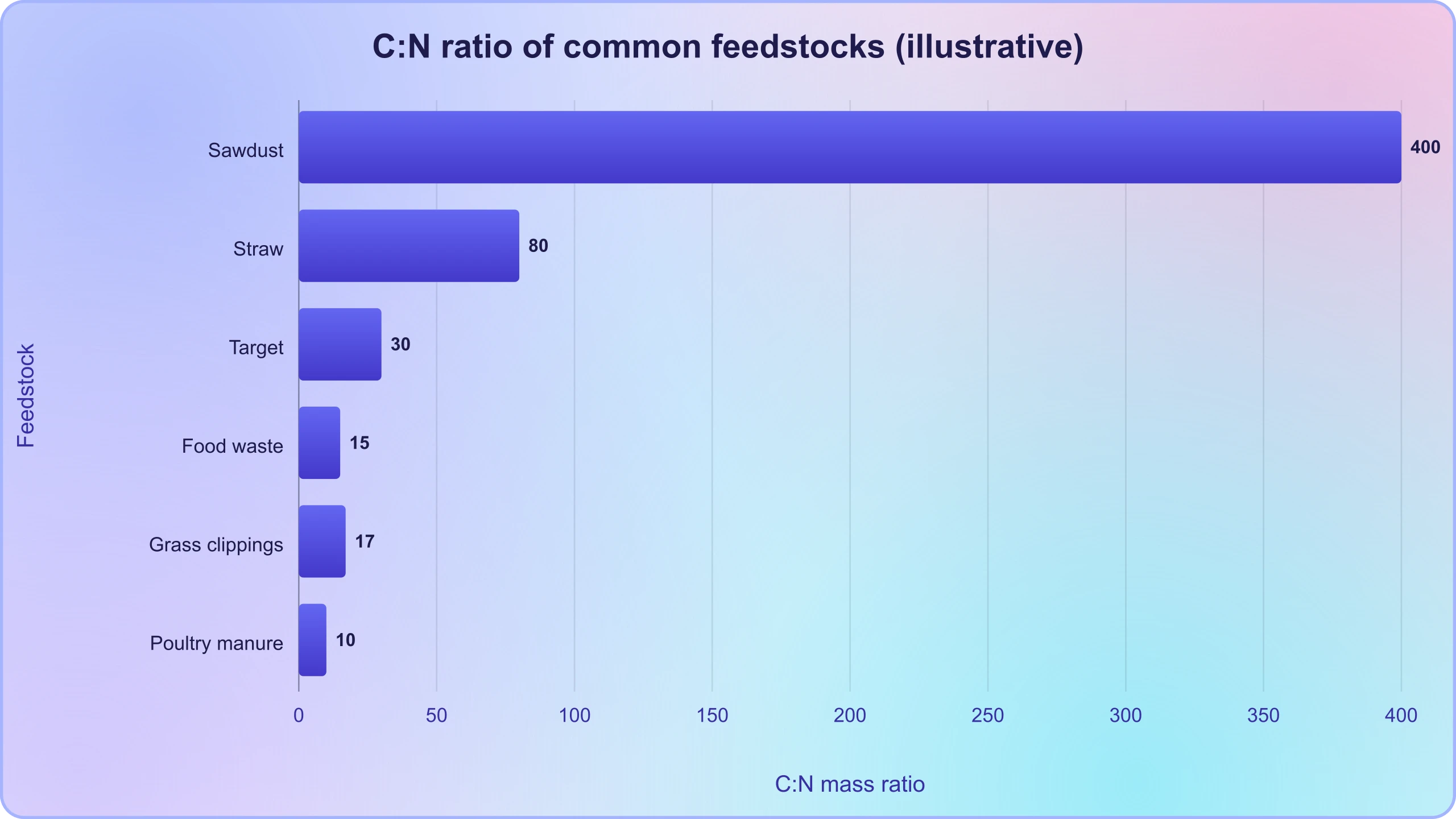
Aeration is the second controlling variable, and it interacts with moisture because water fills pore spaces and excludes air. The standard guidance is to maintain moisture at roughly 50–60 % by mass, the consistency of a wrung-out sponge, and to turn the heap when the interior temperature begins to fall. Turning also homogenises the substrate and exposes fresh surfaces to colonisation. Where turning is impractical, forced aeration or static piles with perforated pipes achieve the same oxygen supply, and the choice between these methods determines the capital cost and labour profile of a composting facility.
Compost Quality and Pathogen Inactivation
The thermophilic phase is not merely a by-product of rapid decomposition; it is a sanitation mechanism. Sustained temperatures above 55 °C for several days inactivate most enteric pathogens, including Salmonella, Escherichia coli O157:H7, and helminth ova, which is why compost standards specify temperature-time profiles rather than simply requiring that material be "hot." A pile that never reaches thermophilic temperatures may still decompose, but it cannot be certified as pathogen-free, and applying such compost to edible crops carries a genuine public health risk.
Mature compost is assessed by respiration rate, carbon-to-nitrogen ratio, and phytotoxicity tests rather than by appearance alone. Immature compost continues to consume oxygen in soil, can immobilise nitrogen as microbes scavenge it from the rhizosphere, and may contain organic acids that inhibit germination. The stability of compost, in other words, is a microbial property measured by how much metabolic activity remains. This is why commercial composters use the Solvita respiration test or the Dewar self-heating test as routine quality controls before releasing product to market.
Sewage Treatment as Applied Microbial Ecology
Municipal wastewater treatment is the largest engineered microbial process on Earth by volume, and its stages map directly onto microbial metabolisms. Primary treatment is physical, removing grit and settleable solids; secondary treatment is biological, where activated sludge or trickling filters expose dissolved organic matter to dense microbial communities; and tertiary treatment polishes the effluent by removing nutrients, pathogens, or specific contaminants. The biological oxygen demand (BOD) of sewage, typically 200–300 mg/L in raw municipal influent, falls to below 30 mg/L after secondary treatment, and that reduction is a direct measure of microbial oxidation.
The activated sludge process is the workhorse of secondary treatment. Sewage is aerated in a tank where a flocculent microbial community — dominated by zoogloeal bacteria such as Zoogloea ramigera, along with protozoa and rotifers — adsorbs and oxidises organic matter. The mixture then passes to a settling tank where the floc settles as sludge, part of which is returned to the aeration tank to maintain the microbial population and part wasted. The returned sludge is the "seed" that keeps the process stable, and the ratio of return sludge to influent is a key operational parameter.
Nutrient Removal and Eutrophication Control
Conventional secondary treatment removes carbon but leaves nitrogen and phosphorus largely intact, and discharging these nutrients causes eutrophication in receiving waters. Biological nutrient removal exploits the fact that different microbial groups thrive under alternating redox conditions. Nitrification, carried out by Nitrosomonas and Nitrobacter, oxidises ammonia to nitrate under aerobic conditions; denitrification, performed by facultative anaerobes such as Pseudomonas and Paracoccus, reduces nitrate to nitrogen gas under anoxic conditions. Alternating aerobic and anoxic zones in a single reactor therefore removes nitrogen as gas.
Phosphorus removal relies on enhanced biological phosphorus removal (EBPR), in which polyphosphate-accumulating organisms (PAOs) take up phosphate beyond their metabolic needs when cycled between anaerobic and aerobic conditions. The anaerobic zone selects for PAOs that store volatile fatty acids as polyhydroxyalkanoates, and the subsequent aerobic zone forces them to accumulate polyphosphate, which is removed with the waste sludge. This is a striking example of ecological selection engineering a metabolic outcome, and it is far cheaper than chemical precipitation with ferric salts.
Anaerobic Digestion of Sludge
The sludge produced by primary and secondary treatment is itself a resource, and anaerobic digestion converts it into biogas while stabilising the solids. Digestion proceeds in four stages: hydrolysis of complex polymers, acidogenesis producing volatile fatty acids, acetogenesis producing acetate and hydrogen, and methanogenesis where methanogenic archaea convert acetate and hydrogen into methane and carbon dioxide. The methanogens are strictly anaerobic and slow-growing, which is why digester design emphasises retention time and temperature stability over throughput.
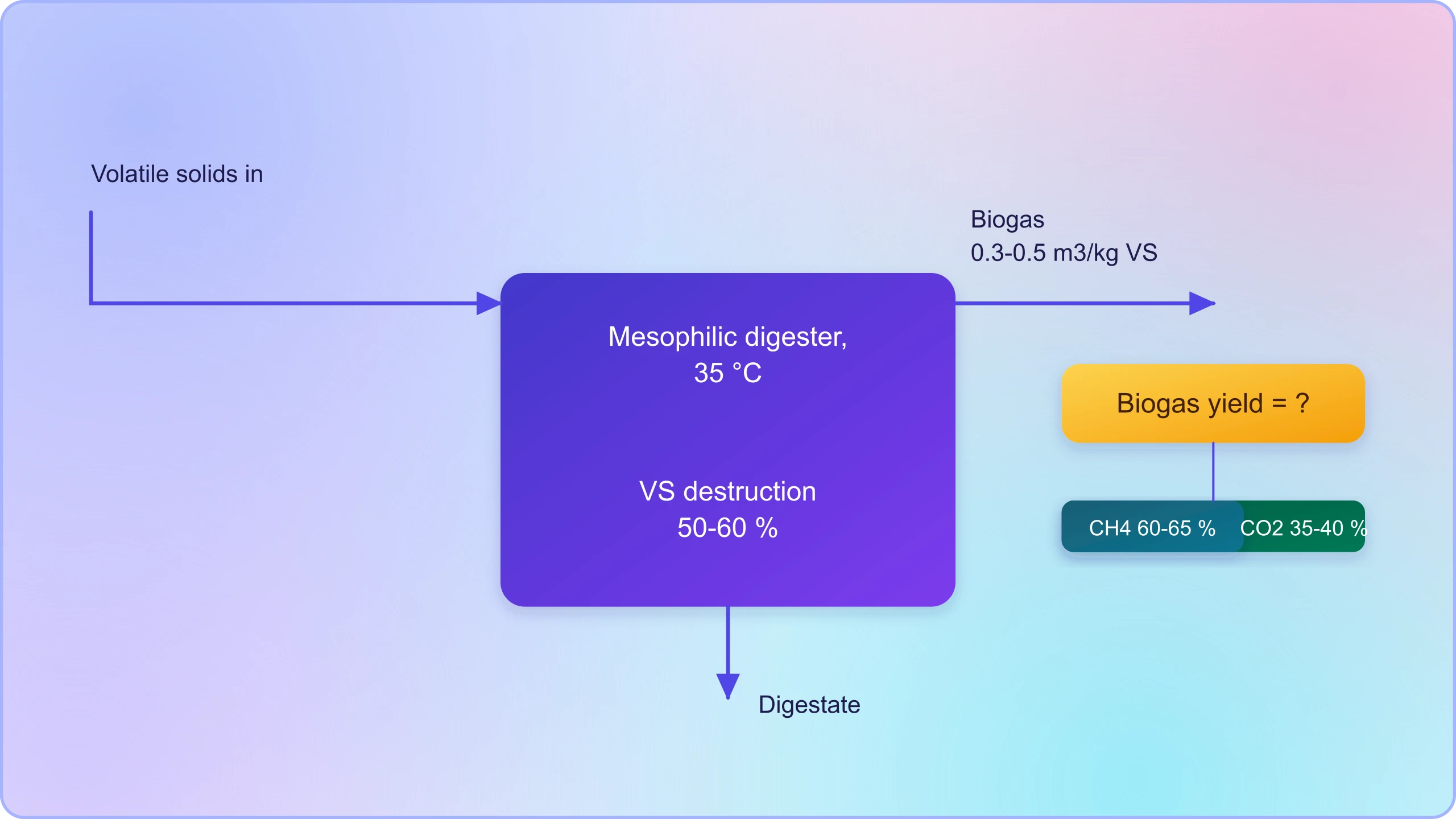
Biogas from sludge typically contains 60–65 % methane and 35–40 % carbon dioxide, with traces of hydrogen sulphide that must be scrubbed before use in engines or boilers. A well-run mesophilic digester at 35 °C can achieve 50–60 % volatile solids destruction and produce roughly 0.3–0.5 cubic metres of biogas per kilogram of volatile solids added. The digestate remaining is a stabilised, nutrient-rich material suitable for land application, closing the loop between waste treatment and the biofertiliser concepts studied in the previous lesson.
Bioremediation: Microbes as Environmental Repair Crews
Bioremediation is the use of microorganisms to degrade, transform, or immobilise environmental contaminants, and it is the clearest demonstration that microbial metabolism can be directed at problems industry created. The approach divides into natural attenuation, where indigenous microbes degrade contaminants unaided; biostimulation, where limiting nutrients such as nitrogen and phosphorus are added to accelerate growth; and bioaugmentation, where specific strains are introduced. The choice depends on whether the limiting factor is the microbial population itself or the nutrients and electron acceptors it needs.
The Exxon Valdez oil spill of 1989 remains the canonical case study. When the tanker ran aground in Prince William Sound, Alaska, it released roughly 41 million litres of crude oil into a cold, nutrient-poor marine environment. Initial mechanical recovery removed only a fraction of the oil, and the cold water slowed natural microbial degradation. Researchers observed that indigenous hydrocarbon-degrading bacteria were present but limited by nitrogen and phosphorus availability, which set the stage for the largest biostimulation experiment ever conducted on a shoreline.
The Exxon Valdez Response and Its Lessons
The bioremediation response involved applying oleophilic fertiliser formulations containing nitrogen and phosphorus to selected shorelines, stimulating the growth of naturally occurring hydrocarbon degraders such as Alcanivorax, Rhodococcus, and Pseudomonas species. Monitoring showed that fertilised plots degraded oil significantly faster than untreated reference plots, and the approach was judged effective for fine-grained shorelines where mechanical methods would have caused more damage than the oil itself. The lesson was not that bacteria can clean any spill, but that the limiting nutrient, not the microbial population, often controls the rate.
The Exxon Valdez case also established the principle that bioremediation must be matched to the physical environment. On exposed rocky shores, wave action dispersed the oil and natural attenuation sufficed; on sheltered gravel beaches, oil penetrated deeply and persisted, and fertiliser application was most beneficial there. Modern spill response therefore begins with a site assessment that maps contaminant chemistry, indigenous microbial communities, and hydrodynamic conditions before any intervention is chosen. This diagnostic discipline distinguishes bioremediation from wishful thinking.
Phytoremediation and Its Microbial Partners
Phytoremediation uses plants to extract, stabilise, or degrade contaminants, and its effectiveness depends heavily on the microbial community in the rhizosphere. Plants release root exudates — sugars, organic acids, and amino acids — that fuel microbial growth, and in return rhizosphere bacteria can enhance contaminant bioavailability, degrade organic pollutants, and promote plant growth under stress. The relationship is genuinely symbiotic, and phytoremediation is best understood as a plant-microbe consortium technology rather than a purely botanical one.
Different phytoremediation strategies target different contaminants. Phytoextraction uses hyperaccumulators such as Thlaspi caerulescens or sunflower to take up heavy metals into harvestable biomass; rhizofiltration uses plant roots to absorb metals from water; and phytodegradation relies on plant enzymes and associated microbes to break down organic compounds. The harvested biomass must then be processed, which is why phytoremediation is often paired with bioenergy production — a connection that leads naturally to the next section on microbial energy technologies.
Microbial Fuel Cells: Electricity from Wastewater
A microbial fuel cell (MFC) converts chemical energy stored in organic matter directly into electrical energy using microorganisms as catalysts. The device consists of an anode compartment where bacteria oxidise organic substrates and transfer electrons to an electrode, a cathode compartment where an electron acceptor such as oxygen is reduced, and a proton-exchange membrane separating the two. The fundamental reaction is the microbial oxidation of acetate or glucose at the anode, coupled to oxygen reduction at the cathode, with electrons flowing through an external circuit and doing useful work.
The critical biological step is extracellular electron transfer, the mechanism by which bacteria deposit electrons onto a solid electrode they cannot internalise. Two strategies dominate: direct transfer through outer-membrane cytochromes or conductive pili, as in Geobacter sulfurreducens and Shewanella oneidensis, and indirect transfer via soluble electron shuttles such as flavins or phenazines. Geobacter is the model organism for direct transfer and is prized for its ability to form thick, conductive biofilms on anode surfaces, which is essential for high current density.
Principles and Performance Limits
The theoretical maximum power output of an MFC is constrained by the thermodynamics of the anode and cathode half-reactions and by the internal resistance of the cell. For acetate oxidation coupled to oxygen reduction, the overall cell potential is approximately 1.1 V under standard conditions, but operating voltages are typically 0.3–0.6 V because of activation losses at the electrodes, ohmic losses in the electrolyte, and mass-transfer limitations. Power density, usually expressed in milliwatts per square metre of anode area, is the standard performance metric, and laboratory devices have reached the order of 1–2 W/m².
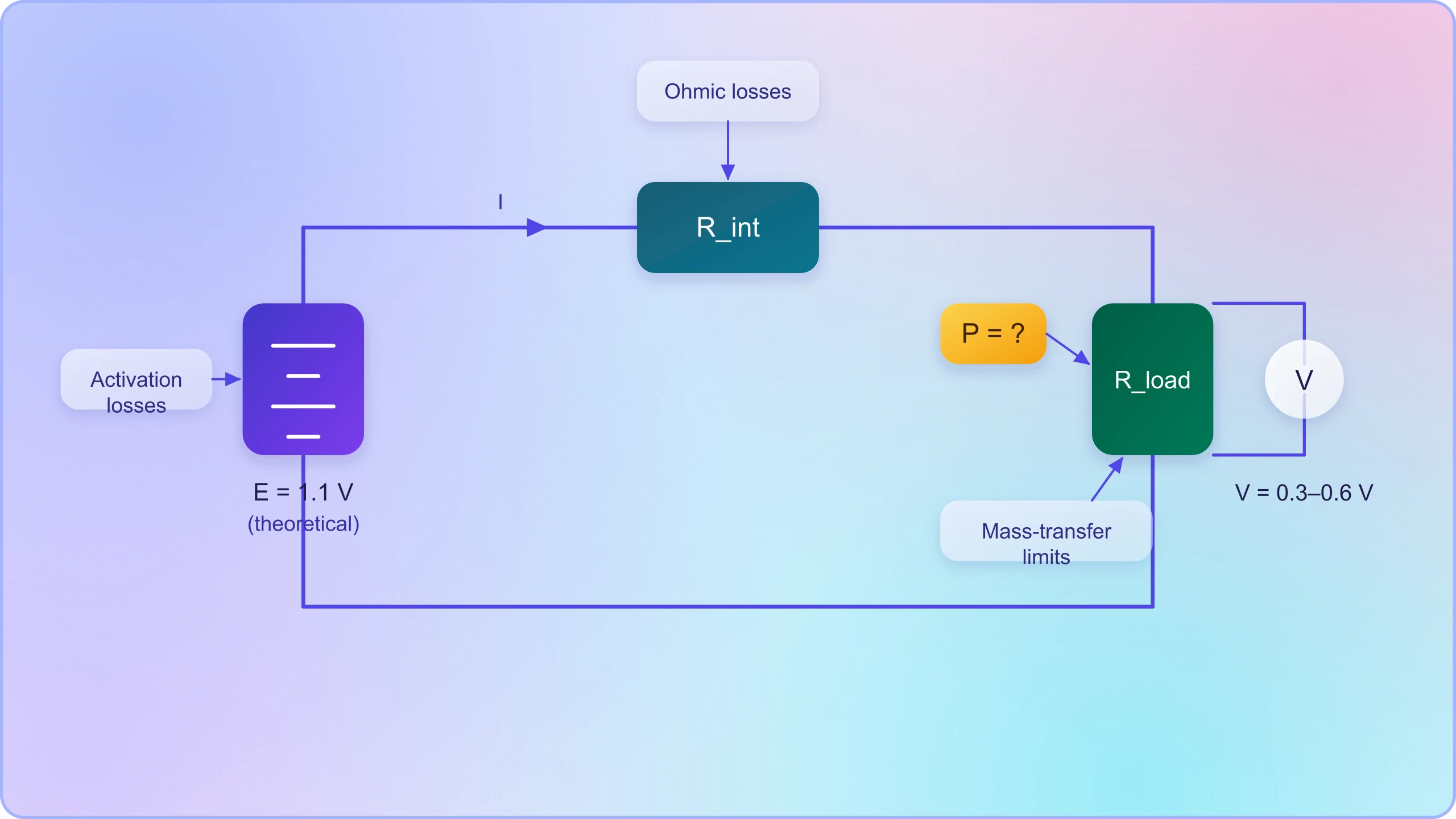
The fundamental bottleneck is the slow rate of extracellular electron transfer relative to the rates achievable in chemical fuel cells. Improving performance requires electrode materials with high surface area and biocompatibility, such as carbon brush or graphene-modified anodes, and reactor designs that minimise internal resistance. The mathematics of power output follows the familiar relationship between voltage and current, where maximum power is delivered when the external resistance matches the internal resistance of the cell:
Here ##V_{oc}## is the open-circuit voltage and ##R_{int}## the internal resistance, so halving internal resistance quadruples the achievable power. This is why MFC research concentrates on electrode architecture and membrane conductivity rather than on discovering new microbial species.
Applications and Realistic Expectations
MFCs are most promising where wastewater treatment and energy recovery coincide, because the organic matter in sewage is a free substrate and the alternative — aerobic treatment — consumes energy rather than producing it. Pilot-scale MFCs have powered small sensors, remote monitoring equipment, and in some demonstrations, modest lighting in off-grid communities. The technology is also being explored for biosensing, where the current output responds to substrate concentration, and for powering implantable medical devices using body fluids as fuel.
Realistic expectations matter here. MFCs will not replace grid-scale power generation; their power densities are orders of magnitude below those of combustion or photovoltaic systems. Their value lies in niche applications where a self-powered, low-maintenance device is more valuable than a high-power one, and in the research insight they provide into microbial electron transfer. The honest framing is that MFCs are a promising component of decentralised wastewater treatment, not a solution to global energy demand.
Biogas, Bioenergy and the Circular Economy
Anaerobic digestion is the most mature microbial energy technology, and its feedstock base extends far beyond sewage sludge to include animal manure, food waste, crop residues, and the organic fraction of municipal solid waste. The process is carried out in sealed, oxygen-free digesters maintained at either mesophilic (around 35 °C) or thermophilic (around 55 °C) temperatures, with the choice trading reaction rate against energy input and stability. The biogas produced is a renewable fuel that can be combusted for heat and electricity or upgraded to biomethane for injection into gas grids.
The circular economy framing is important because digestion does not merely produce energy; it returns nutrients to the land as digestate and diverts organic waste from landfill, where it would otherwise generate methane through uncontrolled anaerobic decomposition. Landfill methane is a potent greenhouse gas with a global warming potential roughly 28 times that of carbon dioxide over a hundred-year horizon, so capturing and combusting it converts a diffuse emission into useful energy. The climate benefit of anaerobic digestion therefore comes from both the energy produced and the emissions avoided.
Digester Microbiology and Stability
The four-stage digestion pathway — hydrolysis, acidogenesis, acetogenesis, and methanogenesis — is a syntrophic chain in which the products of one group become the substrates of the next. The critical vulnerability is that acidogenic bacteria grow far faster than methanogenic archaea, so an overload of readily degradable substrate can cause volatile fatty acids to accumulate, pH to fall, and methanogenesis to collapse. This is why digesters are fed gradually and why the ratio of volatile fatty acids to alkalinity is monitored as an early warning indicator.
Temperature stability is equally important. A sudden drop of a few degrees can inhibit methanogens for days, and thermophilic digesters are more productive but less forgiving than mesophilic ones. The operational skill in biogas engineering lies in maintaining a stable environment for the slowest-growing members of the community, which is a general principle of microbial process control that recurs throughout industrial microbiology.
From Biogas to Biohydrogen and Beyond
Beyond methane, microbial processes can produce hydrogen through dark fermentation, where fermentative bacteria such as Clostridium species convert carbohydrates to hydrogen, volatile fatty acids, and carbon dioxide. Biohydrogen has a higher energy content per unit mass than methane and produces only water on combustion, but yields from dark fermentation are limited by the thermodynamics of the pathway and by hydrogen-consuming organisms in mixed cultures. Research focuses on suppressing hydrogen consumers and on coupling dark fermentation with photofermentation or microbial electrolysis cells.
These technologies remain at earlier stages of development than anaerobic digestion, and their economics depend on the value placed on waste treatment and carbon avoidance as well as on the fuel itself. The broader point for learners is that the same microbial metabolic diversity that makes waste a problem also makes it a feedstock, and the choice of technology determines which product — methane, hydrogen, electricity, or compost — emerges from the same starting material.
Sustainability, Engineered Microbes and the Road Ahead
Microbial waste management sits at the intersection of several United Nations Sustainable Development Goals, and the connections are concrete rather than rhetorical. SDG 6 (clean water and sanitation) depends on biological sewage treatment; SDG 7 (affordable and clean energy) is served by biogas and bioenergy; SDG 12 (responsible consumption and production) is advanced by composting and industrial symbiosis; and SDG 13 (climate action) benefits from avoided landfill methane. Recognising these links helps learners see waste management as infrastructure for sustainable development rather than an afterthought to it.
The emerging frontier is engineered microbiology: strains designed to degrade specific pollutants faster, tolerate harsh conditions, or produce valuable products from waste streams. Synthetic biology tools allow researchers to introduce degradation pathways into robust chassis organisms, and directed evolution can improve enzyme performance under industrial conditions. These approaches promise to extend bioremediation to contaminants that resist natural degradation, including some chlorinated solvents, pharmaceuticals, and per- and polyfluoroalkyl substances.
Engineered Microbes: Promise and Precaution
Releasing engineered organisms into open environments raises legitimate ecological and regulatory questions. Horizontal gene transfer could spread engineered traits to native communities, and the ecological consequences of displacing indigenous strains are difficult to predict. Most jurisdictions therefore require contained use for engineered strains and treat environmental release as a regulated activity subject to risk assessment. The precautionary principle is not opposition to innovation; it is a recognition that open environmental systems are harder to recall than laboratory experiments.
Containment strategies include auxotrophy, where strains are engineered to depend on a nutrient absent from the environment, and kill switches that trigger cell death outside the reactor. These safeguards are still imperfect, and the field is converging on a pragmatic position: use engineered organisms in contained bioreactors where their performance can be monitored, and rely on biostimulation of indigenous communities for open-environment remediation. This division of labour reflects both scientific caution and regulatory reality.
Integrating Lessons and Looking Forward
This lesson has traced a single principle across four domains: microorganisms move electrons and elements from reduced, waste-bound forms into oxidised, useful, or harmless forms. Composting, sewage treatment, bioremediation, and bioenergy are different expressions of that principle, and the choice among them is determined by the physical state of the waste, the value of the product, and the regulatory context. The next and final lesson draws these threads together into a synthesis of microbes and human welfare.
Learners preparing for assessment should be able to distinguish aerobic composting from anaerobic digestion, explain the role of nutrient limitation in the Exxon Valdez response, describe the principle of extracellular electron transfer in MFCs, and connect microbial waste treatment to specific sustainability goals. These are not isolated facts but a connected argument about how microbial metabolism can be harnessed responsibly, and that argument is the intellectual core of the course.
# Simplified estimate of biogas energy potential from volatile solids
def biogas_energy(volatile_solids_kg, yield_m3_per_kg=0.4, methane_fraction=0.62,
                  lhv_methane_mj_per_m3=35.8):
    """
    volatile_solids_kg : kg of volatile solids fed to the digester
    yield_m3_per_kg    : biogas yield (typical 0.3-0.5 m3 per kg VS)
    methane_fraction   : share of methane in biogas (typical 0.60-0.65)
    lhv_methane_mj_per_m3 : lower heating value of methane
    """
    biogas_m3 = volatile_solids_kg * yield_m3_per_kg
    methane_m3 = biogas_m3 * methane_fraction
    energy_mj = methane_m3 * lhv_methane_mj_per_m3
    return biogas_m3, methane_m3, energy_mj

biogas, methane, energy = biogas_energy(1000)
print(f"Biogas: {biogas:.1f} m3, Methane: {methane:.1f} m3, Energy: {energy:.0f} MJ")
Also Read
- No links available.
From our network :
- Trump Political Strategy How Geopolitical Stunts Serve As Media Diversions
- 10 Physics Numerical Problems with Solutions for IIT JEEPrepare for IIT JEE with 10 physics numerical problems, complete with detailed solutions and conceptual explanations. Ideal for mastering kinematics, thermodynamics, electromagnetism, and optics.
- How to Print Cheaply: Cutting the Cost per PageA practical, measured guide to lowering what each printed page costs — duplex and draft modes, third-party ink, yield mathematics, and knowing when a new printer beats refills.
- AI-Powered 'Precision Diagnostic' Replaces Standard GRE Score ReportsDiscover the new GRE Precision Diagnostic. Learn how AI-powered behavioral analytics and time-to-solve tracking are replacing standard GRE score reports to empower students.
- EV 2.0: The Solid-State Battery Breakthrough and Global Factory ExpansionDiscover the impact of the Solid-State Battery Breakthrough on the EV market. Learn about CATL and BYD stock growth, global factory expansion in Europe, and the future of EV 2.0 technology.
- Analyzing Trump Deportation Numbers Insights Into The 2026 Immigration Crackdown
- Do You Need a New Router or Is Your Internet Plan the Problem?A practical comparison of the signs that point to router limits versus signs your broadband speed or provider is the bottleneck, so you can decide what to replace before spending money.
- 98% of Global MBA Programs Now Prefer GRE Over GMAT Focus EditionExplore why 98% of global MBA programs now prefer the GRE over GMAT Focus. Learn about the shorter GRE format, verbal logic importance, and strategic versatility for students.
- Where to Put Your Wireless Router for Better CoverageA practical, physics-grounded guide to router placement: why the centre of the home beats the corner, how walls and metal sap signal, and how to run a simple survey that proves the improvement.
RESOURCES
- Resources will be updated soon.