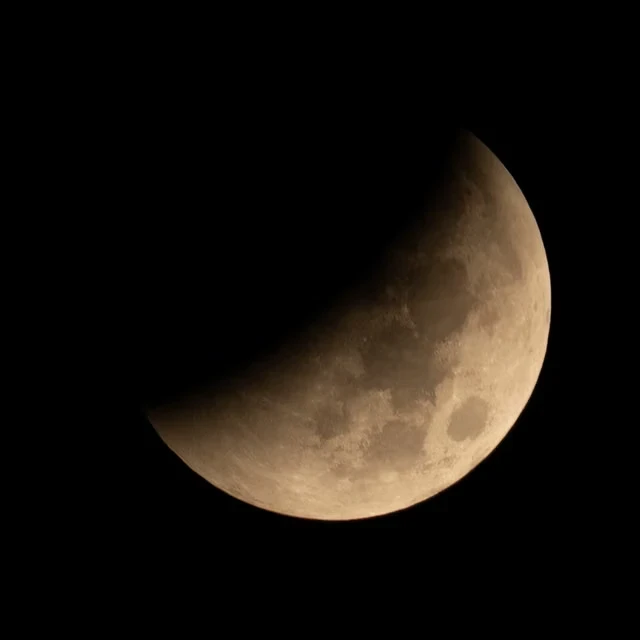
Astrophysical observation methods have achieved an unprecedented level of precision through continuous lunar reconnaissance missions deployed by space agencies worldwide. Recent telemetry data transmitted by the NASA Moon orbiter highlights a singularly exceptional impact event that reshaped a localized section of the barren regolith. Understanding the dynamics of such high-velocity celestial impacts requires rigorous mathematical formulation and precise orbital mechanics calculations.
Scientific documentation confirms that high-energy meteorite strikes upon planetary bodies obey fundamental conservation laws regarding kinetic energy transfer and momentum dissipation. Investigators must therefore model crater formation mechanics using empirical scaling laws that correlate projectile mass, impact velocity, and target material density with final excavation dimensions. The ensuing analysis establishes a comprehensive theoretical framework and computational derivation for evaluating extraordinary lunar impact phenomena.
On This Page
Orbital Dynamics and Impact Velocity Derivations
Analyzing high-velocity interplanetary impacts demands an exhaustive examination of orbital mechanics and gravitational potential energy transformations. When an unmapped bolide intersects the lunar trajectory, its kinetic energy scales exponentially with approach velocity relative to the lunar escape velocity. Advanced trajectory modeling allows researchers to reverse-engineer impact vectors from ejecta blanket distributions observed by high-resolution cameras.
Gravitational Potential and Kinetic Energy Relationships
The total mechanical energy ##[E]## of an incoming impactor approaching the lunar surface is given by the sum of its kinetic and gravitational potential energies within the Earth-Moon system.
We express the primary energy equation using standard astrophysical notation, where ##[m]## represents the projectile mass and ##[v_{\infty}]## denotes its hyperbolic excess velocity.
To compute the impact velocity ##[v_{\text{imp}}]## upon immediate contact with the regolith surface, we apply the conservation of energy from an initial reference radius ##[r_0]##.
The resulting closed-form mathematical expression incorporates the lunar radius ##[R_{\text{Moon}}]## and the gravitational constant ##[G]## for rigorous analytical evaluation.
Momentum Conservation and Kinetic Dissipation
Upon initial physical contact, the momentum vector of the projectile must be transferred instantaneously to the lunar crust, initiating a hemispherical shockwave propagation.
Let ##[\vec{p}_{\text{initial}}]## be the linear momentum vector just before impact, defined by ##[\vec{p}_{\text{initial}} = m \vec{v}_{\text{imp}}]##.
The peak stress ##[\sigma_{\text{peak}}]## induced at the point of impact exceeds the compressive strength of the basaltic regolith by several orders of magnitude.
We quantify the instantaneous energy dissipation rate ##[\dot{E}_{\text{diss}}]## through the constitutive shock compression equations of state for silicate minerals.
Integrating this dissipation across the excavation volume yields the exact thermal and kinetic energy partition distributed throughout the surrounding bedrock.
Crater Excavation Scaling and Volume Calculations
Crater morphology is fundamentally dictated by gravity-regime scaling laws where excavation volume scales directly with the kinetic energy of the impactor. Empirical observations from orbiter altimetry reveal specific depth-to-diameter ratios characteristic of complex lunar craters formed during rare centennial events. Mathematical scaling models enable planetary scientists to estimate impactor dimensions solely from remote-sensing topographical profiles.
Transient Cavity Growth and Hydrodynamic Flow
The growth phase of the transient crater cavity proceeds via incompressible hydrodynamic flow, which can be modeled using modified Euler equations for fluid dynamics.
The radius of the transient cavity ##[R_t]## expands as a power-law function of time ##[t]##, governed by the scaling parameter ##[\nu]##.
Here, ##[\rho_{\text{target}}]## denotes the bulk density of the lunar regolith, while ##[C_1]## represents an experimentally derived dimensionless coupling constant.
As the shock wave attenuates, gravity takes dominance over inertial forces, halting the outward expansion of the transient crater boundary.
The maximum transient radius ##[R_{t,\text{max}}]## is explicitly computed using the projectile kinetic energy ##[E_k]## and local gravitational acceleration ##[g_{\text{Moon}}]##.
Final Crater Dimensions and Collapse Mechanics
Following maximum cavity expansion, gravitational instability triggers rim collapse and slumping of interior walls, resulting in the final observed crater diameter ##[D_f]##.
For large-scale impact events, modification stage mechanics introduce central peaks due to the elastic rebound of compressed subsurface basement rocks.
We define the final excavation volume ##[V_f]## through integration of the paraboloid profile function fitted to altimetry elevation data.
The depth profile function ##[z(r)]## accounts for both floor depression and central uplift structures typical of rare lunar impact formations.
Through precise geometric modeling, the volume discrepancy between transient and final states confirms the magnitude of mass-wasting processes.
We Also Published
Orbiter Telemetry and Remote Sensing Analysis
Modern lunar orbiters utilize synthetic aperture radar and multi-spectral imaging to detect topographical alterations caused by recent celestial impacts. Detecting a fresh crater requires identifying high-albedo ray systems and blocky ejecta fields that have not yet undergone space weathering. Telemetry processing units onboard the spacecraft synthesize gigabytes of raw sensor data into high-precision digital elevation models.
Albedo Contrast and Space Weathering Decays
Fresh lunar impact sites exhibit distinct optical properties due to the excavation of unweathered sub-regolith material devoid of solar wind agglutinates.
The optical maturation rate ##[\alpha(t)]## of ejecta blankets follows an exponential decay model relative to exposure time ##[t]##.
Here, ##[\alpha_{\text{sat}}]## represents the saturated mature regolith albedo, and ##[\lambda]## denotes the space weathering constant determined by micrometeoroid flux.
Orbital cameras measure reflectance changes across discrete wavelengths ##[\Delta \lambda]## to map compositional variations within the ejecta.
The signal-to-noise ratio ##[\text{SNR}]## of optical sensors is optimized using radiometric calibration algorithms implemented in flight software.
Digital Elevation Modeling and Volumetric Error Analysis
Stereo photogrammetry applied to overlapping orbiter imagery generates detailed digital elevation models (DEMs) with vertical accuracies under one meter.
The volumetric error ##[\delta V]## associated with DEM integration is bounded by the spatial resolution ##[\Delta x]## and elevation uncertainty ##[\sigma_z]##.
Researchers compute residual height differences ##[\Delta h(x, y)]## between pre-impact and post-impact topography maps to isolate true excavation volumes.
Statistical variance propagation through these differential matrices ensures high confidence intervals for rare event classification.
Automated feature-matching algorithms scan thousands of square kilometers daily to flag anomalous topographical disruptions instantly.
Statistical Probability of Centennial Lunar Impacts
Evaluating the statistical rarity of a centennial impact event requires applying Poisson point processes to historical lunar impact cratering rates. The lunar geological record preserves billions of years of impact history, providing a robust statistical baseline for calculating recurrence intervals. Actuarial models of orbital debris populations help astrophysicists distinguish between asteroidal impacts and cometary fragmentation events.
Poisson Distribution of Impact Frequency
The probability ##[P(X = k)]## of observing exactly ##[k]## impact events of a given magnitude over a time interval ##[T]## is modeled using the Poisson distribution.
Let ##[\mu]## be the expected number of impacts per century based on empirical lunar reconnaissance orbiter tracking data.
For rare centennial events where ##[k = 1]## and ##[\mu \approx 1]##, the resulting probability provides a direct mathematical metric for event scarcity.
The cumulative waiting time ##[W]## between successive major impact events follows an exponential probability density function.
We express this waiting time distribution using the characteristic recurrence rate parameter ##[\beta]##.
Hazard Assessment and Impact Risk Matrix
Planetary defense agencies maintain rigorous impact risk matrices to monitor near-Earth objects capable of generating similar lunar-scale craters.
The Palermo Technical Impact Hazard Scale incorporates both impact probability and kinetic energy yield into a standardized logarithmic index.
Risk evaluation equations weigh the kinetic energy ##[E]## against annual background impact probabilities ##[p_b]## over residual time horizons ##[T_r]##.
Continuous monitoring by deep-space radar networks ensures early detection of potential impactors before atmospheric or lunar collisions occur.
Statistical resilience analysis confirms that current lunar observation architectures provide adequate coverage for cataloging centennial events.
Geological Consequences and Regolith Alterations
The formation of a new impact crater triggers profound mineralogical and structural alterations within the lunar regolith matrix. Shock metamorphism melts local silicates into impact glass, while seismic waves compact underlying megaregolith layers across vast distances. Analyzing these geological modifications provides critical insights into the primordial composition and thermal evolution of the lunar crust.
Shock Metamorphism and Glass Production Rates
High-pressure shock waves induce phase transitions within plagioclase feldspar, creating diaplectic glasses and maskelynite structures.
The mass fraction ##[f_{\text{melt}}]## of shock-melted material generated during the event scales with peak shock pressure ##[P]##.
This formulation allows petrologists to estimate the thermal energy deposition profile as a function of radial distance from the impact center.
Seismic attenuation coefficients determine how shock energy dissipates through fractured basaltic sheets.
We compute the seismic energy attenuation ##[E_{\text{seismic}}(r)]## using geometrical spreading and internal friction losses.
Ejecta Blanket Emplacement and Stratigraphy
Ejecta materials expelled from the transient cavity settle in an inverted stratigraphic sequence around the newly formed crater rim.
The thickness ##[T_{\text{ejecta}}(x)]## of the ejecta blanket decays as a power-law function of distance ##[x]## from the crater rim.
Fine-grained secondary craters form where large ballistic blocks impact the surrounding regolith at supersonic velocities.
Laboratory analogue experiments validate these ballistic sedimentation models under simulated lunar gravity conditions.
Orbital multispectral mapping confirms that fresh ejecta exposes pristine highland anorthosite previously shielded from solar radiation.
Future Lunar Reconnaissance and Exploration Missions
The continuous monitoring of lunar impact events underpins safety protocols for upcoming crewed lunar outposts and automated robotic exploration missions. Future orbiters equipped with subterranean radar sounders will map buried crater structures and quantify subsurface volatile distribution. Integrating real-time impact detection systems into lunar infrastructure ensures comprehensive hazard mitigation for permanent human settlements.
Subsurface Radar Sounding and Volatile Detection
Orbital low-frequency radar instruments penetrate the upper regolith layers to detect dielectric discontinuities associated with buried impact structures.
The electromagnetic wave propagation velocity ##[v_w]## through the regolith depends directly on the relative permittivity ##[\epsilon_r]##.
Detecting buried ice deposits or impact melt sheets relies on analyzing radar echo returns for anomalous dielectric signatures.
Signal processing pipelines apply matched filtering techniques to extract weak subsurface reflections from background noise.
The radar penetration depth ##[\delta_p]## is constrained by regolith electrical conductivity ##[\sigma_c]## and operating frequency.
Autonomous Early Warning and Asset Protection
Future lunar exploration frameworks will integrate automated optical monitoring constellations to provide instantaneous alerts for incoming meteoroids.
Machine learning classification algorithms running on edge-computing satellites will categorize flash impacts within milliseconds of occurrence.
Mission controllers can command robotic assets to enter safe modes or seek topographical shelter prior to secondary ejecta arrival.
Comprehensive risk management strategies safeguard critical power generation and life support infrastructure from hypervelocity projectile damage.
Advanced space situational awareness guarantees the long-term sustainability of international scientific operations across the lunar surface.
From our network :
- Trump Political Strategy How Geopolitical Stunts Serve As Media Diversions
- Mastering DB2 12.1 Instance Design: A Technical Deep Dive into Modern Database ArchitectureComprehensive guide to DB2 12.1 Instance Design. Explore architectural components, HADR setup, buffer pool tuning, and security policies for IBM DB2 12.1. Includes 10 functional SQL and Shell samples.
- EV 2.0: The Solid-State Battery Breakthrough and Global Factory ExpansionDiscover the impact of the Solid-State Battery Breakthrough on the EV market. Learn about CATL and BYD stock growth, global factory expansion in Europe, and the future of EV 2.0 technology.
- Analyzing Trump Deportation Numbers Insights Into The 2026 Immigration Crackdown
- Vite 6/7 'Cold Start' Regression in Massive Module GraphsIn-depth analysis of Vite 6/7 cold start regressions in massive module graphs. Learn about barrel file issues, pre-bundling optimizations, and how to improve Vite dev server performance.
- Mastering DB2 LUW v12 Tables: A Comprehensive Technical GuideComprehensive guide on DB2 LUW v12 tables. Explore CREATE TABLE syntax, BLU Acceleration, range partitioning, data types, and security features for IBM DB2 LUW v12.
- AI-Powered 'Precision Diagnostic' Replaces Standard GRE Score ReportsDiscover the new GRE Precision Diagnostic. Learn how AI-powered behavioral analytics and time-to-solve tracking are replacing standard GRE score reports to empower students.
- 10 Physics Numerical Problems with Solutions for IIT JEEPrepare for IIT JEE with 10 physics numerical problems, complete with detailed solutions and conceptual explanations. Ideal for mastering kinematics, thermodynamics, electromagnetism, and optics.
- 98% of Global MBA Programs Now Prefer GRE Over GMAT Focus EditionExplore why 98% of global MBA programs now prefer the GRE over GMAT Focus. Learn about the shorter GRE format, verbal logic importance, and strategic versatility for students.
RESOURCES
- NASA's Moon Orbiter Spots New, 'Once-in-Century' Moon Craterscience.nasa.govSep 16, 2026 ... It started as a routine data-quality check. But as Robert Wagner, a scientist with NASA's Lunar Reconnaissance Orbiter (LRO), scanned…
- Rare new lunar crater shows how impacts remodel the moon's surfacenewsroom.ucla.edu2 days ago ... “During the last 17 years, NASA's Lunar Reconnaissance Orbiter has been orbiting the moon and has mapped it in much…
- In a rare event, the moon got a massive new crater - Science Newssciencenews.orgMar 23, 2026 ... A routine search of images from NASA's Lunar Reconnaissance Orbiter camera found a fresh crater ... Bits of rock ejected…
- NASA's Moon orbiter finds a 728-foot crater that wasn't there beforesciencedaily.comSep 18, 2026 ... A Rare Impact Creates a Giant Moon Crater. The crater was officially ... new analysis of data from NASA's LRO…
- In a rare event, the moon got a massive new crater. : r/astrophysicsreddit.comMar 29, 2026 ... A once-in-a-century crater formed on the moon right under our noses. A routine search of images from NASA's Lunar Reconnaissance…
- NASA discovers a massive new lunar impact that blasted a 728-foot ...thebrighterside.news3 days ago ... NASA's Lunar Reconnaissance Orbiter revealed a 222-meter-wide crater that formed on the Moon between April 11 and May 22, 2024, ...
- NASA's Lunar Reconnaissance Orbiter has spotted a massive new ...facebook.com6 days ago ... ... rare, once-in-a-century impact ... NASA's Lunar Reconnaissance Orbiter captures new crater on Moon from Falcon 9 impact.
- NASA's Lunar Reconnaissance Orbiter Spots Rocket Impact Site on ...nasa.govJun 24, 2022 ... No other rocket body impacts on the Moon created double craters. ... Full resolution (100 cm pixels) image centered on…
- NASA's Lunar Reconnaissance Orbiter has spotted a massive new ...facebook.comSep 19, 2026 ... NASA's Lunar Reconnaissance Orbiter has spotted a massive new crater on the Moon that scientists say was created in a…
- NASA's Moon Orbiter spots a rare new crater on the Moontechexplorist.comSep 18, 2026 ... Scientists determine how often craters form and how the surface changes by observing new lunar impacts; since 2010, the NASA…
- NASA spacecraft discovers a huge new crater on the moonnbcnews.comSep 16, 2026 ... NASA's Lunar Reconnaissance Orbiter (LRO) spotted the crater on the moon's ... This latest impact churned the lunar surface for…
- Lunar Impact - NASA SVSsvs.gsfc.nasa.govOn March 17, 2013, a meteoroid crashed into the surface of the moon. Such events are common for the moon, which has no atmosphere…
- Lunar orbiter spots 'once in a lifetime' new crater on the moon | CNNcnn.com6 days ago ... The insights reveal that the moon — a high-priority destination for NASA and other space agencies when considering sustained human…
- NASA orbiter spots massive 'once-in-a-century' crater on moon - WCIVabcnews4.comSep 18, 2026 ... (TNND) — NASA's Lunar Reconnaissance Orbiter has spotted a massive new crater on the Moon that scientists say was created…
- The Moon Just Got a New Scar - Universe Todayuniversetoday.comApr 12, 2026 ... Captured by NASA's Lunar Reconnaissance Orbiter before and after the impact ... This new crater is more than three times…

0 Comments