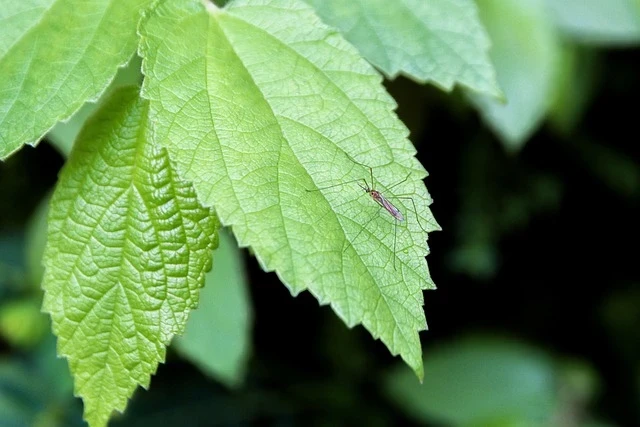
Every summer, the same scene unfolds at backyard gatherings: one person swats relentlessly while another sits untouched, reading calmly as mosquitoes drift past. For decades, this disparity was dismissed as luck or anecdote. Yet a landmark study published on August 28, 2026, has reframed the mystery entirely, revealing that your skin chemistry—not your blood type, not your diet—dictates precisely which mosquito species finds you irresistible.
The research, emerging from the intersection of analytical chemistry and entomology, demonstrates that volatile organic compounds (VOCs) exuded through human skin create a unique chemical signature. These compounds, shaped by genetics, diet, and the resident bacterial ecosystem on your epidermis, form an olfactory beacon that mosquitoes decode with astonishing precision. Understanding this chemistry transforms mosquito bites from a nuisance into a fascinating case study in molecular communication.
This article dissects the science behind mosquito attraction, exploring the specific carboxylic acids, aldehydes, and microbial metabolites that determine your bite risk. We will examine the olfactory receptors that allow mosquitoes to distinguish between human hosts, quantify the chemical thresholds that trigger attraction, and evaluate emerging repellent strategies grounded in skin microbiome manipulation. By the end, you will understand precisely why mosquitoes treat you as a five-star meal or a last-resort snack.
On This Page
The Chemical Signature of Human Skin: Decoding the Volatile Organic Compound Profile
Human skin is not an inert barrier; it is a dynamic chemical factory continuously emitting a complex cocktail of volatile organic compounds. These molecules, produced by sebaceous glands, sweat glands, and the metabolic activity of skin-resident bacteria, evaporate into the surrounding air, creating an invisible plume that mosquitoes track with remarkable sensitivity.
Researchers have identified over 300 distinct VOCs on human skin, though only a subset appears relevant to mosquito host-seeking behavior. The composition varies dramatically between individuals, influenced by genetic polymorphisms in immune genes, hormonal fluctuations, and the specific bacterial strains colonizing the skin surface. This variability explains why mosquito attraction is not random but follows predictable chemical patterns.
Carboxylic Acids: The Primary Attractant Class
Carboxylic acids, particularly lactic acid, butyric acid, and various medium-chain fatty acids, constitute the most significant class of mosquito attractants. Lactic acid, produced during anaerobic metabolism and excreted through sweat, has been studied extensively as a primary cue for Aedes aegypti and Anopheles gambiae. Higher concentrations correlate directly with increased landing and probing behavior.
The concentration gradient of these acids matters as much as their presence. Mosquitoes navigate upwind along chemical plumes, detecting minute differences in concentration between their left and right antennae. When the gradient exceeds a threshold of approximately 0.5 parts per billion, the mosquito initiates a characteristic zigzag flight pattern toward the source.
Individual variation in carboxylic acid production stems largely from sebum composition. Sebaceous glands secrete triglycerides that bacterial lipases hydrolyze into free fatty acids. Individuals with higher sebum secretion rates, often influenced by androgen levels, produce proportionally more of these attractant molecules, explaining why adolescents and young adults frequently report higher mosquito bite rates.
Interestingly, not all carboxylic acids function as attractants. Certain branched-chain acids, such as 2-methylbutanoic acid, appear to repel specific mosquito species while attracting others. This species-specific response suggests that mosquitoes have evolved finely tuned receptor systems that distinguish between structurally similar molecules, enabling them to preferentially target hosts with particular chemical profiles.
Microbial Metabolites: The Bacterial Contribution to Your Scent
Your skin hosts approximately one million bacteria per square centimeter, and their metabolic byproducts substantially modify your chemical signature. Staphylococcus, Corynebacterium, and Pseudomonas species metabolize sweat components and sebum lipids, producing volatile compounds that either amplify or suppress mosquito attraction.
Research demonstrates that individuals with diverse skin microbiomes tend to produce more balanced chemical profiles, often reducing the dominance of any single attractant compound. Conversely, skin dominated by Corynebacterium species produces elevated levels of certain carboxylic acids, correlating with increased attractiveness to Aedes aegypti in controlled behavioral assays.
The bacterial contribution explains why identical twins, despite sharing nearly identical genetics, can exhibit different mosquito attraction profiles. Their skin microbiomes diverge over time due to environmental exposure, hygiene practices, and immune system interactions, creating distinct chemical signatures that mosquitoes readily distinguish.
This microbial influence opens intriguing possibilities for intervention. Probiotic skin treatments designed to introduce competitive bacterial strains could theoretically alter VOC production, making skin less chemically conspicuous to host-seeking mosquitoes. However, the complexity of microbial ecosystems and their stability over time presents significant formulation challenges.
Quantifying Attraction: The Chemical Threshold Model
Mosquito attraction follows a dose-response relationship, where the probability of host-seeking behavior increases with the concentration of attractant compounds. Behavioral studies using olfactometers have established that Aedes aegypti initiates upwind flight when lactic acid concentrations reach approximately 1.2 micromolar in the airstream.
The interaction between multiple compounds follows a synergistic model rather than simple addition. A blend containing lactic acid, ammonia, and specific carboxylic acids at subthreshold concentrations can trigger attraction when each compound alone would fail. This combinatorial coding allows mosquitoes to identify human hosts with remarkable specificity, distinguishing them from other warm-blooded animals.
Mathematically, the attraction probability can be modeled using a logistic function where the log-odds of attraction depend linearly on the weighted sum of compound concentrations. The weighting coefficients vary by mosquito species, reflecting evolutionary adaptations to different host preferences. Anopheles gambiae, for instance, weights human-specific compounds more heavily than Aedes albopictus, which exhibits broader host flexibility.
Understanding these thresholds enables predictive modeling of bite risk. By measuring an individual's VOC profile and applying species-specific weighting coefficients, researchers can estimate relative attractiveness with reasonable accuracy. This quantitative framework transforms mosquito ecology from descriptive science into a predictive discipline with practical applications for personal protection.
The equation above represents the effective threshold concentration for mosquito activation, where ##[K_d]## is the dissociation constant of the mosquito olfactory receptor, ##[R_{max}]## is the maximum receptor response, ##[R_{basal}]## is the baseline firing rate, and ##[\alpha_i]## represents the synergistic weighting coefficient for each volatile organic compound ##[VOC_i]##. This formulation captures how subthreshold compounds collectively lower the activation barrier.
We Also Published
Mosquito Olfactory Neuroscience: How Antennae Decode Chemical Messages
The mosquito antenna represents one of nature's most sophisticated chemical detection systems. Each antenna bears thousands of sensory neurons housed within specialized sensilla, each expressing specific olfactory receptor proteins tuned to particular molecular features. This combinatorial receptor array enables mosquitoes to discriminate between hundreds of volatile compounds with remarkable precision.
Recent genomic studies have identified over 100 functional olfactory receptor genes in Aedes aegypti, with each receptor exhibiting distinct ligand-binding profiles. The activation pattern across this receptor population encodes chemical identity, allowing the mosquito brain to construct a neural representation of the host's scent profile and initiate appropriate behavioral responses.
Receptor-Ligand Interactions: Molecular Recognition at the Atomic Scale
Olfactory receptors are seven-transmembrane G-protein-coupled proteins that undergo conformational changes upon ligand binding. The binding pocket accommodates specific molecular geometries, with hydrogen bonding, hydrophobic interactions, and van der Waals forces contributing to binding affinity. Carboxylic acids, with their polar carboxyl groups and hydrophobic hydrocarbon chains, interact with receptor pockets through complementary electrostatic and steric interactions.
The binding affinity between a VOC and its cognate receptor follows standard enzyme kinetics, characterized by a dissociation constant ##[K_d]## typically ranging from 0.1 to 10 micromolar. Compounds with lower ##[K_d]## values bind more tightly, requiring lower airborne concentrations to trigger receptor activation. This explains why lactic acid, with its relatively high binding affinity, serves as a potent attractant even at trace concentrations.
Signal transduction amplifies the initial binding event through intracellular cascades. Receptor activation triggers G-protein-mediated opening of ion channels, depolarizing the sensory neuron and generating action potentials. A single receptor binding event can produce measurable neural activity, though reliable signal transmission typically requires simultaneous activation of multiple receptors within a single sensillum.
Recent cryo-electron microscopy studies have resolved the three-dimensional structure of several mosquito olfactory receptors, revealing the precise atomic arrangement of the binding pocket. These structural insights enable computational docking studies that predict which synthetic compounds might act as receptor antagonists, potentially blocking mosquito attraction without affecting human sensory perception.
Species-Specific Receptor Tuning and Host Preference Evolution
Different mosquito species exhibit distinct receptor repertoires, reflecting their evolutionary history and host preferences. Anthropophilic species like Anopheles gambiae possess expanded families of receptors tuned to human-specific compounds, while zoophilic species maintain broader receptor arrays capable of detecting a wider range of mammalian odors.
Comparative genomics reveals that receptor gene families undergo rapid evolution, with duplication and pseudogenization events reshaping the olfactory landscape. Anopheles gambiae has experienced recent expansion of receptors responsive to sulcatone, a compound elevated in human skin compared to other animals. This molecular adaptation likely facilitated the species' shift toward human blood-feeding.
The expression level of specific receptors also varies between mosquito populations, contributing to regional differences in host preference. Urban Aedes aegypti populations, which have adapted to feed almost exclusively on humans, show elevated expression of receptors responsive to human skin VOCs compared to forest-dwelling populations that retain broader host ranges.
Understanding these species-specific differences has practical implications for vector control. Repellents that effectively deter one mosquito species may prove ineffective against another, depending on whether they target shared or species-specific olfactory pathways. This knowledge guides the development of tailored protection strategies for different geographic regions.
Quantitative Analysis of Olfactory Response Dynamics
Electroantennography provides a quantitative measure of mosquito olfactory responses, recording the summed electrical activity of antennal neurons upon chemical stimulation. Dose-response curves generated through this technique reveal the sensitivity and dynamic range of the mosquito olfactory system for individual compounds.
The relationship between stimulus concentration and antennal response follows the Hill equation, characterized by a maximal response, half-maximal effective concentration, and Hill coefficient reflecting binding cooperativity. For most mosquito olfactory receptors, the Hill coefficient approximates unity, indicating non-cooperative binding, though some receptors exhibit positive cooperativity that sharpens their concentration-response profile.
Behavioral assays complement electrophysiological measurements by quantifying actual host-seeking outcomes. Dual-choice olfactometers present mosquitoes with competing odor streams, allowing researchers to calculate preference indices that reflect the relative attractiveness of different chemical blends. These behavioral data provide the ultimate validation of receptor-level findings.
Integrating electrophysiological and behavioral data enables construction of predictive models linking molecular structure to behavioral output. Quantitative structure-activity relationship (QSAR) models, trained on datasets of compounds with known attractant or repellent activity, can screen virtual libraries of candidate molecules to identify novel repellents with optimal efficacy and safety profiles.
This Hill equation describes the antennal response ##[R(C)]## as a function of compound concentration ##[C]##, where ##[R_{max}]## is the maximum response, ##[EC_{50}]## is the half-maximal effective concentration, and ##[n]## is the Hill coefficient. For typical mosquito olfactory receptors, ##[EC_{50}]## values range from 0.1 to 10 micromolar, with ##[n]## approximately equal to 1.
Practical Applications: Microbiome-Based Repellents and Personal Protection Strategies
The emerging understanding of skin chemistry and mosquito olfaction has catalyzed development of next-generation repellent technologies. Rather than relying solely on synthetic chemicals that block mosquito receptors, researchers are exploring strategies that modify the host's chemical signature itself, making individuals less detectable to host-seeking mosquitoes.
These approaches range from topical probiotics that alter skin bacterial communities to systemic interventions that modulate VOC production through dietary or pharmacological means. While many remain experimental, preliminary results suggest that microbiome manipulation could provide sustained protection without the need for frequent repellent reapplication.
Probiotic Skin Treatments: Engineering Your Microbial Shield
Topical probiotic formulations aim to introduce bacterial strains that outcompete attractant-producing species or metabolize attractant compounds into non-volatile products. Bacillus subtilis and certain Lactobacillus strains have demonstrated ability to degrade lactic acid and medium-chain fatty acids in vitro, suggesting potential for reducing mosquito attraction.
Clinical trials evaluating probiotic skin treatments have shown variable results, with efficacy depending on the specific bacterial strains, formulation stability, and individual skin conditions. Some participants experienced significant reductions in mosquito landing rates, while others showed minimal change, highlighting the complexity of microbial ecosystem engineering.
The stability of introduced bacterial strains presents a fundamental challenge. Native skin microbiomes resist colonization by foreign species, and introduced strains often fail to establish persistent populations. Researchers are exploring prebiotic approaches that selectively promote growth of beneficial native bacteria rather than introducing foreign species.
Long-term safety considerations also require attention. Modifying the skin microbiome could have unintended consequences for skin health, potentially increasing susceptibility to pathogenic bacterial or fungal infections. Rigorous safety testing must precede any widespread deployment of microbiome-based repellent products.
Chemical Ecology of Personal Protection: Optimizing Repellent Selection
Traditional repellents like DEET and picaridin function by blocking mosquito olfactory receptors, creating a chemical barrier that prevents detection of host attractants. Understanding the molecular basis of repellent action enables rational design of improved compounds with enhanced efficacy and reduced toxicity.
DEET acts as a general olfactory masking agent, interfering with multiple receptor types simultaneously. Its effectiveness stems from its ability to saturate the mosquito's olfactory system, preventing detection of the complex chemical blend emanating from human skin. However, DEET's mechanism also contributes to its characteristic odor and potential skin irritation.
Newer repellents target specific receptor populations, potentially providing protection with lower concentrations and fewer side effects. Icaridin, for example, exhibits selective activity against receptors responsive to lactic acid, effectively eliminating the primary attractant signal without broadly suppressing olfactory function.
Combination strategies that pair traditional repellents with microbiome-modifying treatments could provide synergistic protection. By reducing baseline attractant production through microbial intervention and blocking residual signals with receptor antagonists, individuals might achieve protection levels exceeding either approach alone.
Quantitative Risk Assessment: Calculating Your Personal Bite Index
Advances in analytical chemistry have made personal VOC profiling increasingly accessible. Gas chromatography-mass spectrometry analysis of skin swabs can quantify the concentration of key attractant compounds, enabling calculation of a personal bite risk index based on established dose-response relationships.
The bite risk index integrates multiple factors: the concentration of primary attractants, the presence of synergistic enhancers, the abundance of natural repellents, and the individual's skin microbiome diversity. This composite score provides a more nuanced assessment than simple categorical classifications of "mosquito magnet" or "mosquito repellent."
Wearable sensors under development aim to provide real-time monitoring of skin VOC emissions, alerting users when their chemical signature becomes particularly conspicuous to mosquitoes. These devices could optimize repellent application timing, ensuring protection precisely when needed rather than on a fixed schedule.
While personal VOC profiling remains primarily a research tool, its translation to consumer applications appears imminent. As analytical technologies miniaturize and costs decrease, individuals may soon access personalized mosquito protection recommendations based on their unique chemical fingerprint, transforming the ancient battle between humans and mosquitoes into a precision-guided endeavor.
Mathematical Modeling of Mosquito Host-Seeking Behavior
The chemical ecology of mosquito attraction lends itself to quantitative modeling, enabling predictions of host-seeking behavior under varying conditions. These models integrate chemical concentration gradients, wind dynamics, and mosquito sensory thresholds to simulate the probability of a mosquito locating and biting a specific human host.
Such models have practical applications in predicting disease transmission risk, optimizing repellent deployment strategies, and designing vector control interventions. By understanding the mathematical relationships governing mosquito behavior, researchers can identify intervention points with maximum epidemiological impact.
Diffusion and Plume Dynamics: How Chemical Signals Travel
Volatile compounds released from human skin disperse through the environment according to turbulent diffusion principles. The concentration at any point downwind depends on emission rate, wind speed, atmospheric stability, and distance from the source. Mosquitoes exploit these concentration gradients to navigate toward their host.
The Gaussian plume model provides a useful approximation of chemical dispersion from a point source. Concentration decreases with distance from the source following an inverse relationship modulated by atmospheric turbulence. Mosquitoes flying upwind encounter increasing concentrations, providing directional information that guides their approach.
Near the human body, a boundary layer forms where chemical concentrations remain elevated due to reduced air movement. This personal chemical envelope extends approximately 10-20 centimeters from the skin surface, creating a detectable zone that mosquitoes must enter to initiate host-seeking behavior.
Understanding plume dynamics informs trap design and repellent placement. Effective mosquito traps must generate chemical plumes that mimic human emissions, attracting mosquitoes away from actual hosts. Similarly, spatial repellents must create chemical barriers that disrupt plume detection before mosquitoes reach their target.
Behavioral State Transitions: From Appetitive Search to Biting
Mosquito host-seeking proceeds through discrete behavioral states, each triggered by specific chemical cues. The transition from appetitive search to oriented flight requires detection of attractant concentrations above threshold. Subsequent transitions to landing and probing depend on additional cues including heat, humidity, and visual stimuli.
Markov chain models capture these behavioral transitions, assigning probabilities to each state change based on current sensory input. The probability of transitioning from flight to landing increases with proximity to the host, reflecting the stronger chemical signals and additional cues encountered at close range.
Each behavioral state exhibits characteristic duration and responsiveness to repellents. Repellents may act at multiple transition points, preventing initiation of oriented flight, interrupting approach behavior, or inhibiting landing and probing. Understanding which transitions are most vulnerable to disruption guides repellent development priorities.
Individual mosquitoes exhibit variability in their behavioral thresholds, influenced by age, nutritional status, and prior exposure to repellents. This variability complicates prediction of individual mosquito behavior but averages out at population level, enabling reliable epidemiological modeling.
Computational Simulations and Predictive Epidemiology
Agent-based models simulate individual mosquito behavior within realistic environmental contexts, tracking each mosquito's position, physiological state, and sensory inputs over time. These models incorporate stochastic elements reflecting natural variability in mosquito behavior and environmental conditions.
Simulation studies have demonstrated that small changes in mosquito sensory thresholds can produce substantial changes in host-seeking success rates. A 10% reduction in olfactory sensitivity, potentially achievable through repellent exposure or genetic modification, could reduce host-seeking success by over 30% under certain environmental conditions.
These computational approaches also enable evaluation of intervention strategies before field deployment. Virtual experiments can test the impact of novel repellents, habitat modification, or sterile insect techniques on mosquito populations and disease transmission, identifying promising approaches while minimizing costly field trials.
The integration of chemical ecology, behavioral neuroscience, and computational modeling represents the frontier of vector biology. As these disciplines converge, the ancient mystery of why mosquitoes bite some people more than others transforms into a solvable engineering problem, offering hope for more effective and personalized protection against mosquito-borne diseases.
This logistic regression model predicts the probability of mosquito biting ##[P_{bite}]## based on concentrations of lactic acid ##[LA]##, butyric acid ##[BA]##, octenol ##[Oct]##, relative humidity ##[H]##, and temperature ##[T]##. The coefficients ##[\beta_i]## are estimated from behavioral data and vary by mosquito species, enabling species-specific bite risk prediction.
From our network :
- AI-Powered 'Precision Diagnostic' Replaces Standard GRE Score ReportsDiscover the new GRE Precision Diagnostic. Learn how AI-powered behavioral analytics and time-to-solve tracking are replacing standard GRE score reports to empower students.
- Vite 6/7 'Cold Start' Regression in Massive Module GraphsIn-depth analysis of Vite 6/7 cold start regressions in massive module graphs. Learn about barrel file issues, pre-bundling optimizations, and how to improve Vite dev server performance.
- 10 Physics Numerical Problems with Solutions for IIT JEEPrepare for IIT JEE with 10 physics numerical problems, complete with detailed solutions and conceptual explanations. Ideal for mastering kinematics, thermodynamics, electromagnetism, and optics.
- 98% of Global MBA Programs Now Prefer GRE Over GMAT Focus EditionExplore why 98% of global MBA programs now prefer the GRE over GMAT Focus. Learn about the shorter GRE format, verbal logic importance, and strategic versatility for students.
- Mastering DB2 12.1 Instance Design: A Technical Deep Dive into Modern Database ArchitectureComprehensive guide to DB2 12.1 Instance Design. Explore architectural components, HADR setup, buffer pool tuning, and security policies for IBM DB2 12.1. Includes 10 functional SQL and Shell samples.
- Analyzing Trump Deportation Numbers Insights Into The 2026 Immigration Crackdown
- Trump Political Strategy How Geopolitical Stunts Serve As Media Diversions
- EV 2.0: The Solid-State Battery Breakthrough and Global Factory ExpansionDiscover the impact of the Solid-State Battery Breakthrough on the EV market. Learn about CATL and BYD stock growth, global factory expansion in Europe, and the future of EV 2.0 technology.
- Mastering DB2 LUW v12 Tables: A Comprehensive Technical GuideComprehensive guide on DB2 LUW v12 tables. Explore CREATE TABLE syntax, BLU Acceleration, range partitioning, data types, and security features for IBM DB2 LUW v12.
RESOURCES
- Sweaty skin: an invitation to bite? - PubMedpubmed.ncbi.nlm.nih.govVolatile organic chemicals are the principal cues by which humans are being located. Human sweat contains ... Volatile Organic Compounds; insect attractants.
- Differences in human skin volatiles between populations with high ...pmc.ncbi.nlm.nih.govMay 21, 2025 ... The attractiveness of mosquitoes to humans varies among individuals, with human volatile organic compounds (VOCs) playing a pivotal role in ...
- Attraction of phlebotomine sandflies to volatiles from skin odors of ...pubmed.ncbi.nlm.nih.govSep 24, 2018 ... Insect Bites and Stings / prevention & control; Insect Vectors ... Volatile Organic Compounds / chemistry; Young Adult. Substances.
- Variability in human attractiveness to mosquitoes - PMC - NIHpmc.ncbi.nlm.nih.gov... chemical signals, including carbon dioxide, lactic acid, and other volatile organic compounds ... skin-derived volatile compounds associated with mosquito ...
- Zika virus discovered to alter skin chemistry to entice mosquitoeschemistryworld.comFeb 12, 2025 ... This affects the production of volatile organic compounds (VOCs) emitted through the skin that mosquitoes use as cues for locating…
- Differential mosquito attraction to humans is associated with skin ...sciencedirect.comOct 27, 2022 ... Moreover, the current absence of a complete reference metabolome of chemical compounds found on human skin, and the lack of…
- Mosquito bite prevention through graphene barrier layers - PNASpnas.orgAug 26, 2019 ... Humidity and sweat-associated organic chemicals are known mosquito attractants (19–21) that when applied externally become bioavailable to ...
- Ever wondered why some people get bitten more by mosquitoes ...instagram.comSep 24, 2025 ... Mosquitoes are attracted to the carbon dioxide from your breath and a complex mixture of chemicals released through our skin…
- Advancing the analytical toolkit in the investigation of vector ...analyticalsciencejournals.onlinelibrary.wiley.comDec 18, 2023 ... Sophisticated analytical techniques have proved valuable in the identification of human skin surface chemicals used by vector mosquitoes to find ...
- Why do mosquitoes bite some people more than others? - BBCbbc.comJul 10, 2026 ... "Small, highly volatile chemicals make the difference. Mosquitoes ... There are over 500 VOCs in our skin. Your relative attractiveness ...
- Mosquito bite prevention through self-assembled cellulose ...academic.oup.comApr 11, 2023 ... They are fully bio-based, and their surface chemistry ... volatile organic compounds (VOCs) perspiring through human skin which attract mosquitoes ...
- Why do mosquitoes seem to love some people more than others ...facebook.comMay 31, 2026 ... Volatile organic compounds and skin microbiome differences influence which individuals mosquitoes prefer. ... bite based on these chemical ...
- Bugs find bats to bite thanks to bacteria - Field Museumfieldmuseum.orgAug 5, 2021 ... ... chemicals produced by bacteria on the bats' skin. Holly Lutz ... volatile organic compounds-- during this initial work. Without…
- Mosquito Magnet? It depends on the mosquito | ACSHacsh.orgAug 13, 2026 ... Distinct Chemical Profiles: Analysis of airborne skin chemicals, the VOCs, revealed clear sex-based differences. However, while Aedes aegypti ...
- You're not every mosquito's type - Florida International Universitynews.fiu.eduAug 7, 2026 ... ... volatile organic compounds, many uncharacterized. While scientists have long known that some people attract more mosquito bites than others ...




0 Comments