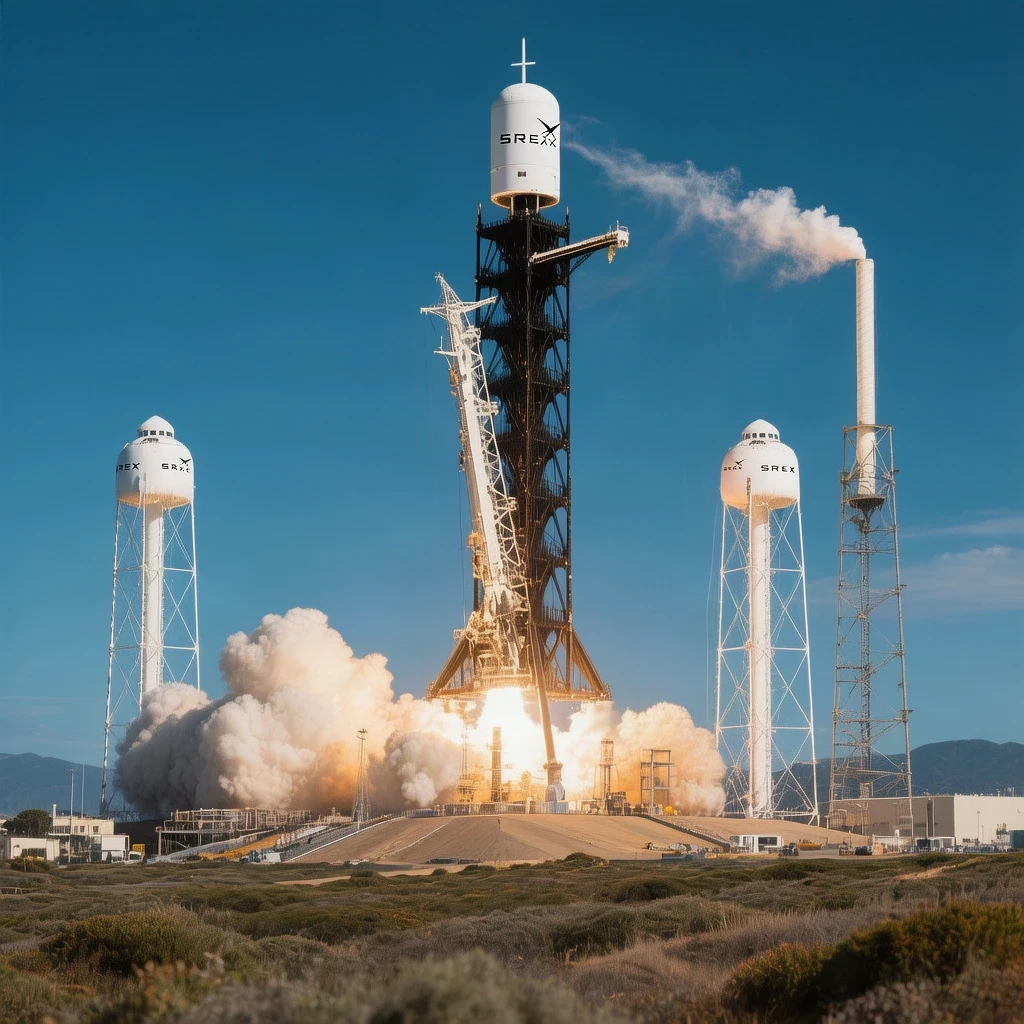
The monumental acceleration of aerospace engineering and commercial orbital deployment has reached an unprecedented zenith as SpaceX marks its fiftieth West Coast launch of the year. This extraordinary milestone, anchored by the successful liftoff of twenty-four Starlink satellites from Vandenberg Space Force Base, redefines the operational boundaries of low-Earth orbit constellations. Industry analysts and aerospace authorities recognize this cadence not merely as a logistical triumph, but as a paradigm shift in global telecommunications infrastructure.
Commercial satellite internet deployment has transitioned from experimental architecture to an omnipresent utility, fundamentally altering how remote connectivity, maritime communications, and high-frequency data routing operate across continents. By establishing a relentless launch tempo, SpaceX continues to mitigate orbital decay challenges while exponentially expanding bandwidth capacity. This comprehensive analysis delves into the mechanical, mathematical, and logistical physics governing these orbital mechanics and their profound implications for the future of digital connectivity.
On This Page
Orbital Dynamics and Launch Cadence Mathematics
The sheer frequency of modern rocket launches requires an exquisite synchronization of celestial mechanics, atmospheric modeling, and propellant thermodynamics. Achieving fifty launches from a single regional base within a compressed temporal window demands absolute precision in trajectory optimization and booster recovery protocols. Every Falcon 9 flight relies on rigorous calculus to balance gravitational parameters against orbital insertion velocities, ensuring payloads achieve their designated low-Earth orbit altitudes safely and efficiently.
To understand the mechanics of these frequent deployments, one must examine the fundamental equations governing rocket propulsion and orbital injection. The delta-V requirement for reaching a polar low-Earth orbit from Vandenberg Space Force Base is dictated by the Earth's rotational velocity vector and atmospheric drag coefficients. Mathematical modeling of these trajectories ensures minimal energy expenditure while maximizing payload mass fractions for each batch of Starlink satellites.
In this Tsiolkovsky rocket equation variant, ##v_{e}## represents the effective exhaust velocity, ##m_{0## is the initial wet mass, ##m_{f## is the dry mass, and the subtractive gravitational term accounts for gravity losses during vertical ascent. Let us evaluate a sample calculation for a standard Falcon 9 booster stage insertion parameter. Consider a total initial mass of ##549,054 \text{ kg}## and a dry structural mass of ##33,000 \text{ kg##, operating with an effective exhaust velocity of ##3,000 \text{ m/s}## over a nominal burn duration.
Computing the theoretical ideal delta-V yields an exceptionally high value, which is then adjusted for gravitational drag and steering losses during the pitch-over maneuver. Advanced computational scripts running telemetry simulations handle these optimizations dynamically.
import math

def calculate_ideal_deltav(m_zero, m_dry, v_exhaust):
    mass_ratio = m_zero / m_dry
    ideal_dv = v_exhaust * math.log(mass_ratio)
    return ideal_dv

m0 = 549054.0
mf = 33000.0
ve = 3000.0

result_dv = calculate_ideal_deltav(m0, mf, ve)
print(f"Ideal Delta-V: {result_dv:.2f} m/s")
Orbital Constellation Scaling and Geometric Distribution
The rapid deployment of thousands of satellites into low-Earth orbit transforms the spatial density of our upper atmosphere. Maintaining precise orbital planes prevents inter-satellite collisions and ensures uniform global coverage. Each satellite operates within a tightly controlled orbital shell, utilizing onboard ion thrusters to execute station-keeping maneuvers.
Geometric distribution models dictate that as the total number of operational nodes increases, inter-satellite laser links must dynamically reroute data packets across the mesh network. This decentralized architecture eliminates terrestrial bottlenecks, providing high-speed internet access to isolated geographical regions without relying on traditional undersea fiber-optic cables.
Bandwidth Allocation and Signal Propagation Physics
Electromagnetic wave propagation through the troposphere and ionosphere introduces distinct attenuation challenges for Ka-band and Ku-band communications. Atmospheric moisture, rain fade, and thermal noise dictate the signal-to-noise ratio required for reliable terminal downlink performance. Advanced phased-array antennas onboard each satellite dynamically steer beams to maintain uninterrupted connections with ground stations.
Calculating link budgets requires rigorous mathematical modeling of free-space path loss and atmospheric absorption coefficients. The Friis transmission equation serves as the foundational framework for evaluating received power relative to transmitter characteristics and propagation distance.
Let us calculate the received power ##P_{r## given a transmitter power ##P_{t} = 10 \text{ W}##, transmitting antenna gain ##G_{t} = 100##, receiving antenna gain ##G_{r} = 50##, wavelength ##\lambda = 0.025 \text{ m## (corresponding to 12 GHz Ku-band), and an orbital slant range distance ##d = 550,000 \text{ m##.
Execution of the Friis transmission formula in software allows engineers to map signal degradation across varied orbital inclinations and user terminal locations.
import math

def calculate_received_power(Pt, Gt, Gr, wavelength, distance):
    numerator = wavelength * wavelength * Pt * Gt * Gr
    denominator = (4 * math.pi * distance) ** 2
    return numerator / denominator

Pt = 10.0
Gt = 100.0
Gr = 50.0
lam = 0.025
d = 550000.0

pr = calculate_received_power(Pt, Gt, Gr, lam, d)
print(f"Received Power: {pr:.6e} Watts")
Vandenberg Operations and Infrastructure Scaling
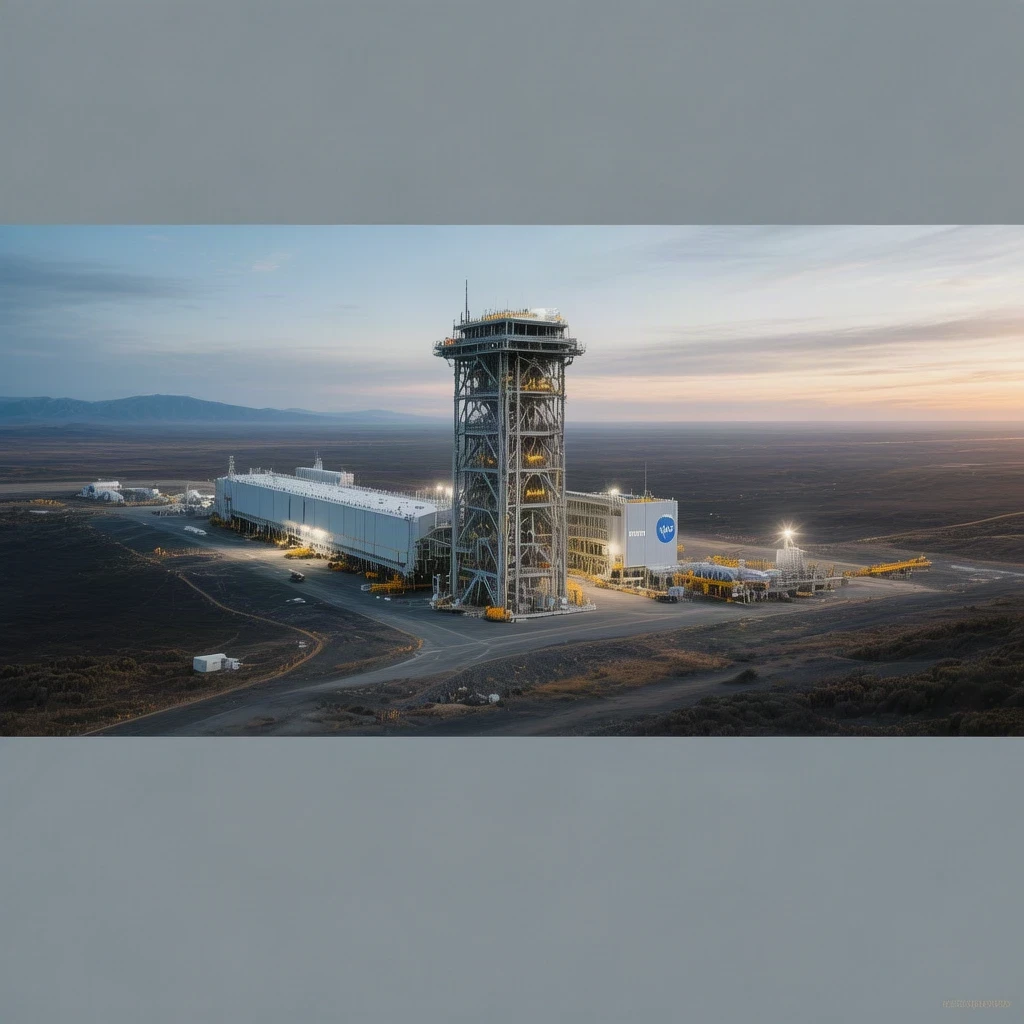
The strategic importance of Vandenberg Space Force Base in SpaceX's operational roadmap cannot be overstated. Situated on the central coast of California, this launch facility provides optimal geography for inserting payloads into high-inclination and polar orbits. Achieving fifty launches from this single site within a calendar year demonstrates a mature, highly repeatable manufacturing and logistical framework.
Ground support equipment, pad turnaround times, and regulatory coordination have been streamlined to unprecedented levels. This operational velocity ensures that constellation replenishment occurs continuously, offsetting natural orbital decay and accommodating growing subscriber demand across global markets without interruption.
Pad Turnaround Efficiency and Booster Reuse
The economic viability of mega-constellations rests entirely upon rapid booster reuse and minimal launch pad refurbishment. Falcon 9 first-stage boosters routinely land on autonomous droneships stationed off the Pacific coast or return to landing pads near the launch complex. This closed-loop operational cycle drastically reduces unit production costs per launch.
Maintaining a fifty-launch cadence from the West Coast requires strict adherence to maintenance schedules and non-destructive testing of structural components. Thermal protection systems, Merlin engine nozzles, and grid fins undergo rigorous post-flight inspections to certify them for subsequent missions within weeks of recovery.
Regulatory Frameworks and Airspace Management
Managing fifty annual launches from a coastal military base requires flawless coordination with the Federal Aviation Administration, the United States Coast Guard, and international maritime authorities. Airspace closures and maritime exclusion zones must be scheduled meticulously to prevent commercial aviation disruptions while maintaining absolute public safety standards.
Environmental impact assessments and wildlife protection protocols along the California coastline add layers of complexity to launch operations. SpaceX works closely with regulatory agencies to monitor marine mammal populations and minimize acoustic disturbances during supersonic boost-back burns and atmospheric re-entry phases.
We Also Published
Global Telecommunications Impact and Future Horizons
The proliferation of low-Earth orbit satellite internet constellations fundamentally reshapes the global economic landscape by bridging the digital divide for underserved populations. Rural communities, maritime vessels, and airborne commercial fleets now access broadband speeds previously restricted to major urban centers. This ubiquitous connectivity stimulates economic growth, remote education, and telemedicine delivery on an unprecedented international scale.
Looking ahead, the integration of direct-to-cell capabilities promises to eliminate cellular dead zones entirely, allowing standard mobile devices to communicate seamlessly via orbiting hardware. As launch cadences continue to accelerate, the boundary between terrestrial and space-based telecommunications will dissolve permanently.
Direct-to-Cell Integration and Cellular Synergy
The evolution of Starlink extends beyond fixed-location residential terminals into direct-to-cellular architectures designed to partner with existing telecommunications providers. By deploying specialized payloads equipped with advanced eNodeB hardware, orbiting satellites function essentially as cellular cell towers in space. This breakthrough enables standard LTE and 5G smartphones to receive signals in remote wilderness areas without requiring modified hardware or bulky external antennas.
Analyzing the Doppler shift and propagation delay inherent in low-Earth orbit satellite communications requires sophisticated digital signal processing algorithms. Because satellites travel at speeds exceeding seven kilometers per second relative to the Earth's surface, frequency offsets must be compensated dynamically in real-time.
Let us evaluate the maximum Doppler shift ##f_{d## for a carrier frequency ##f_{0} = 1.9 \text{ GHz## (PCS cellular band), relative satellite velocity ##v_{r} = 7,500 \text{ m/s##, speed of light ##c = 3 \times 10^{8} \text{ m/s##, and direct overhead alignment where ##\cos(\theta) = 1##.
Simulating this frequency shift programmatically ensures that modem firmware can lock onto signals instantaneously upon satellite acquisition.
def calculate_doppler_shift(f_carrier, v_rel, c_light, cos_theta):
    return f_carrier * (v_rel / c_light) * cos_theta

f0 = 1.9e9
vr = 7500.0
c = 3.0e8
cos_t = 1.0

fd = calculate_doppler_shift(f0, vr, c, cos_t)
print(f"Doppler Shift: {fd / 1000.0:.2f} kHz")
Orbital Sustainability and Space Traffic Management
The exponential growth of low-Earth orbit constellations places immense responsibility on operators to maintain pristine orbital hygiene. Debris mitigation strategies, including passive atmospheric reentry upon mission completion and active collision avoidance automated by artificial intelligence, are vital for preserving the orbital environment for future generations.
Space traffic management protocols require unprecedented international cooperation and real-time telemetry sharing among space agencies and commercial entities. As launch frequencies continue to rise, adherence to strict orbital safety standards will determine the long-term viability of commercial space exploitation.
From our network :
- AI-Powered 'Precision Diagnostic' Replaces Standard GRE Score ReportsDiscover the new GRE Precision Diagnostic. Learn how AI-powered behavioral analytics and time-to-solve tracking are replacing standard GRE score reports to empower students.
- Analyzing Trump Deportation Numbers Insights Into The 2026 Immigration Crackdown
- 98% of Global MBA Programs Now Prefer GRE Over GMAT Focus EditionExplore why 98% of global MBA programs now prefer the GRE over GMAT Focus. Learn about the shorter GRE format, verbal logic importance, and strategic versatility for students.
- EV 2.0: The Solid-State Battery Breakthrough and Global Factory ExpansionDiscover the impact of the Solid-State Battery Breakthrough on the EV market. Learn about CATL and BYD stock growth, global factory expansion in Europe, and the future of EV 2.0 technology.
- Mastering DB2 12.1 Instance Design: A Technical Deep Dive into Modern Database ArchitectureComprehensive guide to DB2 12.1 Instance Design. Explore architectural components, HADR setup, buffer pool tuning, and security policies for IBM DB2 12.1. Includes 10 functional SQL and Shell samples.
- Vite 6/7 'Cold Start' Regression in Massive Module GraphsIn-depth analysis of Vite 6/7 cold start regressions in massive module graphs. Learn about barrel file issues, pre-bundling optimizations, and how to improve Vite dev server performance.
- Mastering DB2 LUW v12 Tables: A Comprehensive Technical GuideComprehensive guide on DB2 LUW v12 tables. Explore CREATE TABLE syntax, BLU Acceleration, range partitioning, data types, and security features for IBM DB2 LUW v12.
- Trump Political Strategy How Geopolitical Stunts Serve As Media Diversions
- 10 Physics Numerical Problems with Solutions for IIT JEEPrepare for IIT JEE with 10 physics numerical problems, complete with detailed solutions and conceptual explanations. Ideal for mastering kinematics, thermodynamics, electromagnetism, and optics.
RESOURCES
- SpaceX West Coast launch surge continues with Starlink missionspaceflightnow.com2 days ago ... ... satellites for its internet service going into orbit atop a Falcon 9 rocket. Liftoff of the Starlink 17-38 mission…
- SpaceX Starlink rocket launches increasing in California: Here's whyvcstar.comJul 23, 2025 ... Florida: Why does SpaceX launch Starlink satellites from Vandenberg? ... Starlink mission to deploy internet satellites into orbit. What's ...
- SpaceX launches 24 Starlink satellites on Falcon 9 rocket from ...spaceflightnow.comJun 3, 2026 ... Update June 3, 11:50 a.m. EDT (1550 UTC): SpaceX confirmed deployment of the 24 Starlink satellites. SpaceX is set to…
- SpaceX planning Saturday morning launch from Vandenberg SFBfacebook.comMay 29, 2026 ... SpaceX to Launch 46 Starlink Satellites Tonight from Vandenberg Space Force Base in California - Space Coast Daily.
- SpaceX launches 50th rocket from West Coast this year - KTLAktla.com2 days ago ... The Falcon 9 rocket lifted off from Vandenberg Space Force Base carrying 24 Starlink internet satellites. SpaceX later confirmed that…
- Vandenberg Space Force Base - Facebookfacebook.comApr 29, 2026 ... SpaceX successfully launched, landed and deployed another 24 Starlink satellites ... The rocket will launch west/southwest over the ...
- Guardians and Airmen at Vandenberg Space Force Base supported ...instagram.comApr 6, 2026 ... ... Starlink satellite deployment and what SpaceX called its best re-entry yet. ... A SpaceX rocket launched 24 Starlink satellites…
- Not just Starship. SpaceX to launch Falcon 9 in California againdesertsun.comJul 24, 2026 ... A Falcon 9 rocket is scheduled to deploy 24 Starlink internet satellites into low-Earth orbit. The mission can be viewed…
- The U.S. Space Force has approved the launch of a SpaceX Falcon ...instagram.comJul 20, 2026 ... ... West Coast Spaceport and Test Range at Vandenberg ... The Falcon 9 rocket will deploy 24 satellites, enhancing global…


0 Comments