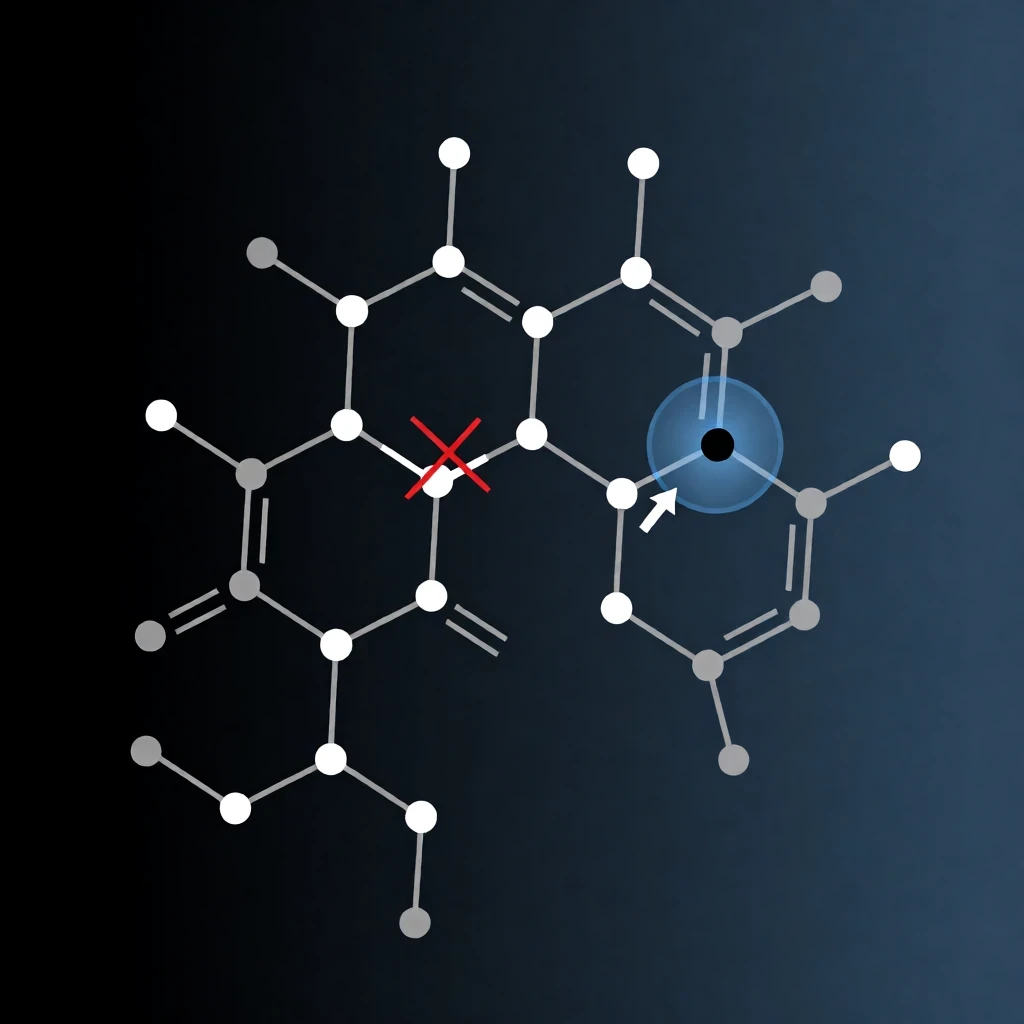
Medicinal chemistry has long operated on a costly assumption: that discovering a genuinely new drug requires building a genuinely new molecule, atom by atom, from the ground up. That assumption is now being dismantled by a discipline called skeletal editing, which treats an existing molecular framework as a manuscript to be revised rather than a structure to be rebuilt. The central proposition is deceptively simple — reach into a proven scaffold and swap a single carbon atom for a nitrogen atom, and you may emerge with a compound possessing different biological properties, better metabolic stability, or improved solubility, all without abandoning the synthetic route that produced the original.
This matters enormously because drug discovery is not primarily an intellectual exercise; it is an industrial pipeline governed by attrition, cost, and time. A typical development campaign consumes years and enormous capital before a single candidate reaches clinical trials, and the overwhelming majority of candidates fail. When chemists can modify a validated scaffold rather than restart from an empty flask, they compress timelines, preserve intellectual property positions, and exploit the accumulated knowledge embedded in existing structure-activity relationships. The carbon-to-nitrogen swap sits at the heart of this shift, converting familiar ring systems into nitrogenous analogues with altered electronics and geometry.
The following analysis examines skeletal editing as a technical discipline, unpacks the mechanistic logic of single-atom transmutation, and traces how it reshapes the daily workflow of medicinal chemists. It moves from conceptual foundations through concrete synthetic strategies, quantitative structure-property reasoning, and the practical constraints that determine when editing outperforms de novo synthesis. Readers seeking to understand why a one-atom change can constitute a new medicine rather than a cosmetic tweak will find the answer distributed across mechanism, thermodynamics, and pharmacology.
On This Page
- The Conceptual Foundations of Skeletal Editing
- Mechanistic Strategies for Single-Atom Transmutation
- Quantifying the Consequences of a Single Swap
- Rewriting the Medicinal Chemistry Workflow
- Limits, Risks, and the Boundaries of the Method
- Mathematical Framework for Editing Decisions
- The Future of Atom-Level Drug Design
The Conceptual Foundations of Skeletal Editing
Skeletal editing is the deliberate, controlled modification of a molecular framework's core connectivity — the ring systems and linking atoms that define a compound's three-dimensional shape. Unlike functional group interconversion, which decorates the periphery of a molecule, skeletal editing alters the scaffold itself. This distinction is fundamental because the scaffold dictates how a molecule presents itself to a protein binding pocket, how it partitions between aqueous and lipid environments, and how it is recognized by metabolic enzymes.
The intellectual lineage of skeletal editing reaches back to classical ring-expansion and ring-contraction reactions, but the modern version is distinguished by its precision and its ambition. Contemporary practitioners aim for single-atom insertions, deletions, and substitutions within intact rings, often under mild conditions compatible with complex functionality. The field has matured rapidly because it addresses a genuine bottleneck: the synthesis of diverse scaffolds remains one of the slowest and most resource-intensive steps in lead optimization.
Why the Scaffold Governs Biological Fate
A drug's scaffold determines its overall molecular geometry, and geometry determines complementarity with a biological target. Two compounds sharing identical functional groups but differing in scaffold can exhibit radically different binding affinities, because the spatial arrangement of hydrogen bond donors and acceptors is what the protein actually reads. Skeletal editing therefore operates on the most consequential variable in the medicinal chemistry equation.
Beyond binding, the scaffold controls pharmacokinetics. Ring systems influence metabolic soft spots, plasma protein binding, and membrane permeability. Replacing a carbon with nitrogen within a ring can introduce a hydrogen bond acceptor, reduce lipophilicity by a predictable increment, and block a site of oxidative metabolism simultaneously. These are not marginal effects; they frequently determine whether a compound survives first-pass metabolism or accumulates to therapeutic concentrations.
Consider the aromatic ring as an illustrative case. Benzene and pyridine differ by a single atom substitution, yet their electronic characters diverge sharply. The nitrogen lone pair in pyridine withdraws electron density from the ring, lowering the ##[pK_a]## of conjugate acids and altering reactivity toward electrophiles. A medicinal chemist who can convert a benzene ring in a lead compound into a pyridine ring has effectively installed a metabolic blocking group and a solubilizing handle in one operation.
The conceptual payoff is that skeletal editing converts scaffold diversity from a synthetic problem into an editing problem. Instead of designing a new route for every scaffold variant, chemists design a single route to a versatile intermediate and then diversify by atom-level surgery. This reframing is what allows the field to promise acceleration rather than mere novelty.
The Carbon-Nitrogen Swap as a Chemical Operation
Replacing a carbon atom with nitrogen inside a ring is formally a transmutation, and transmutations require careful accounting of valence, charge, and orbital occupancy. A carbon atom in an aromatic ring contributes one electron to the ##\pi## system and typically bears one hydrogen. A nitrogen atom in the same position contributes two electrons from its lone pair or one electron plus a formal charge, depending on the ring's electronic demands.
The simplest formal description treats the transformation as a single-atom skeletal substitution, but the mechanistic reality involves sequential bond-breaking and bond-forming events. Common strategies include nitrene insertion into ##C-H## or ##C-C## bonds, ring contraction of azides with nitrogen extrusion, and the conversion of cyclic ketones into lactams followed by deoxygenation. Each route imposes different functional group tolerance and different regiochemical constraints.
Quantitatively, the swap alters molecular formula by replacing ##CH## with ##N##, a net change of ##-1## in hydrogen count and ##+1## in nitrogen count, with the carbon count decreasing by one. The resulting change in molecular weight is small — approximately ##-1.0## atomic mass units — but the change in hydrogen bond acceptor count is decisive. Lipinski-style rules track these acceptors closely, and a single new acceptor can shift a compound across a permeability threshold.
The electronic consequences propagate through the entire ##\pi## system. Replacing a ring carbon with nitrogen lowers the highest occupied molecular orbital energy in electron-poor heterocycles and raises it in electron-rich ones, depending on substitution pattern. These orbital shifts translate directly into altered reactivity, altered metabolic susceptibility, and altered binding thermodynamics — the three axes along which medicinal chemists optimize.
Mechanistic Strategies for Single-Atom Transmutation
Executing a carbon-to-nitrogen swap demands a reaction that can break a robust ##C-C## or ##C-H## bond and forge a ##C-N## bond without collateral damage to the rest of the molecule. This is a demanding specification, because drug-like molecules bristle with functional groups that react indiscriminately with strong oxidants, electrophiles, and radicals. The strategies that have proven viable share a common virtue: they generate a reactive nitrogen species in close proximity to the target bond.
Three families dominate contemporary practice. Nitrene transfer chemistry generates an electrophilic or nucleophilic nitrogen fragment that inserts into a ##C-H## bond. Ring contraction of cyclic azides extrudes molecular nitrogen while reorganizing the skeleton. Carbonyl-to-nitrogen conversions transform cyclic ketones into lactams or amidines, then strip the oxygen. Each family carries distinct regiochemical preferences and functional group tolerances that determine its applicability.
Nitrene Insertion and Its Energetic Landscape
A nitrene is a neutral species bearing a nitrogen atom with six valence electrons, making it electron-deficient and highly reactive. When generated photochemically or via transition-metal catalysis, a nitrene can insert into an unactivated ##C-H## bond, forming a new ##C-N## bond and a new ##N-H## bond in a single concerted or stepwise event. The insertion converts a ##CH_2## group into an ##NH## group within the skeleton.
The energetic feasibility of this insertion depends on the bond dissociation energy of the target ##C-H## bond and the stability of the resulting nitrene. For a secondary ##C-H## bond in an aliphatic ring, the bond dissociation energy is approximately ##400## kJ/mol, while the insertion is exothermic by roughly ##150## to ##200## kJ/mol depending on the nitrene precursor. These figures explain why nitrene insertions proceed readily at or below room temperature.
Regioselectivity is the persistent challenge. A molecule with multiple inequivalent ##C-H## bonds will produce a mixture of insertion products unless the nitrene is directed by steric or electronic bias. Modern solutions employ directing groups that coordinate the metal catalyst and deliver the nitrene to a specific position, or they exploit the intrinsic reactivity differences between tertiary, secondary, and primary ##C-H## bonds.
The kinetic isotope effect provides a diagnostic window into mechanism. If ##C-H## cleavage is rate-determining, replacing hydrogen with deuterium slows the reaction by a factor of ##k_H/k_D \approx 3## to ##10##. Observed isotope effects in this range confirm concerted insertion, while values near unity suggest a stepwise pathway with a discrete radical intermediate.
Ring Contraction and Expansion Tactics
Ring contraction offers an alternative route to skeletal transmutation by reorganizing the carbon framework while introducing nitrogen. A cyclic ketone can be converted to a cyclic azide, which upon thermolysis or photolysis extrudes ##N_2## and contracts the ring by one carbon, leaving a nitrogen atom in the new ring. The expelled carbon departs as a stable small molecule, driving the reaction forward.
The thermodynamic driving force is substantial. Dinitrogen is among the most stable diatomic molecules known, with a bond dissociation energy of ##945## kJ/mol. Azide decomposition therefore proceeds with a large negative free energy change, often exceeding ##-100## kJ/mol, which compensates for the strain introduced by ring contraction. This is why azide-based contractions tolerate a wide range of functional groups.
Ring expansion operates in the opposite direction, inserting a nitrogen atom into an existing ring to generate a larger heterocycle. This is typically achieved through the reaction of a cyclic ketone with a nitrogen source followed by a rearrangement, such as the Beckmann or Schmidt transformation. The resulting lactam can be further elaborated or deoxygenated to yield an amine-containing ring.
Choosing between contraction and expansion depends on the target scaffold and the available starting material. Contraction is favored when a smaller ring is desired and a suitable cyclic ketone is accessible. Expansion is favored when the target requires a larger ring or when the starting material is a readily available smaller carbocycle. Both strategies preserve the majority of the original molecular investment.
Quantifying the Consequences of a Single Swap
Medicinal chemists do not evaluate structural changes in isolation; they evaluate them against quantitative descriptors that predict absorption, distribution, metabolism, and excretion. A carbon-to-nitrogen swap perturbs these descriptors in ways that can be calculated with reasonable confidence before any compound is synthesized. This predictive capacity is what makes skeletal editing a rational design strategy rather than a speculative gamble.
The most immediate descriptor change is lipophilicity. Replacing a ##CH## unit with ##N## reduces the calculated partition coefficient by approximately ##1.0## to ##1.5## log units, depending on the surrounding electronic environment. This reduction can rescue a compound that was too lipophilic for adequate aqueous solubility, or it can push a compound below the threshold for passive membrane permeability. The direction of benefit depends entirely on the starting point.
Lipophilicity, Permeability, and the Golden Range
Passive permeability across the intestinal epithelium is governed by a compound's balance of lipophilicity and polar surface area. The empirical rule of thumb holds that optimal permeability occurs when ##\log P## falls between ##1## and ##3## and polar surface area remains below ##140## Ų. A single nitrogen substitution can move a compound into or out of this window with remarkable efficiency.
Consider a hypothetical lead compound with ##\log P = 4.2## and polar surface area of ##60## Ų. It is highly permeable but poorly soluble, a common failure mode. Introducing a nitrogen into an aromatic ring lowers ##\log P## to approximately ##2.9## and raises polar surface area to ##72## Ų. The compound now sits comfortably within the golden range, with improved solubility and preserved permeability.
The relationship between ##\log P## and permeability is not monotonic. At very low lipophilicity, compounds partition poorly into lipid bilayers and permeability collapses. At very high lipophilicity, compounds become substrates for efflux transporters and exhibit poor aqueous dissolution. The nitrogen swap is a tool for navigating this inverted-U relationship, not a universal improvement.
Formally, the permeability coefficient ##P_{app}## can be modeled as a function of lipophilicity and polar surface area through an empirical relationship of the form ##\log P_{app} = a \cdot \log P - b \cdot \text{PSA} + c##, where ##a##, ##b##, and ##c## are fitted constants. The negative coefficient on polar surface area captures the penalty for desolvation, while the positive coefficient on ##\log P## captures the benefit of membrane partitioning.
Metabolic Stability and the Blocking Effect
Metabolic stability determines how long a drug persists in the body, and it is frequently the limiting factor in oral dosing. Cytochrome P450 enzymes oxidize electron-rich aromatic rings and aliphatic ##C-H## bonds, and the rate of oxidation correlates with the electron density at the site of attack. Introducing nitrogen into a ring withdraws electron density and renders the ring less susceptible to oxidation.
The quantitative effect can be substantial. A benzene ring oxidized with a half-life of ##15## minutes in liver microsomes may, upon conversion to pyridine, exhibit a half-life exceeding ##60## minutes. This fourfold improvement in metabolic stability can translate directly into a longer dosing interval and a lower required dose, both of which improve the therapeutic index and patient compliance.
The blocking effect is not without cost. Nitrogen-containing heterocycles can themselves be oxidized at the nitrogen atom, producing ##N##-oxides that may be reactive or toxic. The medicinal chemist must therefore evaluate not only the parent compound's stability but also the identity and safety of its metabolites. Skeletal editing shifts the metabolic profile rather than eliminating metabolism entirely.
Isotope labeling provides a rigorous method for quantifying these effects. Synthesizing the deuterated analogue at the suspected oxidation site and measuring the kinetic isotope effect reveals whether that specific ##C-H## bond is rate-limiting for metabolism. An isotope effect of ##k_H/k_D > 2## confirms the site, guiding subsequent editing decisions with molecular precision.
We Also Published
Rewriting the Medicinal Chemistry Workflow
The practical significance of skeletal editing lies less in any single reaction than in how it reorganizes the sequence of decisions that constitute drug discovery. Traditional workflows begin with hit identification, proceed through scaffold synthesis, and then optimize by decorating the periphery. Skeletal editing inserts a new degree of freedom — scaffold modification — that can be exercised late in the campaign without restarting synthesis.
This late-stage capability is transformative because it allows chemists to respond to problems that only emerge after extensive testing. If a lead compound fails due to metabolic instability, a nitrogen swap can be attempted on the existing scaffold rather than requiring a new synthetic route. If solubility is inadequate, the same swap may resolve it. The workflow becomes iterative and responsive rather than linear and brittle.
From Linear Synthesis to Iterative Editing
Linear synthesis commits the chemist to a route before biological data are available, and any scaffold change invalidates the route. Iterative editing inverts this logic by treating the scaffold as a mutable object that can be revised in response to data. The synthetic investment shifts from building diverse scaffolds to building versatile intermediates that can be edited in multiple directions.
The economic implications are considerable. A typical lead optimization campaign may synthesize several hundred analogues, and each analogue requires a bespoke route. If even a fraction of those analogues can be accessed by editing a common intermediate, the savings in time, materials, and skilled labor compound rapidly. This is why pharmaceutical organizations have invested heavily in skeletal editing methodology.
The workflow also changes the nature of intellectual property. A patent claiming a scaffold and its derivatives is strengthened when the derivatives can be accessed by a documented editing route, because the route itself becomes a protected asset. Competitors cannot simply replicate the compounds without navigating the same synthetic territory, which raises the barrier to entry.
Computational tools increasingly support this iterative model. Machine learning models trained on reaction databases can predict which editing reactions will succeed on a given substrate, and retrosynthetic algorithms can propose editing sequences that reach a target scaffold from available starting materials. These tools compress the design cycle from weeks to hours.
Case Logic: Editing a Known Drug Scaffold
The most persuasive demonstration of skeletal editing's value is the modification of an approved drug to address a limitation that emerged in the clinic. Consider a kinase inhibitor whose efficacy is compromised by rapid metabolic clearance. Rather than abandoning the scaffold, chemists can introduce nitrogen at a metabolic soft spot, blocking oxidation while preserving the binding pharmacophore.
The strategy requires precise knowledge of the metabolic pathway. If the soft spot is a ##C-H## bond on an aromatic ring, the nitrogen swap must be positioned to withdraw electron density from that specific carbon. If the soft spot is an aliphatic ##C-H## bond, a different editing strategy — such as nitrene insertion or hydrogen atom transfer — may be required. The choice of reaction follows from the metabolic data.
Once the edited analogue is synthesized, it must be re-evaluated across the full panel of assays. Binding affinity may shift, selectivity against related kinases may change, and the metabolite profile must be re-characterized. Skeletal editing accelerates the synthesis, but it does not eliminate the need for rigorous pharmacological evaluation. The compound is new, and it must be treated as such.
The regulatory dimension is equally important. An edited analogue of an approved drug is a new chemical entity, not a reformulation, and it must traverse the full approval pathway. The advantage lies in the reduced risk of the starting scaffold, not in a shortened regulatory process. Skeletal editing compresses discovery timelines; it does not bypass clinical validation.
Limits, Risks, and the Boundaries of the Method
No synthetic strategy is universal, and skeletal editing carries constraints that temper its promise. The most significant is functional group intolerance: many editing reactions require conditions that destroy sensitive groups such as alcohols, amines, or boronic acids. A molecule that cannot survive the editing conditions cannot be edited, regardless of how attractive the target scaffold may be.
Regioselectivity presents a second constraint. Molecules with multiple potential editing sites produce mixtures, and separating those mixtures can consume more effort than the synthesis would have required. Directed strategies mitigate this problem but add complexity and often require protecting group manipulations that erode the efficiency gains. The method is most powerful on substrates with a single accessible site.
Functional Group Intolerance and Regiochemical Ambiguity
Nitrene chemistry is particularly sensitive to nucleophilic functional groups. An alcohol will react with an electrophilic nitrene to form an ##O-H## insertion product, consuming the reagent and generating an unwanted byproduct. An amine will react even faster. Protecting group strategies can mask these groups, but each protection and deprotection adds steps and reduces overall yield.
Regiochemical ambiguity arises when a substrate presents multiple ##C-H## bonds of similar strength. Statistical mixtures result, and the desired product may constitute only a fraction of the total. Computational prediction of site selectivity has improved, but it remains imperfect for complex substrates. The practical consequence is that editing is most reliable on relatively simple scaffolds.
Scale presents a third constraint. Many editing reactions have been demonstrated only on milligram quantities, and translation to gram or kilogram scale introduces challenges in mixing, heat transfer, and reagent availability. Process chemists must re-optimize reactions that worked beautifully in a vial, and some transformations prove resistant to scale-up. Commercial viability depends on solving these problems.
Finally, the biological consequences of editing are not always predictable. A nitrogen swap that improves metabolic stability may simultaneously reduce binding affinity, and the net effect may be unfavorable. The method generates hypotheses rapidly, but each hypothesis must be tested experimentally. Skeletal editing accelerates the generation of candidates; it does not guarantee that any candidate will succeed.
Safety, Selectivity, and the Unintended Metabolite
Introducing nitrogen into a scaffold can create new metabolic liabilities even as it resolves old ones. Nitrogen-containing heterocycles are susceptible to ##N##-oxidation, producing metabolites that may be reactive, toxic, or pharmacologically active in unintended ways. The medicinal chemist must characterize the full metabolite profile of every edited compound, not merely the parent.
Reactive metabolite formation is a particular concern. Aromatic amines and nitro groups are well-known toxicophores, and editing reactions that generate these motifs must be scrutinized carefully. The presence of a nitrogen atom in a ring does not automatically create a toxicophore, but it changes the electronic landscape in ways that can activate latent pathways. Vigilance is essential.
Selectivity against off-target proteins must also be re-established. A compound that was selective for its intended target may lose selectivity after editing, because the change in shape and electronics alters interactions with related proteins. Kinase inhibitors are especially vulnerable, given the large family of structurally similar targets. Each edited compound requires a fresh selectivity panel.
These risks do not diminish the value of skeletal editing; they define its proper scope. The method is a powerful tool for generating and testing hypotheses about structure-activity relationships, and it is most valuable when applied to well-characterized scaffolds with known liabilities. Used with appropriate caution, it compresses timelines without compromising rigor.
Mathematical Framework for Editing Decisions
Decisions about whether to edit or rebuild can be formalized using expected-value reasoning. Each synthetic route carries a probability of success, a cost in time and materials, and a value if successful. Comparing the expected value of editing against the expected value of de novo synthesis provides a rational basis for choosing between them, replacing intuition with arithmetic.
The framework also accommodates the sequential nature of optimization. Editing decisions are not made once but repeatedly, as data accumulate and priorities shift. A dynamic model that updates success probabilities after each experiment captures this iterative character more faithfully than a static comparison. The mathematics of sequential decision-making, borrowed from operations research, applies directly.
Expected Value of an Editing Campaign
Let ##p_e## denote the probability that an editing reaction succeeds on a given substrate, ##C_e## the cost of the editing campaign, and ##V## the value of a successful analogue. The expected value of editing is ##E_e = p_e \cdot V - C_e##. The corresponding expression for de novo synthesis uses ##p_d## and ##C_d##, and the rational choice is the option with the higher expected value.
Empirical estimates place ##p_e## between ##0.4## and ##0.7## for well-precedented transformations on simple substrates, falling to ##0.2## or below for complex molecules with sensitive functionality. De novo synthesis of a novel scaffold typically carries ##p_d## between ##0.3## and ##0.5##, reflecting the uncertainty inherent in route design. Editing wins when ##p_e## is high and ##C_e## is low.
The cost differential is often decisive. An editing campaign may require two to three synthetic steps, while a de novo route may require eight to twelve. If each step costs approximately the same in labor and materials, the editing campaign is three to five times cheaper. This ratio explains why editing is attractive even when its success probability is only modestly higher.
Formally, editing is preferred whenever ##p_e \cdot V - C_e > p_d \cdot V - C_d##, which rearranges to ##(p_e - p_d) \cdot V > C_e - C_d##. The left side is the value of the probability advantage, and the right side is the cost disadvantage. When the probability advantage is large relative to the cost disadvantage, editing dominates.
Kinetic Modeling of Metabolic Stabilization
The metabolic benefit of a nitrogen swap can be modeled using Michaelis-Menten kinetics. The rate of oxidation is ##v = \dfrac{V_{max} \cdot [S]}{K_m + [S]}##, where ##V_{max}## reflects enzyme concentration and catalytic efficiency, and ##K_m## reflects substrate affinity. A nitrogen substitution that reduces ##V_{max}## or increases ##K_m## lowers the oxidation rate and extends half-life.
The half-life of the compound in a microsomal preparation is related to the intrinsic clearance by ##t_{1/2} = \dfrac{\ln 2 \cdot V_d}{CL_{int}}##, where ##V_d## is the volume of distribution and ##CL_{int}## is intrinsic clearance. Reducing ##CL_{int}## by a factor of four, as in the earlier example, extends the half-life by the same factor, from ##15## to ##60## minutes.
Scaling from microsomes to humans requires allometric scaling, which relates clearance to body weight through a power law: ##CL_{human} = CL_{animal} \cdot \left(\dfrac{W_{human}}{W_{animal}}\right)^{0.75}##. The exponent ##0.75## reflects the scaling of metabolic rate with mass. This relationship allows preclinical data to inform human dose predictions.
The final dose prediction follows from ##Dose = \dfrac{CL \cdot C_{ss} \cdot \tau}{F}##, where ##C_{ss}## is the target steady-state concentration, ##\tau## is the dosing interval, and ##F## is bioavailability. A fourfold reduction in clearance translates directly into a fourfold reduction in dose, which improves the therapeutic index and reduces the burden on formulation.
The Future of Atom-Level Drug Design
Skeletal editing is still a young discipline, but its trajectory is clear. Methodological advances are expanding the range of accessible transformations, computational tools are improving predictive accuracy, and pharmaceutical organizations are integrating editing into their discovery workflows. The result is a gradual shift in how chemists think about molecular diversity — from building blocks to editable frameworks.
The broader significance extends beyond any single reaction. Skeletal editing embodies a philosophical reorientation: molecules are not fixed objects but malleable structures whose properties can be tuned by precise atomic surgery. This reorientation aligns with parallel developments in computational chemistry, where generative models propose novel scaffolds, and in automation, where robotic platforms execute synthetic sequences without human intervention.
Automation, Machine Learning, and Closed-Loop Discovery
Machine learning models trained on reaction databases can predict the outcome of editing reactions with increasing reliability. These models learn patterns from thousands of examples, capturing subtle relationships between substrate structure, reaction conditions, and product distribution. When integrated into design software, they allow chemists to evaluate editing proposals in silico before committing to synthesis.
Closed-loop discovery platforms combine prediction, synthesis, and testing into a single automated cycle. A model proposes an editing reaction, a robotic system executes it, analytical instruments characterize the product, and the resulting data update the model. Each cycle refines the model's understanding, and the system converges on successful transformations with minimal human intervention.
The code below illustrates a simplified scoring function that ranks candidate editing sites by predicted metabolic stability improvement. It encodes the heuristic that electron-withdrawing nitrogen substitution at electron-rich positions yields the largest stabilization, while penalizing sites adjacent to sensitive functional groups.
import math

def predicted_stabilization(electron_density, adjacent_sensitive, ring_size):
    """Estimate fold-improvement in metabolic half-life after C->N swap."""
    base_gain = 1.0 + 2.5 * electron_density
    if adjacent_sensitive:
        base_gain *= 0.4
    strain_penalty = math.exp(-0.15 * abs(ring_size - 6))
    return base_gain * strain_penalty

candidates = [
    {"site": "C3", "density": 0.82, "sensitive": False, "ring": 6},
    {"site": "C5", "density": 0.61, "sensitive": True,  "ring": 6},
    {"site": "C7", "density": 0.74, "sensitive": False, "ring": 5},
]

for c in candidates:
    score = predicted_stabilization(c["density"], c["sensitive"], c["ring"])
    print(f"Site {c['site']}: predicted fold-gain = {score:.2f}")
The output ranks sites by predicted benefit, guiding experimental prioritization. Such scoring functions are deliberately simple, but they capture the essential logic: electron density drives oxidation susceptibility, sensitive neighbors constrain options, and ring strain modulates reactivity. More sophisticated models incorporate three-dimensional structure and quantum chemical descriptors.
Regulatory and Ethical Horizons
As editing becomes routine, regulators will confront questions about how edited analogues should be classified. A compound differing from an approved drug by a single atom is chemically distinct but pharmacologically related, and the appropriate evidentiary burden may differ from that of a wholly novel entity. Clear frameworks will be needed to guide development decisions.
Ethical considerations also arise. The ability to modify known drugs rapidly could accelerate the creation of follow-on products that offer marginal clinical benefit while imposing new costs on healthcare systems. Balancing innovation incentives against access concerns is a policy challenge that the technical community cannot resolve alone, but it must inform how the technology is deployed.
Environmental considerations are equally relevant. Editing reactions often employ transition-metal catalysts and specialized reagents whose supply chains and waste streams require scrutiny. Green chemistry principles — atom economy, solvent selection, catalyst recovery — apply to editing just as they do to conventional synthesis, and the field's sustainability will depend on how seriously these principles are taken.
None of these considerations diminishes the promise of skeletal editing. They define the context in which the promise will be realized, and they remind us that technical capability and responsible application are inseparable. The carbon-to-nitrogen swap is a powerful instrument, and like all powerful instruments, its value depends on the judgment of those who wield it.
From our network :
- Mastering DB2 12.1 Instance Design: A Technical Deep Dive into Modern Database ArchitectureComprehensive guide to DB2 12.1 Instance Design. Explore architectural components, HADR setup, buffer pool tuning, and security policies for IBM DB2 12.1. Includes 10 functional SQL and Shell samples.
- Mastering DB2 LUW v12 Tables: A Comprehensive Technical GuideComprehensive guide on DB2 LUW v12 tables. Explore CREATE TABLE syntax, BLU Acceleration, range partitioning, data types, and security features for IBM DB2 LUW v12.
- Analyzing Trump Deportation Numbers Insights Into The 2026 Immigration Crackdown
- Trump Political Strategy How Geopolitical Stunts Serve As Media Diversions
- AI-Powered 'Precision Diagnostic' Replaces Standard GRE Score ReportsDiscover the new GRE Precision Diagnostic. Learn how AI-powered behavioral analytics and time-to-solve tracking are replacing standard GRE score reports to empower students.
- Vite 6/7 'Cold Start' Regression in Massive Module GraphsIn-depth analysis of Vite 6/7 cold start regressions in massive module graphs. Learn about barrel file issues, pre-bundling optimizations, and how to improve Vite dev server performance.
- EV 2.0: The Solid-State Battery Breakthrough and Global Factory ExpansionDiscover the impact of the Solid-State Battery Breakthrough on the EV market. Learn about CATL and BYD stock growth, global factory expansion in Europe, and the future of EV 2.0 technology.
- 10 Physics Numerical Problems with Solutions for IIT JEEPrepare for IIT JEE with 10 physics numerical problems, complete with detailed solutions and conceptual explanations. Ideal for mastering kinematics, thermodynamics, electromagnetism, and optics.
- 98% of Global MBA Programs Now Prefer GRE Over GMAT Focus EditionExplore why 98% of global MBA programs now prefer the GRE over GMAT Focus. Learn about the shorter GRE format, verbal logic importance, and strategic versatility for students.
RESOURCES
- Resources will be updated soon.



0 Comments