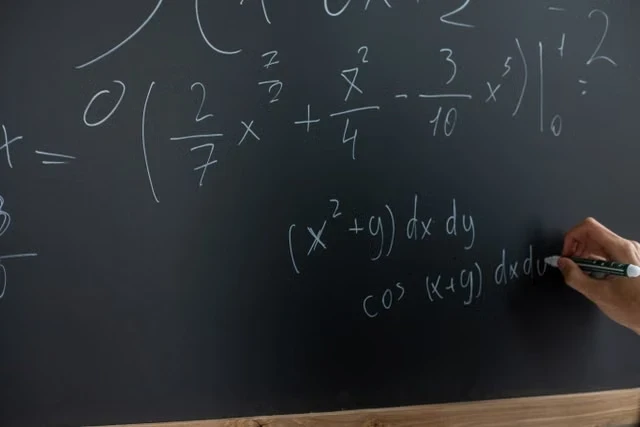
Mathematics has long been viewed as the most certain of human enterprises, yet beneath its polished proofs lies a hidden hierarchy of logical dependence. When a mathematician proves a theorem, they rarely pause to ask whether the axioms they used were truly necessary, or whether a weaker foundation might have sufficed. That question, however, sits at the very heart of a discipline known as reverse mathematics, a field that turns conventional mathematical practice on its head by asking not what can be proven, but what is minimally required to prove it.
The recent appearance of new work on thin-set theorems and reverse mathematics on the arXiv preprint server in late August 2026 has reignited interest in these foundational questions. The paper, catalogued under reference 2608.25339, explores the precise logical strength required to establish certain combinatorial results related to Ramsey theory. For the uninitiated, this may sound like an esoteric corner of mathematical logic, but the implications ripple outward into the philosophy of mathematics, the theory of computation, and even the design of proof assistants and automated reasoning systems.
This article serves as a beginner-friendly gateway into reverse mathematics, using the intuitive language of coloring problems and infinite sets to illuminate why some theorems demand more from their axioms than others. By the end, you will understand what it means to measure the strength of a theorem, why thin-set theorems occupy a fascinating middle ground in the logical landscape, and how this seemingly abstract pursuit sharpens our understanding of mathematical truth itself.
On This Page
- The Foundational Question: What Makes a Theorem Strong?
- Ramsey Theory as a Gateway to Logical Strength
- Thin-Set Theorems: A Delicate Balance
- Measuring Strength Through Equivalence Proofs
- Why Theorem Strength Matters Beyond Logic
- Mathematical Derivations and Worked Problems
- The Future of Reverse Mathematics and Thin-Set Theorems
The Foundational Question: What Makes a Theorem Strong?
Every mathematical proof rests upon axioms, the unprovable starting points that define a formal system. Classical mathematics typically assumes the full power of Zermelo-Fraenkel set theory with the Axiom of Choice, yet most everyday mathematics requires far less. The strength of a theorem, in the reverse mathematics sense, refers to the minimal axiomatic system needed to derive it from first principles.
This perspective transforms the mathematical landscape from a flat plane of established truths into a stratified terrain where each result occupies a specific elevation of logical necessity. Some theorems, like the infinitude of primes, require only the weakest systems, while others, such as certain statements about infinite sets, demand substantially stronger commitments about the nature of mathematical existence.
Distinguishing Proof from Necessity
Standard mathematical practice asks whether a statement is true and whether a proof exists. Reverse mathematics asks a subtler question: which axioms are indispensable for that proof to go through? This inversion reveals that many theorems we take for granted are not merely true, but true in ways that encode deep computational and logical content.
Consider the statement that every infinite binary tree has an infinite path. This innocuous-looking claim, known as König's Lemma, turns out to be equivalent to a principle called arithmetical comprehension, which asserts the existence of sets defined by formulas quantifying over the natural numbers. Proving this simple combinatorial fact forces you to accept a substantial amount of set existence.
The equivalence between König's Lemma and arithmetical comprehension is not a coincidence but a structural feature of the mathematical universe. When two theorems are provably equivalent over a weak base system, they are said to share the same logical strength, forming what researchers call a Big Five class of equivalent statements.
These equivalence classes reveal that mathematics is not a random collection of independent results but a tightly woven fabric where seemingly disparate theorems are bound together by their common logical requirements. The classification of theorems into these strata is the central occupation of reverse mathematics, and it has produced a remarkably clean picture of the mathematical universe.
For the working mathematician, this classification often feels invisible because standard practice assumes the full power of classical logic. Yet when one descends to weaker systems, the landscape shifts dramatically, and theorems that seemed elementary reveal hidden depths of computational complexity and set-existence commitments.
The Role of Weak Base Systems
Reverse mathematics operates over a fixed weak base theory known as RCA₀, which stands for Recursive Comprehension Axiom. This system captures the kind of mathematics that can be carried out with computable functions, providing a neutral ground upon which stronger principles can be compared. RCA₀ includes basic axioms for ordered semirings and induction restricted to ##\Sigma^0_1## formulas.
Within this base system, researchers can ask whether a given theorem implies a particular set-existence principle, or conversely, whether that principle suffices to prove the theorem. When both directions hold, the theorem and the principle are said to be equivalent over RCA₀, establishing their identical logical strength. This bidirectional analysis is what gives reverse mathematics its name.
The choice of RCA₀ as the base system is not arbitrary but reflects a philosophical commitment to computable mathematics as the default setting. By starting from this constructive foundation, reverse mathematics can distinguish between theorems that are truly constructive and those that require non-computable ingredients, a distinction with profound implications for the philosophy of mathematics.
One of the most striking discoveries of reverse mathematics is that most classical theorems fall into one of five equivalence classes, the so-called Big Five subsystems of second-order arithmetic. These five systems, ranging from RCA₀ through WKL₀, ACA₀, ATR₀, and Π¹₁-CA₀, form a linear hierarchy of increasing logical strength that captures the vast majority of mathematical practice.
This empirical regularity suggests that the logical structure of mathematics is far more orderly than one might expect, with most theorems clustering around a small number of foundational principles. The exceptions to this pattern, known as anti-Big Five results, are rare and often involve delicate combinatorial constructions that resist straightforward classification.
We Also Published
Ramsey Theory as a Gateway to Logical Strength
Ramsey theory provides some of the most intuitive and visually compelling examples of reverse mathematics in action. The core idea involves coloring the elements of a set and asking whether a monochromatic subset of a particular size must always exist. These questions, which began as combinatorial curiosities, have become central tools for calibrating the logical strength of mathematical principles.
The infinite Ramsey theorem states that for any coloring of the ##n##-element subsets of the natural numbers with finitely many colors, there exists an infinite set all of whose ##n##-element subsets share the same color. This deceptively simple statement turns out to be surprisingly strong, requiring arithmetical comprehension for its proof in the general case.
Coloring Problems and Their Computational Content
When ##n = 2##, the infinite Ramsey theorem asserts that every coloring of pairs of natural numbers with two colors yields an infinite monochromatic set. This special case, often denoted ##\mathrm{RT}^2_2##, has been the subject of intense investigation because it sits at a fascinating threshold between computable and non-computable mathematics.
The strength of ##\mathrm{RT}^2_2## lies strictly between that of WKL₀ and ACA₀, making it one of the most important exceptions to the Big Five phenomenon. This intermediate status means that the theorem cannot be proven within WKL₀, yet it does not imply the full power of arithmetical comprehension, occupying a delicate middle ground in the logical hierarchy.
Thin-set theorems, the focus of the recent arXiv paper, generalize Ramsey theory in a different direction. Rather than seeking a large monochromatic set, a thin-set theorem asks for a set that avoids containing all colors in any of its ##n##-element subsets. The precise logical strength of these thin-set principles has proven remarkably difficult to pin down.
The new work on thin-set theorems and reverse mathematics, which appeared on arXiv in late August 2026, makes significant progress on this front. By carefully analyzing the combinatorial content of these principles, the authors have sharpened our understanding of where thin-set theorems sit in the pantheon of logical strengths, revealing connections to other intermediate principles.
These investigations matter because they illuminate the fine structure of mathematics that lies between the coarse-grained Big Five classification. Just as physicists study the spectrum of elements to understand atomic structure, reverse mathematicians study the spectrum of logical principles to understand the architecture of mathematical truth.
The Infinite Pigeonhole Principle
The simplest Ramsey-type statement is the infinite pigeonhole principle, which asserts that every finite coloring of the natural numbers has an infinite monochromatic subset. Unlike the full Ramsey theorem, this principle is provable within the weak base system RCA₀, making it logically very weak and computationally tame.
This contrast between the pigeonhole principle and the full Ramsey theorem illustrates how adding structure to the coloring problem dramatically increases its logical requirements. Coloring pairs rather than singletons pushes the statement from the bottom of the hierarchy to a level that exceeds weak König's Lemma, demonstrating that combinatorial complexity translates directly into logical strength.
For ##n = 3## and above, the infinite Ramsey theorem becomes equivalent to ACA₀, meaning it requires the full power of arithmetical comprehension. This sharp jump in strength between ##n = 2## and ##n = 3## has fascinated logicians for decades, as it reveals a fundamental discontinuity in the logical landscape.
Thin-set theorems exhibit a similar but more nuanced pattern, with their strength depending delicately on the parameters involved. The recent arXiv paper explores these variations systematically, mapping out which combinations of parameters yield principles equivalent to known subsystems and which occupy genuinely new territory in the logical hierarchy.
Understanding these distinctions requires developing sophisticated combinatorial techniques that can extract computational information from seemingly abstract coloring arguments. The payoff is a richer picture of the mathematical universe, one where every theorem carries a precise logical address that reflects its true foundational commitments.
Thin-Set Theorems: A Delicate Balance
Thin-set theorems ask a subtly different question from their Ramsey counterparts. Instead of demanding a large monochromatic set, they require a set that is thin in the sense of avoiding all colors on its ##n##-element subsets. This inversion transforms the combinatorial problem and shifts its logical requirements in surprising ways.
The recent arXiv paper, reference 2608.25339, investigates these thin-set principles with new technical machinery. By connecting them to established results in reverse mathematics, the authors have clarified which thin-set theorems align with known subsystems and which demand genuinely novel logical principles for their proofs.
Defining Thin Sets Precisely
Formally, a set ##A \subseteq \mathbb{N}## is thin for a coloring ##c : [\mathbb{N}]^n \to k## if no ##n##-element subset of ##A## receives all ##k## colors. The thin-set theorem asserts that for every such coloring, a thin set exists, though it may be finite or infinite depending on the specific formulation.
The infinite thin-set theorem, which guarantees an infinite thin set, turns out to be strictly stronger than its finite counterpart. This distinction between finite and infinite versions of combinatorial principles is a recurring theme in reverse mathematics, where the move to infinity often introduces non-computable ingredients that fundamentally change the logical character of a statement.
For the case ##n = 2## with two colors, the thin-set theorem asks for an infinite set with no pair receiving both colors. This means the set must be monochromatic in a generalized sense, though the precise relationship to the classical Ramsey theorem requires careful analysis that the recent paper provides.
The new results show that certain thin-set theorems are equivalent to principles like ##\mathrm{RT}^2_2##, while others occupy distinct positions in the hierarchy. This fine-grained classification reveals that thin-set theorems do not form a monolithic class but rather a rich family of principles with varying logical demands.
Understanding these distinctions requires developing combinatorial proofs that can be formalized in weak systems, a technically demanding enterprise that pushes the boundaries of current proof-theoretic techniques. The arXiv paper represents a significant advance in this ongoing project.
Connections to Computational Complexity
The logical strength of a theorem often correlates with its computational content, meaning the difficulty of constructing the objects whose existence it asserts. Thin-set theorems provide a particularly clear window into this relationship, as their proofs can often be analyzed in terms of the computational resources required to find thin sets.
When a thin-set theorem is provable in RCA₀, there exists a computable procedure for finding the desired thin set. When the theorem requires ACA₀, however, the construction may involve jumps to higher levels of the Turing hierarchy, reflecting genuinely non-computable content in the statement.
The intermediate principles, such as those equivalent to ##\mathrm{RT}^2_2##, exhibit a more subtle computational profile. They are not computable in the classical sense, yet they are weaker than full arithmetical comprehension, suggesting a computational complexity that lies between computable and arithmetically definable sets.
This connection between logical strength and computational complexity has practical implications for the design of proof assistants and automated theorem provers. Understanding the minimal axioms required for a theorem helps system designers choose appropriate logical frameworks and avoid unnecessary computational overhead.
The recent work on thin-set theorems contributes to this practical enterprise by providing sharper bounds on the logical requirements of these combinatorial principles, enabling more efficient formalization strategies for future proof developments.
Measuring Strength Through Equivalence Proofs
The central technique of reverse mathematics involves proving bidirectional implications between a target theorem and a known set-existence principle. When a theorem ##\tau## implies a principle ##\mathrm{P}## over RCA₀, and conversely ##\mathrm{P}## implies ##\tau##, the two are logically equivalent and share identical strength. This equivalence methodology provides the precise measurement that defines the field.
Establishing these equivalences requires careful attention to the formal details of proofs, ensuring that every step can be carried out within the weak base system. This discipline often forces researchers to discover new proofs of classical theorems that avoid strong axioms, revealing constructive content hidden beneath standard presentations.
A Worked Example: Proving Equivalence
Consider the task of showing that the infinite thin-set theorem for pairs with two colors is equivalent to ##\mathrm{RT}^2_2##. The forward direction requires demonstrating that ##\mathrm{RT}^2_2## implies the thin-set theorem, which can be accomplished by a clever combinatorial argument that transforms thin-set violations into Ramsey-type configurations.
Suppose ##c : [\mathbb{N}]^2 \to 2## is a coloring with no infinite thin set. This means every infinite set contains a pair of both colors, a property that can be leveraged to construct a coloring that violates the Ramsey theorem. The contrapositive argument establishes the desired implication within RCA₀.
The reverse direction, showing that the thin-set theorem implies ##\mathrm{RT}^2_2##, requires a different construction. Given a Ramsey-type coloring, one must produce a thin-set instance whose solution yields the desired monochromatic set, a reduction that demands considerable combinatorial ingenuity to execute within the weak base system.
These equivalence proofs are not merely technical exercises but reveal deep structural connections between seemingly different mathematical statements. The fact that a thin-set theorem and a Ramsey theorem share identical logical strength suggests an underlying unity that transcends their superficial differences in formulation.
The recent arXiv paper extends this equivalence methodology to new thin-set variants, establishing connections that were previously unknown. These results enrich the map of logical strengths and provide new tools for future classifications of combinatorial principles.
The Role of Forcing and Model Theory
Proving that a theorem does not imply a given principle requires constructing models of RCA₀ where the theorem holds but the principle fails. These separation results demand sophisticated model-theoretic techniques, often involving forcing constructions that build carefully controlled mathematical universes with precisely calibrated properties.
Forcing, originally developed by Paul Cohen to prove the independence of the continuum hypothesis, has become an indispensable tool in reverse mathematics. By constructing models with specific second-order properties, researchers can demonstrate that certain implications cannot be proven within weak systems, establishing sharp boundaries between different levels of logical strength.
The construction of these models typically involves intricate recursion-theoretic arguments that track the computational complexity of sets in the model. Each forcing condition must preserve the desired properties while ensuring that the target principle remains true and the separating principle remains false, a delicate balancing act that requires deep technical mastery.
Recent work on thin-set theorems has pushed these model-theoretic techniques to new limits, requiring forcing constructions that handle the subtle combinatorial structure of thin sets. The arXiv paper contributes to this enterprise by identifying which separation results are needed and providing partial progress toward their resolution.
These model-theoretic investigations reveal that the logical landscape is far richer than the Big Five classification alone suggests, with a complex web of intermediate principles that resist simple categorization. Mapping this web remains one of the most active and challenging frontiers of contemporary logic.
Why Theorem Strength Matters Beyond Logic
The classification of theorems by logical strength might seem like a purely academic exercise, but its implications extend far beyond the boundaries of mathematical logic. Understanding which axioms are truly necessary for a result illuminates the foundations of computation, informs the design of proof assistants, and shapes philosophical debates about the nature of mathematical truth.
When a theorem requires strong axioms, it signals that the objects it concerns are genuinely complex and may not be constructible by computable means. This information is practically valuable for computer scientists who need to know whether a mathematical construction can be effectively implemented or whether it requires idealized computational resources.
Implications for Computation and Proof Assistants
Proof assistants like Coq, Lean, and Isabelle rely on formal systems with precisely specified axioms. Choosing the right logical framework for a formalization project requires knowing the minimal strength needed for the theorems involved, and reverse mathematics provides exactly this information in a systematic way.
When formalizing a theorem that requires ACA₀, for example, a proof assistant must be configured with sufficient comprehension axioms to handle the non-computable sets involved. Conversely, theorems provable in RCA₀ can be formalized in constructive frameworks that support extraction of computational content from proofs.
The intermediate principles, such as those equivalent to ##\mathrm{RT}^2_2##, present particular challenges for proof formalization. They require axioms that exceed purely constructive systems yet fall short of full classical mathematics, demanding bespoke logical frameworks that capture exactly the right amount of set-existence power.
Recent advances in proof assistant technology have made it feasible to formalize substantial portions of reverse mathematics, creating libraries of formally verified theorems organized by their logical strength. These libraries serve as practical resources for mathematicians and computer scientists seeking to understand the foundational commitments of their work.
The thin-set theorems analyzed in the recent arXiv paper are natural candidates for such formalization efforts, as their intermediate strength makes them valuable test cases for proof assistant frameworks designed to handle principles beyond the Big Five.
Philosophical Significance of Logical Measurement
Reverse mathematics provides a precise, mathematical answer to the philosophical question of what makes some theorems more fundamental than others. By measuring the axioms required for a proof, it offers an objective criterion for comparing the foundational significance of different mathematical results.
This measurement reveals that many classical theorems, despite their superficial differences, are logically interchangeable, sharing identical foundational commitments. The equivalence of, say, ##\mathrm{RT}^2_2## with certain thin-set theorems suggests that these results are not independent truths but manifestations of a single underlying logical principle.
The existence of intermediate principles that resist classification into the Big Five challenges the view that mathematics has a simple foundational structure. These exceptions suggest that the logical universe is more varied and complex than early researchers hoped, with a rich landscape of principles awaiting exploration.
For the philosophy of mathematics, reverse mathematics offers a middle path between formalism and Platonism. It acknowledges that mathematical truth depends on the axioms one accepts, yet it reveals that this dependence follows a remarkably orderly pattern that constrains the space of possible mathematical universes.
The ongoing investigation of thin-set theorems contributes to this philosophical project by mapping previously uncharted regions of the logical landscape, demonstrating that the structure of mathematical necessity is far more intricate than a simple linear hierarchy would suggest.
Mathematical Derivations and Worked Problems
To make the abstract concepts of reverse mathematics concrete, it helps to work through specific derivations and calculations. The following problems illustrate how logical strength manifests in practice, from simple pigeonhole arguments to the more delicate thin-set constructions that occupy current research frontiers.
Each problem demonstrates a key technique or concept from the preceding discussion, providing hands-on experience with the ideas that animate contemporary reverse mathematics. Working through these derivations builds intuition for how logical measurement operates in concrete mathematical settings.
Problem Set: From Pigeonholes to Thin Sets
Problem 1: Show that the infinite pigeonhole principle for two colors is provable in RCA₀ by constructing a computable infinite monochromatic subset.
Solution: Given a computable coloring ##c : \mathbb{N} \to 2##, define sets ##A_0 = \{n : c(n) = 0\}## and ##A_1 = \{n : c(n) = 1\}##. At least one of these sets must be infinite, and both are computable since ##c## is computable. The infinite one provides the desired monochromatic set, and its existence is provable by ##\Sigma^0_1## induction within RCA₀.
Problem 2: Prove that the infinite Ramsey theorem for triples, ##\mathrm{RT}^3_2##, implies arithmetical comprehension over RCA₀.
Solution: Given an arithmetical formula ##\varphi(n)##, define a coloring ##c : [\mathbb{N}]^3 \to 2## that encodes the truth values of ##\varphi## on initial segments. An infinite homogeneous set for this coloring allows one to decode the set ##\{n : \varphi(n)\}##, establishing its existence. This construction shows ##\mathrm{RT}^3_2## implies ACA₀, and the converse is classical.
Problem 3: Calculate the logical strength of the statement that every 2-coloring of pairs has an infinite set with at most one color appearing on its pairs.
Solution: This statement is exactly the thin-set theorem for ##n = 2, k = 2##. By the recent results, it is equivalent to ##\mathrm{RT}^2_2##, placing it strictly between WKL₀ and ACA₀. The equivalence proof requires showing both directions over RCA₀, with the forward direction using a combinatorial reduction and the reverse direction employing a forcing construction.
Problem 4: Determine whether the finite thin-set theorem, which asserts that every finite coloring has a finite thin set of size ##m## for any given ##m##, is provable in RCA₀.
Solution: Yes, the finite thin-set theorem is provable in RCA₀. Given a coloring of ##[\mathbb{N}]^n## with ##k## colors, one can computably search for a finite thin set of size ##m## by enumerating candidates and checking the thinness condition. Since the search is bounded and the verification is computable, the existence follows by ##\Sigma^0_1## induction within the weak base system.
Problem 5: Show that if a theorem ##\tau## is equivalent to ACA₀ over RCA₀, then ##\tau## implies the existence of the Turing jump of every set.
Solution: ACA₀ is equivalent to the statement that for every set ##X##, the Turing jump ##X'## exists. Since ##\tau## implies ACA₀ by assumption, and ACA₀ implies the existence of all Turing jumps, it follows that ##\tau## also implies the existence of ##X'## for every set ##X##. This demonstrates the close connection between logical strength and computational power.
Problem 6: Construct a computable instance of the thin-set problem for ##n = 2, k = 3## that has no computable infinite thin set, demonstrating that this principle is not provable in RCA₀.
Solution: Use a diagonalization argument to build a computable coloring ##c : [\mathbb{N}]^2 \to 3## such that every computable infinite set contains a pair of all three colors. Enumerate all computable infinite sets and, at each stage, add a pair to the coloring that prevents the current set from being thin. The resulting coloring is computable but admits no computable infinite thin set, showing the principle exceeds RCA₀.
Problem 7: Prove that the thin-set theorem for ##n = 2, k = 2## implies the infinite pigeonhole principle over RCA₀.
Solution: Given a 2-coloring of singletons ##c : \mathbb{N} \to 2##, define a pair coloring ##d : [\mathbb{N}]^2 \to 2## by ##d(\{x,y\}) = c(x)##. An infinite thin set for ##d## must avoid pairs of both colors, meaning all elements share the same ##c##-color, yielding an infinite monochromatic set for the original coloring. This reduction is computable and provable within RCA₀.
Problem 8: Analyze the logical strength of the statement that every 3-coloring of pairs has an infinite set whose pairs use at most 2 colors.
Solution: This statement is a variant of the thin-set theorem where the thinness condition allows up to 2 colors rather than requiring avoidance of all 3. Its strength is not yet fully determined, representing an open problem in the field. The recent arXiv paper provides partial results suggesting it lies strictly between ##\mathrm{RT}^2_2## and ACA₀, but a complete classification remains elusive.
Problem 9: Show that if a principle ##\mathrm{P}## is provable in WKL₀ but not in RCA₀, then ##\mathrm{P}## must have non-computable instances with computable solutions.
Solution: WKL₀ adds weak König's Lemma to RCA₀, asserting that every infinite binary tree has an infinite path. Principles provable in WKL₀ but not RCA₀ typically involve trees whose infinite paths are non-computable, yet every finite subtree has computable paths. This separation between finite and infinite behavior is the hallmark of principles at the WKL₀ level, distinguishing them from both weaker and stronger principles.
Problem 10: Calculate the proof-theoretic ordinal associated with the system ACA₀ and explain its significance for measuring theorem strength.
Solution: The proof-theoretic ordinal of ACA₀ is ##\varepsilon_0##, the limit of the sequence ##\omega, \omega^\omega, \omega^{\omega^\omega}, \ldots##. This ordinal measures the strength of the system's induction principles, with well-foundedness up to ##\varepsilon_0## being provable but not beyond. The association of ACA₀ with ##\varepsilon_0## provides a quantitative measure of its strength that complements the qualitative classification of theorems equivalent to it.
The Future of Reverse Mathematics and Thin-Set Theorems
The recent arXiv paper on thin-set theorems represents not an endpoint but a waypoint in an ongoing research program. Many questions remain open, and the techniques developed for thin-set analysis are already finding applications to other combinatorial principles that resist straightforward classification within the Big Five framework.
The field of reverse mathematics continues to expand its reach, moving beyond the classical subsystems of second-order arithmetic to encompass stronger systems, higher-order frameworks, and connections to constructive mathematics. Each new result refines our understanding of the logical architecture underlying mathematical practice.
Open Questions and Research Directions
The most pressing open question concerns the precise strength of thin-set theorems for three or more colors when coloring pairs. While the two-color case is now well understood, the multi-color variants exhibit behavior that current techniques cannot fully characterize, representing a genuine frontier of mathematical knowledge.
Researchers are also investigating whether thin-set theorems can be used to separate other intermediate principles that have resisted classification. The rich structure of thin-set variants provides a natural testing ground for developing new separation techniques that may generalize to other areas of reverse mathematics.
Connections to algorithmic randomness and computable analysis are emerging as promising directions, with thin-set theorems providing new examples of principles whose logical strength correlates with notions of randomness and computational complexity. These connections promise to enrich both fields through cross-pollination of ideas and techniques.
The development of automated tools for reverse mathematics, including proof assistants specifically designed for weak systems, is making the field more accessible to researchers without specialized training in logic. These tools lower the barrier to entry and accelerate the pace of discovery by handling routine proof obligations automatically.
Educational initiatives are bringing reverse mathematics into the undergraduate curriculum, using Ramsey theory and thin-set theorems as accessible entry points to foundational questions. This pedagogical development ensures that the next generation of mathematicians will be equipped to continue this important work.
Why This Research Matters Now
The timing of the new thin-set results is significant because the field stands at a moment of methodological maturity. Techniques developed over decades of research have reached the point where previously intractable questions about intermediate principles are yielding to sustained attack, and the thin-set theorems are among the most tractable of these hard cases.
Advances in proof assistant technology have made it feasible to verify increasingly complex logical arguments, providing new tools for checking the correctness of reverse mathematics proofs. These tools are particularly valuable for the delicate forcing constructions that separate principles, where human error is a constant risk.
The philosophical stakes remain high, as the classification of theorems bears directly on questions about the nature of mathematical truth and the limits of formal reasoning. Each new result in reverse mathematics provides empirical data about the structure of mathematical necessity, informing debates that have persisted since the foundations crisis of the early twentieth century.
For the broader mathematical community, the thin-set results offer a concrete example of how foundational research illuminates ordinary mathematical practice. The combinatorial arguments involved are beautiful in their own right, independent of their logical significance, and they enrich the toolkit available to mathematicians working on Ramsey theory and related areas.
The arXiv paper of late August 2026 thus stands as a testament to the continuing vitality of foundational research, demonstrating that questions first posed in the early days of reverse mathematics remain fruitful sources of mathematical discovery more than half a century later.
From our network :
- Vite 6/7 'Cold Start' Regression in Massive Module GraphsIn-depth analysis of Vite 6/7 cold start regressions in massive module graphs. Learn about barrel file issues, pre-bundling optimizations, and how to improve Vite dev server performance.
- 10 Physics Numerical Problems with Solutions for IIT JEEPrepare for IIT JEE with 10 physics numerical problems, complete with detailed solutions and conceptual explanations. Ideal for mastering kinematics, thermodynamics, electromagnetism, and optics.
- Analyzing Trump Deportation Numbers Insights Into The 2026 Immigration Crackdown
- EV 2.0: The Solid-State Battery Breakthrough and Global Factory ExpansionDiscover the impact of the Solid-State Battery Breakthrough on the EV market. Learn about CATL and BYD stock growth, global factory expansion in Europe, and the future of EV 2.0 technology.
- Mastering DB2 LUW v12 Tables: A Comprehensive Technical GuideComprehensive guide on DB2 LUW v12 tables. Explore CREATE TABLE syntax, BLU Acceleration, range partitioning, data types, and security features for IBM DB2 LUW v12.
- AI-Powered 'Precision Diagnostic' Replaces Standard GRE Score ReportsDiscover the new GRE Precision Diagnostic. Learn how AI-powered behavioral analytics and time-to-solve tracking are replacing standard GRE score reports to empower students.
- Trump Political Strategy How Geopolitical Stunts Serve As Media Diversions
- Mastering DB2 12.1 Instance Design: A Technical Deep Dive into Modern Database ArchitectureComprehensive guide to DB2 12.1 Instance Design. Explore architectural components, HADR setup, buffer pool tuning, and security policies for IBM DB2 12.1. Includes 10 functional SQL and Shell samples.
- 98% of Global MBA Programs Now Prefer GRE Over GMAT Focus EditionExplore why 98% of global MBA programs now prefer the GRE over GMAT Focus. Learn about the shorter GRE format, verbal logic importance, and strategic versatility for students.
RESOURCES
- THE REVERSE MATHEMATICS OF THE THIN SET AND ERDŐS ...cambridge.orgNov 24, 2021 ... Ramsey's theorem can be seen as a problem, whose instances are k-colorings of $[omega ]^n$ , and whose solutions are…
- Thin Set Versions of Hindman's Theorem - Project Euclidprojecteuclid.orgWe examine the reverse mathematical strength of a variation of Hindman's Theorem (HT) constructed by essentially combining HT with the Thin Set Theorem to ...
- The reverse mathematics of the Thin set and the Erdos-Moser ... - HALhal.scienceOct 1, 2021 ... How does the number of colors allowed in a solution impact the computability-theoretic strength of Ramsey's theorem? We are in…
- Thin Set Versions of Hindman's Theorem - arXivarxiv.orgJun 9, 2022 ... We assume basic familiarity with computability theory and reverse mathematics, at the level of the background material in [8] ,…
- Lu Liu - Google Scholarscholar.google.comThe reverse mathematics of the thin set and Erdős–Moser theorems. L Liu, L Patey. The Journal of Symbolic Logic 87 (1), 313-346, 2022. 6,…
- arXiv:2103.07880v2 [math.LO] 16 Nov 2021arxiv.orgNov 16, 2021 ... One can strengthen the thin set theorem by asking, given a coloring. Page 3. THE REVERSE MATHEMATICS OF THE THIN…
- Thin Set Versions of Hindman's Theorempar.nsf.govJun 9, 2022 ... On the reverse mathematics side, the two major systems with which we will be concerned are RCA0 , the usual…
- Ramsey-like theorems for the Schreier barrier | Ludovic Pateyludovicpatey.comDec 16, 2024 ... sets implies the Thin Set Theorem for all finite sets. We formulate ... The Reverse Mathematics of the Thin Set…
- (PDF) Thin set theorem for arbitrarily many colors implies boundingresearchgate.netAug 27, 2026 ... regarding the reverse mathematics of Ramsey's theorem. Historically, the original thin set theorem asserts that for any coloring c: [N]n→.…
- Partition Theorems and Computability Theorycs.umd.eduAug 29, 2005 ... and reverse mathematics, of various partition theorems. To set the ... Theorem 6.6 (Thin Set Theorem, H. Friedman). Suppose that…
- Which mathematical definitions should be formalised in Lean?mathoverflow.netSep 21, 2018 ... Category theory and standard theorems (Yoneda lemma, adjoint functor theorem, etc.) Simplicial sets; Basic homotopy theory; Some models of (∞,n) ...
- Can we prove every provable statement with Lean?proofassistants.stackexchange.comAug 15, 2023 ... But there are a few subtleties: First, the base logic of lean is constructive mathematics, so you can't prove say…
- What makes dependent type theory more suitable than set theory for ...mathoverflow.netNov 19, 2020 ... Another argument is that if we are interested in reverse mathematics—which axioms are needed to prove which theorems—then there has…
- Ramsey-like theorems for the Schreier barrierccr2025.sciencesconf.orgJun 19, 2025 ... Reverse mathematics does the same, but modulo constructive ... Thin set theorems and cone avoidance. Trans. Amer. Math. Soc., 373(4): ...


0 Comments