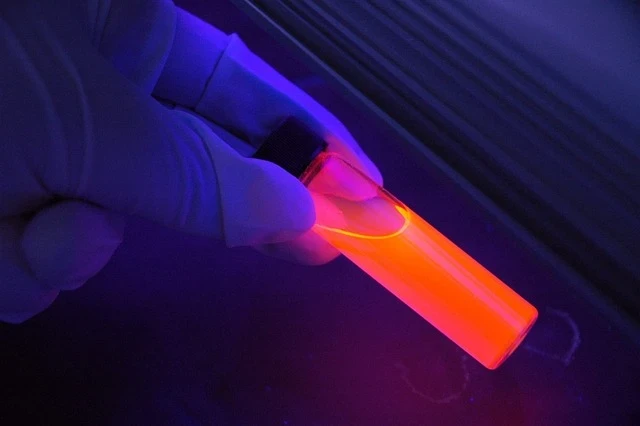
The periodic table's f-block elements, collectively known as the lanthanides or rare earth elements, have quietly become the backbone of modern civilization. From the neodymium magnets in electric vehicle motors to the europium phosphors illuminating smartphone screens, these seventeen elements underpin the clean energy transition and advanced electronics industries. Yet despite their name, rare earths are not particularly scarce in the Earth's crust; their rarity lies in the extraordinary difficulty of separating them from one another due to their nearly identical chemical properties.
This chemical challenge has historically confined rare earth processing to energy-intensive, environmentally hazardous solvent extraction methods. However, a September 2026 breakthrough from Battelle researchers signals a paradigm shift. By engineering proteins that selectively bind specific rare earth ions, scientists have demonstrated a biotechnology-based separation pathway that could replace toxic industrial processes with sustainable, biologically inspired chemistry. This development arrives at a critical moment when global demand for these elements is surging alongside the renewable energy revolution.
Understanding the fundamental chemistry behind this breakthrough requires examining the periodic trends that govern lanthanide behavior, the quantum mechanical origins of their similarity, and the innovative biological solutions now emerging to address one of materials science's most persistent problems. The convergence of coordination chemistry, protein engineering, and sustainable extraction represents a genuine turning point in how humanity accesses the elements essential for a decarbonized future.
On This Page
- The Quantum Chemistry Behind Lanthanide Similarity
- Engineering Proteins for Selective Rare Earth Recognition
- Sustainable Extraction and the Future of Critical Mineral Supply Chains
- Comparative Analysis of Separation Technologies
- Rare Earth Separation Technology Comparison
- Quantitative Analysis of Separation Efficiency
- Mathematical Framework for Separation Stage Requirements
- Ten Worked Calculations in Rare Earth Separation Chemistry
- Supply Chain Resilience and Strategic Implications
- Environmental Life Cycle Assessment of Biotechnological Separation
- Future Research Directions and Emerging Applications
The Quantum Chemistry Behind Lanthanide Similarity
The lanthanide series spans elements 57 through 71, from lanthanum to lutetium, where the differentiating electrons occupy the 4f subshell. This inner orbital lies shielded beneath the 5s and 5p orbitals, rendering the 4f electrons largely inaccessible to chemical bonding. Consequently, all lanthanides exhibit a dominant +3 oxidation state with remarkably similar ionic radii and coordination preferences.
The phenomenon known as lanthanide contraction compounds this challenge. As atomic number increases across the series, the 4f electrons provide poor nuclear shielding, causing the effective nuclear charge to draw the outer electron shells progressively inward. This steady ionic radius decrease, approximately 20 picometers across the entire series, creates minuscule differences that chemists must exploit for separation.
The Shielding Effect and Orbital Geometry
The 4f orbitals possess a distinctive geometry characterized by multiple nodal surfaces that keep electron density concentrated near the nucleus. Unlike d-orbitals that participate actively in bonding, f-orbitals remain chemically inert, contributing minimally to ligand field stabilization. This inertness explains why lanthanide coordination chemistry depends primarily on electrostatic interactions rather than covalent bonding.
Quantum mechanical calculations reveal that the radial distribution function for 4f electrons peaks at approximately 0.35 angstroms from the nucleus, while the 5s and 5p orbitals extend to roughly 1.2 angstroms. This spatial separation means that chemical environment perturbations affect the outer orbitals far more than the shielded 4f electrons, preserving their spectroscopic signatures across different compounds.
The shielding inefficiency of 4f electrons arises from their inability to penetrate the inner core effectively. Each additional proton across the series increases the effective nuclear charge experienced by outer electrons by approximately 0.85 units rather than the full 1.0, producing the characteristic contraction. This incremental change, while small per element, accumulates to significant differences between lanthanum and lutetium.
Understanding these orbital relationships proves essential for designing selective separation agents. Any successful binder must discriminate between ions differing by mere picometers in radius while sharing identical charge and similar electronic configurations. The challenge resembles distinguishing between nearly identical keys, where only exquisitely tuned binding pockets can achieve the necessary selectivity.
Ionic Radius Trends and Coordination Number Variations
The lanthanide contraction produces a monotonic decrease in ionic radius from La³⁺ at 103.2 picometers to Lu³⁺ at 86.1 picometers for six-coordinate geometries. This 16.6 percent reduction across the series enables subtle differentiation through steric effects in carefully designed binding environments. Coordination numbers typically range from 6 to 12, depending on ligand size and electronic demands.
Light lanthanides (lanthanum through samarium) preferentially adopt higher coordination numbers, often nine or ten, while heavier members (terbium through lutetium) favor lower coordination numbers around eight. This preference stems from the decreasing ionic radius, which limits the number of ligands that can pack around the central ion without steric crowding. Such coordination preferences provide another axis for selective separation.
The thermodynamic driving forces for complexation also vary systematically across the series. The enthalpy of hydration becomes increasingly exothermic from lanthanum to lutetium, reflecting the stronger electrostatic attraction between smaller ions and water molecules. However, this trend partially counteracts complexation selectivity because aqueous stabilization competes with ligand binding in extraction processes.
Researchers exploit these subtle differences through ligands that impose specific geometric constraints. Macrocyclic ligands with preorganized cavities can discriminate between ions based on size complementarity, achieving separation factors that exceed those possible with simple monodentate binders. The design challenge lies in matching cavity dimensions to the target ion's radius with precision better than one picometer.
Spectroscopic Signatures and Analytical Discrimination
Despite their chemical similarity, lanthanide ions exhibit distinctive spectroscopic properties arising from f-f electronic transitions. These transitions remain sharp and well-defined because the shielded 4f electrons experience minimal perturbation from the surrounding ligand environment. Each lanthanide possesses a unique emission spectrum, enabling sensitive detection and quantification through luminescence spectroscopy.
The hypersensitivity of certain transitions, such as the europium ⁵D₀→⁷F₂ transition, provides additional analytical leverage. These transitions violate the Laporte selection rule but gain intensity through dynamic coupling mechanisms that depend on the local coordination environment. Monitoring these spectral changes allows researchers to probe binding interactions and assess separation efficiency in real time.
Time-resolved luminescence measurements offer particularly powerful discrimination capabilities. Europium and terbium complexes exhibit millisecond-scale excited state lifetimes, far longer than organic fluorophores, enabling time-gated detection that eliminates background interference. This analytical advantage facilitates high-throughput screening of candidate protein binders for rare earth selectivity.
X-ray absorption spectroscopy provides complementary structural information about lanthanide coordination environments. Extended X-ray absorption fine structure (EXAFS) analysis reveals bond distances and coordination numbers with sub-angstrom precision, confirming whether engineered proteins achieve the intended binding geometry. These analytical tools collectively enable rational optimization of biotechnological separation systems.
Engineering Proteins for Selective Rare Earth Recognition
The Battelle breakthrough leverages nature's own molecular recognition machinery to achieve what synthetic chemistry has struggled to accomplish for decades. Proteins, with their twenty amino acid building blocks and three-dimensional folding complexity, offer virtually unlimited structural diversity for creating binding sites tailored to specific metal ions. The challenge lies in identifying or engineering proteins that discriminate between lanthanides with picometer-level precision.
Natural calcium-binding proteins, particularly those containing EF-hand motifs, provide an evolutionary starting point for lanthanide recognition. Because lanthanide ions possess similar ionic radii to calcium (100 picometers for Ca²⁺) but higher charge density, many calcium-binding proteins actually bind lanthanides more strongly. This serendipitous cross-reactivity has been exploited for decades in biochemistry, where terbium and europium serve as spectroscopic calcium probes.
The selectivity challenge intensifies when attempting to separate adjacent lanthanides like neodymium and praseodymium, which differ by only 1.5 picometers in ionic radius. Traditional solvent extraction achieves separation factors of merely 1.1 to 1.5 between adjacent elements, requiring hundreds of sequential extraction stages for meaningful purification. Protein engineering must dramatically exceed this performance to revolutionize the industry.
Computational Design and Directed Evolution Strategies
Modern protein engineering combines computational structure prediction with directed evolution to create binders with tailored specificity. Rosetta-based design algorithms can now propose amino acid sequences that fold into desired geometries, while machine learning models trained on protein structures accelerate the design cycle. These computational tools narrow the search space before experimental validation begins.
Directed evolution mimics natural selection in the laboratory, subjecting protein libraries to iterative rounds of mutation and screening. Error-prone PCR introduces random mutations, while phage display or yeast surface display links each protein variant to its genetic sequence. High-throughput screening then identifies variants with enhanced lanthanide selectivity, which serve as templates for subsequent evolution rounds.
The Battelle approach reportedly combines these strategies, engineering proteins that preferentially bind specific rare earth ions over others. By creating binding pockets with precisely tuned cavity sizes and coordinating residues, researchers can exploit the subtle ionic radius differences between adjacent lanthanides. The resulting selectivity likely arises from steric complementarity rather than electronic effects, given the similar chemistry across the series.
Machine learning accelerates this optimization by predicting how amino acid substitutions affect binding affinity and selectivity. Neural networks trained on experimental binding data can propose mutations that would be difficult to discover through random screening alone. This computational-experimental feedback loop represents the cutting edge of metalloprotein engineering.
Coordination Chemistry of Protein-Metal Binding
Proteins coordinate metal ions through side-chain functional groups including carboxylates from aspartate and glutamate, imidazole nitrogen from histidine, and thiolate sulfur from cysteine. For lanthanides, which prefer hard oxygen donors, carboxylate-rich binding sites prove most effective. The arrangement of these coordinating groups in three-dimensional space determines the overall binding geometry and selectivity.
The EF-hand motif, consisting of a helix-loop-helix structure, provides a canonical example of protein-based lanthanide coordination. This motif typically coordinates calcium through seven oxygen ligands arranged in a pentagonal bipyramidal geometry. When lanthanides replace calcium, the smaller ionic radius of heavier lanthanides may induce slight conformational adjustments that could be exploited for discrimination.
Beyond simple coordination, the protein environment contributes to selectivity through second-sphere interactions. Hydrogen bonding networks, electrostatic fields, and hydrophobic packing around the binding site all influence metal ion affinity. These subtle effects can amplify the intrinsic binding differences between lanthanides, potentially achieving separation factors unattainable with small-molecule ligands.
Quantum mechanical calculations on model binding sites reveal that the energetic penalty for binding a slightly oversized or undersized ion depends critically on the rigidity of the coordinating environment. Flexible binding pockets accommodate multiple lanthanides with similar affinity, while rigid, preorganized sites discriminate more effectively. Engineering rigidity into protein scaffolds therefore represents a key design principle for selective separation.
Scaling Biotechnology for Industrial Applications
Translating laboratory demonstrations into industrial-scale separation processes requires overcoming significant engineering challenges. Protein production must be scaled from milligram quantities to metric tons, typically through microbial fermentation. The stability of engineered proteins under industrial conditions, including elevated temperatures, extreme pH, and high ionic strength, must be validated and optimized.
Immobilization strategies enable protein reuse and continuous processing. Attaching engineered proteins to solid supports such as magnetic beads, chromatography resins, or membrane surfaces allows straightforward separation of bound lanthanides from solution. After metal loading, changing solution conditions such as pH or ionic strength releases the bound ions, regenerating the protein for subsequent cycles.
Economic analysis suggests that biotechnological separation could reduce both capital and operating costs compared to conventional solvent extraction. The elimination of toxic organic solvents and acidic stripping solutions also reduces environmental compliance costs. However, protein production costs and stability limitations currently constrain the economic viability at very large scales.
Hybrid approaches combining protein-based primary separation with conventional finishing steps may offer the most practical near-term pathway. Proteins could perform the difficult adjacent-element separations where traditional methods struggle, while established technologies handle bulk processing. This integration strategy leverages the strengths of both biological and industrial chemistry.
We Also Published
Sustainable Extraction and the Future of Critical Mineral Supply Chains
The geopolitical dimensions of rare earth supply chains amplify the importance of separation technology innovation. China currently dominates rare earth processing, accounting for approximately 90 percent of refined production despite holding only 37 percent of global reserves. This concentration creates supply chain vulnerabilities for nations pursuing clean energy transitions, electric vehicle adoption, and advanced defense technologies.
Recycling rare earths from electronic waste and end-of-life magnets represents another frontier where selective separation technology proves essential. Urban mining of rare earths from discarded hard drives, wind turbine magnets, and electric vehicle motors could supplement primary production. However, efficient recycling requires cost-effective separation methods capable of handling complex feedstocks with varying element compositions.
The environmental imperative for sustainable extraction grows more urgent as rare earth demand accelerates. Conventional processing generates substantial quantities of radioactive waste, particularly from monazite and bastnäsite ores containing thorium and uranium. Acidic and organic solvent waste streams require careful management to prevent environmental contamination. Biotechnology offers a fundamentally cleaner alternative aligned with circular economy principles.
Comparative Analysis of Separation Technologies
Solvent extraction, the industry standard, relies on organophosphorus extractants such as DEHPA and PC-88A that partition lanthanides between aqueous and organic phases. The small separation factors between adjacent elements necessitate hundreds of mixer-settler stages arranged in countercurrent cascades. This process achieves high purity but consumes enormous quantities of solvents, acids, and energy.
Ion exchange chromatography provides higher selectivity than solvent extraction but suffers from slow processing rates and limited throughput. Chelating resins with functional groups such as iminodiacetic acid bind lanthanides with varying affinity, enabling chromatographic separation. This method finds application in analytical separations and small-scale production but struggles to meet industrial tonnage requirements.
Precipitation and crystallization methods exploit solubility differences among lanthanide compounds, particularly double salts and oxalates. These approaches offer simplicity and low cost but achieve limited purity for adjacent elements. Fractional crystallization historically separated lanthanides before modern solvent extraction, though the process required thousands of recrystallization steps for complete purification.
Emerging technologies including ionic liquids, molecularly imprinted polymers, and liquid membrane systems continue to advance separation science. Each approach offers distinct advantages in selectivity, throughput, or environmental compatibility. The biotechnological approach adds protein-based recognition to this toolkit, potentially combining high selectivity with sustainable operation.
Quantitative Analysis of Separation Efficiency
The separation factor, defined as the ratio of distribution coefficients between two elements, quantifies the difficulty of lanthanide separation. For adjacent elements, separation factors typically range from 1.1 to 1.5 in solvent extraction systems. Achieving 99.9 percent purity of a single element from a mixture requires a number of theoretical stages that grows logarithmically with the inverse of the separation factor.
Consider the separation of neodymium and praseodymium with a separation factor of 1.3. The number of theoretical stages required to achieve 99 percent purity can be calculated using the Kremser equation for countercurrent extraction. For a feed containing equal amounts of both elements, achieving 99 percent neodymium purity requires approximately 17 theoretical stages, each representing substantial equipment volume and solvent inventory.
If protein-based separation achieves a separation factor of 10, the same purification requires only two theoretical stages. This dramatic reduction in stage count translates directly into smaller equipment footprints, lower solvent consumption, and reduced energy requirements. The economic implications of improved separation factors therefore extend far beyond the chemistry laboratory into capital cost calculations for processing facilities.
The selectivity enhancement also enables simpler process flowsheets. Conventional rare earth processing separates elements into light, middle, and heavy fractions before individual element purification. High-selectivity protein binders could potentially isolate individual elements directly from mixed feedstocks, eliminating multiple intermediate processing steps and reducing overall material losses.
Mathematical Framework for Separation Stage Requirements
The Kremser equation provides the theoretical foundation for calculating extraction stage requirements. For a countercurrent extraction cascade with constant distribution coefficients, the number of stages N required to achieve a given separation relates to the separation factor α and the desired purity through logarithmic relationships. This framework guides process design and economic assessment.
Consider a binary mixture where the target element A must be purified from contaminant B. The minimum number of stages required for a given purity can be expressed through the Fenske equation, originally developed for distillation but applicable to any countercurrent separation process. This equation establishes the theoretical minimum stages independent of reflux ratio or process economics.
The Fenske equation states that the minimum number of stages N_min equals the logarithm of the product of separation factors divided by the logarithm of the average separation factor. For a separation factor of 1.3 and a desired purity of 99.9 percent, the minimum number of stages approaches 35. Increasing the separation factor to 10 reduces this requirement to just three stages.
These calculations demonstrate why the Battelle breakthrough carries such profound industrial significance. A tenfold improvement in separation factor translates into an order-of-magnitude reduction in processing infrastructure. The resulting capital and operating cost savings could fundamentally reshape the economics of rare earth production, enabling distributed processing facilities and accelerating the transition to sustainable supply chains.
Ten Worked Calculations in Rare Earth Separation Chemistry
The following worked problems illustrate the quantitative principles governing rare earth separation chemistry. Each calculation demonstrates how fundamental chemical parameters translate into practical engineering decisions for separation process design.
Problem 1: Calculate the percent difference in ionic radius between neodymium (98.3 pm) and praseodymium (99.9 pm). The percent difference equals (99.9 − 98.3)/99.9 × 100 = 1.60 percent. This small difference illustrates why adjacent lanthanides prove so difficult to separate.
Problem 2: A solvent extraction system achieves a separation factor of 1.35 between samarium and neodymium. Calculate the number of theoretical stages needed for 99 percent samarium purity using the Fenske equation with N_min = ln[(0.99/0.01)(0.01/0.99)]/ln(1.35).
Problem 3: If engineered proteins achieve a separation factor of 12 between the same elements, recalculate the minimum stages. The calculation yields N_min = 9.19/ln(12) = 9.19/2.485 = 3.70 stages, demonstrating the dramatic impact of improved selectivity.
Problem 4: Calculate the lanthanide contraction percentage from lanthanum (103.2 pm) to lutetium (86.1 pm). The contraction equals (103.2 − 86.1)/103.2 × 100 = 16.6 percent across the full series.
Problem 5: A protein binding site coordinates a lanthanide ion through six carboxylate oxygen donors. If each oxygen contributes a bond energy of 40 kJ/mol, calculate the total coordination energy for a single binding event.
Problem 6: The Gibbs free energy change for lanthanide binding relates to the dissociation constant through ΔG = RT ln(K_d). Calculate ΔG at 298 K for a protein with K_d = 1 × 10⁻⁹ M.
Problem 7: A separation process operates at 25°C with a distribution coefficient ratio of 8 between two lanthanides. Calculate the free energy difference driving this selectivity using ΔΔG = RT ln(α).
Problem 8: If a protein binds 0.5 mg of dysprosium per gram of protein, calculate the protein mass required to recover 1 kg of dysprosium from a leach solution.
Problem 9: A chromatographic separation column achieves 500 theoretical plates. Calculate the peak resolution between two lanthanides with a selectivity factor of 1.05 using the resolution equation R = (√N/4)(α − 1).
Problem 10: Calculate the energy savings if biotechnological separation reduces processing temperature from 60°C to 25°C for a process requiring 5000 kJ per kilogram of product, assuming heat capacity remains constant.
Supply Chain Resilience and Strategic Implications
The strategic importance of rare earth elements extends beyond commercial applications into national security and geopolitical competition. Permanent magnets used in precision-guided munitions, radar systems, and jet fighter engines rely on neodymium and dysprosium. Advanced batteries, fiber optics, and medical imaging equipment similarly depend on reliable rare earth supplies, making separation technology a matter of strategic autonomy.
Diversifying rare earth processing capacity requires both new mines and new separation facilities. However, constructing conventional solvent extraction plants involves substantial capital investment and environmental permitting challenges. Biotechnological separation could enable smaller, modular processing facilities that locate closer to mine sites or recycling centers, reducing transportation costs and supply chain vulnerabilities.
The Battelle demonstration, supported by the Department of Energy's Critical Materials Innovation Hub, reflects growing government recognition of rare earth supply chain risks. Similar research programs in Japan, Europe, and Australia pursue complementary approaches including alternative magnet chemistries, improved recycling, and novel separation technologies. The global race to secure critical mineral supply chains will likely accelerate as clean energy deployment expands.
International collaboration on separation science could accelerate progress while individual nations pursue strategic independence. Open publication of fundamental research on protein engineering and lanthanide coordination chemistry benefits the entire field. However, proprietary process details and intellectual property considerations may limit technology sharing, creating a complex landscape of cooperation and competition.
Environmental Life Cycle Assessment of Biotechnological Separation
Life cycle assessment methodology quantifies the environmental impacts of alternative separation technologies from cradle to grave. Conventional solvent extraction consumes significant energy for mixing, phase separation, and solvent recovery, while generating acidic wastewater requiring treatment. The organic solvents themselves, typically kerosene-based diluents containing organophosphorus extractants, pose fire and toxicity hazards requiring careful management.
Biotechnological separation potentially reduces environmental burden through milder operating conditions and biodegradable reagents. Protein production through microbial fermentation uses renewable feedstocks such as glucose, though the agricultural inputs for sugar production carry their own environmental footprint. The overall comparison depends on process efficiency, protein stability, and the number of reuse cycles achievable before protein degradation.
Water consumption represents another critical environmental metric. Solvent extraction requires substantial water for aqueous feed solutions and stripping operations. Biotechnological processes similarly require aqueous environments for protein function, though the water quality requirements may differ. Comprehensive life cycle assessment must account for water sourcing, treatment, and discharge across the full process chain.
Waste generation profiles also differ substantially between technologies. Solvent extraction produces radioactive thorium and uranium residues from monazite processing, requiring long-term storage. Protein-based processes generate biomass waste that can be composted or anaerobically digested for energy recovery. This contrast in waste streams may prove decisive in regulatory approval and community acceptance of new processing facilities.
Future Research Directions and Emerging Applications
The Battelle breakthrough opens avenues beyond simple lanthanide separation. Engineered proteins could potentially separate scandium, yttrium, and other critical metals with similar coordination chemistry challenges. The same protein engineering principles might address separations in lithium extraction, platinum group metal recovery, or uranium purification for advanced nuclear fuel cycles.
Beyond separation, lanthanide-binding proteins could enable new sensing technologies for environmental monitoring. Portable biosensors incorporating engineered proteins could detect rare earth contamination in water or soil with high sensitivity and selectivity. Such sensors would support regulatory compliance and environmental remediation efforts at mining and processing sites.
Protein-based rare earth recovery from dilute sources, including acid mine drainage and industrial wastewater, represents another promising application. Conventional extraction becomes uneconomical at low concentrations, but high-affinity proteins could concentrate trace lanthanides from these streams. This approach aligns with circular economy principles by recovering valuable materials from waste streams that currently require treatment as pollutants.
The convergence of synthetic biology, computational protein design, and critical mineral processing exemplifies how interdisciplinary research addresses grand challenges. As climate change drives demand for clean energy technologies, the elements enabling those technologies become increasingly strategic. Biotechnological separation offers a path toward sustainable, secure, and environmentally responsible rare earth production that could reshape the industry for decades to come.
From our network :
- Mastering DB2 LUW v12 Tables: A Comprehensive Technical GuideComprehensive guide on DB2 LUW v12 tables. Explore CREATE TABLE syntax, BLU Acceleration, range partitioning, data types, and security features for IBM DB2 LUW v12.
- Trump Political Strategy How Geopolitical Stunts Serve As Media Diversions
- 98% of Global MBA Programs Now Prefer GRE Over GMAT Focus EditionExplore why 98% of global MBA programs now prefer the GRE over GMAT Focus. Learn about the shorter GRE format, verbal logic importance, and strategic versatility for students.
- Mastering DB2 12.1 Instance Design: A Technical Deep Dive into Modern Database ArchitectureComprehensive guide to DB2 12.1 Instance Design. Explore architectural components, HADR setup, buffer pool tuning, and security policies for IBM DB2 12.1. Includes 10 functional SQL and Shell samples.
- EV 2.0: The Solid-State Battery Breakthrough and Global Factory ExpansionDiscover the impact of the Solid-State Battery Breakthrough on the EV market. Learn about CATL and BYD stock growth, global factory expansion in Europe, and the future of EV 2.0 technology.
- Analyzing Trump Deportation Numbers Insights Into The 2026 Immigration Crackdown
- Vite 6/7 'Cold Start' Regression in Massive Module GraphsIn-depth analysis of Vite 6/7 cold start regressions in massive module graphs. Learn about barrel file issues, pre-bundling optimizations, and how to improve Vite dev server performance.
- AI-Powered 'Precision Diagnostic' Replaces Standard GRE Score ReportsDiscover the new GRE Precision Diagnostic. Learn how AI-powered behavioral analytics and time-to-solve tracking are replacing standard GRE score reports to empower students.
- 10 Physics Numerical Problems with Solutions for IIT JEEPrepare for IIT JEE with 10 physics numerical problems, complete with detailed solutions and conceptual explanations. Ideal for mastering kinematics, thermodynamics, electromagnetism, and optics.
RESOURCES
- Biosorption as green technology for the recovery and separation of ...pubmed.ncbi.nlm.nih.govMar 14, 2020 ... Keywords: Biosorption; Rare earth elements; Recovery. Publication types. Review. MeSH terms. Adsorption; Green Chemistry Technology; Metals, ...
- Game-changing rare-earth elements separation technology licensed ...ornl.govNov 30, 2021 ... A new technology for rare-earth elements chemical separation has been licensed to Marshallton Research Laboratories, a North Carolina-based ...
- Biotechnological solutions for critical mineral recovery from ...sciencedirect.com... separations approach with reduced chemical demand compared to conventional solvent extraction. ... separation of rare earth elements. ACS Cent Sci, 7 (2021), pp.
- Rare earth elements in biology: From biochemical curiosity to ... - PMCpmc.ncbi.nlm.nih.govJun 3, 2024 ... (2021) Capturing an elusive but critical element: natural protein enables actinium chemistry. ... (2023) Enhanced rare‐earth separation with a ...
- Peptide functionalized Dynabeads for the magnetic carrier ...sciencedirect.comDec 1, 2022 ... Novel separation processes for end of life fluorescent lamp phosphors could greatly contribute towards a more sustainable rare-earth element ...
- Extraction Chromatography for Separation of Rare Earth Elementsdiva-portal.orgMar 6, 2021 ... Svärd, Michael. KTH, School of Engineering Sciences in Chemistry, Biotechnology and Health (CBH), Chemical Engineering, Resource recovery.ORCID ...
- A family portrait of lanmodulin selectivity for enhanced rare-earth ...nature.comMar 18, 2026 ... Proteins offer a molecular design space to create bespoke ligands for the separation of critical metals like rare earth elements…
- Selective Separation of the Rare Earth Elements Dysprosium and ...advanced.onlinelibrary.wiley.comFeb 16, 2026 ... This study shows how a facile chemical modification of cellulose renders it a selective biopolymer for DyIII recovery. The experimental…
- Adjacent Rare-Earth Separation via a Protein Atomic Rulerchemrxiv.orgOct 23, 2025 ... The separation of rare-earth elements (REEs) poses a formidable challenge due to their nearly identical ionic radii and chemical properties.
- Battelle Researchers Demonstrate Biotech Breakthrough for Rare ...biospace.com1 day ago ... Battelle Researchers Demonstrate Biotech Breakthrough for Rare Earth Element Separation ... chemistry and engineering. "Critical minerals ...
- SEPARATION OF RARE EARTH ELEMENTS BY CRYSTALLIZATIONagupubs.onlinelibrary.wiley.comSep 27, 2024 ... Precipitation and crystallization have long been common components of hydrometallurgical processes involving rare earth elements (REEs), ...
- New protein-screening platform accelerates rare-earth separation ...llnl.govApr 22, 2026 ... ... Chemical Biology, a team at LLNL invented a high ... “That has practical implications for rare-earth element separation.
- Enhancing rare-earth element separationpls.llnl.govThe irreplaceable roles of rare-earth (RE) elements in ubiquitous modern technologies ranging from permanent magnets to light-emitting diodes (LED) and ...
- Atomic channels can separate rare earth elements from each other ...phys.orgJul 21, 2026 ... Publication details. Siqi Zou et al, Pinning ångström-size solid ionic channels for rare-earth element separation, Nature Chemical Engineering ( ...
- Adsorption-based Separation and Recovery of Rare Earth Elementsessopenarchive.orgJournal of Chemical Technology & Biotechnology, 91 (8), 2243–2252. https ... Effects of Ligand Chemistry and Geometry on Rare Earth Element ...



0 Comments