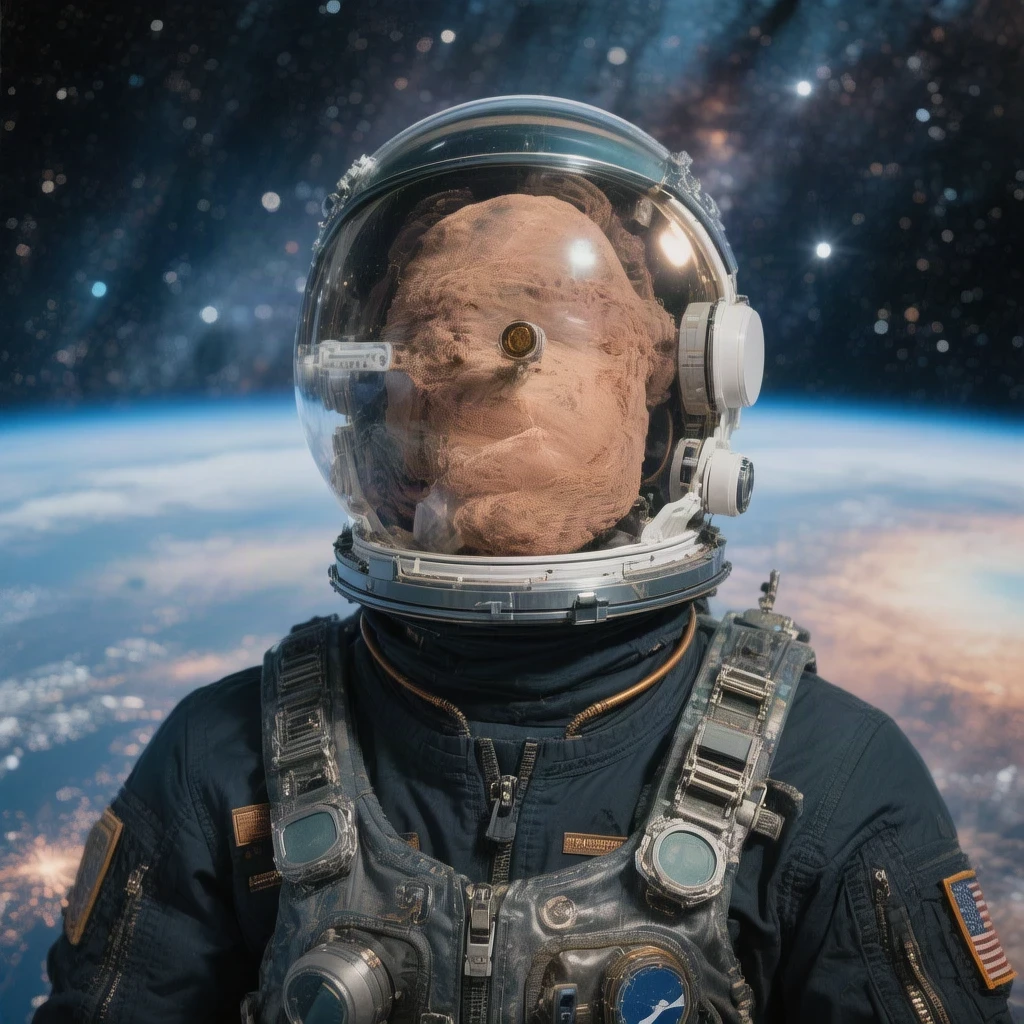
Navigating the intricate expanse of human space habitation requires a meticulous synthesis of physiological endurance and rigorous engineering precision, particularly as missions extend far beyond traditional temporal boundaries. When seasoned spacefarers spend extended epochs in microgravity, their biological frameworks undergo profound adaptations that demand comprehensive empirical documentation and exhaustive post-flight medical analysis. The recent eight-month orbital deployment executed by NASA astronaut Chris Williams serves as a stellar benchmark for evaluating long-term systemic responses to cosmic radiation, skeletal unloading, and psychological isolation. By rigorously quantifying these variables, aerospace physiologists can formulate predictive models to safeguard future interplanetary crews journeying toward Martian frontiers and distant celestial bodies. Understanding the complex biophysical implications of extended-duration orbital habitation necessitates deep mathematical modeling of fluid shifts, bone mineral density decay, and muscle atrophy rates observed across prolonged missions. As human physiology confronts sustained sub-gravitational vectors, homeostatic mechanisms deviate significantly from terrestrial baselines, requiring precise algorithmic interventions and nutritional countermeasure protocols. Researchers deploy advanced multivariate statistics and differential equations to track bone resorption velocities and cardiovascular deconditioning gradients among returning crew members. This analytical rigor transforms raw telemetry and clinical debrief data into actionable paradigms for future deep-space architecture and spacecraft life support optimization.
On This Page
Physiological Adaptations and Biomechanical Dynamics in Microgravity

The human biological matrix experiences profound structural alterations when subjected to prolonged orbital free-fall conditions over hundreds of days. Gravitational unloading triggers immediate cephalad fluid shifts, resulting in elevated intracranial pressure and characteristic cardiovascular remodeling across the systemic circulation. To comprehend these cascading shifts, biophysicists evaluate hemodynamic pressure gradients using specialized fluid dynamics equations adapted for zero-gravity environments.
###[ P_{\text{effective}} = \Delta P_{\text{hydrostatic}} + \rho \cdot a_{\text{centrifugal}} \cdot r ]###
Skeletal integrity similarly degrades under reduced mechanical loading, manifesting as a progressive loss of trabecular bone mass primarily in weight-bearing lumbar and femoral regions. The rate of calcium excretion and osteoclastic bone resorption can be modeled as an exponential decay function relative to mission duration days.
###[ M(t) = M_{0} \cdot e^{-\lambda t} + M_{\text{residual}} ]###
Cardiovascular Dynamics and Fluid Redistribution
The absence of gravitational pull causes venous blood to pool within the thoracic and cranial cavities, simulating an artificial hypervolemia. To counteract this perceived fluid overload, renal excretion pathways initiate diuresis, reducing total circulating plasma volume significantly during the initial weeks of flight.
Upon terrestrial re-entry, this reduced blood volume precipitates severe orthostatic hypotension and potential syncopal episodes. Flight surgeons utilize continuous telemetry monitoring to track heart rate variability and peripheral vascular resistance across the adaptation window.
Musculoskeletal Atrophy and Countermeasure Efficacy
Sustained unloading of postural musculature induces rapid fiber-type transitions from slow-twitch oxidative to fast-twitch glycolytic configurations. Astronauts must adhere to strict daily exercise regimens incorporating flywheel ergometers and advanced resistive training devices to mitigate muscle mass degradation.
Biochemical markers such as serum creatinine and urinary nitrogen excretion are analyzed regularly to gauge protein catabolism rates. These metrics ensure that nutritional intake remains precisely calibrated against the heightened energy expenditure demanded by intensive orbital exercise protocols.
Psychological Resilience and Cognitive Performance Under Confinement

Prolonged isolation aboard orbital platforms places extraordinary demands on human psychological endurance, requiring structured coping strategies and robust crew cohesion frameworks. Behavioral health specialists analyze continuous voice loops, facial affect recognition telemetry, and cognitive test batteries to identify early indicators of interpersonal friction or operational fatigue. Maintaining high morale across an eight-month deployment necessitates scheduled private communication channels with families on Earth and dynamic recreational scheduling within the habitat.
Circadian rhythm disruption remains a persistent challenge due to rapid orbital sunrise and sunset cycles occurring every ninety minutes, which suppresses endogenous melatonin production. Flight surgeons utilize programmable solid-state lighting arrays with adjustable spectral outputs to stabilize crew circadian alignments and enhance cognitive alertness during mission-critical tasks. These environmental controls are mathematically modeled using circadian phase response curves to optimize sleep hygiene and operational productivity.
###[ C_{\text{phase}} = \int_{0}^{T} \left( I(t) \cdot \sin(\omega t - \phi) \right) dt ]###
Behavioral Dynamics and Team Cohesion
Living in confined quarters with a multinational crew requires exceptional intercultural communication skills and high emotional intelligence. Expedition commanders utilize structured team-building exercises and collaborative problem-solving tasks to reinforce mutual trust and operational synergy.
Psychologists track social network dynamics aboard the station to detect early markers of interpersonal withdrawal or clique formation. Proactive intervention strategies ensure that operational cohesion remains robust throughout the entire duration of the mission.
Circadian Entrainment and Sleep Architecture
Disruption of natural light-dark cycles impairs slow-wave and rapid eye movement sleep stages, leading to cumulative sleep debt among crew members. Environmental monitoring systems measure cabin illumination spectra to ensure compliance with human spaceflight sleep hygiene standards.
Pharmacological aids are utilized sparingly as secondary countermeasures when non-invasive light therapy proves insufficient for restoring restorative sleep patterns. Continuous polysomnography telemetry provides detailed insights into sleep architecture shifts during extended missions.
Implications for Interplanetary Exploration and Mission Architecture
Translating lessons learned from eight-month station deployments into viable mission architectures for deep-space transit requires revolutionary advancements in radiation shielding and closed-loop life support systems. Galactic cosmic rays and solar particle events present acute carcinogenic and neurological risks that cannot be fully mitigated by current low Earth orbit shielding paradigms. Mission planners apply probabilistic risk assessment models to calculate cumulative radiation doses and establish strict career exposure limits for prospective interplanetary astronauts.
###[ D_{\text{total}} = \sum_{i=1}^{n} \left( \Phi_{i} \cdot Q_{i} \cdot \sigma_{i} \right) ]###
Furthermore, autonomous medical diagnostic capabilities must be integrated into deep-space habitats to account for communication latency with terrestrial mission control during transit phases. Artificial intelligence algorithms will assist crews in real-time health monitoring, anomaly detection, and personalized pharmacological dosing. This paradigm shift from ground-dependent medical support to fully autonomous crew self-sufficiency represents the ultimate milestone in human space exploration readiness.
###[ R_{\text{autonomous}} = \frac{N_{\text{resolved}}}{N_{\text{total}}} \cdot 100 ]###
Radiation Mitigation and Dosimetry Calculations
Interplanetary transit exposes crews to high-energy galactic cosmic rays that penetrate standard spacecraft hull materials, necessitating novel hydrogen-rich polyethylene shielding composites. Health physicists track cumulative dose equivalents using active tissue equivalent proportional counters deployed throughout the habitat modules.
Mathematical modeling of secondary neutron production within shielding layers is essential for optimizing material thickness and minimizing overall structural mass penalties. These calculations ensure maximum biological protection without compromising launch vehicle payload capacity constraints.
###[ H = D \cdot Q \cdot N ]###
Autonomous Medical Support Systems
Deep-space exploration missions demand robust medical diagnostic suites capable of operating independently of terrestrial consultation due to communication signal propagation delays. Automated biosensors analyze blood chemistry, genomic markers, and neural feedback in real time to diagnose pathological anomalies instantly.
Decision-support software synthesizes these physiological streams to recommend targeted therapeutic interventions, ensuring crew members receive prompt and accurate medical care during multi-year planetary transit missions.
From our network :
RESOURCES




0 Comments