Health is far more than the mere absence of illness, and understanding why that distinction matters is the foundation of everything that follows in the study of human disease. For centuries, civilisations explained sickness through the balance of bodily "humors," a theory that shaped Greek and Ayurvedic medicine alike and persisted until experimental science dismantled it. That intellectual revolution, driven by William Harvey's demonstration of blood circulation and the thermometer's ability to measure fever, established a principle that modern biology now takes for granted: the body is a measurable, testable system whose failures can be investigated rather than merely speculated about.
This opening lesson of the Human Health and Disease course establishes the conceptual scaffolding for the nine lessons that follow. It defines health as a state of complete physical, mental, and social well-being, then draws the essential dividing line between infectious diseases, which pass from person to person through pathogens, and non-infectious diseases, which arise from genetics, lifestyle, and environment. Along the way, it examines how the immune system, the nervous system, and the endocrine system interact, and why mental state can influence physical resilience. These ideas recur throughout the course, so a firm grasp here pays dividends later.
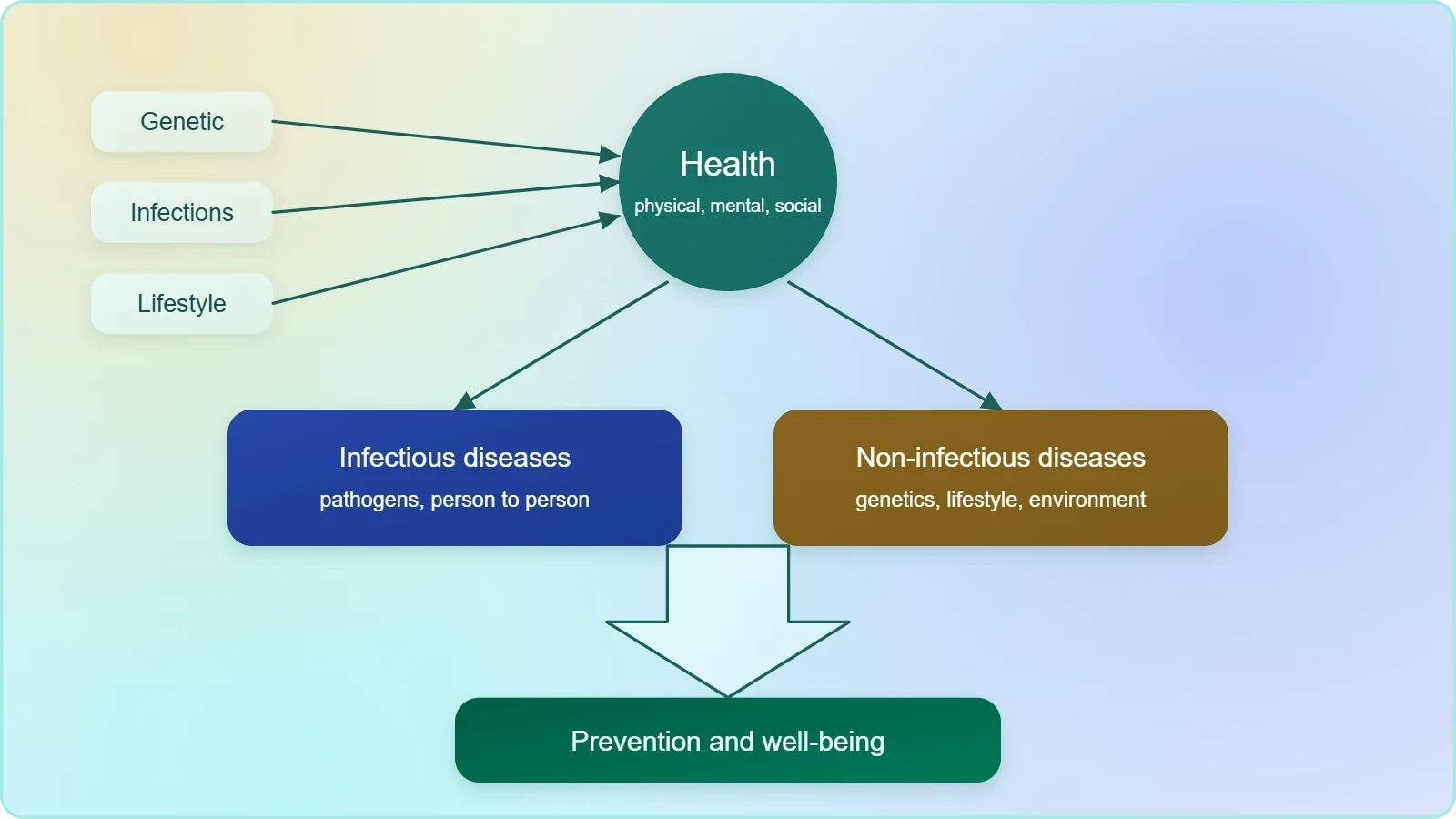
Learners will also encounter the practical dimensions of health: balanced diet, personal hygiene, regular exercise, vaccination, vector control, and safe food and water. The lesson introduces lifestyle diseases such as diabetes and hypertension, the influence of socio-economic conditions on health outcomes, and the logic of preventive medicine. By the end, readers should be able to define health precisely, classify diseases correctly, and explain how the human body defends itself against the organisms that cause infection.
On This Page
Defining Health: From Humors to Holistic Well-Being
The World Health Organization's 1948 constitution famously defined health as "a state of complete physical, mental and social well-being and not merely the absence of disease or infirmity." That formulation was radical for its time because it shifted attention away from pathology and toward positive functioning. It also introduced a tension that persists today: the word "complete" sets an aspirational standard that few people ever fully meet, prompting later revisions that emphasise health as a resource for living rather than a fixed destination. Understanding this evolution helps learners appreciate why health policy concerns housing, education, and income as much as hospitals and medicines.
The Humoral Theory and Its Experimental Refutation
Early Greek physicians such as Hippocrates, and the Indian Ayurvedic tradition, held that health depended on a balance of certain "humors" within the body. Persons with an excess of "black bile" were thought to possess a hot personality and to be prone to fevers. Crucially, this idea was arrived at by pure reflective thought rather than observation or measurement. It was elegant, internally consistent, and entirely wrong. The lesson here is methodological: a theory that cannot be tested cannot be corrected, and medicine advanced only when it began to interrogate nature with instruments and experiments rather than with reasoning alone.
The refutation came in stages. William Harvey's experimental demonstration of blood circulation showed that the body operated as a mechanical system with observable dynamics, not a vessel of static humors. Then the thermometer revealed that persons supposedly dominated by black bile had normal body temperature, directly contradicting the humoral prediction. These findings did not merely correct a detail; they replaced an entire explanatory framework. Modern biology subsequently established that the mind influences the immune system through the neural and endocrine systems, so mental state genuinely affects health, but through measurable physiological pathways rather than mystical humors.
Determinants of Health: Genetics, Infection, and Lifestyle
Health is affected by three broad categories of influence. First, genetic disorders include deficiencies with which a child is born and defects inherited from parents from birth. Second, infections introduce pathogens that multiply within the body and interfere with normal vital activities. Third, lifestyle encompasses the food and water we consume, the rest and exercise we give our bodies, and the habits we have or lack. These determinants interact: a genetic predisposition to diabetes may remain dormant unless poor diet and inactivity trigger it, and an infection may prove far more dangerous in a malnourished host than in a well-nourished one.
Lifestyle diseases illustrate this interaction vividly. Type 2 diabetes arises when cells become resistant to insulin, often after years of excess caloric intake and sedentary behaviour, and it can be delayed or prevented through weight management and activity. Hypertension, or persistently elevated blood pressure, frequently develops silently and damages the heart, kidneys, and brain before symptoms appear. Both conditions demonstrate why the WHO definition matters: a person can be free of obvious disease yet far from complete well-being, and the goal of medicine is to intervene before irreversible damage occurs.
We Also Published
Infectious Versus Non-Infectious Disease
When the functioning of one or more organs or systems of the body is adversely affected, characterised by the appearance of various signs and symptoms, we say that we are not healthy, that is, we have a disease. Diseases fall into two broad groups. Infectious diseases are easily transmitted from one person to another, and everyone suffers from them at some time or other; some, like AIDS, are fatal. Non-infectious diseases are not transmitted between people, and among them cancer is the major cause of death. Drug and alcohol abuse also affect health adversely and belong to the non-infectious category, though their consequences ripple through families and communities.
Pathogens and the Mechanisms of Infection
A wide range of organisms belonging to bacteria, viruses, fungi, protozoans, and helminths can cause disease in humans. Such disease-causing organisms are called pathogens, and most parasites are therefore pathogens because they harm the host by living in or on them. Pathogens enter the body by various means, multiply, and interfere with normal vital activities, producing morphological and functional damage. They must adapt to the host environment: organisms entering the gut must survive the stomach's low pH and resist digestive enzymes. This requirement explains why particular pathogens target particular tissues and why transmission routes matter so much.
Consider the diversity of agents. Salmonella typhi is a bacterium that causes typhoid fever, entering the small intestine through contaminated food and water and migrating to other organs through the blood; sustained high fever of 39° to 40°C, weakness, stomach pain, constipation, headache, and loss of appetite are common symptoms, and intestinal perforation and death may occur in severe cases. The Widal test confirms the diagnosis. The story of Mary Mallon, nicknamed Typhoid Mary, a cook who continued to spread typhoid for years through the food she prepared, remains a classic illustration of the asymptomatic carrier.
Viral, Protozoan, and Other Pathogens
Many viruses cause human disease. Rhinoviruses cause the common cold, one of the most infectious human ailments; they infect the nose and respiratory passage but not the lungs, producing nasal congestion and discharge, sore throat, hoarseness, cough, headache, and tiredness lasting three to seven days. Droplets from coughs or sneezes are inhaled directly or transmitted through contaminated objects such as pens, books, cups, doorknobs, and computer keyboards. Bacteria such as Streptococcus pneumoniae and Haemophilus influenzae cause pneumonia by infecting the alveoli, which fill with fluid and impair respiration.
Protozoans account for some of humanity's oldest adversaries. Plasmodium, a tiny protozoan, causes malaria, with P. vivax, P. malariae, and P. falciparum responsible for different types; malignant malaria caused by P. falciparum is the most serious and can be fatal. The parasite enters as sporozoites through the bite of an infected female Anopheles mosquito, multiplies in liver cells, then attacks red blood cells, whose rupture releases haemozoin, the toxin responsible for recurring chills and high fever every three to four days. The parasite requires two hosts, human and mosquito, to complete its life cycle, and the mosquito is the vector.
The Immune System and the Mind-Body Connection
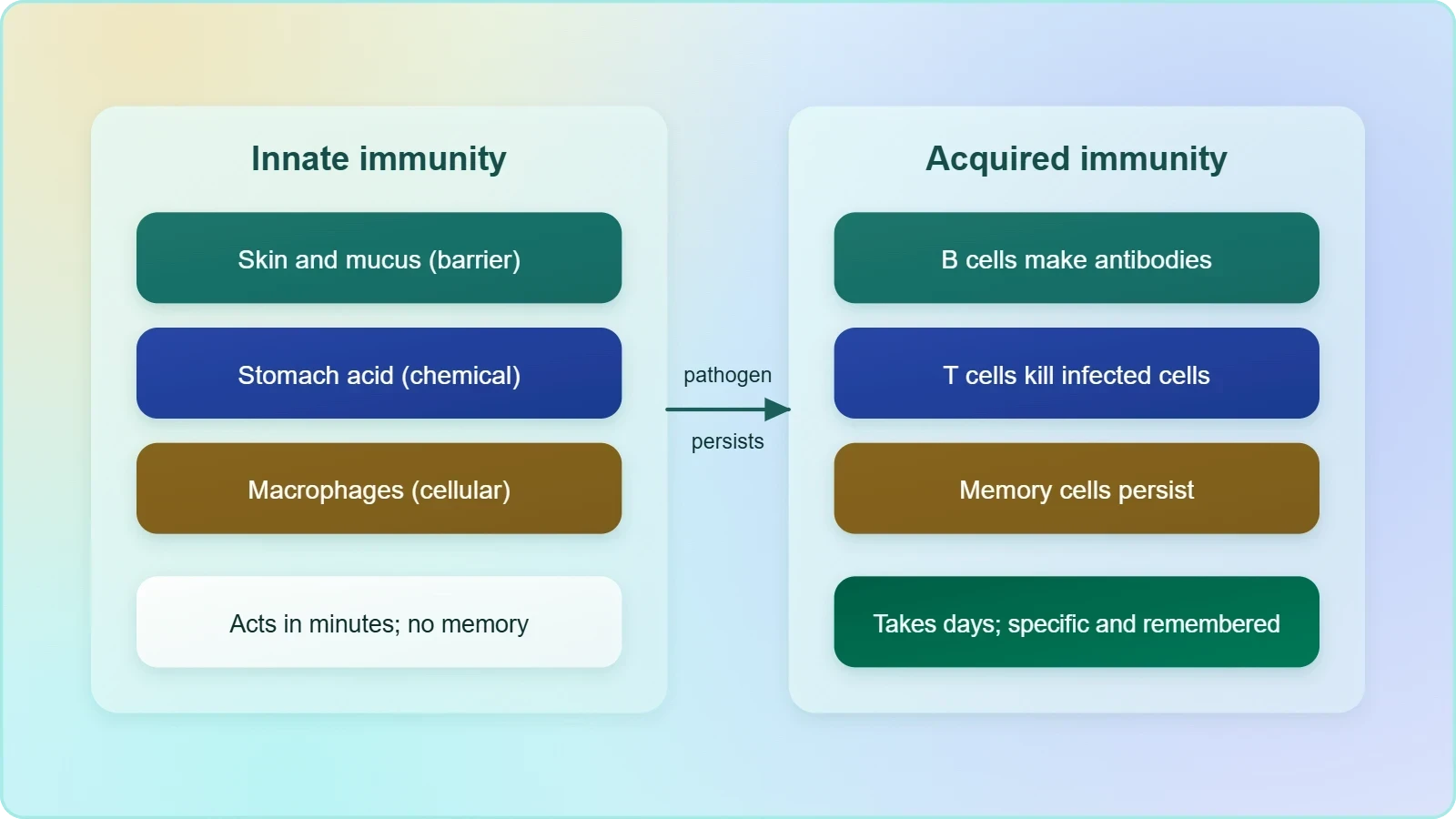
Biology established that the mind influences the immune system through the neural and endocrine systems, and that the immune system maintains our health. This is why mental state can affect physical health: chronic stress elevates cortisol, which suppresses immune function, while positive social connection and restful sleep correlate with stronger immune responses. The immune system itself operates in two layers. Innate immunity provides immediate, non-specific defence through barriers such as skin and mucous membranes, plus phagocytic cells and inflammatory responses. Acquired immunity develops after exposure and targets specific pathogens with precision and memory.
Innate and Acquired Defences
Innate immunity is the body's first line and requires no prior exposure. Physical barriers, chemical defences such as stomach acid, and cellular responders like macrophages act within minutes. Acquired immunity, by contrast, is slower to activate but far more specific. Lymphocytes recognise particular antigens, and B cells produce antibodies while T cells coordinate cellular responses and destroy infected cells. The defining feature of acquired immunity is memory: after an infection or vaccination, memory cells persist for years or decades, enabling a faster and stronger response upon re-exposure. This principle underpins vaccination, one of the most consequential interventions in medical history.
Vaccination works by exposing the immune system to a harmless form of a pathogen, prompting the production of memory cells without the risk of severe disease. When the real pathogen later appears, the immune system recognises it immediately and neutralises it before illness develops. This is why immunisation programmes have driven smallpox to extinction and brought polio close to eradication. The concept connects directly to preventive medicine: it is far more efficient to prevent disease than to treat it, and the economic returns on vaccination are among the highest of any health intervention.
Mental Health, Stress, and Immunity
Mental health is not a separate domain from physical health but an integral component of the WHO definition. Depression and chronic anxiety are associated with elevated inflammatory markers, poorer wound healing, and increased susceptibility to infection. The pathways are physiological: the hypothalamus signals the pituitary, which directs the adrenal glands to release cortisol, and sustained cortisol exposure impairs the activity of immune cells. Conversely, practices that reduce stress, including regular exercise, adequate sleep, and social connection, measurably improve immune function. Recognising this connection is essential for anyone studying health, because treating the body while ignoring the mind produces incomplete outcomes.
Socio-economic factors exert equally powerful effects. Income determines housing quality, nutrition, access to clean water, and the ability to afford medical care. Educational attainment correlates strongly with health literacy and preventive behaviour. Communities with limited resources face higher exposure to environmental hazards and infectious disease, and they often present later in the course of illness. These disparities are not incidental; they are structural determinants of health that no amount of individual effort can fully offset. Public health policy therefore addresses sanitation, housing, and nutrition alongside clinical medicine.
Lifestyle Diseases and Preventive Medicine
Non-infectious diseases now account for the majority of deaths worldwide, and many of them are substantially preventable. Diabetes, hypertension, cardiovascular disease, and certain cancers share modifiable risk factors: poor diet, physical inactivity, tobacco use, and excess alcohol consumption. Preventive medicine addresses these factors before disease develops, operating at three levels. Primary prevention removes the cause or risk factor, as with vaccination or smoking cessation. Secondary prevention detects disease early, as with blood pressure screening. Tertiary prevention limits disability once disease is established, as with rehabilitation after a stroke.
Diabetes and Hypertension as Case Studies
Type 2 diabetes develops when the body's cells fail to respond adequately to insulin, a hormone that signals cells to absorb glucose from the blood. The condition often progresses silently for years, damaging blood vessels, nerves, and kidneys before diagnosis. Hypertension follows a similar pattern: persistently elevated pressure strains the heart and arteries without producing obvious symptoms. Both conditions are strongly associated with obesity and sedentary behaviour, and both respond to weight loss, dietary change, and increased physical activity. Together they illustrate why the WHO definition of health as complete well-being is more useful than a simple absence-of-disease criterion.
The mathematics of risk is instructive. If a population's average systolic blood pressure is ##\mu## with standard deviation ##\sigma##, the proportion of individuals above a clinical threshold ##T## can be estimated using the normal distribution:
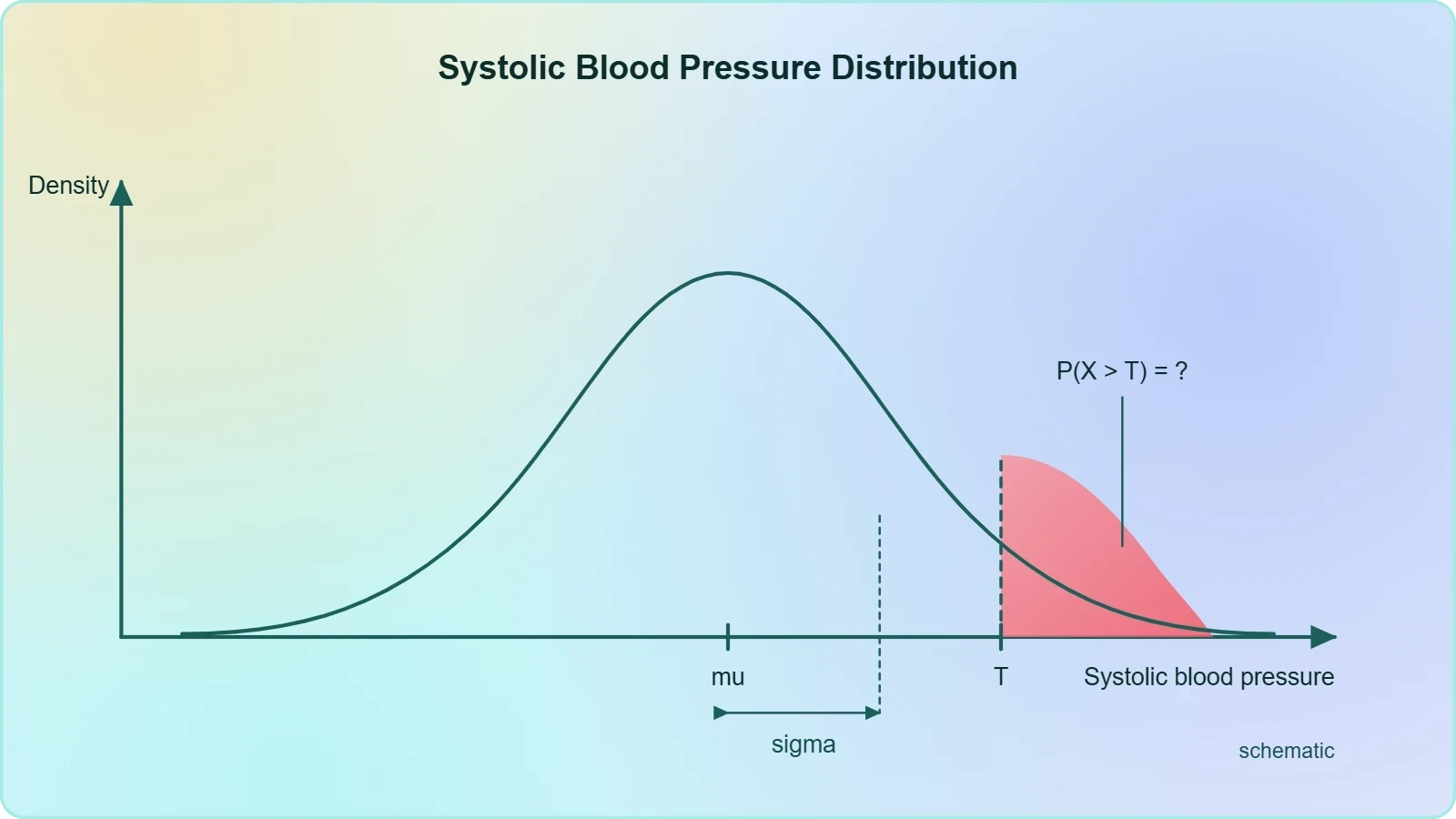
where ##\Phi## is the cumulative distribution function of the standard normal distribution. This relationship explains why modest population-wide reductions in blood pressure produce large reductions in the number of people crossing the threshold, a principle that justifies public health interventions targeting entire communities rather than only high-risk individuals.
Hygiene, Nutrition, and Vector Control
Balanced diet, personal hygiene, and regular exercise are very important to maintain good health. Yoga has been practised since time immemorial to achieve physical and mental health. Awareness about diseases and their effects on different bodily functions, vaccination against infectious diseases, proper disposal of wastes, control of vectors, and maintenance of hygiene in food and water resources are all necessary for achieving good health. These measures are unglamorous but extraordinarily effective: clean water and sanitation alone have saved more lives than most pharmaceutical innovations.
Vector control deserves particular attention because it interrupts transmission at its source. Malaria, as noted, requires the female Anopheles mosquito to complete its life cycle, so draining stagnant water, using bed nets, and applying insecticides reduce human exposure. Similarly, houseflies act as mechanical carriers that transmit Entamoeba histolytica from the faeces of infected persons to food, so sanitation and food hygiene break the chain. Understanding the life cycle of a pathogen is therefore not academic; it identifies precisely where intervention will be most effective.
Modelling Disease Transmission and Population Health
Understanding how infectious diseases spread requires more than describing individual pathogens; it requires quantifying transmission across populations. The basic reproduction number, denoted ##R_0##, represents the average number of secondary infections generated by one infected individual in a fully susceptible population. When ##R_0 > 1##, an outbreak grows; when ##R_0 < 1##, it declines. This single parameter explains why measles, with an ##R_0## often estimated between 12 and 18, requires very high vaccination coverage to control, while diseases with lower values are easier to contain. The herd immunity threshold follows directly from this reasoning.
The Reproduction Number and Herd Immunity
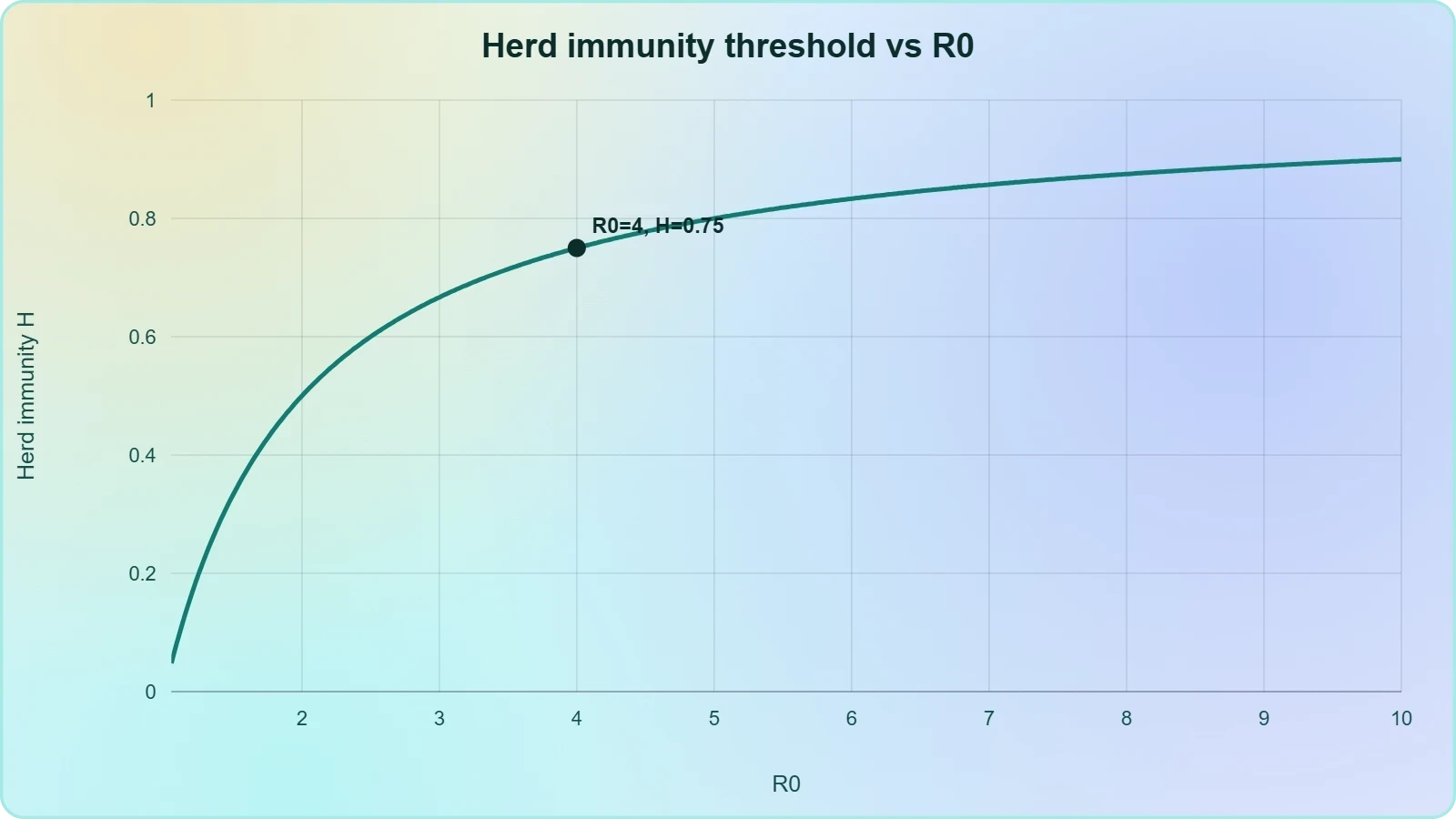
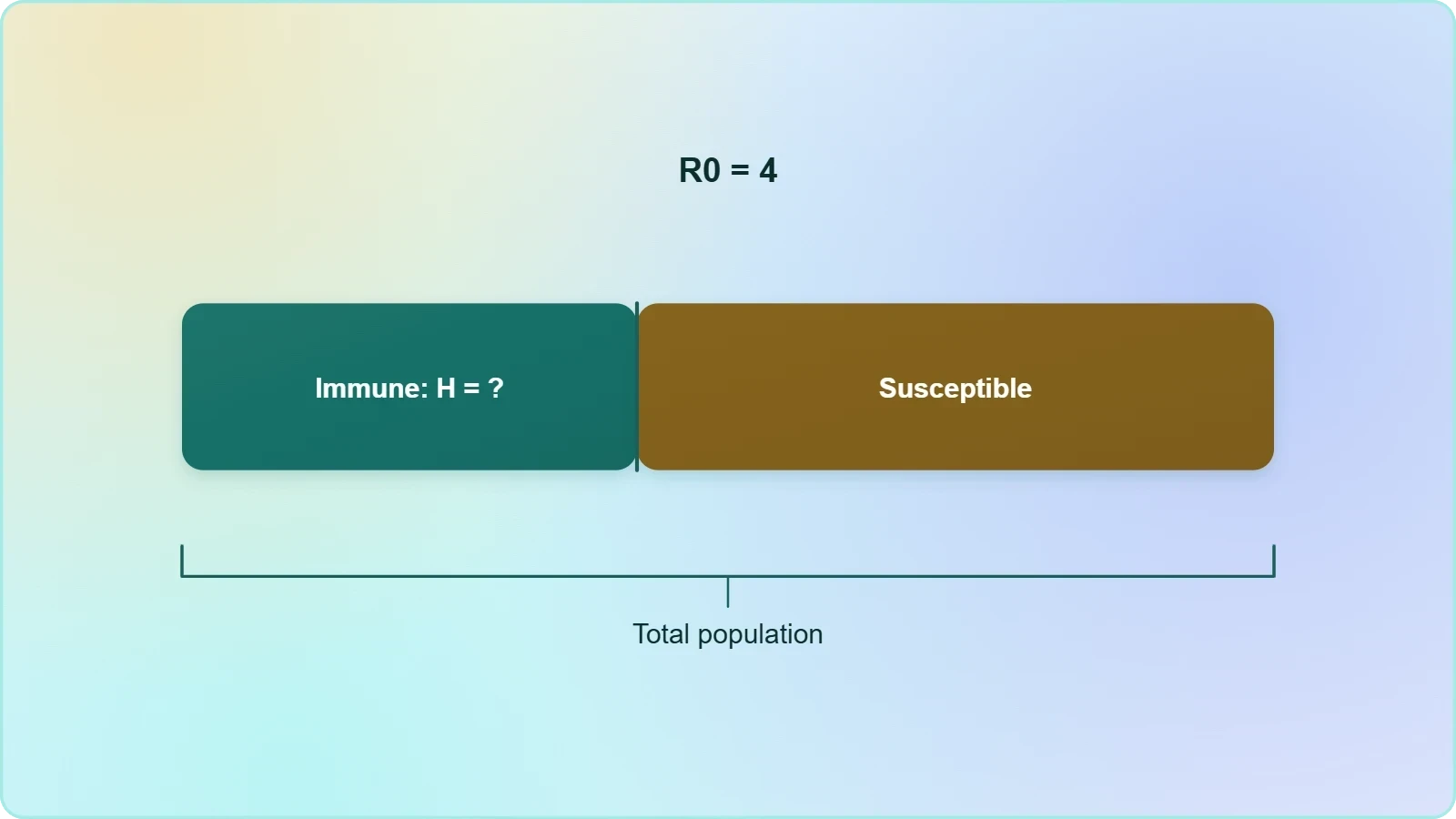
The herd immunity threshold ##H## is the fraction of the population that must be immune to drive ##R_0## below one, and it is given by:
For a disease with ##R_0 = 4##, the threshold is ##H = 1 - 0.25 = 0.75##, meaning 75 percent of the population must be immune to halt sustained transmission. This calculation is why public health officials emphasise coverage targets rather than individual protection alone: vaccination protects the vaccinated, but high coverage protects those who cannot be vaccinated, including infants and immunocompromised individuals. The mathematics transforms a clinical act into a collective responsibility.
Applying Models to Real Pathogens
These models illuminate the diseases discussed earlier. Malaria's dependence on the Anopheles mosquito means that vector control reduces the effective reproduction number by lowering mosquito-to-human contacts, which is why bed nets and habitat management remain central. Typhoid's transmission through contaminated food and water means that sanitation and safe water supply interrupt the faecal-oral route. The common cold's airborne droplet transmission explains its rapid spread in crowded settings. In each case, the pathogen's biology dictates the intervention, and mathematical reasoning clarifies how much intervention is required.
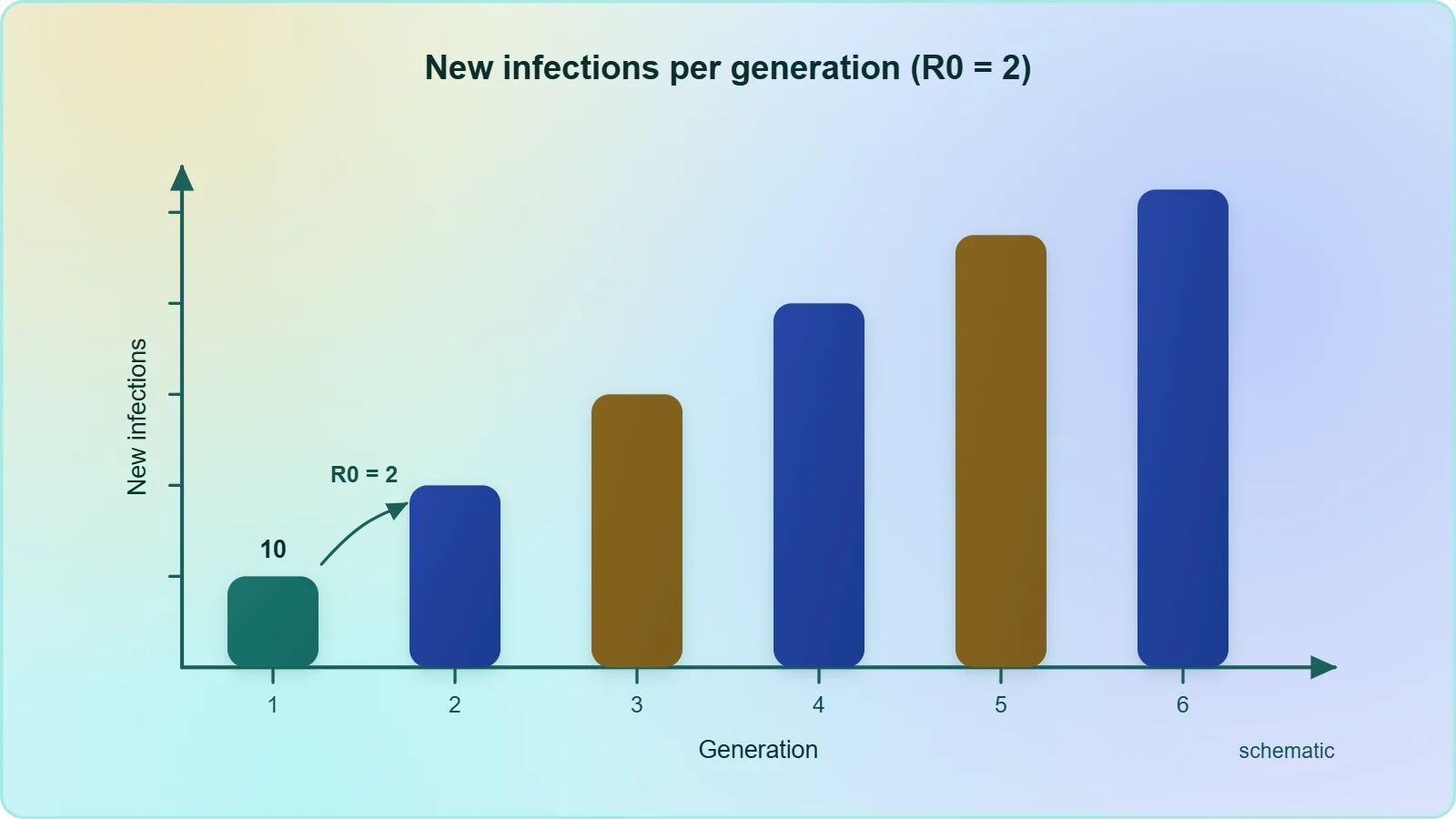
A simple computational model can illustrate epidemic growth. The following Python snippet simulates new infections over successive generations using the reproduction number:
def epidemic_generations(r0, initial_cases, generations):
    cases = initial_cases
    history = [cases]
    for _ in range(generations):
        cases = cases * r0
        history.append(cases)
    return history

# Example: R0 = 2, starting with 10 cases
series = epidemic_generations(2.0, 10, 5)
for gen, count in enumerate(series):
    print(f"Generation {gen}: {count:.0f} cases")
Running this model with ##R_0 = 2## produces 10, 20, 40, 80, 160, and 320 cases across six generations, a doubling pattern that illustrates exponential growth. Real epidemics deviate from this ideal because susceptible individuals become depleted and interventions alter contact rates, but the underlying principle remains: small changes in ##R_0## produce dramatic differences in outbreak size. This is why early intervention, even when case counts appear modest, has outsized effects on final outcomes.
Common Misconceptions and the Path Ahead
Several misconceptions recur among learners encountering this material for the first time. The most persistent is the equation of health with the absence of symptoms, which ignores mental and social dimensions and delays intervention in silent conditions such as hypertension. Another is the belief that infectious diseases are a solved problem; emerging pathogens and antimicrobial resistance demonstrate otherwise. A third is the assumption that genetic predisposition determines destiny, when lifestyle and environment frequently modulate genetic risk. Correcting these misconceptions early prevents errors that compound in later lessons on AIDS, cancer, and substance abuse.
Distinguishing Correlation from Causation
Students often confuse association with causation. A correlation between two variables, such as coffee consumption and heart disease, does not establish that one causes the other; confounding factors such as smoking or age may explain the relationship. The history of the humoral theory is instructive here: it was plausible, widely accepted, and wrong, precisely because it was never subjected to controlled observation. Modern epidemiology uses randomised trials, cohort studies, and statistical adjustment to separate genuine causal effects from spurious associations, and learners should apply the same scepticism to health claims encountered outside the classroom.
Preparing for Bacterial and Viral Diseases
This lesson has established the vocabulary and conceptual framework for the course. Learners should now be able to define health using the WHO formulation, explain why the humoral theory was abandoned, classify diseases as infectious or non-infectious, describe the principal pathogen groups, outline innate and acquired immunity, and articulate the logic of preventive medicine. The next lesson, Bacterial and Viral Diseases, builds directly on this foundation by examining specific bacterial and viral pathogens in greater detail, including their structures, transmission routes, and the immune responses they provoke.
Before proceeding, consolidate the key relationships. Health depends on genetic, infectious, and lifestyle determinants acting together. The immune system, influenced by neural and endocrine signals, maintains health and can be strengthened through vaccination. Infectious diseases spread according to quantifiable principles that guide public health intervention. Non-infectious diseases, including cancer and the consequences of substance abuse, dominate mortality in many populations. Each of these threads will be developed further, and each depends on the definitions and distinctions established here.
From our network :
- Analyzing Trump Deportation Numbers Insights Into The 2026 Immigration Crackdown
- EV 2.0: The Solid-State Battery Breakthrough and Global Factory ExpansionDiscover the impact of the Solid-State Battery Breakthrough on the EV market. Learn about CATL and BYD stock growth, global factory expansion in Europe, and the future of EV 2.0 technology.
- Trump Political Strategy How Geopolitical Stunts Serve As Media Diversions
- 98% of Global MBA Programs Now Prefer GRE Over GMAT Focus EditionExplore why 98% of global MBA programs now prefer the GRE over GMAT Focus. Learn about the shorter GRE format, verbal logic importance, and strategic versatility for students.
- AI-Powered 'Precision Diagnostic' Replaces Standard GRE Score ReportsDiscover the new GRE Precision Diagnostic. Learn how AI-powered behavioral analytics and time-to-solve tracking are replacing standard GRE score reports to empower students.
- How to Print Cheaply: Cutting the Cost per PageA practical, measured guide to lowering what each printed page costs — duplex and draft modes, third-party ink, yield mathematics, and knowing when a new printer beats refills.
- Where to Put Your Wireless Router for Better CoverageA practical, physics-grounded guide to router placement: why the centre of the home beats the corner, how walls and metal sap signal, and how to run a simple survey that proves the improvement.
- Do You Need a New Router or Is Your Internet Plan the Problem?A practical comparison of the signs that point to router limits versus signs your broadband speed or provider is the bottleneck, so you can decide what to replace before spending money.
- 10 Physics Numerical Problems with Solutions for IIT JEEPrepare for IIT JEE with 10 physics numerical problems, complete with detailed solutions and conceptual explanations. Ideal for mastering kinematics, thermodynamics, electromagnetism, and optics.
RESOURCES
- Infectious Diseases: Types, Causes & Treatments - Cleveland Clinicmy.clevelandclinic.orgMay 16, 2025 ... Infectious diseases are illnesses caused by harmful germs (pathogens) that get into your body ... disease are all examples of…
- the role of toll-like receptor 4 in human health and disease, and its ...pubmed.ncbi.nlm.nih.govMar 5, 2026 ... Overall, TLR4 exhibits context-dependent protective and pathogenic roles across infectious and non-infectious diseases, reflecting the ...
- Impacts of environmental and climatic changes on future infectious ...pmc.ncbi.nlm.nih.govJan 24, 2023 ... ... disease transmission to humans when the ... Climate has a great impact on human health ranging from noninfectious to…
- Microbes in us and their role in human health and diseasegenome.govMay 29, 2019 ... Hence it is not surprising that the human microbiome is an important avenue of health research. ... non-infectious diseases or…
- Human Aquaporins: Functional Diversity and Potential Roles ... - PMCpmc.ncbi.nlm.nih.govInfection route, spreading and shedding at different organs of the body and tissue-specific distribution of AQPs. The roles of AQPs in non-infectious diseases ...
- About Homelessness and Health - CDCcdc.govOct 15, 2024 ... ... not meant for human habitation, such ... People experiencing homelessness are at increased risk for infectious and non-infectious diseases.
- Human circulating bacteria and dysbiosis in non-infectious diseasesfrontiersin.orgAug 23, 2022 ... Blood microorganisms were once thought to indicate the infection. Blood in healthy people appears to be devoid of growing bacteria; ...
- Paradigms for microbiome analysis in infectious and non ...cell.comDec 17, 2025 ... ... health- or disease-associated human gut microbiome (see Glossary). ... In diagnostics of infectious diseases, it is well established that…
- Achievements in Public Health, 1900-1999: Control of Infectious ...cdc.govJul 30, 1999 ... Public health action to control infectious diseases ... disease could be eradicated from all human populations through global cooperation.
- A systematic framework for understanding the microbiome in human ...nature.comSep 23, 2024 ... ... human health as well as various infectious, inflammatory and tumor diseases. ... non-infectious diseases (such as an increase in…
- A Comprehensive Review of Autophagy and Its Various Roles in ...mdpi.comJul 3, 2019 ... The roles of autophagy have been explored in fields such as health, disease, infection, degeneration, and genetic or lifestyle-acquired diseases ...
- Emerging Infectious Diseases: Threats to Human Health and Global ...journals.plos.orgJul 4, 2013 ... Competing interests: The authors have declared that no competing interests exist. The inevitable, but unpredictable, appearance of new ...
- Health-care waste - World Health Organization (WHO)who.intOct 24, 2024 ... ... infectious diseases in isolation wards;; pathological waste: human ... However, health-care waste is often not separated into hazardous or…
- Global Health | Department of Medicine | The University of Chicagomedicine.uchicago.edu... infectious and non-infectious disease health systems, and hospital infection epidemiology. ... infectious diseases and public health. Current faculty and ...
- Climate change and animal infectious diseases: a systematic review ...thelancet.comSep 14, 2026 ... ... human infectious diseases, non-infectious ... These trends mirror those observed in human health, reinforcing that climate-sensitive disease risks ...