The story of human origins is, at its heart, a story about reading skulls, stones, and genomes as historical documents. When Charles Darwin first proposed that humans shared a common ancestor with the great apes, he had almost no fossil evidence to support the claim; he reasoned instead from comparative anatomy and from the distribution of living species. Today the evidence is overwhelming and comes from many independent directions: fossilised bones and teeth, stone tools, ancient DNA recovered from cave sediments, and molecular clocks calibrated against living genomes. Each line of evidence tells a slightly different part of the story, and the intellectual task of this lesson is to weave them into a coherent account of how a small, tree-dwelling primate lineage became a species capable of painting bison on cave walls and sequencing its own genome.
The reference material for this lesson captures the essential arc in a few dense paragraphs. It notes that the Neanderthal man, with a brain size of about 1400 cc, lived in the Near East and central Asia between roughly 100,000 and 40,000 years ago, used hides for clothing, and buried its dead. It records that Homo sapiens arose in Africa, moved across continents, and developed into distinct races, with modern humans emerging during the ice age between 75,000 and 10,000 years ago. Prehistoric cave art appeared about 18,000 years ago, exemplified by the Bhimbetka rock shelters in the Raisen district of Madhya Pradesh, and agriculture arrived around 10,000 years ago, triggering settled human communities. These facts form the skeleton of the lesson; the flesh and blood come from the wider fossil and genetic record.
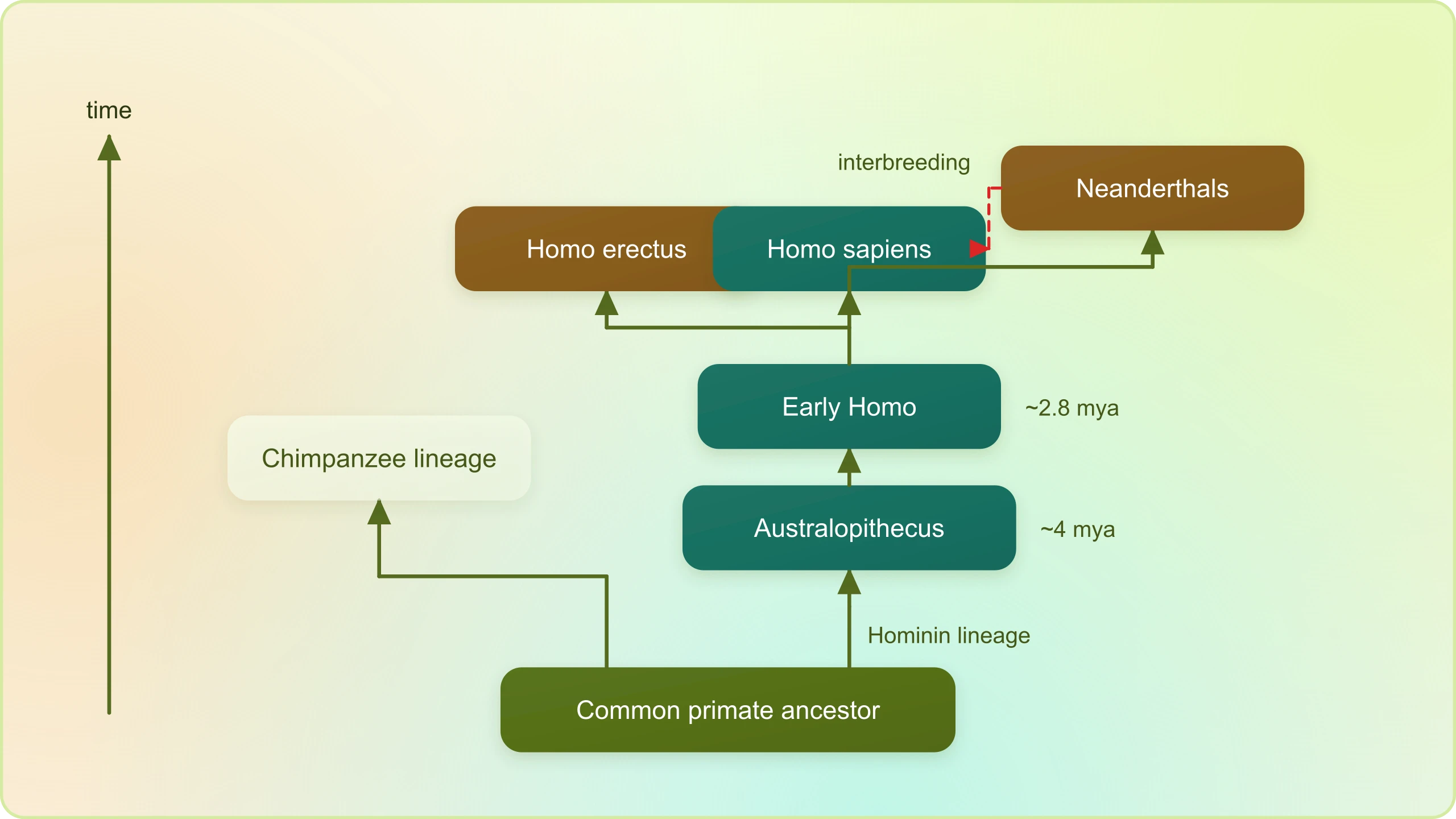
What makes human evolution such a rewarding subject for a Class 12 student is that it forces you to think in two registers at once. On one hand there is biological evolution, measured in changes to skeletal anatomy, brain volume, and gene frequencies over hundreds of thousands of years. On the other hand there is cultural evolution, measured in the transmission of tool-making techniques, symbolic art, burial practices, and language, which can spread through a population in a single generation. The two registers interact: a slightly larger brain or a more dexterous hand makes new cultural behaviours possible, and those behaviours in turn reshape the selection pressures acting on the body. This lesson traces that interaction from the earliest primates to the first farmers.
On This Page
- The Primate Inheritance: What We Brought With Us
- Australopithecines and the Bushy Tree of Hominin Diversity
- Homo erectus: Anatomy, Dispersal, and Fire
- Neanderthals and the Complexity of Late Hominin Life
- The Emergence of Homo sapiens and the Great Dispersal
- Cultural Evolution and the Neolithic Threshold
- Reading the Evidence: Fossils, Genes, and the Scientific Method
- From Deep History to the Present: Why Human Origins Matter
The Primate Inheritance: What We Brought With Us
Before any hominin walked upright, the primate lineage had already accumulated a distinctive set of anatomical and behavioural traits that would prove decisive later. Primates are characterised by grasping hands and feet with opposable thumbs, nails instead of claws, forward-facing eyes that permit stereoscopic depth perception, and a relatively large brain for their body size. These features originally evolved in arboreal ancestors that needed to judge distances between branches, grip slender supports, and coordinate precise movements of the limbs. When the ancestors of humans eventually descended from the trees, they carried this toolkit with them, and it would be repurposed for tool-making, throwing, and eventually writing.
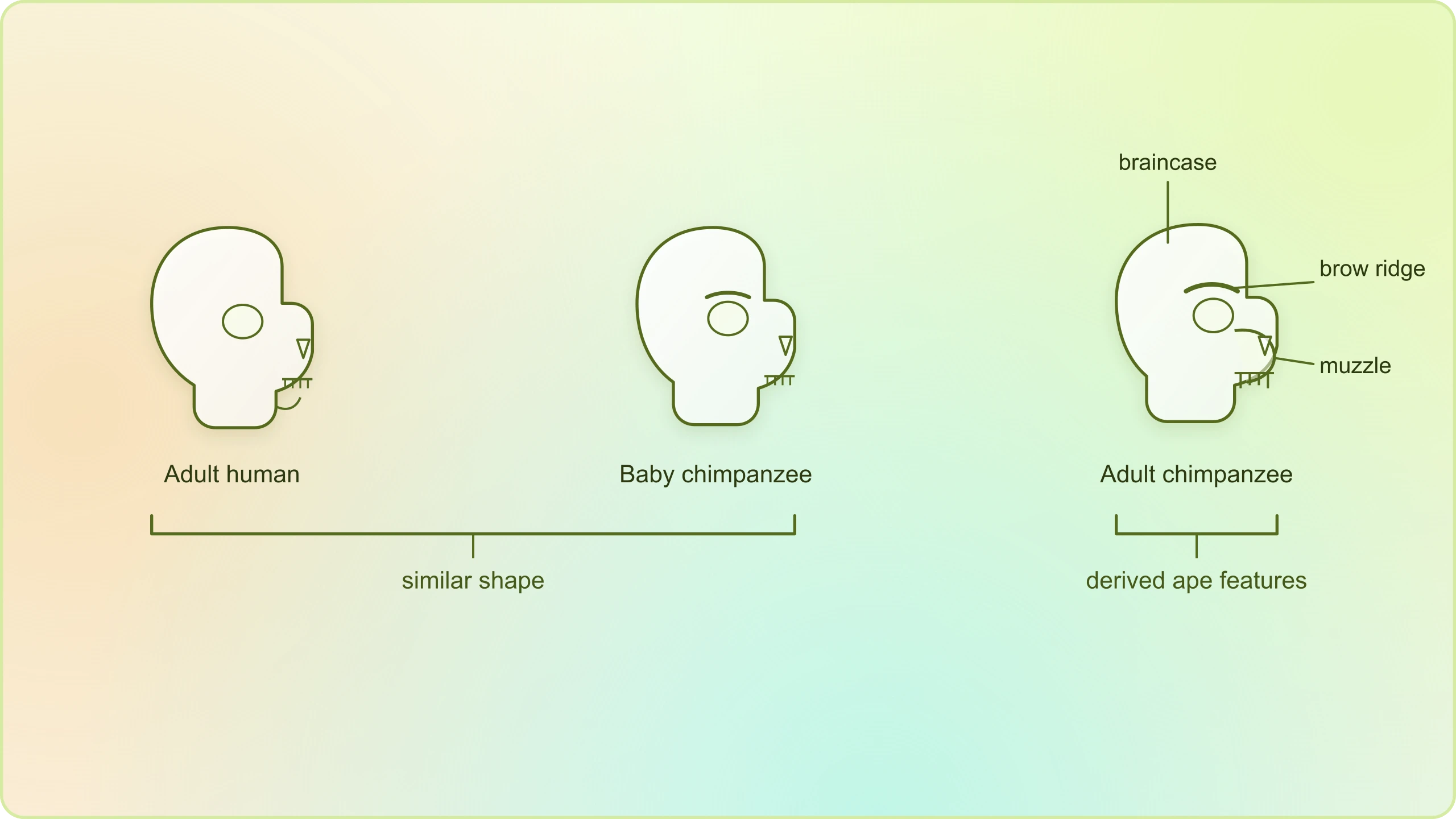
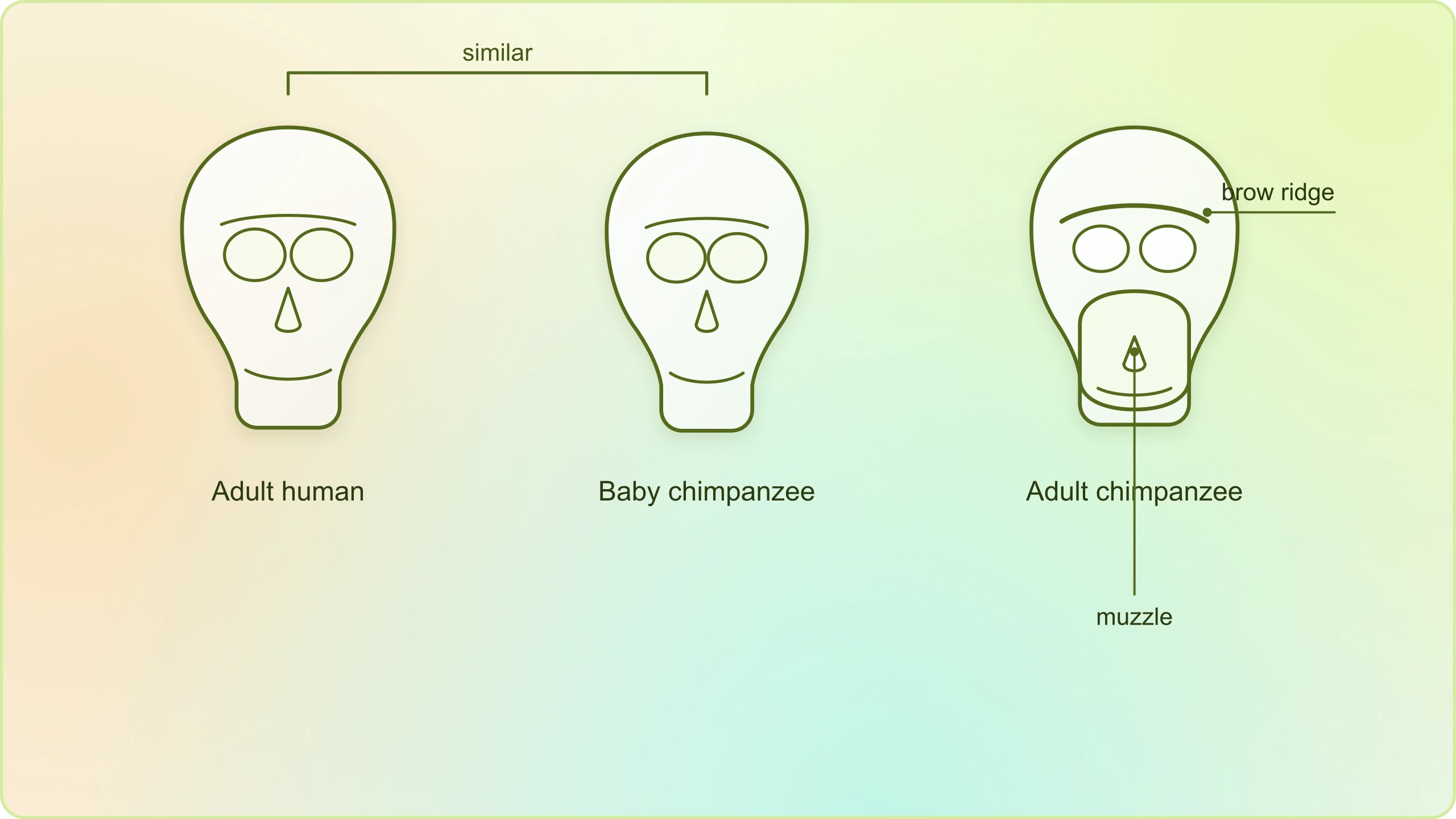
The reference material makes a striking point that is worth pausing over: the skull of a baby chimpanzee is more like an adult human skull than an adult chimpanzee skull is. This observation, illustrated in the comparison of adult human, baby chimpanzee, and adult chimpanzee skulls, captures something profound about how evolution works. Humans retain into adulthood several features that other apes possess only as juveniles, a phenomenon known as neoteny, or the retention of juvenile traits. The relatively flat face, the large braincase relative to the jaw, and the small brow ridges of adult humans all resemble the juvenile condition in chimpanzees. This suggests that changes in the timing of developmental gene expression, rather than the invention of entirely new genes, played a major role in human evolution.
Dryopithecus and Ramapithecus: Early Hominoid Candidates
The fossil record of early hominoids includes genera such as Dryopithecus and Ramapithecus, which the reference material names as early primates in the human lineage. Dryopithecus, known from Miocene deposits in Europe, Africa, and Asia dating to roughly 12 to 9 million years ago, had a mosaic of ape-like and monkey-like features, with arms suggesting some form of suspensory or climbing locomotion. It is generally regarded as close to the common ancestry of the great apes and humans, though it is not a direct human ancestor. Its dental formula and limb proportions place it firmly among the hominoids, the superfamily that includes gibbons, orangutans, gorillas, chimpanzees, and humans.
Ramapithecus, recovered from Siwalik deposits in northern India and Pakistan and dated to about 14 to 8 million years ago, was once widely promoted as the earliest direct human ancestor because of its thick-enamelled, relatively small front teeth and robust jaw. Later discoveries of more complete material showed that Ramapithecus was very likely a female of the genus Sivapithecus, an extinct relative of the orangutan, and its human-ancestor status was withdrawn. The episode is a valuable lesson in palaeoanthropology: a fragmentary jaw can suggest a compelling story, but only more complete fossils and independent lines of evidence can confirm or refute it.
From Ape Ancestry to the Hominin Line
Molecular evidence indicates that the lineages leading to chimpanzees and to humans diverged roughly 6 to 7 million years ago, a date consistent with the earliest putative hominins such as Sahelanthropus tchadensis from Chad, dated to about 7 million years ago. The key anatomical shift that defines the hominins is bipedalism, habitual upright walking on two legs. The foramen magnum, the opening at the base of the skull through which the spinal cord passes, sits more centrally in hominins than in apes, indicating a vertically held head. The pelvis becomes shorter and bowl-shaped, and the femur angles inward to bring the feet under the body's centre of gravity. These skeletal signatures allow palaeontologists to identify bipedal species even from fragmentary remains.
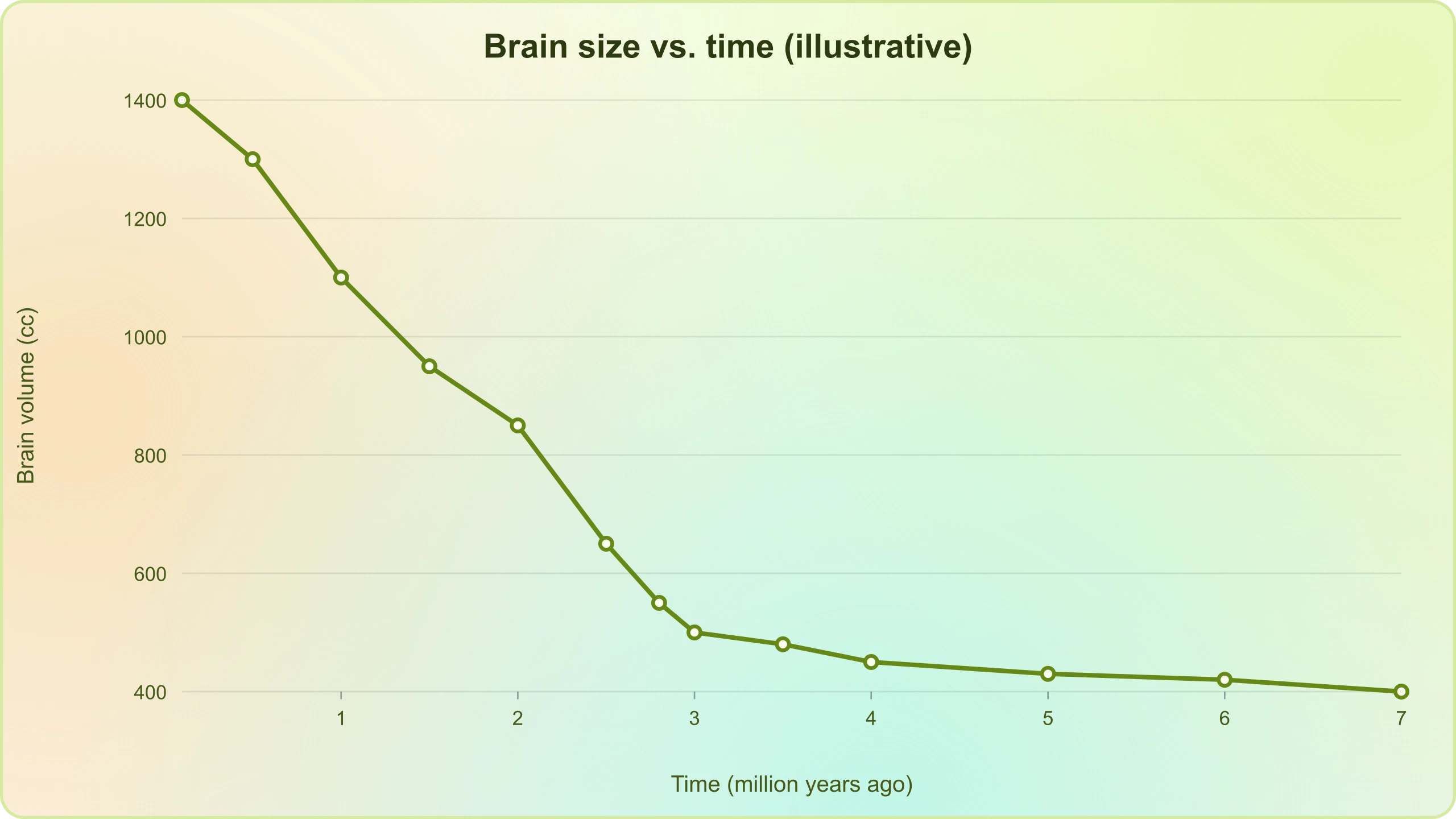
Bipedalism preceded large brains by several million years, a point that overturns the intuitive assumption that intelligence came first. The earliest well-documented bipeds, such as Australopithecus anamensis and Australopithecus afarensis, had brains only slightly larger than those of modern chimpanzees. The selective advantages of bipedalism probably included more efficient travel across open savanna, the ability to carry food or infants, and reduced exposure of the body surface to the tropical sun. Whatever the precise mix of benefits, the commitment to upright walking reshaped the hominin skeleton and set the stage for the later expansion of the brain.
Australopithecines and the Bushy Tree of Hominin Diversity
The popular image of human evolution as a single file of increasingly upright, increasingly brainy ancestors is deeply misleading. The hominin fossil record reveals a bushy tree with many branches, most of which ended in extinction. At various times in the past, two, three, or even more hominin species coexisted in the same region of Africa, and later in Eurasia. The genus Australopithecus, which flourished between about 4.2 and 2 million years ago, alone contains more than half a dozen recognised species, differing in body size, jaw robusticity, and habitat preference. Recognising this diversity is essential for understanding evolution as a branching process rather than a march of progress.
The most famous australopithecine is Australopithecus afarensis, known from the Afar region of Ethiopia and dated to between about 3.9 and 3.0 million years ago. The best-known specimen, a partial skeleton nicknamed Lucy, was discovered in 1974 and preserves about 40 percent of the skeleton, including a pelvis and femur that clearly indicate bipedal walking. Lucy stood roughly 1.1 metres tall and had a brain volume of about 400 to 500 cc, comparable to that of a modern chimpanzee. Her limb proportions, with relatively long arms and short legs, suggest a creature that walked upright on the ground but retained climbing abilities.
Footprints, Diets, and the Laetoli Evidence
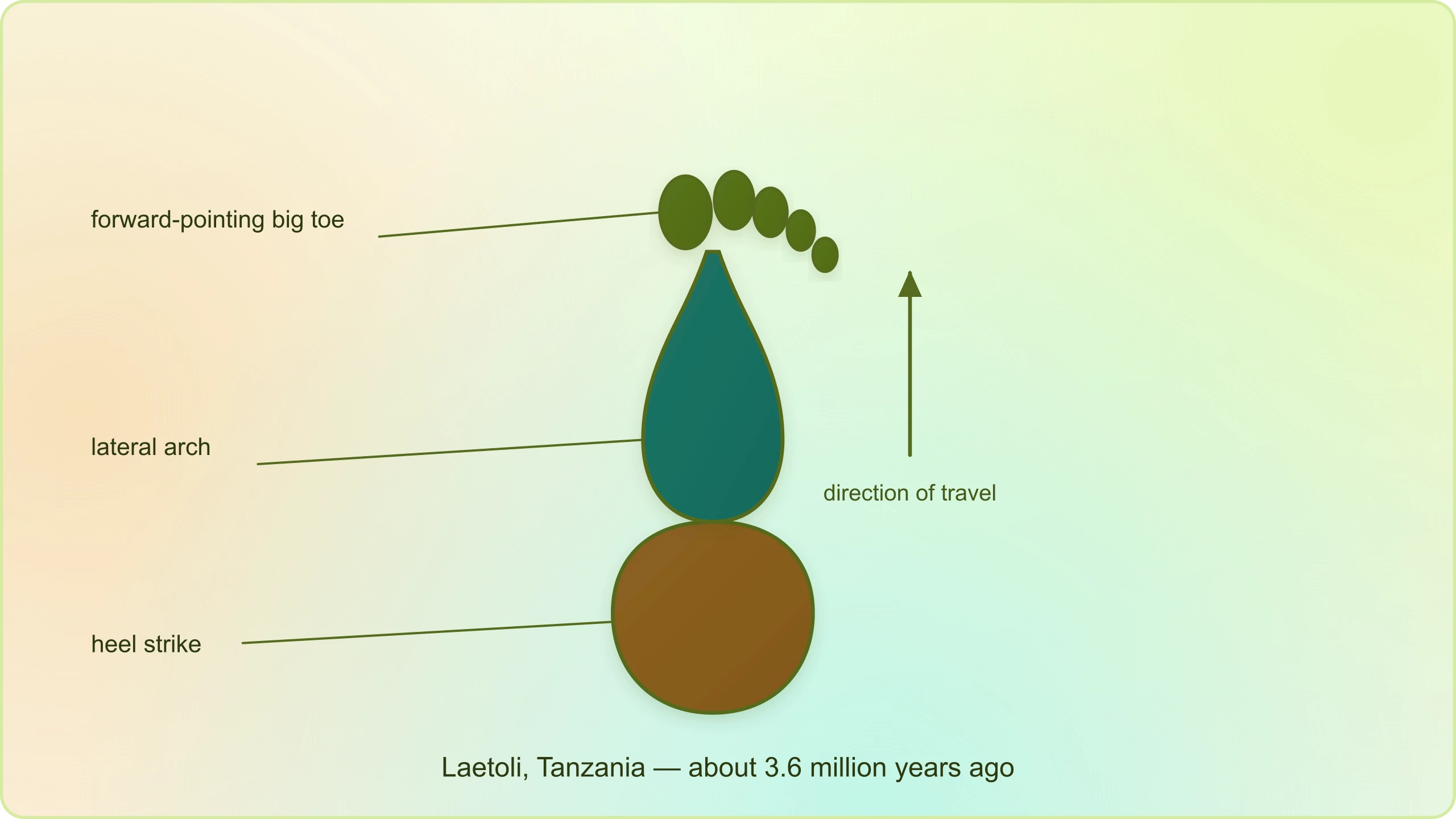
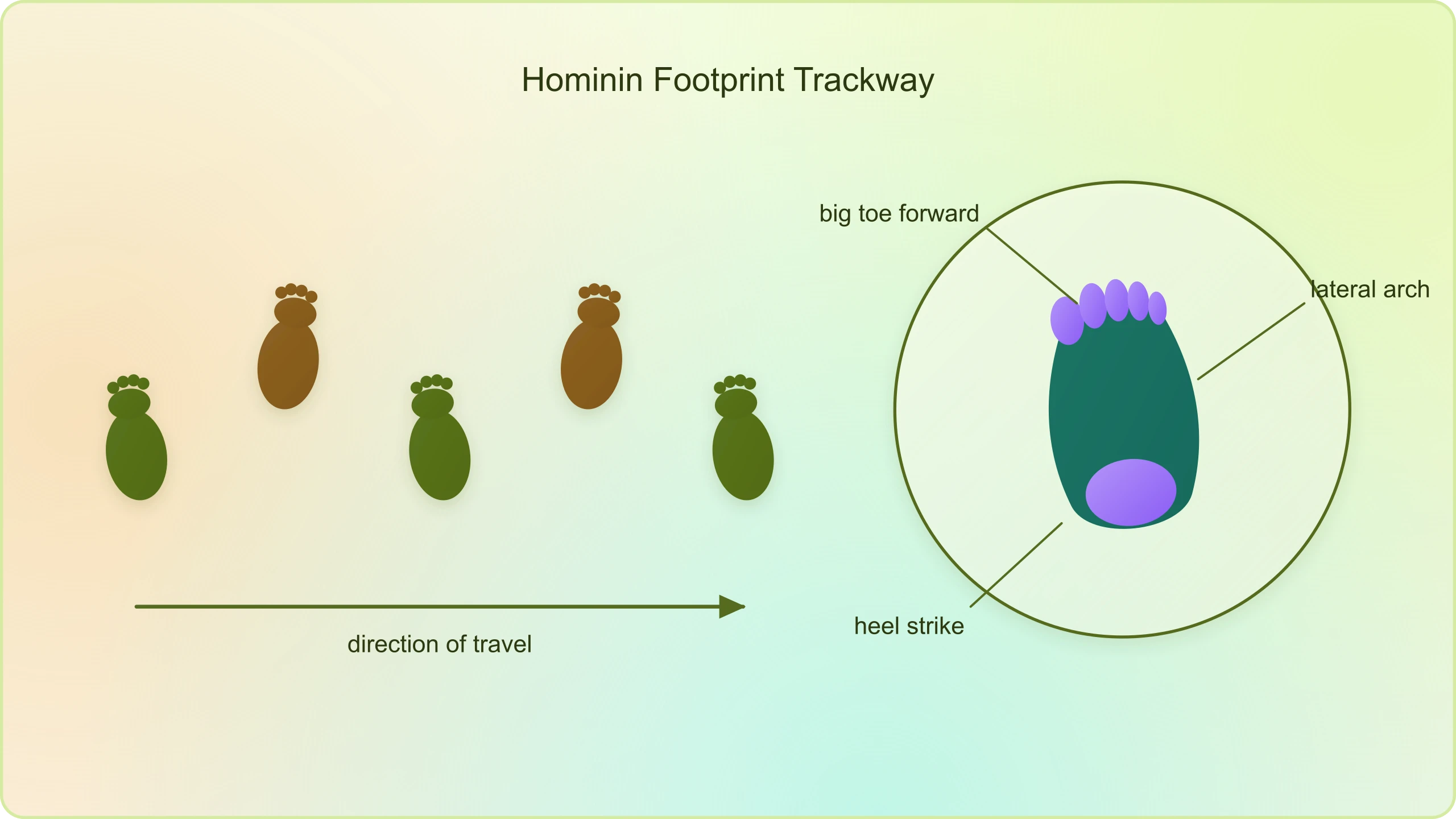
The Laetoli footprints in Tanzania, dated to about 3.6 million years ago, provide direct evidence of bipedal locomotion in early hominins. The footprints preserve a heel strike, a lateral arch, and a forward-pointing big toe, all characteristic of the modern human gait rather than the grasping foot of an ape. Because footprints record behaviour rather than anatomy, they are especially valuable: they show that bipedalism was already established well before the appearance of the genus Homo. The trackway also suggests that at least two individuals walked together across a bed of volcanic ash, a tantalising glimpse of social behaviour.
Dietary evidence from australopithecine teeth and from carbon isotope analysis of tooth enamel indicates a varied menu. Some species, such as Australopithecus africanus, had relatively generalised teeth suited to a mixed diet of fruits, leaves, and perhaps some animal matter. Others, such as Paranthropus boisei, had enormous molars, thick enamel, and massive jaw muscles, adaptations for grinding tough plant foods. The coexistence of gracile and robust forms in the same landscapes suggests that these species partitioned their ecological niches, exploiting different food sources rather than competing directly for the same resources.
The First Members of the Genus Homo
The genus Homo appears in the fossil record around 2.8 million years ago, with the earliest known specimens from Ethiopia and Kenya. The defining features of early Homo include a modestly enlarged brain, a flatter face, smaller teeth, and a more modern limb skeleton than that of australopithecines. Homo habilis, dated to about 2.4 to 1.5 million years ago, is associated with the earliest stone tools of the Oldowan tradition, simple flakes and choppers made by striking one stone against another. Whether Homo habilis was the actual toolmaker or merely a contemporary of the tools remains debated, but the association is suggestive.
The Oldowan tool industry, dating from about 2.6 million years ago, marks a threshold in human evolution: the deliberate modification of the environment for a future purpose. Making a sharp-edged flake requires selecting suitable raw material, understanding the fracture properties of stone, and executing a controlled strike. This is a form of planning and skill transmission that goes beyond the simple use of unmodified sticks or stones. The cognitive demands of tool-making may have created selection pressures favouring the enlargement of the brain and the refinement of manual dexterity, initiating a feedback loop between culture and biology.
Homo erectus: Anatomy, Dispersal, and Fire
Homo erectus represents one of the most successful and long-lived hominin species, persisting from about 1.9 million years ago to perhaps as recently as 100,000 years ago in some regions. Its body was taller and more modern than that of earlier hominins, with long legs, a narrow pelvis, and a stature approaching that of modern humans. The brain was substantially larger than that of Homo habilis, ranging from about 800 to 1100 cc, and the face was flatter with prominent brow ridges. These features suggest a more efficient bipedal gait and a greater capacity for endurance running, which may have been important for hunting or scavenging.
The reference material notes that Homo erectus probably ate meat, and this dietary shift is supported by several lines of evidence. Cut marks on animal bones from sites such as Olduvai Gorge indicate that hominins were butchering carcasses, and the reduction in tooth and gut size in Homo erectus is consistent with a higher-quality diet that required less chewing and less lengthy digestion. Meat provides a dense source of energy and nutrients, and its inclusion in the diet may have supported the metabolic demands of a larger brain. The controlled use of fire, evidenced at sites such as Gesher Benot Ya'aqov in Israel and Wonderwerk Cave in South Africa, would have made meat easier to digest and provided warmth and protection.
The First Out-of-Africa Dispersal
Homo erectus was the first hominin to migrate out of Africa, reaching Asia and Europe. Fossil sites in the Caucasus, such as Dmanisi in Georgia, preserve skulls dated to about 1.8 million years ago, and the famous Java and Peking specimens document the presence of Homo erectus in East Asia by about 1.6 million years ago. The dispersal was not a single event but a series of movements, probably following expanding savanna habitats and animal prey. The ability to survive in temperate and tropical environments outside Africa required technological and social adaptations, including the use of fire, the manufacture of more sophisticated tools, and the capacity to cooperate in hunting and scavenging.
The Acheulean tool tradition, characterised by large, symmetrical hand axes and cleavers, is associated with Homo erectus and later hominins. These tools required a mental template and a sequence of planned strikes to produce a symmetrical form, indicating a more advanced cognitive capacity than the Oldowan industry. The widespread distribution of Acheulean tools across Africa, Europe, and Asia suggests that the techniques were transmitted across generations and across vast distances, a form of cultural inheritance that would become increasingly important in human evolution.
Neanderthals and the Complexity of Late Hominin Life
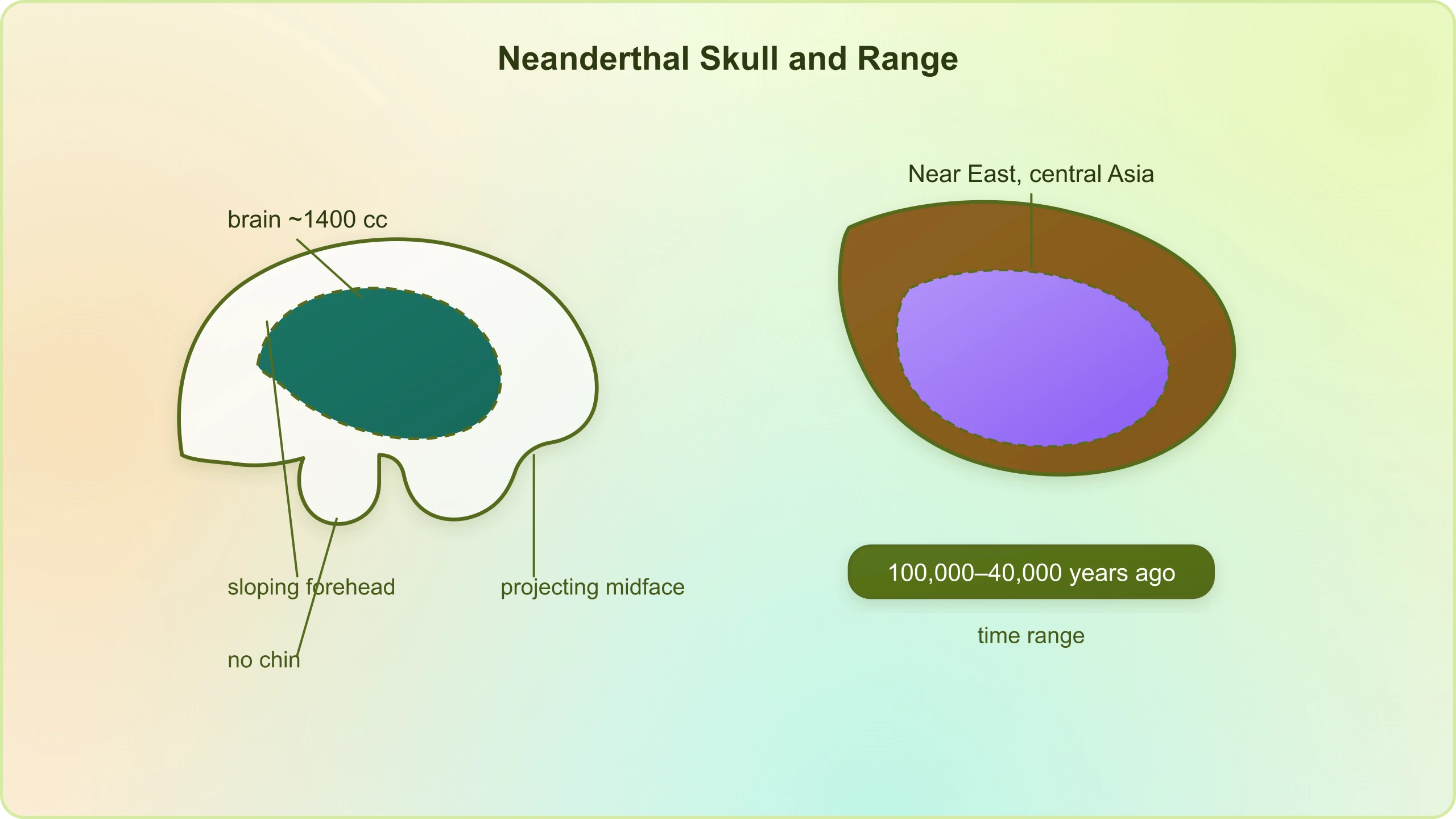
The Neanderthal man, as the reference material describes, had a brain size of about 1400 cc and lived in the Near East and central Asia between roughly 100,000 and 40,000 years ago. Neanderthals were a distinct species, Homo neanderthalensis, adapted to cold climates with a stocky build, short limbs, and a large nasal aperture that may have helped warm inhaled air. They used hides to protect their bodies, manufactured sophisticated stone tools of the Mousterian tradition, controlled fire, and buried their dead. Burial practices, such as those at Shanidar Cave in Iraq and La Chapelle-aux-Saints in France, suggest a degree of symbolic behaviour and emotional life that was once thought to be uniquely human.
Neanderthals were not simply a crude precursor to modern humans; they were a parallel lineage with their own cultural achievements. They hunted large game, including mammoths and reindeer, and some populations produced ornaments from shells and pigments. Recent evidence suggests they may have made cave art and used plant materials for medicine. Their extinction around 40,000 years ago coincides with the arrival of modern humans in Europe, and the causes remain debated: competition for resources, climate change, disease, or a combination of factors may have contributed. What is clear is that Neanderthals were not replaced in a single dramatic event but disappeared gradually over thousands of years.
Interbreeding and the Genetic Legacy
One of the most important discoveries of the genomic era is that Neanderthals interbred with modern humans. Analyses of ancient DNA extracted from Neanderthal bones, pioneered by Svante Pääbo and his team, revealed that non-African populations today carry roughly 1 to 2 percent Neanderthal DNA. This genetic legacy includes genes affecting skin pigmentation, immune function, and adaptation to climate. Some Neanderthal genes may have conferred advantages in resisting pathogens encountered outside Africa, while others may have been deleterious and were gradually removed by selection. The presence of Neanderthal DNA in living people is direct evidence that species boundaries in the hominin lineage were porous.
The interbreeding did not occur once but multiple times, and different modern human populations carry slightly different Neanderthal gene variants. There is also evidence of interbreeding with Denisovans, another extinct hominin group known from a finger bone and teeth found in Denisova Cave in Siberia. Denisovan DNA is found at highest frequency in Melanesian and Aboriginal Australian populations, indicating that the dispersal of modern humans involved encounters with multiple archaic groups. These findings have transformed our understanding of human origins from a simple replacement model to a more complex model of interbreeding and assimilation.
Symbolic Behaviour and the Roots of Culture
The Neanderthal archaeological record includes evidence of symbolic behaviour that challenges the idea that modern humans alone were capable of abstract thought. Burials with grave goods, the use of pigments such as red ochre, and the manufacture of personal ornaments all point to a capacity for symbolism. Some scholars argue that these behaviours were less frequent or less elaborate among Neanderthals than among modern humans, but the distinction is becoming harder to maintain as new evidence accumulates. The capacity for symbolic thought may have deep roots in the hominin lineage, predating the emergence of our own species.
Language is the most elusive aspect of Neanderthal behaviour. Anatomical studies of the hyoid bone, which supports the larynx, suggest that Neanderthals may have had a vocal tract capable of producing a range of sounds similar to those of modern humans. Genetic evidence, including the presence of the FOXP2 gene variant associated with language in modern humans, is suggestive but not conclusive. Whether Neanderthals had a fully symbolic language or a simpler communication system remains an open question, but the complexity of their tool-making and social organisation implies a sophisticated form of communication.
The Emergence of Homo sapiens and the Great Dispersal
Modern Homo sapiens originated in Africa about 300,000 years ago, according to fossils from sites such as Jebel Irhoud in Morocco and Omo Kibish in Ethiopia. These early modern humans had a skull shape that was essentially modern, with a high forehead, a rounded braincase, and a small face, though some features were still archaic. The transition from earlier forms to fully modern anatomy was gradual and mosaic, with different features appearing at different times and places. The African origin of our species is supported by genetic evidence, which shows that the greatest genetic diversity among living humans is found in African populations, consistent with a longer history there.
The dispersal of modern humans out of Africa began roughly 70,000 to 50,000 years ago, according to genetic and archaeological evidence. The routes taken are debated, but the most likely path was through the Sinai Peninsula and the Levant, followed by expansion into Europe and Asia. Some populations may have crossed the Red Sea into Arabia, and others may have travelled along the coast of South Asia to reach Australia by about 65,000 years ago. The dispersal was not a single migration but a series of movements, with some populations becoming isolated and diverging genetically.
Replacement and Assimilation of Archaic Hominins
As modern humans spread across the continents, they encountered other hominin species, including Neanderthals in Europe and western Asia, Denisovans in Asia, and possibly Homo erectus in Southeast Asia. The outcome of these encounters was a mix of competition, interbreeding, and assimilation. In some regions, modern humans may have outcompeted archaic species for resources, while in others they interbred with them. The genetic evidence indicates that the archaic species eventually disappeared as distinct entities, but their genes persist in modern populations, a phenomenon sometimes called "ghost introgression."
The replacement of archaic hominins by modern humans was not a simple process of superiority. Modern humans may have had advantages in social organisation, language, and technological innovation, but archaic species were also well adapted to their environments. The extinction of Neanderthals, for example, may have been driven by a combination of factors, including competition, climate change, and the effects of interbreeding. The story of human dispersal is thus a story of complex interactions, not a simple triumph of one species over another.
Cultural Evolution and the Neolithic Threshold
The reference material notes that prehistoric cave art developed about 18,000 years ago, with the Bhimbetka rock shelters in the Raisen district of Madhya Pradesh preserving one such example. Cave art is among the most striking expressions of symbolic thought in early modern humans, and it appears independently in several regions, including Europe, Africa, Australia, and Asia. The paintings at Bhimbetka, which span a long period from the Palaeolithic to historical times, depict animals, hunting scenes, and human figures. The art is not merely decorative; it likely served social, ritual, or communicative functions, and its existence implies a mind capable of abstraction, planning, and storytelling.
Agriculture came around 10,000 years ago, marking the transition from hunting and gathering to settled farming communities. This Neolithic Revolution occurred independently in several regions, including the Fertile Crescent, China, Mesoamerica, and the Andes, and it transformed human societies in profound ways. Farming allowed larger populations to be supported on a given area of land, but it also brought new challenges: the spread of infectious diseases from domesticated animals, the emergence of social hierarchies, and the environmental impact of land clearance. The shift to agriculture was not an unalloyed improvement in human welfare, but it was a decisive step in the development of civilisations.
Tools, Language, and the Ratchet Effect
Cultural evolution differs from biological evolution in its speed and mechanism. Biological evolution proceeds by natural selection acting on genetic variation, typically over many generations. Cultural evolution proceeds by the transmission of information through learning, imitation, and teaching, and it can occur within a single generation. The ratchet effect, a concept from cultural evolution theory, describes the accumulation of modifications to a cultural trait over time, with each generation building on the innovations of the previous one. Tool-making traditions, from the Oldowan to the Acheulean to the sophisticated blades of the Upper Palaeolithic, illustrate this cumulative process.
Language is the most powerful vehicle of cultural transmission. A symbolic, recursive language allows information to be shared about the past, the future, and the absent, enabling planning, cooperation, and the accumulation of knowledge. The evolution of language is difficult to trace directly in the fossil record, but anatomical, genetic, and archaeological evidence all point to a capacity for complex communication in modern humans and possibly in Neanderthals. The relationship between language and brain expansion is a central theme in human evolution, and it is the subject of the next lesson.
Common Misconceptions and How to Avoid Them
Several misconceptions about human evolution persist in popular culture and even in some textbooks. One is the idea that evolution is a linear progression from primitive to advanced, with modern humans as the endpoint. In reality, evolution is a branching process, and most hominin species went extinct without leaving descendants. Another misconception is that humans evolved from chimpanzees; in fact, humans and chimpanzees share a common ancestor that lived millions of years ago, and both lineages have evolved independently since the split. A third misconception is that brain size alone determines intelligence; brain organisation, connectivity, and the relative size of different brain regions are equally important.
A fourth misconception is that human evolution has stopped. In reality, human populations continue to evolve, with recent adaptations including lactose tolerance in dairying populations, high-altitude tolerance in Tibetan and Andean populations, and resistance to infectious diseases such as malaria. The pace of genetic change may even have accelerated in the last 10,000 years, as larger populations and new environments created new selection pressures. Understanding these ongoing processes is essential for a complete picture of human evolution, and it connects the deep past to the present day.
Reading the Evidence: Fossils, Genes, and the Scientific Method
The study of human evolution relies on multiple independent lines of evidence, each with its own strengths and limitations. Fossils provide direct anatomical evidence but are rare and often fragmentary. Genetics provides information about relationships and population history but requires well-preserved DNA, which is rare in tropical environments. Archaeology provides evidence of behaviour but is limited to what survives in the material record. The most robust conclusions are those supported by multiple lines of evidence, and the history of palaeoanthropology is full of examples where one line of evidence corrected or refined conclusions drawn from another.
The fossil record of human evolution is uneven. East Africa, particularly the Great Rift Valley, has yielded an extraordinary abundance of hominin fossils because of its geology and the history of research there. Other regions, such as Central and West Africa, are less well explored, and their fossil records are correspondingly poorer. This geographic bias means that our understanding of human evolution is skewed toward the regions that have been most intensively studied. Future discoveries in under-explored regions are likely to revise our understanding of the hominin family tree.
Dating Methods and Their Uncertainties
Accurate dating is essential for reconstructing the sequence of events in human evolution. Radiometric methods, such as potassium-argon and argon-argon dating, are used to date volcanic rocks associated with fossils, providing ages in the millions of years. Radiocarbon dating is used for more recent material, up to about 50,000 years ago. Luminescence dating can date sediments and burnt flints, and palaeomagnetic dating uses reversals of the Earth's magnetic field as a global clock. Each method has its own range of applicability and sources of error, and the most reliable dates are those confirmed by multiple methods.
The uncertainty in dating has important implications for interpreting the fossil record. A fossil dated to 3.2 million years ago with an error of plus or minus 100,000 years could be older or younger than another fossil dated to 3.1 million years ago with a similar error. This uncertainty means that the precise sequence of events in human evolution is often debated, and apparent gaps in the fossil record may reflect sampling rather than true absence. The integration of dating methods with stratigraphy and taphonomy is essential for building a reliable chronology.
Molecular Clocks and Ancient DNA
Molecular clocks use the rate of genetic change to estimate the timing of evolutionary events. By comparing the DNA sequences of living species, researchers can estimate when their lineages diverged, assuming a roughly constant rate of mutation. The molecular clock is calibrated using fossils of known age, and its accuracy depends on the reliability of the calibration and the constancy of the mutation rate. Molecular clocks have been used to date the chimpanzee-human divergence, the dispersal of modern humans out of Africa, and the divergence of Neanderthals and Denisovans.
Ancient DNA has transformed the study of human evolution by providing direct genetic evidence from extinct species. The first Neanderthal genome was sequenced in 2010, and since then, genomes from Denisovans, early modern humans, and other archaic hominins have been recovered. Ancient DNA has revealed interbreeding between species, population movements, and adaptations that are invisible in the fossil record. The field is still young, and new techniques, such as the recovery of DNA from cave sediments, are opening up new avenues of research.
From Deep History to the Present: Why Human Origins Matter
The study of human origins is not merely an academic exercise; it has profound implications for how we understand ourselves. The recognition that all living humans share a recent African ancestry, and that our species interbred with other hominins, undermines the concept of biological races as discrete, ancient categories. Genetic variation within human populations is far greater than variation between them, and the differences that do exist are largely the result of recent migration and adaptation to local environments. Understanding this history is essential for combating racism and for promoting a scientifically informed view of human diversity.
The human story is also a story of cultural evolution, in which the transmission of knowledge across generations has become the dominant mode of adaptation. Tools, language, art, and social institutions have allowed humans to occupy virtually every terrestrial environment on Earth, from tropical rainforests to Arctic tundra. This cultural capacity is itself a product of biological evolution, but it has taken on a life of its own, driving changes that are far faster than genetic evolution could achieve. The interaction between biology and culture is one of the most fascinating themes in the study of human origins, and it continues to shape our species today.
As you prepare for the next lesson on bipedalism, brain expansion, and culture, keep in mind the central lesson of this one: human evolution is a branching, contingent, and ongoing process, not a predetermined march toward modernity. The species that came before us were not failed versions of ourselves but successful organisms in their own right, adapted to their own times and places. Their fossils, tools, and genes are the archives of our shared history, and reading them carefully is one of the most rewarding intellectual adventures available to a student of biology.
Also Read
- No links available.
From our network :
- Analyzing Trump Deportation Numbers Insights Into The 2026 Immigration Crackdown
- 98% of Global MBA Programs Now Prefer GRE Over GMAT Focus EditionExplore why 98% of global MBA programs now prefer the GRE over GMAT Focus. Learn about the shorter GRE format, verbal logic importance, and strategic versatility for students.
- How to Print Cheaply: Cutting the Cost per PageA practical, measured guide to lowering what each printed page costs — duplex and draft modes, third-party ink, yield mathematics, and knowing when a new printer beats refills.
- 10 Physics Numerical Problems with Solutions for IIT JEEPrepare for IIT JEE with 10 physics numerical problems, complete with detailed solutions and conceptual explanations. Ideal for mastering kinematics, thermodynamics, electromagnetism, and optics.
- Do You Need a New Router or Is Your Internet Plan the Problem?A practical comparison of the signs that point to router limits versus signs your broadband speed or provider is the bottleneck, so you can decide what to replace before spending money.
- Where to Put Your Wireless Router for Better CoverageA practical, physics-grounded guide to router placement: why the centre of the home beats the corner, how walls and metal sap signal, and how to run a simple survey that proves the improvement.
- EV 2.0: The Solid-State Battery Breakthrough and Global Factory ExpansionDiscover the impact of the Solid-State Battery Breakthrough on the EV market. Learn about CATL and BYD stock growth, global factory expansion in Europe, and the future of EV 2.0 technology.
- AI-Powered 'Precision Diagnostic' Replaces Standard GRE Score ReportsDiscover the new GRE Precision Diagnostic. Learn how AI-powered behavioral analytics and time-to-solve tracking are replacing standard GRE score reports to empower students.
- Trump Political Strategy How Geopolitical Stunts Serve As Media Diversions
RESOURCES
- Homo sapiens - The Smithsonian's Human Origins Programhumanorigins.si.eduJan 3, 2024 ... Evolutionary Tree Information: Fossils and DNA confirm humans are one of more than 200 species belonging to the order of…
- Human evolution - Wikipediaen.wikipedia.orgHomo sapiens is a distinct species of the hominid family of primates, which includes all the great apes. Over their evolutionary history, humans gradually ...
- Introduction to Human Evolutionhumanorigins.si.eduJul 9, 2024 ... Humans are primates. Physical and genetic similarities show that the modern human species, Homo sapiens, has a very close relationship…
- Human evolution | History, Stages, Timeline, Tree, Chart, & Factsbritannica.com3 days ago ... human evolution, the process by which human beings developed on Earth from now-extinct primates. Viewed zoologically, we humans are Homo…
- Can someone explain to me how humans evolved? : r/evolutionreddit.comMar 24, 2023 ... 46 votes, 40 comments. I'm very confused, did humans evolve from apes? Did they evolve from homo erectus? I don't…
- Human Evolution | Smithsonian National Museum of Natural Historynaturalhistory.si.eduHumans and Our Evolutionary Relatives. Humans are primates. Physical and genetic similarities show that the modern human species, Homo sapiens, are most ...
- Was there ever a first human ? If not then how did we become ...reddit.comMay 6, 2022 ... Overview of human evolution and origins. Clear search. Search Reddit ... What is evolution (of humans/apes) and how does/did it…
- Fossil apes and human evolution - Sciencescience.orgMay 7, 2021 ... The evolutionary history of apes and humans is largely incomplete. ... Linnaeus included modern humans (Homo sapiens) within the order…
- A natural history of the human mind: tracing evolutionary changes in ...pmc.ncbi.nlm.nih.govSince the last common ancestor shared by modern humans, chimpanzees and bonobos, the lineage leading to Homo sapiens has undergone a substantial change in ...
- Theories about evolutionary origins of human hepatitis B virus in ...pubmed.ncbi.nlm.nih.gov... human primates and humans and the possible origins and evolution of these viruses. Results: The evolutionary origin of viruses of the Hepadnaviridae family ...
- 1.7 The Evolution of Primates – Human Biologyopen.lib.umn.edu... origins of the New World monkeys. At the time the ... There is considerable debate about the origins of anatomically modern humans or…
- Charles Darwin defined evolution as a process; he never claimed ...discourse.biologos.orgFeb 29, 2024 ... Charles Darwin defined evolution as a process; he never claimed that humans originated from monkeys. Two Moderators I ask for…
- Biological Anthropologyanthropology.dartmouth.eduPrimate Evolution and Ecology. Humans are primates. The biology of our species cannot be fully understood outside of this context. This course offers a…
- Fossil Apes Vital to Understanding Human Evolution | AMNHamnh.orgMay 6, 2021 ... In 1871, Charles Darwin made a cautious speculation that humans originated in Africa. Since then, the number of species in…
- On the Origins of "The March of Progress" | Washington University ...sites.wustl.eduDec 17, 2018 ... The abbreviated version of "The Road to Homo Sapiens" from Early Man (1965). ... origins and evolution of this visual…