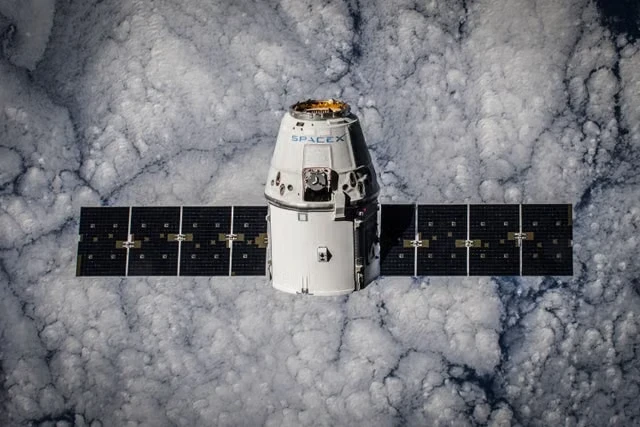
After twenty-four years of relentless orbital service, the European Space Agency's Cluster mission has reached its carefully orchestrated conclusion. The final two spacecraft of this four-satellite constellation reentered Earth's atmosphere over the remote South Pacific on August 31 and September 1, 2026, marking the end of one of the most ambitious magnetospheric research programs ever conceived. This was no uncontrolled tumble from orbit; rather, it represented a meticulously planned descent designed to eliminate space debris and set a new standard for responsible spacecraft retirement.
The Cluster mission began as a scientific response to a fundamental question: how does the Sun's energy interact with Earth's magnetic field? Launched in pairs during the summer of 2000 aboard Russian Soyuz rockets, the four identical spacecraft formed a tetrahedral formation in space, allowing scientists to measure magnetic fields and charged particles in three dimensions simultaneously. Over its operational lifetime, Cluster returned a treasure trove of data that reshaped our understanding of space weather, auroras, magnetic reconnection, and the complex plasma physics governing the near-Earth environment.
Retiring a constellation that has served science for nearly a quarter-century demands engineering precision equal to its launch. The European Space Agency deliberately targeted the South Pacific Ocean Uninhabited Area, a vast stretch of water far from human habitation, ensuring that any surviving fragments would pose zero risk to populations. This controlled reentry approach reflects a broader shift in space policy, where end-of-life disposal is no longer an afterthought but a core design consideration from the very first day of a mission's conception.
On This Page
- The Scientific Legacy of the Cluster Constellation
- The Physics of Controlled Reentry
- Selecting the South Pacific Disposal Zone
- Space Debris Mitigation and Policy Implications
- Space Weather Research and the Cluster Data Archive
- The Future of Magnetospheric Research
- Lessons in Responsible Spacecraft Retirement
- Conclusion: A Mission That Defined an Era
The Scientific Legacy of the Cluster Constellation
Cluster's scientific output is staggering by any measure, with more than 3,500 peer-reviewed papers directly attributable to its observations. The mission fundamentally rewrote textbooks on magnetospheric physics, revealing dynamic processes that single-spacecraft missions could only glimpse indirectly. Its four-point measurement capability was the key innovation, enabling scientists to distinguish spatial variations from temporal changes in the plasma environment.
Among its most celebrated achievements was the detailed observation of magnetic reconnection, the process by which magnetic field lines break and reconnect, releasing enormous amounts of energy. Cluster provided the first unambiguous three-dimensional views of this phenomenon at Earth's magnetopause, the boundary where the solar wind meets the magnetic field. These findings have implications far beyond Earth, informing our understanding of solar flares, auroras on other planets, and even laboratory fusion experiments.
Mapping the Magnetosphere in Unprecedented Detail
The magnetosphere is Earth's invisible shield, a teardrop-shaped region carved out of the solar wind by our planet's magnetic field. Cluster's tetrahedral formation allowed researchers to calculate the curl of the magnetic field directly, a measurement impossible with single spacecraft. This capability enabled the first accurate estimates of electric currents flowing through the magnetosphere, currents that drive the spectacular auroral displays seen at high latitudes.
Over its 24-year mission, Cluster witnessed two complete solar cycles, from the quiet minimum of 2008 to the stormy maximum of 2024. This longevity allowed scientists to study how the magnetosphere responds to varying solar activity over decadal timescales. The data revealed that Earth's magnetic environment is far more dynamic and structured than pre-Cluster models suggested, with filamentary currents, localized acceleration regions, and turbulent boundaries defying simple descriptions.
One of the mission's most surprising discoveries involved the discovery of magnetic null points, locations where the magnetic field strength drops to zero. Cluster identified these points as sites of intense particle acceleration, where electrons are energized to relativistic speeds within milliseconds. Understanding these acceleration mechanisms is crucial for predicting space weather events that can damage satellites, disrupt communications, and pose radiation hazards to astronauts.
The mission also provided critical insights into the polar cusps, funnel-shaped regions where solar wind particles can penetrate deep into the magnetosphere. Cluster showed that these cusps are not static entry points but dynamic, pulsating structures that respond rapidly to changes in the interplanetary magnetic field. This research has direct applications for predicting the severity of geomagnetic storms triggered by coronal mass ejections.
Beyond its core scientific objectives, Cluster served as a testbed for innovative data analysis techniques that are now standard in space physics. The mission pioneered the use of wave-particle interaction studies, revealing how plasma waves accelerate and scatter charged particles throughout the magnetosphere. These methodological advances continue to influence the design of current and future magnetospheric missions, including ESA's upcoming Vigil spacecraft.
Engineering a Constellation for Longevity
Designing spacecraft that could survive 24 years in the harsh radiation environment of near-Earth space required extraordinary engineering foresight. Each Cluster spacecraft carried a suite of eleven instruments, including fluxgate magnetometers, electric field probes, and particle detectors, all mounted on a carbon-fiber structure weighing approximately 1.2 tonnes. The spacecraft were spin-stabilized at 15 revolutions per minute, a design choice that simplified attitude control and provided natural scanning of the instrument fields of view.
Radiation hardening was a paramount concern, as the spacecraft's elliptical orbit carried them repeatedly through the Van Allen radiation belts. Engineers selected radiation-tolerant electronic components and employed extensive shielding around sensitive subsystems, particularly the solid-state recorders used for data storage. Despite the harsh environment, all four spacecraft maintained full instrument functionality well beyond their original five-year design lifetime, a testament to conservative engineering margins.
The mission's orbital design evolved significantly over its lifetime through a series of carefully planned maneuvers. Initially orbiting at 4 to 19.6 Earth radii, the constellation was gradually lowered and reshaped to explore different regions of the magnetosphere. These maneuvers, executed using the spacecraft's 400-newton main engine, consumed the vast majority of the onboard hydrazine fuel, leaving just enough for the final deorbit burns.
Operations teams at ESA's European Space Operations Centre in Darmstadt, Germany, managed the constellation with remarkable efficiency, coordinating complex formation flying maneuvers to maintain the tetrahedral configuration. The spacecraft communicated with Earth via S-band radio links, with data downlinked at rates up to 2.2 megabits per second during ground station passes. Over the mission's lifetime, more than 100 terabytes of scientific data were transmitted to Earth and archived for the global research community.
As the mission entered its final years, engineers faced the challenge of operating aging spacecraft with degraded components. Solar array output had declined by approximately 20 percent due to radiation damage, and several instruments required creative workarounds to maintain functionality. The decision to retire the mission was driven not by spacecraft failure but by the inevitable depletion of propellant reserves needed to maintain the formation and eventually execute a controlled reentry.
The Physics of Controlled Reentry
Executing a controlled reentry from an elliptical orbit that extends far beyond geostationary altitude is a formidable astrodynamic challenge. The Cluster spacecraft's final orbits had perigees near 200 kilometers and apogees exceeding 100,000 kilometers, requiring a series of precisely timed engine burns to lower the orbital energy. Each burn had to be calculated with extreme accuracy to ensure the spacecraft would enter the atmosphere at the correct location and angle.
The fundamental physics governing reentry is the conversion of orbital kinetic energy into thermal energy through atmospheric drag. As a spacecraft descends into denser atmospheric layers, it encounters increasing aerodynamic forces that decelerate it from orbital velocity of approximately 7.8 kilometers per second. This deceleration generates enormous heat, with temperatures at the vehicle surface potentially exceeding 1,600 degrees Celsius, sufficient to melt most metals and alloys used in spacecraft construction.
Calculating the Deorbit Maneuver Sequence
The deorbit sequence for each Cluster spacecraft involved a series of propulsive maneuvers designed to lower the orbit's perigee into the dense atmosphere. The first maneuver, executed approximately one orbit before final entry, reduced the perigee altitude from roughly 200 kilometers to about 120 kilometers. This intermediate step allowed controllers to verify the spacecraft's trajectory and make any necessary corrections before committing to the final destructive entry.
The final deorbit burn, lasting approximately 20 minutes, was designed to lower the perigee to approximately 30 kilometers altitude. At this height, atmospheric density is sufficient to ensure that the spacecraft cannot skip back out of the atmosphere, guaranteeing a one-way descent. The burn consumed the last usable propellant in the spacecraft's tanks, leaving no margin for error and requiring absolute confidence in the navigation solution.
To understand the energy involved, consider the spacecraft's orbital velocity at perigee. For an orbit with semi-major axis ##a## and Earth's gravitational parameter ##\mu = 398,600 \text{ km}^3/\text{s}^2##, the vis-viva equation gives the orbital speed as:
For a typical Cluster orbit with perigee radius ##r_p = 6,571## km and apogee radius ##r_a = 126,371## km, the semi-major axis is ##a = (r_p + r_a)/2 = 66,471## km. Substituting these values yields a perigee velocity of approximately ##v_p = 10.4## km/s, representing a kinetic energy of roughly ##\tfrac{1}{2}mv^2 \approx 65## gigajoules for a 1,200 kg spacecraft. This energy must be dissipated entirely through atmospheric friction during the final descent.
The reentry corridor itself is remarkably narrow, with an acceptable flight path angle window of only about ±1 degree. If the spacecraft enters too steeply, it experiences excessive heating and aerodynamic loads; too shallowly, and it may skip off the atmosphere like a stone on water. ESA's navigation team used differential drag tracking and precise orbit determination to target the corridor center with confidence, ensuring a controlled descent into the designated South Pacific disposal zone.
During the final minutes of flight, the spacecraft's structure began to break apart under the combined stresses of aerodynamic heating and deceleration. The breakup altitude typically occurs between 75 and 85 kilometers, where dynamic pressure reaches levels that exceed structural limits. Individual components with high melting points, such as titanium propellant tanks and beryllium mirror assemblies, may survive to lower altitudes, but the vast majority of the spacecraft mass vaporizes or fragments into small debris that harmlessly disperses over the ocean.
Selecting the South Pacific Disposal Zone
The choice of reentry location is governed by a single overriding principle: minimize risk to human populations. The South Pacific Ocean Uninhabited Area, often called Point Nemo, is the most remote location on Earth, with the nearest landmass more than 2,600 kilometers away. This vast expanse of ocean has become the preferred graveyard for decommissioned spacecraft, including the Russian Mir space station and numerous cargo vehicles bound for the International Space Station.
ESA's decision to target this zone for the Cluster reentries reflects a broader international consensus on responsible space debris management. The Inter-Agency Space Debris Coordination Committee recommends that controlled reentries target areas where the casualty risk to humans is below 1 in 10,000. By directing the spacecraft into the South Pacific, ESA ensures that the residual debris footprint, typically an ellipse several hundred kilometers long, poses no threat to any inhabited territory.
Navigating to a Precise Ocean Target
Targeting a specific point in the vast Pacific Ocean requires extraordinary navigational precision, particularly for spacecraft in highly elliptical orbits. The reentry point is determined by the timing and magnitude of the final deorbit burn, with a one-second error in burn timing translating to approximately 7.8 kilometers of downrange displacement. ESA's flight dynamics team used multiple tracking data sources, including GPS receivers and ground-based radar, to refine the orbit determination to within a few hundred meters.
The final approach trajectory is designed to enter the atmosphere at a shallow angle, typically between 1 and 2 degrees below horizontal. This shallow entry maximizes the distance over which the spacecraft decelerates, spreading the thermal load over a longer period and reducing peak heating rates. The resulting ground track extends for thousands of kilometers, but the debris footprint at the surface is typically confined to an ellipse measuring approximately 200 kilometers by 50 kilometers.
To calculate the required deorbit delta-v, mission planners use the rocket equation, which relates the change in velocity to the propellant mass and exhaust velocity. For a spacecraft with initial mass ##m_0## and final mass ##m_f##, the delta-v is given by:
where ##v_e## is the exhaust velocity of the propulsion system. For Cluster's hydrazine thrusters with ##v_e \approx 2,200## m/s, achieving a deorbit delta-v of ##\Delta v = 150## m/s requires a propellant mass fraction of approximately 6.6 percent of the spacecraft's initial mass. This calculation guided the mission's propellant budgeting throughout its extended operational lifetime.
The timing of the deorbit burn is equally critical, as it determines the longitude of the reentry ground track. By executing the burn at a specific point in the orbit, controllers can shift the reentry point westward or eastward by thousands of kilometers. ESA selected a burn timing that placed the reentry squarely within the South Pacific disposal zone, with the spacecraft's final moments occurring over waters thousands of kilometers from any shipping lanes or air routes.
Throughout the final approach, the spacecraft continued to transmit telemetry to ground stations, providing real-time confirmation of its trajectory. The last signal from each Cluster spacecraft was received approximately 20 minutes before atmospheric entry, after which the heat of reentry destroyed the communications systems. The silence that followed was a confirmation of success, marking the end of a mission that had communicated with Earth continuously for nearly a quarter-century.
We Also Published
Space Debris Mitigation and Policy Implications
The Cluster reentry represents a landmark in the evolution of space debris mitigation practices. When the mission was designed in the 1990s, end-of-life disposal was not a standard requirement for scientific missions in elliptical orbits. The fact that ESA planned and executed a controlled reentry for Cluster reflects how dramatically the space sustainability landscape has changed over the past two decades.
Orbital debris has become one of the most pressing challenges facing the space industry, with an estimated 36,500 objects larger than 10 centimeters currently tracked in Earth orbit. The uncontrolled reentry of large spacecraft poses a genuine, if small, risk to human populations, as demonstrated by the scattered debris from the Chinese Long March 5B rocket stages. Controlled reentry eliminates this risk entirely, ensuring that any surviving fragments land in uninhabited ocean regions.
Setting a Precedent for Future Missions
Cluster's controlled retirement establishes a template that future scientific missions can follow, particularly those operating in highly elliptical orbits that cannot naturally decay within a reasonable timeframe. The mission demonstrated that even spacecraft with limited propellant reserves can be safely deorbited with careful planning and execution. This capability is essential as the number of active satellites continues to grow exponentially, driven by mega-constellations for communications and Earth observation.
The engineering techniques validated by Cluster's reentry, including precise orbit determination, targeted deorbit burns, and real-time trajectory monitoring, are directly applicable to future missions. ESA's upcoming missions, including the SMILE collaboration with China and the Vigil space weather observatory, will incorporate end-of-life disposal plans from the earliest design phases. This proactive approach is far more cost-effective than retrofitting disposal capabilities onto spacecraft after launch.
International guidelines, such as those published by the Inter-Agency Space Debris Coordination Committee, recommend that spacecraft in low Earth orbit be deorbited within 25 years of mission completion. For spacecraft in higher orbits, where natural decay would take centuries, controlled reentry is the preferred disposal method. Cluster's successful reentry demonstrates that these guidelines are achievable, even for complex multi-spacecraft missions with extended operational lifetimes.
The economic implications of responsible disposal are significant. A controlled reentry requires propellant that could otherwise extend a mission's operational lifetime, creating a tension between scientific return and debris mitigation. However, the cost of uncontrolled reentry, in terms of potential liability and damage to the space environment, far exceeds the value of the additional propellant. Cluster's mission planners balanced these considerations carefully, extending the science mission as long as possible while reserving sufficient propellant for a safe disposal.
Looking forward, the lessons learned from Cluster will inform the design of disposal systems for even larger spacecraft. The International Space Station, weighing over 400 tonnes, will require a carefully orchestrated deorbit sequence when its operational life ends later this decade. The techniques developed for Cluster, scaled up by two orders of magnitude, will guide that complex operation, ensuring that humanity's largest orbital structure is retired safely and responsibly.
Space Weather Research and the Cluster Data Archive
The scientific value of the Cluster mission extends far beyond its operational lifetime through the comprehensive data archive it leaves behind. All raw and calibrated data from the mission's 24 years of operations are publicly accessible through ESA's Cluster Science Archive, providing an invaluable resource for future research. This archive represents one of the most complete long-term records of the near-Earth space environment ever assembled.
Space weather research has become increasingly important as society grows more dependent on space-based technologies. Geomagnetic storms triggered by solar activity can disrupt GPS navigation, damage satellites, induce currents in power grids, and increase radiation exposure for airline crews and astronauts. The Cluster data archive provides the long-term context needed to understand these phenomena and improve predictive models that protect critical infrastructure.
Key Discoveries and Their Applications
One of Cluster's most impactful contributions was the detailed characterization of magnetic reconnection at the dayside magnetopause. By measuring the electric and magnetic fields simultaneously at four points, the mission provided the first direct evidence of electron diffusion regions, the tiny volumes where magnetic field lines break and reconnect. These observations have informed models used to predict the coupling between the solar wind and the magnetosphere, improving space weather forecasts.
The mission also revolutionized our understanding of the Earth's ring current, a torus of charged particles that intensifies during geomagnetic storms. Cluster's measurements revealed that the ring current is far more structured than previously believed, with localized injections of energetic particles occurring on timescales of minutes. These findings have implications for understanding the storm-time disturbances that drive the most severe space weather effects at Earth's surface.
Cluster's observations of plasma waves, including chorus and hiss emissions, have provided critical insights into the acceleration and loss of radiation belt electrons. These waves, which are generated by instabilities in the plasma distribution, can accelerate electrons to relativistic energies or scatter them into the atmosphere. Understanding these processes is essential for predicting the radiation environment that satellites must withstand during their operational lifetimes.
The mission's data have also been used to validate and improve global magnetohydrodynamic models of the magnetosphere. By comparing model predictions with Cluster's four-point measurements, researchers have identified weaknesses in existing simulations and developed more accurate representations of the coupled solar wind-magnetosphere-ionosphere system. These improved models are now used operationally by space weather prediction centers worldwide.
As the scientific community transitions from Cluster to next-generation missions, the data archive will continue to yield discoveries for decades to come. The unique four-point measurements cannot be replicated by any current or planned mission, making the Cluster archive a permanent scientific treasure. Future researchers will mine this dataset with increasingly sophisticated analysis techniques, extracting insights that were impossible to obtain with the computational tools available during the mission's operational phase.
The Future of Magnetospheric Research
With Cluster's retirement, the scientific community faces a transition period in magnetospheric research capabilities. No current mission provides the four-point measurement capability that made Cluster so uniquely powerful. However, the next generation of space weather missions is already being developed, building on the foundation that Cluster established over its 24-year operational lifetime.
ESA's upcoming Vigil mission, planned for launch later this decade, will provide continuous monitoring of the solar wind from the Sun-Earth Lagrange point L5. While Vigil will not replace Cluster's in-situ measurements, it will provide the upstream solar wind context that is essential for interpreting magnetospheric observations. The combination of Vigil's remote sensing with future in-situ missions will enable a more complete understanding of the solar wind-magnetosphere coupling process.
Next-Generation Constellations and Technologies
Several proposed missions aim to recapture Cluster's multi-point measurement capability with modern technology. NASA's Geospace Dynamics Constellation concept envisions a fleet of small satellites that would provide simultaneous measurements of the ionosphere-thermosphere system. ESA's Plasma Observatory mission concept, currently under study, would deploy multiple spacecraft in strategic orbits to investigate fundamental plasma processes throughout the magnetosphere.
Advances in small satellite technology are making multi-point missions more affordable than ever before. CubeSats and small satellites, equipped with miniaturized magnetometers and particle detectors, can now provide scientifically valuable measurements at a fraction of the cost of traditional large spacecraft. This democratization of space access is enabling universities and smaller space agencies to participate in magnetospheric research that was once the exclusive domain of major space powers.
Artificial intelligence and machine learning are also transforming the analysis of space physics data. These techniques can identify patterns in large datasets that would be impossible to detect through manual analysis, potentially revealing new physical processes in the vast Cluster data archive. As these tools become more sophisticated, the scientific return from archived missions like Cluster will continue to grow, extending their legacy far beyond their operational lifetimes.
The engineering lessons from Cluster's extended mission and controlled reentry will also inform the design of future spacecraft. The mission demonstrated that careful power management, component redundancy, and operational flexibility can enable spacecraft to far exceed their design lifetimes. These principles are being incorporated into the design of next-generation scientific missions, maximizing the return on investment for space agencies and taxpayers.
As humanity's presence in space continues to expand, the responsible stewardship demonstrated by Cluster's retirement will become increasingly important. Every spacecraft launched today will eventually need to be disposed of safely, and the techniques validated by Cluster provide a proven template. The mission's final act, a controlled descent into the remote South Pacific, was not an ending but a transition, ensuring that the space environment remains usable for future generations of scientists and explorers.
Lessons in Responsible Spacecraft Retirement
The Cluster mission's controlled reentry offers profound lessons for the entire space industry, extending far beyond the scientific community. As orbital congestion increases and the value of space infrastructure grows, the way we retire spacecraft has become as important as the way we launch them. Cluster demonstrated that responsible disposal is not merely a regulatory obligation but an engineering achievement worthy of the same rigor as the mission itself.
The mission's success was the product of decades of planning, beginning with the original design that reserved propellant for end-of-life disposal. This forward-thinking approach, unusual for missions designed in the 1990s, ensured that Cluster could be retired safely even after 24 years of operations. The lesson for future missions is clear: disposal planning must begin at the drawing board, not as an afterthought when a spacecraft approaches the end of its useful life.
Engineering Excellence in Final Operations
The final weeks of the Cluster mission showcased the extraordinary skill of ESA's operations team, who managed the complex deorbit sequence with precision and calm. Each spacecraft required a unique sequence of maneuvers, tailored to its specific orbital state and remaining propellant. The team's ability to execute these maneuvers flawlessly, despite the aging spacecraft's degraded systems, is a testament to their expertise and dedication.
The reentry itself was monitored by a global network of ground stations and radar systems, providing real-time tracking data that confirmed the spacecraft's trajectory. ESA coordinated with international partners, including the United States Space Surveillance Network, to ensure comprehensive coverage of the final descent. This collaborative approach to tracking reentries is essential for verifying that spacecraft enter their designated disposal zones and pose no risk to populated areas.
One of the most remarkable aspects of the Cluster retirement was the transparency with which ESA communicated the process to the public. The agency published detailed information about the reentry timeline, the disposal zone, and the expected debris footprint, allowing the public to follow the mission's final hours in real time. This openness stands in contrast to the secrecy that sometimes surrounds military and intelligence spacecraft reentries, and it builds public trust in space operations.
The data collected during Cluster's final descent, including telemetry from the spacecraft's last moments, provides valuable information for improving future reentry predictions. Engineers will analyze this data to validate their models of spacecraft breakup and debris dispersion, refining their ability to predict the behavior of future reentries. Each controlled reentry adds to the collective knowledge that makes space operations safer for everyone.
As the space industry continues to grow, with thousands of new satellites launched each year, the lessons from Cluster's retirement will become increasingly relevant. The mission proved that even complex, multi-spacecraft constellations can be retired safely and responsibly, protecting both human populations and the orbital environment. Cluster's final act was not merely the end of a mission but the beginning of a new standard for space sustainability.
Conclusion: A Mission That Defined an Era
The Cluster mission's 24-year journey, from its ambitious launch in 2000 to its controlled reentry in 2026, represents one of the most successful scientific endeavors in the history of space exploration. The four spacecraft transformed our understanding of the magnetosphere, produced thousands of scientific papers, and inspired a generation of space physicists. Their final descent into the South Pacific was a fitting conclusion to a mission that consistently exceeded expectations.
The legacy of Cluster extends far beyond its scientific discoveries. The mission demonstrated the value of international collaboration, the importance of engineering excellence, and the necessity of responsible space stewardship. As humanity ventures further into space, the lessons learned from Cluster will guide the design, operation, and retirement of future missions for decades to come.
The controlled reentry of the final two Cluster spacecraft was not an ending but a transition. The data they collected will continue to yield discoveries for generations, and the techniques they validated will enable safer, more sustainable space operations. In retiring Cluster, ESA has shown that even the most successful missions must eventually come to an end, but their legacy endures in the knowledge they created and the standards they set.
From our network :
- EV 2.0: The Solid-State Battery Breakthrough and Global Factory ExpansionDiscover the impact of the Solid-State Battery Breakthrough on the EV market. Learn about CATL and BYD stock growth, global factory expansion in Europe, and the future of EV 2.0 technology.
- Vite 6/7 'Cold Start' Regression in Massive Module GraphsIn-depth analysis of Vite 6/7 cold start regressions in massive module graphs. Learn about barrel file issues, pre-bundling optimizations, and how to improve Vite dev server performance.
- Analyzing Trump Deportation Numbers Insights Into The 2026 Immigration Crackdown
- Mastering DB2 12.1 Instance Design: A Technical Deep Dive into Modern Database ArchitectureComprehensive guide to DB2 12.1 Instance Design. Explore architectural components, HADR setup, buffer pool tuning, and security policies for IBM DB2 12.1. Includes 10 functional SQL and Shell samples.
- Trump Political Strategy How Geopolitical Stunts Serve As Media Diversions
- 98% of Global MBA Programs Now Prefer GRE Over GMAT Focus EditionExplore why 98% of global MBA programs now prefer the GRE over GMAT Focus. Learn about the shorter GRE format, verbal logic importance, and strategic versatility for students.
- AI-Powered 'Precision Diagnostic' Replaces Standard GRE Score ReportsDiscover the new GRE Precision Diagnostic. Learn how AI-powered behavioral analytics and time-to-solve tracking are replacing standard GRE score reports to empower students.
- Mastering DB2 LUW v12 Tables: A Comprehensive Technical GuideComprehensive guide on DB2 LUW v12 tables. Explore CREATE TABLE syntax, BLU Acceleration, range partitioning, data types, and security features for IBM DB2 LUW v12.
- 10 Physics Numerical Problems with Solutions for IIT JEEPrepare for IIT JEE with 10 physics numerical problems, complete with detailed solutions and conceptual explanations. Ideal for mastering kinematics, thermodynamics, electromagnetism, and optics.
RESOURCES
- Latest news on the Cluster mission's 'Salsa' spacecraft: the satellite ...facebook.comSep 7, 2024 ... Esa's Cluster mission ends with targeted reentry. Terrance D Frost ... ESA's Draco mission to study satellite re- entry and…
- Inside ESA's mission to meet its falling Cluster satellites with a ...aerospaceglobalnews.comFeb 12, 2026 ... ESA will deploy a Falcon 900 to observe the final Cluster satellite re-entry, capturing rare real-world debris data.
- Glossary Term | ESA Archives Portal - European Space Agencyhistoricalarchives.esa.intThe Atmospheric Reentry Demonstrator was an ESA ... The Cluster mission investigated plasma processes in the Earth's magnetosphere using four identical spacecraft ...
- ESA ACHIEVEMENTS - European Space Agencyesa.int... Cluster. 182. Huygens. 188. TeamSat. 200. ARD. 202. XMM ... The Meteosat weather satellite system developed by ESA similarly led to the creation…
- X-point Portals Connect Earth to Sun – - Space Safety Magazinespacesafetymagazine.comJul 5, 2012 ... ... ESA's Cluster probes, will assist the upcoming Magnetospheric Multiscale Mission (MMM). ... MissionPolarportalsolar atmospherespacecraftSun ...
- Decades of the Cluster Program: A Look at the European Space ...hun-ren.huDec 14, 2024 ... "Before the Cluster project, most magnetosphere research ... Cluster was the first ESA mission to include members from a Hungarian…
- Old satellite to burn up over Pacific in 'targeted' re-entry first - Phys.orgphys.orgSep 7, 2024 ... An artist's illustrtaion of the Cluster satellite mission to study Earth's magentic field. After 24 years diligently studying Earth's ...
- NASA SVS | Homesvs.gsfc.nasa.govThe NASA Scientific Visualization Studio works closely with scientists in the creation of visualizations, animations, and images in order to promote a ...
- List of European Space Agency programmes and missions - Wikipediaen.wikipedia.orgCornerstone 1 – Cluster, launched June 1996, failed – Earth observation mission using four identical spacecraft to study the planet's magnetosphere. Failed ...
- European Space Agency - dlab @ EPFLdlab.epfl.chArtemis — Europe's most advanced telecommunication satellite. Cluster-2 — a group of four probes studying the magnetosphere. Double Star Mission — probe to ...
- Rare Footage of a Satellite Reentering Earth's Atmosphere Capturedextremetech.comSep 11, 2024 ... Salsa was one of four satellites belonging to the Cluster mission, which the ESA launched in the summer of 2000.…
- Space Microbiology - PMC - NIHpmc.ncbi.nlm.nih.govBy providing a comprehensive review of these somewhat disparate research disciplines, we hope to convey the complexity of characterizing and analyzing microbial ...
- Aeronautics and Space Report of the President: Fiscal Year 2025 ...nasa.govIn support of satellite missions, NIST provided calibration services and research to enable the ... Three ESA spacecraft to study the Didymos. 2024-180. Juventas.
- Scientists to Study a Live Satellite Reentry With Implications for ...uk.pcmag.comAug 26, 2024 ... In a rarity, the European Space Agency is going to send a plane to observe what happens to a live…
- FY 2026 President's Budget Request Summary - NASAnasa.govMay 1, 2025 ... ... Mission Services & Capabilities. 2,042.6. --. 1,498.0. 1,671.8. 1,671.8 ... spacecraft. NASA will continue the Artemis campaign by procuring ...

0 Comments