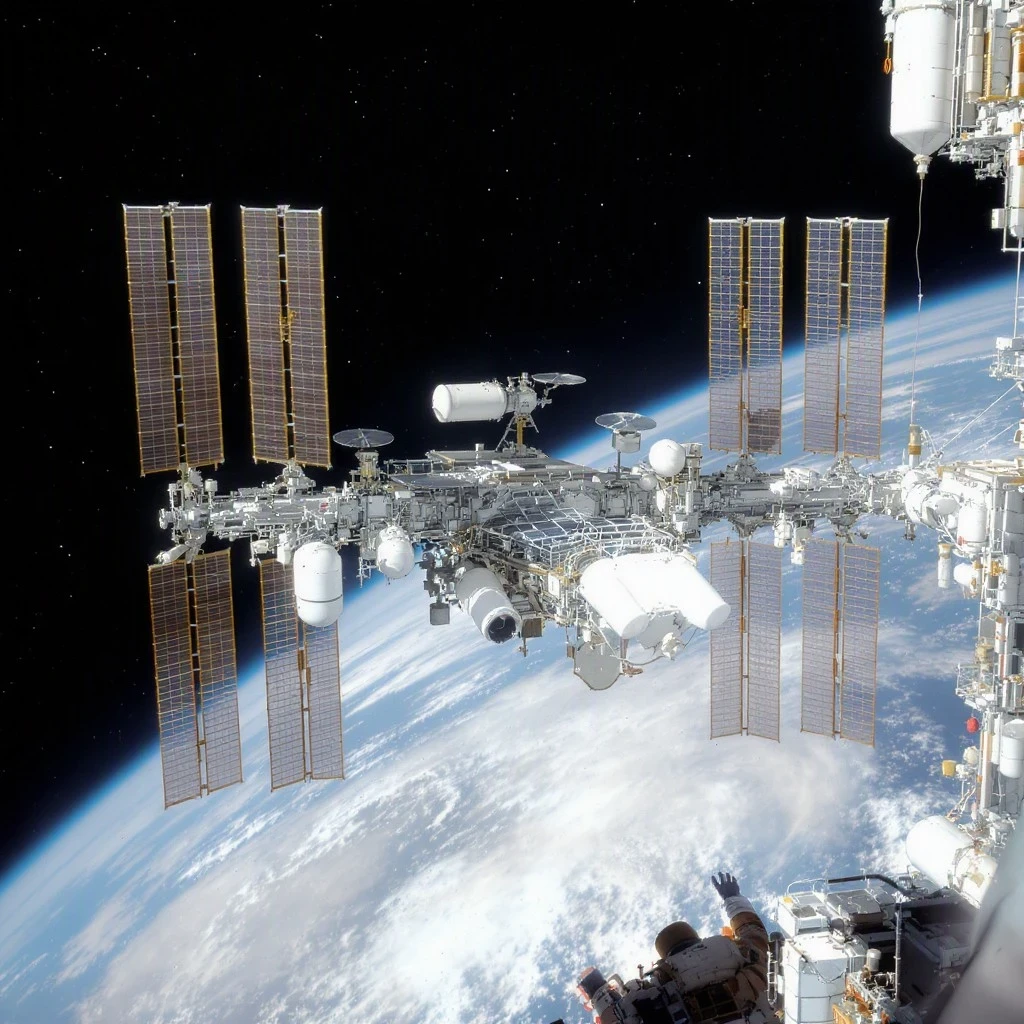
The relentless progression of orbital architecture demands robust engineering solutions to sustain humanity’s premier microgravity laboratory. As the International Space Station continues its historic tenure in low Earth orbit, preserving an uninterrupted power supply remains the fundamental prerequisite for groundbreaking scientific inquiry. The recent deployment of advanced rollout solar technology marks a transformative milestone in extraterrestrial power generation and systems longevity. Modern orbital complexes require innovative energy matrices to compensate for environmental degradation and the relentless decay of legacy photovoltaic cells. Consequently, engineers and astronauts must execute complex extravehicular activities to integrate next-generation power units into the existing station framework.
Orbital electrical distribution relies heavily on high-efficiency photovoltaic systems capable of withstanding the harsh thermal gradients and atomic oxygen present in low Earth orbit. The integration of advanced roll-out solar arrays represents a masterclass in aerospace engineering, merging compact storage efficiency with expansive surface area deployment. When astronauts venture into the vacuum of space to anchor these massive structures, they are not merely performing routine maintenance. They are fundamentally upgrading the station's electrical capacity to meet the surging demands of modern microgravity laboratories, commercial payloads, and extended human spaceflight missions.
On This Page
Architectural Evolution of Orbital Power Systems
The transition from rigid photovoltaic panels to flexible roll-out arrays signifies a paradigm shift in spacecraft design. Legacy solar wings deployed during early station assembly have suffered structural fatigue and power output degradation due to prolonged exposure to solar radiation and micrometeoroid impacts. To counteract this inevitable decline, NASA engineered the rollout solar array architecture, which utilizes advanced composite materials and high-efficiency photovoltaic cells. This technological leap ensures that the station can sustain peak operational capacity without sacrificing precious cargo volume during launch ascent.
Deploying flexible solar blankets in a zero-gravity environment introduces profound mechanical and structural challenges. Engineers must account for dynamic resonance, thermal expansion coefficients, and automated tensioning mechanisms to prevent structural failure during orbital sunrise and sunset transitions. The deployment dynamics can be mathematically modeled using structural mechanics equations to predict strain distribution across the composite booms.
The integration process requires meticulous coordination between robotics operators inside the cupola and spacewalking crew members operating along the truss structures. Every bolt, torque measurement, and electrical connector must adhere to rigorous aerospace specifications to prevent catastrophic arc faults.
Engineering Physics of Photovoltaic Conversion
The conversion efficiency of space-grade solar cells depends directly on semiconductor bandgap optimization and anti-reflective optical coatings. Modern gallium arsenide multijunction cells capture specific photon wavelengths across the solar spectrum, minimizing thermal dissipation losses. Software routines continuously monitor voltage thresholds to prevent battery overcharging and optimize shunt regulator units.
Executing precise automation scripts ensures that power load shedding protocols operate seamlessly during unexpected eclipse anomalies. Software engineers deploy fault-tolerant algorithms to manage electrical bus switching without interrupting critical life support telemetry.
class PowerChannel:
    def __init__(self, channel_id, base_capacity):
        self.channel_id = channel_id
        self.capacity = base_capacity
        self.status = "nominal"

    def calculate_degradation(self, operating_hours, degradation_rate=0.0001):
        effective_power = self.capacity * (1 - (degradation_rate * operating_hours))
        return max(effective_power, 0.0)

    def verify_bus_integrity(self, current_load):
        limit = self.calculate_degradation(15000)
        if current_load > limit:
            self.status = "overload_warning"
            return False
        return True
Extravehicular Integration Challenges
Spacewalking astronauts face extraordinary physical constraints when handling rigid roll-out blankets wrapped tightly in launch canisters. The specialized tools required for bolting brackets onto the 20-year-old metallic truss demand exact torque calibration. Engineers simulate these maneuvers in neutral buoyancy laboratories to mitigate astronaut fatigue and prevent equipment snagging.
Thermal regulation of space suits during high-exertion tasks dictates strict timelines for extravehicular operations. Mission controllers coordinate sunlight and orbital darkness periods to ensure optimal thermal comfort for the crew while securing electrical connections.
def simulate_spacewalk_timeline(task_list):
    total_duration = 0
    for task, duration in task_list.items():
        if duration > 360.0:  # Maximum continuous operation threshold in minutes
            raise ValueError(f"Task {task} exceeds safe EVA duration limits.")
        total_duration += duration
    return f"Total EVA duration: {total_duration} minutes. Nominal execution."

active_eva_tasks = {"bracket_installation": 180, "electrical_unfurling": 120}
print(simulate_spacewalk_timeline(active_eva_tasks))
We Also Published
Sustaining Microgravity Research and Scientific Payloads
Maintaining a stable electrical grid in orbit directly enables continuous scientific discovery across diverse disciplines, ranging from protein crystal growth to quantum physics experiments. Advanced laboratory racks, such as the Fluids Integrated Rack and the Microgravity Science Glovebox, require dedicated, high-voltage circuits to maintain precise thermal and mechanical conditions. Without the continuous power injection provided by modern array upgrades, delicate biological and material science investigations would face catastrophic power interruptions, invalidating months of rigorous experimentation.
Furthermore, commercial entities utilizing the orbiting laboratory for manufacturing fiber optics and pharmaceutical compounds rely on absolute electrical reliability. Voltage fluctuations can ruin high-precision manufacturing runs, making the installation of new power generation hardware an essential economic catalyst for the low Earth orbit economy. Engineers utilize telemetry analytics software to forecast power demands and schedule high-draw experiments during optimal orbital solar exposure windows.
Telemetry Analytics and Power Forecasting
Predictive maintenance algorithms analyze real-time telemetry streams from power distribution units to identify micro-anomalies before they escalate into systemic failures. Data scientists implement time-series forecasting models in Python to predict future energy yields based on historical orbital geometry and degradation coefficients.
Automated warning scripts notify flight controllers immediately if voltage fluctuations exceed predetermined safety parameters. This proactive monitoring framework ensures uninterrupted support for sensitive crew health monitoring equipment and life support subsystems.
import numpy as np

def forecast_power_output(historical_yields, days_ahead):
    trend = np.polyfit(np.arange(len(historical_yields)), historical_yields, 1)
    future_days = np.arange(len(historical_yields), len(historical_yields) + days_ahead)
    predicted_yields = trend[0] * future_days + trend[1]
    return predicted_yields

sample_yields = [120.5, 120.2, 119.8, 119.5, 119.1]
print("Forecasted yields for next 3 days:", forecast_power_output(sample_yields, 3))
Future-Proofing Orbital Infrastructure
As commercial space stations prepare to succeed the International Space Station, engineering lessons learned from iROSA installations will dictate future power architecture designs. Modular, scalable solar blankets that can be robotically deployed without astronaut intervention represent the next logical step in aerospace evolution. These autonomous deployment systems eliminate the inherent physiological risks associated with extravehicular spacewalks while accelerating station assembly timelines.
System architects are currently prototyping high-voltage direct current (HVDC) distribution grids to reduce transmission losses across expansive orbital structures. Integrating these next-generation transmission protocols ensures that future deep-space habitats and orbital platforms can support intensive industrial manufacturing and high-power communication arrays effortlessly.
def evaluate_hvdc_efficiency(voltage_input, current, resistance):
    power_loss = (current ** 2) * resistance
    transmitted_power = (voltage_input * current) - power_loss
    efficiency = (transmitted_power / (voltage_input * current)) * 100
    return efficiency

print(f"HVDC Transmission Efficiency: {evaluate_hvdc_efficiency(160.0, 50.0, 0.04):.2f}%")
Strategic Importance for Future Crewed Missions
The strategic imperative of continuous power augmentation extends far beyond current scientific operations, serving as the literal heartbeat for future crewed exploration initiatives. Maintaining robust power redundancy guarantees that life support loops, atmospheric scrubbing systems, and thermal regulation networks remain fully operational under any contingency scenario. As NASA and international partners look toward lunar orbital outposts and Martian transit vehicles, the reliability standards established by continuous space station upgrades provide an invaluable engineering blueprint.
Moreover, accommodating larger crews requires exponential increases in potable water recycling efficiency, waste processing power, and food production lighting systems. Upgrading orbital electrical grids ensures that life support systems can scale safely to support permanent human habitation in extraterrestrial environments. Engineers continuously test advanced energy storage systems, such as regenerative fuel cells, to complement photovoltaic generation during prolonged orbital eclipse phases.
Long-Term Orbital Viability and Risk Management
Mitigating space debris hazards while deploying large flexible solar arrays requires advanced collision avoidance simulations. Mission planners calculate orbital trajectories and adjust station orientation to shield delicate photovoltaic blankets from high-velocity particulate impacts during meteor showers. Engineering resilience into every component ensures uninterrupted mission execution across extended operational lifespans.
Automated deployment software coordinates multi-axis stabilization maneuvers to minimize mechanical stress during array unfurling sequences. Rigorous code validation protocols prevent software anomalies from compromising structural integrity during critical orbital deployment phases.
def assess_collision_risk(debris_velocity, cross_section_area, shielding_factor):
    impact_energy = 0.5 * debris_velocity**2 * cross_section_area
    effective_risk = impact_energy * (1 - shielding_factor)
    if effective_risk > 1000.0:
        return "High Risk: Initiate Debris Avoidance Maneuver"
    return "Nominal Risk: Proceed with Operations"

print(assess_collision_risk(7.8, 2.5, 0.85))
The Legacy of Continuous Orbital Engineering
The successful integration of successive iROSA units underscores the enduring value of human ingenuity and collaborative aerospace engineering. By continually upgrading legacy infrastructure rather than abandoning it, space agencies maximize return on investment while pushing the boundaries of what is technologically feasible in low Earth orbit. These engineering triumphs pave the way for permanent commercial outposts and deep-space exploration ventures.
Ultimately, the meticulous execution of complex spacewalks and systems integration reinforces humanity's technical capability to sustain complex technological ecosystems in hostile cosmic environments. The knowledge gained from powering the International Space Station into its twilight years will directly illuminate the path toward sustainable interplanetary civilization.
def summarize_station_power_evolution(legacy_kw, upgraded_kw, total_arrays):
    net_capacity = (legacy_kw + upgraded_kw) * total_arrays
    return f"Total aggregate station power capacity: {net_capacity} Kilowatts."

print(summarize_station_power_evolution(25.0, 20.0, 8))
From our network :
- 10 Physics Numerical Problems with Solutions for IIT JEEPrepare for IIT JEE with 10 physics numerical problems, complete with detailed solutions and conceptual explanations. Ideal for mastering kinematics, thermodynamics, electromagnetism, and optics.
- Trump Political Strategy How Geopolitical Stunts Serve As Media Diversions
- Mastering DB2 12.1 Instance Design: A Technical Deep Dive into Modern Database ArchitectureComprehensive guide to DB2 12.1 Instance Design. Explore architectural components, HADR setup, buffer pool tuning, and security policies for IBM DB2 12.1. Includes 10 functional SQL and Shell samples.
- 98% of Global MBA Programs Now Prefer GRE Over GMAT Focus EditionExplore why 98% of global MBA programs now prefer the GRE over GMAT Focus. Learn about the shorter GRE format, verbal logic importance, and strategic versatility for students.
- Analyzing Trump Deportation Numbers Insights Into The 2026 Immigration Crackdown
- Vite 6/7 'Cold Start' Regression in Massive Module GraphsIn-depth analysis of Vite 6/7 cold start regressions in massive module graphs. Learn about barrel file issues, pre-bundling optimizations, and how to improve Vite dev server performance.
- EV 2.0: The Solid-State Battery Breakthrough and Global Factory ExpansionDiscover the impact of the Solid-State Battery Breakthrough on the EV market. Learn about CATL and BYD stock growth, global factory expansion in Europe, and the future of EV 2.0 technology.
- Mastering DB2 LUW v12 Tables: A Comprehensive Technical GuideComprehensive guide on DB2 LUW v12 tables. Explore CREATE TABLE syntax, BLU Acceleration, range partitioning, data types, and security features for IBM DB2 LUW v12.
- AI-Powered 'Precision Diagnostic' Replaces Standard GRE Score ReportsDiscover the new GRE Precision Diagnostic. Learn how AI-powered behavioral analytics and time-to-solve tracking are replacing standard GRE score reports to empower students.
RESOURCES
- NASA Spacewalkers Complete Solar Array Installationnasa.govJun 9, 2023 ... Bowen and Hoburg completed all of their objectives to install an IROSA (International Space Station Roll-Out Solar Array) to augment…
- Hoburg, Bowen Wrap Up iROSA Installation, Fourth Set of ISS Solar ...americaspace.comJun 15, 2023 ... ... iROSA Installation, Fourth Set of ISS Solar Arrays ... NASABoeingISSInternational Space StationEVAExtravehicular ActivitySpacewalkSolar Array ...
- NASA Spacewalkers Finish Installing Roll-Out Solar Arraynasa.govJun 15, 2023 ... Hoburg and Bowen completed their major objective to install an IROSA (International Space Station Roll-Out Solar Array) to augment power ...
- NASA Astronauts Complete Spacewalks to Install Fourth iROSA ...rdw.comDec 22, 2022 ... 22 at 3:27 p.m. EST to install the fourth ISS Roll-Out Solar Arrays (iROSA) on the Port 4 Truss of…
- astro_chrisw and I are getting pumped for next week's spacewalk ...instagram.comMar 13, 2026 ... ... install of an “IROSA mod kit,” which will serve as the mounting plate to attach an @iss Roll-Out Solar…
- Astronauts complete prep for new ISS solar array on 1st NASA ...space.comMar 18, 2026 ... ... ISS Roll-Out Array (iROSA), to be installed on a future spacewalk. Once unfurled, it will be the seventh of…
- NASA Astronauts Complete Spacewalk to Install Third iROSA Arrayrdw.com3 at 2:21 p.m. EST to install the third ISS Roll-Out Solar Arrays (iROSA) on the Starboard 4 Truss of the International Space Station…
- 'One more step': NASA astronauts conduct 6.5-hour spacewalk to ...space.com3 days ago ... ... ISS Rolll-Out Solar Array (iROSA). Since 2021 ... Diagram showing a space station and install locations for advanced solar…
- NASASpaceflight.com - Facebookfacebook.comFeb 2, 2023 ... ... Mounting Bracket for a future ISS Rollout Solar Array (iROSA) installation. ... NASA to Air Live Coverage of US…



0 Comments