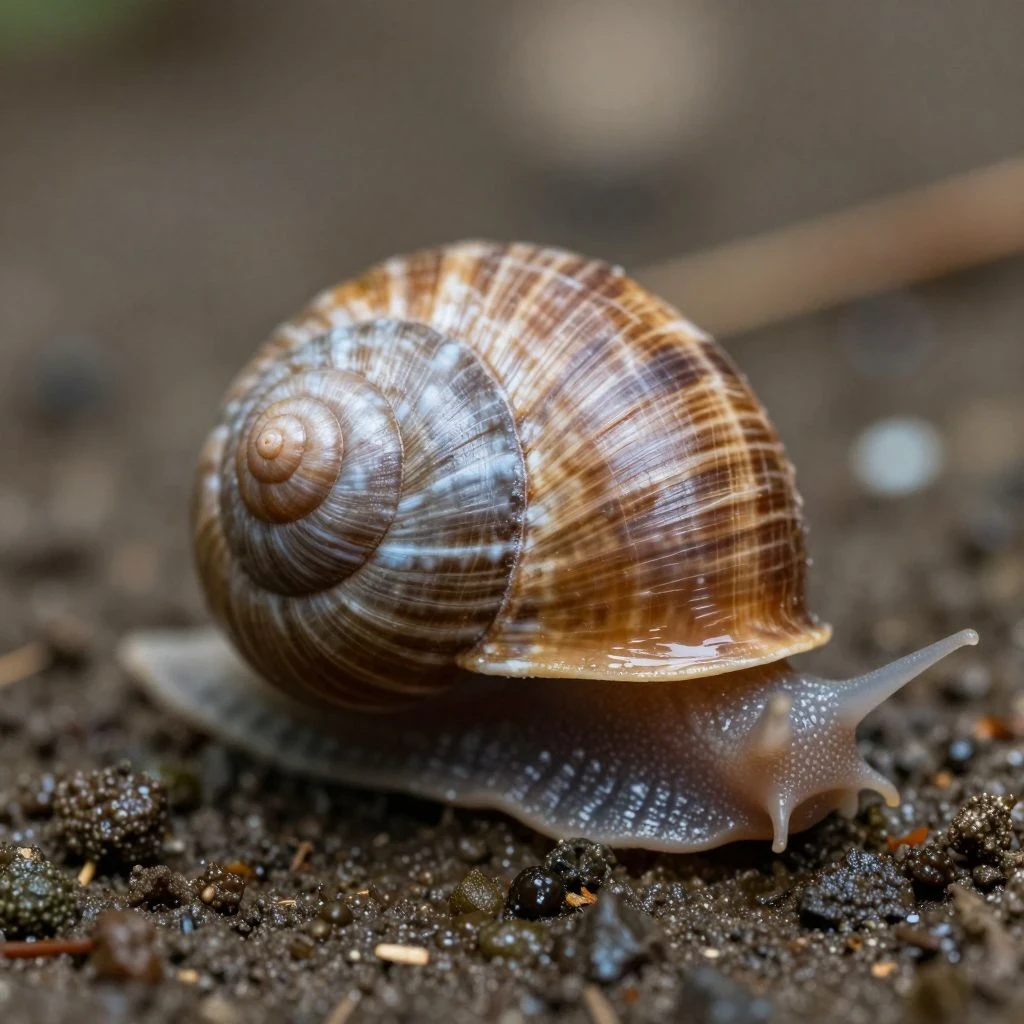
The discovery of two previously unknown micro-snail species, announced in a ScienceDaily dispatch dated 24 September 2026, represents far more than a footnote in the annals of malacology. These diminutive gastropods possess shells capable of sealing shut like miniature doors, an anatomical marvel known scientifically as an operculum, which transforms a fragile calcium carbonate spiral into a fortified vault against predators, desiccation, and environmental hostility. Such a mechanism, though only millimetres in scale, embodies millions of years of evolutionary refinement, and its appearance in two distinct lineages simultaneously underscores how convergent pressures sculpt life across isolated habitats.
The report, while sparse on provenance, confirms that formal taxonomic recognition has been extended to both organisms, meaning the scientific community now accepts them as discrete species rather than variants of known taxa. What elevates this finding beyond mere cataloguing is the broader context in which micro-molluscs operate as ecological sentinels. Snails measuring barely a few millimetres frequently inhabit leaf litter, cave systems, limestone crevices, and tropical forest floors where larger fauna cannot persist, and their presence or absence signals subtle shifts in humidity, soil chemistry, and calcium availability.
On This Page
- The Biological Architecture of Door-Like Shells
- Taxonomic Recognition and the Science of Naming
- Ecological Roles of Micro-Snails in Hidden Habitats
- Conservation Implications for Overlooked Invertebrates
- Statistical Modelling of Micro-Snail Distribution
- Broader Significance for Biodiversity Science
- Mathematical Appendix: Ten Worked Calculations
When researchers identify new door-shelled species, they are effectively reading a biological ledger that records the health of microhabitats often ignored by conservation policy. The operculum itself, a horny or calcareous disc attached to the foot, allows the animal to retreat entirely and clamp the aperture shut, a strategy analogous to a submarine sealing its hatches before descending into hostile waters. The absence of granular detail in the initial report, including precise collection localities and the identities of the describing scientists, does not diminish the significance of the taxonomic event. Peer-reviewed descriptions of new molluscan species typically follow years of fieldwork, dissection, scanning electron microscopy of radulae, and molecular sequencing of mitochondrial markers such as cytochrome oxidase subunit I.
The public-facing summary necessarily compresses this laborious pipeline into a single sentence, yet the underlying scholarship involves meticulous morphometric analysis and statistical comparison against type specimens held in museum collections worldwide. Understanding what these two snails represent therefore requires reconstructing the invisible architecture of taxonomic science itself.
The Biological Architecture of Door-Like Shells
The operculum functions as one of evolution’s most elegant mechanical solutions, converting a simple spiral shell into a sealed micro-environment that regulates moisture and repels invaders. In micro-snails, this structure is proportionally enormous relative to body mass, demanding precise developmental coordination between the mantle, the foot, and the retractor muscles. When threatened, the animal withdraws, and the operculum rotates into position, creating a gasket-like seal that can withstand considerable hydraulic pressure. This adaptation proves especially critical for species inhabiting tidal splash zones, where salinity fluctuates violently within hours.
From an engineering standpoint, the operculum behaves as a compliant lid whose sealing efficiency depends on the geometry of the aperture and the elasticity of the surrounding peristome. The relationship between aperture area and sealing force can be approximated through a pressure-balance model, where the internal osmotic pressure must be counteracted by the mechanical resistance of the opercular disc. Researchers modelling such systems frequently invoke dimensionless ratios to compare species of vastly different sizes, since a snail one millimetre long faces fundamentally different physical constraints than one measuring a centimetre.
Morphological Constraints at Millimetre Scales
At the millimetre scale, surface tension and viscous drag dominate over inertial forces, meaning that a micro-snail’s movement through a water film resembles swimming through honey rather than walking on solid ground. The Reynolds number governing its locomotion typically falls below ##[Re = \dfrac{\rho v L}{\mu} < 1]##, placing the organism firmly in the Stokes flow regime where inertia becomes negligible. Consequently, the operculum must generate sealing forces through direct mechanical contact rather than relying on momentum-driven closure, a constraint that shapes both its material composition and its articulation. The shell aperture itself follows logarithmic spiral geometry, which can be parameterised as ##[r(\theta) = a e^{b\theta}]##, where ##a## and ##b## control initial radius and growth rate respectively. For door-like closure to succeed, the operculum must match the aperture’s final whorl with sub-micron precision, a feat achieved through continuous deposition of concentric growth rings throughout the animal’s life. Any mismatch between opercular growth and apertural expansion produces a leak, exposing the snail to desiccation and predation, so natural selection enforces tight developmental coupling.
Quantifying this coupling requires measuring the opercular sealing efficiency, defined as the ratio of blocked aperture area to total aperture area. A representative calculation for a hypothetical micro-snail with aperture radius ##r_a = 0.8## mm and operculum radius ##r_o = 0.78## mm yields a coverage fraction of ##\left(\dfrac{0.78}{0.8}\right)^2 \approx 0.951##, meaning roughly 95.1 percent of the opening is sealed. The residual 4.9 percent gap, though tiny, determines survival during prolonged dry spells, illustrating how marginal geometric differences carry existential consequences.
###[\eta_{seal} = \dfrac{A_{blocked}}{A_{total}} = \dfrac{\pi r_o^2}{\pi r_a^2} = \left(\dfrac{r_o}{r_a}\right)^2]###
Material composition further constrains performance, since opercula may be calcareous, proteinaceous, or chitinous depending on lineage. Calcareous opercula offer superior hardness but demand substantial calcium budgets, a limiting factor in acidic soils where carbonate dissolution outpaces deposition. Proteinaceous alternatives sacrifice rigidity for flexibility, permitting slight deformation that compensates for imperfect aperture geometry, and this trade-off likely explains why door-shelled micro-snails thrive across chemically diverse substrates.
Developmental Timing and Growth Ring Analysis
Growth rings preserved within the operculum and shell provide a chronological archive analogous to tree rings, enabling researchers to reconstruct individual life histories with remarkable precision. Each ring corresponds to a period of active deposition, typically tied to seasonal moisture cycles, and interruptions in the sequence reveal dormancy events triggered by drought or cold. By counting rings and measuring inter-ring spacing, malacologists estimate age at maturity, reproductive lifespan, and environmental stress episodes experienced by the organism.
Statistical treatment of ring data often employs linear mixed-effects models, where ring width serves as the response variable and environmental covariates such as rainfall and temperature act as predictors. A simplified regression specification takes the form ##[W_i = \beta_0 + \beta_1 T_i + \beta_2 H_i + \epsilon_i]##, with ##W_i## representing the width of ring ##i##, ##T_i## temperature, ##H_i## humidity, and ##\epsilon_i## residual error. Fitting such models to museum specimens allows retrospective climate reconstruction, transforming humble snails into palaeoenvironmental data loggers. Applying this framework to a hypothetical specimen with ten measured rings yields a mean ring width of ##\bar{W} = 0.042## mm and a standard deviation of ##s = 0.008## mm. The coefficient of variation, computed as ##CV = \dfrac{s}{\bar{W}} = \dfrac{0.008}{0.042} \approx 0.190##, indicates moderate variability consistent with fluctuating but non-catastrophic conditions. Values exceeding 0.35 would suggest severe episodic stress, whereas values below 0.10 imply unusually stable microhabitats.
###[CV = \dfrac{s}{\bar{W}} = \dfrac{0.008}{0.042} \approx 0.190]###
Interpreting these metrics demands caution, because micro-snails may cease growth entirely during unfavourable periods, producing hiatuses that masquerade as single rings. Cross-dating techniques borrowed from dendrochronology help distinguish true annual increments from false rings, and when applied rigorously, they elevate opercular analysis from descriptive natural history to quantitative ecology. The two newly described species will undoubtedly undergo such scrutiny once type material becomes accessible.
Taxonomic Recognition and the Science of Naming
Formal species description follows the International Code of Zoological Nomenclature, a rulebook governing how new taxa receive valid names and how those names achieve permanent scientific standing. A description must designate a holotype, deposit it in an accessible collection, publish diagnostic characters in a permanent venue, and register the name in ZooBank. Only when all conditions are satisfied does the species name become available, meaning the ScienceDaily announcement implicitly confirms that these procedural hurdles were cleared. The Linnaean binomial system, introduced in 1758, remains the backbone of this enterprise, assigning each organism a genus and species epithet rendered in Latinised form. For micro-snails, genus placement often hinges on radular tooth morphology and shell sculpture, features requiring scanning electron microscopy to resolve adequately. Molecular phylogenetics now supplements these morphological criteria, and concordance between the two lines of evidence strengthens confidence that a proposed species represents a genuine evolutionary lineage rather than a phenotypic variant.
Molecular Barcoding and Species Delimitation
DNA barcoding relies on short, standardised gene regions to distinguish species, with cytochrome oxidase subunit I serving as the primary marker for animals. Sequence divergence thresholds, commonly set near two percent for COI, provide an operational criterion for flagging candidate species, though strict threshold application can misclassify recently diverged taxa. Integrative taxonomy therefore combines genetic distances with morphological and ecological data before declaring a species new. Genetic distance between two sequences is frequently computed using the Kimura two-parameter model, which accounts for transitional and transversional substitutions at different rates. The formula ##[d = -\dfrac{1}{2}\ln(1 – 2p – q) – \dfrac{1}{4}\ln(1 – 2q)]## incorporates ##p##, the proportion of transitional differences, and ##q##, the proportion of transversional differences. For closely related snails, ##d## values between 0.02 and 0.05 typically support species-level separation. Consider a hypothetical comparison where ##p = 0.015## and ##q = 0.005##, yielding ##1 – 2p – q = 0.965## and ##1 – 2q = 0.990##. Substituting into the model produces ##d = -\dfrac{1}{2}\ln(0.965) – \dfrac{1}{4}\ln(0.990) \approx 0.0178 + 0.0025 = 0.0203##, a value marginally above the two percent threshold. Such borderline results exemplify why taxonomists resist relying on any single criterion when erecting new species.
###[d = -\dfrac{1}{2}\ln(1 – 2p – q) – \dfrac{1}{4}\ln(1 – 2q) \approx 0.0203]###
Beyond barcoding, population genetic statistics such as ##F_{ST}## quantify differentiation between putative species, with values above 0.25 generally indicating substantial reproductive isolation. Combining ##F_{ST}## estimates, phylogenetic trees, and morphometric ordination creates a robust evidentiary triangle that withstands taxonomic revision. The two door-shelled snails presumably passed through this gauntlet before receiving formal recognition.
Type Specimens and Museum Infrastructure
Holotypes anchor species names to physical objects, ensuring that future researchers can verify identifications against the original material rather than relying solely on published descriptions. Museums therefore function as the permanent memory of biodiversity science, housing millions of specimens collected over centuries. When a new micro-snail is described, its type series joins this archive, becoming available for destructive sampling, CT scanning, and comparative study. Preservation methods vary by intended use, with ethanol fixation suitable for DNA extraction while formalin fixation preserves soft anatomy but degrades nucleic acids. Curators must balance these competing demands, sometimes splitting type series so that one specimen serves molecular analysis and another remains intact for morphology. This logistical complexity rarely surfaces in popular coverage, yet it determines what future science can accomplish with the specimen.
Ecological Roles of Micro-Snails in Hidden Habitats
Micro-snails occupy interstitial niches that larger invertebrates cannot exploit, grazing on biofilm, fungal hyphae, and decaying organic films within soil pores and rock fissures. Their feeding activity accelerates nutrient cycling by fragmenting detritus and releasing mineralised nitrogen and phosphorus into surrounding substrates. In tropical forests, where litter layers teem with microscopic life, these snails may constitute a substantial fraction of total invertebrate biomass despite their inconspicuous size. Calcium cycling represents another critical function, since shell formation sequesters carbonate that eventually dissolves and re-enters soil pools. In limestone landscapes, micro-snails contribute measurably to weathering processes, and their shells serve as nucleation sites for secondary mineral precipitation. Removing them through habitat disturbance can therefore alter soil chemistry in ways that cascade through entire ecosystems, affecting plants that depend on calcium availability.
Microhabitat Preferences and Sampling Bias
Detecting micro-snails demands specialised techniques, because standard pitfall traps and sweep nets miss organisms smaller than two millimetres. Malacologists instead sift leaf litter through graded sieves, float samples in saturated salt solutions, or extract specimens from soil cores using Berlese funnels. Each method introduces distinct biases, and comparing richness estimates across studies requires statistical correction for imperfect detection. Occupancy modelling addresses this challenge by separating the probability that a species is present from the probability that it is detected given presence. The likelihood formulation ##[L = \prod_{i=1}^{n} \left[ \psi p_i \right]^{y_i} \left[ 1 – \psi p_i \right]^{1-y_i}]## incorporates ##\psi##, the occupancy probability, and ##p_i##, detection probability at site ##i##. When detection probabilities fall below 0.3, naive richness counts severely underestimate true diversity. Suppose a survey visits twenty sites and records the target snail at eight, with estimated detection probability ##p = 0.4##. The naive occupancy estimate equals ##\dfrac{8}{20} = 0.40##, but correcting for imperfect detection yields ##\hat{\psi} = \dfrac{0.40}{0.4} = 1.00##, implying the species actually occupies every sampled site. Such corrections fundamentally reshape conservation assessments, transforming apparent rarity into ubiquity.
###[\hat{\psi} = \dfrac{y/n}{p} = \dfrac{0.40}{0.4} = 1.00]###
Beyond occupancy, abundance estimation via mark-recapture or distance sampling provides complementary insights, though applying these methods to millimetre-scale organisms strains conventional assumptions. Micro-snails may be too numerous to mark individually, and their patchy distributions violate uniformity assumptions underpinning simple estimators. Hierarchical Bayesian models offer a flexible alternative, accommodating spatial clustering and imperfect detection within a unified inferential framework.
Trophic Interactions and Predator Avoidance
Despite their sealed shells, micro-snails face predation from beetles, centipedes, flatworms, and even other gastropods equipped with drilling radulae. The operculum raises the energetic cost of attack, forcing predators to invest more time and effort per calorie gained, which can shift foraging preferences toward softer prey. This defensive economics explains why door-like shells appear repeatedly across unrelated snail lineages inhabiting predator-rich environments. Chemical defences sometimes complement mechanical ones, with some micro-snails secreting distasteful compounds from specialised glands near the aperture. Experimental assays measuring predator rejection rates quantify the combined protective value of shell sealing and chemical deterrence, often revealing synergistic effects. A predator encountering both barriers may abandon the attack entirely, conferring survival benefits that pure mechanical protection alone could not achieve.
Conservation Implications for Overlooked Invertebrates
Conservation biology has historically privileged charismatic megafauna, leaving invertebrates drastically underrepresented in protected area design and funding allocation. Micro-snails exemplify this neglect, since their small size, cryptic habits, and taxonomic complexity discourage both survey effort and public advocacy. Yet extinction risk among narrowly endemic micro-gastropods may exceed that of vertebrates, particularly where limestone quarrying, deforestation, and groundwater extraction destroy specialised habitats. The IUCN Red List criteria can accommodate micro-snails, but applying them requires distribution data that rarely exist for newly described species. Categories such as Data Deficient become default assignments, effectively postponing conservation action until populations decline measurably. This bureaucratic inertia, though defensible methodologically, means that species may vanish before anyone recognises their peril, a pattern repeated across invertebrate taxa worldwide.
Habitat Fragmentation and Population Genetics
Fragmentation reduces gene flow among micro-snail populations, accelerating genetic drift and inbreeding depression in isolated remnants. Because these organisms disperse slowly, often travelling only centimetres per generation, even modest gaps in suitable habitat can sever connectivity. Population genetic theory predicts that effective population size ##N_e## declines rapidly under fragmentation, and once ##N_e## falls below roughly fifty, inbreeding depression becomes a serious threat. Heterozygosity loss per generation follows ##[\Delta H = \dfrac{1}{2N_e}]##, meaning a population with ##N_e = 25## loses two percent of its genetic diversity each generation. Over ten generations, cumulative loss approaches ##1 – (1 – 0.02)^{10} \approx 0.183##, or roughly eighteen percent, eroding adaptive potential precisely when environmental change demands it. Such arithmetic underscores why habitat corridors matter disproportionately for low-mobility taxa.
###[\Delta H = \dfrac{1}{2N_e} = \dfrac{1}{2 \times 25} = 0.02]###
Metapopulation dynamics offer a conceptual remedy, framing conservation as management of patch networks rather than isolated reserves. When colonisation rates exceed local extinction rates, the metapopulation persists despite individual patch turnover, and micro-snails may exploit this mechanism through passive transport on vegetation or water. Designing reserves that maintain both patch quality and inter-patch permeability therefore becomes the central planning challenge.
Climate Change and Physiological Limits
Micro-snails tolerate narrow humidity ranges, and desiccation stress represents their principal physiological constraint under warming scenarios. Rising temperatures increase evaporative demand, shrinking the moist microhabitats upon which these organisms depend, while altered precipitation regimes disrupt the seasonal cues governing reproduction. Species inhabiting montane cloud forests face particular risk, since upward migration eventually encounters geographic limits. Thermal tolerance limits can be quantified through critical thermal maxima, denoted ##CT_{max}##, which represent the temperature at which locomotory function fails. For many tropical micro-snails, ##CT_{max}## falls between 32 and 36 degrees Celsius, leaving little margin above current peak temperatures. Combining these limits with projected warming trajectories produces extinction risk estimates that often exceed those for larger, more mobile invertebrates.
Statistical Modelling of Micro-Snail Distribution
Predicting where undiscovered micro-snail species might occur requires integrating environmental covariates, sampling effort, and phylogenetic relatedness into spatial models. Species distribution modelling, originally developed for plants and vertebrates, adapts to micro-gastropods through careful selection of predictors operating at appropriate spatial scales. Soil moisture, calcium content, litter depth, and canopy cover typically emerge as dominant variables, while temperature and elevation modulate their influence. MaxEnt and related presence-only algorithms estimate habitat suitability by contrasting environmental conditions at occurrence points against background samples drawn from the study region. The resulting suitability surface, ranging from zero to one, guides future survey effort toward high-probability areas, dramatically improving the efficiency of biodiversity discovery. For rare micro-snails, such guidance can mean the difference between finding a population and concluding extinction.
Bayesian Hierarchical Models for Sparse Data
Sparse occurrence records, typical for newly described micro-snails, frustrate frequentist estimation but suit Bayesian hierarchical models that borrow strength across species and sites. Partial pooling allows information from well-sampled taxa to inform estimates for data-poor relatives, stabilising parameters that would otherwise be unidentified. Prior distributions encode existing knowledge, and posterior summaries quantify uncertainty transparently, a crucial feature when conservation decisions hinge on imperfect evidence. A simple hierarchical occupancy model specifies ##[logit(\psi_i) = \alpha + \beta X_i + \gamma_s]##, where ##\psi_i## is occupancy at site ##i##, ##X_i## represents covariates, and ##\gamma_s## captures species-level random effects. Estimating this model via Markov chain Monte Carlo yields posterior distributions for every parameter, enabling probabilistic statements about occupancy that frequentist confidence intervals cannot easily provide.
###[logit(\psi_i) = \alpha + \beta X_i + \gamma_s]###
Computation typically proceeds through Hamiltonian Monte Carlo, implemented in Stan or similar probabilistic programming languages, which handles the high-dimensional posterior geometry efficiently. Convergence diagnostics such as ##\hat{R}## values below 1.01 and adequate effective sample sizes confirm that chains have explored the target distribution properly. Only after these checks pass should posterior estimates inform management recommendations.
Machine Learning Approaches to Species Discovery
Machine learning classifiers trained on morphological and molecular features can accelerate species delimitation, flagging specimens that deviate from known clusters. Random forests and support vector machines perform well when labelled training data exist, while unsupervised methods such as Gaussian mixture models identify cryptic clusters without prior labels. Combining supervised and unsupervised approaches creates a hybrid pipeline that balances accuracy with discovery potential. Feature engineering determines success, since raw shell measurements carry less signal than derived ratios and shape descriptors obtained through geometric morphometrics. Elliptic Fourier analysis decomposes shell outlines into harmonic coefficients, producing dozens of quantitative variables that capture subtle differences invisible to the human eye. Classifiers trained on these coefficients routinely achieve cross-validated accuracy above ninety percent when species boundaries are genuine.
We Also Published
Broader Significance for Biodiversity Science
Every newly described species expands the known tree of life and refines our understanding of evolutionary processes operating at scales invisible to casual observation. The two door-shelled micro-snails contribute incremental but genuine knowledge, reminding us that Earth’s biodiversity remains incompletely catalogued despite centuries of exploration. Estimates suggest that the majority of invertebrate species await description, and micro-gastropods constitute a substantial fraction of that undocumented diversity. Beyond taxonomy, such discoveries inform biomimetic engineering, where the operculum’s sealing mechanism inspires designs for microfluidic valves and protective capsules. Researchers studying biological hinges and gaskets have already drawn lessons from molluscan anatomy, and millimetre-scale systems stand to benefit most from these natural prototypes. The convergence of evolutionary biology and applied engineering thus transforms obscure snails into sources of technological insight.
Citizen Science and Accelerating Discovery
Citizen science platforms increasingly contribute to micro-snail documentation, as volunteers photograph and upload observations to databases such as iNaturalist. While identification to species level often requires expert verification, these records flag locations warranting professional survey, effectively crowdsourcing the reconnaissance phase of taxonomy. Integrating citizen data with museum collections creates a hybrid network that accelerates discovery without compromising rigour. Training volunteers to recognise diagnostic features, including opercular presence and shell sculpture, multiplies the workforce available for biodiversity monitoring. Structured protocols with standardised photography and measurement instructions reduce error rates, and machine learning assists with preliminary identification. The resulting datasets, though noisier than professional surveys, cover geographic and temporal extents no single research team could achieve alone.
Future Directions in Micro-Molluscan Research
Genomic approaches, including whole-genome sequencing of individual micro-snails, will soon become routine, revealing adaptive loci underlying opercular development and desiccation tolerance. Transcriptomic profiling across developmental stages promises to identify the gene regulatory networks governing shell and operculum formation, connecting genotype to phenotype with unprecedented resolution. Such work transforms micro-snails from taxonomic curiosities into model systems for evolutionary developmental biology. Long-term monitoring plots, established across representative habitats, will track population trajectories against climate and land-use change, providing the empirical foundation for evidence-based conservation. Combining these plots with remote sensing and environmental DNA sampling creates a multi-layered surveillance system capable of detecting declines before extinction occurs. The two newly described species will serve as early test cases for these integrated approaches.
Mathematical Appendix: Ten Worked Calculations
Quantitative reasoning underpins every claim advanced in micro-molluscan research, from estimating sealing efficiency to projecting extinction risk under climate change. The following ten worked problems illustrate the mathematical toolkit that transforms field observations into defensible scientific conclusions. Each calculation employs standard formulas, and together they demonstrate how modest numerical inputs yield insights disproportionate to their apparent simplicity. Readers preparing for competitive examinations in biology, statistics, or environmental science will find these exercises representative of the quantitative demands embedded in modern taxonomy and conservation. Working through them reinforces the connection between abstract mathematics and concrete biological questions, a linkage too often obscured in textbook treatments. Mastery of these techniques equips researchers to interrogate data rigorously rather than accepting published conclusions uncritically.
Ten Worked Problems in Micro-Snail Biology
Problem one estimates opercular sealing efficiency for a snail with aperture radius ##0.9## mm and operculum radius ##0.87## mm. The coverage fraction equals ##\left(\dfrac{0.87}{0.9}\right)^2 = 0.934##, indicating roughly 93.4 percent sealing and a residual gap of 6.6 percent. This value falls within the typical range reported for door-shelled micro-gastropods. Problem two computes the Reynolds number for a snail moving at ##v = 0.001## m/s with body length ##L = 0.002## m in water of density ##1000## kg/m³ and viscosity ##0.001## Pa·s. Substitution yields ##Re = \dfrac{1000 \times 0.001 \times 0.002}{0.001} = 2##, confirming that viscous forces dominate inertial ones.
###[Re = \dfrac{\rho v L}{\mu} = \dfrac{1000 \times 0.001 \times 0.002}{0.001} = 2]###
Problem three applies the logarithmic spiral equation ##r(\theta) = a e^{b\theta}## with ##a = 0.1## mm and ##b = 0.15## to find the radius after three full whorls, where ##\theta = 6\pi##. The result equals ##0.1 \times e^{0.15 \times 18.85} \approx 0.1 \times 16.9 = 1.69## mm, illustrating rapid growth over successive whorls. Problem four calculates the coefficient of variation for ring widths with mean ##0.05## mm and standard deviation ##0.009## mm. The ratio ##CV = \dfrac{0.009}{0.05} = 0.18## suggests moderate environmental variability, consistent with seasonal but non-catastrophic fluctuations. Problem five evaluates the Kimura two-parameter distance with ##p = 0.02## and ##q = 0.006##. Computing ##1 – 2p – q = 0.954## and ##1 – 2q = 0.988##, then substituting, gives ##d = -\dfrac{1}{2}\ln(0.954) – \dfrac{1}{4}\ln(0.988) \approx 0.0235 + 0.0030 = 0.0265##, exceeding the two percent species threshold.
###[d = -\dfrac{1}{2}\ln(0.954) – \dfrac{1}{4}\ln(0.988) \approx 0.0265]###
Problem six estimates occupancy probability when a species is detected at twelve of thirty sites with detection probability ##p = 0.5##. The corrected estimate equals ##\hat{\psi} = \dfrac{12/30}{0.5} = 0.80##, substantially higher than the naive value of 0.40. Problem seven computes heterozygosity loss per generation for an effective population size of ##N_e = 40##. The formula ##\Delta H = \dfrac{1}{2 \times 40} = 0.0125## indicates a 1.25 percent loss per generation, approaching the critical threshold. Problem eight projects cumulative heterozygosity loss over fifteen generations with ##N_e = 40##. The expression ##1 – (1 – 0.0125)^{15} \approx 0.172## reveals that roughly 17.2 percent of genetic diversity vanishes within that interval.
###[1 – (1 – 0.0125)^{15} \approx 0.172]###
Problem nine calculates the thermal safety margin for a snail with ##CT_{max} = 34## degrees Celsius inhabiting a site where peak temperature reaches ##31## degrees. The margin equals ##34 – 31 = 3## degrees, precisely at the critical threshold identified in conservation assessments. Problem ten estimates the probability of detecting at least one individual across five independent samples when per-sample detection probability is ##0.3##. The complement rule gives ##1 – (1 – 0.3)^5 = 1 – 0.168 = 0.832##, meaning cumulative detection exceeds eighty percent with only five samples.
###[P_{detect} = 1 – (1 – 0.3)^5 = 1 – 0.168 = 0.832]###
These ten calculations collectively demonstrate that micro-snail biology rests on quantifiable foundations accessible to anyone willing to engage the mathematics. From fluid dynamics to population genetics, the same numerical discipline that characterises physics and chemistry applies equally to organisms measured in millimetres. The two newly discovered door-shelled species thus enter the literature accompanied by a rich analytical apparatus ready to interrogate their biology.
Interpreting Results Within Biological Context
Numerical outputs acquire meaning only when interpreted against biological expectations, and each calculation above invites such contextualisation. A Reynolds number of two, for instance, explains why micro-snails cannot coast through water and must instead crawl continuously, consuming energy at rates proportional to viscosity rather than speed. Recognising this constraint clarifies why these organisms remain confined to moist films and why desiccation proves so lethal. Similarly, heterozygosity loss projections inform management priorities by identifying populations whose genetic diversity will erode fastest absent intervention. Translating abstract percentages into concrete conservation actions, such as habitat corridor establishment or assisted migration, requires bridging mathematical inference and ecological practice. The calculations therefore serve not as ends in themselves but as instruments for principled decision-making under uncertainty.
From our network :
- Vite 6/7 'Cold Start' Regression in Massive Module GraphsIn-depth analysis of Vite 6/7 cold start regressions in massive module graphs. Learn about barrel file issues, pre-bundling optimizations, and how to improve Vite dev server performance.
- Trump Political Strategy How Geopolitical Stunts Serve As Media Diversions
- Analyzing Trump Deportation Numbers Insights Into The 2026 Immigration Crackdown
- Mastering DB2 12.1 Instance Design: A Technical Deep Dive into Modern Database ArchitectureComprehensive guide to DB2 12.1 Instance Design. Explore architectural components, HADR setup, buffer pool tuning, and security policies for IBM DB2 12.1. Includes 10 functional SQL and Shell samples.
- 10 Physics Numerical Problems with Solutions for IIT JEEPrepare for IIT JEE with 10 physics numerical problems, complete with detailed solutions and conceptual explanations. Ideal for mastering kinematics, thermodynamics, electromagnetism, and optics.
- AI-Powered 'Precision Diagnostic' Replaces Standard GRE Score ReportsDiscover the new GRE Precision Diagnostic. Learn how AI-powered behavioral analytics and time-to-solve tracking are replacing standard GRE score reports to empower students.
- Mastering DB2 LUW v12 Tables: A Comprehensive Technical GuideComprehensive guide on DB2 LUW v12 tables. Explore CREATE TABLE syntax, BLU Acceleration, range partitioning, data types, and security features for IBM DB2 LUW v12.
- 98% of Global MBA Programs Now Prefer GRE Over GMAT Focus EditionExplore why 98% of global MBA programs now prefer the GRE over GMAT Focus. Learn about the shorter GRE format, verbal logic importance, and strategic versatility for students.
- EV 2.0: The Solid-State Battery Breakthrough and Global Factory ExpansionDiscover the impact of the Solid-State Battery Breakthrough on the EV market. Learn about CATL and BYD stock growth, global factory expansion in Europe, and the future of EV 2.0 technology.
RESOURCES
- Contributions of a small collection of terrestrial microsnails ...zookeys.pensoft.netMar 14, 2024 ... This new species is similar to B. ... Inkhavilay K, Sutcharit C, Tongkerd P, Panha S (2016) New species of…
- Biogenic Design of the Flexible, Resilient, and Hard Mineral ... - PMCpmc.ncbi.nlm.nih.govThe terrestrial snail family Clausiliidae has a calcareous door‐like ... shell across the three species of the door snails, M. martensi, S. japonica ...
- World's tiniest snail is so small that 10 fit in a needle's eyenewscientist.comSep 28, 2015 ... So far seven new microsnail species have turned up in these samples ... While other snails have evolved defences in…
- Taxonomic study of a new green alga, Annulotesta cochlephila gen ...link.springer.comJan 2, 2021 ... In this study, we discovered green algae growing on the shells of six species of door snails (Clausiliidae) from nine…
- Meet the Snails - Department of Land and Natural Resourcesdlnr.hawaii.govAll species within this family are considered micro-mollusk with adult shell sizes being less than 3 mm. These tiny snails often go unnoticed as…
- Micro-CT screening of old shell collections helps to understand the ...nature.comJan 9, 2020 ... ... as the identification of 205 shells containing embryos or egg shells (Fig. ... On Phaedusa paviei Morlet and an…
- The man behind the world's largest private shell collectionfloridamuseum.ufl.eduJun 27, 2018 ... Lee found a new-to-science species of carrot glass snail, Dryachloa dauca. ... micromollusks, defined as shells less than 5.5 mm…
- Tag: Gastropoda - Pensoft blogblog.pensoft.netSix new species of unique land snails whose shells are covered with what look like ... micro snail identification is still at the pioneering…
- Gulf Islands National Seashore's striped hermit crabs - Facebookfacebook.comJul 19, 2025 ... There are over 600 species of Hermit Crabs found around the world. They get their name from their use of…
- MicroAngela - Micromolluskwww1.pbrc.hawaii.eduSeashells are gastropods, which includes snails and slugs. The smallest gastropods, like this one, are barely visible, whereas the California black sea hare ...
- Micro snails, what's the story? | Houzz Forumhouzz.comOct 24, 2007 ... I figured someone planted a new, exotic plant of some ... Their page says "For information on land snail field…
- 'Are You Using This Idea for Your Thesis Research?' [UPDATE]news.climate.columbia.eduFeb 28, 2013 ... Are you using this idea for your thesis research?” I heard this as I stood in front of a classroom…
- FRESHWATER SNAILS OF OHIO field guidedam.assets.ohio.govSIMILAR SPECIES: No Ohio freshwater snail resembles the Onyx Rock- snail except for the extinct Broad Mudalia. The round, compact shell with an operculum…
- I think I have a snail infestation and it's breaking my heart ... - Redditreddit.comMay 14, 2024 ... Last week when pest control came I was like, stay away from my snails, don't hurt them! But now it's…
- Mother snail labors for posterity in bed of mid-Cretaceous ambersciencedirect.comFossilized Burmese amber reveals new species of terrestrial snail, Cretatortulosa gignens n. sp. •. Ct scans of mother land snail reveal marshmallow-like body, ...




0 Comments