Where Exploration Leads to Academic Excellence
A Knowledge Hub by Rahul Anand

Mathematical Marvels: Insights from the Field

Understanding Function Decay Rates: Slow vs. Rapid
Explore function decay rates and how the parameter α affects whether a function has slow or rapid decay. Learn with examples!

Representing Logical Operators as Functions
Learn how to represent logical operators like AND, OR, and NOT as functions. Understand their mathematical formulations and applications.

Constructing Continuous Functions: Examples and Proofs
Learn how to build functions continuous at specific points, like integers or irrationals. Explore examples and proofs for constructing continuous functions.

Understanding ##\Theta## Complexity: Proving Floor Function’s Growth
Explore proving that the floor function has Theta complexity of Θ(x). Learn about upper and lower bounds in this analysis.
Summing Hadamard Product of Generating Functions
Learn how to efficiently compute the sum of coefficients in the Hadamard product of generating functions. Simplify complex calculations!

Function Notation Explained: f(x) vs. f
Understanding function notation is key! Learn the difference between f(x) and f, and how to use them correctly in math.
Fractional Differentiability of Functions
Explore fractional differentiability functions and how they behave with non-integer derivatives. Learn about constructing functions with specific differentiability.

Generalized Cosine Functions and Equations
Explore generalized cosine functions through functional equations. Understand solutions and challenges in higher-order generalizations.
Calculus Castle
No Results Found
The page you requested could not be found. Try refining your search, or use the navigation above to locate the post.
Insight into the Laws of Physics
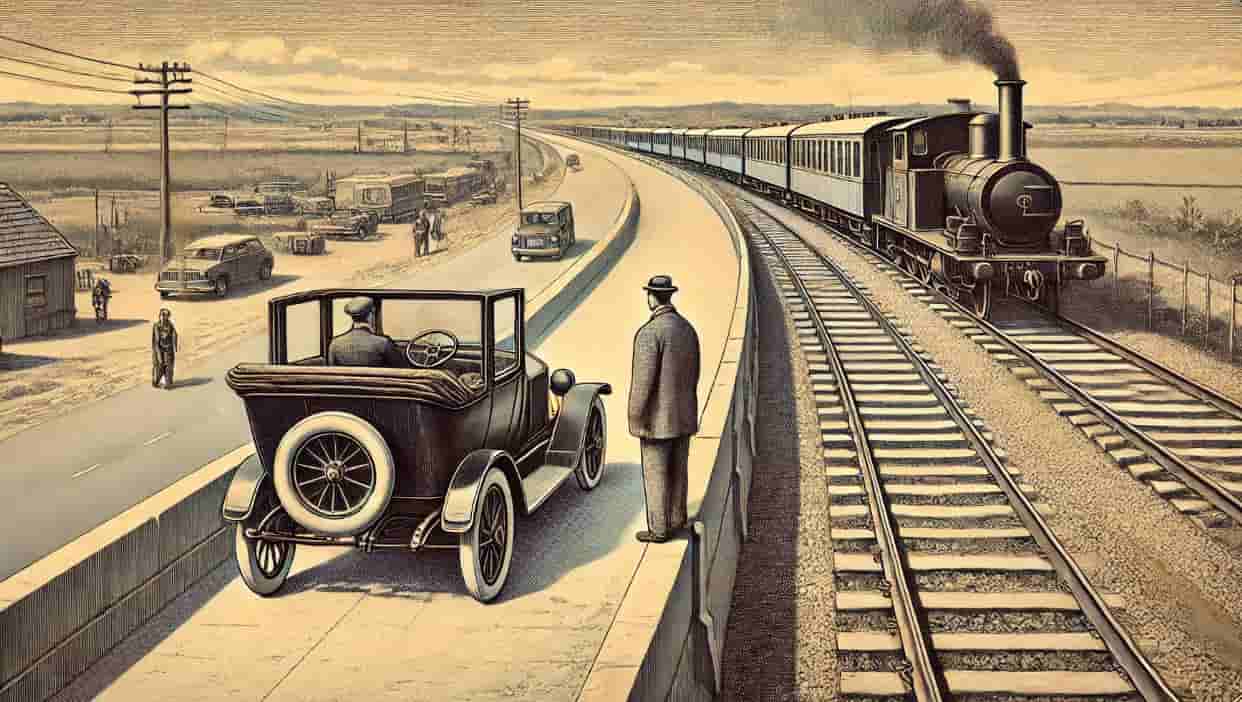
A Boat is moving downstream on a river. Determine the speed of the boat relative to the riverbank (RELATIVE AND ABSOLUTE MOTION NUMERICAL PROBLEMS)
A boat is moving downstream on a river. The river flows at a speed of 3 m/s relative to the riverbank. The boat’s engine propels it at a speed of 7 m/s relative to the water.
Determine the speed of the boat relative to the riverbank (absolute motion).
If the boat turns around and starts moving upstream, what will be its speed relative to the riverbank?

Understanding Relative and Absolute Motion
Understanding the concepts of Relative and Absolute Motion forms a crucial part of mastering the principles of kinematics. When we delve into the complex worlds of physics, these two notions significantly influence how we perceive and analyse movement. In essence,...

Physics: Motion in One Dimension
Motion in One Dimension forms the foundational block in understanding the Physics of movement. This topic delves into the specifics of how objects move in a straight line under the influence of various forces. By exploring the key concepts of displacement, velocity,...
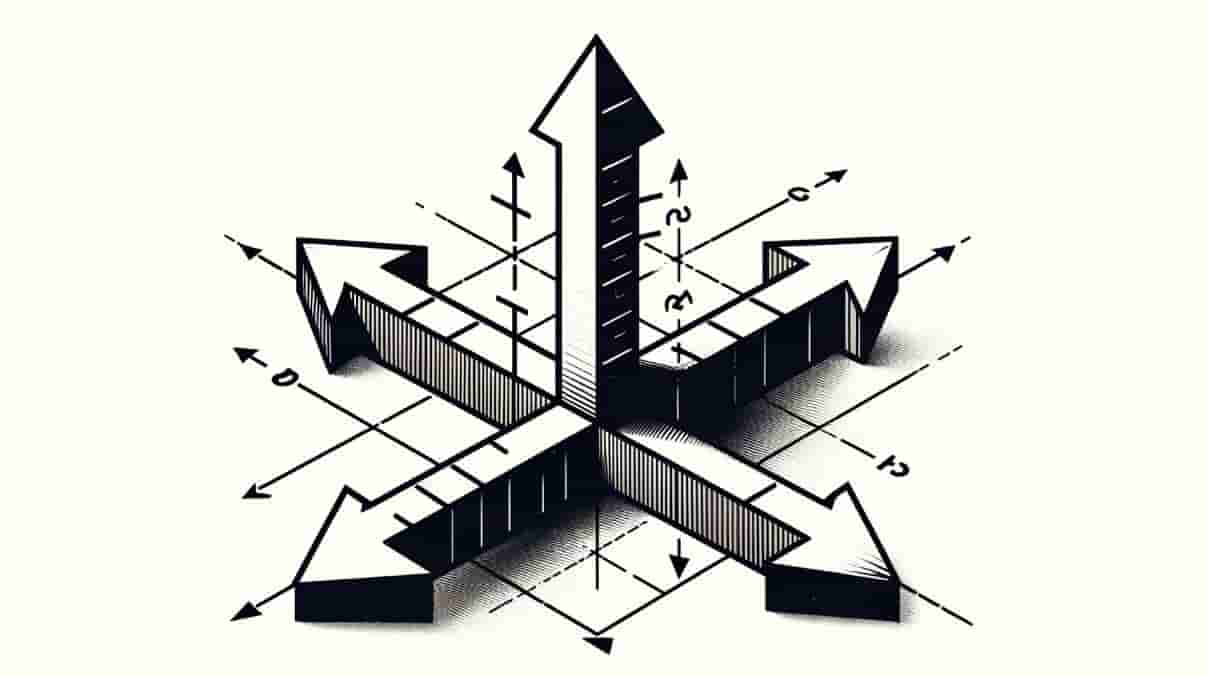
The Three Dimensions
In physics and geometry, the concept of "three dimensions" refers to a spatial framework necessary to describe the position or location of an object fully. Each dimension provides a unique axis that, together with the others, can describe any point in space. Here’s a...

The Pivotal Role of Supernova Explosions in Shaping Our Universe
Supernova Explosions: A Cosmic Transformation The study of supernova explosions has significantly expanded our understanding of the intricate workings of the universe. These cataclysmic events have provided invaluable insights into the life cycles of stars, the...

Scientific Notations
Scientific notation is a way to express very large or very small numbers in a compact form. It's especially useful in fields like science, engineering, and mathematics where such numbers frequently occur. The notation is based on powers of 10. Here's the general form:...
Drive, Walk, Refuel: Find Displacement, Time & Velocity
You drive a car on a straight road at a constant speed of 70 km/h for a distance of 8.4 km, after which the car runs out of fuel. You then walk a further distance of 2 km for 30 minutes to reach the gas station. a) What is the total displacement from the beginning of your drive to your arrival at the gas station? b) What is the total time interval from the beginning of your drive to your arrival at the gas station? c) What is the average velocity from the beginning of your drive to your arrival at the gas station?

Numerical Examples in Motion in One Dimension – Kinematics
These problems encompass a variety of scenarios involving motion in one dimension, designed to reinforce the understanding of key concepts such as constant velocity, acceleration, deceleration, and the equations of motion.
NUMERICAL SOLUTIONS IN PHYSICS
No Results Found
The page you requested could not be found. Try refining your search, or use the navigation above to locate the post.
Atom to Atom: Insights from the Chemical Universe
No Results Found
The page you requested could not be found. Try refining your search, or use the navigation above to locate the post.
Life's Mysteries Revealed: Exploring Biology
No Results Found
The page you requested could not be found. Try refining your search, or use the navigation above to locate the post.
Features

Physics

Chemistry

Biology

Computing

Learning
