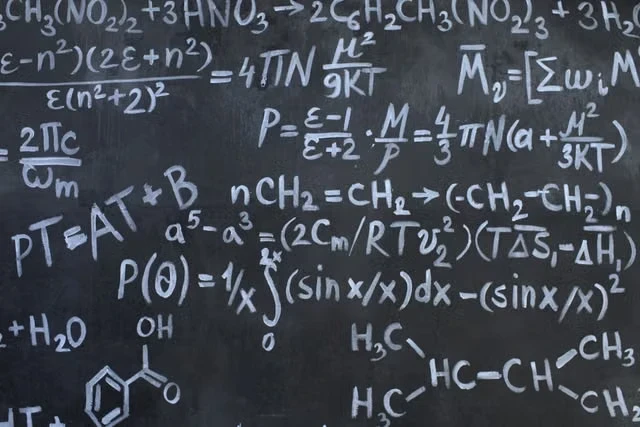
The question of whether artificial intelligence can genuinely perform mathematics has moved from philosophical speculation to urgent professional debate. Recent activity on MathOverflow, particularly within the experimental mathematics tag, reveals a community wrestling with a fundamental distinction: is AI discovering genuinely new mathematical truths, or is it merely accelerating the search and verification processes that human mathematicians have always performed? This distinction carries profound implications for how credit is assigned, how research effort is allocated, and ultimately how the discipline itself evolves.
Contemporary machine learning systems have demonstrated remarkable capabilities in pattern recognition, conjecture generation, and proof assistance. Systems like DeepMind's AlphaTensor have discovered faster matrix multiplication algorithms, while large language models have produced plausible-sounding mathematical arguments that sometimes contain subtle errors. The mathematical community now faces the practical challenge of evaluating these outputs with the same rigor applied to human work, while simultaneously determining which aspects of the research pipeline genuinely benefit from automation.
This analysis examines the evidence on both sides of the debate, exploring the technical mechanisms that enable AI mathematical work, the philosophical questions surrounding machine creativity, and the practical implications for working mathematicians. By examining concrete examples, computational frameworks, and the structural realities of mathematical research, we can develop a clearer picture of what AI actually contributes and where human judgment remains irreplaceable.
On This Page
- The Historical Context of Machine-Assisted Mathematics
- Defining Mathematical Creativity and Discovery
- Case Studies in AI Mathematical Achievement
- The Technical Mechanisms Behind AI Mathematical Reasoning
- Philosophical and Epistemological Dimensions
- Practical Implications for Mathematical Research Practice
- Mathematical Derivations and Computational Examples
- Pattern Recognition in Number Theory
- Computational Verification of Algebraic Identities
- Optimization Problems in Algorithm Discovery
- Conjecture Testing Through Computational Experimentation
- Formal Proof Construction with Machine Assistance
- Statistical Learning for Mathematical Pattern Discovery
- Numerical Verification and Error Analysis
- Graph Theory and Combinatorial Optimization
- Evaluating AI Mathematical Outputs
- Criteria for Evaluating Machine-Generated Mathematics
- The Future Trajectory of AI in Mathematics
The Historical Context of Machine-Assisted Mathematics
Mathematics has never been a purely solitary intellectual pursuit, and the tools available to mathematicians have always shaped what problems seem tractable. From the abacus to the computer algebra system, each technological advance has redefined the boundary between routine calculation and genuine insight.
The formalization movement of the twentieth century, championed by figures like Hilbert and later automated by systems such as Coq and Lean, established that mathematical arguments could be mechanically verified. This foundation made the current wave of AI-assisted research possible, though the leap from verification to discovery remains conceptually vast.
From Mechanical Calculation to Automated Reasoning
The earliest computing machines were designed explicitly for mathematical purposes, with Babbage's analytical engine conceived as a general-purpose calculator. Modern computer algebra systems like Mathematica and Maple have long handled symbolic manipulation, integration, and equation solving that would consume hours of human effort.
Automated theorem provers emerged from the logic tradition, with systems like ACL2 and Isabelle demonstrating that formal proofs could be constructed algorithmically. These tools excel at exhaustive case analysis and mechanical deduction, yet they require human guidance to identify promising directions and formulate meaningful conjectures.
The transition to machine learning represents a qualitative shift, moving from rule-based systems to statistical pattern recognition. Neural networks do not follow explicit logical rules but instead learn distributions from data, enabling them to identify patterns that might escape human attention entirely.
This statistical approach introduces both remarkable flexibility and troubling opacity, as the internal representations learned by these systems resist straightforward interpretation. Mathematicians must therefore evaluate AI outputs without full visibility into how those outputs were generated, creating novel epistemic challenges.
The historical trajectory suggests that each generation of mathematical tools has expanded what practitioners can achieve, yet the core creative act of choosing problems and interpreting results has remained stubbornly human.
Early AI Systems and Their Mathematical Limitations
The first wave of AI research in the 1960s and 1970s produced systems like MACSYMA and the Logic Theorist, which could solve constrained mathematical problems through search and symbolic manipulation. These systems demonstrated that machines could replicate certain mathematical competencies, though their fragility and narrow scope limited practical impact.
Expert systems of the 1980s encoded human mathematical knowledge in rule-based frameworks, achieving impressive results within tightly bounded domains. However, these systems could not generalize beyond their encoded rules, and maintaining them required constant human intervention as knowledge evolved.
The limitations of these early systems reinforced a prevailing skepticism about machine mathematics, with many researchers arguing that genuine mathematical insight required forms of intuition and creativity that resisted algorithmic capture. This skepticism shaped funding priorities and research agendas for decades.
Statistical learning methods began to challenge these assumptions in the 2010s, as deep neural networks demonstrated unexpected capabilities in pattern recognition across diverse domains. The application of these methods to mathematics remained limited by data availability, since formal mathematical knowledge is sparse compared to the vast corpora used to train language models.
Despite these constraints, early experiments with neural networks for mathematical tasks showed promise, suggesting that the statistical approach might complement rather than replace traditional symbolic methods.
Defining Mathematical Creativity and Discovery
Before evaluating whether AI can be a mathematician, we must clarify what mathematical creativity actually means. The term encompasses conjecture formation, proof construction, conceptual innovation, and the aesthetic judgment that guides research toward significant problems.
Philosophers of mathematics have long debated whether discovery involves genuine creation or merely the uncovering of pre-existing truths. This ontological question bears directly on how we evaluate machine outputs, since a Platonist might argue that any correct mathematical statement was already true before its discovery.
The Nature of Mathematical Insight
Mathematical insight typically involves recognizing unexpected connections between seemingly disparate domains, a process that draws on deep intuition developed through years of immersion. Human mathematicians describe moments of insight as involving subconscious processing that suddenly surfaces as a clear realization.
This phenomenological experience of insight has no obvious analogue in current machine learning systems, which operate through explicit computational processes. Neural networks do not experience the sudden clarity of understanding, yet they can produce outputs that appear to embody similar conceptual leaps.
The question becomes whether insight is essential to mathematical progress or merely an epiphenomenon of the cognitive processes that produce results. If the latter, machines might achieve mathematical discoveries without any internal experience of insight.
Research on mathematical cognition suggests that human insight relies heavily on analogical reasoning, spatial intuition, and embodied understanding of quantity and structure. These cognitive foundations may not be necessary for producing valid mathematical arguments, which can be verified through formal proof.
However, the selection of which problems to pursue and which conjectures merit attention requires judgment that may depend on precisely the aesthetic and intuitive faculties that machines lack.
Conjecture Generation Versus Proof Verification
The mathematical research process can be decomposed into distinct phases, each with different cognitive demands. Conjecture generation involves proposing plausible statements that might be true, often based on computational evidence or analogical reasoning.
Proof verification, by contrast, requires establishing the truth of a statement through rigorous logical deduction from accepted axioms. This phase has been successfully automated for decades, with proof assistants providing mechanical verification of human-constructed arguments.
Machine learning systems have shown particular promise in conjecture generation, identifying patterns in computational data that suggest general principles. The Ramanujan Machine project, for example, uses algorithms to discover conjectures about fundamental constants that human mathematicians had not previously considered.
These generated conjectures still require human or automated proof, and the process of proving them often demands creative construction of intermediate lemmas and novel proof techniques. Current AI systems struggle with this creative proof construction, particularly for conjectures requiring genuinely new mathematical ideas.
The division of labor that emerges is one where AI excels at generating candidate statements and verifying known proofs, while humans retain primary responsibility for the creative work of proof construction.
Case Studies in AI Mathematical Achievement
Concrete examples provide the most compelling evidence for assessing AI mathematical capabilities. Several high-profile results have captured attention, each demonstrating different aspects of what machines can achieve in mathematical contexts.
These case studies reveal a pattern where AI succeeds when problems can be framed as optimization or pattern recognition tasks, while struggling with open-ended creative challenges that resist such formulation.
AlphaTensor and Matrix Multiplication Discovery
DeepMind's AlphaTensor system made headlines in 2022 by discovering faster algorithms for matrix multiplication, a fundamental operation underlying countless computational tasks. The system framed the problem as a game, learning to find efficient tensor decompositions through reinforcement learning.
AlphaTensor discovered algorithms that outperform the best-known human-designed approaches for certain matrix sizes, representing a genuine improvement in a problem that had received intense attention for decades. This achievement demonstrates that AI can discover mathematical structures that elude human researchers.
However, the discovered algorithms are not conceptually novel in the way that Strassen's original insight was, representing instead optimized variations within known algorithmic frameworks. The system found better solutions to a well-defined optimization problem rather than opening fundamentally new mathematical territory.
The matrix multiplication problem is unusually well-suited to machine learning because it has a clear objective function and abundant training data. Most mathematical problems lack this structure, making it unclear how broadly AlphaTensor's approach can generalize.
Nevertheless, the result provides concrete evidence that AI can outperform humans on specific mathematical tasks, challenging the assumption that mathematical discovery requires uniquely human cognitive abilities.
The Ramanujan Machine and Conjecture Discovery
The Ramanujan Machine project, developed at the Technion, uses algorithms to automatically discover conjectures about mathematical constants. The system searches for continued fraction representations and other structural patterns that suggest new mathematical relationships.
This project has generated numerous conjectures that were previously unknown, several of which have subsequently been proven by human mathematicians. The system operates by identifying patterns in numerical data that suggest general principles, a process analogous to the empirical mathematics that guided historical discoveries.
The conjectures produced by the Ramanujan Machine are typically accessible to proof using existing techniques, suggesting that the system identifies patterns within known mathematical frameworks rather than venturing into genuinely novel territory.
This limitation reflects the system's reliance on computational search within predefined structural families, which constrains the space of possible discoveries to those expressible in the system's search language.
Despite these constraints, the project demonstrates that automated conjecture generation can productively supplement human research, identifying candidate statements that merit further investigation.
The Technical Mechanisms Behind AI Mathematical Reasoning
Understanding what AI can achieve in mathematics requires examining the technical mechanisms that enable its performance. Modern systems combine neural network architectures with search algorithms and formal verification tools in increasingly sophisticated pipelines.
These hybrid approaches leverage the pattern recognition capabilities of deep learning while compensating for its unreliability through mechanical verification and structured search.
Neural Network Architectures for Mathematical Tasks
Transformer-based language models have become the dominant architecture for mathematical AI, trained on vast corpora of mathematical text including textbooks, papers, and formal proof libraries. These models learn statistical patterns in mathematical language that enable them to generate plausible arguments and identify relevant techniques.
The autoregressive nature of these models means they generate mathematical text token by token, conditioning each prediction on the preceding context. This approach captures local dependencies well but can struggle with the global coherence required for lengthy proofs.
Graph neural networks offer an alternative architecture particularly suited to mathematical structures, which often have natural graph representations. These networks can operate directly on mathematical objects like groups, rings, and topological spaces, learning representations that capture structural properties.
Reinforcement learning provides a framework for training systems to optimize mathematical objectives, as demonstrated by AlphaTensor's success in finding efficient algorithms. This approach requires a well-defined reward signal, which limits its applicability to problems with clear optimization criteria.
The choice of architecture fundamentally shapes what mathematical capabilities a system can develop, with each approach offering complementary strengths and weaknesses.
Formal Verification and Proof Assistants
Formal proof assistants like Lean, Coq, and Isabelle provide a rigorous foundation for machine-checked mathematics, ensuring that any theorem verified within these systems is logically sound. These tools have become increasingly sophisticated, with libraries containing thousands of formally verified theorems.
The integration of machine learning with proof assistants represents a promising frontier, with systems trained to suggest proof steps or identify relevant lemmas during interactive proof development. These AI-assisted proof systems can accelerate formalization efforts while maintaining the guarantees of mechanical verification.
However, formalizing mathematics remains extremely labor-intensive, requiring significant expertise and effort even with AI assistance. The gap between informal mathematical reasoning and its formal representation continues to limit the practical impact of these systems.
Recent work on autoformalization aims to bridge this gap, using language models to automatically translate informal mathematical statements into formal proof language. These efforts show promise but remain unreliable for complex arguments requiring nuanced mathematical understanding.
The combination of neural pattern recognition with formal verification creates a powerful pipeline where AI generates candidate proofs that are then mechanically checked, providing confidence in results that might otherwise be suspect.
We Also Published
Philosophical and Epistemological Dimensions
The question of whether AI can be a mathematician touches on deep philosophical issues about the nature of mathematical knowledge and creativity. These questions have practical implications for how the mathematical community should evaluate and credit machine contributions.
Epistemological frameworks developed for human knowledge may require extension to accommodate machine-generated mathematics, raising questions about justification, reliability, and the social structure of mathematical validation.
Can Machines Possess Mathematical Understanding?
The concept of understanding in mathematics involves more than the ability to produce correct proofs, encompassing the capacity to explain why a result holds and to apply it in novel contexts. Whether machines possess such understanding remains deeply contested.
Critics argue that neural networks merely manipulate symbols according to learned statistical patterns without any genuine comprehension of mathematical meaning. This position holds that machine outputs, however impressive, lack the semantic grounding that characterizes human mathematical understanding.
Proponents counter that understanding may be fundamentally behavioral, consisting in the ability to use mathematical knowledge flexibly and correctly. Under this view, systems that reliably produce correct proofs and apply techniques appropriately might be said to understand mathematics, regardless of their internal architecture.
The debate parallels longstanding questions in the philosophy of mind about whether computational processes can give rise to genuine cognition. These questions resist empirical resolution, depending instead on philosophical commitments about the nature of mind and meaning.
For practical purposes, the mathematical community may need to develop operational criteria for evaluating machine contributions that do not depend on resolving these deeper philosophical disputes.
The Social Structure of Mathematical Validation
Mathematics has traditionally been validated through a social process involving peer review, community scrutiny, and the gradual acceptance of results into the canon of established knowledge. This process relies on trust in human mathematicians and shared standards of rigor.
Machine-generated mathematics disrupts this social structure, raising questions about who bears responsibility for errors and how machine contributions should be credited. The opacity of neural network reasoning complicates the traditional model of mathematical explanation and justification.
Some researchers advocate for requiring machine-generated results to be formally verified before acceptance, ensuring that the social validation process can rely on mechanical guarantees rather than trust in opaque systems. This approach would preserve rigor while accommodating machine contributions.
Others worry that an overreliance on formal verification could stifle mathematical creativity, since many important results were initially accepted based on informal arguments that were later formalized. The balance between rigor and creativity in mathematical practice requires careful calibration.
The mathematical community is actively debating these questions, with different journals and institutions adopting varying policies regarding AI-generated content and machine-assisted proofs.
Practical Implications for Mathematical Research Practice
Regardless of philosophical positions, AI systems are already changing how mathematical research is conducted. Working mathematicians must adapt their practices to leverage machine capabilities while maintaining the rigor and creativity that define the discipline.
The integration of AI into mathematical workflows raises practical questions about training, collaboration, and the allocation of human effort toward tasks where it adds the most value.
How Mathematicians Can Leverage AI Effectively
Effective use of AI in mathematical research requires understanding both the capabilities and limitations of current systems. Mathematicians who treat AI as an extremely fast research assistant can accelerate their work without compromising quality.
AI systems excel at exhaustive search, pattern identification in large datasets, and routine proof verification, tasks that consume significant human time without requiring deep creativity. Delegating these tasks to machines frees mathematicians to focus on conceptual innovation and problem selection.
Conjecture generation systems can propose candidate statements that human mathematicians might not have considered, expanding the space of hypotheses worth investigating. These systems work best when combined with human judgment about which conjectures merit proof efforts.
Formal proof assistants, augmented with machine learning suggestions, can accelerate the verification of complex arguments while providing guarantees of correctness. This combination of human creativity and machine rigor represents a promising model for future mathematical practice.
The most effective collaborations treat AI as a junior collaborator whose outputs require careful human review, rather than as an autonomous authority whose results are accepted without scrutiny.
Training the Next Generation of Mathematicians
The integration of AI into mathematical practice has implications for mathematical education and training. Students must learn to work effectively with AI tools while developing the conceptual understanding that enables meaningful mathematical contributions.
Educational approaches that emphasize computational thinking and AI literacy will better prepare students for the evolving mathematical landscape. However, these technical skills must complement rather than replace traditional mathematical training.
The ability to formulate meaningful problems, judge the significance of results, and construct creative proofs remains essential, suggesting that core mathematical education should maintain its emphasis on rigorous reasoning and conceptual depth.
Students should learn to use AI systems critically, understanding their limitations and developing the judgment to evaluate machine outputs. This critical literacy is essential for responsible use of increasingly powerful mathematical tools.
The mathematical community must also develop norms and standards for acknowledging AI contributions, ensuring that credit is assigned appropriately and that the social structure of mathematical validation adapts to new forms of collaboration.
Mathematical Derivations and Computational Examples
To ground this discussion in concrete mathematical practice, we examine specific derivations and computational approaches that illustrate the capabilities and limitations of AI systems. These examples demonstrate the types of tasks where machines excel and where human insight remains essential.
The following problems range from routine computations that AI handles easily to creative proof construction that currently requires human mathematical judgment.
Pattern Recognition in Number Theory
Consider the problem of identifying patterns in the distribution of prime numbers, a task where computational approaches have historically contributed to conjectures that were later proven. Machine learning systems can accelerate this pattern discovery process.
The prime number theorem states that the number of primes less than ##[x]## is approximately ##[\dfrac{x}{\ln x}]##. Machine learning systems can identify deviations from this asymptotic behavior that suggest deeper structure.
For example, consider the function ##[\pi(x) - \dfrac{x}{\ln x}]##, which measures the error in the prime number approximation. Computational exploration reveals oscillatory behavior that connects to the Riemann zeta function.
An AI system trained on prime distributions might identify correlations between this error term and other arithmetic functions, generating conjectures about relationships that human mathematicians could then investigate.
The following derivation illustrates the type of analysis that combines computational pattern recognition with analytical verification.
This formulation of the prime number theorem with error term shows the connection between prime distribution and the logarithmic integral function. Machine learning systems can explore variations of this relationship empirically.
Computational Verification of Algebraic Identities
Consider the task of verifying algebraic identities involving special functions, a domain where computer algebra systems have long excelled. Modern AI systems extend these capabilities to more complex pattern recognition.
The following identity involving the gamma function illustrates the type of result that computational systems can verify and, increasingly, discover.
This reflection formula for the gamma function represents a fundamental result that connects complex analysis with trigonometric functions. Machine learning systems trained on special function identities can propose analogous relationships.
The verification of such identities typically proceeds through series expansions or functional equation analysis, tasks well-suited to automated symbolic manipulation.
However, discovering genuinely new identities of this type requires recognizing structural analogies that may not be apparent from computational data alone.
The following example shows a derivation that combines symbolic computation with analytical insight.
This integral representation of the Riemann zeta function demonstrates the type of result that connects multiple areas of mathematics. AI systems can verify such identities but may struggle to discover them independently.
Optimization Problems in Algorithm Discovery
The AlphaTensor approach to matrix multiplication discovery frames the problem as finding efficient tensor decompositions. Consider the standard matrix multiplication algorithm for ##[2 \times 2]## matrices.
Standard multiplication requires 8 scalar multiplications, while Strassen's algorithm achieves the result in 7 multiplications at the cost of additional additions. The search for even more efficient algorithms can be formulated as an optimization problem.
For ##[n \times n]## matrix multiplication, the exponent ##[\omega]## represents the asymptotic complexity, with the best-known algorithms approaching ##[\omega \approx 2.37]##. AlphaTensor discovered algorithms that improve constant factors for specific matrix sizes.
The optimization problem can be stated as finding the minimal number of multiplications ##[r]## such that the matrix multiplication tensor can be decomposed into ##[r]## rank-one terms.
This tensor decomposition formulation transforms the algorithm discovery problem into a search over possible decompositions, a task well-suited to reinforcement learning approaches.
Conjecture Testing Through Computational Experimentation
Consider the Collatz conjecture, which states that repeated application of the function ##[f(n) = 3n+1]## for odd ##[n]## and ##[f(n) = n/2]## for even ##[n]## eventually reaches 1 for any positive integer starting value.
Computational verification has confirmed the conjecture for all starting values up to approximately ##[2^{68}]##, yet no proof exists. Machine learning systems can analyze the statistical properties of Collatz trajectories to identify patterns that might inform proof attempts.
The distribution of stopping times, the number of steps required to reach 1, exhibits complex statistical structure that resists simple characterization. AI systems might identify correlations with other number-theoretic functions.
However, the fundamental challenge of proving the conjecture for all integers requires creative mathematical insight that current AI systems cannot provide. This example illustrates the boundary between computational exploration and genuine mathematical discovery.
The following calculation shows the type of statistical analysis that AI systems can perform on Collatz trajectories.
This heuristic estimate for the expected stopping time derives from probabilistic models of Collatz iteration, illustrating how statistical analysis can complement computational exploration.
Formal Proof Construction with Machine Assistance
Consider the task of formally verifying a theorem in Lean, a proof assistant that has gained significant adoption in the mathematical community. Machine learning systems can assist by suggesting proof steps.
The following example shows a simple theorem about natural numbers that might be proved with machine assistance.
This commutativity of addition can be proved by induction in Lean, with machine learning systems suggesting the appropriate induction strategy and intermediate steps.
The formal proof requires establishing both the base case and the inductive step, with the machine suggesting relevant lemmas about successor functions and addition definitions.
More complex theorems require creative construction of intermediate results, a task where current AI assistance remains limited. The integration of language models with proof assistants aims to expand these capabilities.
The following code illustrates how a proof might be structured in Lean with machine assistance.
theorem add_comm (a b : ℕ) : a + b = b + a := by
  induction a with
  | zero => simp
  | succ a ih =>
      rw [succ_add, ih, add_succ]
This Lean proof demonstrates the type of formal argument that combines human strategy with machine-verified steps, illustrating the collaborative model that is emerging in mathematical practice.
Statistical Learning for Mathematical Pattern Discovery
Consider the problem of identifying whether a given sequence of integers satisfies a linear recurrence relation, a task with applications across combinatorics and number theory.
Given a sequence ##[a_0, a_1, a_2, \ldots]##, the question is whether there exist constants ##[c_1, \ldots, c_k]## such that ##[a_n = c_1 a_{n-1} + \cdots + c_k a_{n-k}]## for all sufficiently large ##[n]##.
Machine learning systems can detect such recurrences from finite initial segments of sequences, using techniques from sparse signal recovery and structured regression.
The Berlekamp-Massey algorithm provides an efficient method for finding the minimal linear recurrence generating a given sequence, a task that AI systems can perform rapidly for large datasets.
However, determining whether a discovered recurrence reflects genuine mathematical structure or merely fits noise requires human judgment about the significance and context of the pattern.
This general form of a linear recurrence illustrates the type of pattern that computational systems can detect, while the interpretation of such patterns remains a human responsibility.
Numerical Verification and Error Analysis
Numerical methods play an essential role in experimental mathematics, providing evidence for conjectures that may later receive rigorous proofs. AI systems can accelerate numerical exploration and improve the reliability of computational evidence.
Consider the numerical verification of the Riemann hypothesis, which states that all nontrivial zeros of the zeta function lie on the critical line ##[\text{Re}(s) = 1/2]##. Computational verification has confirmed this for billions of zeros.
Machine learning systems can analyze the statistical distribution of zero spacings, comparing them to predictions from random matrix theory. These analyses provide evidence about the structure of the zeta function that informs theoretical investigations.
The following calculation illustrates the type of numerical analysis that supports experimental mathematics.
This formula for the number of zeros ##[N(T)]## with imaginary part less than ##[T]## provides a benchmark against which computational results can be compared, enabling detection of anomalies that might indicate deeper structure.
Graph Theory and Combinatorial Optimization
Machine learning has found significant application in graph theory, where pattern recognition can identify structural properties that suggest new theorems. Consider the problem of detecting graph isomorphism, a task with both theoretical and practical importance.
The Weisfeiler-Lehman algorithm provides a hierarchy of graph invariants that can distinguish many non-isomorphic graphs, though it fails for certain carefully constructed counterexamples. Machine learning systems can learn to identify structural features that complement these classical invariants.
For the graph isomorphism problem, the question of whether a polynomial-time algorithm exists remains open, representing one of the most important unresolved questions in theoretical computer science.
AI systems have contributed to the development of practical isomorphism testing algorithms that perform well on real-world instances, though theoretical guarantees remain elusive.
The following example illustrates how spectral methods can reveal structural properties of graphs that inform both algorithmic development and theoretical understanding.
This bound on the second eigenvalue of the graph Laplacian connects spectral properties with combinatorial structure, illustrating the type of result that emerges from combining computational exploration with analytical insight.
Evaluating AI Mathematical Outputs
The practical challenge of evaluating AI-generated mathematics requires developing criteria that distinguish genuine contributions from plausible but incorrect arguments. This evaluation process combines automated verification with human judgment.
Formal verification provides the strongest guarantee of correctness, ensuring that any theorem checked by a proof assistant is logically sound. However, formalization remains costly and may not capture the full scope of mathematical reasoning.
Statistical evaluation methods can assess whether AI-generated conjectures hold for extensive computational testing, providing evidence of plausibility that complements formal verification.
The following framework summarizes the evaluation criteria that mathematicians might apply to AI outputs.
The Future Trajectory of AI in Mathematics
The current state of AI in mathematics represents an early stage of what promises to be a transformative relationship. Projecting forward requires understanding both the trajectory of technical capabilities and the evolving structure of mathematical practice.
Several trends suggest that AI will become increasingly integrated into mathematical research, though the nature of this integration will depend on technical developments and community choices about how to deploy these tools.
Emerging Capabilities and Research Directions
Current research focuses on improving the reliability of AI mathematical reasoning, addressing the tendency of language models to produce plausible but incorrect arguments. Techniques including chain-of-thought prompting, verification training, and integration with formal proof systems aim to address these limitations.
The development of specialized mathematical AI systems, trained on formal proof libraries and mathematical corpora, promises to improve performance on tasks requiring rigorous reasoning. These
From our network :
- Mastering DB2 12.1 Instance Design: A Technical Deep Dive into Modern Database ArchitectureComprehensive guide to DB2 12.1 Instance Design. Explore architectural components, HADR setup, buffer pool tuning, and security policies for IBM DB2 12.1. Includes 10 functional SQL and Shell samples.
- 98% of Global MBA Programs Now Prefer GRE Over GMAT Focus EditionExplore why 98% of global MBA programs now prefer the GRE over GMAT Focus. Learn about the shorter GRE format, verbal logic importance, and strategic versatility for students.
- AI-Powered 'Precision Diagnostic' Replaces Standard GRE Score ReportsDiscover the new GRE Precision Diagnostic. Learn how AI-powered behavioral analytics and time-to-solve tracking are replacing standard GRE score reports to empower students.
- 10 Physics Numerical Problems with Solutions for IIT JEEPrepare for IIT JEE with 10 physics numerical problems, complete with detailed solutions and conceptual explanations. Ideal for mastering kinematics, thermodynamics, electromagnetism, and optics.
- Mastering DB2 LUW v12 Tables: A Comprehensive Technical GuideComprehensive guide on DB2 LUW v12 tables. Explore CREATE TABLE syntax, BLU Acceleration, range partitioning, data types, and security features for IBM DB2 LUW v12.
- Vite 6/7 'Cold Start' Regression in Massive Module GraphsIn-depth analysis of Vite 6/7 cold start regressions in massive module graphs. Learn about barrel file issues, pre-bundling optimizations, and how to improve Vite dev server performance.
- Analyzing Trump Deportation Numbers Insights Into The 2026 Immigration Crackdown
- Trump Political Strategy How Geopolitical Stunts Serve As Media Diversions
- EV 2.0: The Solid-State Battery Breakthrough and Global Factory ExpansionDiscover the impact of the Solid-State Battery Breakthrough on the EV market. Learn about CATL and BYD stock growth, global factory expansion in Europe, and the future of EV 2.0 technology.
RESOURCES
- Why can't AI models do complex math? - Redditreddit.comDec 7, 2023 ... It cannot do math because it is math. It's an equation, not a brain. AI models do not “use” equations…
- Watch: Fields Medalist Terence Tao on Artificial Intelligence and ...simonsfoundation.orgAug 13, 2026 ... “Let's assume that soon, AI will be able to perform a reasonable fraction of mathematical tasks successfully,” he said. “If…
- Can AI do maths yet? Thoughts from a mathematician. - Redditreddit.comJan 5, 2025 ... Meta, Google, and others have AI models that have specifically trained on systems of mathematical proofs and can generate correct…
- Incentivizing mathematics in an era of AI-accelerated proof abundancemathoverflow.netMay 22, 2026 ... If we aim to explain what we understand about a bit of math, we point to what we can do…
- Mathematicians are grappling with the possibility that AI might ...understandingai.orgAug 4, 2026 ... Developments like these have led some to claim that mathematics is close to being “solved” by AI systems. How do…
- AI leaps from math dunce to whiz - Harvard Gazettenews.harvard.eduJul 23, 2025 ... Forms of artificial intelligence have been used in mathematics for decades. But in the last few years, advances in machine…
- Can AI do maths yet? Thoughts from a mathematician. - Xena Projectxenaproject.wordpress.comDec 22, 2024 ... I believe that a real AI needs to prove mathematical theorems using the mathematical knowledge which were given to the…
- Mathematics in the age of AI - arXivarxiv.orgAug 17, 2026 ... ... performing research-level mathematical tasks ... Instead, I will point to the Leiden Declaration on Artificial Intelligence and Mathematics ...
- What it Means to Be a Mathematician When AI Does the Mathspectrum.ieee.orgSuch achievements suggest that AI is already capable of handling some mathematical tasks long considered uniquely human. As the technology advances, more of the ...
- AI Is Usually Bad At Math. Here's Why It Matters - Forbesforbes.comOct 7, 2024 ... “Math is really, really hard for AI models,” writes Melissa Heikkila at our own MIT Technology Review. “Complex math, such…
- How likely is a 'math crisis' due to AI becoming better than humans?academia.stackexchange.comMay 24, 2026 ... ... AI can perform in seconds. There is a possibility that PhD students will ask themselves: What is my role…
- Some Notes on AI | Not Even Wrong - Columbia Math Departmentmath.columbia.eduMay 1, 2026 ... But our current way of doing math and science is focused on depth because that's where human expertise is, because…
- Generative AI without guardrails can harm learning - PNASpnas.orgJun 25, 2025 ... Student Performance. GPT Base often makes mistakes on math problems (22). We first quantify error rates by repeatedly querying GPT…
- The AI Revolution in Math Has Arrived | Quanta Magazinequantamagazine.orgApr 13, 2026 ... The Quanta Podcast. AI is rapidly changing how mathematicians do math. They must now reckon with why they do it.

0 Comments