Genetically modified crops occupy a peculiar position in modern biology education: they are simultaneously one of the most rigorously studied technologies in agricultural science and one of the most publicly contested. For a CBSE Class 12 learner, the topic demands more than memorising a list of benefits. It requires understanding why genetic modification was pursued in the first place, how a bacterial gene can be transferred into a cotton plant and still function, and why the same technology that reduces pesticide spraying can also provoke regulatory moratoria and ethical debate. This lesson builds directly on the tissue culture and somatic hybridisation techniques studied earlier, where protoplast fusion produced curiosities like the pomato without delivering commercially useful traits.
The central case study is Bacillus thuringiensis, a soil bacterium that has been used as a biological insecticide spray for decades and whose crystalline proteins became the template for the world's most widely planted insect-resistant crops. Understanding Bt technology means understanding protein chemistry, gut physiology, gene regulation and ecology at once. The toxin is harmless to the bacterium that makes it, harmless to humans who eat the crop, yet lethal to a narrow set of insect larvae — and explaining precisely why requires careful attention to pH, receptor binding and gene nomenclature. Beyond the mechanism, the lesson examines the regulatory architecture that governs GM crops, the refuge strategy used to delay resistance, and the Indian experience with Bt brinjal.
Equally important is the conceptual distinction that students frequently blur: pest resistance and herbicide tolerance are different GM traits with different mechanisms, different ecological consequences and different regulatory histories. Bt crops carry insecticidal proteins; herbicide-tolerant crops carry altered target enzymes. Conflating them produces confused answers in examinations and confused arguments in public debate. By the end of this lesson, the learner should be able to trace a cry gene from bacterial plasmid to plant chromosome, explain the molecular basis of target specificity, evaluate the agronomic and environmental case for GM crops, and articulate why the same technology can be both a tool of sustainable intensification and an object of legitimate public concern.
On This Page
- The Rationale for Genetically Modified Crops
- Bt Technology: From Bacterial Crystal to Crop Protection
- Engineering the Construct: Codon Optimisation and Plant Expression
- Pest Resistance Versus Herbicide Tolerance
- Regulation, Moratoria and the Bt Brinjal Case
- Worked Examples and Common Mistakes
- Looking Ahead: From Bt to RNA Interference
- Frequently Asked Questions
The Rationale for Genetically Modified Crops
Agriculture faces a structural problem that classical breeding cannot solve quickly enough. The global population continues to rise while arable land per capita declines, and the yield gains of the Green Revolution have begun to plateau in many regions. Farmers therefore need varieties that tolerate abiotic stress, resist pests without heavy chemical input, and retain nutritional quality through storage and transport. Conventional breeding can address some of these goals, but it is constrained by the sexual compatibility of species and by the time required for repeated backcrossing. Genetic modification offers a route to introduce a specific, well-characterised trait from an unrelated organism directly into an elite cultivar, without dragging along unwanted genes from a wild relative.
The reference definition is worth stating precisely: plants, bacteria, fungi and animals whose genes have been altered by manipulation are called Genetically Modified Organisms, or GMOs. The manipulation need not involve foreign DNA — gene editing and silencing constructs also qualify — but in the CBSE context the emphasis falls on transgenic crops carrying genes from bacteria or other species. What distinguishes GM technology from mutation breeding is intentionality and precision: the breeder knows which gene is being introduced, where it is likely to land, and what protein it will produce. That precision is precisely what makes both the benefits and the regulatory scrutiny possible.
The Five Listed Benefits of Genetic Modification
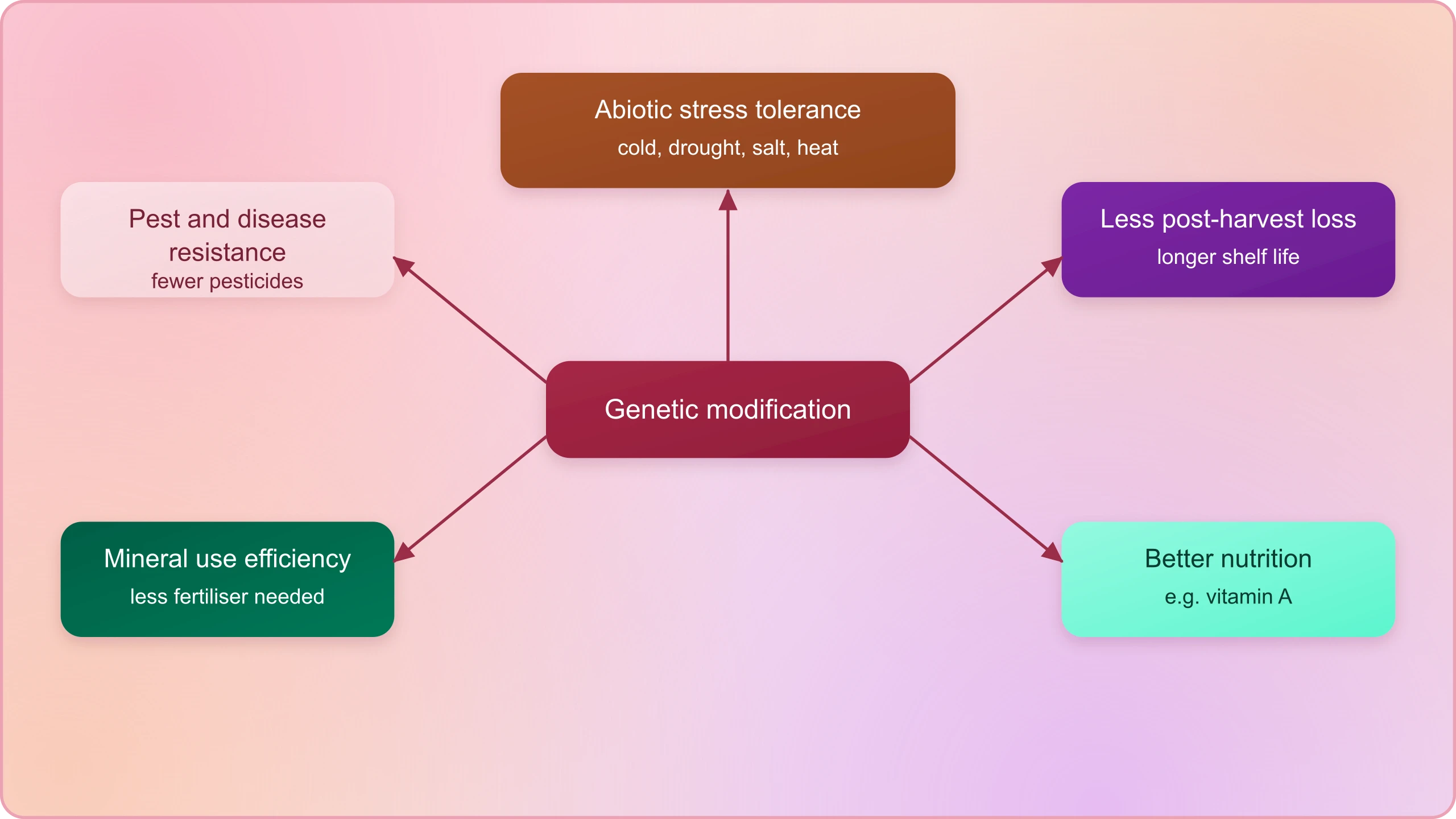
The NCERT framework identifies five principal agronomic benefits of genetic modification in crops, and each deserves unpacking rather than rote memorisation. First, GM has made crops more tolerant to abiotic stresses such as cold, drought, salt and heat, typically through genes controlling osmolyte accumulation, membrane stability or transcription factors that orchestrate stress responses. Second, it has reduced reliance on chemical pesticides through pest-resistant varieties. Third, it has helped reduce post-harvest losses by slowing ripening or improving storage tolerance. Fourth, it has increased the efficiency of mineral usage by plants, which prevents early exhaustion of soil fertility. Fifth, it has enhanced the nutritional value of food, the canonical example being golden rice, a Vitamin A-enriched variety developed to address deficiency in rice-dependent populations.
Beyond these five, genetic modification has been used to create tailor-made plants supplying alternative resources to industry — starches with specific branching patterns for food processing, oils with modified fatty acid profiles, and even plant-based pharmaceutical compounds. This industrial dimension is often overlooked in school syllabi but matters enormously in the real economy of agricultural biotechnology. The key conceptual point is that GM is a platform technology, not a single product: the same transformation machinery can deliver insect resistance, drought tolerance, vitamin enrichment or industrial feedstock quality depending on the construct inserted. Students should resist the temptation to treat "GM crop" as a homogeneous category.
Why Somatic Hybridisation Was Not Enough
The previous lesson ended with a cautionary tale: fusing a tomato protoplast with a potato protoplast produced a pomato, but the hybrid lacked the desired combination of characteristics for commercial utilisation. This failure is instructive. Somatic hybridisation transfers entire genomes, so desirable traits arrive bundled with undesirable ones, and the resulting polyploid may be sterile or agronomically unstable. Genetic modification solves this problem by transferring a single characterised gene rather than a whole genome. The farmer's question — is there an alternative path that our understanding of genetics can show so that maximum yield is obtained while fertiliser and chemical use is minimised? — is answered precisely by this shift from whole-genome merging to targeted gene insertion.
This is why the NCERT narrative moves directly from pomato to GM crops. The logic is not that somatic hybridisation failed technically, but that it failed commercially because it could not deliver a clean trait. Recombinant DNA technology, by contrast, allows the breeder to specify the protein, the promoter, the tissue in which it is expressed and the developmental stage at which it switches on. That level of control is what makes a Bt cotton plant possible: the insecticidal protein is produced in the leaf tissue that the bollworm eats, at concentrations sufficient to kill the larva, without imposing a metabolic burden that would cripple the plant.
Bt Technology: From Bacterial Crystal to Crop Protection
Bt toxin is produced by a bacterium called Bacillus thuringiensis, commonly abbreviated Bt. The Bt toxin gene has been cloned from the bacterium and expressed in plants to provide resistance to insects without the need for insecticides, in effect creating a bio-pesticide. Examples include Bt cotton, Bt corn, Bt rice, Bt tomato, Bt potato and Bt soyabean. The technology is elegant because it exploits a protein that the bacterium itself has evolved to deploy against insect larvae, and because the protein's toxicity depends on a physiological condition — alkaline gut pH — that exists in the target insect but not in mammals. The following sections trace the mechanism step by step.
It is worth pausing on terminology. The bacterium forms protein crystals during a particular phase of its growth, and these crystals contain a toxic insecticidal protein. The word "crystal" here is literal: the proteins pack into a paracrystalline inclusion body, visible under a light microscope, which protects the toxin from degradation in the soil and releases it only when ingested. This is a natural example of a delivery system, and it explains why Bt sprays have been used in organic agriculture for decades. The same protein that is sprayed onto leaves as a biological pesticide is the protein whose gene has been engineered into the crop — a point that dissolves the common misconception that "Bt" is synonymous with "GM".
The Mechanism of Toxin Activation
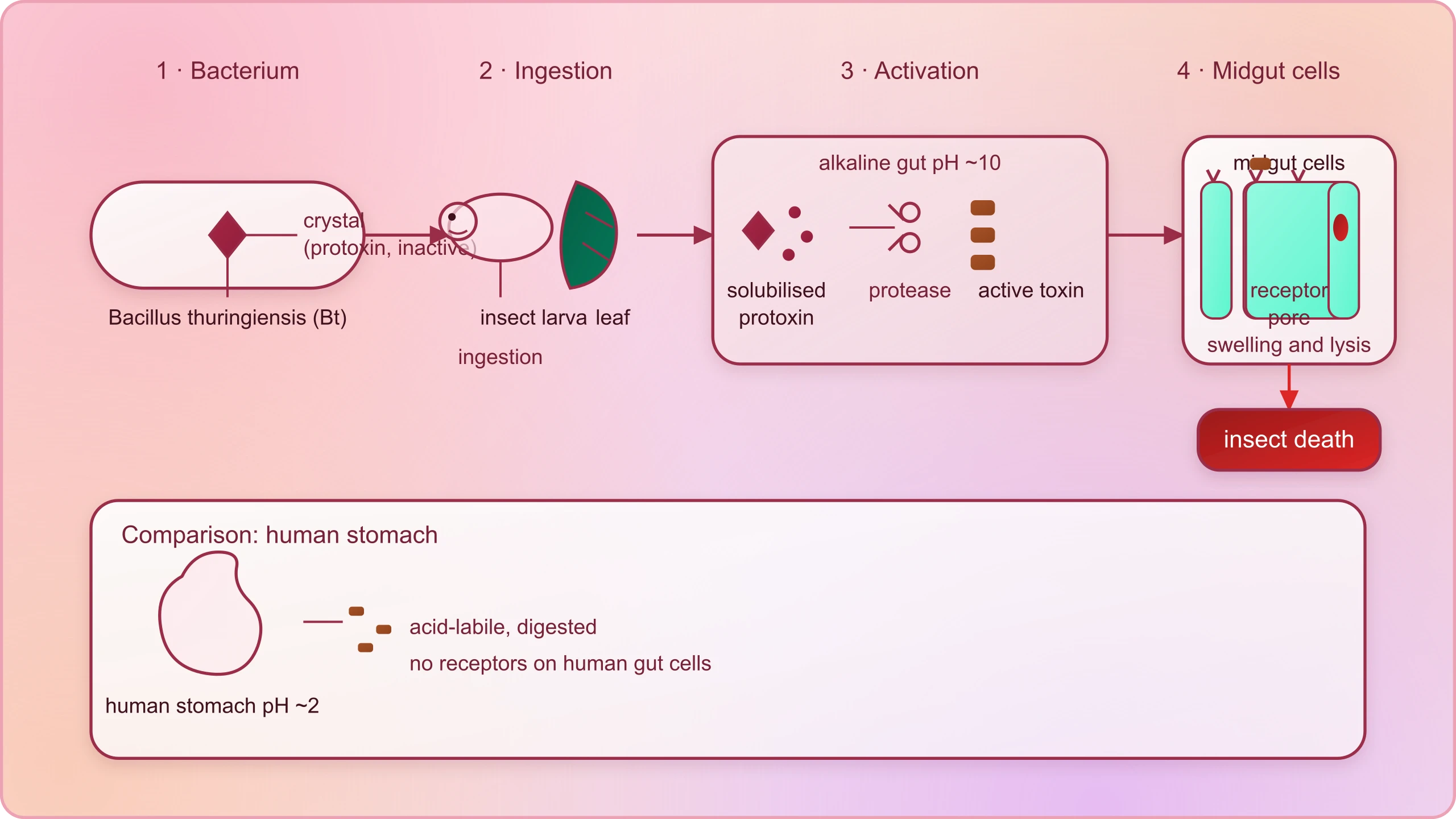
The Bt toxin protein exists as an inactive protoxin inside the bacterium, and this is why it does not kill the Bacillus itself. Once an insect ingests the inactive toxin, it is converted into an active form of toxin due to the alkaline pH of the gut, which solubilises the crystals. The activated toxin then binds to the surface of midgut epithelial cells and creates pores that cause cell swelling and lysis, and eventually cause death of the insect. The sequence is therefore: ingestion, solubilisation, proteolytic processing, receptor binding, pore formation, osmotic lysis. Each step is a potential point of specificity, and each explains why the toxin is harmless to organisms that lack the relevant gut chemistry or receptors.
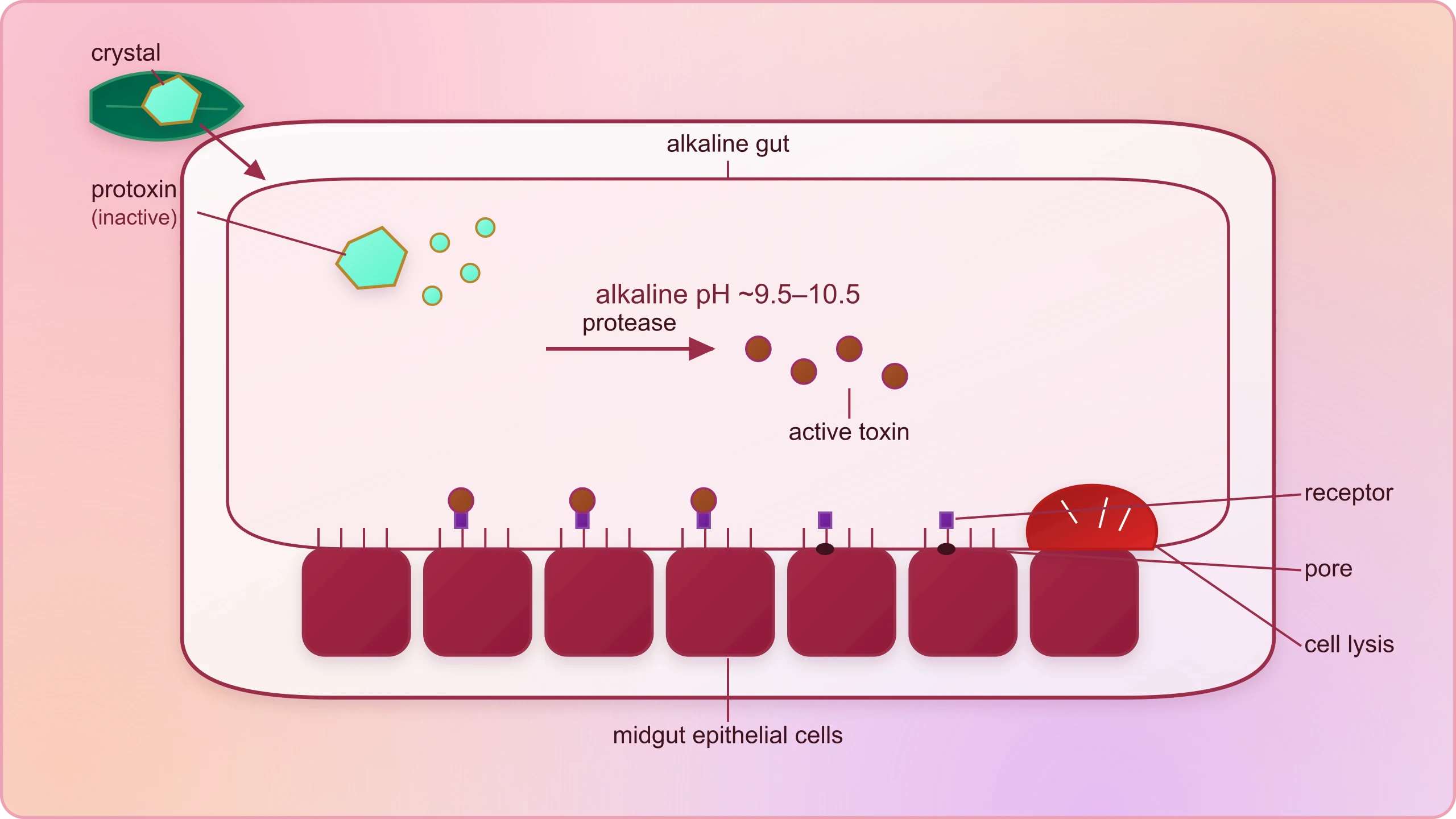
The pH dependence is central. The insect midgut is strongly alkaline, typically around pH 9.5 to 10.5 in lepidopteran larvae, which is precisely the condition required to dissolve the crystal and activate the protoxin. The human stomach, by contrast, is strongly acidic, around pH 1.5 to 3.5, and the toxin is acid-labile: it is degraded rather than activated. Furthermore, the human gut epithelium lacks the specific receptors to which the activated toxin binds. These two facts — acid instability and receptor absence — are the standard biological explanation for why Bt proteins consumed in food do not harm humans. Students should be able to state both, because either alone is an incomplete answer.
Cry Genes and Target Specificity
Specific Bt toxin genes were isolated from Bacillus thuringiensis and incorporated into several crop plants such as cotton. The choice of genes depends upon the crop and the targeted pest, because most Bt toxins are insect-group specific. The toxin is coded by a gene named cry, and there are a number of them. For example, the proteins encoded by the genes cryIAc and cryIIAb control the cotton bollworms, while that of cryIAb controls the corn borer. This nomenclature is not arbitrary: the Roman numeral indicates the primary insect order targeted, the capital letter denotes a subfamily, and the lowercase letter distinguishes individual genes within it.
The specificity is a genuine ecological advantage. Bacillus thuringiensis strains produce proteins that kill certain insects such as lepidopterans (tobacco budworm, armyworm), coleopterans (beetles) and dipterans (flies, mosquitoes), but not others. A Bt cotton plant expressing cryIAc therefore targets the bollworm complex without harming aphids, predators or pollinators that lack the receptor. This narrow spectrum contrasts sharply with broad-spectrum chemical insecticides, which kill beneficial insects alongside pests and can trigger secondary pest outbreaks. The trade-off is that a Bt crop protects against a defined pest spectrum only; a new pest arriving in the field will not be controlled by the same toxin.
We Also Published
Engineering the Construct: Codon Optimisation and Plant Expression
Cloning a bacterial gene into a plant is not a simple cut-and-paste operation. Bacterial genes use a different codon bias from plants, and the native bacterial promoter will not function in plant cells. The cry gene must therefore be codon-optimised — its coding sequence rewritten so that the codons match the abundant tRNAs of the host plant — and placed under a plant-active promoter, typically a constitutive promoter such as CaMV 35S or a tissue-specific promoter that directs expression to the green tissues the larva consumes. Without these modifications, expression levels are too low to be insecticidal, and the crop fails in the field despite carrying the correct gene.
The construct also requires a selectable marker, a terminator and often a transit peptide if the protein must be directed to a particular compartment. Modern constructs increasingly remove the selectable marker after transformation or use marker-free systems, responding to public concern about antibiotic-resistance genes in food crops. The engineering detail matters pedagogically because it explains why GM crop development is expensive and slow: each construct must be tested across multiple insertion events, because the site of integration affects expression stability, and only a handful of events survive the regulatory and agronomic screening that precedes commercial release.
Refuges and Resistance Management
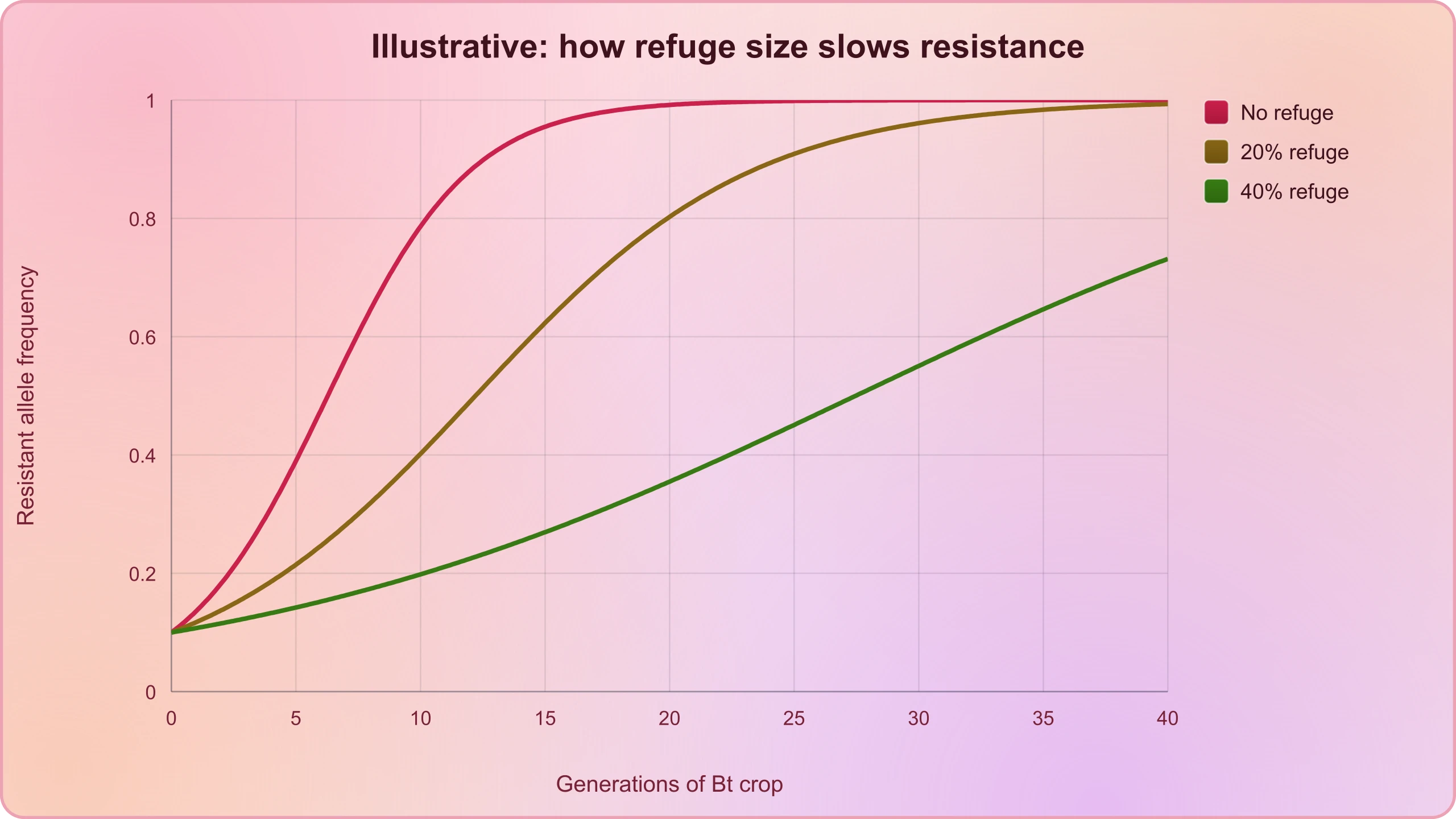
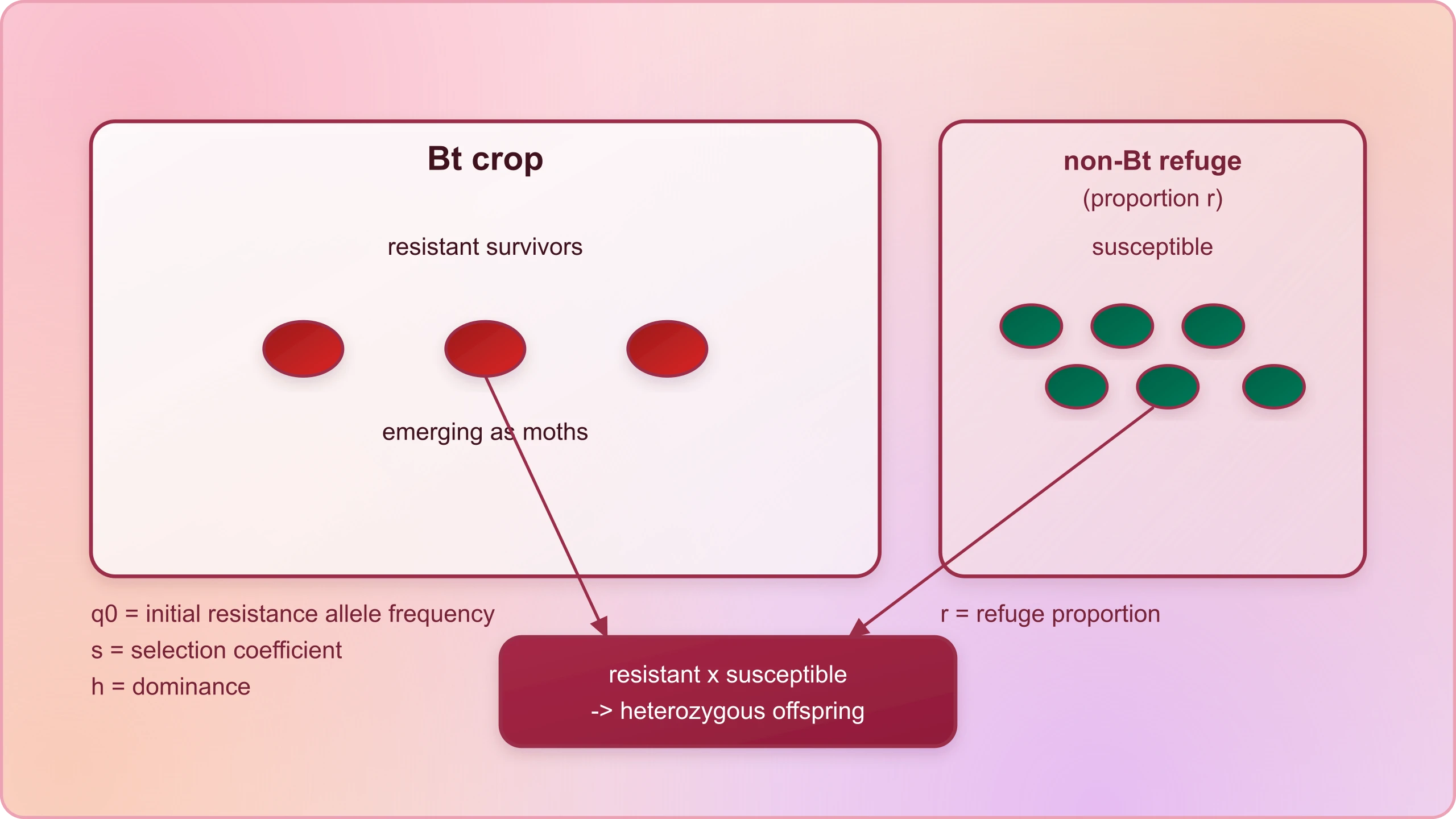
Bt crops are regulated, and resistance management is recommended to slow the evolution of pest resistance. The principal tool is the refuge strategy: farmers plant a proportion of non-Bt crop nearby, providing a reservoir of susceptible insects that mate with any resistant survivors emerging from the Bt area. Because resistance is usually recessive, the heterozygous offspring of a resistant survivor and a susceptible refuge moth are killed by the toxin, diluting the resistance allele in the population. Without refuges, continuous selection pressure on a closed population accelerates the fixation of resistance alleles, and field-evolved resistance has indeed been documented in several pest species.
The refuge concept is a direct application of population genetics, and it can be expressed quantitatively. If the initial resistance allele frequency is ##q_0##, the time to resistance depends on the selection coefficient ##s##, the dominance ##h## and the proportion of refuge ##r##. High-dose/refuge strategy works when the toxin dose is high enough to kill heterozygous resistant individuals, effectively making resistance functionally recessive. Students should appreciate that this is an evolutionary argument, not a chemical one: the toxin does not "wear out", the pest population evolves around it. The same logic underpins the recommendation to rotate crops and stack multiple cry genes with independent modes of action.
Why Bt Proteins Are Not Harmful to Humans
The safety argument rests on two independent pillars. First, the human gut is acidic, and the Bt protoxin is acid-labile: it is digested rather than solubilised into an active pore-forming toxin. Second, even if some activated toxin survived, the human intestinal epithelium lacks the specific receptors to which the toxin binds in insect midgut cells. Without receptor binding, pore formation cannot occur. These facts explain why Bt proteins have a long history of safe use as sprayable biopesticides in organic farming, and why regulatory agencies treat them as low-risk compared with broad-spectrum synthetic insecticides.
It is important to be precise rather than triumphalist. The absence of acute toxicity does not by itself settle every question about long-term exposure, allergenicity or effects on non-target organisms, which is why GM crops undergo compositional analysis, toxicological testing and environmental risk assessment before approval. The scientific consensus, reflected in assessments by bodies such as the WHO and the European Food Safety Authority, is that approved Bt crops are as safe as their conventional counterparts for human consumption. Students should be able to state the mechanism of safety and acknowledge that regulation exists precisely because safety is established by evidence rather than assumed.
Pest Resistance Versus Herbicide Tolerance
Two GM traits dominate global agriculture, and they are routinely confused. Pest resistance, exemplified by Bt crops, involves an insecticidal protein that kills a defined insect spectrum. Herbicide tolerance involves an altered plant enzyme — commonly EPSPS or ALS — that is no longer inhibited by a specific herbicide, allowing the farmer to spray over the crop and kill weeds without damaging it. The two traits have different mechanisms, different ecological consequences and different regulatory profiles. Bt reduces insecticide use; herbicide tolerance changes the herbicide regime, and its principal risk is the evolution of herbicide-resistant weeds rather than resistant insects.
The distinction matters for examination answers and for public argument. A question asking about "GM crops and pesticide use" may be answered with Bt technology, but a question about "GM crops and chemical use" may require acknowledging that herbicide-tolerant crops can increase herbicide application even as they reduce tillage. Conflating the two produces the kind of imprecision that examiners penalise and that public debate suffers from. The cleanest way to remember the difference is by target: Bt acts on the insect's gut, herbicide tolerance acts on the plant's own metabolic pathway.
Regulation, Moratoria and the Bt Brinjal Case
Bt crops are regulated because they are living organisms that can disperse, interbreed and exert selection pressure beyond the farm gate. In India, the Genetic Engineering Appraisal Committee evaluates environmental release proposals, and the Cartagena Protocol on Biosafety governs transboundary movement. Regulation covers molecular characterisation, allergenicity, toxicity, compositional equivalence and environmental risk, and approval is conditional on post-release monitoring. The regulatory burden is heavy, and it is deliberately so: the technology's capacity to spread means that a mistake cannot be recalled once pollen has moved.
The Indian experience with Bt brinjal illustrates the regulatory debate in its sharpest form. Bt brinjal was developed to control the fruit and shoot borer, a pest that causes severe losses and drives heavy insecticide spraying on a vegetable eaten fresh and cooked. In 2010, following public consultation, the then Minister of Environment imposed a moratorium on commercial release, citing concerns about biosafety and the absence of a robust regulatory consensus. The moratorium remains in force, and Bt brinjal has become a case study in how scientific assessment, public trust and political decision-making interact in agricultural biotechnology.
Organic Farming, Bt Sprays and the Meaning of "Bt"
Organic farming also uses Bt sprays as a biological pesticide, so Bt is not synonymous with GM. Formulations of Bacillus thuringiensis subsp. kurstaki have been approved for organic use for decades, and they work by exactly the same mechanism as the transgenic protein: ingestion, solubilisation in the alkaline gut, receptor binding, pore formation. The difference is delivery. A spray deposits toxin on the leaf surface, where it degrades in sunlight and washes off in rain, requiring repeated application and reaching only the insects that consume treated foliage. A Bt crop produces the toxin inside the tissue, continuously and systemically, which is more effective but also exerts stronger and more persistent selection pressure.
This distinction is pedagogically valuable because it separates the molecule from the technology. Objections to GM crops are not objections to the Bt protein as such; organic agriculture embraces the same protein. The debate concerns the genetic intervention, the governance of seed supply, the economics of proprietary varieties and the ecological consequences of large-scale planting. Recognising this allows students to hold a more nuanced position than either blanket endorsement or blanket rejection, and it prepares them for the ethical and legal debates — patents, biopiracy and benefit-sharing — that follow in later lessons.
Worked Examples and Common Mistakes
Applying the mechanism to unfamiliar scenarios is the best test of understanding. Consider a question that asks why a Bt cotton plant is not killed by its own toxin. The answer requires three linked ideas: the protein is expressed as a protoxin that requires alkaline pH and specific proteases for activation; the plant cell interior does not provide those conditions; and the toxin lacks receptors on plant membranes. A student who writes only "the plant is resistant" has not answered the question. The examiner is looking for the protoxin concept and the pH dependence, both of which are explicitly stated in the reference material.
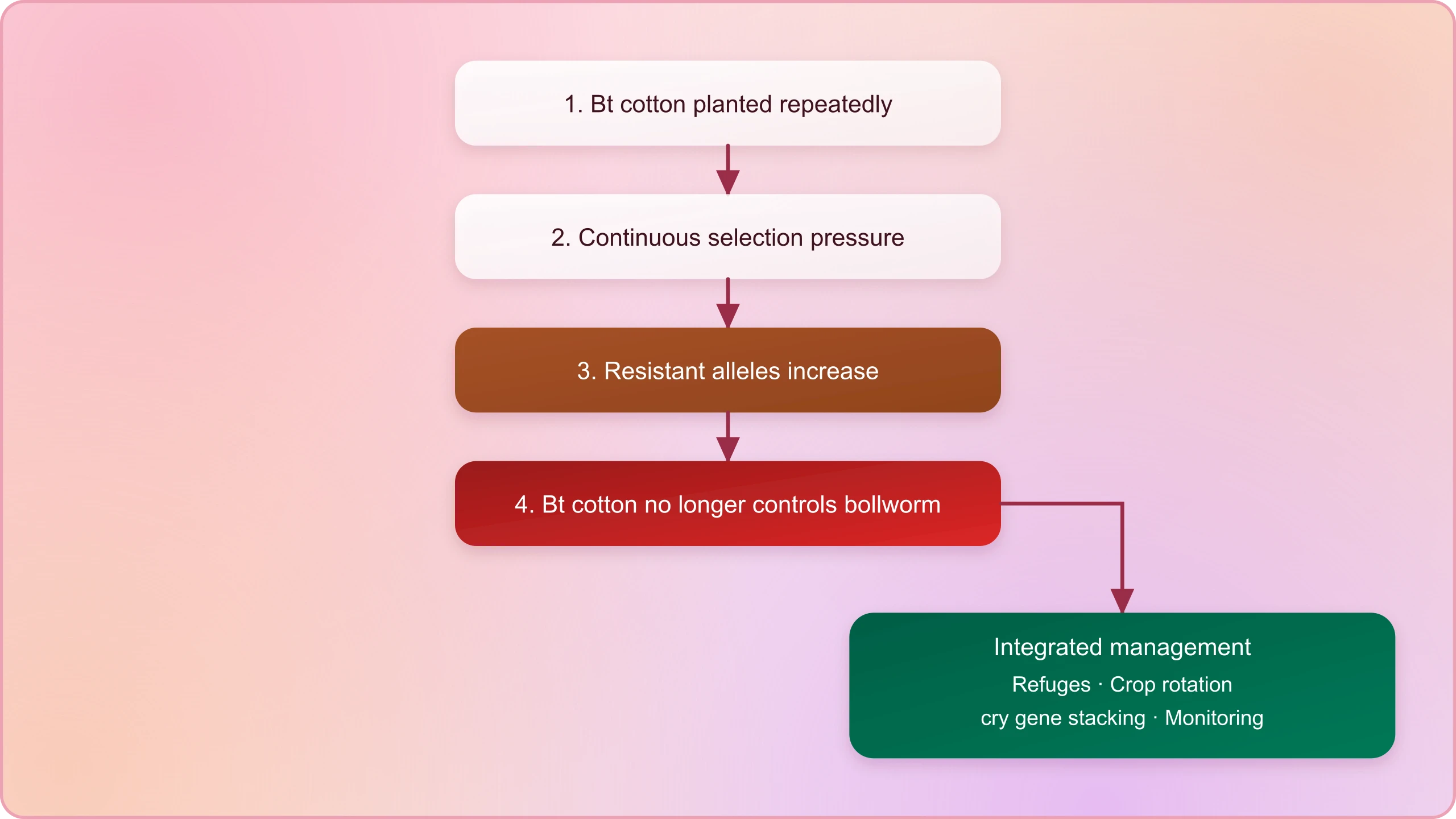
A second common scenario involves a farmer who observes that Bt cotton no longer controls bollworm after several seasons. The correct explanation invokes selection of resistant alleles in the pest population, not failure of the gene or degradation of the protein. The remedy is integrated management: refuges, rotation, stacking of cry genes and monitoring. A third scenario asks why Bt brinjal was not released despite technical success; the answer lies in regulatory and public-trust considerations rather than in any demonstrated failure of the toxin. Distinguishing technical from governance questions is a mark of mature understanding.
Common Mistakes to Avoid
Several errors recur in examinations and in public discussion. Students often claim that Bt toxin kills all insects, when in fact it is insect-group specific and targets lepidopterans, coleopterans and dipterans selectively. Others assert that Bt toxin is harmful to humans because it is a "toxin", ignoring the acid-lability and receptor-absence arguments. A third error is to describe the cry gene as a single gene rather than a family, or to misassign cryIAc to the corn borer instead of the cotton bollworm. A fourth is to treat Bt as synonymous with GM, forgetting that Bt sprays are used in organic farming.
Two further mistakes deserve mention. Some students describe the toxin as entering the insect's haemolymph directly, when the primary lesion is at the midgut epithelium; the insect dies from starvation and septicaemia following gut lysis, not from a systemic neurotoxin. Others confuse the refuge strategy with crop rotation, when the refuge is specifically a non-Bt planting designed to supply susceptible mates. Careful use of terminology — protoxin, activation, receptor, pore, lysis, refuge, resistance allele — will prevent most of these errors and will make answers both accurate and concise.
Looking Ahead: From Bt to RNA Interference
The Bt story establishes the template for the next lesson. A bacterial gene, transferred into a plant, produces a protein that kills a defined pest spectrum through a mechanism that depends on the pest's own physiology. RNA interference follows the same architectural logic — a gene from another organism is introduced into the host plant to disarm a pest — but the weapon is not a protein. Instead, the plant produces a double-stranded RNA that silences a specific nematode mRNA, preventing the parasite from surviving in the transgenic host. The conceptual continuity is deliberate: both technologies convert the plant into a delivery vehicle for a molecule that the pest cannot tolerate.
The contrast is equally instructive. Bt relies on protein-receptor interactions and gut pH; RNAi relies on sequence complementarity and the RNA-induced silencing complex. Bt specificity is determined by receptor binding; RNAi specificity is determined by nucleotide sequence, which in principle allows exquisite targeting of a single species. Bt has been deployed commercially for decades; RNAi-based crops are newer and face their own regulatory questions. Understanding both equips the student to evaluate the next generation of pest-resistant crops and to see biotechnology as a evolving toolkit rather than a fixed set of products.
Frequently Asked Questions
Students preparing for board examinations often arrive with the same handful of questions about Bt technology, and answering them crisply consolidates the lesson. The questions below address the mechanism, the safety argument, the gene nomenclature and the regulatory context. Each answer should be read alongside the relevant section above, because the examination expects precise terminology rather than paraphrase. Where a question invites a comparison, the answer should name both sides explicitly and state the criterion of comparison, whether that is mechanism, target or ecological consequence.
Why does Bt toxin not kill the bacterium that produces it?
The toxin exists inside Bacillus thuringiensis as an inactive protoxin packaged in a crystalline inclusion. The bacterium does not possess the alkaline gut environment or the specific proteases that convert the protoxin into its active pore-forming form, and it lacks the midgut receptors to which the activated toxin binds. The crystal is therefore a stable storage form, not a self-destructive weapon. Activation requires the specific chemical conditions of an insect gut, which is why the bacterium can manufacture the toxin safely and why the protein remains inert until ingested by a susceptible larva.
Is Bt cotton safe for human consumption?
Approved Bt cotton is not a food crop in the direct sense, but the same safety logic applies to Bt food crops such as Bt corn and Bt brinjal. The Bt protein is acid-labile and is digested in the acidic human stomach, and the human intestinal epithelium lacks the receptors required for pore formation. Regulatory agencies evaluate compositional equivalence, allergenicity and toxicity before approval. The scientific consensus is that approved Bt crops are as safe as conventional counterparts, though regulation and post-market monitoring remain essential because safety is established by evidence rather than assumed from the mechanism alone.
What is the difference between cryIAc and cryIAb?
Both are cry genes encoding insecticidal crystal proteins, but they target different pests. The protein encoded by cryIAc controls the cotton bollworm, while cryIAb controls the corn borer. The Roman numeral indicates the insect order primarily targeted, the capital letter denotes the subfamily and the lowercase letter distinguishes individual genes. Because most Bt toxins are insect-group specific, the choice of gene depends on the crop and the pest complex. Stacking cryIAc with cryIIAb, for example, broadens protection against the bollworm complex and reduces the probability of resistance evolution.
Why was Bt brinjal placed under moratorium in India?
Bt brinjal was developed to control the fruit and shoot borer, a serious pest of brinjal that drives heavy insecticide use. In 2010, following public consultation, the Ministry of Environment imposed a moratorium on commercial release, citing biosafety concerns and the absence of a robust regulatory consensus. The decision reflected the interaction of scientific assessment, public trust and political judgement rather than any demonstrated failure of the toxin. The moratorium remains a landmark case in the governance of agricultural biotechnology in India and is frequently cited in discussions of the precautionary principle.
Does organic farming use Bt toxin?
Yes. Formulations of Bacillus thuringiensis have been approved for organic agriculture for decades and are sprayed onto foliage as a biological pesticide. The mechanism is identical to that of the transgenic protein: ingestion, solubilisation in the alkaline gut, receptor binding and pore formation. The difference lies in delivery and persistence. A spray degrades in sunlight and washes off, requiring repeated application, whereas a Bt crop expresses the toxin continuously in its tissues. This is why Bt is not synonymous with GM, and why objections to GM crops are not objections to the Bt protein as such.
From our network :
- Trump Political Strategy How Geopolitical Stunts Serve As Media Diversions
- 10 Physics Numerical Problems with Solutions for IIT JEEPrepare for IIT JEE with 10 physics numerical problems, complete with detailed solutions and conceptual explanations. Ideal for mastering kinematics, thermodynamics, electromagnetism, and optics.
- Analyzing Trump Deportation Numbers Insights Into The 2026 Immigration Crackdown
- Do You Need a New Router or Is Your Internet Plan the Problem?A practical comparison of the signs that point to router limits versus signs your broadband speed or provider is the bottleneck, so you can decide what to replace before spending money.
- EV 2.0: The Solid-State Battery Breakthrough and Global Factory ExpansionDiscover the impact of the Solid-State Battery Breakthrough on the EV market. Learn about CATL and BYD stock growth, global factory expansion in Europe, and the future of EV 2.0 technology.
- AI-Powered 'Precision Diagnostic' Replaces Standard GRE Score ReportsDiscover the new GRE Precision Diagnostic. Learn how AI-powered behavioral analytics and time-to-solve tracking are replacing standard GRE score reports to empower students.
- How to Print Cheaply: Cutting the Cost per PageA practical, measured guide to lowering what each printed page costs — duplex and draft modes, third-party ink, yield mathematics, and knowing when a new printer beats refills.
- Where to Put Your Wireless Router for Better CoverageA practical, physics-grounded guide to router placement: why the centre of the home beats the corner, how walls and metal sap signal, and how to run a simple survey that proves the improvement.
- 98% of Global MBA Programs Now Prefer GRE Over GMAT Focus EditionExplore why 98% of global MBA programs now prefer the GRE over GMAT Focus. Learn about the shorter GRE format, verbal logic importance, and strategic versatility for students.