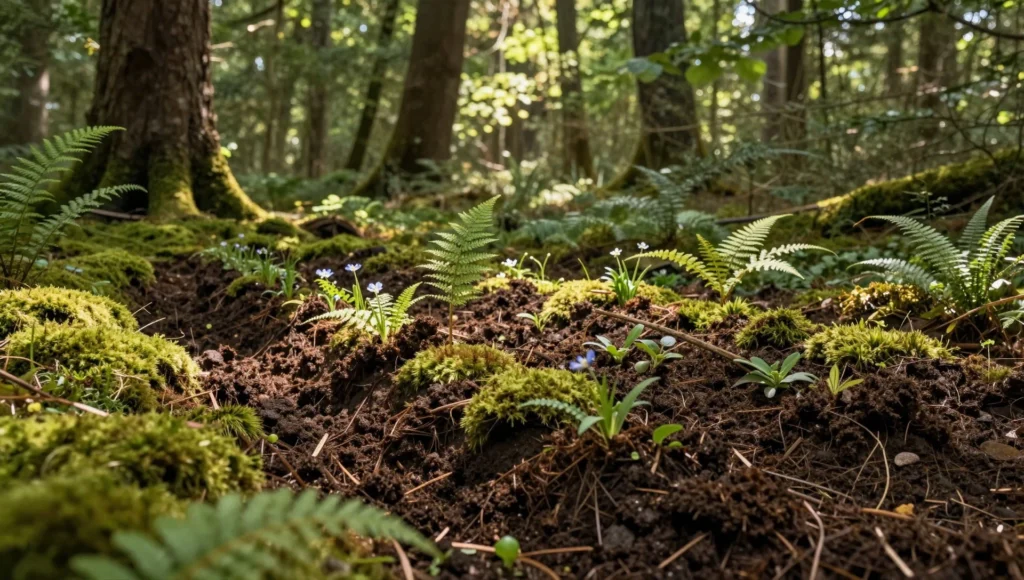
Human composting, formally known as natural organic reduction, has moved from speculative design fiction into the realm of regulated scientific inquiry. In France, researchers have begun testing whether a human body can be transformed into fertile soil through controlled microbial decomposition, a process that supporters frame as a return to the earth rather than a departure from it. The work, reported by France 24's Down to Earth programme, sits at the intersection of environmental science, public health regulation, and shifting cultural attitudes toward mortality. It asks a question that industrialised societies have largely avoided: whether the final act of a life can be made materially lighter on the planet.
The environmental arithmetic behind the inquiry is difficult to ignore. Cremation relies on fossil fuels to sustain combustion at temperatures exceeding 800 degrees Celsius, and a single cremation can consume the energy equivalent of a substantial car journey while releasing mercury from dental amalgam and carbon dioxide into the atmosphere. Conventional burial, meanwhile, locks away land in perpetuity, introduces embalming fluids and non-biodegradable caskets into soil, and concentrates maintenance demands on cemeteries that must be watered, mown, and managed indefinitely. Natural organic reduction proposes a third path: a vessel-based process in which the body, combined with wood chips, straw, and alfalfa, is aerated and monitored until only a nutrient-rich soil remains.
What makes the French tests notable is not the novelty of the concept but the geographic and institutional context. Human composting was legalised in Washington State in 2019 and has since expanded to several American states, where licensed facilities now operate under defined protocols. France, by contrast, maintains a legal framework in which the deceased hold a protected status, and the notion of transforming a body into soil raises questions that are as much juridical and ethical as they are technical. The reported tests did not disclose methodology, duration, or the regulatory conditions that would govern wider use, and no results have been announced. The significance lies in the fact that a European scientific establishment is now examining the proposition seriously.
On This Page
The Scientific Foundations of Natural Organic Reduction
Natural organic reduction is best understood as an engineered acceleration of the same biological processes that govern forest floors. When a body is placed in a closed vessel with a carefully calibrated mixture of carbon-rich and nitrogen-rich materials, thermophilic bacteria and fungi drive the temperature upward, often beyond 55 degrees Celsius, which is sufficient to neutralise most pathogens. The vessel is periodically rotated or aerated to maintain oxygen levels, and over a period of roughly four to eight weeks the organic material is broken down into a stable, humus-like substance. The resulting soil is then cured for several additional weeks before being returned to families or used in conservation land.
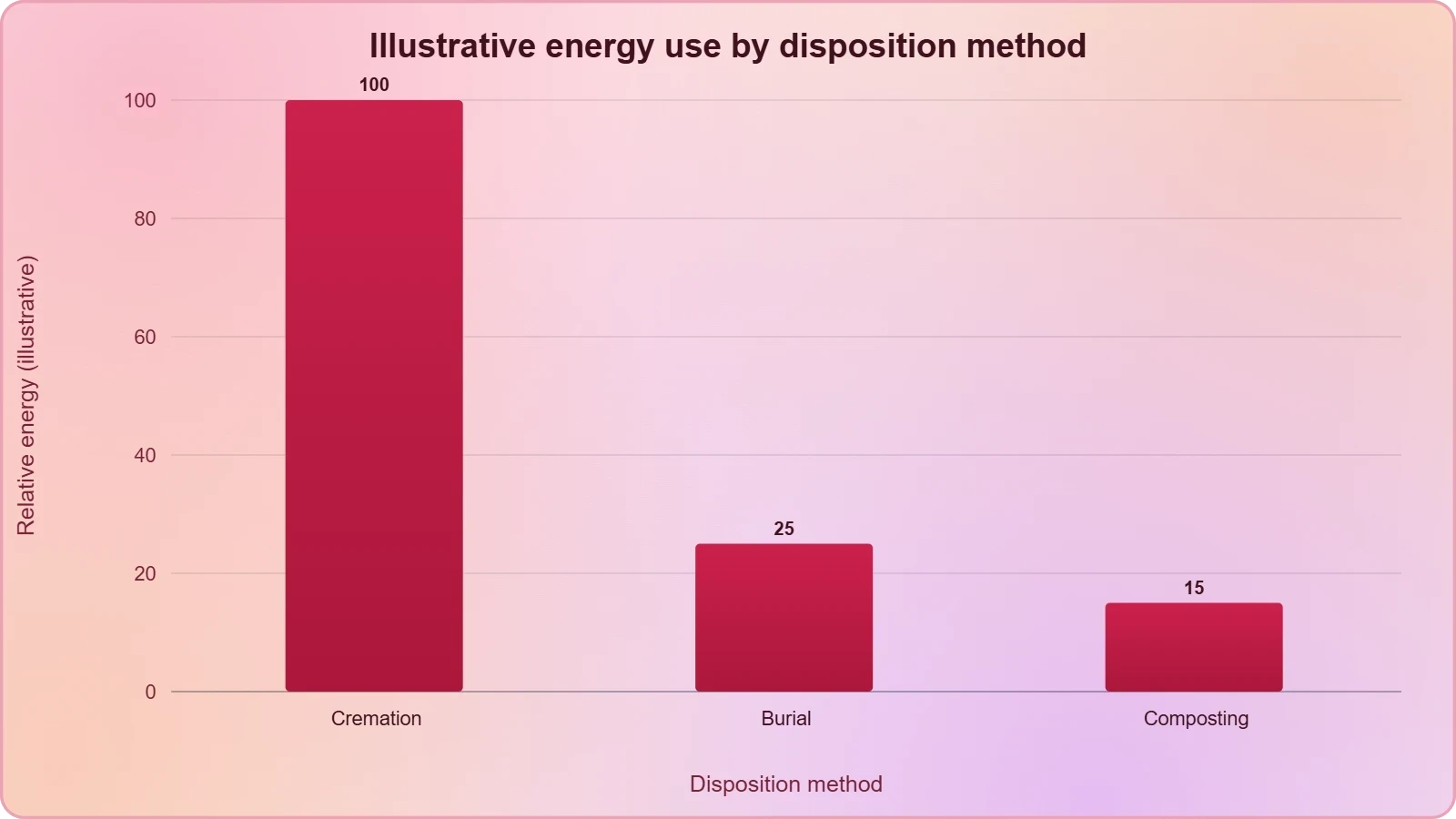
The process is governed by the same thermodynamic and microbiological principles that underpin industrial composting, though the regulatory scrutiny is far more intense because the input material is human. Researchers must demonstrate that pathogen reduction is verifiable, that heavy metals and pharmaceutical residues are managed, and that the end product meets safety thresholds before it can be released. The French tests, whatever their undisclosed design, will necessarily engage with these questions. The scientific appeal is that the method converts a waste-management problem into a soil-generation process, closing a nutrient loop that cremation and burial both leave open.
Thermal Dynamics and Pathogen Inactivation
The core safety argument for natural organic reduction rests on sustained thermal exposure. Composting systems are designed to hold material within the thermophilic range long enough to achieve logarithmic reduction of indicator organisms. The relationship between temperature and microbial inactivation is typically modelled with first-order kinetics, where the surviving population declines exponentially with time at a given temperature. Regulatory frameworks in jurisdictions that permit the practice require documentation that every portion of the vessel has exceeded the threshold temperature for a defined duration, which is why aeration and mixing schedules are central to facility design rather than incidental operational details.
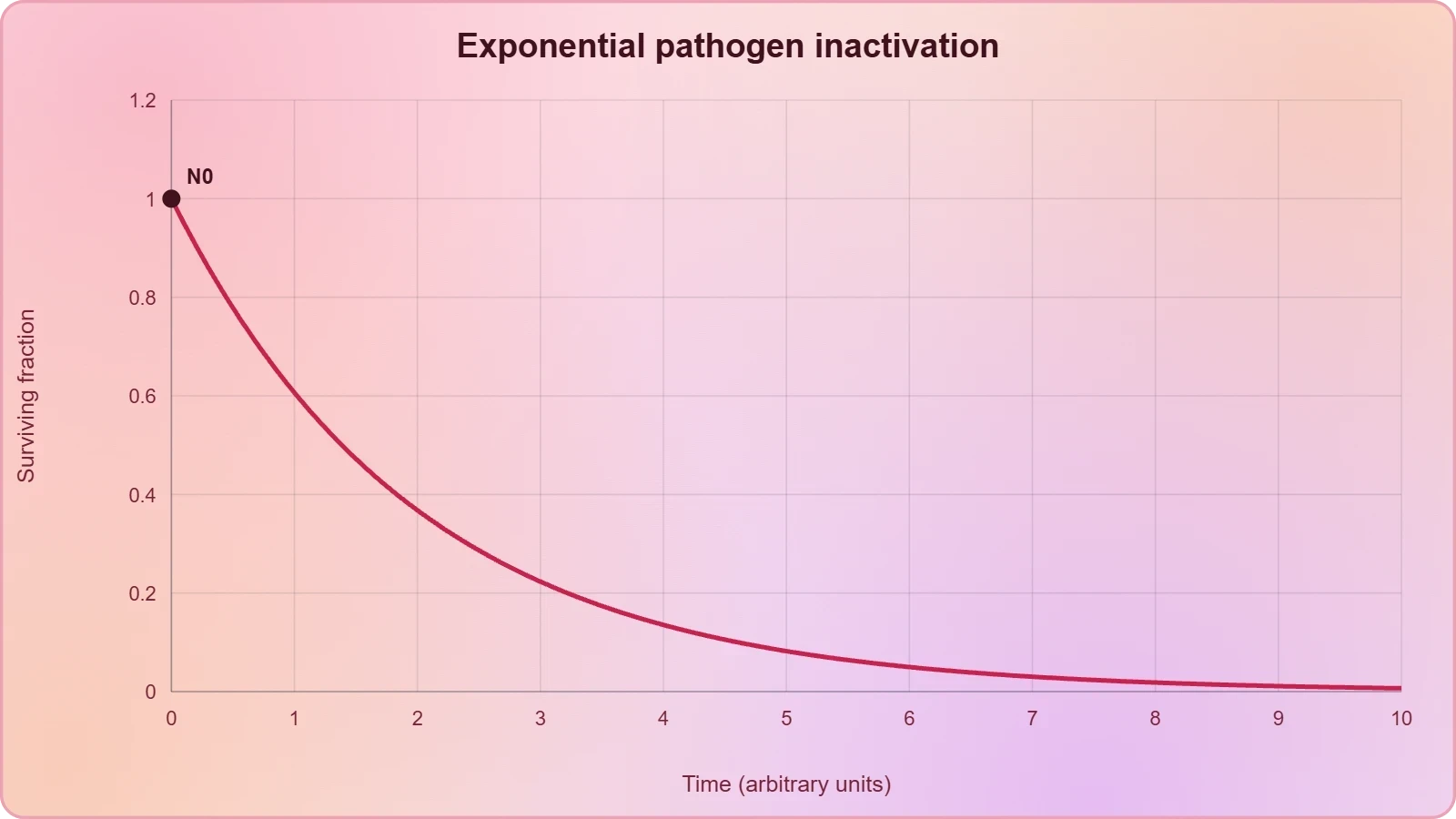
In this expression, ##[N(t)]## represents the surviving microbial population at time ##[t]##, ##[N_0]## the initial population, and ##[k]## the inactivation rate constant, which itself follows an Arrhenius relationship in which ##[E_a]## is the activation energy, ##[R]## the universal gas constant, and ##[T]## the absolute temperature. The practical implication is that modest increases in vessel temperature produce disproportionately faster pathogen reduction, which is why thermophilic operation is pursued deliberately rather than tolerated. A facility that maintains ##[T]## near 328 kelvin rather than 318 kelvin can achieve the same log reduction in a substantially shorter window, improving throughput and reducing energy expenditure per body processed.
Mass Balance and Carbon Accounting
Beyond microbiology, the environmental case depends on a defensible mass and energy balance. A human body is roughly 60 to 70 percent water, with the remainder composed largely of carbon, oxygen, nitrogen, and mineral matter. In natural organic reduction, the added carbonaceous bulking agent supplies the energy substrate that drives microbial metabolism, and much of the carbon is released as carbon dioxide while nitrogen is retained in the final soil. Comparing this pathway with cremation requires accounting for the fossil energy consumed in combustion and the embodied emissions of the furnace infrastructure, against the fuel and transport demands of composting vessels and the land application of the resulting product.
For cremation, the energy required to raise and vaporise body mass can be approximated by the sensible and latent heat terms above, where ##[m]## is mass, ##[c]## the specific heat capacity, ##[\Delta T]## the temperature rise, and ##[L_v]## the latent heat of vaporisation of water. A body of 70 kilograms containing roughly 45 kilograms of water requires on the order of ##[1.2 \times 10^8]## joules simply to drive off moisture before combustion of the organic fraction can proceed, which explains why crematoria are energy-intensive installations. Natural organic reduction avoids this latent heat penalty entirely, since water is retained and managed biologically rather than boiled away, giving it a structural efficiency advantage that no amount of furnace optimisation can close.
Regulatory Landscapes Across Jurisdictions
The legal treatment of human remains varies enormously, and that variation shapes what is technically possible. In the United States, several states have amended their funeral statutes to recognise natural organic reduction as a lawful disposition method, with licensing regimes that specify vessel design, operator training, and record-keeping. In much of Europe, by contrast, the deceased are subject to a regime rooted in dignity and public health that presumes either burial or cremation, and any new method must be accommodated within frameworks that were not drafted with soil transformation in mind. France's tests therefore carry weight beyond their borders, because a favourable scientific finding could inform legislative debate across the continent.
Legal Status and Public Health Oversight
Public health oversight is the pivot on which adoption turns. Regulators must be satisfied that a facility can demonstrate consistent pathogen destruction, that workers are protected from biohazard exposure, and that the end product is not inadvertently entering the food chain. In jurisdictions where the practice is permitted, the resulting soil is typically restricted from commercial agriculture and directed toward conservation projects, memorial gardens, or family use. These restrictions reflect a precautionary posture rather than evidence of harm, but they illustrate how deeply the governance of human remains is entangled with cultural assumptions about purity, dignity, and the boundary between person and material.
Cultural Reception and Ethical Debate
Cultural reception is equally consequential. Surveys conducted in countries where the method has been legalised suggest that younger and environmentally engaged populations express openness, while older cohorts and religious authorities often voice reservations rooted in the sanctity of the body. The ethical debate is not easily resolved by data, because it concerns what a society believes a body is and what obligations persist after death. Proponents argue that returning a body to the soil is a dignified continuation of biological cycles; critics contend that transformation into a consumable substance risks instrumentalising the deceased. Both positions deserve serious engagement rather than dismissal.
Environmental Accounting and the Climate Case
The climate case for natural organic reduction is strongest when examined across the full life cycle rather than at the point of disposition. Cremation's emissions are concentrated and easily measured, which makes them visible; burial's impacts are diffuse and long-lived, which makes them easy to overlook. Composting sits between these poles, consuming energy for aeration and monitoring but avoiding combustion entirely and producing a soil product with genuine agronomic value. A rigorous comparison must therefore include the avoided emissions from fertiliser substitution, the sequestration potential of the resulting organic matter, and the infrastructure footprint of the facility itself.
Energy, Water, and Land Footprints
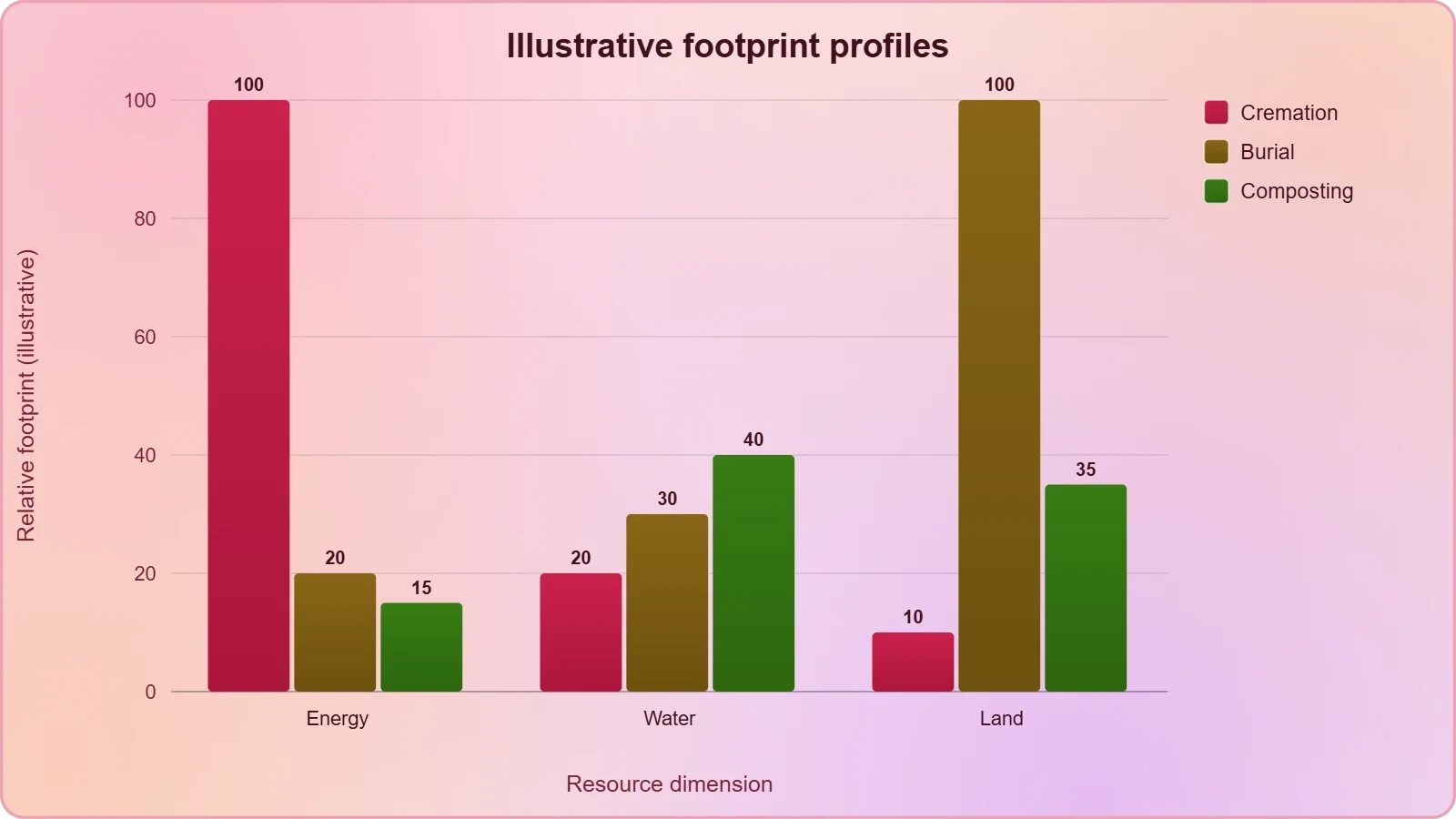
Water consumption is a frequently overlooked dimension. Cremation is water-light but energy-heavy; burial is energy-light but land-heavy; composting requires modest water inputs to maintain microbial activity and modest energy inputs for aeration. The land footprint of a composting facility is compact relative to a cemetery, because vessels can be stacked and cycled continuously rather than occupying permanent plots. For dense urban regions where cemetery space is scarce and expensive, this compactness may prove as decisive as any emissions calculation, since the practical constraint on burial in many cities is not sentiment but available ground.
Comparing Cremation, Burial, and Composting
Any honest comparison must acknowledge uncertainty. Life-cycle assessments of funeral practices are few, often rely on proxy data from adjacent industries, and are sensitive to assumptions about transport distances and grid mix. What can be said with confidence is that cremation's dependence on fossil fuel is structural rather than incidental, and that burial's land commitment is effectively permanent. Composting offers a pathway that is neither, at the cost of new infrastructure and regulatory overhead. The French tests will not settle this comparison, but they may supply the empirical grounding that has so far been missing from European debate.
We Also Published
Engineering the Vessel and the Process
The engineering challenge of natural organic reduction is deceptively substantial. A vessel must contain biological activity, manage leachate, permit controlled aeration, and allow periodic mixing without exposing operators to biohazards. Temperature must be monitored continuously and logged for regulatory verification. The material mix must be adjusted to maintain an appropriate carbon-to-nitrogen ratio, typically in the range of 25 to 30 to one, because an imbalance slows decomposition or produces odour. These are familiar constraints from municipal composting, but the stakes are higher when the input is a human body and the output is intended for memorial use.
Vessel Design and Aeration Control
Aeration is the central control variable. Anaerobic conditions produce methane and hydrogen sulphide, both undesirable, while excessive airflow cools the pile and suppresses thermophilic activity. Operators therefore modulate airflow in response to temperature and oxygen readings, a control problem that lends itself to simple feedback algorithms. The following illustrative routine captures the logic of a temperature-triggered aeration cycle, in which the controller activates airflow when the vessel cools below the thermophilic threshold and pauses when the target band is reached.
def aeration_cycle(temp_c, target_min=55.0, target_max=65.0, max_on=180):
    """Return aeration duration in seconds for a thermophilic vessel."""
    if temp_c < target_min:
        deficit = target_min - temp_c
        duration = min(max_on, int(deficit * 30))
        return duration
    if temp_c > target_max:
        return 0
    return 30

readings = [48.2, 52.7, 57.1, 61.4, 66.0, 63.2]
for t in readings:
    print(t, aeration_cycle(t))
The routine is deliberately simple, but it illustrates the operational discipline the process demands. In practice, controllers log every cycle, because regulators will want evidence that the vessel sustained thermophilic conditions across the entire mass rather than merely at the sensor location. This is why mixing schedules matter: a vessel that heats uniformly at its core but remains cool at its periphery has not achieved the pathogen reduction it claims. The French tests, whatever their design, will have to confront this spatial heterogeneity problem, which is the same one that has occupied composting engineers for decades.
End-Product Testing and Assurance
The final soil must be tested before release, typically for pathogen indicators, heavy metals, and residual pharmaceutical compounds. Testing regimes vary, but the principle is consistent: the product must be demonstrably safe for its intended use. This is where the regulatory burden concentrates, because testing is costly and the analytical methods for trace pharmaceuticals in soil are not standardised across jurisdictions. A credible French programme would need to establish baseline methods, and the absence of published detail about the tests means that observers cannot yet assess whether the work addresses these questions or focuses narrowly on decomposition kinetics.
What the French Tests Signal for Europe
The French initiative matters less for what it has produced than for what it represents. A national scientific establishment is examining a disposition method that sits outside the continent's legal and cultural consensus, and it is doing so under public scrutiny. That alone shifts the terms of debate, because it moves natural organic reduction from the category of foreign curiosity to the category of domestic research question. If the tests yield credible evidence on pathogen reduction and process control, they will provide legislators with something they currently lack: a domestic evidentiary base rather than reliance on American operational experience.
Research Gaps and Unanswered Questions
The reported absence of methodological detail is itself significant. Observers do not know the scale of the trials, the number of participants, the duration, or the regulatory authorisation under which the work proceeds. These gaps are not unusual in early-stage research, but they limit what can be inferred. A rigorous programme would need to address decomposition kinetics across varied body compositions, the fate of dental amalgam and medical implants, the behaviour of pharmaceutical residues, and the social acceptability of the resulting product. Until such data are published, the French work remains a signal of intent rather than a body of evidence.
Pathways to Public Adoption
Adoption, if it comes, will likely follow a familiar sequence: scientific validation, legislative amendment, facility licensing, and gradual public familiarity. Each stage carries friction. Legislators must reconcile the method with existing dignity protections; regulators must build inspection capacity; operators must train staff and secure sites. Public familiarity may prove the slowest variable, because funeral choices are deeply personal and often made under grief. The experience in jurisdictions that have legalised the practice suggests that uptake grows steadily rather than dramatically, driven by a committed minority and by the gradual normalisation that follows visible, well-run facilities.
Conclusion: A Quiet Reckoning with Final Disposition
Human composting is not a technological novelty so much as a provocation. It asks industrialised societies to reconsider a practice they have treated as settled, and it does so with an argument grounded in resource accounting rather than sentiment. The French tests, however preliminary, place that argument within a European scientific and legal context where it has not previously been examined. Whether or not the method is eventually offered to the public in France, the inquiry itself has value: it forces a clearer articulation of what cremation and burial actually cost, and it invites a more honest conversation about what the living owe the dead and the planet they share.
From our network :
- Trump Political Strategy How Geopolitical Stunts Serve As Media Diversions
- 98% of Global MBA Programs Now Prefer GRE Over GMAT Focus EditionExplore why 98% of global MBA programs now prefer the GRE over GMAT Focus. Learn about the shorter GRE format, verbal logic importance, and strategic versatility for students.
- EV 2.0: The Solid-State Battery Breakthrough and Global Factory ExpansionDiscover the impact of the Solid-State Battery Breakthrough on the EV market. Learn about CATL and BYD stock growth, global factory expansion in Europe, and the future of EV 2.0 technology.
- Vite 6/7 'Cold Start' Regression in Massive Module GraphsIn-depth analysis of Vite 6/7 cold start regressions in massive module graphs. Learn about barrel file issues, pre-bundling optimizations, and how to improve Vite dev server performance.
- 10 Physics Numerical Problems with Solutions for IIT JEEPrepare for IIT JEE with 10 physics numerical problems, complete with detailed solutions and conceptual explanations. Ideal for mastering kinematics, thermodynamics, electromagnetism, and optics.
- AI-Powered 'Precision Diagnostic' Replaces Standard GRE Score ReportsDiscover the new GRE Precision Diagnostic. Learn how AI-powered behavioral analytics and time-to-solve tracking are replacing standard GRE score reports to empower students.
- Mastering DB2 LUW v12 Tables: A Comprehensive Technical GuideComprehensive guide on DB2 LUW v12 tables. Explore CREATE TABLE syntax, BLU Acceleration, range partitioning, data types, and security features for IBM DB2 LUW v12.
- Mastering DB2 12.1 Instance Design: A Technical Deep Dive into Modern Database ArchitectureComprehensive guide to DB2 12.1 Instance Design. Explore architectural components, HADR setup, buffer pool tuning, and security policies for IBM DB2 12.1. Includes 10 functional SQL and Shell samples.
- Analyzing Trump Deportation Numbers Insights Into The 2026 Immigration Crackdown
RESOURCES
- Our Model - Recompose | Human Compostingrecompose.lifeCan I visit Recompose? · Environmental Impact · Why is human composting more eco-friendly than burial or cremation? · How does human composting reduce…
- The ultimate green burial? Human composting lets you ... - NPRnpr.orgMar 22, 2024 ... ... environmentally friendly alternatives to conventional burial and cremation. Human composting is the latest option. But not everywhere, or ...
- Human Composting: How it Works and Where It's Legal - WebMDwebmd.com... composting to provide an environmentally friendly alternative to traditional options like burials and cremation. It's a growing part of the green burial ...
- Human Composting: Everything You Need to Know - Earth Funeralearthfuneral.comSep 1, 2026 ... It also produces no net CO2, making it an eco-friendly alternative to burial and cremation. Human composting is also known…
- Green Burial Options | San Diego Memorial Societysdmsonline.comAug 29, 2025 ... In California, two meaningful alternatives are gaining momentum: water cremation (also known as alkaline hydrolysis) and human composting (also ...
- Human Composting vs. Cremation: An Eco-Friendly Comparisonearthfuneral.comBoth cremation and human composting are more affordable alternatives to traditional burial and result in remains that can be scattered or kept for different ...
- Human composting available in Howard County - Facebookfacebook.comMay 21, 2026 ... This process is presented as an eco-friendly alternative to traditional burial and cremation, with the resulting soil being returned to…
- Return Home: Green Funeral Home | Human Compostingreturnhome.comReturn Home is a green funeral home specializing in human composting. We gently transform human remains into rich, fertile soil. Learn more.
- Human Composting Guide 2026: Process, Cost & Providersus-funerals.comMar 13, 2026 ... Alongside that shift, a growing number of families are looking for greener alternatives to both flame cremation and conventional burial:…
- In death planning, greener options are becoming more popular in ...cascadiadaily.comMar 12, 2026 ... At Wildflower, that includes terramation (human composting), aquamation (a water-based alternative to cremation) and green burial (interment in ...
- Body composting, recently approved by Colorado lawmakers, is a ...coloradosun.comSep 18, 2021 ... ... green” alternative to burial and cremation. On Sept. 7, Colorado became the second state after Washington to allow human…
- Human Composting: A New Take on the 'Green' Funeral - AARPaarp.orgDec 6, 2024 ... Here's what to know about this end-of-life substitute for traditional burials and cremation. Learn about the process. At Earth Funeral ...
- Natural Organic Reduction: Human Composting Burial Optionsinterraburial.comWhen discussing death care, one might think of traditional methods like burial and cremation. However, another eco-friendly alternative is making headway, ...
- Is California ready for 'human composting'? - Los Angeles Timeslatimes.comJun 30, 2022 ... Human composting — or natural organic reduction — is an eco-friendly alternative burial option to the traditional casket burial or…
- Meet the new, environmentally friendly alternative to burial or ...vitalsigns.edf.orgMeet the new, environmentally friendly alternative to burial or cremation: human composting. Published: November 8, 2022 Last Updated: January 3, 2023.