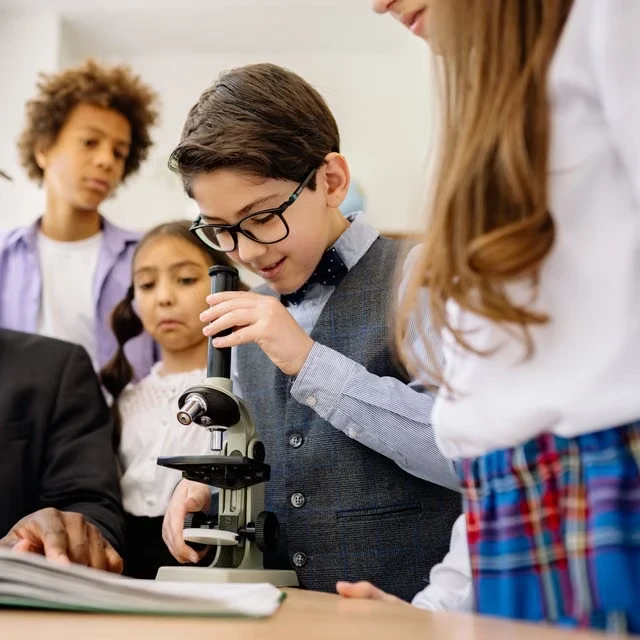
Rigorous academic inquiry and the celebration of youth ingenuity serve as the foundational pillars for cultivating the next generation of scientific pioneers. The recent announcement by the esteemed Society for Science regarding the finalists for the prestigious 2026 Thermo Fisher Scientific Junior Innovators Challenge highlights an unprecedented level of analytical prowess and inventive capacity among middle-school researchers worldwide. This globally recognized competition serves as the pinnacle of achievement for young minds, bridging the gap between theoretical experimentation and practical engineering solutions across diverse multidisciplinary domains.
Understanding the rigorous selection criteria utilized by the judging panels requires an examination of complex analytical frameworks and empirical evaluation metrics. Promising scholars submit comprehensive research portfolios that undergo rigorous peer-review-style evaluation, testing their hypotheses against stringent statistical models and empirical validation standards. The ensuing analysis delves deep into the structural methodologies, mathematical derivations, and technological paradigms that define the groundbreaking projects presented by this year's exceptional cohort of international finalists.
On This Page
Methodological Frameworks of Youth Innovation
The structural integrity of any scientific investigation relies heavily upon reproducible empirical methodologies and precise data collection protocols. Young researchers entering the innovation challenge employ sophisticated experimental designs to isolate variables and test complex hypotheses. Through systematic observation and rigorous control of confounding factors, these finalists establish robust foundations for their technological and biological breakthroughs.
Experimental Design and Variable Control
Precision in experimental design dictates the ultimate validity of empirical findings generated by student researchers. Controlling extraneous variables ensures that observed outcomes stem directly from the manipulated independent variables. ##[x]## represents the independent parameter, while ##[y]## denotes the dependent response measured across trials. Researchers utilize randomized block designs to minimize experimental bias and enhance measurement accuracy. Statistical significance is subsequently verified using rigorous hypothesis testing methodologies and variance analysis.
Mathematical modeling of experimental data allows researchers to extrapolate trends beyond immediate laboratory observations. The general polynomial relationship governing these interactions can be expressed as follows:
Evaluating this polynomial requires precise computation of coefficients ##[a_i]## through least-squares regression analysis. Students apply matrix algebra to solve systems of linear equations derived from calibration curves. This ensures high fidelity between theoretical models and empirical measurements obtained during trials.
Error propagation analysis is another critical component mastered by these junior innovators during their investigations. Systematic and random uncertainties are quantified to establish confidence intervals for all calculated physical quantities. The propagation formula for a multivariable function ##[f(u, v)]## is given by:
Mastery of this mathematical principle empowers students to critically assess the reliability of their analytical instruments. They demonstrate exceptional aptitude in distinguishing between precision and accuracy within laboratory settings. Such analytical rigor elevates their projects far beyond standard classroom demonstrations into genuine scientific contributions.
Computational simulations frequently complement physical experimentation in modern scientific problem-solving endeavors. Students harness algorithmic programming to simulate complex physical phenomena under extreme operational constraints. Python scripts are commonly deployed to automate data acquisition and process large numerical datasets efficiently:
import numpy as np

def calculate_uncertainty(partial_u, sigma_u, partial_v, sigma_v):
    variance = (partial_u ** 2) * (sigma_u ** 2) + (partial_v ** 2) * (sigma_v ** 2)
    return np.sqrt(variance)

sigma_total = calculate_uncertainty(1.5, 0.05, 2.0, 0.1)
print(f"Propagated Uncertainty: {sigma_total:.4f}")
This seamless integration of computational logic and physical experimentation highlights the advanced skill set possessed by contemporary science finalists. By bridging theoretical programming with tangible laboratory results, they unlock unprecedented avenues for scientific exploration.
Statistical Validation and Data Analysis
Validating experimental outcomes necessitates the application of advanced statistical inference and probability distributions. Finalists routinely utilize Student's t-tests to evaluate whether observed differences between control and experimental groups are statistically significant. The test statistic ##[t]## is computed using the sample mean difference and pooled standard deviation:
Interpreting the calculated ##[t]## value against critical distribution tables enables researchers to accept or reject their null hypotheses with defined confidence levels. This quantitative rigor safeguards against false-positive conclusions in complex biological and physical assays.
Regression analysis further refines the predictive capabilities of junior innovator models by establishing correlation coefficients. Pearson's correlation coefficient ##[r]## quantifies the strength and direction of linear associations between paired datasets:
Values of ##[r]## approaching positive or negative one indicate robust linear relationships, validating the underlying mechanistic hypotheses. Students leverage these statistical tools to present data visualizations that clearly communicate complex empirical findings.
Analysis of variance (ANOVA) is frequently employed when studies involve multiple treatment groups simultaneously. The total sum of squares is partitioned into between-group and within-group components to determine variance ratios. The F-statistic formula highlights this partitioning process clearly:
Through these sophisticated computational workflows, finalists ensure their empirical claims withstand the strictest academic scrutiny. Such meticulous attention to statistical detail distinguishes elite researchers from amateur experimenters.
Technological Breakthroughs in Engineering
Engineering innovations presented by the challenge finalists often incorporate advanced hardware systems and automated feedback loops. These projects address pressing real-world challenges through intelligent design and resource optimization. Students demonstrate remarkable proficiency in translating theoretical engineering principles into functional, scalable prototypes.
Control Systems and Feedback Loops
Implementing stable mechanical and electrical systems requires deep comprehension of proportional-integral-derivative (PID) control algorithms. The control output ##[u(t)]## regulates system actuation based on error magnitude, accumulation, and rate of change:
Tuning gains ##[K_p]##, ##[K_i]##, and ##[K_d]## ensures rapid response times without inducing catastrophic system oscillation. Innovators apply these control loops in autonomous robotics and environmental monitoring apparatuses.
Energy efficiency within these engineered prototypes is evaluated using thermodynamic work-energy principles. The total mechanical power output ##[P]## delivered by an electromechanical actuator is defined mathematically as:
Where ##[\tau]## represents torque and ##[\omega]## denotes angular velocity. Optimizing this product minimizes thermal dissipation and extends battery longevity during continuous field deployments.
Circuit board design also incorporates impedance matching principles to maximize signal integrity across high-frequency data lines. The characteristic impedance ##[Z_0]## of a transmission line is calculated from distributed inductance and capacitance parameters:
Minimizing signal reflection preserves data fidelity in custom sensor arrays built by student engineers. Such precision reflects an extraordinary depth of technical understanding.
Structural load distribution represents another critical engineering focus for physical prototypes subjected to mechanical stress. Finite element analysis principles are utilized to identify potential failure points under heavy loading conditions. The maximum bending stress ##[\sigma_{\max}]## in a beam structure is expressed as:
Where ##[M]## is the internal bending moment, ##[c]## is the neutral axis distance, and ##[I]## represents the area moment of inertia. Ensuring ##[\sigma_{\max}]## remains well below material yield strength guarantees structural durability during rigorous operational trials.
Biological Sciences and Environmental Research
Biological investigations conducted by challenge finalists explore intricate cellular processes and ecological interactions. Students utilize microscopy, biochemical assays, and field-sampling techniques to gather primary ecological data. Their findings contribute valuable insights toward biodiversity preservation and disease pathology.
Cellular Dynamics and Biochemical Kinetics
Enzymatic reaction rates form the cornerstone of numerous biological projects submitted to the innovation challenge. The Michaelis-Menten kinetic model describes the rate of enzymatic product formation as a function of substrate concentration ##[S]##:
Determining maximal velocity ##[V_{\max}]## and Michaelis constant ##[K_m]## allows students to characterize metabolic pathways accurately. This kinetic analysis provides quantitative rigor to biochemical experimentation.
Population growth dynamics in ecological studies are frequently modeled using the logistic growth differential equation. Carrying capacity limitations prevent exponential expansion, establishing a stable equilibrium population size ##[K]##:
Where ##[r]## represents the intrinsic growth rate of the species under investigation. Students apply this differential equation to predict ecosystem recovery rates following environmental disturbances.
Genetic mutation rates within microbial populations are analyzed using Poisson distribution models to account for rare stochastic events. The probability of observing exactly ##[k]## mutations in a given timeframe with expected rate ##[\lambda]## is:
Such probabilistic modeling enhances our comprehension of evolutionary adaptations occurring under environmental stressors. Finalists integrate these statistical insights into comprehensive research compendiums.
Cellular respiration efficiency and ATP synthesis calculations require thorough understanding of thermodynamic free energy changes. The Gibbs free energy equation dictates whether metabolic reactions proceed spontaneously:
Where ##[\Delta H]## represents enthalpy change, ##[T]## is absolute temperature, and ##[\Delta S]## denotes entropy variation. Maintaining negative ##[\Delta G]## values is essential for sustaining cellular homeostasis across all living organisms.
Physical Sciences and Energy Solutions
Physical science investigations submitted to the innovation challenge frequently explore renewable energy conversion and wave mechanics. Innovators design novel photovoltaic configurations and thermoelectric generators to combat global energy shortages. Their experimental setups exhibit exceptional ingenuity and adherence to fundamental physical laws.
Electromagnetic Induction and Power Generation
Harvesting ambient electromagnetic energy relies upon Faraday's law of induction, which dictates that changing magnetic flux generates electromotive force. The induced voltage ##[\mathcal{E}]## across a conductive coil is proportional to the time rate of change of magnetic flux ##[\Phi_B]##:
Where ##[N]## represents the number of turns in the induction coil. Students optimize coil geometry and core permeability to maximize power generation efficiency in renewable generator prototypes.
Thermal energy harvesting projects utilize the Seebeck effect to convert temperature gradients directly into electrical potential. The generated open-circuit voltage ##[V]## is determined by the Seebeck coefficient ##[\alpha]## and temperature differential ##[\Delta T]##:
Maximizing ##[\Delta T]## through effective heat sink design enhances overall energy conversion yields in portable thermoelectric devices.
Wave propagation characteristics in acoustic energy harvesting systems are governed by the classical wave equation. The spatial and temporal displacement ##[y(x, t)]## satisfies second-order partial differential constraints:
Where ##[v]## represents wave propagation velocity through the medium. Students analyze resonant frequencies to construct highly efficient acoustic absorbers.
Radiation heat transfer principles are equally vital for solar thermal innovations designed by challenge participants. The Stefan-Boltzmann law dictates total emissive power ##[E]## from a blackbody radiator:
Where ##[\sigma]## denotes the Stefan-Boltzmann constant and ##[T]## is absolute temperature. Maximizing absorption while minimizing reradiation loss is crucial for high-efficiency solar concentrators.
We Also Published
Global Impact and Future Implications
The global recognition provided by the Society for Science elevates young innovators onto an international platform, encouraging continuous academic inquiry. Their achievements demonstrate that middle-school researchers possess the capability to address complex societal problems through rigorous empirical methodology. The mentoring and networking opportunities fostered by the competition inspire lifelong dedication to scientific excellence.
Evaluating the broader implications of these youth-led innovations requires examining scalability and commercial viability. Innovators must consider economic constraints and manufacturing feasibility when designing solutions for widespread deployment. Interdisciplinary collaboration between computer scientists, biologists, and engineers remains essential for sustained technological progress.
Future research trajectories indicate increasing reliance on artificial intelligence and machine learning algorithms within student-led investigations. Young innovators are uniquely positioned to harness these advanced computational tools to accelerate scientific discovery. Their endeavors establish an inspiring precedent for upcoming cohorts of aspiring scientists worldwide.
Ultimately, the Thermo Fisher Scientific Junior Innovators Challenge exemplifies the transformative power of encouraging empirical curiosity in youth. By celebrating these exceptional finalists, the global scientific community reaffirms its commitment to nurturing inquisitive minds. Through rigorous experimentation and analytical dedication, these young scholars illuminate the path toward a technologically advanced future.
Conclusion and Summary of Innovator Achievements
The remarkable achievements of the 2026 challenge finalists underscore the profound impact of structured scientific mentorship and inquiry-based education. Across diverse disciplines ranging from quantum mechanics to molecular biology, these students demonstrate extraordinary analytical capability. Their research projects reflect a deep commitment to solving pressing global challenges through empirical validation and innovative engineering design.
Summarizing the overarching success of this international competition highlights the enduring value of fostering scientific literacy from an early age. The rigorous evaluation standards maintained by the Society for Science ensure that only the most rigorous investigations receive recognition. These young innovators represent the vanguard of future scientific breakthroughs and technological advancements.
As these exceptional finalists transition toward higher academic pursuits, their contributions will undoubtedly shape industrial and scientific landscapes. The Society for Science continues to serve as an indispensable catalyst for cultivating world-class intellectual talent. Celebrating their ingenuity ensures a prosperous and scientifically enlightened future for global society.
Reflecting upon the meticulous methodologies and empirical rigor displayed throughout the challenge reveals the exceptional standard of modern youth research. These finalists exemplify the very best of academic inquiry, proving that curiosity paired with discipline unlocks limitless possibilities. Their success remains a testament to the transformative power of dedicated scientific exploration.
From our network :
- Trump Political Strategy How Geopolitical Stunts Serve As Media Diversions
- Analyzing Trump Deportation Numbers Insights Into The 2026 Immigration Crackdown
- EV 2.0: The Solid-State Battery Breakthrough and Global Factory ExpansionDiscover the impact of the Solid-State Battery Breakthrough on the EV market. Learn about CATL and BYD stock growth, global factory expansion in Europe, and the future of EV 2.0 technology.
- 98% of Global MBA Programs Now Prefer GRE Over GMAT Focus EditionExplore why 98% of global MBA programs now prefer the GRE over GMAT Focus. Learn about the shorter GRE format, verbal logic importance, and strategic versatility for students.
- 10 Physics Numerical Problems with Solutions for IIT JEEPrepare for IIT JEE with 10 physics numerical problems, complete with detailed solutions and conceptual explanations. Ideal for mastering kinematics, thermodynamics, electromagnetism, and optics.
- Mastering DB2 12.1 Instance Design: A Technical Deep Dive into Modern Database ArchitectureComprehensive guide to DB2 12.1 Instance Design. Explore architectural components, HADR setup, buffer pool tuning, and security policies for IBM DB2 12.1. Includes 10 functional SQL and Shell samples.
- Mastering DB2 LUW v12 Tables: A Comprehensive Technical GuideComprehensive guide on DB2 LUW v12 tables. Explore CREATE TABLE syntax, BLU Acceleration, range partitioning, data types, and security features for IBM DB2 LUW v12.
- AI-Powered 'Precision Diagnostic' Replaces Standard GRE Score ReportsDiscover the new GRE Precision Diagnostic. Learn how AI-powered behavioral analytics and time-to-solve tracking are replacing standard GRE score reports to empower students.
- Vite 6/7 'Cold Start' Regression in Massive Module GraphsIn-depth analysis of Vite 6/7 cold start regressions in massive module graphs. Learn about barrel file issues, pre-bundling optimizations, and how to improve Vite dev server performance.
RESOURCES
- Junior Innovators Challenge - Society for Sciencesocietyforscience.orgSociety for Science proudly announces the 30 finalists of the 2026 Thermo Fisher Scientific Junior Innovators Challenge. From October 23–28, these young ...
- Thermo Fisher Scientific Junior Innovators Challenge Finalistscorporate.thermofisher.comStem Education. Thirty Inspiring Middle School Scientists and Engineers Shine as Finalists in the Thermo Fisher Scientific Junior Innovators Challenge.
- 2026 Thermo Fisher Scientific Junior Innovators Challenge Finalistssocietyforscience.orgMeet the 2026 Finalists! · Myreen Ahsan · Ankith Burki · Ishaan Dokania · Wileidy Enid Feliciano-Rivera · Bailey Quinn Frank · Sartaj Singh…
- Thermo Fisher Scientific Junior Innovators Challengethermofisherjic.smapply.orgThe Thermo Fisher Scientific Junior Innovators Challenge® is the premier STEM research competition for 6th, 7th, and 8th grade students in the United States.
- In one week, we're announcing the Top 300 in the 2026 ... - Instagraminstagram.comAug 26, 2026 ... CONGRATULATIONS to Anvi Kulkarni and Suhavi Santhosh who have been selected as Top 300 #juniorinnovators in the 2026 Thermo Fisher…
- Friendswood ISD Student Named National Finalist in 2026 Thermo ...myfisd.comSep 17, 2026 ... Friendswood ISD Student Named National Finalist in 2026 Thermo Fisher Scientific Junior Innovators Challenge. Friendswood High School.
- How to Win the Thermo Fisher Scientific Junior Innovators ...futureforward.appJan 19, 2026 ... Thermo Fisher JIC: what winning Junior Innovators Challenge projects have in common, how to start yours, and the weekly time…
- 30 Middle School Scientists and Engineers Named Finalists in 2026 ...stridelearning.com30 Middle School Scientists and Engineers Named Finalists in 2026 Thermo Fisher Scientific Junior Innovators Challenge. Stride In The News | Sep 16, 2026.
- Advait Badrish ~ Top 30 Thermo Fisher Scientific Junior Innovators ...wssef.org“I applaud the top 30 Thermo Fisher Scientific Junior Innovator Challenge finalists! ... Copyright © 2026 WSSEF. Return to top of page.
- Thermo Fisher Scientific - Facebookfacebook.comSep 16, 2026 ... The Thermo Fisher Scientific Junior Innovators Challenge is the nation's premier STEM competition for middle school students. The 30 finalists ...
- IUSD Students Chosen for Prestigious Thermo Fisher Scientific ...iusd.orgSep 8, 2026 ... 2026 IUSD Thermo Fisher Scientific Junior Innovators · Zain Alam, Jeffrey Trail Middle School · Violet Bian, Turtle Rock Elementary…
- Arizona Western College student Jay Chandra named to 2026 ...facebook.comSep 16, 2026 ... 2024 Thermo Fisher Scientific Junior Innovators Challenge winners announced. Society for Science. 1y · Public · Thermo Fisher Scientific and ...
- Plano ISD Student Named Thermo Fisher Junior Innovators ...pisd.eduA Plano ISD middle school student has been named a Top 300 competitor in the 2026 Thermo Fisher Scientific Junior Innovators Challenge® - the…



0 Comments