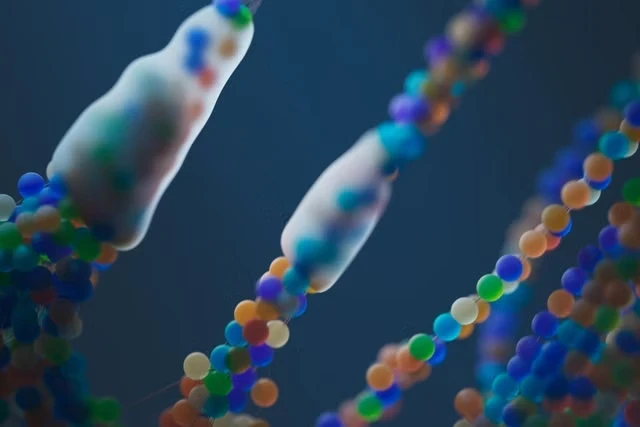
The genetic code, that universal dictionary translating nucleic acid language into protein sequence, has long been treated as a biological constant. Yet a quiet revolution in synthetic biology now treats this code as mutable substrate, a system open to deliberate engineering. The most provocative frontier of this movement is not inside living cells at all, but in cell-free robotic platforms that iterate through redesigned codes with unprecedented speed.
Recent work reported in Nature demonstrates how automated, cell-free systems can rapidly test alternative genetic codes and non-standard amino acids, bypassing the slow, often lethal constraints of living organisms. This approach fundamentally reframes the question of genetic code rewriting from a theoretical curiosity to an engineering discipline. By decoupling code design from cellular viability, researchers can explore vast sequence spaces that would otherwise remain inaccessible, accelerating the path toward organisms with expanded chemical repertoires.
The implications extend far beyond academic fascination. A genetic code engineered to incorporate non-standard amino acids could yield proteins with novel catalytic, material, or therapeutic properties, unlocking biopolymers that nature never conceived. Cell-free platforms serve as the rapid prototyping engine for this endeavor, compressing what once required months of cellular engineering into days of automated iteration. This convergence of robotics, biochemistry, and information theory marks a decisive shift in how we conceive the relationship between genotype and phenotype.
On This Page
- The Rationale for Rewriting Life's Most Conserved Language
- The Architecture of Cell-Free Robotic Platforms
- Quantitative Analysis of Code Expansion Efficiency
- Applications and Implications of Expanded Genetic Codes
- Challenges and Limitations of Cell-Free Code Engineering
- Future Directions and the Path to Living Cells
- Conclusion: The Cell-Free Revolution in Genetic Code Engineering
The Rationale for Rewriting Life's Most Conserved Language
The genetic code's near-universality across all domains of life testifies to its ancient origin and profound functional constraints. Any alteration risks catastrophic mistranslation, producing dysfunctional proteins that threaten cellular survival. This evolutionary inertia explains why the code has remained essentially frozen for billions of years, despite theoretical arguments that alternative codes might offer advantages.
Yet the very conservation that protects the code also limits its potential. Natural proteins are built from just twenty canonical amino acids, a chemical palette that constrains the possible functions of biological molecules. Expanding this repertoire through code engineering could unlock polymers with enhanced stability, novel catalytic activities, or entirely new material properties, pushing biology beyond its evolutionary boundaries.
The Evolutionary Lock-In of the Canonical Code
The standard genetic code exhibits remarkable robustness against the deleterious effects of point mutations and translation errors. This error-minimization property likely contributed to its fixation early in life's history, creating an evolutionary ratchet that resists change. Once established, any deviation would generate widespread mistranslation, imposing a severe fitness penalty on organisms attempting code modification.
This lock-in explains why natural code variants are exceedingly rare and confined to minor reassignments in mitochondria or a few microbial lineages. These exceptions demonstrate that code change is possible, but only under conditions where reduced selective pressure permits exploration. The canonical code's dominance is thus a historical contingency reinforced by strong purifying selection, not an inevitable feature of genetic information processing.
Overcoming this evolutionary inertia requires deliberate engineering that bypasses the fitness landscape entirely. Rather than forcing cells to survive intermediate states of code ambiguity, researchers can design codes in silico and test them in controlled, cell-free environments. This strategy decouples the exploration of code space from the unforgiving demands of organismal viability.
The cell-free approach also enables parallel testing of many code variants simultaneously, a capability impossible with living systems. Robotic platforms can assemble hundreds of reactions, each testing a distinct codon assignment or amino acid incorporation, generating comprehensive datasets on code functionality. This high-throughput paradigm transforms genetic code engineering from a serial, painstaking process into a scalable, industrial endeavor.
Moreover, cell-free systems eliminate the confounding variables of cellular metabolism, transport, and regulation that obscure interpretation of code modifications in vivo. Researchers can isolate the fundamental biochemistry of translation, measuring precisely how codon reassignment affects protein synthesis efficiency and fidelity. This reductionist clarity accelerates the iterative design-build-test-learn cycle central to synthetic biology.
Expanding the Chemical Palette Beyond Twenty Amino Acids
Non-standard amino acids (nsAAs) represent the most compelling motivation for genetic code engineering. These building blocks can introduce chemical functionalities absent from the canonical set, including reactive handles for bioconjugation, fluorophores for imaging, or residues conferring enhanced protein stability. The potential applications span drug discovery, materials science, and industrial biocatalysis.
Incorporating nsAAs requires liberating codons from their canonical assignments, typically by repurposing stop codons or creating quadruplet codon systems. Each strategy demands careful optimization of the translational machinery, including engineered aminoacyl-tRNA synthetases and orthogonal tRNAs that recognize the reassigned codons with high specificity. Cell-free systems allow rapid screening of these components without the burden of maintaining cellular viability.
The robotic platform reported in Nature automates this optimization process, systematically varying tRNA sequences, synthetase mutants, and codon contexts to identify combinations achieving high incorporation efficiency. Machine learning algorithms can guide this search, predicting which variants are most likely to succeed based on structural and biophysical principles. This synergy of automation and computation dramatically expands the accessible design space.
Beyond simple incorporation, cell-free systems enable the production of proteins containing multiple distinct nsAAs at defined positions. This capability opens the door to precisely engineered biopolymers with tailored properties, such as cyclic peptides stabilized by non-canonical crosslinks or proteins with built-in degradation signals. The chemical diversity achievable through such approaches far exceeds what natural evolution has produced.
Importantly, cell-free platforms also facilitate the characterization of nsAA-containing proteins, integrating translation with downstream analysis. Robotic systems can purify, assay, and even crystallize the products of cell-free reactions, providing immediate feedback on how code modifications affect protein function. This closed-loop workflow accelerates the discovery of useful non-standard biopolymers.
The Architecture of Cell-Free Robotic Platforms
Cell-free protein synthesis systems harness the translational machinery extracted from cells, operating in open reaction vessels rather than within living organisms. These systems contain ribosomes, tRNAs, aminoacyl-tRNA synthetases, and the necessary energy regeneration components, all maintained in a carefully buffered biochemical environment. By removing the cell membrane, researchers gain direct access to the translation apparatus, enabling precise manipulation of its components.
Robotic integration transforms these cell-free reactions from manual laboratory procedures into automated, high-throughput workflows. Liquid handling robots assemble reaction mixtures with microliter precision, while integrated readers monitor protein production in real time through fluorescent or luminescent reporters. This automation eliminates human error and enables hundreds of parallel experiments with minimal hands-on time.
Automated Assembly and Parallelized Experimentation
The core innovation of robotic cell-free platforms lies in their ability to systematically vary reaction parameters across many conditions simultaneously. A typical experiment might test dozens of tRNA variants, each paired with different synthetase mutants and codon contexts, all arrayed in a single microtiter plate. This combinatorial approach generates rich datasets that reveal how each component contributes to code functionality.
Machine learning algorithms increasingly guide this experimental design, predicting which combinations are most likely to yield efficient nsAA incorporation. Active learning strategies iteratively refine these predictions, selecting the most informative experiments to perform next. This closed-loop optimization dramatically reduces the number of reactions needed to identify high-performing code variants.
The modular architecture of cell-free systems facilitates rapid component swapping and testing. Researchers can exchange the tRNA pool, add purified orthogonal translation factors, or introduce engineered ribosomes with modified decoding properties. Each modification is tested in isolation or combination, building a comprehensive understanding of the molecular determinants of code expansion.
Real-time monitoring of cell-free reactions provides kinetic data that informs mechanistic understanding. By tracking protein production over time, researchers can distinguish between limitations in initiation, elongation, or termination of translation. This temporal resolution guides rational improvements to the system, accelerating the path toward efficient nsAA incorporation.
Integration with downstream analytical instruments, such as mass spectrometers or plate readers, enables immediate characterization of the protein products. Researchers can confirm the identity and position of incorporated nsAAs, quantifying incorporation fidelity and identifying any misincorporation events. This analytical feedback loop ensures that successful code variants are rigorously validated.
Computational Design and Machine Learning Integration
The design of orthogonal translation components benefits enormously from computational prediction. Structural models of the ribosome, tRNAs, and synthetases guide the selection of mutation sites likely to alter substrate specificity. Molecular dynamics simulations can predict how engineered tRNAs interact with modified codons, filtering candidates before experimental testing.
Machine learning models trained on large datasets of translation efficiency can predict the success of novel code variants with remarkable accuracy. These models incorporate features such as tRNA anticodon sequence, codon context, and mRNA secondary structure to forecast protein yields. This predictive power enables researchers to prioritize the most promising designs for experimental validation.
The iterative cycle of design, build, test, and learn is ideally suited to automation. Each round of experiments generates data that refines computational models, which in turn propose improved designs for the next iteration. This virtuous cycle accelerates progress exponentially, compressing years of incremental optimization into months of intensive automated exploration.
Generative models, including those based on deep learning architectures, can propose entirely novel tRNA sequences or synthetase variants beyond the scope of rational design. These models learn the sequence-function relationship from experimental data, generating candidates that human intuition might overlook. The combination of generative design and automated testing creates a powerful engine for innovation.
Importantly, computational approaches also help interpret the vast datasets generated by high-throughput cell-free experiments. Clustering algorithms identify patterns in code functionality, while regression models quantify the contribution of each molecular feature. This analytical layer transforms raw experimental data into actionable design principles.
Quantitative Analysis of Code Expansion Efficiency
Evaluating the success of genetic code engineering requires rigorous quantitative metrics that capture both the efficiency and fidelity of nsAA incorporation. The central parameter is the readthrough efficiency, defined as the fraction of ribosomes that successfully incorporate the nsAA at the reassigned codon rather than terminating translation. This efficiency depends on the competition between orthogonal tRNAs and release factors recognizing the same codon.
Mathematical modeling of this competition provides insight into the determinants of incorporation efficiency. The probability of nsAA incorporation can be expressed in terms of the concentrations and kinetic parameters of the competing species, allowing researchers to predict how system modifications will affect performance.
Kinetic Framework for Codon Reassignment
Consider a simplified kinetic scheme where an orthogonal tRNA (tRNAns) charged with a non-standard amino acid competes with release factor (RF) for recognition of a reassigned stop codon. The rate of nsAA incorporation depends on the second-order rate constant for tRNA selection, ##[k_{tRNA}]##, multiplied by the tRNA concentration, ##[tRNA^{ns}]##. Similarly, termination proceeds with rate ##[k_{RF}[RF]]##.
The probability of incorporation, ##[P_{inc}]##, follows from the competition between these two pathways. Assuming steady-state conditions, this probability is given by the ratio of the incorporation rate to the total rate of codon processing. This relationship reveals that increasing tRNA concentration or improving its selection kinetics directly enhances incorporation efficiency.
Experimental measurements of ##[P_{inc}]## across varying tRNA concentrations allow estimation of the relative rate constants. Fitting the resulting data to the kinetic model yields quantitative insight into the molecular determinants of code expansion. This analysis guides rational engineering of both tRNAs and release factors to optimize performance.
The fidelity of incorporation, defined as the accuracy with which the correct nsAA is inserted, represents a second critical metric. Misincorporation of canonical amino acids at reassigned codons reduces the purity of the resulting protein product. High-fidelity incorporation requires orthogonal tRNAs that are efficiently charged with the desired nsAA but poorly recognized by endogenous synthetases.
Quantitative mass spectrometry provides direct measurement of incorporation fidelity, distinguishing proteins containing the nsAA from those with misincorporated canonical residues. This analytical approach reveals the precise chemical composition of the translation products, enabling rigorous quality control of the engineered code.
This equation captures the essence of codon reassignment, showing how the balance between orthogonal translation and termination determines overall efficiency. Maximizing ##[P_{inc}]## requires either increasing the concentration or activity of the orthogonal tRNA, or suppressing release factor activity. Cell-free systems allow independent manipulation of both factors, enabling systematic optimization.
Beyond simple competition, the kinetics of tRNA selection on the ribosome involve multiple steps, including initial codon recognition, GTP hydrolysis by EF-Tu, and accommodation of the aminoacyl-tRNA into the peptidyl transferase center. Each step offers opportunities for engineering to enhance incorporation efficiency. Detailed kinetic analyses using stopped-flow or single-molecule techniques reveal which steps limit performance.
The mathematical framework extends naturally to more complex scenarios involving multiple reassigned codons or competing orthogonal tRNAs. Systems of differential equations describe the dynamics of translation through engineered codes, predicting how modifications at one codon affect overall protein production. These models serve as design tools for optimizing multi-site nsAA incorporation.
Statistical analysis of high-throughput cell-free data identifies which molecular features most strongly predict incorporation efficiency. Regression models incorporating tRNA sequence features, codon context, and mRNA structure explain a substantial fraction of the observed variation. These models provide actionable design rules for future code engineering efforts.
Optimization Strategies and Design Principles
Systematic optimization of cell-free code expansion follows established design principles derived from both theory and experiment. The first principle emphasizes the importance of orthogonal translation components that minimize cross-reactivity with the endogenous machinery. High specificity of the orthogonal tRNA-synthetase pair prevents mischarging and ensures faithful nsAA incorporation.
The second principle concerns codon choice, favoring reassignment of codons that are rarely used or entirely absent from the genes of interest. Stop codons, particularly the amber codon (UAG), represent attractive targets because they occur infrequently in most genomes. This natural scarcity minimizes unintended readthrough during expression of target proteins.
A third principle involves the optimization of mRNA sequence context around the reassigned codon. Flanking nucleotides influence the efficiency of tRNA selection and the probability of frameshifting or miscoding. Systematic variation of codon context in cell-free reactions identifies optimal sequences that maximize incorporation fidelity.
The fourth principle addresses the balance between translation speed and accuracy. While high tRNA concentrations enhance incorporation efficiency, they may also increase misincorporation at near-cognate codons. Careful titration of orthogonal tRNA levels achieves an optimal trade-off between yield and fidelity, guided by quantitative models of the translation process.
Finally, the fifth principle emphasizes iterative refinement through closed-loop optimization. Each round of cell-free experiments generates data that refines computational models, which propose improved designs for subsequent testing. This cycle continues until the desired performance metrics are achieved, typically requiring only a fraction of the time needed for equivalent cellular engineering.
We Also Published
Applications and Implications of Expanded Genetic Codes
The ability to incorporate non-standard amino acids into proteins unlocks transformative applications across biotechnology and medicine. Proteins containing nsAAs can exhibit enhanced stability, novel catalytic activities, or unique spectroscopic properties that enable advanced imaging. These capabilities position engineered genetic codes as foundational tools for next-generation biomanufacturing.
In therapeutic development, nsAA-containing proteins offer opportunities for site-specific conjugation of drugs, toxins, or imaging agents. The precise placement of reactive handles enables homogeneous antibody-drug conjugates with improved pharmacokinetics and efficacy. Similarly, proteins with built-in crosslinking groups can be covalently attached to surfaces or other biomolecules with defined stoichiometry.
Therapeutic Proteins and Bioconjugation
Antibody-drug conjugates (ADCs) represent one of the most promising applications of nsAA technology. Traditional conjugation methods produce heterogeneous mixtures with variable drug-to-antibody ratios, compromising efficacy and safety. Site-specific incorporation of nsAAs bearing reactive handles enables uniform conjugation at defined positions, yielding homogeneous ADCs with optimized therapeutic properties.
The cell-free platform accelerates ADC development by enabling rapid testing of different conjugation sites and chemistries. Researchers can produce antibody variants with nsAAs at various positions, conjugate different payloads, and assay the resulting ADCs for stability and cytotoxicity. This parallel approach identifies optimal designs far faster than conventional cellular expression.
Beyond ADCs, nsAA-containing proteins enable novel therapeutic modalities such as stapled peptides with enhanced cell penetration and proteolytic stability. These constrained peptides can target protein-protein interactions that are undruggable by conventional small molecules. The expanded chemical repertoire of nsAAs provides the structural diversity needed to achieve high-affinity binding.
Diagnostic applications benefit equally from nsAA incorporation, enabling the creation of proteins with built-in fluorophores or affinity tags at defined positions. These engineered proteins serve as sensitive biosensors or capture reagents with precisely controlled properties. The ability to place reporter groups at specific sites eliminates the need for random labeling that can disrupt protein function.
Industrial biocatalysis represents another major application domain, where enzymes containing nsAAs can catalyze reactions inaccessible to natural proteins. Non-standard residues may introduce new catalytic functionalities, enhance thermostability, or alter substrate specificity. Cell-free screening of enzyme variants accelerates the discovery of industrially relevant biocatalysts.
Materials Science and Synthetic Biology
The materials science community stands to benefit from proteins engineered with nsAAs that introduce crosslinking or self-assembly capabilities. Hydrogels formed from nsAA-containing proteins can exhibit tunable mechanical properties or responsiveness to external stimuli. These biomaterials find applications in tissue engineering, drug delivery, and regenerative medicine.
In synthetic biology, expanded genetic codes enable the construction of genetic circuits with reduced crosstalk and enhanced orthogonality. By reassigning codons to nsAAs, researchers can create protein components that do not interfere with endogenous translation. This orthogonality supports the development of complex synthetic gene networks with predictable behavior.
The creation of genetically recoded organisms (GROs) represents the ultimate goal of code engineering, where entire genomes are rewritten to free codons for nsAA incorporation. Cell-free platforms serve as the testing ground for the individual components that will be assembled into such organisms. Each tRNA, synthetase, and codon assignment is validated in vitro before integration into living systems.
Beyond practical applications, expanded genetic codes offer profound insights into the fundamental nature of the genetic code and its evolution. By exploring alternative codes in the laboratory, researchers test hypotheses about why the canonical code evolved and whether alternative codes could support life. These experiments illuminate the constraints and possibilities inherent in biological information processing.
The philosophical implications are equally significant, challenging the notion that life's molecular language is fixed and universal. Demonstrating that functional proteins can be produced using alternative codes expands our conception of what biology can achieve. This perspective informs astrobiology, suggesting that life elsewhere might utilize different genetic codes optimized for different environments.
Challenges and Limitations of Cell-Free Code Engineering
Despite its transformative potential, cell-free genetic code engineering faces significant technical challenges that must be addressed for widespread adoption. The efficiency of nsAA incorporation in cell-free systems, while improving, often remains lower than desired for industrial-scale protein production. This limitation reflects the inherent difficulty of engineering orthogonal translation components that rival the optimized natural machinery.
Scalability represents another critical challenge, as cell-free reactions typically operate at microliter to milliliter scales. Producing gram quantities of nsAA-containing proteins requires either dramatic scale-up of cell-free systems or eventual transfer to engineered organisms. The transition from cell-free discovery to cellular production introduces new complexities that must be managed.
Technical Hurdles in Efficiency and Fidelity
The efficiency of nsAA incorporation depends on the competition between orthogonal tRNAs and release factors, as described by the kinetic framework presented earlier. While increasing tRNA concentration enhances incorporation, practical limits exist due to the finite capacity of the translation machinery. Excess tRNA can sequester ribosomes or synthetases, reducing overall protein synthesis rates.
Fidelity challenges arise from the promiscuity of engineered synthetases, which may charge canonical amino acids onto orthogonal tRNAs. This mischarging leads to incorporation of the wrong residue at reassigned codons, compromising protein function. Directed evolution of synthetases in cell-free systems can select for variants with improved specificity, but this process requires careful screening.
The genetic code's redundancy creates additional complexity, as multiple codons encode the same amino acid. Reassigning one codon to an nsAA requires ensuring that the remaining codons still provide adequate representation of the displaced amino acid. This constraint limits the number of codons that can be reassigned without compromising protein production.
Context-dependent effects on incorporation efficiency complicate the design of robust codes. The efficiency of nsAA incorporation varies with the surrounding mRNA sequence, meaning that a code optimized for one gene may perform poorly on another. Addressing this variability requires either context-independent translation components or gene-specific optimization strategies.
Finally, the stability of cell-free systems over extended reaction times poses practical challenges. Energy regeneration systems degrade, nucleases accumulate, and ribosomes lose activity, limiting the duration of protein synthesis. Advances in reaction engineering and component stabilization are needed to extend the productive lifetime of cell-free reactions.
Scaling from Discovery to Production
The transition from cell-free discovery to industrial-scale production represents a critical bottleneck in the deployment of expanded genetic codes. While cell-free systems excel at rapid prototyping, their current throughput is insufficient for manufacturing applications requiring kilogram quantities. This limitation necessitates the eventual transfer of optimized codes into living production organisms.
Genetically recoded organisms (GROs) offer a path to scalable production, where the entire genome is rewritten to eliminate reassigned codons. These organisms can stably maintain the expanded genetic code across generations, enabling fermentation-based production of nsAA-containing proteins. However, constructing GROs requires extensive genome engineering and careful validation of fitness.
The cell-free platform plays an essential role in this transition by validating each component before incorporation into living organisms. Every tRNA, synthetase, and codon assignment is tested in vitro, ensuring that only the most robust designs are carried forward. This pre-validation reduces the risk of failure during the slow and costly process of genome rewriting.
Hybrid approaches that combine cell-free and cellular production offer intermediate solutions. Cell-free systems can produce initial batches of nsAA-containing proteins for characterization, while parallel efforts construct engineered organisms for larger-scale production. This parallel track accelerates the overall timeline from discovery to deployment.
Economic considerations also influence the choice between cell-free and cellular production. Cell-free systems currently have higher per-gram costs due to the expense of reaction components and limited scalability. As the technology matures and reaction efficiencies improve, cell-free production may become economically viable for high-value products such as therapeutic proteins.
Future Directions and the Path to Living Cells
The ultimate ambition of genetic code engineering is the creation of organisms that stably maintain and express expanded genetic codes. These genetically recoded organisms would serve as living factories for nsAA-containing proteins, combining the scalability of fermentation with the chemical diversity of expanded codes. The path from cell-free discovery to living cells requires careful orchestration of multiple engineering efforts.
Genome-scale rewriting represents the most ambitious approach, where all instances of a target codon are replaced with synonymous alternatives throughout the entire genome. This massive engineering effort eliminates the reassigned codon from all essential genes, preventing unintended readthrough. The resulting organism can then accommodate orthogonal translation components that deliver nsAAs at the freed codon.
Genome Rewriting and Recoded Organisms
The construction of a genomically recoded organism begins with computational design, identifying all instances of the target codon and designing synonymous replacements. This design must preserve protein sequences while optimizing codon usage for efficient translation. Machine learning algorithms assist in selecting synonymous codons that maintain mRNA structure and translation kinetics.
Multiplex automated genome engineering (MAGE) and related technologies enable the sequential introduction of thousands of codon changes across the genome. These methods leverage homologous recombination to replace targeted sequences with designed variants. The process is iterative, with each round of engineering verified by whole-genome sequencing to confirm the intended changes.
Cell-free platforms support this effort by validating the functionality of the recoded genes before incorporation into the genome. Each recoded gene can be expressed in cell-free systems to confirm that it produces the correct protein with appropriate activity. This pre-validation prevents the assembly of genomes containing non-functional genes.
Once a recoded genome is assembled, the orthogonal translation components are introduced to enable nsAA incorporation. The recoded organism must tolerate the presence of orthogonal tRNAs and synthetases while maintaining normal physiology. Careful tuning of expression levels ensures that the orthogonal machinery does not interfere with endogenous translation.
The resulting recoded organism serves as a platform for producing nsAA-containing proteins at scale. Fermentation processes are optimized to maximize yield while maintaining the integrity of the expanded genetic code. This living production system combines the scalability of microbial biotechnology with the chemical diversity enabled by code expansion.
Ethical and Safety Considerations
The engineering of organisms with expanded genetic codes raises important ethical and safety questions that must be addressed proactively. The creation of organisms with novel biochemical capabilities requires careful risk assessment to ensure they do not pose threats to human health or the environment. Robust biocontainment strategies are essential to prevent unintended release.
Genetic recoding itself offers a powerful biocontainment mechanism, as recoded organisms cannot survive outside controlled environments due to their dependence on non-standard amino acids. This intrinsic dependence creates a safety lock that prevents recoded organisms from thriving in natural ecosystems. Such built-in containment features enhance the safety case for deploying these organisms in industrial settings.
Ethical considerations extend to the appropriate uses of expanded genetic codes, particularly in therapeutic applications. The introduction of non-standard amino acids into human proteins raises questions about immunogenicity and long-term safety. Rigorous preclinical testing and regulatory oversight are essential before any nsAA-containing therapeutic reaches clinical use.
Public engagement and transparent communication about the goals and risks of genetic code engineering are crucial for building trust. Scientists must articulate the potential benefits while honestly acknowledging uncertainties and limitations. This dialogue fosters informed public discourse about the appropriate governance of these powerful technologies.
International coordination on safety standards and best practices will be essential as genetic code engineering advances. The potential for dual-use applications requires careful consideration of how to balance scientific openness with responsible stewardship. Collaborative frameworks that promote beneficial applications while mitigating risks will shape the future trajectory of this field.
Conclusion: The Cell-Free Revolution in Genetic Code Engineering
The emergence of robotic cell-free platforms marks a paradigm shift in genetic code engineering, transforming what was once a slow, painstaking endeavor into a rapid, scalable discipline. By decoupling code design from the constraints of living cells, these systems enable exploration of vast sequence spaces that would otherwise remain inaccessible. The result is an acceleration of discovery that promises to unlock the full potential of expanded genetic codes.
The convergence of automation, computational design, and biochemical insight embodied in these platforms represents synthetic biology at its most sophisticated. Each iteration of the design-build-test-learn cycle generates knowledge that informs the next, creating a virtuous cycle of innovation. This approach not only accelerates the development of specific code variants but also deepens our fundamental understanding of translation and its malleability.
The journey from cell-free discovery to living recoded organisms will require sustained effort across multiple disciplines, from genome engineering to bioprocess development. Yet the cell-free platform provides the essential foundation, validating each component and design principle before commitment to the slow and costly process of organism engineering. This staged approach de-risks the path forward, ensuring that only the most robust designs are carried into living systems.
The implications of successful genetic code engineering extend far beyond the creation of novel proteins. They challenge our conception of the genetic code as a fixed, universal constant, revealing it instead as a dynamic system open to deliberate redesign. This perspective has profound consequences for our understanding of life's possibilities, both on Earth and potentially elsewhere in the universe.
As this field advances, the responsible stewardship of these powerful technologies becomes paramount. Balancing the immense potential benefits with careful attention to safety and ethics will shape the trajectory of genetic code engineering. The cell-free revolution provides the technical foundation; wisdom in its application will determine its ultimate impact.
From our network :
- Analyzing Trump Deportation Numbers Insights Into The 2026 Immigration Crackdown
- AI-Powered 'Precision Diagnostic' Replaces Standard GRE Score ReportsDiscover the new GRE Precision Diagnostic. Learn how AI-powered behavioral analytics and time-to-solve tracking are replacing standard GRE score reports to empower students.
- Mastering DB2 LUW v12 Tables: A Comprehensive Technical GuideComprehensive guide on DB2 LUW v12 tables. Explore CREATE TABLE syntax, BLU Acceleration, range partitioning, data types, and security features for IBM DB2 LUW v12.
- Vite 6/7 'Cold Start' Regression in Massive Module GraphsIn-depth analysis of Vite 6/7 cold start regressions in massive module graphs. Learn about barrel file issues, pre-bundling optimizations, and how to improve Vite dev server performance.
- EV 2.0: The Solid-State Battery Breakthrough and Global Factory ExpansionDiscover the impact of the Solid-State Battery Breakthrough on the EV market. Learn about CATL and BYD stock growth, global factory expansion in Europe, and the future of EV 2.0 technology.
- Trump Political Strategy How Geopolitical Stunts Serve As Media Diversions
- 98% of Global MBA Programs Now Prefer GRE Over GMAT Focus EditionExplore why 98% of global MBA programs now prefer the GRE over GMAT Focus. Learn about the shorter GRE format, verbal logic importance, and strategic versatility for students.
- 10 Physics Numerical Problems with Solutions for IIT JEEPrepare for IIT JEE with 10 physics numerical problems, complete with detailed solutions and conceptual explanations. Ideal for mastering kinematics, thermodynamics, electromagnetism, and optics.
- Mastering DB2 12.1 Instance Design: A Technical Deep Dive into Modern Database ArchitectureComprehensive guide to DB2 12.1 Instance Design. Explore architectural components, HADR setup, buffer pool tuning, and security policies for IBM DB2 12.1. Includes 10 functional SQL and Shell samples.
RESOURCES
- Fully Productive Cell-Free Genetic Code Expansion by Structure ...pubs.acs.orgMar 17, 2020 ... alvus PylRS, the productivities for various non-canonical amino acids were greatly increased by rational engineering of the amino acid-binding ...
- Crystal Structure of Pyrrolysyl-tRNA Synthetase from a ... - PubMedpubmed.ncbi.nlm.nih.gov... Engineering for Highly-Productive Cell-Free Genetic Code Expansion with Non-Canonical Amino Acids. Int J Mol Sci. 2023 Mar 26;24(7):6256. doi: 10.3390 ...
- The Genetic Code Kit: An Open-Source Cell-Free Platform for ...frontiersin.orgAug 18, 2020 ... The Genetic Code Kit utilizes cell-free protein synthesis and ... engineering biological systems and easy-to-use point of care ...
- Automated prototyping of genetic codes - Naturenature.comAug 26, 2026 ... Cell-free synthetic biology for in vitro prototype engineering. Biochem. Soc. Trans. 45, 785–791 (2017). Article CAS PubMed PubMed Central ...
- Crystal Structure of Pyrrolysyl-tRNA Synthetase from a ... - MDPImdpi.com... Engineering for Highly-Productive Cell-Free Genetic Code Expansion with Non-Canonical Amino Acids. by. Tatsuo Yanagisawa. Tatsuo Yanagisawa. SciProfiles Scilit ...
- Reconstituted cell-free protein synthesis using in vitro transcribed ...nature.comJul 3, 2020 ... Entire reconstitution of tRNAs for active protein production in a cell-free system brings flexibility into the genetic code engineering.
- The Application of Cell-Free Protein Synthesis in Genetic Code ...pmc.ncbi.nlm.nih.govMar 20, 2019 ... ... engineering. Although the genetic code expansion strategy has been mostly implemented by using living cells as the host, a…
- Cell‐free translation systems for protein engineering - Shimizu - 2006febs.onlinelibrary.wiley.comAug 23, 2006 ... Thus, reconstituted cell-free systems have enabled a rewriting of the genetic code and the incorporation of unnatural amino acids into…
- Cell-Free Synthetic Biology: Engineering Beyond the Cell - PMC - NIHpmc.ncbi.nlm.nih.govCell-free protein synthesis (CFPS) technology was first used more than 50 years ago by Nirenberg and Matthaei to decipher the genetic code (Nirenberg and ...
- Cell-free gene-regulatory network engineering with synthetic ... - PNASpnas.orgMar 8, 2019 ... ... DNA replication (72) and the genetic code (73). It is likely that they will continue to provide fundamental insights…
- Site-specific dual encoding and labeling of proteins via genetic code ...sciencedirect.comApr 20, 2023 ... Cell-free approach for non-canonical amino ... Engineering the genetic code in cells and animals: biological considerations and impacts.
- An accelerated protein engineering workflow utilizing linear DNA in ...arborbiosci.comTraditionally, this cycle is highly dependent on the ability to edit the genetic code for ... Preparation of IDT gBlocks Gene Fragments for cell-free…
- Genetic Code Expansion with Machine Learning Can Bridge the ...the-scientist.comJun 26, 2026 ... ... engineering tRNA synthetases.2 On the cell-free side, a recent article from researchers at the University of Tokyo demonstrated genetic…
- Engineering molecular translation systems - Cell Presscell.comJun 16, 2021 ... Second, creating new genetic codes with free codons that can be reassigned to ncAAs is challenging, especially in cells. This…
- Rewriting the Genetic Code. - Abstract - Europe PMCeuropepmc.org... Free to read. Share this article Share with emailShare with twitterShare with linkedinShare with facebook. Abstract. The genetic code-the language used by cells ...




0 Comments