From Orbit to Surface: How NASA's Lunar Strategy is Evolving for Future Moon Bases
Humanity stands on the precipice of a monumental shift in space exploration, transitioning from fleeting orbital observations to permanent, sustainable habitation on the lunar landscape. The architecture of interplanetary logistics is undergoing a rigorous metamorphosis driven by pragmatic necessity and cutting-edge engineering breakthroughs that redefine how we conquer the cosmos.
As deep space initiatives mature, space agencies recognize that orbiting platforms alone cannot unlock the full scientific and industrial potential of our nearest celestial neighbor. Establishing enduring footholds requires mastering surface survival, extracting local resources, and deploying resilient infrastructure capable of withstanding the punishing thermal and radiation extremes of the lunar environment.
This paradigm evolution is catalyzed by strategic collaborations between governmental agencies and visionary aerospace contractors. By repurposing advanced orbital habitats into ground-breaking terrestrial demonstrators, the global space enterprise is fast-tracking the timeline from abstract blueprint to boots-on-the-ground reality across craters and maria.
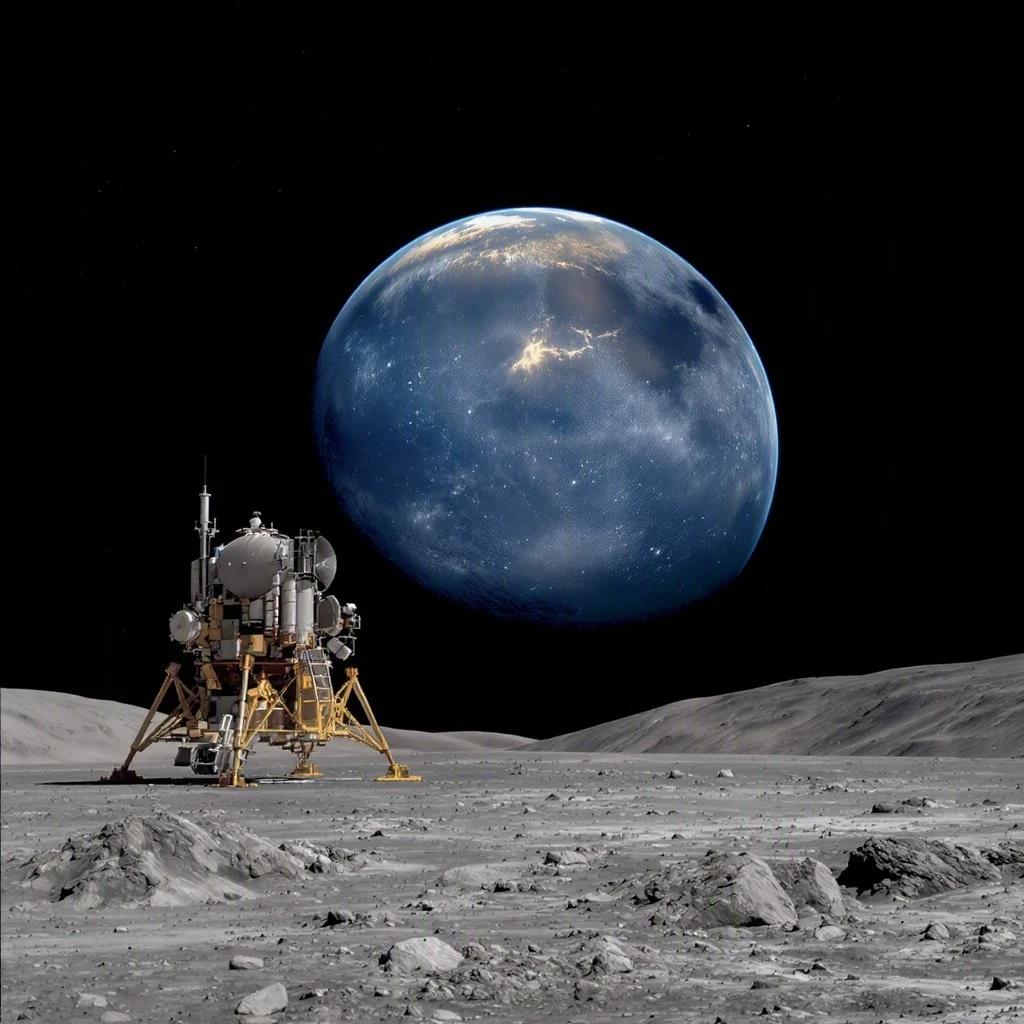
The Paradigm Shift in Deep Space Operations
For decades, lunar planning concentrated heavily on orbital architectures designed to serve as waypoints without demanding the complex technologies needed for long-term surface survival. Today, space authorities understand that true dominion over our cosmic backyard requires immediate, robust testing of power grids, communications, and autonomous machinery directly on the regolith.
By shifting focus downward, missions can directly address the primary engineering hurdles of lunar colonization. Orbital architectures provide invaluable staging capabilities, yet the ultimate measure of success remains our collective capacity to anchor self-sustaining outposts firmly into the lunar dust.
Repurposing Orbital Hardware for Ground Innovation
Innovation in aerospace often springs from clever recycling of proven technologies rather than inventing entirely unproven systems from scratch. The strategic pivoting of established orbital modules into terrestrial demonstrators exemplifies this resourcefulness, drastically compressing development cycles and lowering economic barriers.
These adaptation initiatives leverage rigorous flight-ready components originally engineered for microgravity environments, transmuting them into rugged assets capable of anchoring surface bases against abrasive dust, dramatic thermal swings, and relentless solar radiation.
Engineering the Lunar Infrastructure Demo (LID) Architecture
The formal announcement regarding the integration of advanced habitat technologies into dedicated surface demonstration missions marks a definitive milestone in modern astronautics. These initiatives focus heavily on modularity, ensuring that power generation units, high-bandwidth data networks, and mechanical docking interfaces can interoperate seamlessly under harsh conditions.
Engineers must calculate systemic thermal dissipation and power loads using robust equations to guarantee uninterrupted base operations during the fortnight-long lunar night. For instance, thermal equilibrium across a habitat shell can be mathematically modeled using fundamental Stefan-Boltzmann principles adapted for vacuum conditions:
This mathematical certainty underpins every hardware choice, ensuring that thermal management systems prevent catastrophic freezing or overheating while supporting growing human crews and sensitive electronics.
| Strategic Phase | Primary Focus | Key Technology Asset | Operational Objective |
|---|---|---|---|
| Legacy Orbital | Deep Space Transit | Gateway Modules | Crew staging and deep space radiation shielding. |
| Transition Era | Adaptation & Testing | HALO Derived Hardware | Repurposing orbital tech for surface deployment. |
| Surface Baseline | Permanent Habitation | Lunar Infrastructure Demo (LID) | Sustainable power, data grids, and mechanical interfaces. |
Frequently Asked Questions Regarding Lunar Base Evolution
What is the primary motivation behind shifting from lunar orbit to surface operations?
The primary driver is the need to establish sustainable, long-term human habitation. While orbital platforms offer great staging points, establishing permanent moon bases requires testing power generation, life support, and mechanical interfaces directly in the lunar environment.
How do Lunar Infrastructure Demo (LID) missions accelerate base development?
LID missions accelerate development by repurposing flight-proven orbital technologies—such as habitation and power management modules—for surface testing, thereby reducing research and development timelines significantly.
What role do private aerospace contractors play in this strategic pivot?
Private aerospace contractors collaborate closely with governmental space agencies to design, build, and adapt modular hardware, bringing commercial efficiency and rapid prototyping to deep space exploration.