On This Page
1. What Piecewise Functions Mean
A piecewise function is a function assembled from multiple sub-functions, each active on a specific region of the input domain. Instead of one universal rule, it uses conditional rules that describe how output changes across intervals, thresholds, or categories.
This structure is common whenever behavior changes at boundaries. Tax brackets, shipping fees, signal clipping, grading systems, and application workflows all use piecewise thinking because real systems rarely follow one simple formula across every possible input.
Definition in Mathematical Terms
Mathematically, a piecewise function maps each input to exactly one output, but the rule used depends on where the input belongs. The domain is divided into non-overlapping conditions, and every valid input should satisfy one intended condition.
The key discipline is clarity. Each case must specify both a formula and a condition. When conditions overlap or leave gaps, the definition becomes ambiguous, which can produce incorrect graphs, wrong calculations, or software defects.
Why Conditions Matter
Conditions are the control mechanism of a piecewise function. They tell the reader, calculator, or program which expression applies. A small boundary error, such as using ##x<5## instead of ##x\le 5##, can change outputs at critical values.
For example, a discount rule may charge one price below a threshold and another price at or above that threshold. In business systems, the boundary itself often carries legal, financial, or operational importance.
Piecewise Versus Ordinary Functions
An ordinary function may be represented by one formula over its full domain, while a piecewise function deliberately changes formula by region. This does not make it less valid; it simply reflects conditional structure within the problem.
Many familiar functions can be described piecewise. Absolute value, step functions, and sign functions are classic examples. Their behavior is simple, yet one formula is often less intuitive than separate rules for each interval.
2. Notation and Domain Design
Piecewise notation usually uses a large brace with formulas on the left and conditions on the right. The notation is compact, but it demands precision because each condition determines where a formula is legally applied.
Good domain design begins by identifying meaningful breakpoints. These may come from business rules, physical limits, statistical thresholds, or mathematical discontinuities. Once breakpoints are known, intervals can be written in a clear and complete sequence.
Intervals and Boundaries
Intervals define where each case applies. Open intervals exclude endpoints, closed intervals include endpoints, and half-open intervals include one endpoint while excluding the other. These choices are not stylistic; they determine exact function values.
In programming, boundaries correspond to comparison operators. The mathematical condition ##x<10## becomes a different branch than ##x\le10##. Reliable implementation starts with matching interval notation to conditional logic without interpretation drift.
Completeness of the Domain
A piecewise definition should state what happens for every input in the intended domain. If an input belongs to no case, the function is undefined there. Sometimes that is acceptable, but it must be intentional.
Completeness is especially important in applications. Missing cases can become runtime errors, default fallbacks, or silent data corruption. A professional design lists all allowed intervals and explicitly rejects or handles unsupported inputs.
Avoiding Overlap
Overlapping conditions occur when more than one formula applies to the same input. In pure mathematics, this makes the function poorly defined unless both formulas return the same value at the overlap.
In software, overlap may be resolved by branch order, but that can hide logical errors. It is better to design mutually exclusive conditions so the implementation mirrors the mathematical definition directly and predictably.
3. Graphing Piecewise Functions
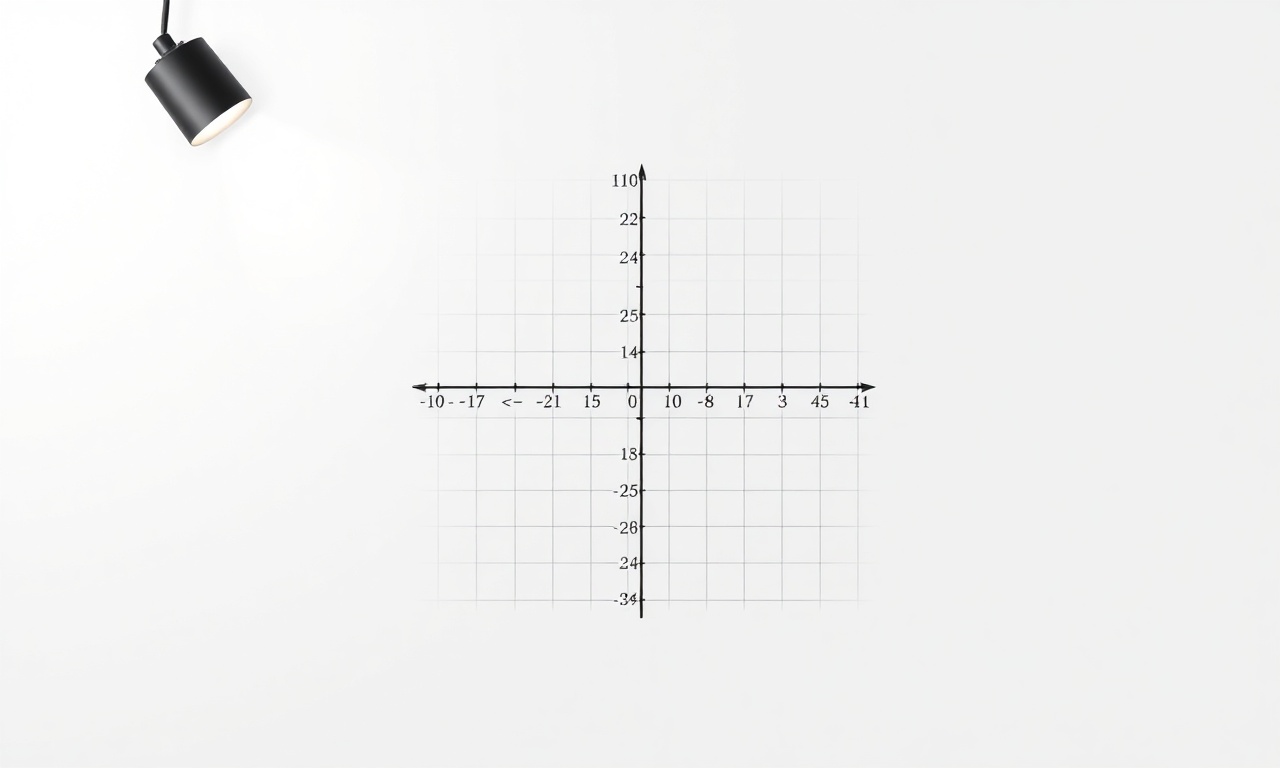
Graphing a piecewise function means graphing each formula only on its assigned interval. The final graph is not a collection of full curves; it is a controlled assembly of partial curves, rays, points, and segments.
Visual accuracy depends on endpoints. Closed dots indicate included boundary values, while open dots indicate excluded values. These markers communicate whether the function actually takes a value at a breakpoint.
Plotting Each Case
The safest approach is to handle one case at a time. First identify the formula, then restrict the input values to its interval, and finally draw only that portion of the graph before moving to the next case.
This method prevents a common mistake: graphing every formula across the entire coordinate plane. Piecewise graphs are constrained objects, and each visible part must respect the condition attached to its formula.
Endpoint Symbols
Endpoint symbols represent inclusion. A filled point means the input is part of that case, while an empty point means the curve approaches the value but does not include it at that boundary.
When two cases meet at the same boundary, endpoints clarify which formula supplies the actual function value. If both formulas agree and the boundary is included appropriately, the graph may appear visually continuous.
Interpreting Jumps and Gaps
Piecewise graphs often contain jumps, holes, or corners. A jump happens when the left-hand and right-hand behavior approach different values. A hole may occur when a limiting value exists but the function value differs or is missing.
Corners are different from jumps. At a corner, the graph may remain connected, but the slope changes abruptly. Absolute value functions and certain cost models often show corners while still remaining continuous.
4. Continuity and Differentiability
Continuity asks whether a piecewise function connects smoothly in value at breakpoints. The function must be defined at the point, the two-sided limit must exist, and that limit must equal the function value.
Differentiability is stricter. A function can be continuous but not differentiable at a boundary if its left and right slopes differ. This distinction matters in optimization, physics, machine learning, and numerical modeling.
Checking Continuity at Breakpoints
To check continuity, evaluate the left-hand limit, the right-hand limit, and the function value at the breakpoint. If all three match, the function is continuous at that point.
Most mistakes occur when the formula for the boundary value is chosen incorrectly. The condition containing equality determines ##f(a)##, not necessarily the expression that looks visually convenient on the graph.
Removable and Jump Discontinuities
A removable discontinuity occurs when the left and right limits agree but the defined value is missing or different. It can often be fixed by redefining the function at one point without changing nearby behavior.
A jump discontinuity occurs when left and right limits are unequal. Unlike removable discontinuities, jumps cannot be repaired by changing a single point because the two sides approach different heights.
Differentiability at Boundaries
Differentiability requires the slope from the left and the slope from the right to agree. Even if a piecewise function is continuous, a sharp corner can prevent a derivative from existing at the boundary.
For professional modeling, this affects algorithms that depend on gradients. Optimization routines may struggle at nondifferentiable points, so analysts sometimes use smooth approximations when gradient-based methods are required.
We Also Published
5. Piecewise Functions in Programming
Programming languages implement piecewise logic through conditionals, vectorized selection, lookup tables, pattern matching, or rule engines. The mathematical cases become branches, and the domain conditions become Boolean expressions.
Good implementation preserves the mathematical contract. Inputs should be validated, branches should be mutually exclusive, and boundary behavior should be tested. The goal is not merely to compute values but to encode the rule safely.
Conditional Branching
The simplest implementation style uses ordered conditional checks. This works well when the number of cases is small and the conditions are easy to read. However, branch order must not accidentally change the intended rule.
Professional code should make thresholds explicit, preferably through named constants or configuration values. That makes the piecewise rule easier to audit, update, and align with documentation or mathematical specifications.
Vectorized Computation
In data science, piecewise functions are often applied to arrays or columns rather than single values. Vectorized approaches evaluate conditions over many elements efficiently, avoiding slow loops and improving readability.
Vectorization still requires exact boundary logic. A large dataset may contain many values at thresholds, so a minor inequality error can affect reports, models, and downstream decisions at scale.
Testing Edge Cases
Testing should focus on values just below, exactly at, and just above each breakpoint. These are the locations where most defects appear because the formula changes or equality handling becomes relevant.
A robust test suite also checks invalid inputs, missing values, and extreme values. Piecewise logic is often part of production decision systems, so defensive testing protects both correctness and operational reliability.
6. Modeling with Piecewise Functions
Piecewise functions are powerful modeling tools because they capture regime changes. Many systems behave differently before and after a threshold, such as progressive taxation, shipping prices, battery limits, or service-level penalties.
They also allow models to stay interpretable. Instead of forcing one complicated global formula, a piecewise model can express simple rules locally, making assumptions easier to explain to stakeholders.
Business Rules
Business systems frequently use piecewise definitions for pricing, commissions, eligibility, taxation, and discounts. Each interval represents a policy segment, and the output reflects a formal rule rather than an approximation.
Because policies change, these models should be documented and versioned. A clear mathematical definition helps developers, analysts, auditors, and managers agree on the intended behavior before implementation begins.
Engineering and Signals
Engineering applications use piecewise functions to model saturation, dead zones, clipping, switching, and control behavior. Components may respond linearly in one range and nonlinearly or constantly outside safe operating limits.
Signal processing often uses threshold-based transformations. For example, clipping limits amplitude beyond a boundary, while activation functions in neural networks may behave differently for negative and positive inputs.
Data Science Applications
In data science, piecewise transformations appear in feature engineering, binning, robust loss functions, and interpretable models. They can represent nonlinear effects without requiring a black-box model.
However, artificial thresholds should be chosen carefully. If breakpoints are arbitrary, the model may become brittle. Domain knowledge, exploratory analysis, and validation should guide where piecewise transitions belong.
7. Common Mistakes and Best Practices
Piecewise functions look simple, but they are prone to subtle errors. The most common problems involve missing intervals, overlapping conditions, wrong endpoint inclusion, and mismatches between mathematical notation and software implementation.
Best practice is to treat every piecewise function as a specification. Define the domain, list breakpoints, verify exclusivity, check completeness, and test every boundary before using the function in analysis or production.
Boundary Confusion
Boundary confusion occurs when equality is placed in the wrong case. For example, assigning ##x=10## to the lower interval instead of the upper interval may alter the result in pricing or grading systems.
To avoid this, write a boundary table before finalizing the function. Each breakpoint should appear once, and the intended output at that exact value should be verified independently.
Incomplete Definitions
An incomplete piecewise function leaves some inputs without a rule. In classroom problems, this may simply mean the domain is restricted. In software, it may cause exceptions, null outputs, or unintended default behavior.
Completeness does not require accepting every possible input. It requires clearly stating what is accepted and what is rejected. For production systems, invalid-domain behavior should be explicit and tested.
Overcomplicated Cases
Too many cases can make a piecewise function difficult to maintain. Sometimes a simpler continuous approximation, a lookup table, or a configuration-driven rules engine is more appropriate than a long nested definition.
The best representation depends on context. Mathematical clarity, business maintainability, numerical stability, and software performance should all influence how the piecewise behavior is finally expressed.
8. Worked Interpretation and Professional Summary
To interpret a piecewise function, begin with the input value and identify the condition it satisfies. Then apply only the corresponding formula. Do not evaluate every expression unless you are checking boundaries or graph behavior.
This habit mirrors reliable programming logic. A well-designed piecewise function is deterministic: every valid input follows one clear path, produces one clear output, and can be justified from the written specification.
Reading a Piecewise Rule
Suppose an input is ##x=3##. The first two conditions fail, while the third condition applies because ##3\ge2##. Therefore, the value is computed from the third expression, not from the earlier cases.
This may seem obvious, but it is the foundation of correct interpretation. In larger systems, the same discipline prevents accidental branch execution, incorrect fallbacks, and inconsistent results across implementations.
Translating to Algorithms
When translating to an algorithm, list the cases in a readable order and preserve exact inequalities. If the function is defined mathematically with non-overlapping intervals, the algorithm should reflect that structure directly.
For maintainability, keep the rule close to its documentation. Comments, tests, and naming should make it clear which mathematical case each branch implements, especially when thresholds come from policy or configuration.
Final Takeaways
Piecewise functions connect mathematics with real-world conditional behavior. They allow precise modeling of systems whose rules change across intervals, making them valuable in algebra, calculus, data science, engineering, and software development.
The professional approach is simple: define intervals carefully, handle endpoints explicitly, test boundaries thoroughly, and document assumptions. With those habits, piecewise functions become reliable tools rather than sources of hidden ambiguity.
From our network :
- EV 2.0: The Solid-State Battery Breakthrough and Global Factory Expansion
- AI-Powered 'Precision Diagnostic' Replaces Standard GRE Score Reports
- Mastering DB2 LUW v12 Tables: A Comprehensive Technical Guide
- https://www.themagpost.com/post/trump-political-strategy-how-geopolitical-stunts-serve-as-media-diversions
- Vite 6/7 'Cold Start' Regression in Massive Module Graphs
- https://www.themagpost.com/post/analyzing-trump-deportation-numbers-insights-into-the-2026-immigration-crackdown
- Mastering DB2 12.1 Instance Design: A Technical Deep Dive into Modern Database Architecture
- 98% of Global MBA Programs Now Prefer GRE Over GMAT Focus Edition
- 10 Physics Numerical Problems with Solutions for IIT JEE
RESOURCES
- Understanding Piecewise Functions: Why They Confuse You
- When are you supposed to learn Piecewise Functions? - Reddit
- What is a Piecewise Function? | Precalculus Exercises - YouTube
- Piecewise Functions - Math is Fun
- Evaluating Piecewise Functions | PreCalculus - YouTube
- [Grade 9 Algebra HW] How to Evaluate Piecewise Functions? - Reddit
- Graphing Piecewise Functions - 2 Methods - YouTube
- Can a Piecewise Function be Defined Twice at the Same Point?
- Piecewise function - Wikipedia
- Why do piecewise functions exist? : r/askmath - Reddit
- How to typeset piecewise functions - TeX - LaTeX Stack Exchange
- [Middle School 8th grade Regents Class Algebra 1] Functions - Reddit
- Piecewise Functions (Prime 1.0) - PTC Community
- Best strategies to solve an ODE with piecewise functions using ...
- Is there a way to enlarge the expressions in a piecewise function?

0 Comments