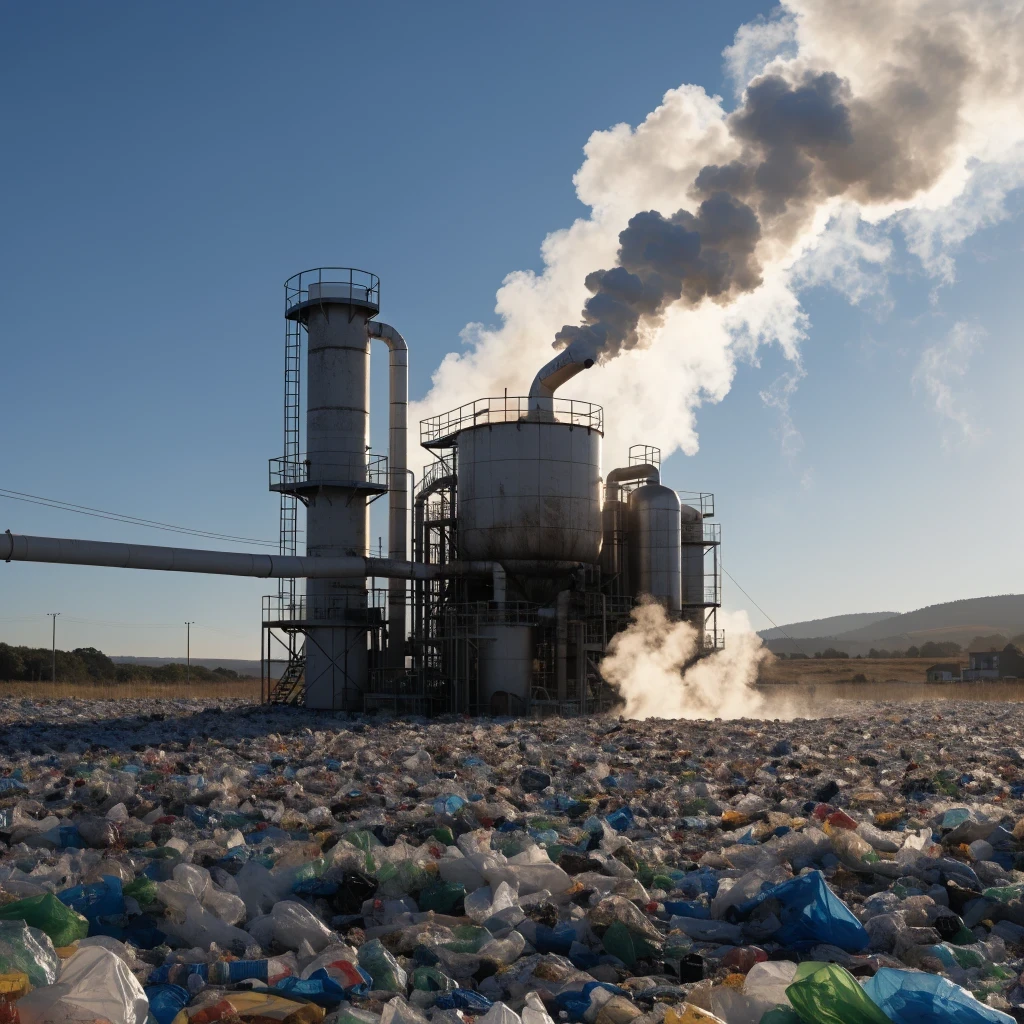
Turning mixed plastic waste directly into hydrogen sounds like a decisive breakthrough because it attacks the most frustrating weakness in chemical recycling: the need to sort an untidy stream before processing. The reported July 2026 concept proposes a more aggressive route—accepting heterogeneous plastic waste as it arrives, then converting its carbon and hydrogen content into hydrogen fuel. The promise is substantial, but the chemistry is anything but simple.
“Unsorted” does not mean “chemically harmless.” A household waste stream may contain polyethylene, polypropylene, polystyrene, polyethylene terephthalate, polyvinyl chloride, multilayer films, pigments, fillers, food residues, metals, and moisture. Each component decomposes differently, releases different by-products, and imposes different demands on reactors, catalysts, gas-cleaning systems, and hydrogen purification. The central question is therefore not whether plastic can produce hydrogen, but whether a process can tolerate variability without losing economic or environmental credibility.
This analysis examines the chemistry behind plastic-to-hydrogen pathways, quantifies the material and energy logic, and identifies the bottlenecks hidden behind the headline. It also explains why eliminating sorting could lower costs while simultaneously increasing corrosion, catalyst poisoning, emissions-control, and process-stability risks.
On This Page
The Chemical Logic of Converting Plastic into Hydrogen
The Chemical Logic of Converting Plastic into Hydrogen
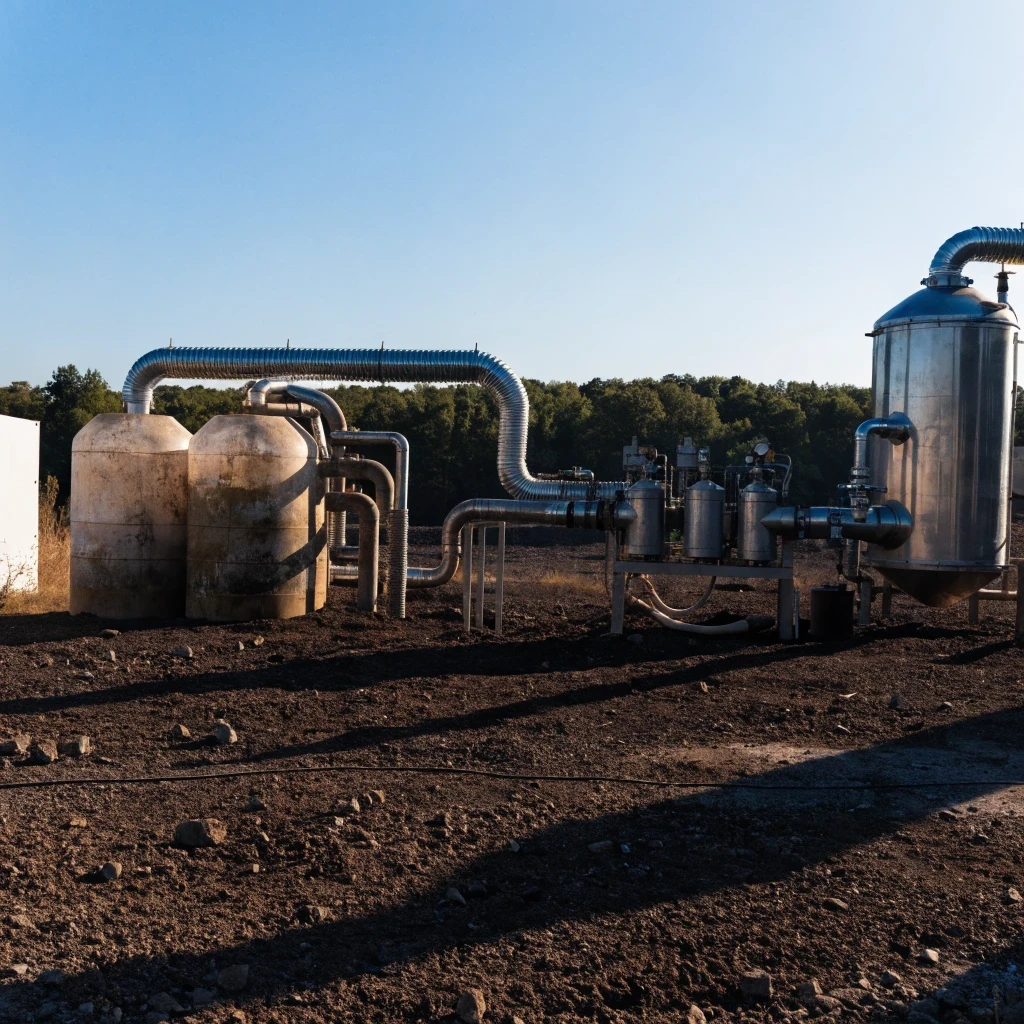
Most common plastics are rich in carbon and hydrogen, which makes them plausible feedstocks for hydrogen production. Polyethylene and polypropylene, for example, are hydrocarbon polymers with compositions broadly resembling long-chain alkanes. Their molecular architecture stores chemical energy, but that energy is locked inside very large molecules. A conversion plant must break those chains, rearrange the fragments, and separate hydrogen from carbon-containing gases, liquids, and solids.
The crucial distinction is between merely heating plastic and chemically converting it into hydrogen. Pyrolysis occurs in limited or absent oxygen and produces vapours, gases, oils, and char. Hydrogen becomes a major product only after further reactions—typically steam reforming, partial oxidation, gasification, or a hybrid catalytic sequence. The process must therefore manage both depolymerisation and syngas chemistry rather than treating melting as conversion.
From Polymer Chains to Reactive Gas
In thermal pyrolysis, polymer chains undergo random scission when heated. Polyethylene can generate alkanes, alkenes, waxes, and light gases; polypropylene tends to form branched hydrocarbons; polystyrene can yield aromatic-rich vapours; and PET produces oxygenated compounds alongside aromatic fragments. These products depend strongly on temperature, residence time, heating rate, pressure, and catalyst selection. A mixed feed consequently creates a moving chemical target.
Hydrogen production generally improves when hydrocarbon vapours are converted into carbon monoxide, carbon dioxide, and hydrogen. A simplified steam-reforming reaction for a generic hydrocarbon is represented below. It is not a complete description of an industrial plant, but it captures the fundamental atom balance that makes hydrogen recovery possible.
###\mathrm{C}_{n}\mathrm{H}_{m}+n\mathrm{H}_{2}\mathrm{O}\rightarrow n\mathrm{CO}+\left(n+\dfrac{m}{2}\right)\mathrm{H}_{2}###
Calculation 1 — theoretical reforming yield. Consider an idealised molecule with the composition of ethylene, ##[\mathrm{C_2H_4}]##. Applying the generic relation gives two moles of carbon monoxide and four moles of hydrogen per mole of ethylene. Since one mole of ethylene weighs 28 grams and four moles of hydrogen weigh 8 grams, the ideal hydrogen mass fraction is ##[8/28=0.286]##, or approximately 28.6%, before losses and side reactions.
Why Steam, Oxygen, and Water–Gas Shift Matter
Steam does more than provide hydrogen atoms. It helps convert carbonaceous intermediates into synthesis gas and can suppress some forms of coke formation, although excessive steam consumes heat and increases reactor size. Oxygen or air may be introduced in gasification or partial oxidation to supply heat internally. Air, however, dilutes the product with nitrogen, making downstream hydrogen separation more demanding.
The water–gas shift reaction then changes the balance between carbon monoxide and hydrogen: ##[\mathrm{CO+H_2O\rightleftharpoons CO_2+H_2}]##. Lower temperatures favour equilibrium hydrogen formation, while higher temperatures improve reaction rates. An industrial system may therefore use staged reactors, heat recovery, and selective catalysts. Every additional stage improves control but weakens the simplicity promised by the phrase “directly into hydrogen.”
Calculation 2 — shift-reaction gain. Suppose a gas stream contains 1 mole of carbon monoxide and enough steam for complete shift conversion. The reaction produces 1 mole of additional hydrogen and 1 mole of carbon dioxide. At standard molar volume, that hydrogen is about 22.4 litres, or roughly 2 grams. The calculation demonstrates why carbon monoxide removal is not merely an emissions task; it can materially increase recoverable hydrogen.
Feedstock map
Plastic families and process consequences
The feedstock determines gas composition, contaminant load, and catalyst stress.
|
Feedstock family |
Principal implication |
|---|---|
|
PE and PP |
High hydrocarbon content; valuable reforming potential but substantial heat demand. |
|
PS |
Aromatic vapours and soot-forming tendency can intensify catalyst and gas-cleaning loads. |
|
PET |
Oxygenated products and solid residues complicate syngas conditioning. |
|
PVC |
Chlorine release creates hydrochloric acid, corrosion, and dioxin-control concerns. |
Note:
- Actual waste streams contain blends, additives, moisture, labels, and non-plastic contaminants.
- These are directional chemistry effects, not universal composition or yield guarantees.

Why Avoiding Sorting Is Both Powerful and Difficult
Why Avoiding Sorting Is Both Powerful and Difficult
Sorting is expensive because it requires collection discipline, optical or near-infrared equipment, manual quality control, storage, and separate processing lines. It also fails when packaging is dark, dirty, multilayered, heavily printed, or composed of bonded materials. A process that accepts mixed plastic could reduce front-end infrastructure and make smaller or more geographically distributed facilities viable.
But sorting performs an important chemical function: it narrows the operating window. Uniform feedstock produces more predictable vapour composition, heat demand, halogen concentration, ash content, and catalyst lifetime. Removing sorting transfers that burden from the waste-handling stage into the reactor and purification train. The cost is not eliminated; it is redistributed into more sophisticated process control.
Feedstock Variability Is a Reactor Problem
A batch dominated by polyolefins may behave like a high-energy hydrocarbon feed, while a batch containing more PET, PVC, rubber, paper, or food residue may suddenly generate oxygenates, acids, nitrogen compounds, sulfur species, ash, and water. These changes alter gasification temperature, fluid flow, residence time, and product quality. A plant designed around one average composition can struggle with real-world excursions.
Moisture is especially consequential. Water can support reforming and shift chemistry, but evaporating it consumes energy before useful conversion begins. Inert materials such as glass, metals, soil, and mineral fillers contribute no hydrogen while increasing solids-handling requirements. The process must therefore measure feed composition continuously or operate with enough flexibility to absorb uncertainty without unstable temperatures or incomplete conversion.
Calculation 3 — moisture penalty. Assume 1,000 kilograms of incoming waste contains 20% moisture. The plant must evaporate 200 kilograms of water. Using an approximate latent heat of vaporisation of 2.26 megajoules per kilogram, the minimum evaporation duty is ##[200\times2.26=452\ \mathrm{MJ}]##. This excludes sensible heating, heat losses, and reactor inefficiency, showing why wet waste can sharply reduce net energy performance.
Chlorine, Additives, and Catalyst Poisoning
PVC is the most obvious warning signal. When heated, it can release hydrogen chloride through dehydrochlorination. If chlorine-bearing compounds enter high-temperature zones with suitable organic precursors, the plant must also address the formation of hazardous chlorinated by-products. Acid gases can corrode equipment, damage catalysts, and complicate compliance with emissions standards.
Additives create a second layer of uncertainty. Flame retardants, plasticisers, pigments, stabilisers, brominated compounds, and metal-containing fillers may not disappear simply because the polymer matrix is converted. Some partition into gas, some into condensable liquids, and some into char or ash. Hydrogen is only a successful product if contaminants are prevented from reaching the fuel stream and if residues are managed responsibly.
Catalysts are particularly vulnerable to sulfur, chlorine, metals, tars, and coke. Nickel catalysts, widely associated with reforming chemistry, can be highly active yet lose performance through carbon deposition or poisoning. Guard beds, sorbents, sacrificial catalysts, and periodic regeneration can protect the core reactor, but they add capital cost, consumables, downtime, and waste-management obligations.
We Also Published
Hydrogen Quality, Energy Balance, and Environmental Reality
Producing a hydrogen-rich gas is not the same as producing usable hydrogen fuel. Raw syngas may contain carbon monoxide, carbon dioxide, methane, light hydrocarbons, steam, nitrogen, hydrogen chloride, sulfur compounds, ammonia, tars, and fine particles. Fuel-cell applications demand especially stringent purification because trace contaminants can damage membranes, electrodes, or catalysts.
The plant therefore needs a chain of operations: particulate removal, tar management, acid-gas capture, sulfur or halogen removal, water–gas shift, carbon-dioxide separation, and final hydrogen purification. Pressure-swing adsorption, membranes, cryogenic methods, or combinations of these may be considered. Each option consumes energy and changes the economics. A headline hydrogen yield without purity and recovery data is incomplete.
Net Energy Is the Decisive Test
Plastic carries chemical energy, but unlocking it requires shredding, feeding, heating, vaporising, reacting, compressing, separating, and often treating contaminated residues. Some process heat can be supplied by oxidising a fraction of the feed or by burning off-gases. That strategy may improve thermal self-sufficiency, but it reduces the amount of carbon converted into saleable hydrogen and can increase carbon dioxide emissions.
Electricity also matters. Compressors, pumps, fans, plasma systems where applicable, gas separation units, and water treatment can become significant loads. If the process uses externally supplied hydrogen or natural gas to stabilise operations, its claimed climate benefit must account for those inputs. “Waste-derived” describes the feedstock, not automatically the carbon intensity of the hydrogen.
Calculation 4 — a simplified energy balance. Suppose a facility receives 1,000 kilograms of plastic and assumes 70% becomes recoverable hydrogen-equivalent chemical output. If the useful output is assigned 120 megajoules per kilogram, the gross energy is ##[700\times120=84{,}000\ \mathrm{MJ}]##. If conversion and purification consume 25,000 megajoules, the simplified net is 59,000 megajoules. Real assessment must include transport, residue treatment, utilities, and carbon accounting.
Carbon Fate Determines Whether the Route Is Sustainable
Plastic contains carbon that originated largely from fossil hydrocarbons. Converting its hydrogen into fuel does not make that carbon vanish. Depending on the process, carbon may leave as carbon dioxide, carbon monoxide, methane, char, solid carbon, or residual liquid. A credible environmental claim must identify each destination, quantify losses, and explain whether carbon is captured, permanently stored, reused, or emitted.
Hydrogen from plastic can be advantageous when it diverts material from uncontrolled disposal, reduces the need for virgin feedstocks, and recovers value from mixtures that mechanical recycling cannot economically handle. Yet chemical recycling should not become an excuse to expand disposable plastic production. The strongest hierarchy remains prevention and reuse first, high-quality mechanical recycling where practical, and chemical conversion for genuinely unsuitable residues.
Life-cycle analysis must compare the complete system with realistic alternatives. Landfilling, incineration with energy recovery, mechanical recycling, refuse-derived fuel, and advanced chemical conversion have different emissions, infrastructure, and material-recovery profiles. A process may outperform incineration on local pollutants yet underperform mechanical recycling on energy use. The correct benchmark depends on the actual waste fraction being treated.
What Must Be Proven Before Industrial Deployment
The phrase “without sorting” should be interpreted as a demanding engineering claim, not a guarantee that no preparation is required. Even an unsorted plant will probably need removal of oversized objects, metals, stones, batteries, pressurised containers, excessive moisture, and dangerous chemicals. The practical distinction is between detailed polymer-by-polymer sorting and broad safety-oriented preprocessing.
Commercial viability will depend on whether the process can maintain stable output when the feed changes by season, region, collection system, and consumer behaviour. Demonstrations using carefully prepared laboratory mixtures are useful for discovering reaction mechanisms, but they do not establish readiness for municipal waste. Continuous operation, maintenance intervals, contaminant accumulation, and full-scale emissions data are the harder tests.
Measurements That Matter More Than a Headline Yield
Researchers and developers should report hydrogen yield on a clearly defined basis: per kilogram of total incoming waste, per kilogram of dry plastic, per kilogram of carbon, or per kilogram of a selected polymer. These denominators are not interchangeable. A high yield calculated only from clean, dry polymer can look impressive while concealing substantial losses from moisture, ash, packaging residues, and rejected material.
Hydrogen purity and recovery must be reported alongside production rate. A gas containing 60% hydrogen may be useful as an intermediate syngas but unsuitable for a fuel-cell vehicle without extensive purification. Developers should also disclose carbon conversion, methane slip, carbon-dioxide intensity, tar concentration, chlorine balance, catalyst deactivation rate, and the fate of solid residues.
Calculation 5 — recovery versus purity. Imagine a process produces 100 kilograms of hydrogen in raw gas but recovers only 80% after purification. Saleable hydrogen is ##[100\times0.80=80\ \mathrm{kg}]##. If the purified stream is 99.97% hydrogen, the impurity mass is ##[80\times0.0003=0.024\ \mathrm{kg}]##, or 24 grams. The example separates two essential metrics: how much hydrogen is made and how much reaches specification.
The Real Industrial Bottleneck Is Integration
No single reactor solves the entire problem. Successful deployment requires integrated feeding, thermal management, contaminant capture, catalytic conversion, gas separation, water treatment, residue stabilisation, and continuous monitoring. The system must also tolerate shutdowns and restarts without creating unsafe mixtures or damaging expensive components. Reliability, not laboratory peak yield, will determine whether operators trust the technology.
Policy and market design will be equally influential. Hydrogen buyers increasingly need evidence of emissions intensity, renewable electricity use, recycled-content accounting, and traceable waste origin. If regulations classify all chemical recycling as equivalent, weak pathways may receive the same recognition as robust ones. Transparent certification should reward measurable carbon performance, material recovery, pollutant control, and genuine diversion from disposal.
The most defensible conclusion is neither blind enthusiasm nor reflexive dismissal. Direct conversion of mixed plastic waste into hydrogen could reduce sorting costs and unlock difficult residual streams, particularly where conventional recycling is technically or economically unsuitable. Its success, however, rests on disciplined chemistry: contaminant tolerance, stable syngas formation, efficient purification, credible energy accounting, and rigorous control of carbon emissions.
Unsorted plastic is not a uniform resource; it is a fluctuating chemical inventory. The winning technology will not simply “accept everything.” It will identify what enters the system, buffer variation, neutralise hazardous species, protect catalysts, and prove that the recovered hydrogen carries a worthwhile environmental advantage. That is the standard the July 2026 concept must meet before its industrial promise can be considered established.
From our network :
- Analyzing Trump Deportation Numbers Insights Into The 2026 Immigration Crackdown
- Mastering DB2 LUW v12 Tables: A Comprehensive Technical GuideComprehensive guide on DB2 LUW v12 tables. Explore CREATE TABLE syntax, BLU Acceleration, range partitioning, data types, and security features for IBM DB2 LUW v12.
- AI-Powered 'Precision Diagnostic' Replaces Standard GRE Score ReportsDiscover the new GRE Precision Diagnostic. Learn how AI-powered behavioral analytics and time-to-solve tracking are replacing standard GRE score reports to empower students.
- 98% of Global MBA Programs Now Prefer GRE Over GMAT Focus EditionExplore why 98% of global MBA programs now prefer the GRE over GMAT Focus. Learn about the shorter GRE format, verbal logic importance, and strategic versatility for students.
- Vite 6/7 'Cold Start' Regression in Massive Module GraphsIn-depth analysis of Vite 6/7 cold start regressions in massive module graphs. Learn about barrel file issues, pre-bundling optimizations, and how to improve Vite dev server performance.
- 10 Physics Numerical Problems with Solutions for IIT JEEPrepare for IIT JEE with 10 physics numerical problems, complete with detailed solutions and conceptual explanations. Ideal for mastering kinematics, thermodynamics, electromagnetism, and optics.
- EV 2.0: The Solid-State Battery Breakthrough and Global Factory ExpansionDiscover the impact of the Solid-State Battery Breakthrough on the EV market. Learn about CATL and BYD stock growth, global factory expansion in Europe, and the future of EV 2.0 technology.
- Trump Political Strategy How Geopolitical Stunts Serve As Media Diversions
- Mastering DB2 12.1 Instance Design: A Technical Deep Dive into Modern Database ArchitectureComprehensive guide to DB2 12.1 Instance Design. Explore architectural components, HADR setup, buffer pool tuning, and security policies for IBM DB2 12.1. Includes 10 functional SQL and Shell samples.
RESOURCES
- Making hydrogen from waste plastic could pay for itself | NSFnsf.govNov 14, 2023 ... Rice University researchers have found a way to harvest hydrogen from plastic waste using a low-emissions method that could more…
- Upcycling of plastic wastes for hydrogen production: Advances and ...sciencedirect.comPyrolysis is the most widely used thermochemical process for converting plastic wastes into value-added hydrogen fuel [46]. Pyrolysis of plastic is the process ...
- Researchers turn recovered car battery acid and plastic waste into ...cam.ac.ukApr 6, 2026 ... Researchers have developed a solar-powered reactor to break down hard-to-recycle forms of plastic waste – such as drinks bottles, ...
- Hydrogen production from plastic waste pyrolysis syngas: A review ...sciencedirect.comAug 14, 2025 ... Pyrolysis provides a way to turn plastic waste into hydrogen-rich gases. This helps to solve both the waste problem and…
- Scientists turn plastic waste into clean hydrogen fuel using sunlightsciencedaily.comMay 4, 2026 ... Scientists are using sunlight to turn plastic waste into clean fuels like hydrogen, offering a breakthrough solution to both pollution…
- From Plastic Waste to Green Hydrogen and Valuable Chemicals ...onlinelibrary.wiley.comMay 16, 2024 ... Recently, plastic waste has been proposed as a sacrificial electron donor for hydrogen production in anaerobic conditions, while being oxidised ...
- New process turns mixed plastic waste into hydrogen fuel without ...newsroom.ucla.edu2 days ago ... An illustration of a thermal treatment process that transforms heterogeneous plastic waste into a biomass-like hydrogen source, enabling ...
- Turning plastic waste into low-cost hydrogen fuelsadvancedsciencenews.comSep 18, 2023 ... A flash heating technique breaks down plastic waste and converts it to pure hydrogen and graphene with significantly less emissions…
- Feasibility of gasifying mixed plastic waste for hydrogen production ...nature.comNov 29, 2022 ... The life cycle assessment results show that hydrogen derived from mixed plastic waste has lower environmental impacts than single-stream plastics.
- NETL Researchers Gasify Plastic Waste With Coal and Biomass for ...netl.doe.govSep 3, 2025 ... NETL researchers are closing in on a more effective and less expensive way to combine a growing accumulation of plastic…




0 Comments