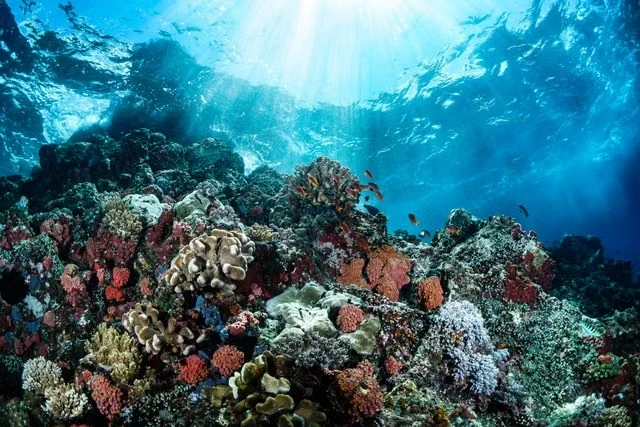
The Great Barrier Reef, a living cathedral of calcium carbonate stretching over 2,300 kilometers along Australia's northeastern coast, is dying in slow motion. Ocean temperatures that once flirted with coral tolerance thresholds now routinely smash through them, triggering mass bleaching events with alarming frequency. In 2016, 2020, and again in 2024, heatwaves cooked vast swaths of this underwater metropolis, leaving ghostly white skeletons where vibrant ecosystems once pulsed with life. The scientific community has watched these die-offs with growing alarm, knowing that coral reefs support roughly a quarter of all marine biodiversity despite covering less than one percent of the ocean floor.
Now a controversial proposition has emerged from the laboratories of marine geneticists: what if we could accelerate evolution itself to save these ecosystems? Assisted evolution, a suite of techniques ranging from selective breeding to genetic manipulation, aims to produce corals that can withstand the heat that is now killing their wild counterparts. A September 2026 paper in Nature Climate Change has thrust this approach into the spotlight, presenting both promising laboratory results and sobering questions about scalability, ecological integrity, and unintended consequences. The central tension is stark: can humanity engineer its way out of a crisis largely created by engineering, or does such intervention risk undermining the very natural systems we seek to preserve?
This analysis examines the science behind heat-tolerant coral breeding, the ecological arguments for and against intervention, and the brutal mathematics of reef restoration at planetary scale. The stakes could not be higher, for coral reefs are not merely beautiful tourist destinations; they are coastal protection barriers, fisheries nurseries, and reservoirs of genetic diversity that humanity has barely begun to catalog.
On This Page
- The Bleaching Crisis and the Urgency of Intervention
- The Science of Assisted Evolution in Corals
- Ecological Risks and Unintended Consequences
- The Scalability Challenge: Mathematics of Reef Restoration
- Quantitative Analysis: Thermal Tolerance and Bleaching Projections
- Governance, Ethics, and the Path Forward
- Conclusion: A Stopgap, Not a Solution
The Bleaching Crisis and the Urgency of Intervention
Coral bleaching occurs when symbiotic algae, known as zooxanthellae, abandon their coral hosts under thermal stress. These algae provide up to 90 percent of the coral's energy through photosynthesis, and their departure starves the animal into a pale, vulnerable state. If temperatures remain elevated for weeks, the coral dies, its calcium carbonate skeleton eventually crumbling into rubble that erodes the reef structure itself.
The frequency of these events has accelerated dramatically. Pre-1980, mass bleaching was virtually unknown; today, the interval between severe events has shrunk to less than six years in many regions, shorter than the recovery time required for most coral species. This compression of disturbance regimes means reefs are being pushed toward ecological collapse, with some models projecting a 90 percent decline in coral cover by mid-century under moderate emissions scenarios.
Thermal Tolerance Thresholds and Bleaching Mechanics
The thermal tolerance of corals is not a fixed property but a complex physiological trait influenced by both the coral animal and its algal symbionts. Different species exhibit vastly different thresholds, with some tolerating temperatures that kill others within days. This variability provides the raw material upon which assisted evolution hopes to act.
Bleaching typically begins when water temperatures exceed the local summer maximum by just 1 to 2 degrees Celsius for several weeks. The mechanism involves damage to the photosynthetic machinery of the algae, which then produces reactive oxygen species that are toxic to the coral host. In response, the coral expels the algae as a protective measure, though this defense ultimately proves fatal if conditions persist.
Research has identified specific heat shock proteins and antioxidant pathways that confer enhanced tolerance in certain coral genotypes. These molecular defenses can be upregulated through selective breeding, potentially shifting the thermal threshold by 1 to 2 degrees Celsius across generations. While seemingly modest, such a shift could mean the difference between survival and mortality during the increasingly frequent marine heatwaves.
The symbiosis itself is also a target for intervention. Some algal strains, particularly those from warmer regions, exhibit greater thermal resilience and can be introduced into more sensitive coral hosts. This approach, known as algal symbiont manipulation, has shown promise in laboratory settings but faces challenges in achieving stable, long-term associations in the wild.
Critically, the thermal tolerance gained through breeding must be weighed against other fitness costs. Corals that invest heavily in heat defense may grow more slowly, reproduce less frequently, or become more susceptible to disease and ocean acidification. The trade-offs are poorly understood and represent a significant uncertainty in the assisted evolution calculus.
The Genetic Architecture of Heat Resistance
Heat tolerance in corals is a polygenic trait, controlled by numerous genes each contributing small effects. This genetic architecture complicates selective breeding, as favorable alleles must be accumulated across many loci simultaneously. However, modern genomic tools now allow researchers to identify and track these alleles with unprecedented precision.
Genome-wide association studies have begun to map the specific genetic variants associated with thermal tolerance in key reef-building species such as Acropora millepora and Acropora tenuis. These studies reveal that tolerance is not a single switch but a complex network of interacting pathways involving heat shock proteins, oxidative stress responses, and membrane lipid composition.
The heritability of heat tolerance, a critical parameter for breeding programs, has been estimated through controlled crosses and common garden experiments. Heritability estimates range from 0.2 to 0.5 depending on species and measurement method, indicating substantial genetic variation available for selection. These values are comparable to those seen in agricultural breeding programs, suggesting that meaningful gains are achievable.
However, the genetic correlations between heat tolerance and other fitness traits are often unfavorable. Fast-growing corals tend to be more heat-sensitive, creating a dilemma for restoration programs that need both rapid reef accretion and thermal resilience. Understanding these genetic trade-offs requires sophisticated quantitative genetic analysis and long-term field trials.
Epigenetic modifications, which alter gene expression without changing the DNA sequence itself, add another layer of complexity. Corals exposed to sublethal heat stress can acquire enhanced tolerance that persists across generations through epigenetic inheritance. This phenomenon, known as thermal priming, offers a potentially faster route to resilience than conventional breeding, though its stability and reversibility remain uncertain.
The Science of Assisted Evolution in Corals
Assisted evolution encompasses a spectrum of interventions, from relatively low-tech selective breeding to high-tech genetic modification using CRISPR-Cas9. Each approach carries distinct advantages, risks, and timelines for implementation. The choice of technique depends on the target species, the urgency of intervention, and the regulatory environment governing genetic manipulation in marine environments.
Selective breeding, the most conservative approach, involves identifying naturally heat-tolerant individuals and crossing them to concentrate favorable alleles in offspring. This method has been used for millennia in agriculture and requires no genetic modification, only careful phenotypic screening and controlled reproduction. For corals, which can take years to reach reproductive maturity, this approach is slow but carries minimal regulatory burden.
Selective Breeding and Larval Propagation
The Great Barrier Reef restoration programs have already demonstrated the feasibility of large-scale larval propagation. During mass spawning events, researchers collect millions of coral gametes, fertilize them in controlled conditions, and rear the resulting larvae before settling them onto degraded reef substrates. This technique, known as larval restoration, has been deployed across dozens of reef sites with measurable success.
Integrating heat tolerance screening into this pipeline requires identifying tolerant parent colonies before spawning. Researchers use standardized heat stress assays, exposing coral fragments to elevated temperatures and measuring their physiological responses. Colonies that maintain photosynthetic efficiency and survive thermal challenge become candidates for selective breeding programs.
The heritability of heat tolerance means that offspring of tolerant parents will, on average, exhibit greater resilience than the general population. However, the gains per generation are modest, typically 10 to 20 percent improvement in thermal threshold. Achieving a full 2-degree Celsius shift in tolerance would require multiple generations of selection, a timeline measured in decades for most coral species.
Accelerating this process requires either shortening generation times or increasing selection intensity. Some researchers are exploring the use of cryopreserved sperm from heat-tolerant colonies to fertilize eggs from diverse populations, effectively introducing tolerance alleles without moving adult corals between reefs. This approach avoids the ecological risks associated with translocating entire colonies while still concentrating favorable genetics.
The integration of genomic selection, where DNA markers predict breeding values before phenotypic expression, could further accelerate gains. By genotyping thousands of larvae and selecting only those carrying the most favorable allele combinations, researchers can increase selection intensity dramatically. This approach, already standard in dairy cattle breeding, is being adapted for coral restoration programs.
Genetic Modification and Gene Editing Approaches
CRISPR-Cas9 gene editing offers a more direct route to heat tolerance by introducing specific genetic changes known to confer resilience. Researchers have identified several candidate genes, including those encoding heat shock proteins and antioxidant enzymes, whose overexpression could enhance thermal tolerance. However, the regulatory landscape for genetically modified corals remains largely undefined.
The release of genetically modified organisms into marine environments raises concerns about unintended ecological consequences. Modified corals could outcompete native populations, disrupt symbiotic relationships, or transfer transgenes to wild relatives through hybridization. These risks must be weighed against the existential threat facing coral reefs under continued climate change.
Gene drive systems, which bias inheritance to spread modified genes through populations rapidly, represent an even more powerful but controversial tool. A gene drive could theoretically spread heat tolerance genes through an entire reef population within generations, but the ecological implications of such intervention are profound and poorly understood. Most researchers advocate for extreme caution with this technology.
An alternative approach involves editing the coral's symbiotic algae rather than the coral itself. The algae have much shorter generation times, allowing faster evolutionary responses to selection. Researchers have successfully engineered algal strains with enhanced thermal tolerance in the laboratory, though achieving stable symbiosis with wild corals remains challenging.
The distinction between genetic modification and natural selection becomes blurred when considering that corals already adapt to local conditions. Assisted evolution simply accelerates processes that occur naturally, albeit at rates insufficient to keep pace with climate change. This framing has helped some conservationists accept interventionist approaches they might otherwise oppose.
Ecological Risks and Unintended Consequences
The introduction of heat-tolerant corals into natural reefs is not without ecological peril. Modified organisms can disrupt the delicate balance of reef ecosystems, potentially causing harm that outweighs the intended benefits. Critics argue that focusing on thermal tolerance ignores other stressors, including ocean acidification, pollution, and disease, which may prove equally lethal to corals.
Furthermore, the genetic homogenization of reef populations through selective breeding could reduce overall genetic diversity, making reefs more vulnerable to future environmental changes. Natural selection operates on standing genetic variation; if that variation is depleted through intensive breeding, the adaptive potential of the population diminishes. This evolutionary trade-off represents a fundamental tension in assisted evolution.
Genetic Diversity and Adaptive Potential
Coral populations harbor immense genetic diversity, much of it invisible to phenotypic observation. This diversity represents an insurance policy against future environmental changes, allowing populations to adapt through natural selection. Assisted evolution programs that focus on a narrow set of traits risk eroding this diversity, leaving reefs less resilient to novel stressors.
Quantitative genetic models demonstrate that selection reduces genetic variance at loci under selection, though the effects on genome-wide diversity depend on the genetic architecture of the selected trait. For polygenic traits like heat tolerance, selection can deplete diversity at many loci simultaneously, potentially reducing adaptive potential across multiple dimensions.
However, the magnitude of this effect depends on the effective population size of the breeding program. Programs that maintain large, genetically diverse founder populations and avoid excessive inbreeding can preserve most of the standing genetic variation while still making progress on heat tolerance. The design of breeding programs is therefore critical to balancing short-term gains against long-term resilience.
Gene flow between restored and natural populations adds another layer of complexity. If heat-tolerant corals interbreed with wild populations, they may introduce alleles that are maladaptive in other contexts. Conversely, gene flow from wild populations could dilute the gains achieved through selective breeding, reducing the effectiveness of restoration efforts.
The spatial scale of intervention matters enormously. A breeding program that produces millions of heat-tolerant larvae for deployment across hundreds of reefs will have different genetic consequences than a small-scale program targeting a single reef. Understanding these scale-dependent effects requires sophisticated population genetic modeling and long-term monitoring.
Unforeseen Ecological Interactions
Heat-tolerant corals may exhibit unexpected interactions with other reef organisms. Changes in coral physiology could affect the composition of fish communities, alter nutrient cycling, or shift competitive dynamics among benthic organisms. These indirect effects are difficult to predict and could cascade through the ecosystem in unforeseen ways.
The microbial communities associated with corals, collectively known as the microbiome, play crucial roles in coral health and nutrient acquisition. Assisted evolution that alters coral physiology may inadvertently disrupt these beneficial microbial associations, leaving corals more vulnerable to disease or nutritional stress. Understanding these complex interactions requires a systems-level approach to coral biology.
Predator-prey dynamics may also shift if heat-tolerant corals exhibit different chemical profiles or growth forms. Coral-eating organisms such as crown-of-thorns starfish could preferentially target or avoid modified corals, altering their population dynamics and the broader ecological balance. These trophic effects are rarely considered in assisted evolution research.
Competition with other benthic organisms, particularly macroalgae, could intensify if heat-tolerant corals exhibit different growth rates or competitive abilities. Reefs already face pressure from algal overgrowth following coral mortality; introducing corals that cannot outcompete algae would provide little benefit. Field trials must therefore assess competitive performance alongside thermal tolerance.
The timescale of ecological adaptation further complicates predictions. Ecosystems are not static; they continuously adjust to changing conditions through shifts in species composition and abundance. Introducing heat-tolerant corals into this dynamic system could trigger feedback loops that amplify or dampen the intended effects, making long-term outcomes inherently uncertain.
The Scalability Challenge: Mathematics of Reef Restoration
Even if assisted evolution proves scientifically sound and ecologically safe, the logistical challenge of scaling interventions to protect the Great Barrier Reef is staggering. The reef system comprises nearly 3,000 individual reefs spanning an area larger than Italy. Restoring even a fraction of this expanse requires production and deployment of billions of coral larvae, each requiring careful rearing and settlement.
The mathematics of reef restoration reveals the magnitude of the challenge. A typical restoration program might deploy 1 million larvae per hectare of degraded reef. With the Great Barrier Reef containing approximately 344,000 square kilometers of reef area, even restoring 10 percent would require 3.4 trillion larvae. Current larval propagation facilities can produce perhaps 100 million larvae annually, a shortfall of several orders of magnitude.
Production Capacity and Cost Analysis
Scaling larval production requires massive investment in aquaculture infrastructure. Each coral colony can produce thousands of larvae during annual spawning events, but controlled rearing requires specialized facilities with precise water quality management, lighting regimes, and nutritional support. The capital costs of such facilities are substantial, running to millions of dollars per production unit.
Operational costs compound the challenge. Coral larvae require feeding, water circulation, and disease management throughout their development. Settlement substrates must be prepared and conditioned before larvae can attach. The resulting juvenile corals must then be transported to reef sites and carefully deployed, often by divers working in challenging conditions.
Cost estimates for coral restoration vary widely, from $10,000 to $500,000 per hectare depending on the technique and location. At the lower bound, restoring 10 percent of the Great Barrier Reef would cost $344 billion, a figure that dwarfs current conservation budgets. Even optimistic projections of cost reduction through technological innovation leave a funding gap of several orders of magnitude.
Alternative deployment strategies could reduce costs. Seeding reefs with larvae that settle naturally, rather than rearing juveniles in nurseries, dramatically reduces per-unit costs. This approach, known as larval enhancement, involves collecting gametes during spawning events and releasing larvae directly over target reefs, allowing natural settlement processes to occur.
The efficiency of larval enhancement depends on natural settlement rates, which are typically low. Only a small fraction of larvae successfully settle and survive to adulthood, meaning vast numbers must be released to achieve meaningful coral cover. Improving settlement rates through chemical cues or substrate preparation could enhance efficiency but adds complexity and cost.
Prioritization and Strategic Deployment
Given the impossibility of restoring the entire reef, strategic prioritization becomes essential. Some reefs serve as larval sources for surrounding areas, making their protection disproportionately valuable. Other reefs harbor unique genetic diversity or provide critical habitat for endangered species. Identifying and prioritizing these key sites maximizes the return on limited restoration investment.
Climate refugia, areas where temperatures remain cooler due to upwelling or ocean currents, may offer natural protection from bleaching. Restoring these refugia could provide source populations that recolonize degraded areas as climate conditions improve. However, the location and stability of these refugia under future climate scenarios remain uncertain.
Connectivity modeling, which tracks larval dispersal between reefs, can identify optimal deployment sites. Reefs that are well-connected to many others serve as hubs for larval exchange, amplifying the impact of restoration efforts. Targeting these hubs could create ripple effects that benefit the broader reef network.
The temporal dimension of prioritization is equally important. Reefs facing imminent bleaching events may require immediate intervention, while those with more time can await improved techniques or conditions. Dynamic prioritization frameworks that incorporate real-time environmental monitoring could optimize the allocation of restoration resources.
Ultimately, the scalability challenge may prove insurmountable without transformative technological breakthroughs. Autonomous deployment systems, drone-based larval spraying, and genetically enhanced larvae with higher settlement rates could reduce costs by orders of magnitude. However, these technologies remain speculative and their development timelines uncertain.
Quantitative Analysis: Thermal Tolerance and Bleaching Projections
The effectiveness of assisted evolution ultimately depends on whether enhanced thermal tolerance can keep pace with rising ocean temperatures. This question lends itself to quantitative analysis, comparing the rate of genetic gain through breeding with the rate of climate warming. The mathematics reveals a sobering picture: even optimistic breeding programs may only buy reefs a few additional decades.
Consider a simplified model of coral thermal tolerance. Let ##T_c## represent the critical temperature threshold at which bleaching occurs, and ##T_o## the ambient ocean temperature during the warmest month. Bleaching occurs when ##T_o## exceeds ##T_c## by more than 1 degree Celsius for extended periods. Assisted evolution aims to increase ##T_c## through genetic selection.
Modeling Genetic Gain Versus Climate Warming
Assume a coral population with mean thermal threshold ##T_c = 30##°C and heritability ##h^2 = 0.3## for heat tolerance. If we apply a selection differential of ##S = 1##°C (selecting parents that tolerate 1°C above the mean), the expected genetic gain per generation is given by the breeder's equation:
With a generation time of ##G = 5## years for most reef-building corals, the annual rate of thermal tolerance increase is approximately ##0.06##°C per year. Over a 30-year restoration program, this yields a cumulative gain of ##1.8##°C, assuming selection pressure can be maintained across six generations.
Now consider the rate of ocean warming. Under the intermediate emissions scenario (RCP 4.5), sea surface temperatures in the Coral Sea are projected to increase by approximately ##0.2##°C per decade, or ##0.02##°C per year. Under the high emissions scenario (RCP 8.5), the rate nearly doubles to ##0.035##°C per year.
Comparing these rates reveals the fundamental challenge. The genetic gain rate of ##0.06##°C per year initially exceeds the warming rate under both scenarios, suggesting that breeding could keep pace. However, this comparison ignores the lag between selection and deployment, the logistical constraints on selection intensity, and the fact that warming rates are accelerating, not constant.
A more realistic model incorporates accelerating warming. If the warming rate increases by 2 percent annually, the cumulative temperature rise after 30 years under RCP 8.5 reaches approximately ##1.6##°C, while the cumulative genetic gain plateaus at ##1.8##°C due to diminishing selection response. The margin of safety narrows to just ##0.2##°C, well within the uncertainty bounds of both estimates.
Probability of Bleaching Avoidance
We can extend this analysis to estimate the probability that a reef avoids severe bleaching over a given time horizon. Assume that bleaching occurs when the thermal anomaly exceeds the coral's tolerance threshold. The annual probability of a bleaching-level heatwave at a given location follows a distribution that shifts with climate change.
Let the annual maximum temperature anomaly ##A## follow an extreme value distribution with location parameter ##\mu## and scale parameter ##\sigma##. The probability of bleaching in year ##t## is ##P(A_t > T_c - T_{clim})##, where ##T_{clim}## is the climatological mean summer temperature. As ##\mu## increases with climate warming, this probability rises rapidly.
For a reef with ##T_c = 31##°C and current ##\mu = 1.5##°C, ##\sigma = 0.5##°C, the current bleaching probability is approximately 0.13 percent per year. Without intervention, ##\mu## increases by ##0.035##°C annually under RCP 8.5, raising the bleaching probability to over 50 percent within 25 years.
With assisted evolution raising ##T_c## by ##0.06##°C annually, the effective thermal safety margin ##M = T_c - T_{clim} - \mu## declines more slowly. The bleaching probability reaches 50 percent only after 40 years, buying an additional 15 years compared to no intervention. This extension could prove critical if emissions reductions take effect in the latter half of the century.
However, these calculations assume that genetic gains translate directly to field performance, an assumption that may not hold. Corals bred for heat tolerance in laboratory conditions may exhibit reduced tolerance when exposed to the complex stressors of natural reefs, including UV radiation, pathogens, and competition. The gap between laboratory and field performance represents a major source of uncertainty.
We Also Published
Governance, Ethics, and the Path Forward
The deployment of assisted evolution technologies raises profound governance questions that extend beyond scientific feasibility. Who decides which reefs receive intervention and which are left to natural processes? What level of genetic modification is acceptable in natural ecosystems? How do we balance the urgency of intervention against the precautionary principle?
These questions become more pressing as the technology advances from laboratory to field trials. The 2026 Nature Climate Change paper represents a milestone in this transition, presenting evidence that heat-tolerant corals can survive and reproduce in natural reef conditions. However, the authors also emphasize the need for careful governance frameworks before large-scale deployment.
Regulatory Frameworks and International Coordination
Coral reefs span national boundaries, and interventions in one country's waters can affect neighboring states through larval dispersal and ecosystem connectivity. This transboundary nature demands international coordination in both research and deployment. Existing frameworks, such as the Convention on Biological Diversity, provide some guidance but were not designed for the specific challenges of assisted evolution.
The Cartagena Protocol on Biosafety, which governs the transboundary movement of genetically modified organisms, may apply to some assisted evolution approaches. However, its provisions were designed primarily for agricultural organisms, not marine species with complex ecological roles. Adapting these frameworks to coral reef contexts requires careful legal analysis and international dialogue.
National regulatory systems vary widely in their treatment of genetic modification in marine environments. Australia, which has jurisdiction over the Great Barrier Reef, has yet to establish clear guidelines for assisted evolution research and deployment. This regulatory uncertainty hampers both scientific progress and public engagement with the technology.
Indigenous communities and traditional owners have deep cultural connections to reef ecosystems and must be central to governance decisions. Their knowledge of reef ecology, accumulated over millennia, could inform both the scientific approach and the ethical framework for intervention. Meaningful consultation requires more than token engagement; it demands genuine partnership in decision-making.
The precautionary principle, which holds that lack of full scientific certainty should not justify postponing cost-effective measures to prevent environmental degradation, cuts both ways in this debate. While it argues for urgent action to save reefs, it also cautions against irreversible interventions whose consequences are poorly understood. Balancing these considerations requires transparent risk assessment and adaptive management.
Ethical Dimensions of Playing God in the Ocean
Critics of assisted evolution often frame their objections in ethical terms, arguing that humanity has no right to fundamentally alter wild species and ecosystems. This perspective holds that nature has intrinsic value independent of human interests and that our interventions, however well-intentioned, represent a form of ecological hubris.
Proponents counter that humanity has already fundamentally altered the planet through climate change, and that refusing to intervene in reef ecosystems constitutes a de facto decision to let them die. From this perspective, assisted evolution is not an unnatural intervention but a necessary correction to the unintended consequences of previous human actions.
The distinction between restoration and transformation is ethically significant. Restoring reefs to a previous state implies a clear reference point for what constitutes health. Transforming reefs to withstand future conditions requires value judgments about what we want reefs to become, judgments that cannot be derived from science alone.
Intergenerational justice adds another ethical dimension. Current generations are responsible for the climate change that threatens reefs, yet it is future generations who will bear the consequences of reef loss. Assisted evolution may be seen as an obligation to future generations, an attempt to preserve options that would otherwise be foreclosed.
Ultimately, the ethical framework for assisted evolution must be developed through inclusive deliberation that incorporates scientific evidence, ecological values, cultural perspectives, and considerations of justice. No single discipline or stakeholder group holds the answer; the path forward requires genuine dialogue across traditional boundaries.
Conclusion: A Stopgap, Not a Solution
Assisted evolution offers a glimmer of hope for coral reefs, but it is not a substitute for the fundamental solution: reducing greenhouse gas emissions. The mathematics is unforgiving. Even the most optimistic breeding programs can only buy reefs a few additional decades of survival under current emissions trajectories. Without aggressive climate action, assisted evolution merely postpones the inevitable.
The value of this borrowed time should not be underestimated. Each decade of reef survival preserves options for future technological developments, maintains ecosystem services for coastal communities, and provides opportunities for natural adaptation. If emissions peak and decline in the coming decades, the extra time purchased by assisted evolution could prove decisive for reef survival.
Integrating Interventions with Emissions Reduction
The most effective strategy combines aggressive emissions reduction with targeted assisted evolution interventions. This dual approach maximizes the probability of reef survival while acknowledging that neither strategy alone is sufficient. Emissions reduction addresses the root cause of reef decline, while assisted evolution provides a bridge to a more stable climate future.
Prioritizing reefs for intervention should consider both their ecological value and their likelihood of survival under different climate scenarios. Reefs in climate refugia, with natural protection from extreme temperatures, may require less intensive intervention. Reefs in marginal environments may be beyond saving regardless of intervention, and resources should not be wasted on hopeless cases.
The integration of assisted evolution with other restoration approaches, such as reducing local stressors like pollution and overfishing, could enhance overall effectiveness. Corals that are not stressed by local factors are better able to withstand thermal stress, making local management an essential complement to genetic interventions.
Monitoring and adaptive management are critical components of any deployment strategy. The ecological consequences of assisted evolution will only become apparent over timescales of years to decades, requiring sustained observation and willingness to adjust approaches based on evidence. This adaptive framework must be built into governance structures from the outset.
The scientific community has a responsibility to communicate both the promise and the limitations of assisted evolution clearly. Overstating the potential of this approach could create a moral hazard, suggesting that technological fixes can substitute for the difficult political and economic changes required to address climate change. Honest communication builds public trust and supports informed decision-making.
The Uncertain Future of Reef Ecosystems
Even with aggressive intervention, the reefs of the future will not be the reefs of the past. Climate change has already altered ocean chemistry and temperature regimes in ways that will persist for centuries. The coral communities that survive will likely be different in composition, structure, and function from those that existed before the Anthropocene.
This transformation raises profound questions about the goals of conservation. Should we aim to preserve reefs as they were, or accept that they will evolve into novel ecosystems adapted to new conditions? The answer may vary by location, with some reefs warranting intensive preservation efforts and others left to natural processes of change.
The concept of ecological grief, the sense of loss associated with environmental change, is increasingly recognized as a legitimate response to reef decline. Conservation scientists and managers must acknowledge these emotional dimensions while maintaining the scientific rigor needed for effective action. The psychological burden of witnessing ecosystem collapse should not be underestimated.
Ultimately, the fate of coral reefs rests on decisions made far from the ocean, in the corridors of political power and the boardrooms of fossil fuel companies. Assisted evolution can buy time, but it cannot buy salvation. The only true solution to the coral reef crisis is the rapid transition to a carbon-neutral global economy, a transition that requires political will, economic transformation, and collective action on an unprecedented scale.
The corals themselves, those ancient animals that have survived mass extinctions and continental drift, now depend on the wisdom and restraint of a species that evolved only recently. Whether humanity proves worthy of this trust remains the central question of our era.
From our network :
- Vite 6/7 'Cold Start' Regression in Massive Module GraphsIn-depth analysis of Vite 6/7 cold start regressions in massive module graphs. Learn about barrel file issues, pre-bundling optimizations, and how to improve Vite dev server performance.
- Analyzing Trump Deportation Numbers Insights Into The 2026 Immigration Crackdown
- 98% of Global MBA Programs Now Prefer GRE Over GMAT Focus EditionExplore why 98% of global MBA programs now prefer the GRE over GMAT Focus. Learn about the shorter GRE format, verbal logic importance, and strategic versatility for students.
- EV 2.0: The Solid-State Battery Breakthrough and Global Factory ExpansionDiscover the impact of the Solid-State Battery Breakthrough on the EV market. Learn about CATL and BYD stock growth, global factory expansion in Europe, and the future of EV 2.0 technology.
- 10 Physics Numerical Problems with Solutions for IIT JEEPrepare for IIT JEE with 10 physics numerical problems, complete with detailed solutions and conceptual explanations. Ideal for mastering kinematics, thermodynamics, electromagnetism, and optics.
- Mastering DB2 12.1 Instance Design: A Technical Deep Dive into Modern Database ArchitectureComprehensive guide to DB2 12.1 Instance Design. Explore architectural components, HADR setup, buffer pool tuning, and security policies for IBM DB2 12.1. Includes 10 functional SQL and Shell samples.
- Trump Political Strategy How Geopolitical Stunts Serve As Media Diversions
- AI-Powered 'Precision Diagnostic' Replaces Standard GRE Score ReportsDiscover the new GRE Precision Diagnostic. Learn how AI-powered behavioral analytics and time-to-solve tracking are replacing standard GRE score reports to empower students.
- Mastering DB2 LUW v12 Tables: A Comprehensive Technical GuideComprehensive guide on DB2 LUW v12 tables. Explore CREATE TABLE syntax, BLU Acceleration, range partitioning, data types, and security features for IBM DB2 LUW v12.
RESOURCES
- Growing heat tolerant corals - Great Barrier Reef Foundationbarrierreef.orgAssisted evolution is a collective term for solutions aimed at enhancing a ... coral's heat tolerance through the acceleration of naturally occurring evolutionary ...
- Breeding temperature tolerant corals for reef restoration and ...aims.gov.auWe're using portable heat-stress test to identify corals which handle the heat better than others. Watch on YouTube · Assisted evolution. Read more ...
- Assisted evolution of corals and their symbionts enhances recruit ...science.orgJul 1, 2026 ... Rapid heat stress assays were conducted to test the heat tolerance of Acropora spathulata broodstock colonies from Davies and Moore…
- Assisted evolution | AIMS - The Australian Institute of Marine Scienceaims.gov.auAssisted gene flow (AGF). This approach aims to enhance the spread of naturally warm-adapted genes across the Great Barrier Reef to buffer populations on…
- Assessing the potential for “assisted gene flow” to enhance heat ...sciencedirect.comGenetic interventions like assisted gene flow may speed up adaptation in reefs with less heat-tolerant corals by increasing the frequency of heat tolerance- ...
- Breeding heat-tolerant corals to save the Great Barrier Reef - Naturenature.comJun 28, 2021 ... Kate Quigley is part of an Australian collaboration that aims to create corals that can survive warming ocean waters.
- Selective breeding enhances coral heat tolerance to marine ... - PMCpmc.ncbi.nlm.nih.govOct 14, 2024 ... Assisted evolution has been proposed as a strategy to mitigate coral reef degradation by facilitating adaptation in the face of…
- The use of experimentally evolved coral photosymbionts for reef ...sciencedirect.comFeb 12, 2024 ... ... directed toward species isolated from Great Barrier Reef (GBR) corals. ... How can heat-evolved symbionts best be deployed on…
- To help coral reefs survive bleaching, scientists speed evolution - NPRnpr.orgApr 17, 2024 ... Even if the heat-tolerant corals prove to be successful, the number of coral needed to restore impaired reefs could be…
- How genetic interventions can increase the resistance of corals to ...csiro.auMay 14, 2020 ... ... coral heat and bleaching tolerance; also referred to as assisted evolution ... heat tolerance to vulnerable corals across the…
- Assessing the potential for demographic restoration and assisted ...esajournals.onlinelibrary.wiley.comMay 10, 2022 ... ... heat-tolerant genotypes (assisted evolution). In most model scenarios ... Corals Following Bleaching on the Great Barrier Reef.” Marine ...
- How assisted evolution could help coral reefs survive - From Blogfrom.ncl.ac.ukMay 6, 2026 ... ... reef-building corals. Evolution of increased heat tolerance will likely be critical for some coral populations to persist, and not ...
- As Ocean Waters Warm, a Race to Breed Heat-Resistant Corale360.yale.eduNov 14, 2024 ... ... assisted evolution — the practice of using human ... the Great Barrier Reef at the Australian Institute of Marine…
- Choice of traits defines the scope for assisted evolution of corals ...cell.comApr 17, 2026 ... Climate change is one of the greatest threats to global biodiversity, and heat ... No apparent trade-offs associated with heat…
- Assisted evolution of corals and their symbionts enhances recruit ...apps.aims.gov.auMay 8, 2026 ... ... the heat tolerance of coral recruits under ecologically relevant levels of thermal stress ... Great Barrier Reef Marine Park…



0 Comments