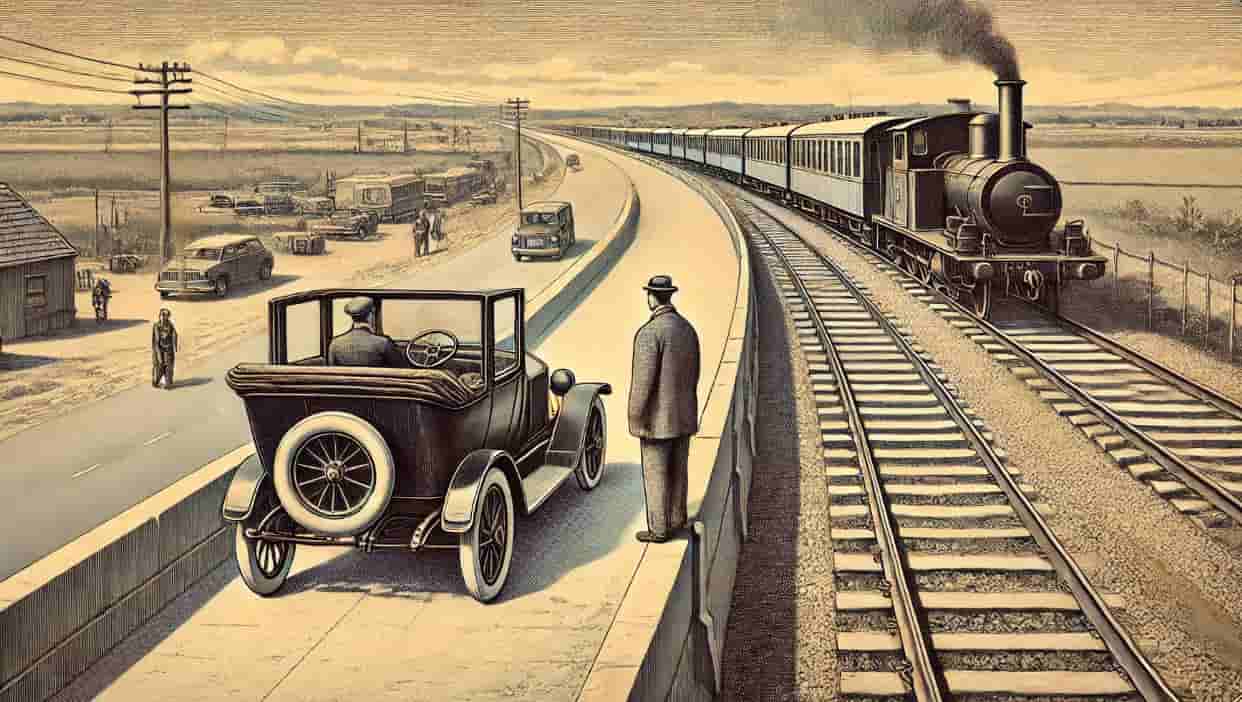
RELATIVE AND ABSOLUTE MOTION NUMERICAL PROBLEMS
QUESTION:
A swimmer is crossing a river that flows at 2 m/s. The swimmer's speed relative to the water is 4 m/s.
1. Determine the swimmer's speed relative to the riverbank (absolute motion) when swimming directly downstream.
2. Determine the swimmer's speed relative to the riverbank when swimming directly upstream.
We also Published
- Exploring the Cosmos: Astronomy and the Wonders of the Universe
As we stand on this tiny planet, gazing up at the cosmos, we are reminded of our profound connection to the universe - Genomics and Personalized Medicine: Empowering Healthcare with Genetic Insights
Introduction In a world that’s increasingly personalized, from curated news feeds to tailored advertisements, it’s no surprise that this trend has permeated healthcare. Genomics, the study of all of a person’s genes (the genome), is at the forefront of this shift, empowering a personalized approach to medicine. Here’s how genomics and personalized medicine are reshaping […] - Why should curd and sour substances not be kept in brass and copper vessels?
Curd and sour substances should not be kept in brass and copper vessels because these metals can react with acidic foods, leading to potential health hazards. The main concern is the leaching of toxic metals into the food or liquid being stored, which can contaminate the food and make it unsafe for consumption. Here are […]
Solution:
1. Downstream Motion: \( v_{s/r} = v_{s/w} + v_{r} = 4 + 2 = 6 \, \text{m/s} \)
2. Upstream Motion: \( v_{s/r} = v_{s/w} - v_{r} = 4 - 2 = 2 \, \text{m/s} \)
\n
RESOURCES
\n- When is the body said to be in rest and in motion? - Quora \n
- Newton’s Laws of Motion | Glenn Research Center | NASA \n
- Problem 42 Define rest and motion.... [FREE SOLUTION] | Vaia \n
- Explain the meaning of the term\'s rest and motion. \n
- Rest and Motion: Definition, Types, Examples and Related Terms - GeeksforGeeks \n
- Define the state of rest and the state of motion of an object. \n
- What is Rest and Motion Explain with Example in Physics | by Arbabbeliever | Medium \n
- Define rest and motion \n
- Motion and Rest: Explanation and Its types | Turito \n
- Make Note on Rest and Motion Definitions \n


0 Comments