PHYSICS
Resources & Insights
ISRO Aditya-L1 Discovery: Validating the Parker Transport Equation
The ISRO Aditya-L1 Discovery provides the first empirical proof of the Parker Transport Equation, revolutionizing solar wind theory. READ MORE...

The Azure Veil: Unraveling the Physics of Why the Sky is Blue
Explore the fascinating physics behind the sky’s blue color, delving into Rayleigh scattering, electromagnetic wave theory, and the inverse fourth-power wavelength dependency in a comprehensive, technical analysis. READ MORE...
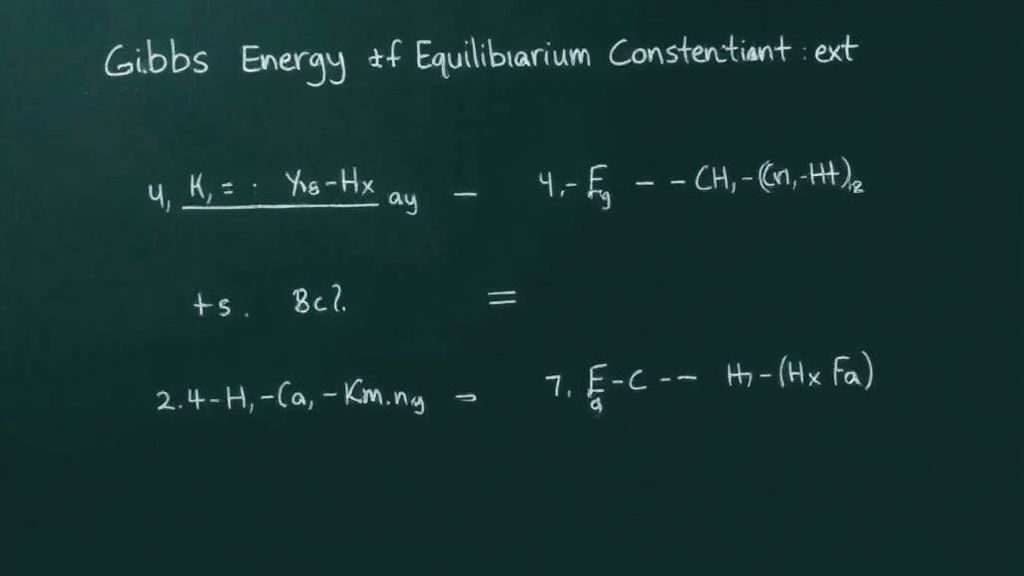
Unveiling Chemical Equilibrium: The Interplay of Gibbs Free Energy and Equilibrium Constant
Explore the fundamental relationship between Gibbs Free Energy and the Equilibrium Constant, understanding how these thermodynamic principles govern reaction spontaneity and the extent of chemical reactions. Dive deep into the mathematical derivations and real-world implications. READ MORE...
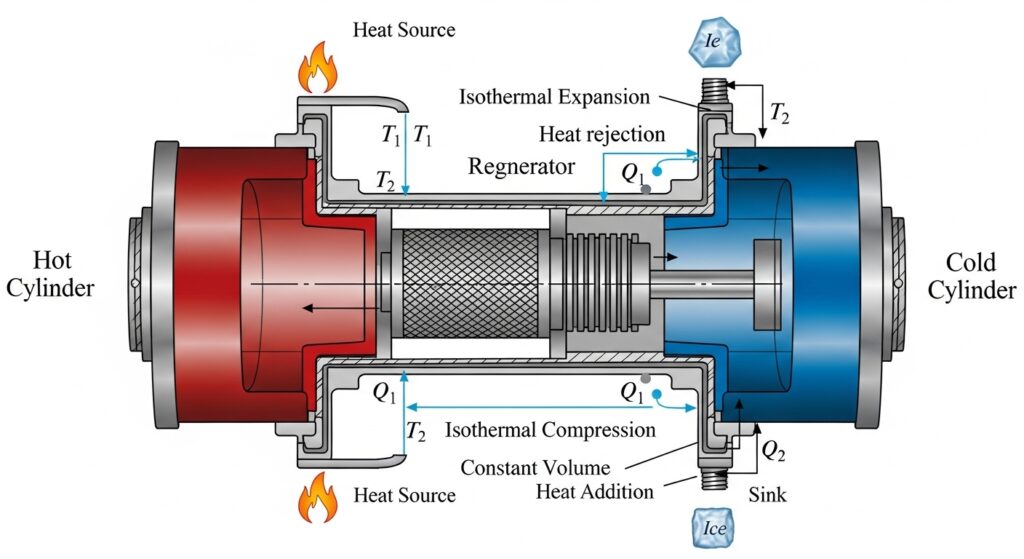
Beyond the Piston: A Comprehensive Thermodynamic Analysis of External Combustion Engines
Explore the intricate thermodynamic principles, operational mechanisms, and engineering challenges of external combustion engines, from classic steam systems to modern Stirling designs. This technical overview delves into efficiency limits, environmental considerations, and their role in energy conversion. READ MORE...
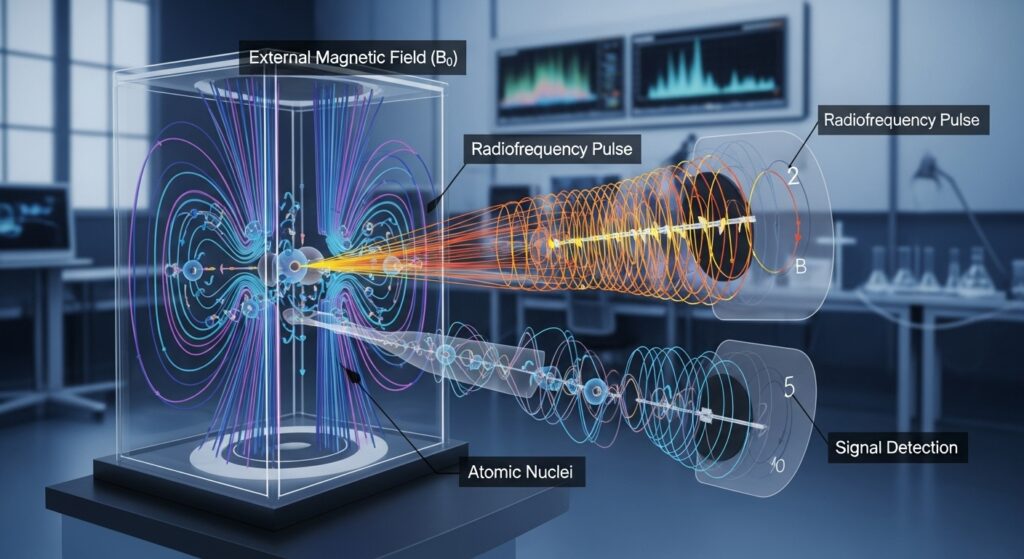
Understanding Nuclear Magnetic Resonance (NMR): A Deep Dive into Principles and Applications
Explore the fundamental principles of Nuclear Magnetic Resonance (NMR) spectroscopy, from nuclear spin and Larmor precession to chemical shift and relaxation processes. Discover its diverse applications in chemistry, physics, and medicine. READ MORE...
DYNAMICS IN PHYSICS – LAWS, EXAMPLES & 10 SOLVED PROBLEMS
INTRODUCTION: WHAT IS DYNAMICS? Dynamics is the part of mechanics that studies how forces affect the motion of objects. While kinematics describes how things move (displacement, velocity, acceleration), dynamics explains why they move that way. For CBSE, JEE, NEET and other exams, dynamics is built mainly on: Newton’s Laws of Motion Work–Energy Theorem Conservation of Momentum Circular Motion, and sometimes springs, pulleys, etc. Circular Motion, and sometimes springs, pulleys, etc. Circular Motion, and sometimes springs, pulleys, etc. Below you’ll find: Fundamental laws of physics involved in dynamics (with MathJax delimiters) Ten problems, from simple to challenging, with full solutions and the key laws stated for each. Ten problems, from simple to challenging, with full solutions and the key laws stated […] READ MORE...

Meta's Scam Ad Strategy: How Billions in Revenue Are Made
Meta’s strategy of profiting from scam ads has been exposed. You’ll learn about the mechanisms and implications of Meta’s scam ad strategy, and how it impacts users. READ MORE...
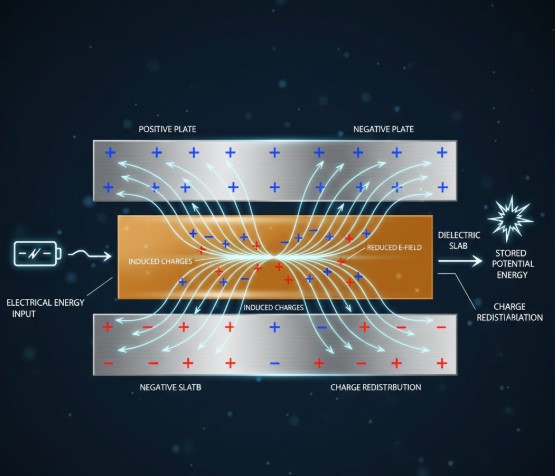
Capacitors With Dielectrics: How They Change Energy And Voltage
Inserting an insulating material between its plates drastically changes the capacitance, stored energy, and potential difference of a capacitor with a dielectric under varying conditions. Consequently, the SEO key phrase "Capacitors with dielectrics change energy and voltage" effectively captures both the underlying physics principle and its real-world implications. This topic forms one of the most fundamental problems in electrostatics because capacitors with dielectrics change energy and voltage depending on whether the battery remains connected or is removed. Specifically, they achieve this by modifying the electric field distribution, a crucial understanding for students preparing for physics exams and for engineers designing modern circuits. In this detailed article, we will not only solve a classic problem involving a capacitor with a dielectric […] READ MORE...