PROBABILITY
Resources & Insights

Navigating the CBSE Board Exams 2025: A Comprehensive Guide
Conquer the CBSE Board Exams 2025 with our guide! Learn effective study strategies, time management tips, and overcome exam anxiety for success. READ MORE...
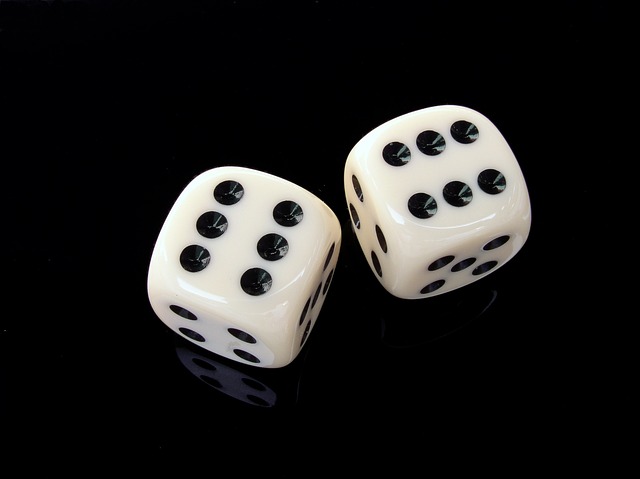
Multiplication Rule in Probability
The multiplication rule in probability is used to find the probability of the intersection of two or more independent event READ MORE...

Addition Rule in Probability
Addition Rule calculates the probability of one or more events occurring. For mutually exclusive events, add individual probabilities. For non-mutually exclusive events, add individual probabilities and subtract the probability of both events occurring. READ MORE...

Suppose the diameter of aerosol particles in a particular application is uniformly distributed between 2 and 6 nanometers. Find the probability that a randomly measured particle has diameter greater than 3 nanometers.
uniformly distributed aerosol particles between 2 and 6 nanometers READ MORE...

Random Event
A random event refers to an unpredictable occurrence that has no discernible pattern or predetermined outcome. It is an event whose outcome cannot be reliably predicted or determined based on prior information or knowledge. Random events are commonly encountered in various fields, including statistics, probability theory, and everyday life. Some examples of random events include: Flipping a Coin: The outcome of a coin toss, whether it lands on heads or tails, is a random event. Each toss has a 50% chance of resulting in either outcome. Rolling a Dice: The number that appears on a rolled dice is a random event. The outcome can be any number from 1 to 6, with each number having an equal chance of occurring. […] READ MORE...