KINEMATICS
Resources & Insights
The study of motion begins here, stripped of the forces that cause it. These articles analyze the pure geometry of displacement, velocity, and acceleration, mapping the precise trajectories of objects through space and time.
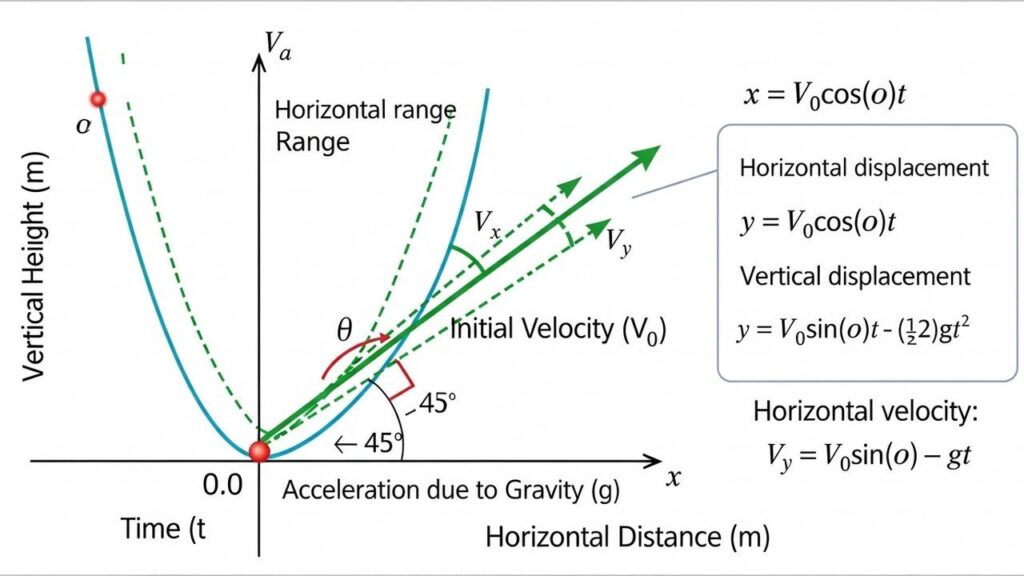
Projectile Motion Angle: Solving for the 45-Degree Angle
Learn how to determine the time when a projectile’s velocity vector forms a 45-degree angle. This post provides a step-by-step guide to solving the Projectile Motion Angle problem. READ MORE...
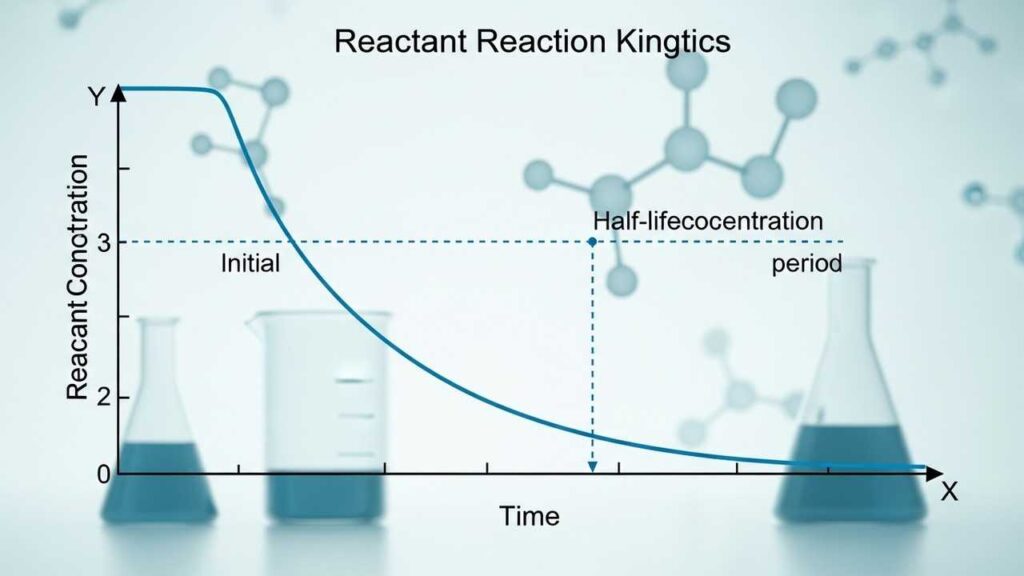
First-Order Reaction Half-Life: Calculating Reactant Remaining
Understand the concept of **First-Order Reaction Half-Life** and how to calculate the fraction of reactant remaining after a given time. This post will describe the half-life and explain how it impacts the decay of a chemical reaction. READ MORE...

Calculating Car Distance Traveled with Uniform Acceleration in 10 Seconds
Learn how to calculate the distance a car travels with uniform acceleration. Find the distance covered in 10 seconds. READ MORE...
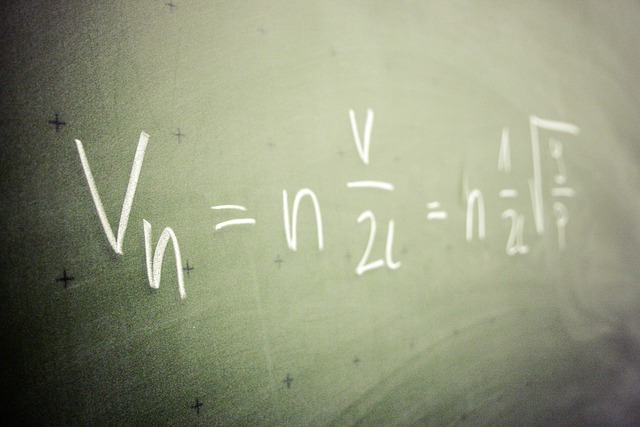
Solving Projectile Motion: Finding Maximum Height and Time of Flight Using a Quadratic Equation
Learn how to solve projectile motion problems using quadratic equations. Find the maximum height and time of flight for a projectile launched at a 45-degree angle. READ MORE...

Displacement and Distance: A Cycle Through Physics
Discover the difference between displacement and distance and how to calculate both, using a simple example of a cyclist’s journey. READ MORE...
Navigating the CBSE Board Exams 2025: A Comprehensive Guide
Conquer the CBSE Board Exams 2025 with our guide! Learn effective study strategies, time management tips, and overcome exam anxiety for success. READ MORE...

Understanding Linear and Circular Motion: Concepts and Applications
In the realm of physics, motion plays a pivotal role in understanding how objects behave in our universe. Among the various types of motion, linear and circular motion are fundamental concepts that provide insights into how objects move in a straight line or around a fixed point. This discussion delves into the intricacies of these motions, exploring their principles, equations, and applications in everyday life and scientific endeavours. By the end of this lecture, you will have a comprehensive understanding of these fundamental concepts, enabling you to appreciate the complexities of motion in both linear and circular forms. What is Linear Motion? Linear motion, also known as rectilinear motion, refers to the movement of an object along a straight […] READ MORE...