ATOMIC STRUCTURE
Resources & Insights
Understand atomic structure, the arrangement of protons, neutrons, and electrons that form atoms. Learn about early atomic models, quantum theory, and how atomic structure explains chemical behavior and physical properties

The Critical Role of the Top 5 Metals Used in Metallurgy Today
Explore the foundational elements of modern industry by delving into the top 5 metals used in metallurgy today, examining their unique properties, complex extraction and processing methods, and indispensable applications across various sectors. This comprehensive article sheds light on why these specific metals remain paramount in advanced metallurgical practices. READ MORE...
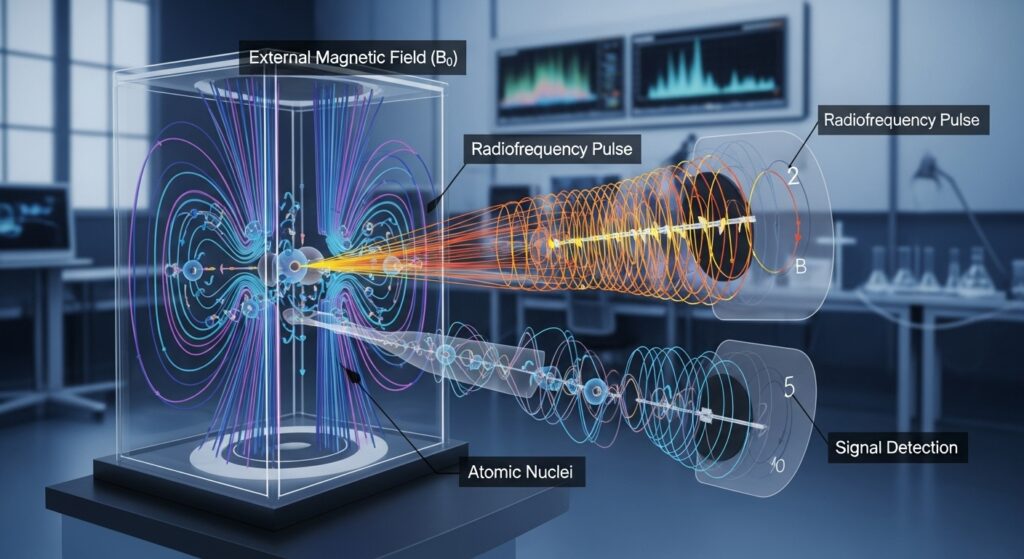
Understanding Nuclear Magnetic Resonance (NMR): A Deep Dive into Principles and Applications
Explore the fundamental principles of Nuclear Magnetic Resonance (NMR) spectroscopy, from nuclear spin and Larmor precession to chemical shift and relaxation processes. Discover its diverse applications in chemistry, physics, and medicine. READ MORE...
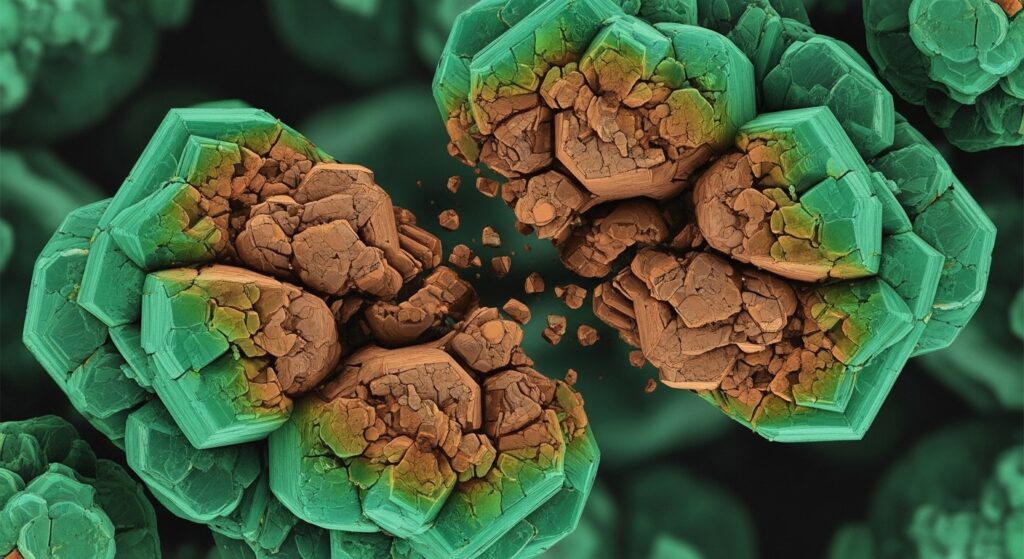
The Chemistry of Chromatic Instability: Why Synthetic Emerald Green Pigments Degrade
An in-depth technical analysis of the degradation mechanisms in copper acetoarsenite pigments. Explores thermodynamics, reaction kinetics, and spectroscopic evidence. READ MORE...

Rutherford Atomic Model: How Scattering Revealed The Nuclear Atom
Rutherford atomic model explains the nuclear structure of the atom with a bold claim: nearly all mass and positive charge reside in an extremely small nucleus while electrons occupy the surrounding space. Proposed after the famous gold-foil experiment, Rutherford atomic model explains the nuclear structure of the atom by overturning the “plum pudding” picture and introducing a concentrated center capable of deflecting energetic alpha particles. In this article, we retrace the experiment, derive the scattering law, compare models, and show why this was a foundational leap toward modern quantum physics. From experimental setup and data reduction to MathJax-powered derivations of the Rutherford differential cross-section, the narrative keeps returning to one theme: Rutherford atomic model explains the nuclear structure of the […] READ MORE...