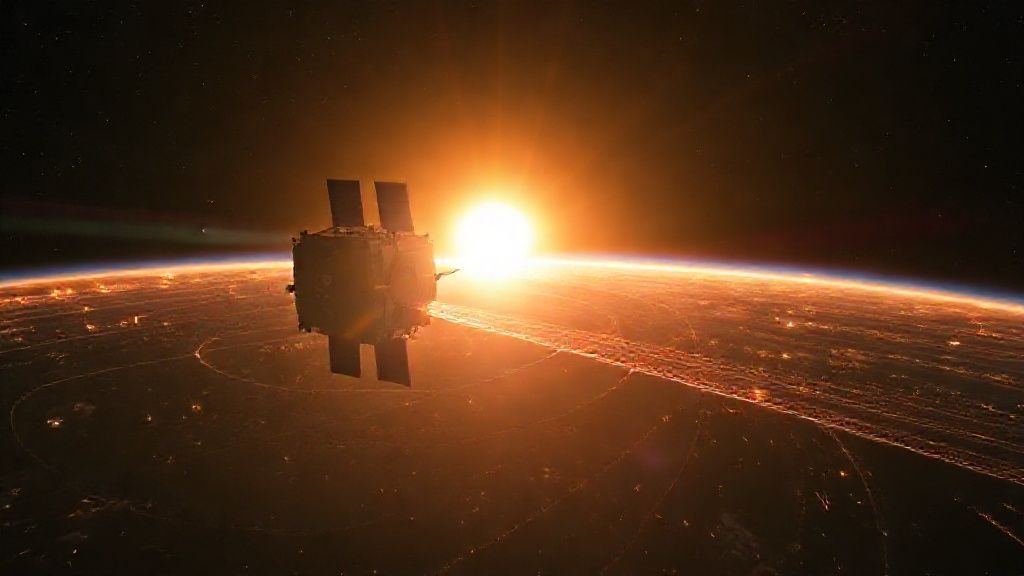
The Scientific Impact of the ISRO Aditya-L1 Discovery on Solar Physics
The ISRO Aditya-L1 Discovery marks a definitive shift in our empirical understanding of heliospheric dynamics, specifically regarding the transport of energetic particles through the solar system. For over four decades, the Parker Transport Equation served as the primary theoretical framework for describing how solar wind particles diffuse, drift, and undergo adiabatic energy changes. However, direct empirical validation during "quiet" solar periods remained elusive until the recent data transmission from the Aditya Solar Wind Particle Experiment (ASPEX). By providing the "ground truth" for these complex magnetohydrodynamic (MHD) interactions, Indian scientists at the Physical Research Laboratory (PRL) have transitioned from observational astronomy to fundamental physics validation.
On This Page
- The Scientific Impact of the ISRO Aditya-L1 Discovery on Solar Physics
- Mathematical Foundations of the Parker Transport Equation
- The ASPEX Instrument: Decoding Solar Wind Composition
- Empirical Validation of Diffusion Theory in Space Physics
- Impact on Global Space Weather Forecasting
- Lunar South Pole: A New Frontier in Plasma Physics
- The Physics of the RAMBHA-LP Measurements
- Implications for Lunar Dust and Communication
- Synergy Between Aditya-L1 and Chandrayaan-3
- The Path Toward Chandrayaan-4 and Gaganyaan
We Also Published
This breakthrough is not merely an academic exercise; it carries profound implications for space weather forecasting. As our global civilization becomes increasingly reliant on orbital infrastructure, the ability to predict the behavior of the solar plasma environment is critical. The data from ASPEX allows for a more precise calibration of the diffusion coefficients used in predictive models, potentially increasing the lead time for solar storm warnings. This article explores the mathematical rigor of these findings, the instrumentation that made them possible, and the parallel discoveries made by Chandrayaan-3 regarding the energetic plasma environment of the lunar South Pole.
Mathematical Foundations of the Parker Transport Equation
To appreciate the magnitude of the ISRO Aditya-L1 Discovery, one must first examine the mathematical complexity of particle transport in the heliosphere. The Parker Transport Equation describes the evolution of the phase space density or the omnidirectional distribution function ##f(\mathbf{r}, p, t)## of cosmic rays and solar particles. The equation is expressed as:
### \frac{\partial f}{\partial t} = \nabla \cdot (\kappa \cdot \nabla f) - \mathbf{V} \cdot \nabla f + \frac{1}{3}(\nabla \cdot \mathbf{V})\frac{\partial f}{\partial \ln p} + Q ###In this expression, the terms represent the following physical processes:
- Diffusion: ##\nabla \cdot (\kappa \cdot \nabla f)##, where ##\kappa## is the diffusion tensor. This describes the stochastic scattering of particles by magnetic field irregularities.
- Convection: ##\mathbf{V} \cdot \nabla f##, where ##\mathbf{V}## is the solar wind velocity. This represents the bulk movement of particles carried by the solar wind plasma.
- Adiabatic Energy Loss: ##\frac{1}{3}(\nabla \cdot \mathbf{V})\frac{\partial f}{\partial \ln p}##. As the solar wind expands, the particles lose momentum ##p##.
- Source Term: ##Q## represents the local injection of particles.
The diffusion tensor ##\kappa## is particularly complex, as it is anisotropic relative to the Mean Magnetic Field (MMF). It is generally decomposed into parallel (##\kappa_\parallel##) and perpendicular (##\kappa_\perp##) components:
### \kappa_{ij} = \kappa_\perp \delta_{ij} + (\kappa_\parallel - \kappa_\perp) b_i b_j + \kappa_A \epsilon_{ijk} b_k ###Where ##b_i## are the components of the unit vector of the magnetic field and ##\kappa_A## represents the anti-symmetric or drift component. The ASPEX instrument on Aditya-L1 has provided the first high-resolution measurements of these coefficients in the L1 Lagrange point environment, confirming that even during solar quiet periods, the diffusion process follows these predicted tensor symmetries.
The ASPEX Instrument: Decoding Solar Wind Composition
The technical success of the ISRO Aditya-L1 Discovery is rooted in the ASPEX payload, which consists of two primary sensors: the Solar Wind Ion Spectrometer (SWIS) and the SupraThermal and Energetic Particle Spectrometer (STEPS). These sensors are designed to measure the solar wind particles in different energy ranges, allowing for a comprehensive view of the plasma temperature and flux.
SWIS is capable of measuring low-energy solar wind ions (protons and alpha particles) in the range of 100 eV to 20 keV. By utilizing a 360-degree field of view, it captures the arrival angle of ions, which is crucial for determining the solar wind velocity vector ##\mathbf{V}##. STEPS, on the other hand, focuses on higher energy suprathermal particles (20 keV to 5 MeV), which are the particles most affected by the diffusion and drift terms of the Parker equation.
The interaction of these particles with the interplanetary magnetic field (IMF) is governed by the Lorentz force. The gyroradius ##r_L## of a particle is given by:
### r_L = \frac{mv_\perp}{|q|B} ###By correlating the fluctuations in the IMF (measured by the onboard magnetometer) with the particle distributions measured by ASPEX, ISRO scientists have been able to calculate the power spectral density of magnetic turbulence, which directly informs the diffusion coefficient ##\kappa##.
Empirical Validation of Diffusion Theory in Space Physics
One of the most significant aspects of the ISRO Aditya-L1 Discovery is the resolution of the "diffusion-convection" debate. Historically, there was significant uncertainty regarding the ratio of parallel to perpendicular diffusion in the inner heliosphere. Theoretical models suggested that ##\kappa_\perp / \kappa_\parallel \approx 0.01## to ##0.05##, but empirical data was sparse.
The data from ASPEX suggests that during quiet periods, the diffusion of solar protons is highly dependent on the "intermittency" of the magnetic field. The scattering mean free path ##\lambda_\parallel## is related to the diffusion coefficient by:
### \kappa_\parallel = \frac{1}{3} v \lambda_\parallel ###Aditya-L1's findings show that ##\lambda_\parallel## fluctuates according to the local plasma beta ##\beta##, which is the ratio of plasma pressure to magnetic pressure:
### \beta = \frac{n k_B T}{B^2 / 2\mu_0} ###When ##\beta \approx 1##, the particles experience enhanced scattering, perfectly aligning with the predictions of the Parker Transport Equation. This confirmation allows physicists to move away from purely statistical models to more deterministic, physics-based simulations of the heliosphere.
Impact on Global Space Weather Forecasting
The practical application of the ISRO Aditya-L1 Discovery lies in its ability to protect terrestrial and orbital technology. Space weather, driven by Coronal Mass Ejections (CMEs) and Solar Energetic Particle (SEP) events, can induce geomagnetically induced currents (GICs) in power grids and cause single-event upsets (SEUs) in satellite electronics.
By refining the parameters of the Parker equation, ISRO’s data enables more accurate space weather forecasting. Current models often struggle with the "arrival time" problem—predicting exactly when a cloud of solar particles will hit Earth's magnetosphere. With a more precise understanding of the diffusion tensor ##\kappa##, we can model the "broadening" of the particle front as it travels from the Sun to the L1 point.
Mathematically, the time-of-flight dispersion for particles of different energies can be modeled using the diffusion-advection equation. The probability density function ##P(x, t)## for a particle starting at the Sun (##x=0##) and reaching Aditya-L1 (##x=L##) is roughly:
### P(L, t) = \frac{L}{\sqrt{4\pi \kappa t^3}} \exp\left( -\frac{(L - Vt)^2}{4\kappa t} \right) ###Refining ##\kappa## and ##V## through the ISRO Aditya-L1 Discovery allows for a significant reduction in the error margins of these arrival time predictions, safeguarding billions of dollars in infrastructure.
Lunar South Pole: A New Frontier in Plasma Physics
While Aditya-L1 watches the Sun, Chandrayaan-3 has been revolutionizing our understanding of the Moon. Specifically, the data from the RAMBHA-LP (Radio Anatomy of Moon Bound Hypersensitive Ionosphere and Atmosphere - Langmuir Probe) has revealed a surprisingly "energetic" plasma environment at the lunar South Pole. This discovery complements the ISRO Aditya-L1 Discovery by showcasing the interaction between solar radiation and planetary (or lunar) surfaces.
The Moon lacks a significant atmosphere and a global magnetic field, meaning its surface is directly exposed to solar wind and ultraviolet (UV) radiation. This interaction creates a thin layer of plasma, known as the lunar ionosphere. Previous models predicted a relatively cold, low-density plasma. However, RAMBHA-LP detected electron temperatures (##T_e##) ranging from 3,000 to 8,000 Kelvin.
This high temperature suggests that the plasma is not in thermal equilibrium. The electron energy distribution function (EEDF) likely deviates from a standard Maxwellian distribution. A standard Maxwellian distribution is given by:
### f(v) = n \left( \frac{m}{2 \pi k_B T_e} \right)^{3/2} \exp \left( -\frac{mv^2}{2 k_B T_e} \right) ###The discovery of 8,000 K electrons indicates a significant presence of "photoelectrons" generated by the photoelectric effect as solar UV hits the lunar regolith. This has massive implications for future lunar exploration.
The Physics of the RAMBHA-LP Measurements
The Langmuir Probe on Chandrayaan-3 works by applying a sweeping voltage ##V_p## to a metallic probe and measuring the resulting current ##I## collected from the plasma. The current-voltage (I-V) characteristic curve is used to derive the electron temperature and density. For a plasma in the "retarding" regime, the electron current ##I_e## is expressed as:
### I_e = I_{e0} \exp\left( \frac{e(V_p - V_s)}{k_B T_e} \right) ###Where ##V_s## is the plasma potential and ##I_{e0}## is the electron saturation current. By taking the natural log of the current and calculating the slope, physicists can determine ##T_e##:
### \frac{d(\ln I_e)}{dV_p} = \frac{e}{k_B T_e} ###The high temperatures recorded by ISRO suggest that the South Pole’s plasma environment is highly dynamic. The Debye length (##\lambda_D##), which characterizes the scale over which electric potentials are screened in a plasma, is calculated as:
### \lambda_D = \sqrt{\frac{\epsilon_0 k_B T_e}{n_e e^2}} ###With high ##T_e## and relatively low density ##n_e##, the Debye length at the lunar South Pole is much larger than anticipated. This means that electric fields produced by surface charging can extend further into space, affecting how dust grains are lofted off the surface.
Implications for Lunar Dust and Communication
The energetic plasma environment discovered by Chandrayaan-3 is a "game-changer" for lunar dust mitigation. Lunar dust is notoriously abrasive and electrostatically charged. In a high-temperature plasma environment, dust grains can acquire a significant negative charge ##Q## through the collection of high-energy electrons.
The charging of a spherical dust grain of radius ##a## is modeled by:
### Q = 4\pi \epsilon_0 a \Phi_s ###Where ##\Phi_s## is the surface potential. In the presence of 8,000 K electrons, the surface potential can become highly negative, leading to electrostatic levitation. This "dust fountain" effect can coat solar panels and sensitive optical instruments, posing a threat to long-term lunar colonies. Furthermore, the plasma density fluctuations can interfere with low-frequency radio communications on the lunar surface. The plasma frequency ##\omega_{pe}## is given by:
### \omega_{pe} = \sqrt{\frac{n_e e^2}{m_e \epsilon_0}} ###If the radio frequency is near ##\omega_{pe}##, the signal will be reflected or severely distorted. The high energy of the plasma environment means that these interference effects might be more prevalent at the South Pole than at the lunar equator.
Synergy Between Aditya-L1 and Chandrayaan-3
The ISRO Aditya-L1 Discovery and the Chandrayaan-3 plasma findings are intrinsically linked. The Sun provides the "input" (solar wind and UV flux), and the Moon provides the "response" (the plasma environment). By studying both simultaneously, ISRO is providing a holistic view of space physics.
For instance, during a solar flare, the increase in X-ray and UV flux will immediately alter the electron temperature at the lunar South Pole. The relationship between the solar photon flux ##\Phi_{ph}## and the lunar photoelectron density ##n_{pe}## can be approximated by:
### n_{pe} \propto \int \eta(E) \Phi_{ph}(E) dE ###Where ##\eta(E)## is the photoelectric yield of the lunar regolith. Because Aditya-L1 is monitoring the solar flux in real-time from the L1 point, scientists can now correlate specific solar events with immediate changes in the lunar plasma environment. This multi-platform approach is what cements India's position as a global powerhouse in fundamental space physics.
The Path Toward Chandrayaan-4 and Gaganyaan
As we look toward the Chandrayaan-4 sample return mission and the Gaganyaan human spaceflight program, the physics insights gained from current missions are indispensable. For Gaganyaan, understanding the solar particle environment is a matter of astronaut safety. High-energy protons can penetrate spacecraft shielding, leading to radiation sickness or long-term health risks.
The validation of the Parker Transport Equation via the ISRO Aditya-L1 Discovery allows for better "shielding physics" calculations. We can now model the Linear Energy Transfer (LET) of solar particles more accurately. The energy deposited by a particle as it travels through shielding is given by the Bethe-Bloch formula:
### -\frac{dE}{dx} = \frac{4\pi e^4 z^2}{m_e v^2} NZ \left[ \ln\left( \frac{2m_e v^2}{I} \right) - \ln(1 - \beta^2) - \beta^2 \right] ###By knowing the exact energy spectrum and diffusion characteristics of the particles hitting the L1 point, ISRO can optimize the material composition of the Gaganyaan crew module to provide maximum protection with minimum mass.
Furthermore, the lunar plasma data will inform the design of landing gear and EVA (Extra-Vehicular Activity) suits for future moonwalkers. If the South Pole is indeed a high-energy plasma "blanket," suits must be designed with grounding mechanisms to prevent static discharge, which could damage electronic life-support systems.
In conclusion, December 2025 has heralded a new era for Indian science. The ISRO Aditya-L1 Discovery has turned theoretical physics into empirical reality, while Chandrayaan-3 has rewritten the textbooks on lunar plasma. Together, these breakthroughs provide the "ground truth" for the complex electromagnetic dance between our Sun, our Earth, and our Moon, ensuring that India’s future in deep space is built on a foundation of rigorous physics and unprecedented data.
From our network :
- Mastering DB2 12.1 Instance Design: A Technical Deep Dive into Modern Database Architecture
- 10 Physics Numerical Problems with Solutions for IIT JEE
- EV 2.0: The Solid-State Battery Breakthrough and Global Factory Expansion
- https://www.themagpost.com/post/trump-political-strategy-how-geopolitical-stunts-serve-as-media-diversions
- Vite 6/7 'Cold Start' Regression in Massive Module Graphs
- 98% of Global MBA Programs Now Prefer GRE Over GMAT Focus Edition
- AI-Powered 'Precision Diagnostic' Replaces Standard GRE Score Reports
- Mastering DB2 LUW v12 Tables: A Comprehensive Technical Guide
- https://www.themagpost.com/post/analyzing-trump-deportation-numbers-insights-into-the-2026-immigration-crackdown
RESOURCES
- Solar wind - Wikipedia
- What is the solar wind? | University of Chicago News
- Dynamical Theory of the Solar Wind - ADS
- Observed Fluctuation Enhancement and Departure from WKB ...
- Origin of the Solar Wind: Theory - ADS
- DETAILED FIT OF “CRITICAL BALANCE” THEORY TO SOLAR ...
- A theory of local and global processes which affect solar wind ...
- Evolution of anisotropic turbulence in the fast and slow solar wind ...
- Solar wind proton temperature anisotropy: Linear theory and WIND ...
- Parker Solar Probe and the Birth of the Solar Wind - NASA
- Solar Wind Theory Confirmed | Science | AAAS
- Dynamical Theory of the Solar Wind
- What Is the Solar Wind? - NASA Science
- How where auroras explained before Eugene Parker's theory of ...
- In Situ Signature of Cyclotron Resonant Heating in the Solar Wind ...

1 Comment