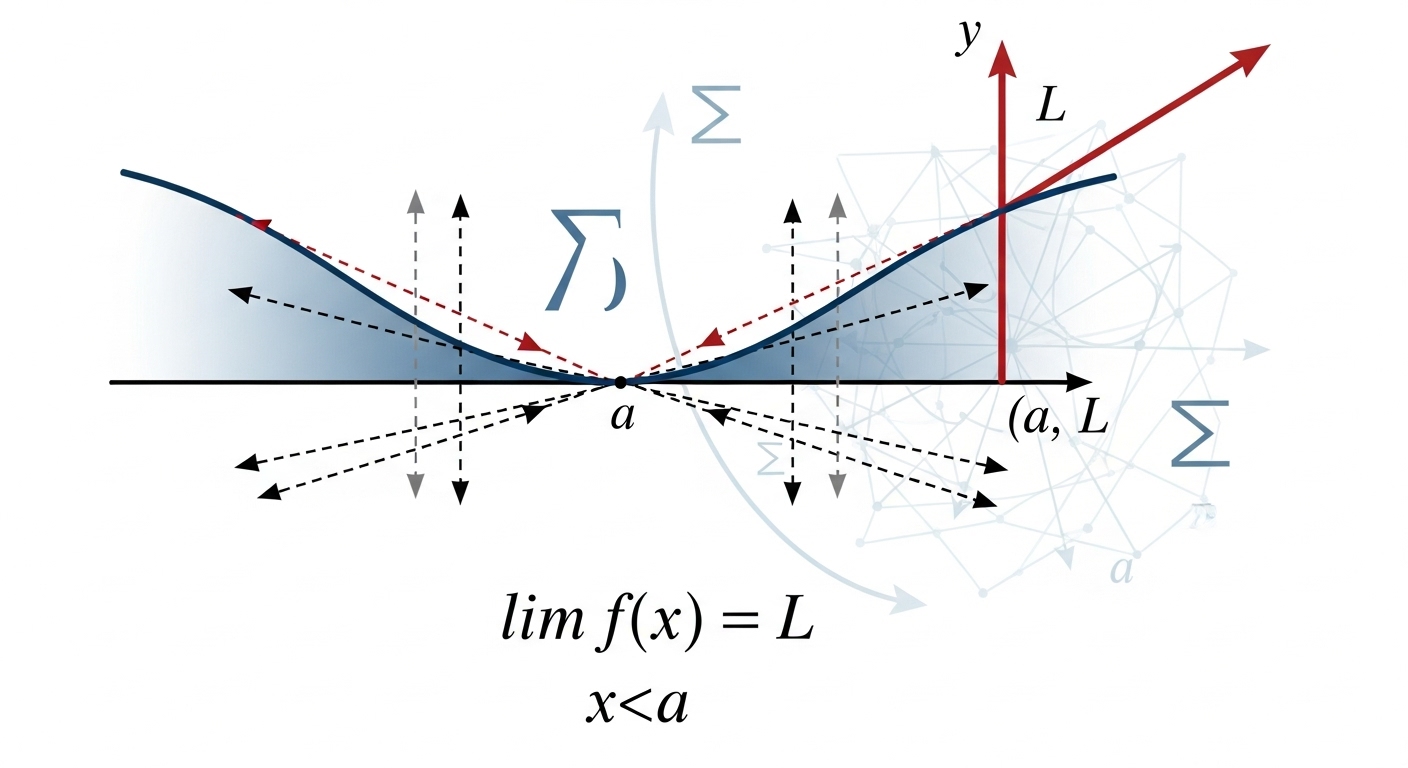
Limits are the secret engine behind derivatives, integrals, and almost every powerful idea in calculus. Yet for many students, limits feel mysterious, abstract, and sometimes even scary. This course turns that mystery into clarity.
In this structured, exam-focused, and concept-driven journey, we explore limits step by step, starting from real-life intuition and building all the way up to advanced problems involving algebraic, trigonometric, exponential, and logarithmic functions. By the end, limits stop being a formula to memorise and become a language we truly understand.
Ideal for: Class XI–XII students (CBSE and similar boards), JEE/competitive exam aspirants, and anyone who wants a rock-solid foundation in calculus.
What We Will Gain from This Course
- Crystal-clear understanding of what a limit actually means, both intuitively and formally.
- Confidence in handling algebraic, trigonometric, exponential, and logarithmic limits step by step.
- Fluency with indeterminate forms like ##\frac{0}{0}## and ##\frac{\infty}{\infty}## and how to resolve them.
- A structured toolbox of techniques: direct substitution, factorisation, rationalisation, conjugates, and more.
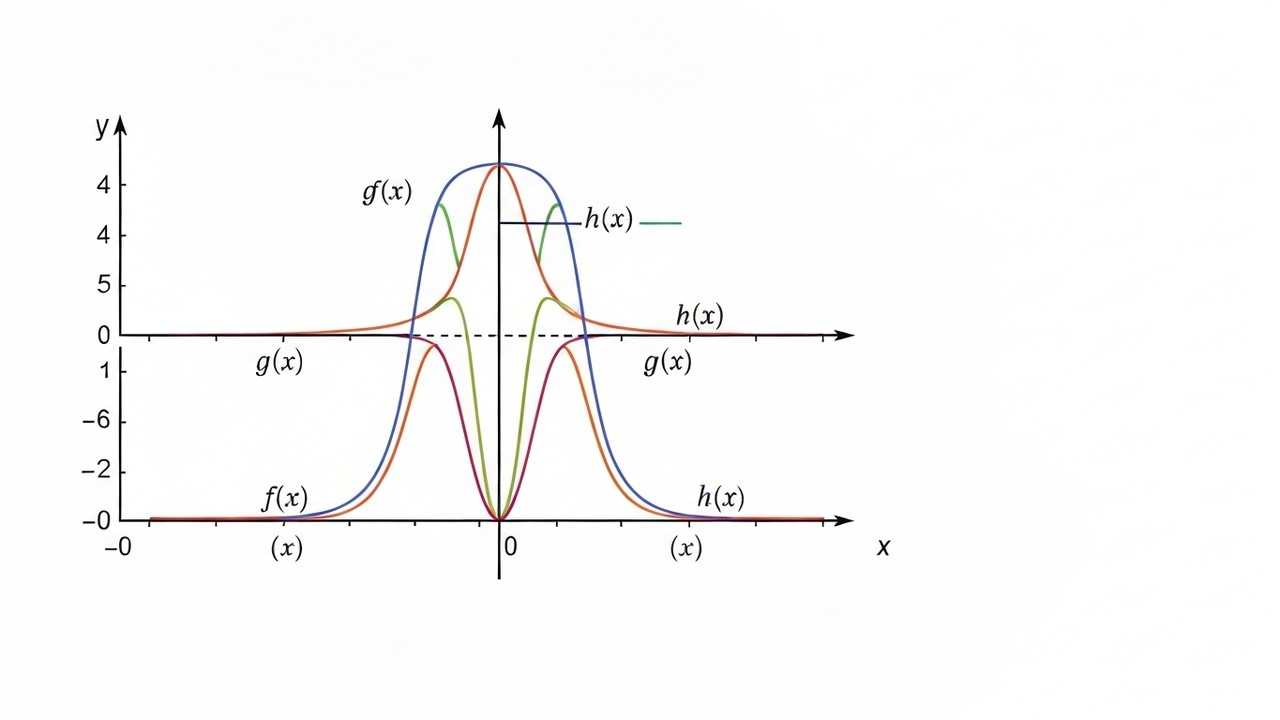
- Strong visual intuition using graphs, asymptotes, and function behaviour near “problem points”.
- Better readiness for derivatives, continuity, and advanced calculus topics that follow naturally after limits.
Who This Course Is For
- Class XI–XII students who want to truly understand limits, not just pass exams.
- Engineering and science aspirants preparing for entrance exams where limits and calculus are heavily tested.
- Self-learners revisiting mathematics and wanting a clean, intuitive entry into calculus.
- Teachers and tutors looking for a clear, example-rich sequence to explain limits to their own students.
Course Roadmap – Lesson-by-Lesson Tour
Here is how the journey unfolds, from “Why do we even need limits?” to “How do we analyse functions at infinity?”
- Understanding Limits – Foundation for Calculus (Class XI–XII)
We begin with the big picture: why limits matter, how they sit at the heart of calculus, and how they connect to change, motion, and real-world phenomena. - Why We Need Limits
Everyday examples like speedometers, approaching a traffic signal, or measuring instantaneous growth help us see why “approaching a value” is more powerful than simply plugging numbers. - Formal Definition of a Limit
We convert intuition into precise language. We explore what it means for a function to approach a value, from both left and right, and why that matters. - Basic Limit Notation and Properties
We learn the standard symbols for limits, the algebra of limits (sum, difference, product, quotient), and how constants and polynomials behave under limits. - Direct Substitution Method
We see when limits are “easy” – just plug the value in and we are done. Then we learn to recognise when substitution fails and why that failure is actually a clue. - Limits Involving Factoring
Whenever limits lead to ##\frac{0}{0}##, factorisation comes to the rescue. We cancel common factors, remove “holes” in graphs, and evaluate limits that looked impossible at first glance. - Limits Using Rationalisation
Surds and roots enter the scene. We use conjugates and the difference-of-squares identity to simplify expressions with square roots and resolve indeterminate forms cleanly. - Understanding Indeterminate Forms
We meet the full family: ##\frac{0}{0}##, ##\frac{\infty}{\infty}##, ##\infty - \infty##, ##0 \cdot \infty##, ##1^{\infty}##, ##0^{0}##, and ##\infty^{0}##. We discuss where they appear and what they really mean. - Limits Using Conjugates
We go deeper into conjugate-based techniques, tackling classic expressions like ##\lim_{x\to 4} \frac{\sqrt{x} - 2}{x - 4}## and more challenging variations. - Limits Involving Trigonometric Functions (Foundation)
We build the base rules for trigonometric limits, especially near zero, and understand why the unit-circle perspective makes these results natural. - Standard Trigonometric Limits (Expanded)
We move to identities and clever manipulations, using standard limits to solve complex expressions that mix multiple trigonometric functions. - Exponential & Logarithmic Limits
We introduce the central limits for exponential and logarithmic functions, and see how they appear in growth–decay models and compound interest style problems. - Limits Involving Algebraic Functions & Piecewise Definitions
Here we study functions defined differently on different intervals, learn to compute left-hand and right-hand limits, and identify jump and removable discontinuities. - Limits at Infinity of Rational Functions Using Degree Comparison
We move towards “far away” behaviour: as ##x \to \infty## or ##x \to -\infty##. Comparing degrees of numerator and denominator helps us predict horizontal asymptotes and end behaviour quickly. - Behaviour of Functions Near Vertical Asymptotes and Infinite Limits
We study what happens when denominators approach zero while numerators stay non-zero. This leads to vertical asymptotes and infinite limits, and a richer picture of how graphs can behave. - Graphical Understanding of Limits
Finally, we tie everything together visually. We read limits directly from graphs, locate holes and jumps, and interpret real-world situations through graphical stories of functions approaching key values.
How the Course Works
- Concept-first explanations: Each idea is introduced with simple language, diagrams, and relatable scenarios.
- Step-by-step examples: Every lesson moves from easy to challenging problems with complete, neat solutions.
- MathJax-style formulas: Limits, fractions, and expressions are written clearly so that the focus stays on understanding, not decoding notation.
- Continuous progression: Each lesson prepares the ground for the next, so our understanding grows in a smooth, logical flow.
Ready to Begin the Limits Journey?
Limits are the doorway to calculus. Once we cross that doorway with confidence, derivatives, integrals, and advanced topics stop feeling like “magic” and start feeling like a natural extension of what we already know.
Start with “Why We Need Limits”, move lesson by lesson, and by the end of this course, limits will be one of the strongest parts of our mathematical toolkit.
Let us power up our calculus foundation – one limit at a time.

1 Comment